

Rail travel offers honeymooners something that flights cannot: the journey itself as a destination, measured in landscapes rather than hours. These routes, spanning Scotland, Switzerland, South Africa, and Southeast Asia, are built around storied long-distance trains and hotel stays chosen to match the slower pace.
Why the Train Is the Right Way to Begin a Marriage
A honeymoon structured around rail travel is a different proposition from one built around a resort or a city. The journey is fixed, the route is shared, and the landscape changes continuously outside the window. There is no itinerary to negotiate once the train is moving.
The long-distance trains behind these journeys, including routes through Europe and Scotland, are designed around extended travel time rather than efficiency. Carriages are configured for dining, conversation, and rest. The schedule is the experience, not an obstacle to it.
This matters for a honeymoon because the structure removes the friction that often accompanies early travel as a couple. Decisions about where to go and what to do are largely resolved before departure. What remains is the journey itself, moving through landscapes that would be invisible from the air and inaccessible by any faster means.
About Do Not Disturb
Do Not Disturb is a luxury travel company specializing in carefully designed journeys and considered experiences. Each itinerary we build for our clients is informed by real destination knowledge, offering insight into places, cultures, and moments that shape how a trip comes together.
If this destination has sparked ideas, the itinerary can be developed into a private journey tailored to your interests and travel style, with hand-picked stays, thoughtful routing, and experiences curated around what matters most to you.
Scotland: The Royal Scotsman Through the Highlands
The Royal Scotsman operates on a series of looped itineraries departing from Edinburgh, with routes extending north through Perthshire, the Great Glen, and into the remote northwest Highlands. Journey lengths range from two to seven nights, with the longer itineraries reaching Wester Ross and the Kyle of Lochalsh line, one of the most geographically isolated rail corridors in Britain.
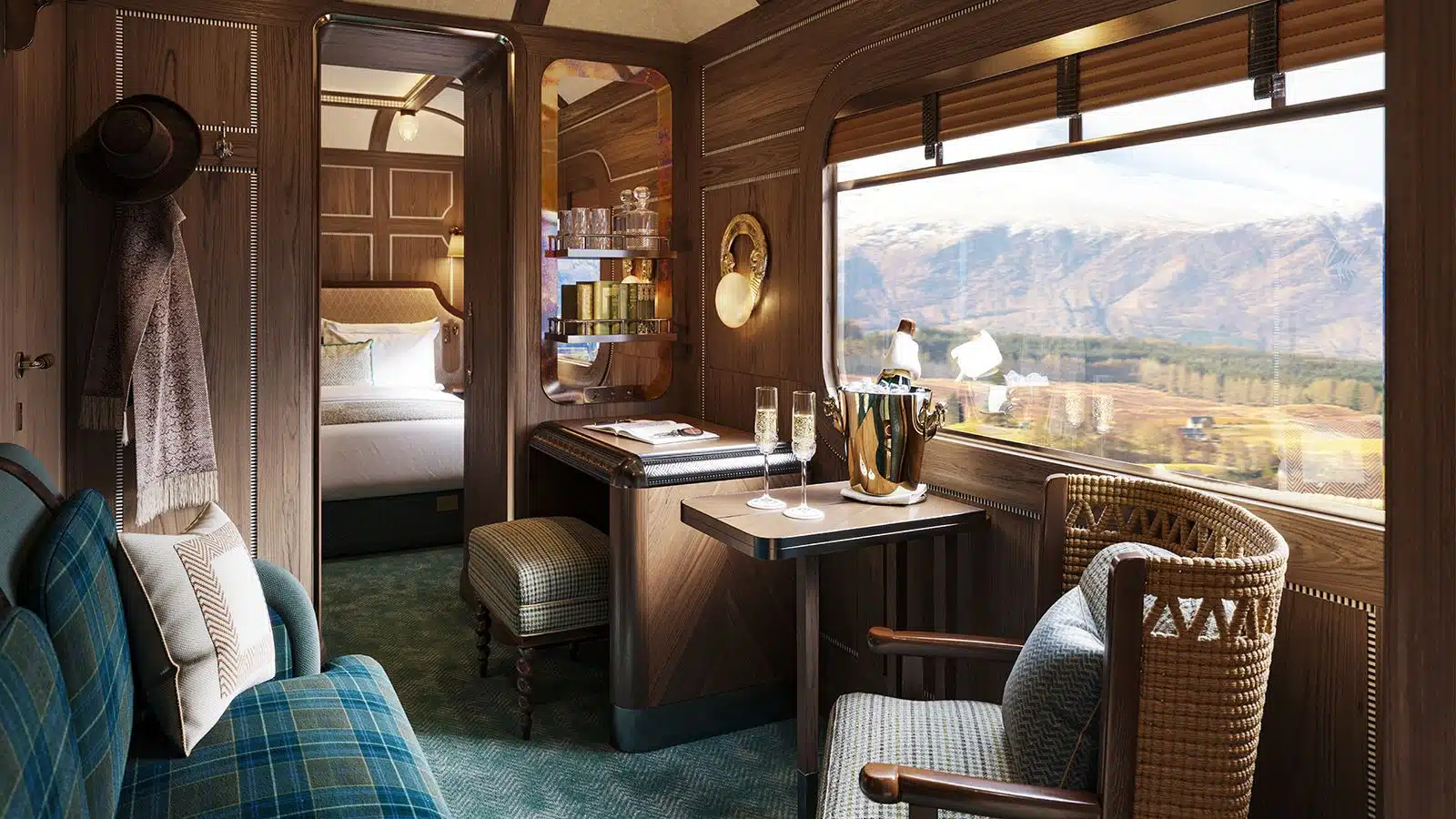
The train carries a maximum of 36 guests across a small number of cabin categories, including twin and double State Rooms and two Observation Cars used for dining and gathering. The ratio of guests to staff is deliberately high, and the programme includes off-train excursions to distilleries, estates, and private landholdings that are not accessible through standard travel.
Hotel pairings at either end of the journey are typically drawn from properties in Edinburgh or the Perthshire countryside. The selection matters: the right pairing extends the logic of the train rather than interrupting it and depends on which itinerary is chosen and the time of year. This is where speaking with a specialist earns its keep, since the right pairing isn’t always the obvious one.
Switzerland: The Glacier Express and the Art of the Alpine Crossing
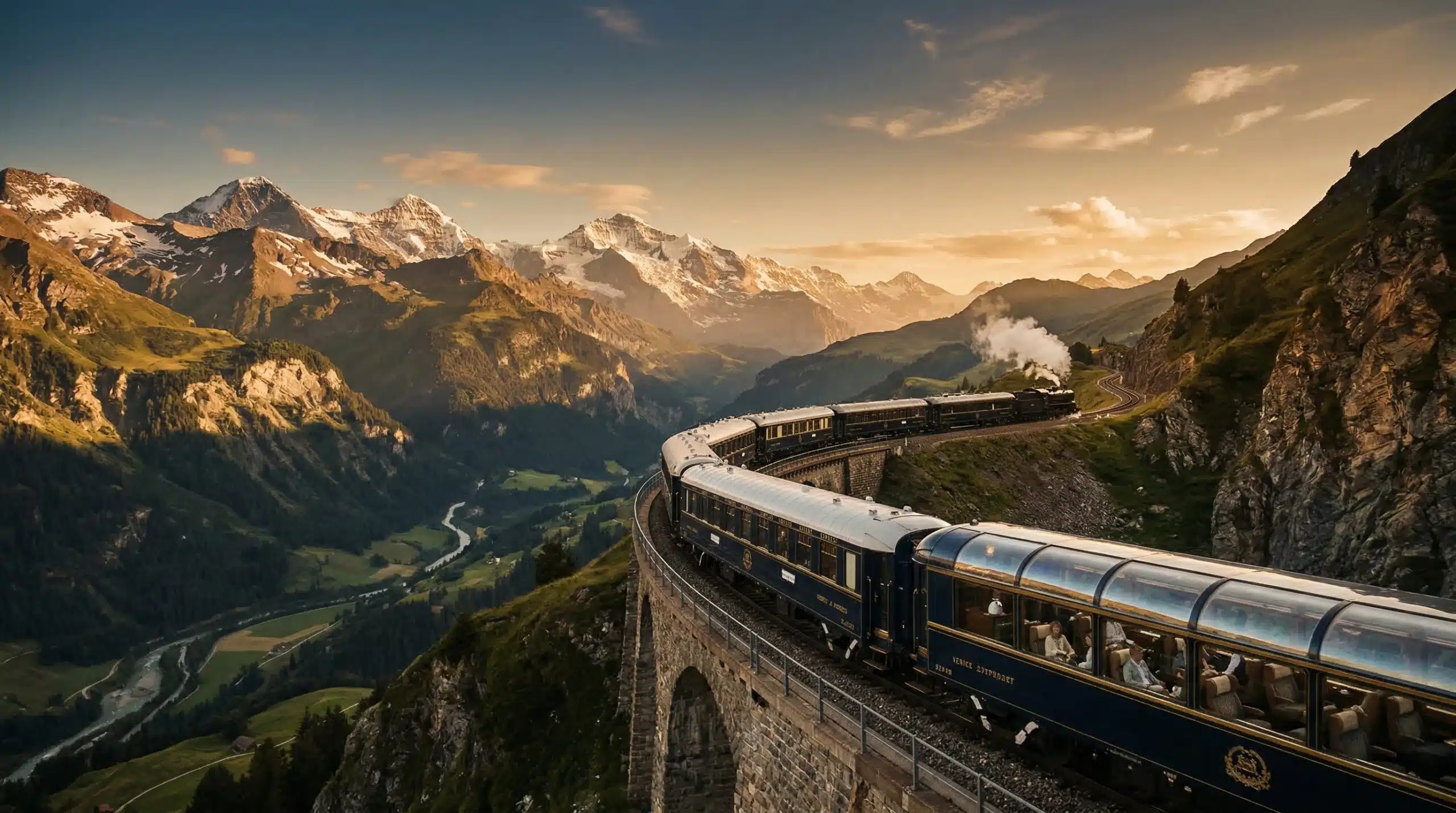
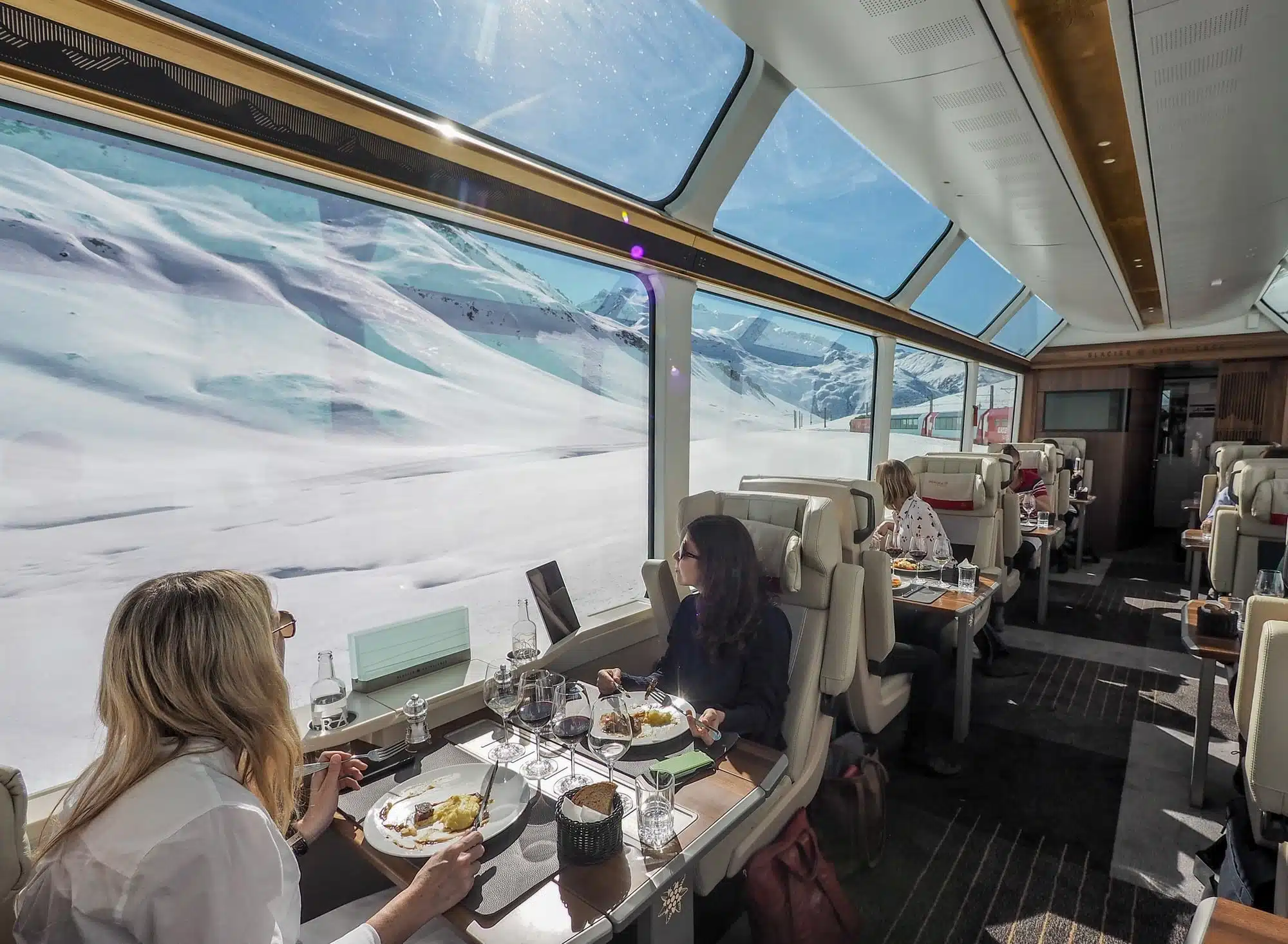
The Glacier Express connects Zermatt and St. Moritz across 291 kilometers of alpine terrain, passing through 91 tunnels and over 291 bridges in approximately eight hours. The route crosses the Oberalp Pass at 2,033 meters, making it one of the highest rail crossings in Switzerland. Panoramic carriages with oversized windows are designed specifically for the landscape, which shifts from the Matterhorn’s southern approaches to the Engadine Valley as the journey progresses.
The pacing of the crossing suits a honeymoon itinerary precisely because it resists compression. There is no meaningful shortcut between the two termini, and the route is the point.
Zermatt is car-free, which shapes the character of a stay there. The Omnia and Mont Cervin Palace both sit within the village and offer direct access to the mountain. In St. Moritz, Badrutt’s Palace has operated since 1896 and remains the reference property for the Engadine, with direct access to the lake and the resort’s ski infrastructure.
South Africa: Rovos Rail and the Journey to the Cape
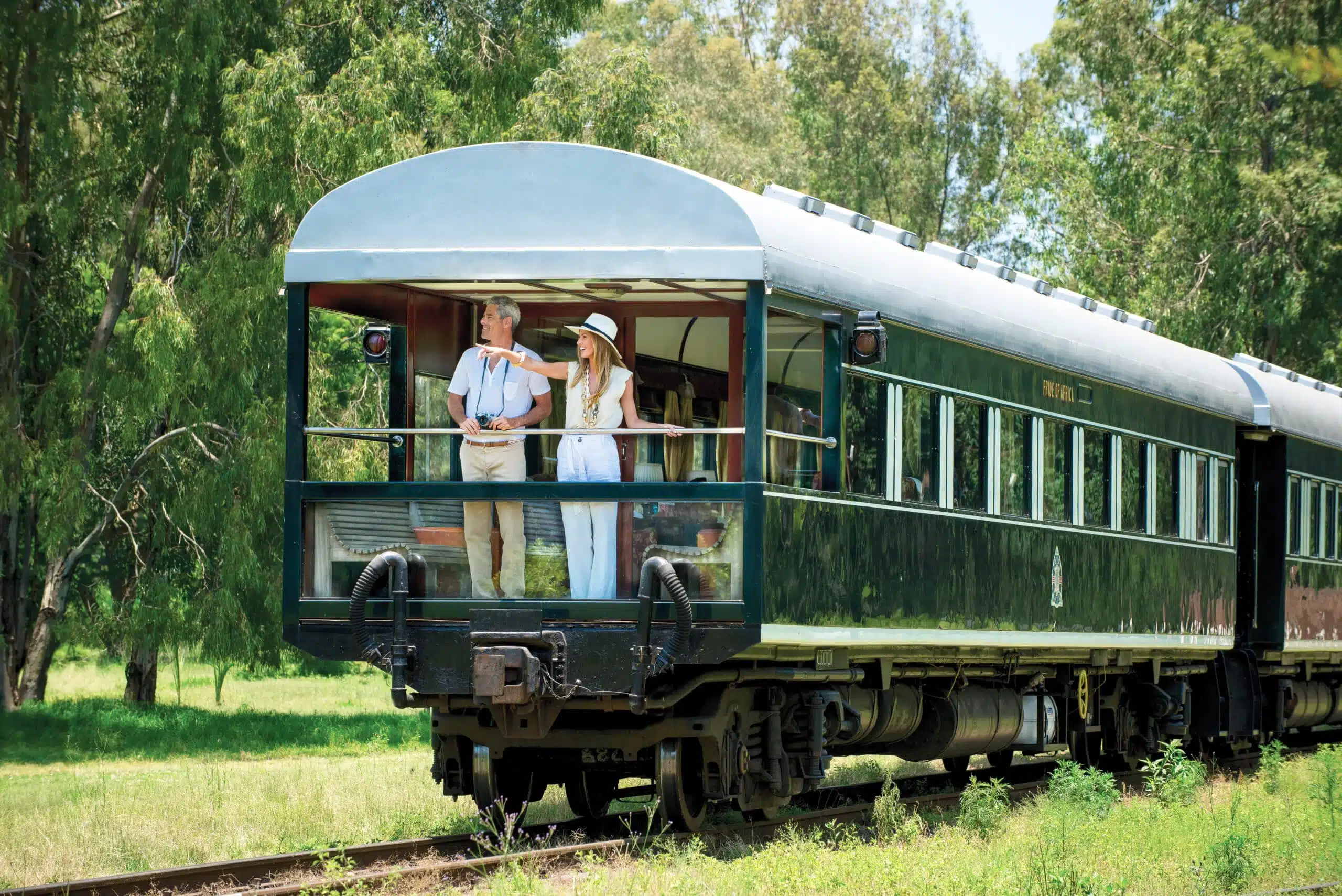
Rovos Rail operates one of the most deliberately paced luxury rail journeys in the world. The Cape Town to Pretoria route covers approximately 1,600 kilometers over two nights, passing through the Hex River Valley, the Karoo, and the Highveld. The train’s Edwardian-era carriages are restored to period specification, with private en-suite compartments and a formal dining car that reflects the operational standards of early twentieth-century rail travel.
The scale of the landscape is a defining feature of the route. The Karoo in particular, a vast semi-arid plateau covering much of the Western and Northern Cape, offers a geographic context that is difficult to access any other way at this pace.
The journey connects naturally to broader South African itineraries. Cape Town and the Winelands provide a logical starting point, while Pretoria offers onward access to Kruger and the private game reserves of Limpopo. Careful planning shapes the sequence, and the quality of the overall itinerary depends significantly on how the connections are structured, another reason it’s worth building this leg with a team that knows the region firsthand.
Southeast Asia: The Eastern & Oriental Express Through the Peninsula
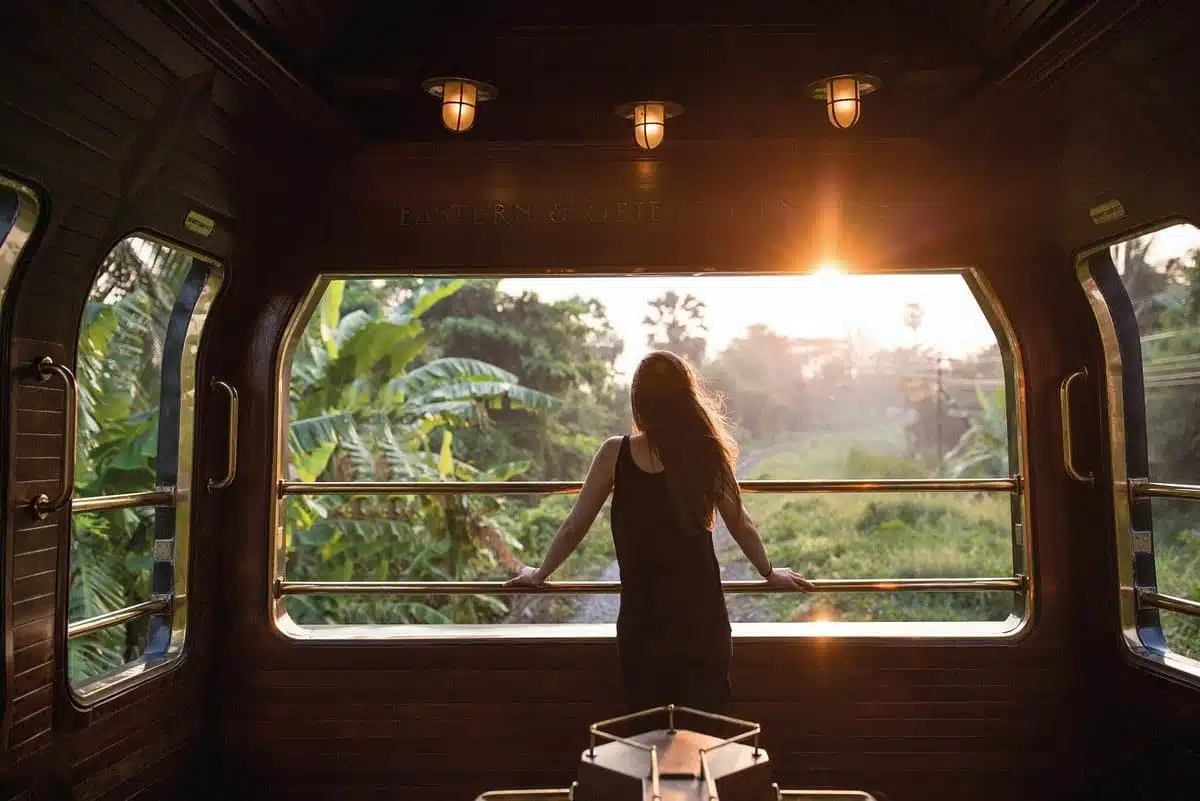
The Eastern & Oriental Express runs between Singapore and Bangkok, covering roughly 1,900 kilometers across the Malay Peninsula over three nights. The route passes through Kuala Lumpur, the Thai border crossing at Padang Besar, and the ancient city of Ayutthaya before reaching Bangkok. Each stop offers structured excursions, giving the journey a defined rhythm rather than continuous transit.
The contrast between Malaysia and Thailand is significant in cultural, architectural, and culinary terms. The train crosses that transition gradually, which is a material difference from flying between the two countries.
Singapore and Bangkok both function as natural anchors for the journey. Singapore is worth extra time before departure, particularly for its colonial-era architecture and concentrated dining culture. Bangkok, approached by rail through the outskirts of the city, offers a different entry point than its international airport. The hotels chosen to frame each end of the journey are as consequential as the train itself, and pairing all the elements requires careful coordination.
How to Plan a Rail Honeymoon That Holds Together
The difference between a rail honeymoon that works and one that doesn’t is usually sequencing. Each of these romantic train journeys has its own rhythm, duration, and arrival logic, and the hotels that sit alongside them need to be chosen accordingly. A property that makes sense after a long overnight crossing may be wrong after a short afternoon run. Getting this right requires knowledge of how individual routes operate, not just where they go.
Pacing matters as much as selection. Building in time to settle between journeys, rather than treating each leg as a transfer, is what separates a well-planned itinerary from a series of bookings that happen to involve trains. Some routes justify a longer stay at either end; others are best positioned mid-journey as a natural break.
These itineraries also depend on access that isn’t straightforwardly available. Certain carriages, departure dates, and hotel combinations are held within specialist allocations, and the quality of what’s arranged reflects the relationships travel experts bring to it. It’s worth having one on your side before you book.
Plan your own version of this journey
Speak to Do Not Disturb’s luxury travel experts and turn this moment into something personal.
Suggested articles

How to Choose the Right Maldives Resort For You

How to Choose a Family-Friendly Maldives Resort
Maldives Villa Guide: Beach vs. Overwater
The Cost of All-Inclusive in the Maldives: Is It Worth It?

Seaplane, Speedboat or Domestic Flight? Maldives Transfers Explained

Multi-Destination Honeymoons: The Best Pairings for Two Distinct Locations

Where to Go On Honeymoon? A Guide to Help You Choose

Beyond the Maldives: Seven Islands for a Different Kind of Honeymoon

Wilderness to Waves: Luxury Honeymoons in Kenya

Luxury Safaris: Why Laikipia Is Kenya’s Best-Kept Secret
Positano vs Ravello: Where to Stay on the Amalfi Coast

Chianti’s Luxury Villas: Stay Like a Renaissance Noble

Romantic Florence: The Ideal Italian Honeymoon