
On this page
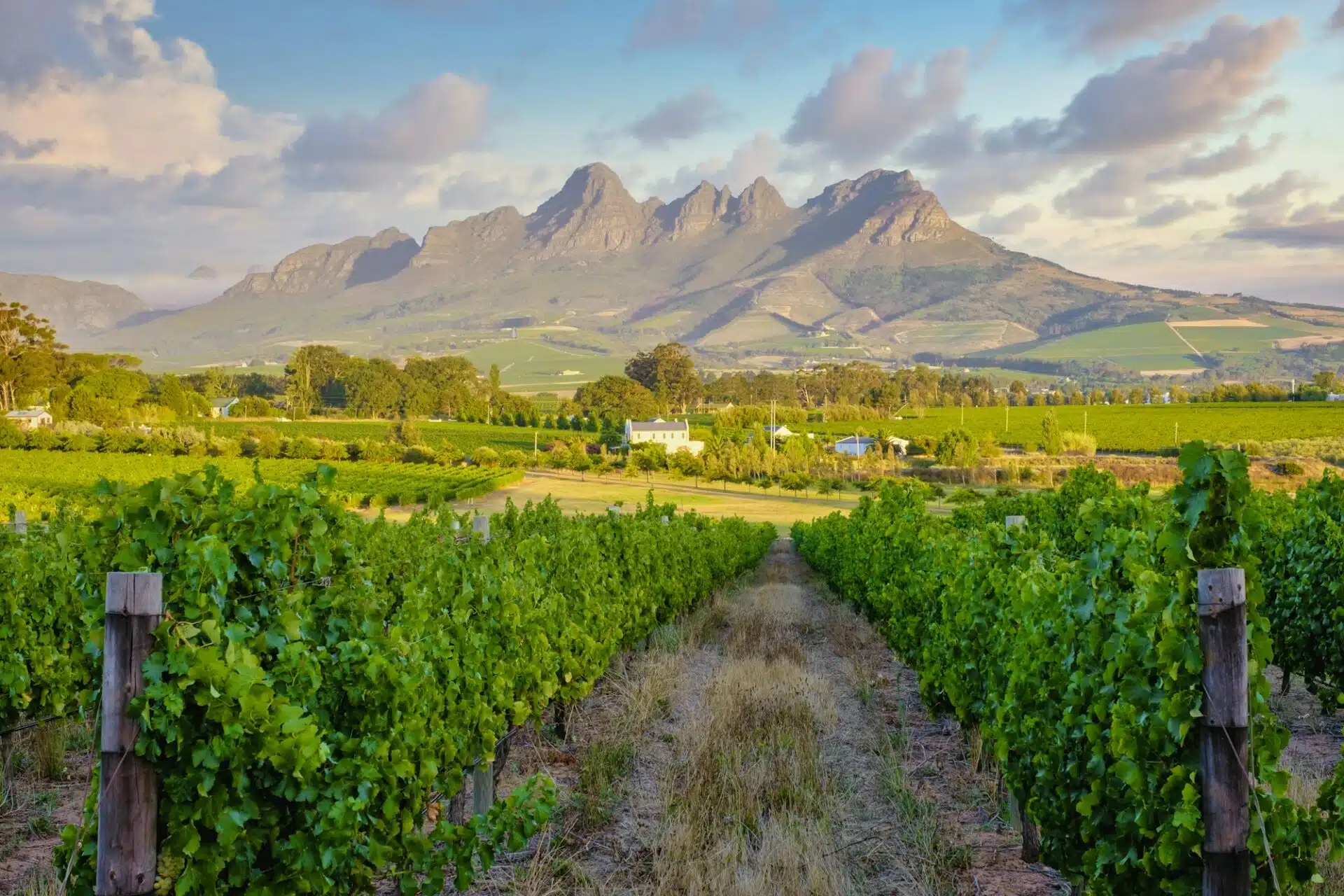
The Cape Winelands offer two distinct bases for a luxury stay, and the choice between Stellenbosch and Franschhoek shapes the character of the whole trip. Both towns deliver serious wine, serious restaurants, and exceptional hotels, but they arrive at that reputation from very different starting points.
First Impressions: Atmosphere and Scale
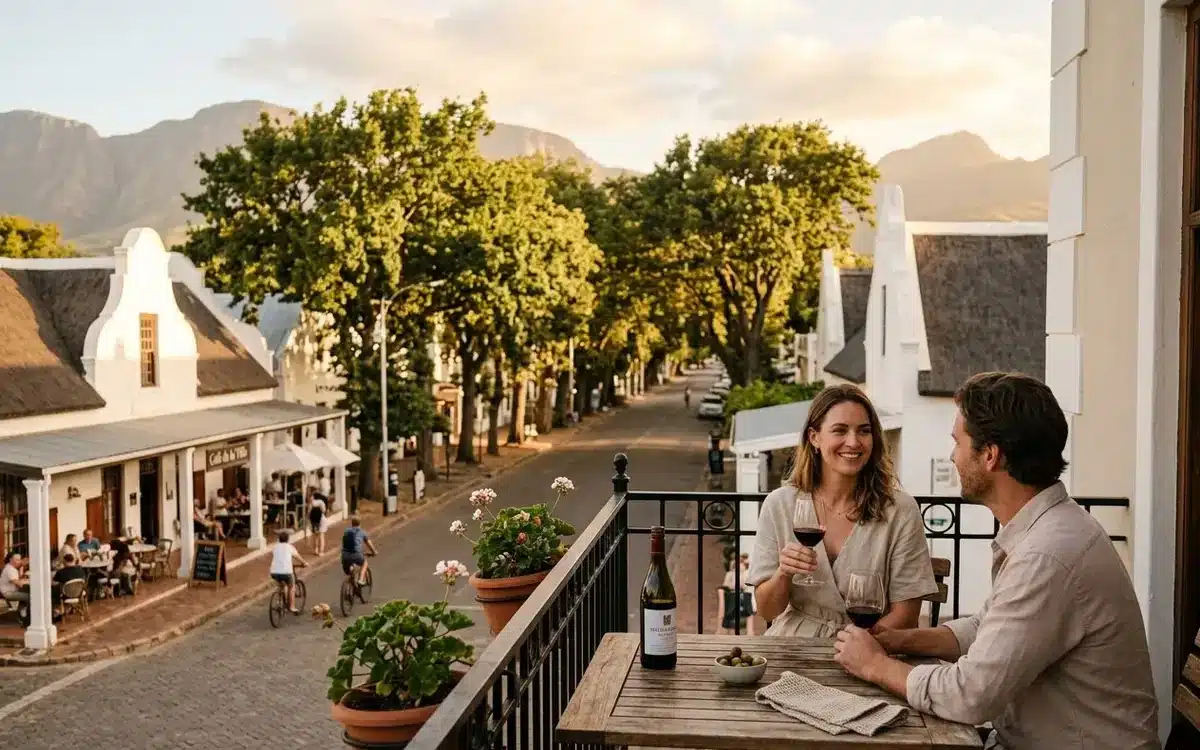
Stellenbosch is South Africa’s second-oldest town, founded in 1679 by the Cape’s then governor, Simon van der Stel, and it feels like a real town rather than a curated village. Oak-lined streets, which earned it the nickname Eikestad, or City of Oaks, run past well-preserved Cape Dutch architecture, and Stellenbosch University gives the place a working, lived-in energy: galleries, independent shops, and a steady student population sit alongside the wine estates.
Franschhoek is smaller and quieter from the first turn into town. Founded in 1688 by French Huguenot refugees fleeing religious persecution, it takes its name, meaning French corner, directly from that history, and the Huguenot Monument and Museum remain its clearest link to it. Where Stellenbosch spreads out, Franschhoek concentrates: one compact main street, mountains close on both sides, and a pace built for lingering rather than covering ground.
The Drive from Cape Town and Getting Around
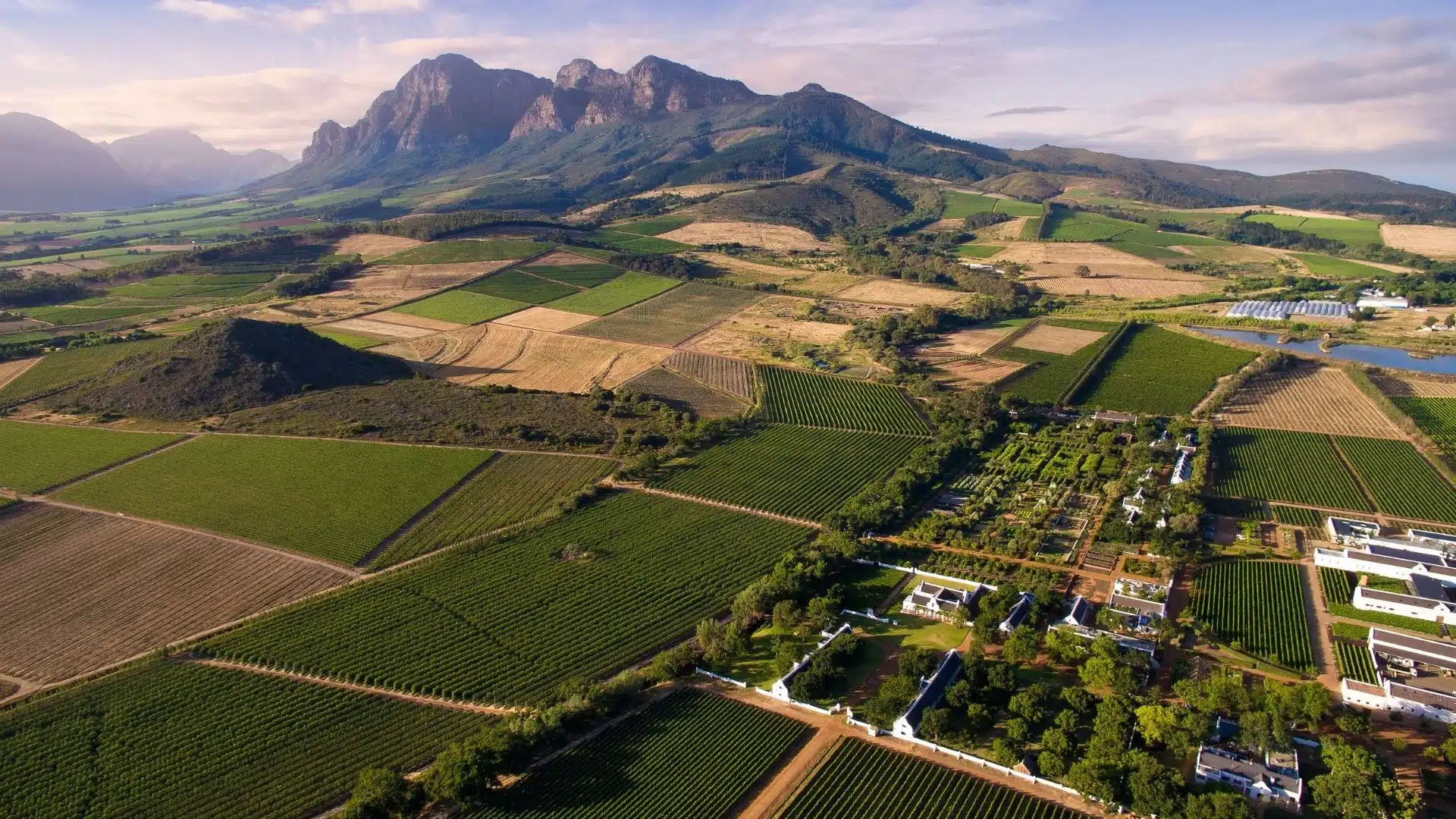
Both towns sit roughly 45 minutes from Cape Town, though the routes and the experience once you arrive differ. Stellenbosch’s size means a car, or at least reliable transfers between estates, makes the most of a stay: the wine farms and hotels spread across a wider area, and having a driver frees travellers to taste properly rather than pace themselves.
Franschhoek rewards travellers on foot. The main street and its surrounding wine estates sit close enough together that a stay here can be genuinely walkable, with a driver reserved for estates slightly further out along the valley. It is the easier town to explore without a car for most of a visit.
Vineyard Access and Wine Culture
Stellenbosch anchors one of the country’s densest concentrations of wine estates, spanning centuries-old farms alongside newer, design-led properties. The culture here leans towards the formal cellar tour and tasting room, with scale to match: travellers can move between old-guard producers and contemporary newcomers in the same afternoon.
Franschhoek’s wine culture is smaller and more intimate, built around boutique cellars and a strong emphasis on pairing wine with food rather than treating tastings as a standalone activity. Its Cap Classique producers, several clustered within a short drive of each other, have made it a particular draw for travellers interested in South African sparkling wine.
Restaurants and the Dining Landscape
Franschhoek is widely regarded as South Africa’s food and wine capital, and its main street concentrates an unusually high number of the country’s top-rated restaurants within walking distance of one another. Dinner here is rarely an afterthought to the day’s tastings. It is the day’s main event.
Stellenbosch’s dining scene is broader rather than more concentrated, ranging from casual, student-frequented spots to serious fine dining, spread across a much larger footprint. Travellers get more variety day to day, though less of the walkable, evening-long dining experience that defines Franschhoek.
Where to Stay: Luxury Hotels and Estate Accommodation
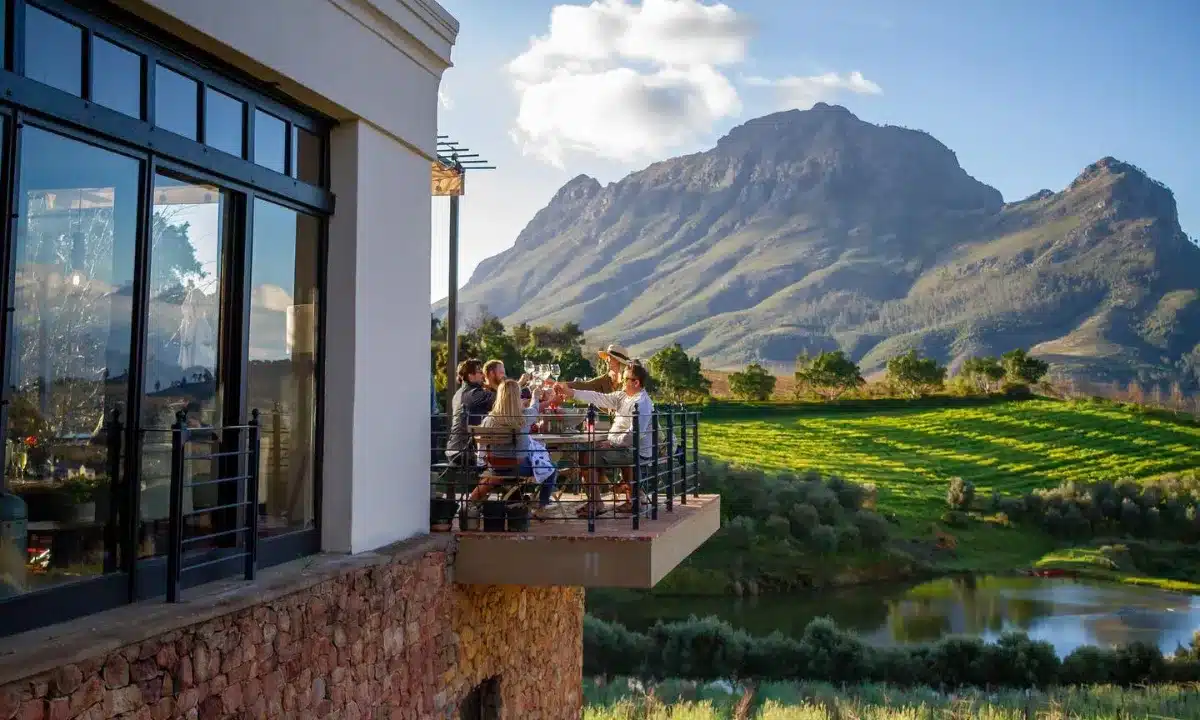
Stellenbosch’s size gives it the wider range of hotels: historic manor houses, contemporary boutique properties, and estate accommodation attached to working wine farms, all within easy reach of the town centre. It suits travellers who want a base with genuine variety.
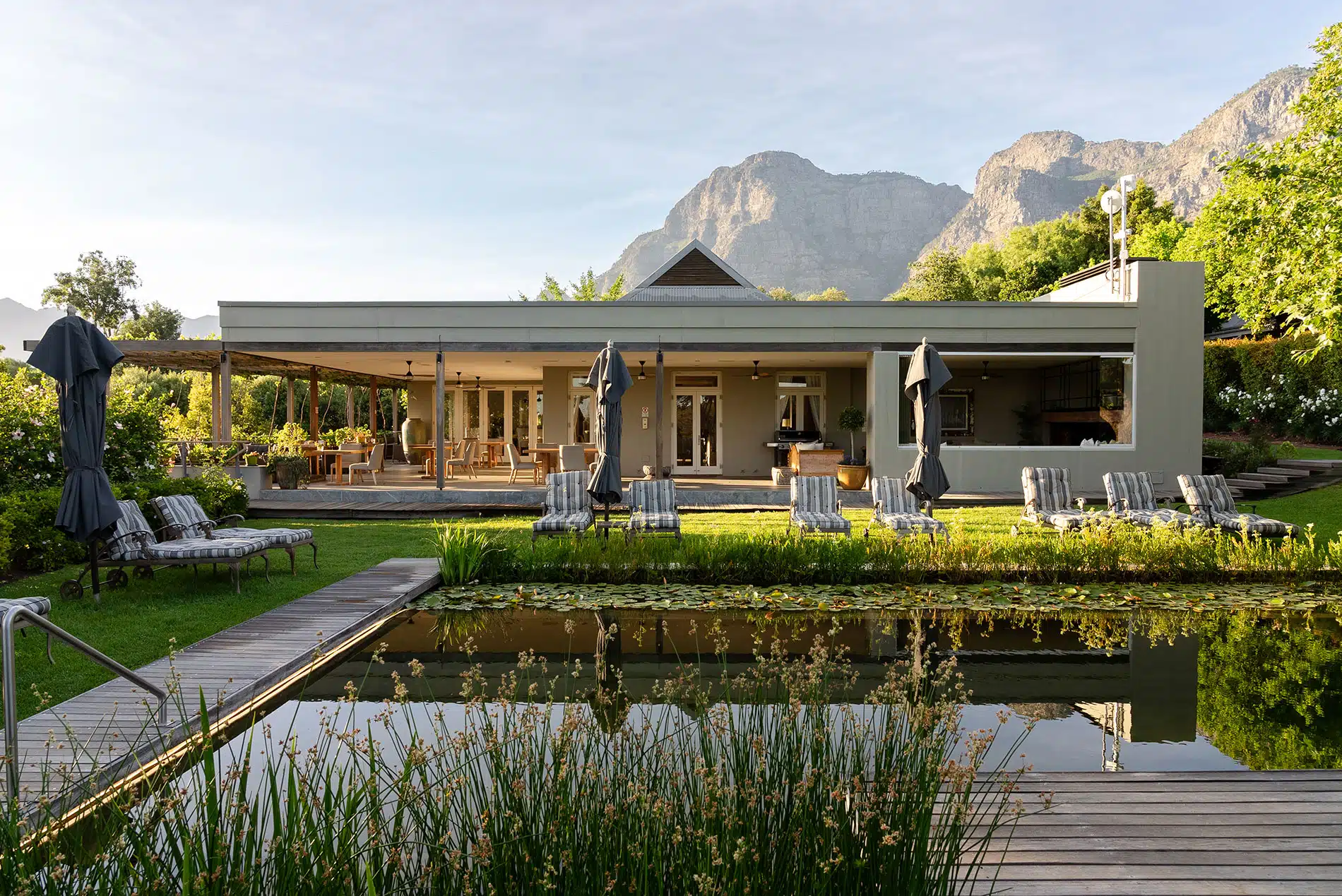
Franschhoek’s hotels and guesthouses are fewer in number but distinctly intimate, most set directly among vineyards a short walk or drive from the village centre. The scale favours quiet, personal stays over larger, amenity-heavy properties.
Which Town Suits Your Trip
Neither town is the better choice in the abstract. Stellenbosch fits travellers who want range: a bigger town, a wider spread of hotels and estates, and a natural link to the rest of a Cape Town itinerary. Franschhoek fits travellers who want depth: a smaller, quieter village where the days are built around exceptional meals and tastings. Many of the itineraries we build for the Cape Winelands split time between the two, using Stellenbosch as the base for exploring and Franschhoek for a slower final stretch.
Whether Stellenbosch’s range or Franschhoek’s focus sounds more like your trip, Do Not Disturb’s specialists can build the stay around it, split between both, or shaped around whichever suits you best.