On this page
Japan gives you a range of hotel choices that few countries match. A traditional ryokan and an international luxury hotel share little beyond a roof, each suiting a different kind of traveller and, often, a different stretch of the same trip.
What a Ryokan Offers
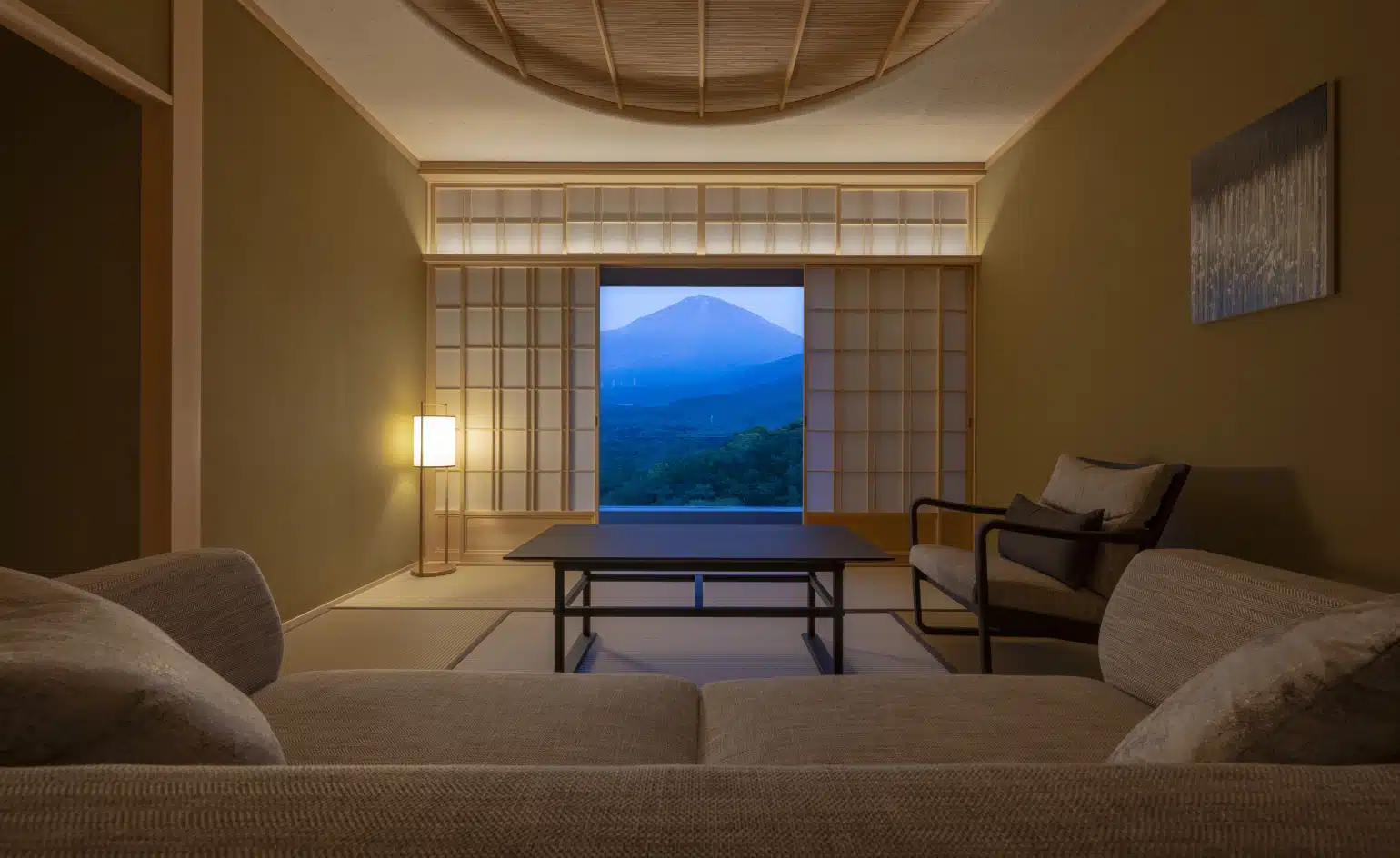
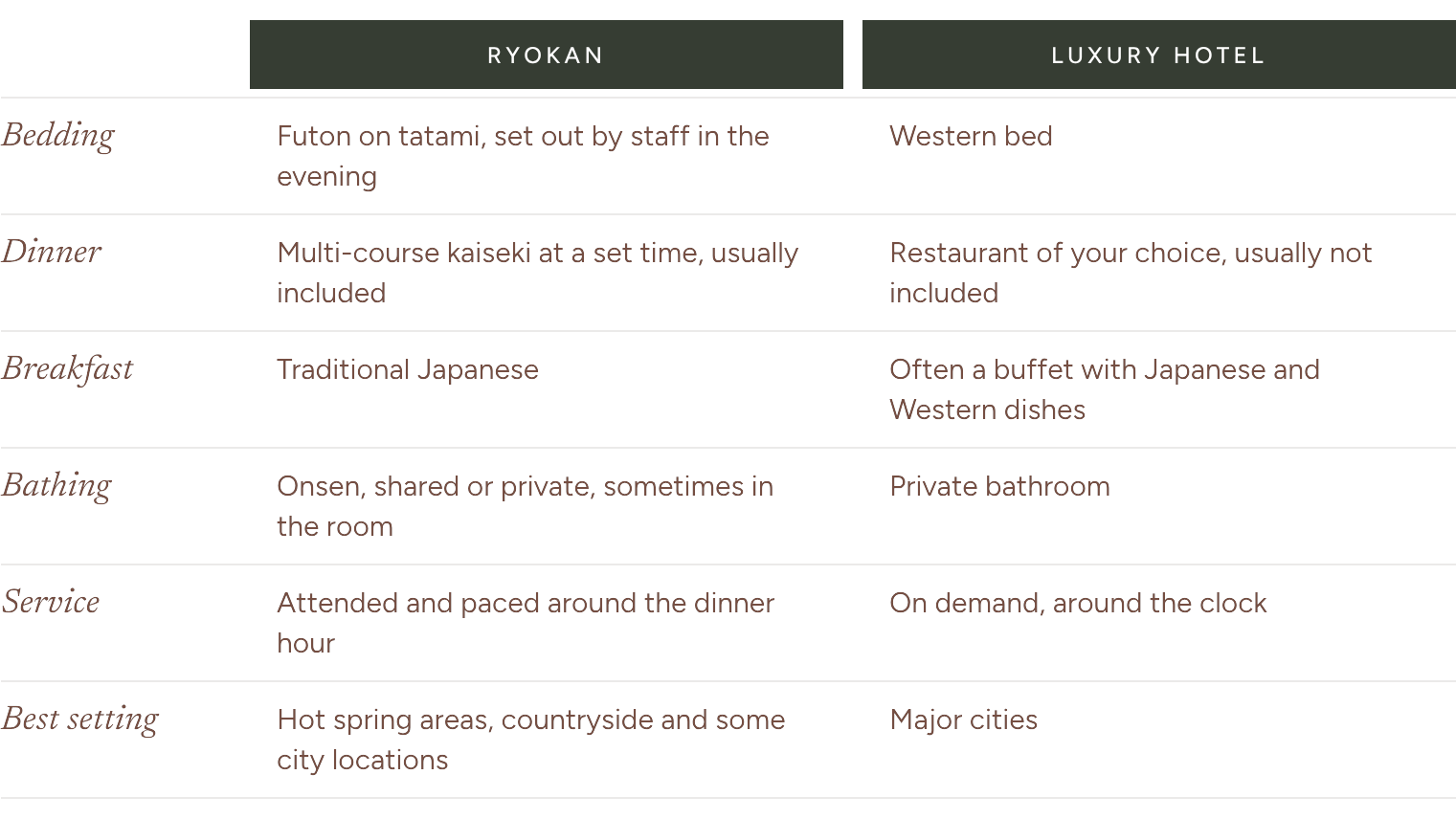
A ryokan is a traditional Japanese inn, and the stay is built around a rhythm rather than a room. You remove your shoes at the entrance, change into a yukata and slippers, and settle into a tatami room furnished with a low table and little else. While you are at dinner, staff lay out futon bedding on the floor, a mattress with sheets and a thick duvet that many travellers find more comfortable than they expect.
Dinner anchors the evening. It is a kaiseki meal, a multi-course menu built on seasonal, local ingredients, and it is often served in your room or in a private dining space. Breakfast follows the Japanese tradition of rice, miso soup, grilled fish, and pickles. Both meals are typically included in the rate, though some ryokan offer room-only stays, so it is worth confirming what a booking covers.
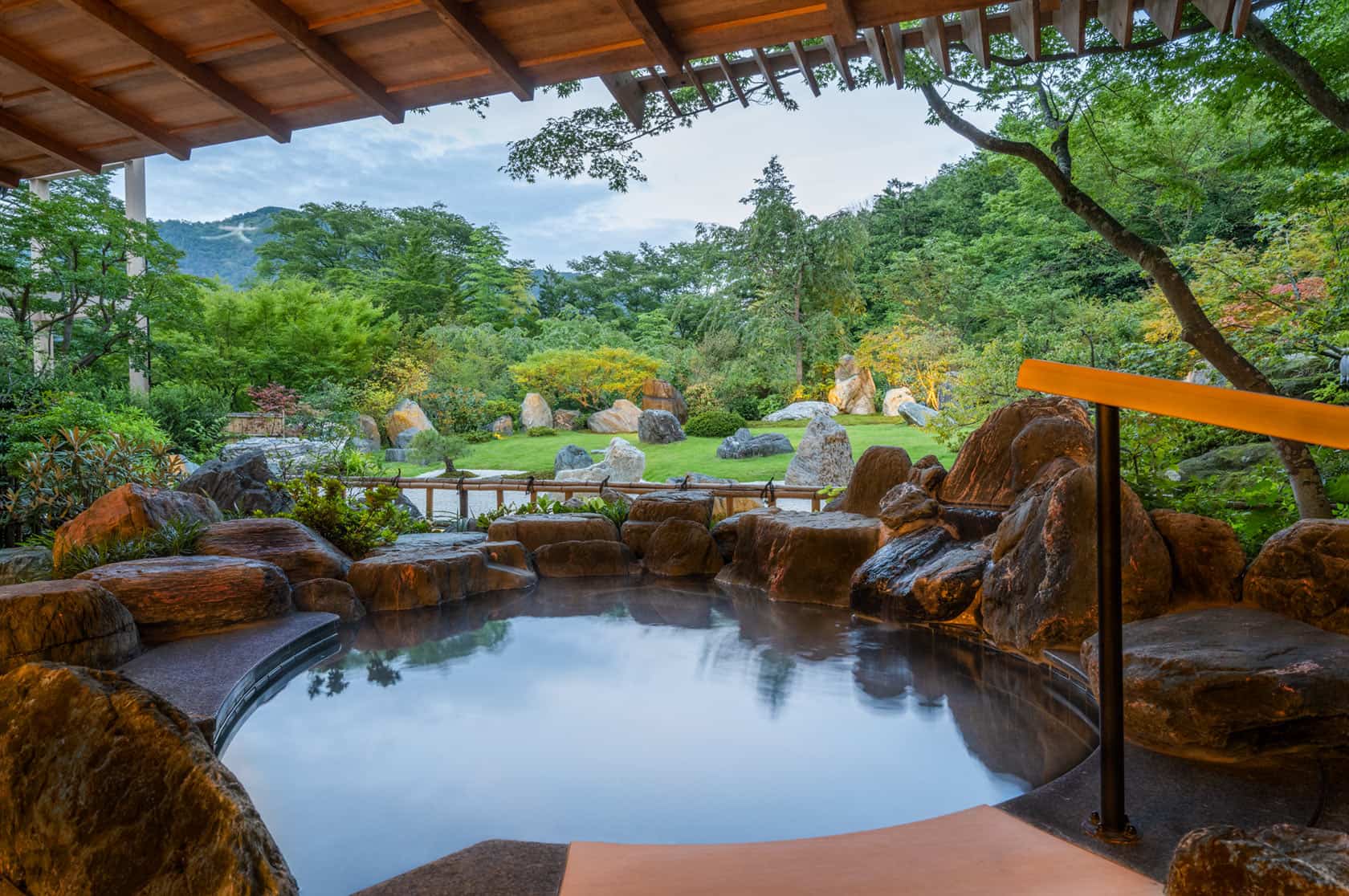
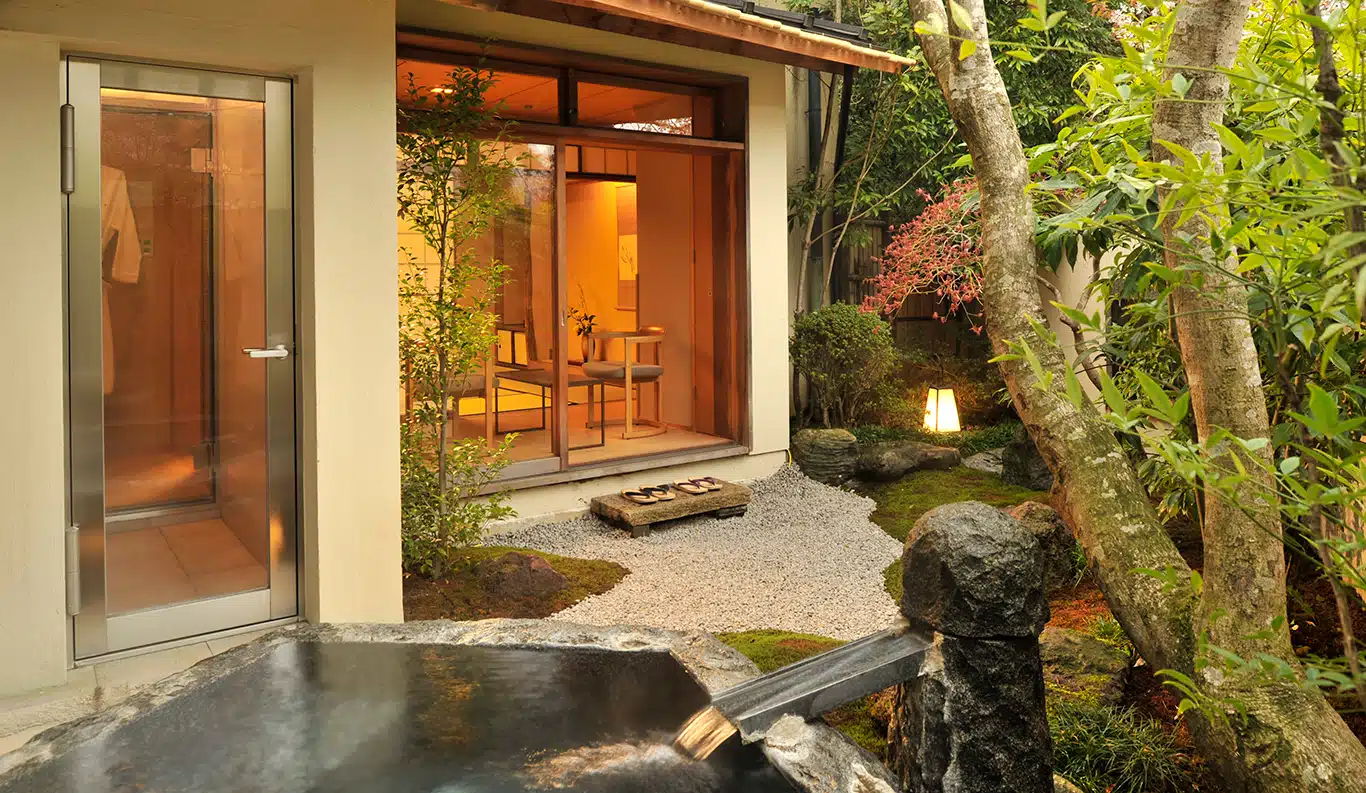
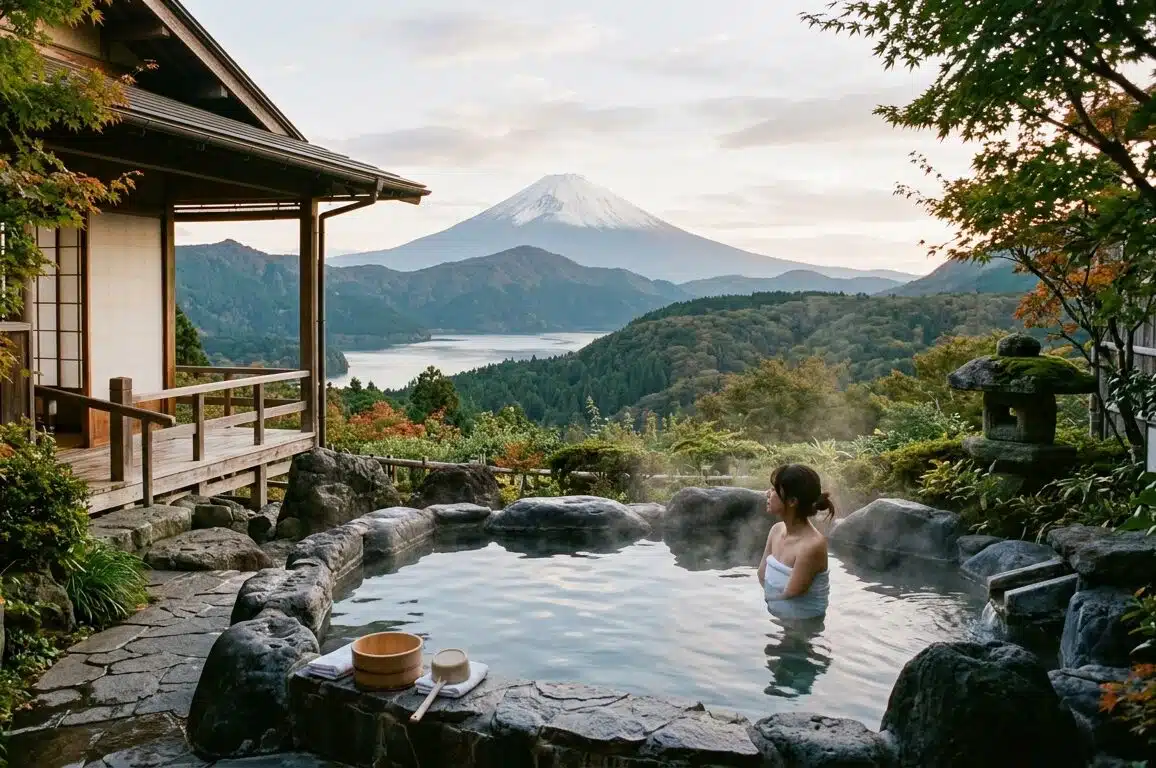
Bathing is the other draw. Many ryokan have onsen, natural hot spring baths, and some offer private baths that are either reserved by the hour or attached to the room.
The schedule is part of the experience. Check-in usually begins around 3 pm, dinner is served at a set time in the early evening, often between 6 and 7 pm, and checkout falls at 10 or 11 am. When dinner is included, arriving by about 5 or 6 pm is advisable, since the kitchen cooks at a fixed time, and a late arrival can mean missing the meal.
What a Luxury Hotel Offers
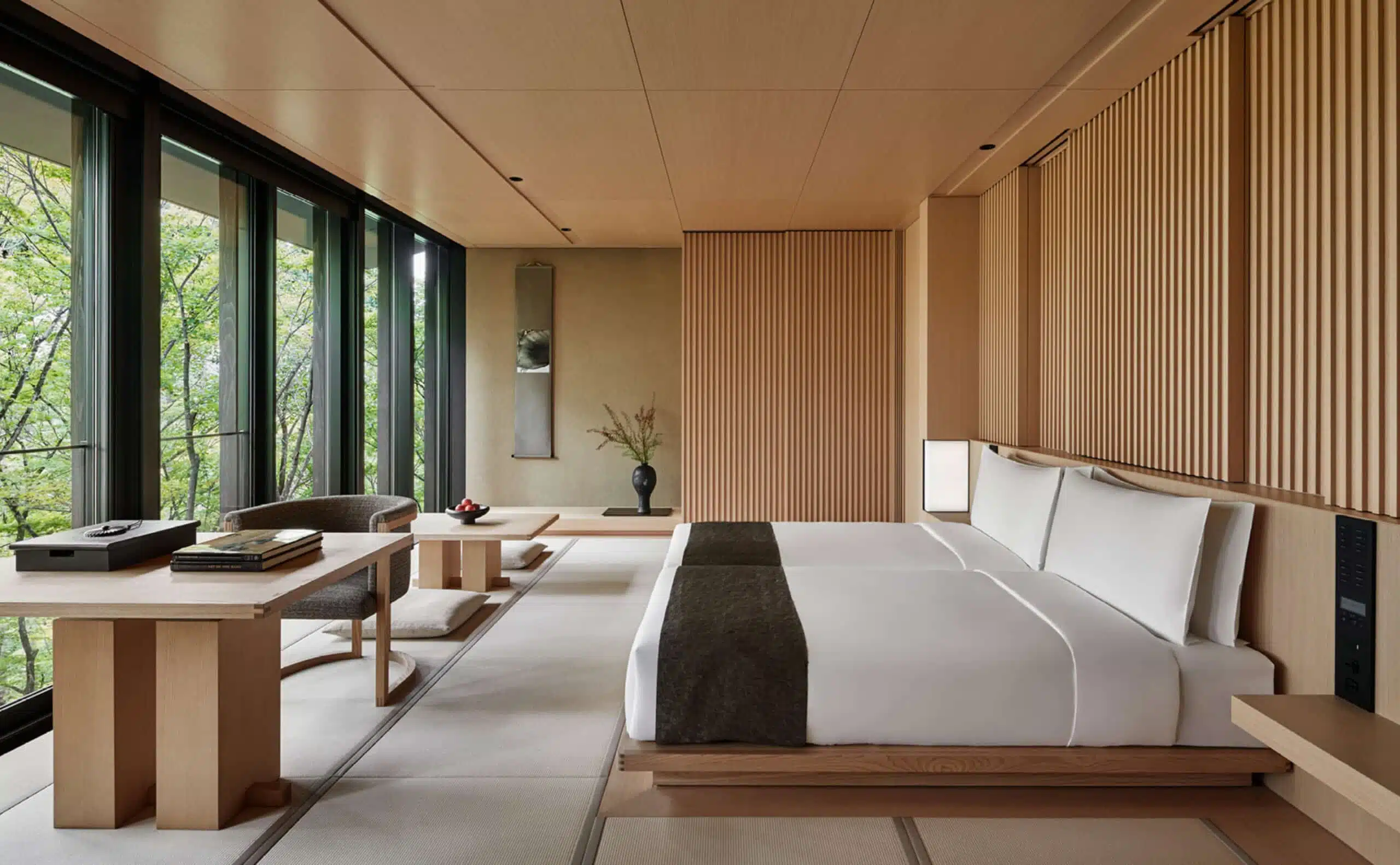
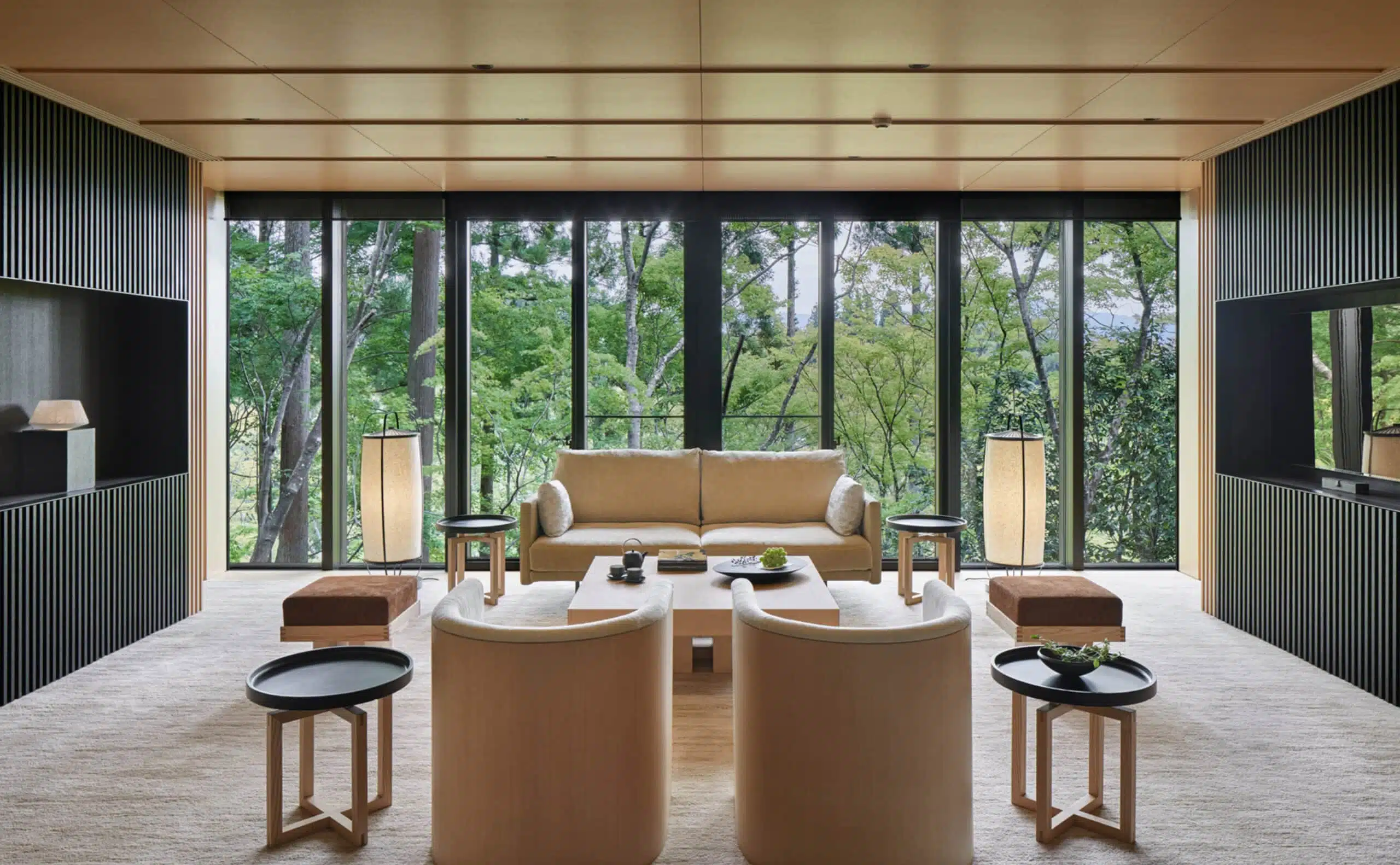
A luxury hotel in Japan works much as it does elsewhere. Rooms have Western beds and private bathrooms, reception is staffed around the clock, and the evening belongs to you. Breakfast is often a buffet with Japanese and Western dishes, and dinner is usually not included, which leaves the night free for a sushi counter or a tempura restaurant of your choosing.
A hotel suits the cities best. In Tokyo and Kyoto it places restaurants, shopping, and neighbourhoods within reach on your own timing, and it absorbs late arrivals and early departures without any rearranging.
Where Each One Works Best
A ryokan belongs in a setting worth lingering in. The hot spring country around Hakone and Mount Fuji suits it well, and the evening has few competing options, which is the point. Many ryokan sit away from the nearest station, and some offer a shuttle, so arrival is worth arranging in advance. Kyoto also has ryokans within the city itself.
A hotel makes more sense where the days are full and the evenings are open. Tokyo is the clearest case, with dinner reservations, shopping, and nightlife all competing for the hours after dark. A ryokan asks for that evening in return for its own, and some lock their doors around 10 pm.
At a Glance
Bathing, and a Note on Tattoos
Onsen etiquette is consistent across Japan. Wash thoroughly before entering the bath, and keep towels out of the water. Policies on tattoos vary from one ryokan to the next, a legacy of the long association between tattoos and organised crime in Japan, and some properties now accept them in the shared baths.
A private bath removes the question, since you bathe alone or with your own party. Travellers with visible tattoos should confirm the policy before booking or request a room with its own bath.
Choosing Between Them
For a first visit built around Tokyo and Kyoto, a luxury hotel is the practical base, and a ryokan works best as a deliberate addition rather than the default.
For travellers drawn to Japan’s traditions or marking an occasion, a ryokan with a private bath offers something no hotel can reproduce. It also asks for a different pace, so it suits a night when you are not arriving off a long flight and are ready to sit down to dinner in the early evening.
Pairing Both
The strongest itineraries often use both. A few nights in a city hotel leave room for restaurants and neighbourhoods, followed by a night or two at a ryokan in the hot spring country around Hakone or in Kyoto. One night captures the format. Two nights leave time for the baths, the setting, and a slower morning.
To experience the difference firsthand, our luxury travel experts recommend Aman Tokyo, a hotel in the city, and Gōra Kadan, a ryokan in the Hakone region.
Do Not Disturb’s Japan specialists shape itineraries around this decision, choosing the region and season for a ryokan stay and pairing it with city hotels that suit the rest of the trip. Let us plan your luxury Japan holiday for you.