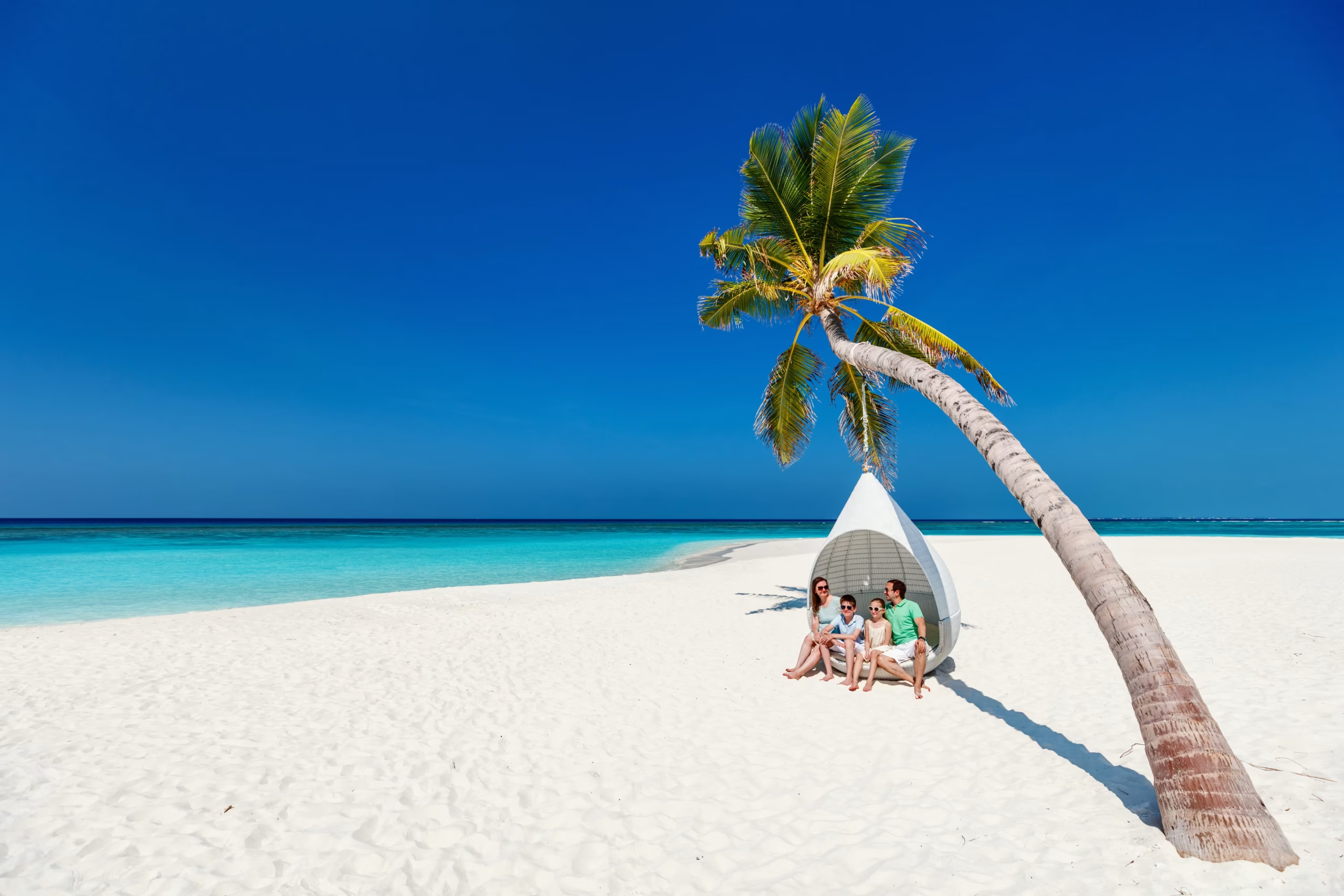


The Maldives delivers on its reputation for seclusion and beauty, but not every resort is built with children in mind. For families, the difference between a seamless holiday and a stressful one comes down to lagoon depth, villa configuration, kids’ programmeming, and a handful of restrictions that most travel guides fail to mention.
Why the Maldives Works for Families: When You Choose Correctly
The Maldives is often positioned as a couples’ destination, and many resorts are designed with exactly that in mind. But a significant number of properties are structured to accommodate families well, with villa configurations that include separate sleeping areas, private pools with controlled depth, and children’s clubs that operate across a full day rather than a few hours.
The criteria that determine suitability are specific. Lagoon conditions vary considerably between atolls and even between neighboring islands. Some house reefs drop sharply close to shore, making them unsuitable for young children. Others offer shallow, protected lagoons extending well into the water, which changes the usability of the beach and the water entirely.
Children’s facilities range from supervised activity programmes with qualified staff to little more than a room with toys. Villa layout, boat transfer times from the airport, and minimum age policies at certain resorts all affect whether a property functions for a family in practice, not just in principle.
About Do Not Disturb
Do Not Disturb is a luxury travel company specializing in carefully designed journeys and considered experiences. Each itinerary we build for our clients is informed by real destination knowledge, offering insight into places, cultures, and moments that shape how a trip comes together.
If this destination has sparked ideas, the itinerary can be developed into a private journey tailored to your interests and travel style, with hand-picked stays, thoughtful routing, and experiences curated around what matters most to you.
The Overwater Villa Problem Families Need to Know About
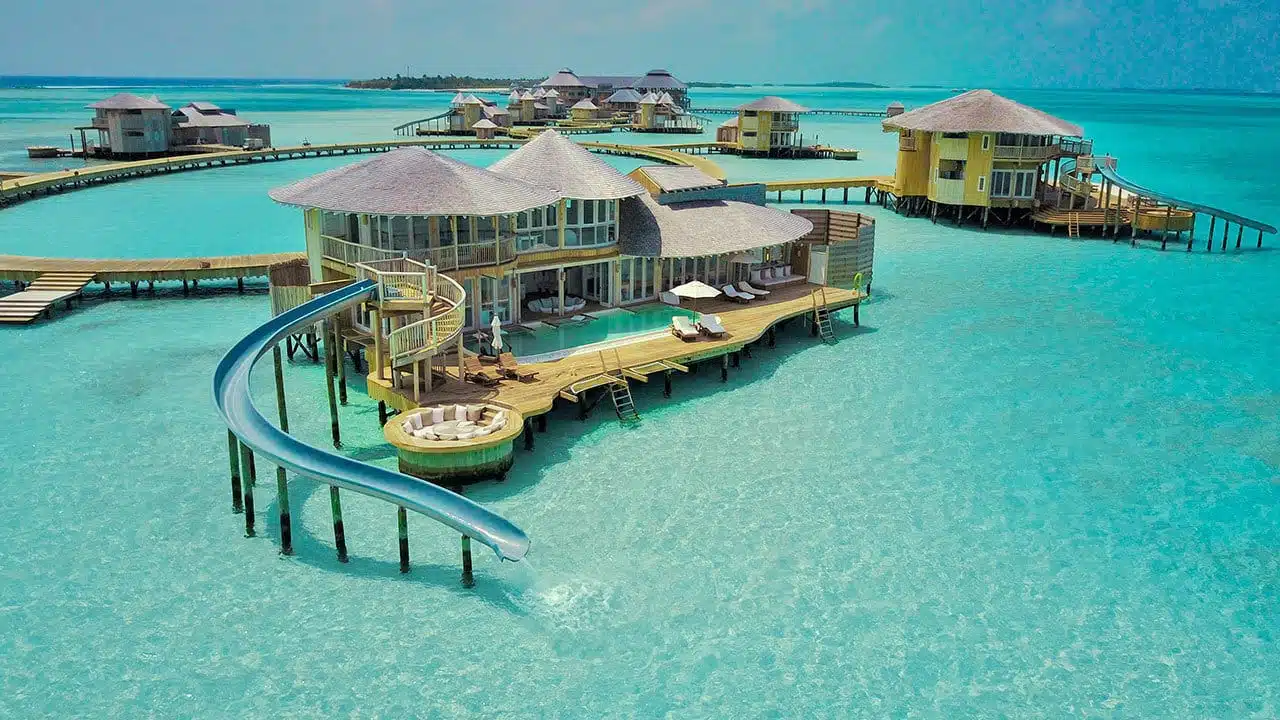
Overwater villas are the defining feature of a Maldives booking for many families, but a significant number of resorts impose age restrictions that prohibit children under 12, and in some cases under 16, from staying in them. The restrictions exist because overwater structures sit directly above open water, with decks and steps that present genuine safety risks for young children. These policies are set at the property level and are not standardized across the industry.
The variation between resorts is considerable. Some properties permit children of any age in overwater villas but require safety nets to be fitted around the deck, which must be requested in advance and are not always guaranteed. Others restrict access entirely, regardless of supervision arrangements or parental consent.
Booking an overwater villa without confirming the applicable policy in advance is a common and costly mistake. Villa eligibility, safety net availability, and any associated conditions need to be verified against the specific property before a reservation is made.
Lagoons, Beach Access, and Where Children Can Actually Swim
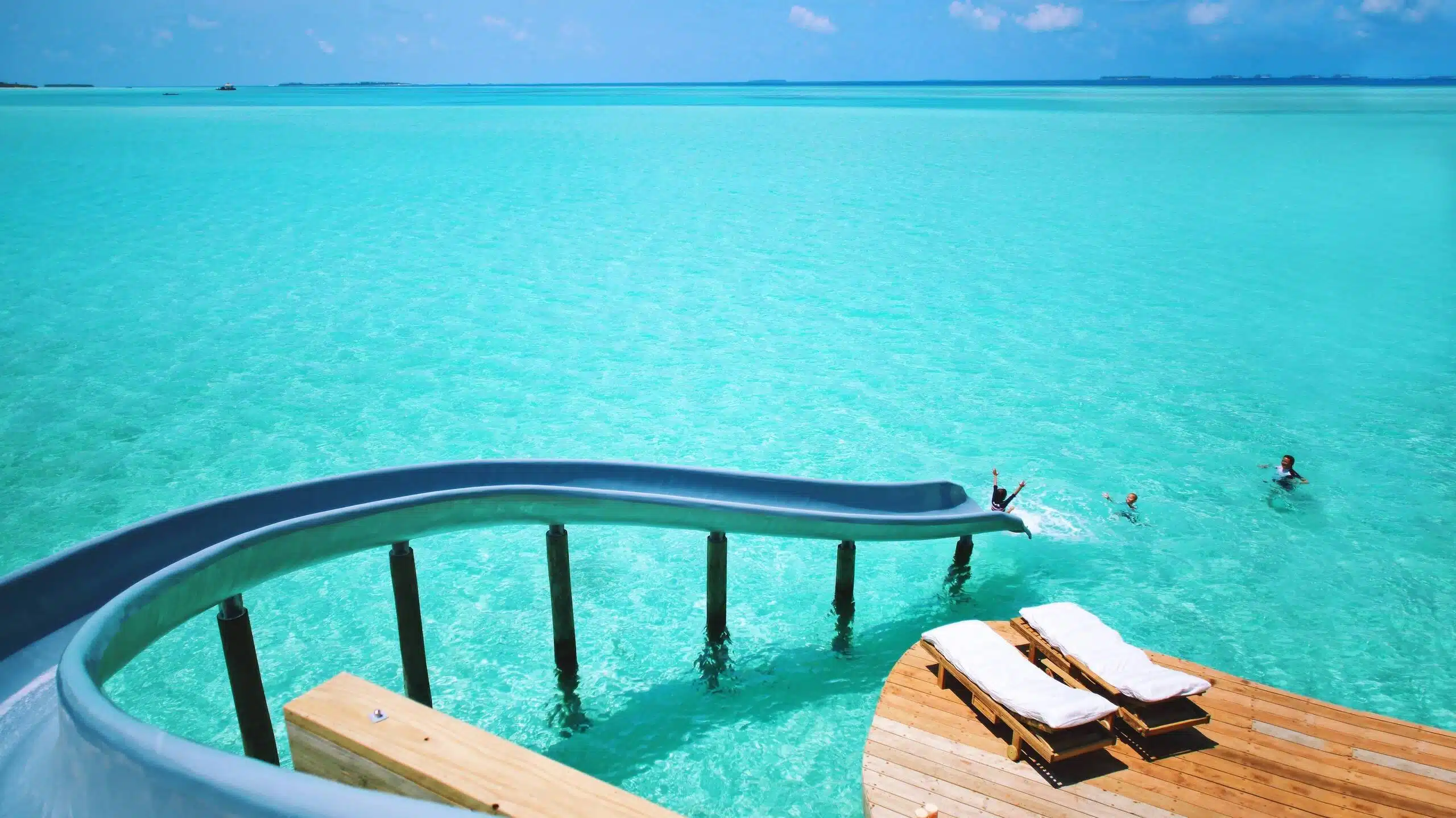
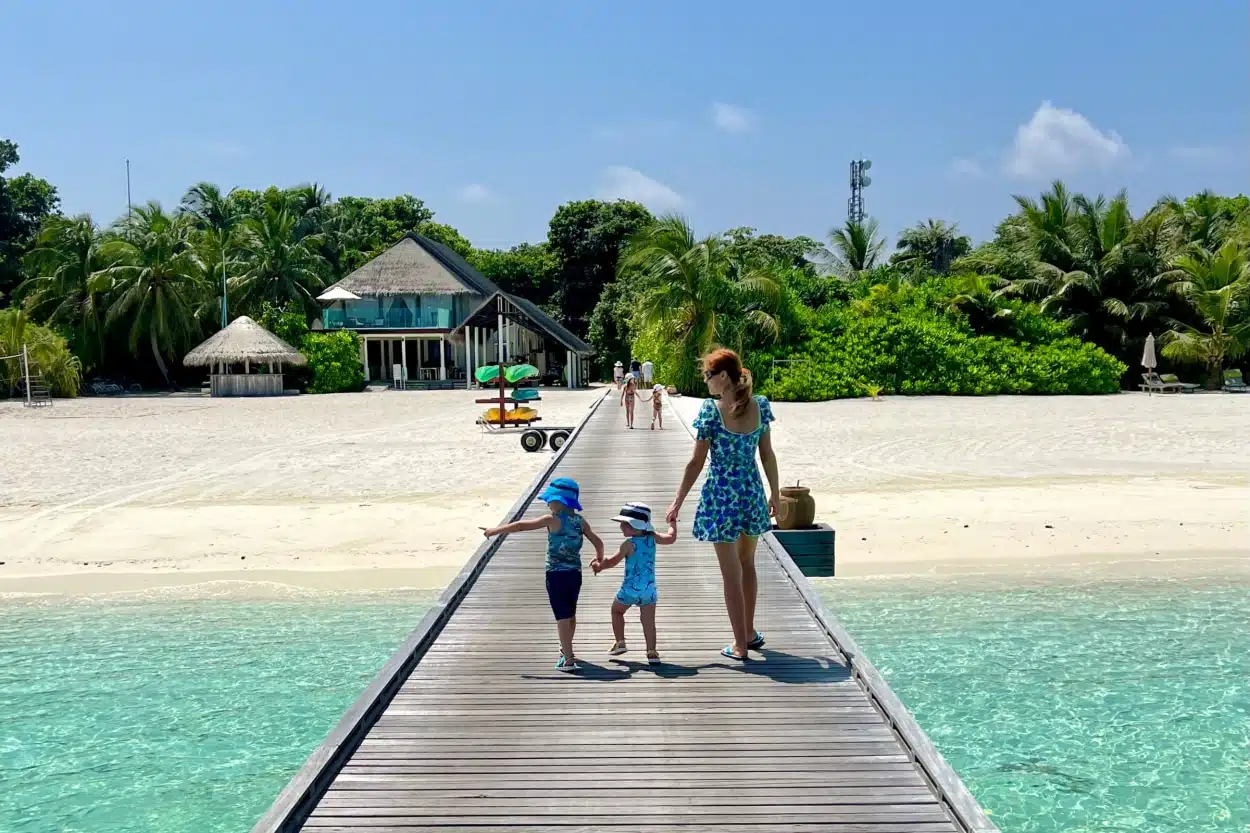
Lagoon depth is one of the most consequential variables for families with young children, and it is rarely disclosed clearly in resort marketing. Properties built on natural sandbanks, such as those in North Malé Atoll, tend to offer shallower, more sheltered lagoons than those positioned on reef edges, where the seabed drops steeply within meters of the shoreline. For children under eight, this distinction is more relevant than villa category or amenity list.
Beach gradient compounds the issue. Some resorts have narrow beaches that give way quickly to deeper water, making unsupervised paddling genuinely hazardous. Others, particularly those on larger natural islands, offer extended tidal flats where water remains ankle to waist depth across a wide area at low tide.
Atoll geography also determines current exposure. Outer atolls, including parts of Baa and Lhaviyani, can experience stronger tidal movement than the more sheltered central atolls, which affects where and when children can safely enter the water regardless of resort infrastructure.
Kids' Clubs and Family Programmeming Worth the Investment
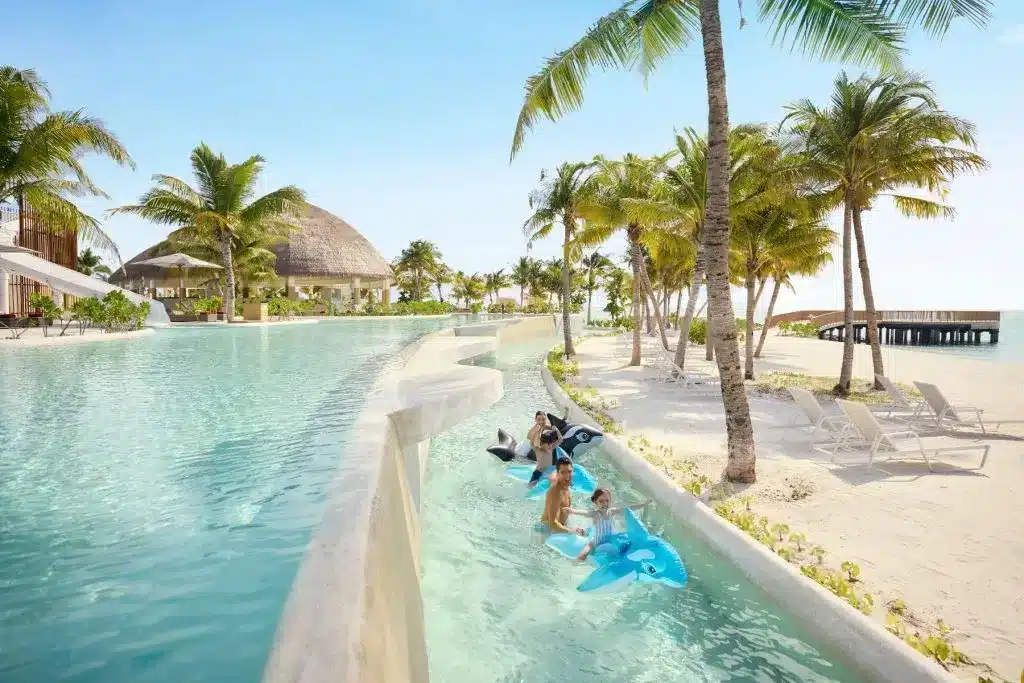
Kids’ clubs in the Maldives vary considerably in structure, staffing, and age coverage. The strongest programmes, found at resorts such as Soneva Fushi and Amilla Maldives, operate across defined age bands with dedicated facilities, trained educators, and scheduled activities that extend beyond supervised play. These include marine biology sessions, cooking classes, and environmental workshops tied to the resort’s conservation work, giving children structured engagement rather than passive entertainment.
Weaker offerings tend to be single-room operations with limited hours, generic activity sheets, and staff who rotate across other resort departments. These are common at resorts that market themselves as family-friendly without investing in dedicated children’s infrastructure. The distinction matters most for families with children under ten, who benefit most from consistent staffing and age-appropriate programmeming.
Teen provision is a separate consideration. Few resorts address this age group with any specificity. Those that do typically offer water sports access, creative workshops, or supervised excursions as structured alternatives to the kids’ club model.
Multi-Bedroom Villas and the Resorts That Get Space Right
Few resorts in the Maldives distinguish between accommodating a family and genuinely housing one. The difference is structural. Certain properties offer multi-bedroom villas where children’s sleeping areas are separated from adult quarters by meaningful distance, not simply a corridor. At some resorts, the larger villa categories include dedicated children’s rooms with independent access, which matters practically when schedules and sleep times differ.
Configuration is as important as scale. A villa with four bedrooms arranged around a single shared living space functions differently from one where the layout allows adults and children to occupy separate zones with distinct outdoor access. The latter is rare, and the resorts that offer it tend to do so across a limited number of units.
Availability of the most functional configurations is consistently constrained, particularly during school holiday periods. The right villa at the right property is not a default outcome: it depends on how the booking is approached and when.
Dining Flexibility and the Resorts That Accommodate Children Well
Dining flexibility varies significantly across family-oriented resorts, and the gap between properties becomes most apparent at mealtimes.
Resorts operating on all-inclusive structures, such as Kandima Maldives and Amari Havodda, remove the friction of per-meal billing and tend to offer extended service windows that accommodate children eating earlier or later than standard sittings. Half-board arrangements at more formal properties can create pressure around timing, particularly for families with young children whose schedules rarely align with fixed restaurant hours.
Children’s menus across the better-positioned resorts go beyond pasta and pizza, with options structured around dietary requirements and portion sizing. Resorts with multiple dining outlets give families the practical advantage of rotating between casual and semi-formal settings without committing to a single venue each evening.
The resorts that handle this best tend to have dedicated family dining coordinators or villa dining options that allow meals to be taken privately, reducing the logistical strain of managing multiple children across a formal restaurant setting.
Plan your own version of this journey
Speak to Do Not Disturb’s luxury travel experts and turn this moment into something personal.
Related destinations
Suggested articles

The Best Honeymoon Destinations for LGBTQ+ Couples

The Most Romantic Train Journeys for a Slow Honeymoon

Where to Go On Honeymoon? A Guide to Help You Choose
Seaplane, Speedboat or Domestic Flight? Maldives Transfers Explained

Multi-Destination Honeymoons: The Best Pairings for Two Distinct Locations
The Cost of All-Inclusive in the Maldives: Is It Worth It?
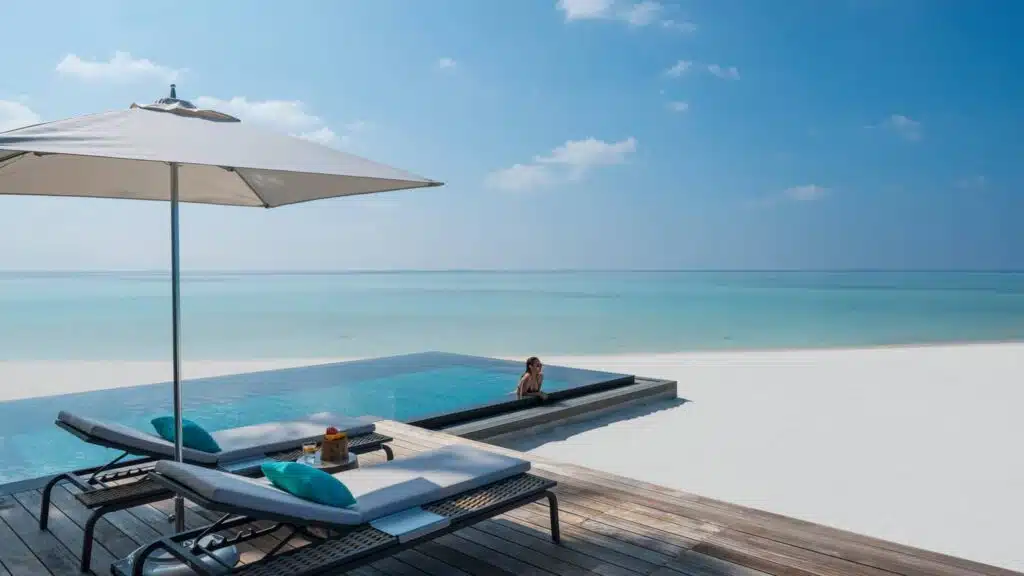
Maldives Villa Guide: Beach vs. Overwater

How to Choose the Right Maldives Resort For You
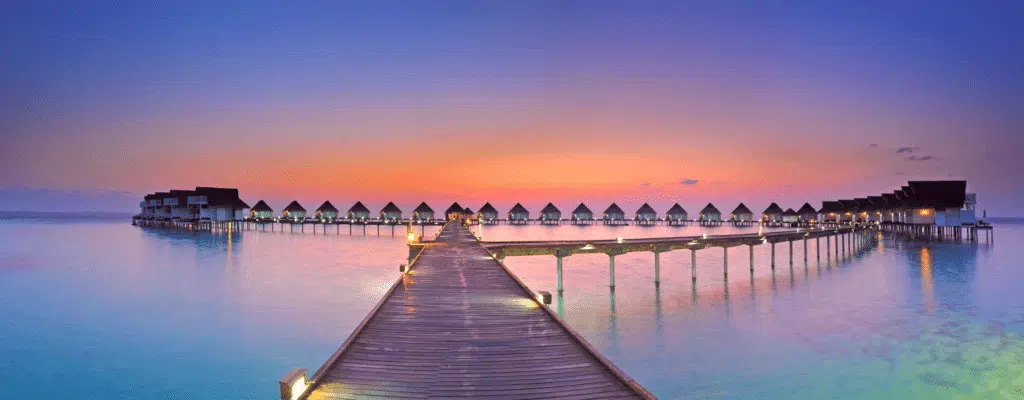
Christmas in the Maldives: What to Expect and is it Worth It

The Best Maldives Resorts for Honeymoons

Maldives vs French Polynesia: Best Honeymoon Destination?

The Maldives Beyond the Villa: Best Activities

Maldives vs Bali for a luxury honeymoon