

On this page
Swedish Lapland sits above the Arctic Circle in a landscape shaped by extreme cold, near-total winter darkness, and one of the lowest population densities in Europe. These are not drawbacks. They are the conditions that make it worth going.
The Arctic Case for Swedish Lapland
Swedish Lapland occupies the northernmost fifth of Sweden, extending well above the Arctic Circle to latitudes where winter dominates for the better part of six months. The travel window runs from November through March, when temperatures regularly fall below minus 20 degrees Celsius and daylight reduces to a few hours or disappears entirely. These conditions are not incidental; they are the basis for the region’s most significant experiences, from dog sledding on frozen river systems to observing the northern lights under dark skies.
What separates Swedish Lapland from other Arctic destinations is the combination of wilderness scale and functional infrastructure. Kiruna, the region’s main hub, is served by direct flights from Stockholm, placing travellers within reach of remote terrain without requiring multi-stage expedition logistics. The region also has a longer tradition of structured wilderness tourism than comparable destinations in northern Norway or Finnish Lapland, which is reflected in the depth and consistency of what is available here.

Where to Stay: Wilderness Lodges and Luxury Hotels
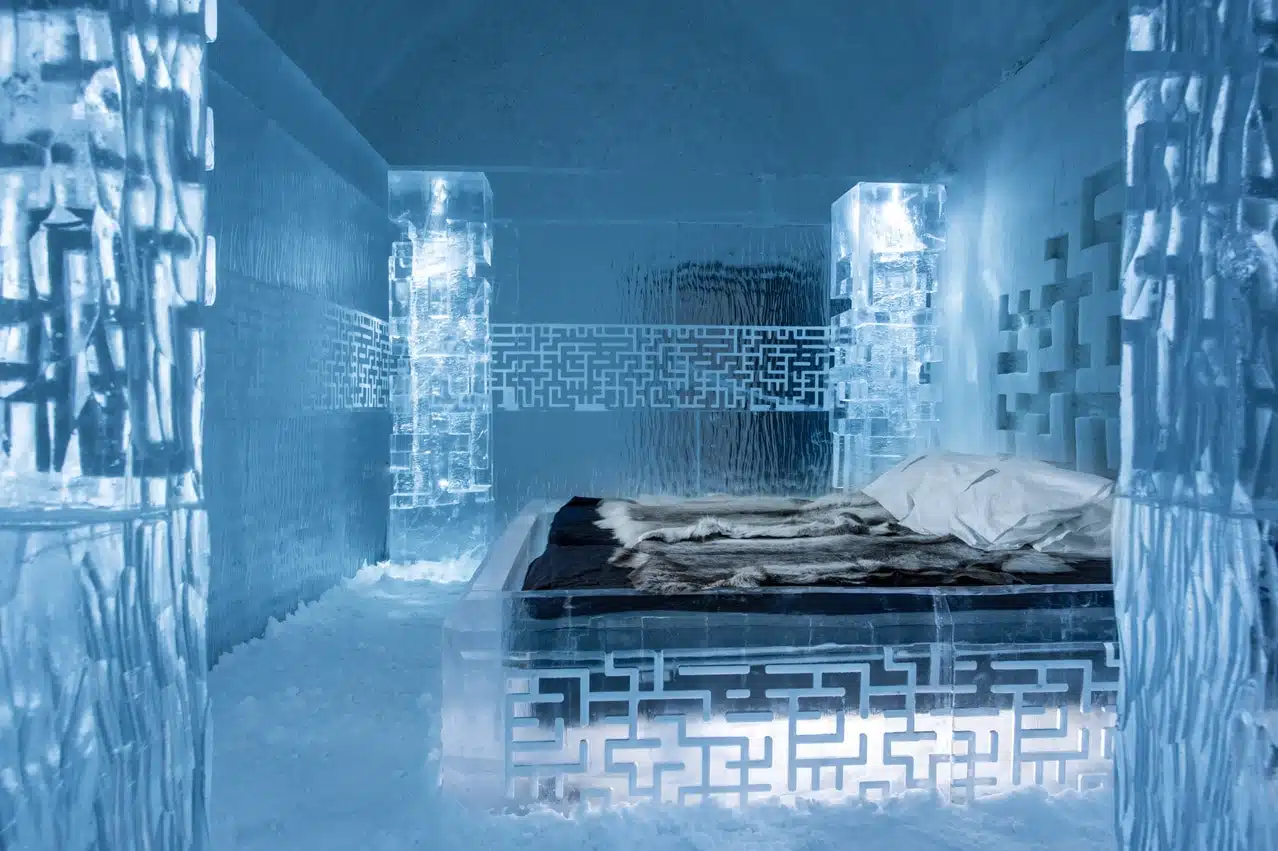
The accommodation landscape in Swedish Lapland is defined by a tension between remoteness and refinement. The Icehotel in Jukkasjärvi, rebuilt each winter from river ice, operates as both a functioning hotel and an annual architectural commission, with suites designed by artists selected through a competitive process. Treehotel, near Harads, takes a different approach: a cluster of architect-designed cabins suspended in boreal forest, each structurally and aesthetically distinct. Both properties are positioned to give direct access to wilderness activities without sacrificing design.
In Abisko, the proximity to one of Europe’s most reliable aurora observation zones shapes where serious travellers choose to base themselves. Abisko Mountain Station sits within a national park, which limits development and concentrates access. Kiruna, the region’s largest town, offers more conventional luxury hotel infrastructure and functions as a practical hub for wider itinerary planning.
Chasing the Northern Lights
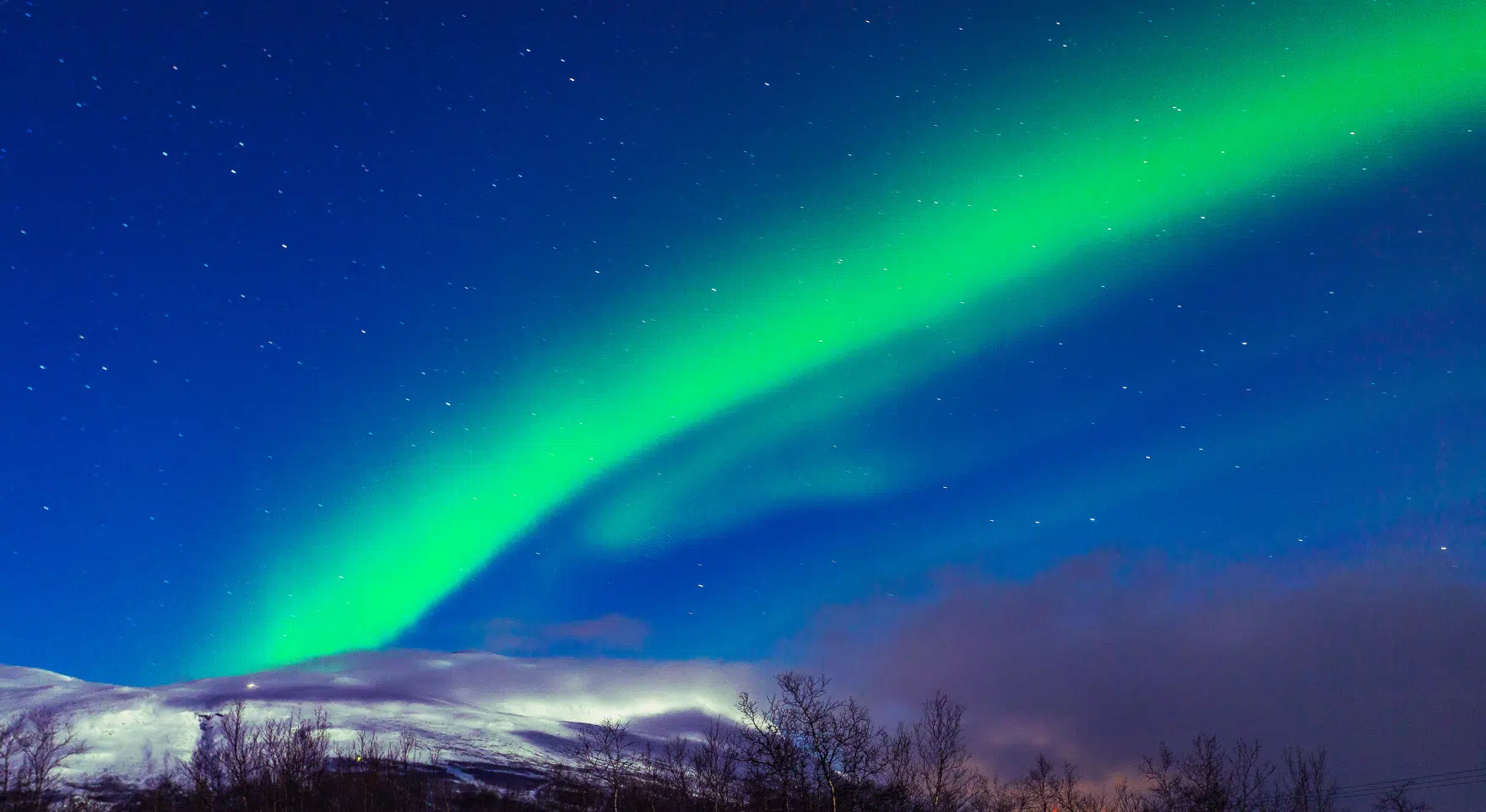
The aurora borealis is visible across Swedish Lapland from late September through March, with peak activity concentrated in the corridor between Abisko and Kiruna. Abisko is particularly well-positioned: a localised microclimate, created by the surrounding mountain topography, produces statistically clearer skies than much of the surrounding region. The Swedish Institute of Space Physics operates a research station here, and its long-term atmospheric data confirms Abisko’s advantage over comparable aurora destinations in Norway and Iceland.
Aurora activity is measured on the Kp index, a global scale of geomagnetic disturbance. Readings of Kp3 and above are generally sufficient for visible displays at this latitude, and Swedish Lapland sits within the auroral oval, the band of maximum geomagnetic activity encircling the poles.
Positioning matters as much as timing. The region’s low population density and minimal light pollution extend viewing range considerably, but identifying the most productive locations on any given night requires real-time interpretation of solar wind data and local cloud cover patterns.

Dog Sledding and the Art of Moving Through Wilderness
Dog sledding in Swedish Lapland functions less as an excursion and more as a method of travel, one that requires the participant to take an active role. Multi-day expeditions, typically running three to seven days, cover significant distances through boreal forest and open fell terrain, with overnight stays in remote cabins or wilderness camps. The traveller is expected to handle their own team, manage the sled, and contribute to camp routines. This is not a guided tour with passive observation built in.
The gap between serious operators and tourist-facing providers is considerable. The former work with established kennel operations, use routes developed over multiple seasons, and structure itineraries around genuine wilderness travel rather than scenic loops. The latter prioritizes accessibility over depth. That distinction is not always visible from a website.
Physical preparation matters. Cold-weather endurance, basic fitness, and the capacity to follow instruction under pressure are all relevant. The experience is demanding by design, and the quality of it depends significantly on how it is arranged.

Reindeer, the Sámi, and the Weight of Place
Reindeer herding is not a cultural exhibit. For the Sámi, it is a land-use practice with legal standing, seasonal structure, and intergenerational continuity. Approximately 4,500 Sámi in Sweden hold reindeer herding rights, and the annual migration cycles across Lapland’s terrain remain active and consequential.
The distinction between authentic and performative encounters here is significant. Community-led access, where herding families determine the terms and context of engagement, produces a fundamentally different experience from staged village visits designed around visitor expectations. The former requires local relationships and careful coordination; it is not reliably accessible through standard tourism channels.
Lapland’s landscape cannot be fully understood without this cultural layer. The Sámi relationship to the land, shaped by centuries of seasonal movement and ecological knowledge, informs how the terrain is read and navigated. Travellers who engage with this context leave with a more complete account of where they have been.

Planning a Luxury Lapland Trip: What to Know Before You Go
Five to seven nights are the minimum required to move through the region’s core experiences without feeling compressed. A well-sequenced itinerary separates activities by terrain and daylight window, reserving the most physically demanding excursions for the middle days when acclimatisation is established. Kiruna and Gallivare are the primary entry points, both served by direct flights from Stockholm Arlanda, with connections from London, Amsterdam, and Frankfurt. Transfer times to remote lodges vary significantly and are rarely straightforward.
The region’s most respected properties and guides operate on allocations that close months in advance, particularly for the December to March peak. The northern lights season runs from late September through early April, but February and March offer the most reliable combination of darkness and stable weather conditions.
Standard cold-weather briefings provided at lodges cover the basics, but layering systems suited to extended outdoor exposure at minus twenty or below require preparation before arrival. What to bring and how to wear it are details worth resolving in advance.
Swedish Lapland requires more advance planning than almost any destination we cover. The properties, guides, and seasonal windows that make the difference book out months ahead. Do Not Disturb handles the sequencing, the logistics, and the detail, so the only thing left to think about is the experience itself. Get in touch to start planning.