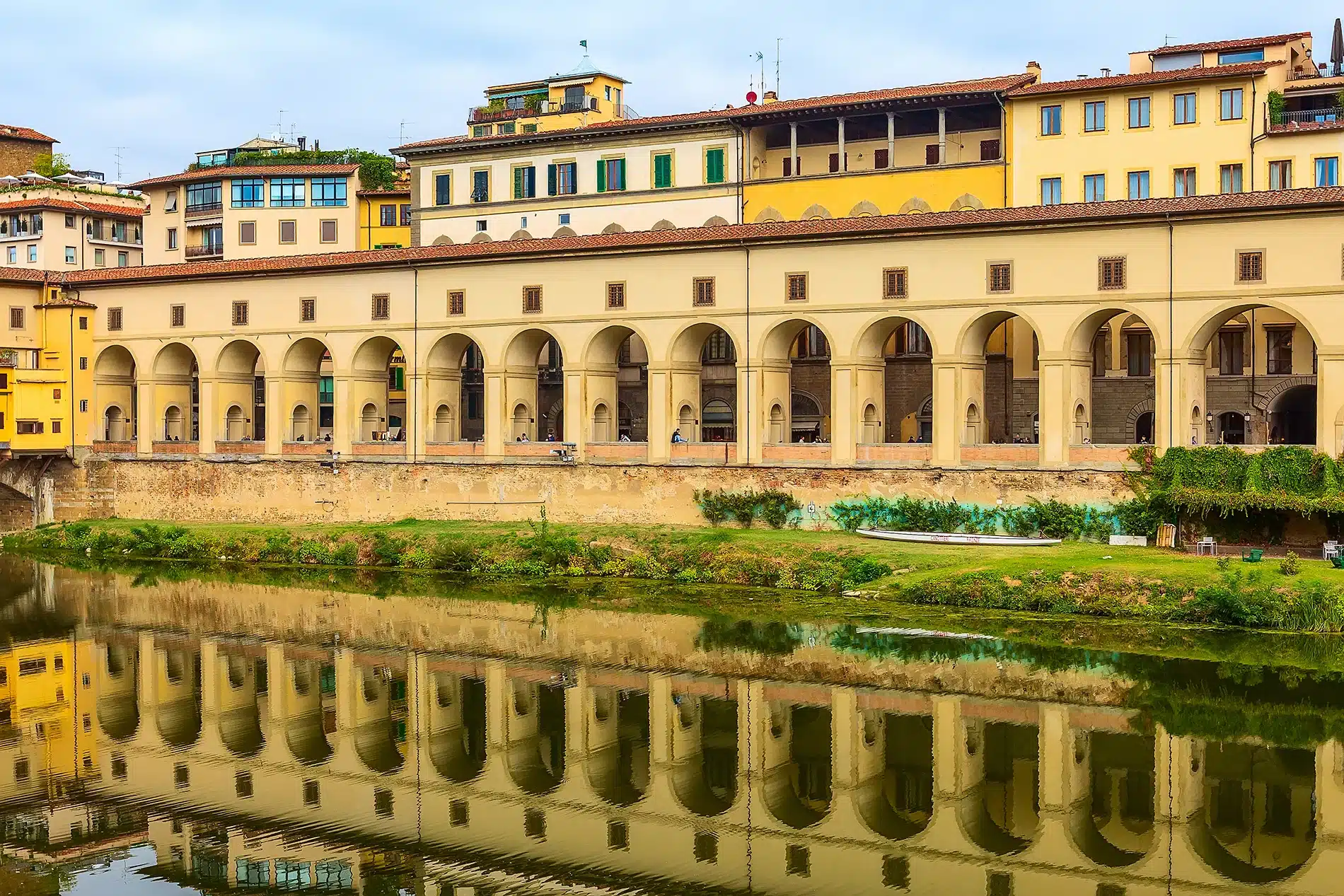


A private walk through Florence’s Vasari Corridor, the 700-meter elevated passageway built by Cosimo I de’ Medici in 1565, crossing the Arno above the Ponte Vecchio with 73 windows over the city.
The Vasari Corridor runs for approximately 760 meters above the streets of Florence, from the Uffizi Gallery through the upper level of the Ponte Vecchio, across the Arno, past the church of Santa Felicita, and into the Boboli Gardens at the rear of the Pitti Palace.
It was designed by Giorgio Vasari and completed in five months in 1565 on the occasion of the marriage of Cosimo I de’ Medici’s son Francesco to Joanna of Austria. The construction required negotiating with property owners along the route, engineering the passage above the Ponte Vecchio, and building around the medieval tower of the Mannelli family who refused to allow demolition.
The purpose of the corridor was as much practical as ceremonial. Political violence in Renaissance Florence was not unusual, and a private elevated route between the seat of government, the administrative offices, and the family residence was a genuine security measure as well as a statement of power.
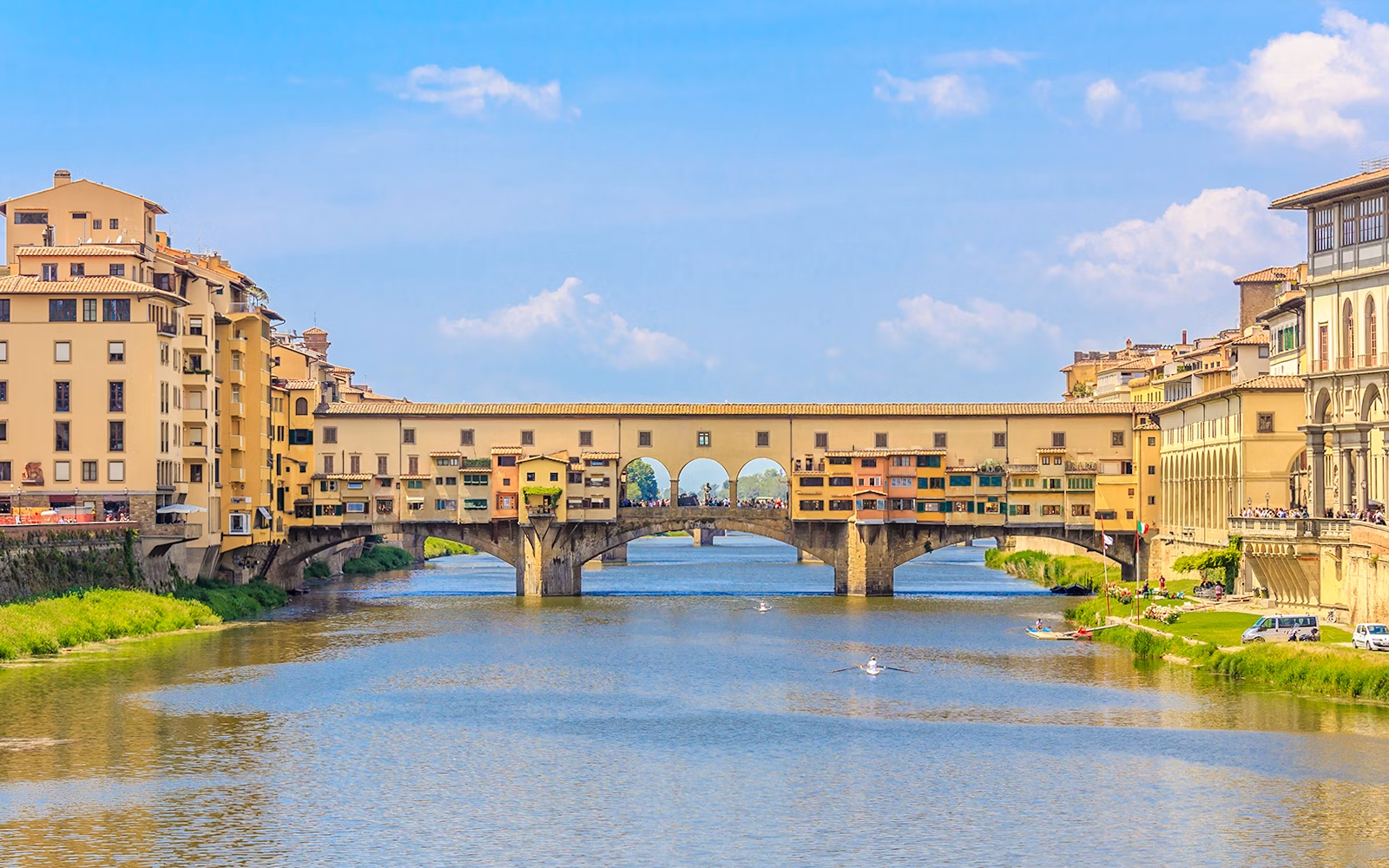
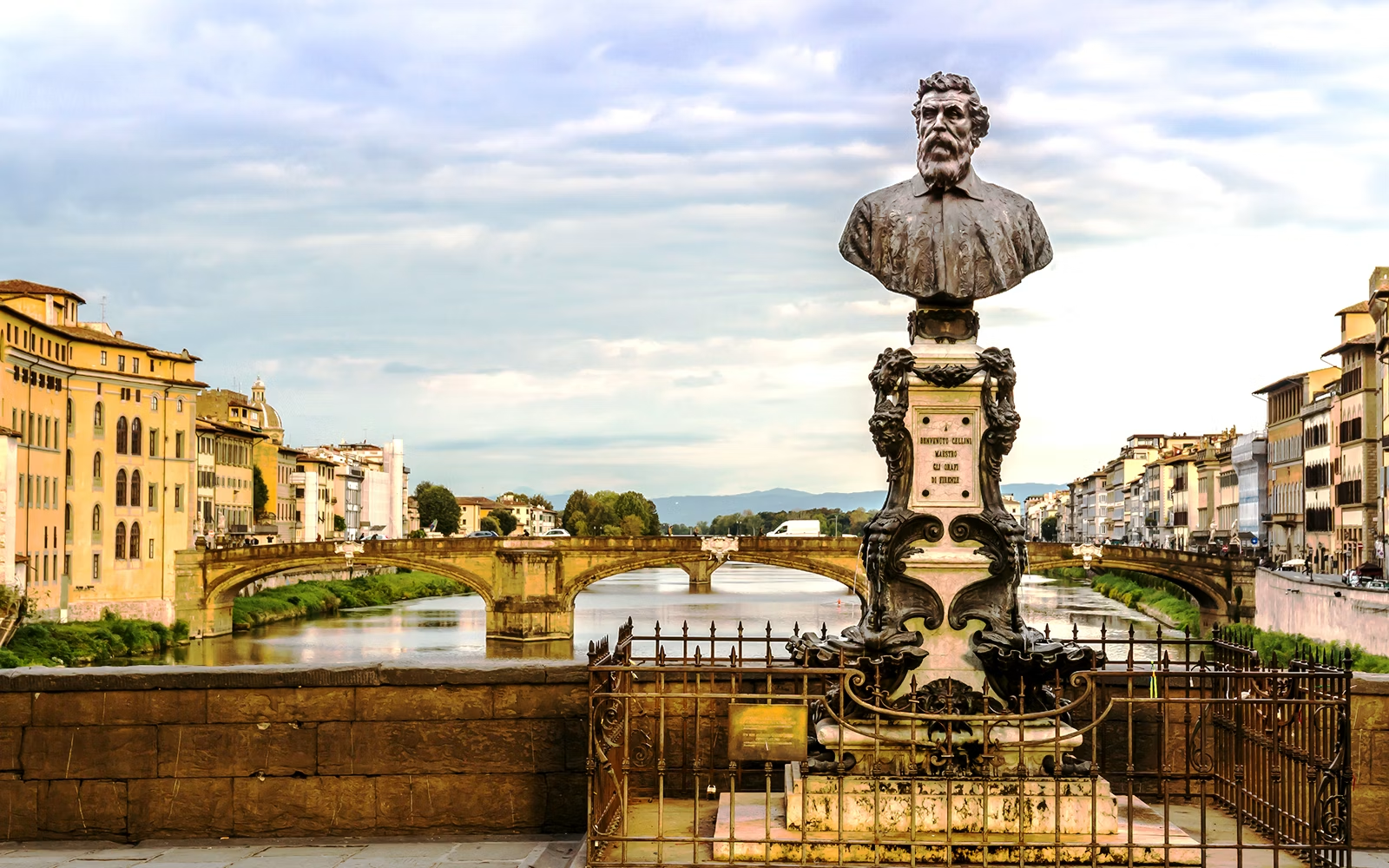
When the corridor reached the Ponte Vecchio, Cosimo ordered the butchers who had occupied the bridge since 1345 to be replaced with goldsmiths and jewelers. The goldsmiths remain on the bridge today.
About Do Not Disturb
Do Not Disturb is a luxury travel company specializing in carefully designed journeys and considered experiences. Each itinerary we build for our clients is informed by real destination knowledge, offering insight into places, cultures, and moments that shape how a trip comes together.
If this destination has sparked ideas, the itinerary can be developed into a private journey tailored to your interests and travel style, with hand-picked stays, thoughtful routing, and experiences curated around what matters most to you.
Cultural and Historical Context
Giorgio Vasari is better known as the author of Lives of the Artists, the 16th-century text that remains one of the primary sources on Renaissance painters and sculptors. He was also a working architect employed directly by the Medici, and the corridor was one of his largest single commissions, built as a direct extension of the Uffizi he had designed five years earlier.
The corridor suffered significant damage in August 1944 when the retreating German army destroyed the medieval buildings at both ends of the Ponte Vecchio. The bridge itself survived and the corridor above it remained intact. A major restoration completed in 2024 addressed structural concerns, upgraded lighting and climate control, and reorganized the experience of the space.
The self-portrait collection that previously lined the walls, over 700 works spanning the Renaissance to the 20th century, was moved to dedicated rooms on the second floor of the Uffizi. The corridor has been returned to its original condition as an elevated promenade above the city, with 73 windows opened to maximize the views along the route.
Why Private or Small-Group Access Matters
A private arrangement means moving through the passageway at the pace the architecture rewards, stopping at the windows that matter, and spending time in the sections that require it, rather than keeping pace with a group.
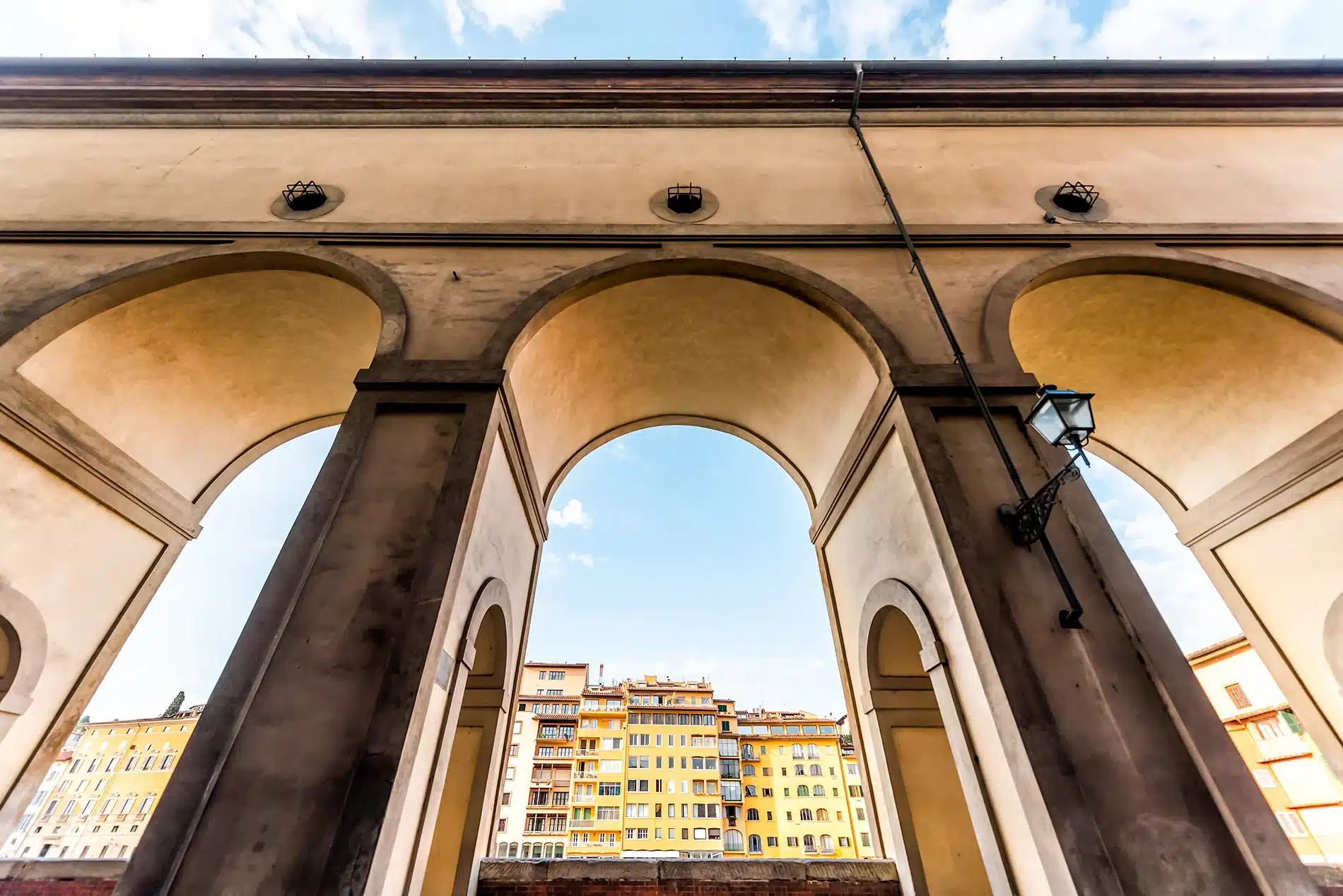
The corridor is a sequence of views, and each of the 73 windows frames a different aspect of Florence. The Friday evening openings, running until 11pm, produce the city at its most complete from above, with the lights of the Ponte Vecchio, the Arno, and the historic center below creating a perspective that the daytime visit does not reproduce.
A private arrangement at that hour, with a guide who can explain what each section of the route reveals about the Medici’s relationship to the city below, produces an encounter with Florence that no street-level experience provides.

What You See
The passageway enters from the Uffizi Gallery and immediately changes in character. The ceiling is lower, the walls narrower, and the sense of the original function as a private route is immediate.
The crossing above the Ponte Vecchio is the most direct section, running along the upper level of the bridge with windows looking down onto the Arno on both sides and across the rooftops of the goldsmith shops below. The view has not fundamentally changed since the day Cosimo first walked this route.
The route passes through the church of Santa Felicita, where Vasari built an enclosed balcony from which the Medici could attend Mass without being seen by the congregation below, before ending at the Boboli Gardens entrance of the Pitti Palace, depositing the visitor beside Buontalenti’s grotto in one of the Medici’s most significant landscape commissions.
How Do Not Disturb Makes This Possible
Do Not Disturb works with a small number of specialist guides in Florence whose knowledge of the corridor extends to the full political, architectural, and historical context of the route. The corridor ticket is sold in combination with the Uffizi Gallery ticket and requires advance reservation.
Both are arranged before arrival, with timing coordinated around the Friday evening opening where possible. The visit can be combined with the Uffizi’s self-portrait collection on the second floor, or structured as a standalone experience for guests whose primary interest is the architecture and the views.
Ready to plan your private walk through the Vasari Corridor and experience Florence from the elevated perspective the Medici kept for themselves? Speak with Do Not Disturb to begin your journey.
Plan your own version of this journey
Speak to Do Not Disturb’s luxury travel experts and turn this moment into something personal.
Related destinations
Suggested articles

Italy vs Greece for Your Honeymoon – Which is Better?
How to Travel Through a European Summer Heatwave

Chianti’s Luxury Villas: Stay Like a Renaissance Noble
Where to Go On Honeymoon? A Guide to Help You Choose

Lake Como vs Lake Garda: Which Italian Lake Is Right for You?
Positano vs Ravello: Where to Stay on the Amalfi Coast

Venice Without the Crowds: Is It Possible?

Sardinia vs Sicily: Which Italian Island Is Right for You?

Experiencing Florence Without the Crowds

Portofino and the Italian Riviera: Italy’s Most Stylish Coastline
Venice for Art Lovers: Palaces, Churches and Private Views

Romantic Florence: The Ideal Italian Honeymoon

Beyond Rome: Italy’s Most Beautiful Cities