On this page
A morning in the clay hills south of Siena with a truffle hunter and their dog, following the search through oak woodland and scrub, and a lunch built around what was found.
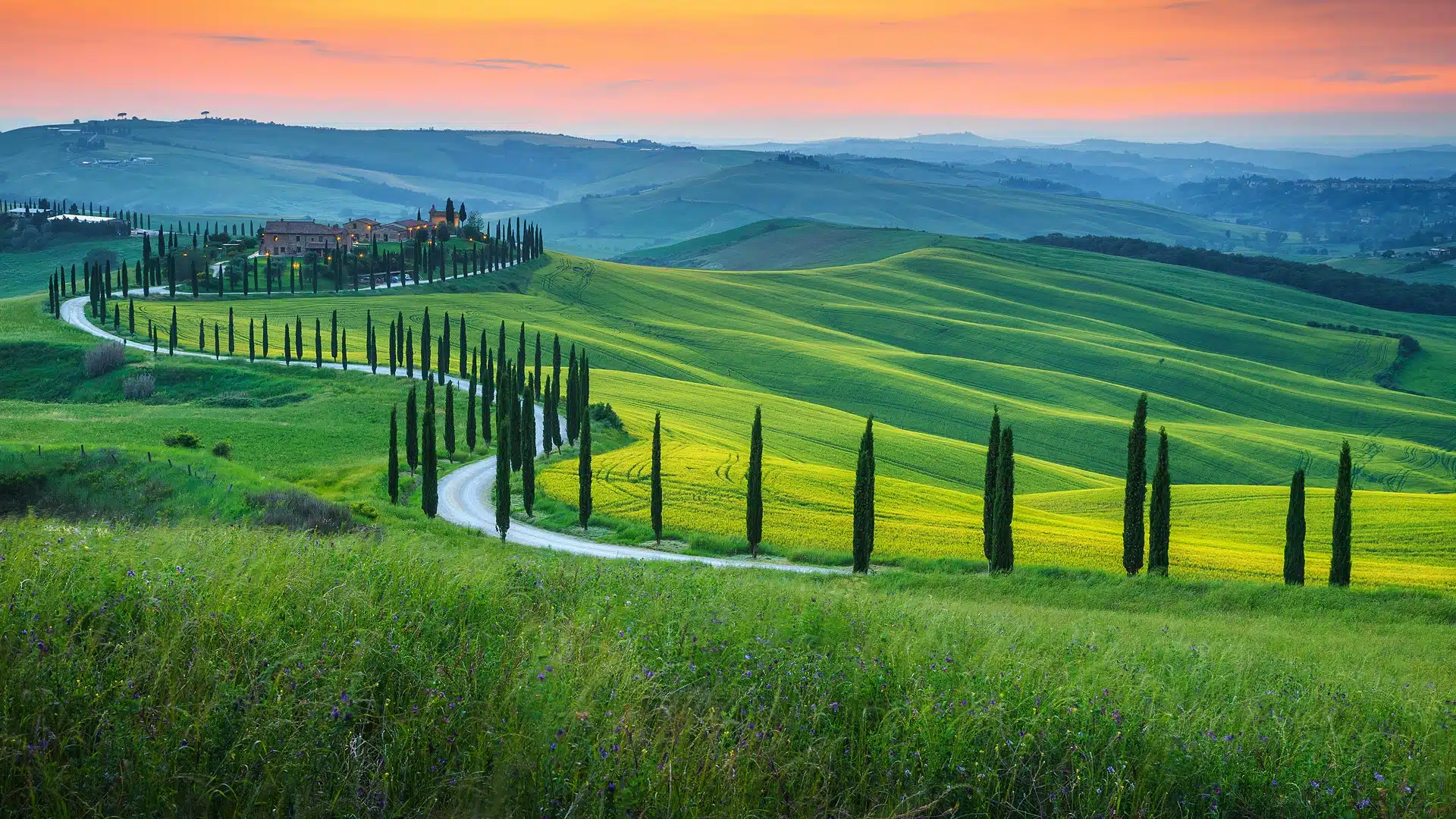
The Crete Senesi is a landscape southeast of Siena defined by rolling clay hills, picturesque villages, and clay-rich soil that creates conditions for producing both white and black truffles. The hills between Siena and Montalcino have been harvested by local hunters, known in Italian as trifolai, for generations.
The knowledge required to find truffles in this specific terrain takes years to build. It is the product of years of reading the same woodland, understanding the same soil, and working with dogs trained from the age of two months to locate a fungus that grows beneath the surface with no visible trace above ground.
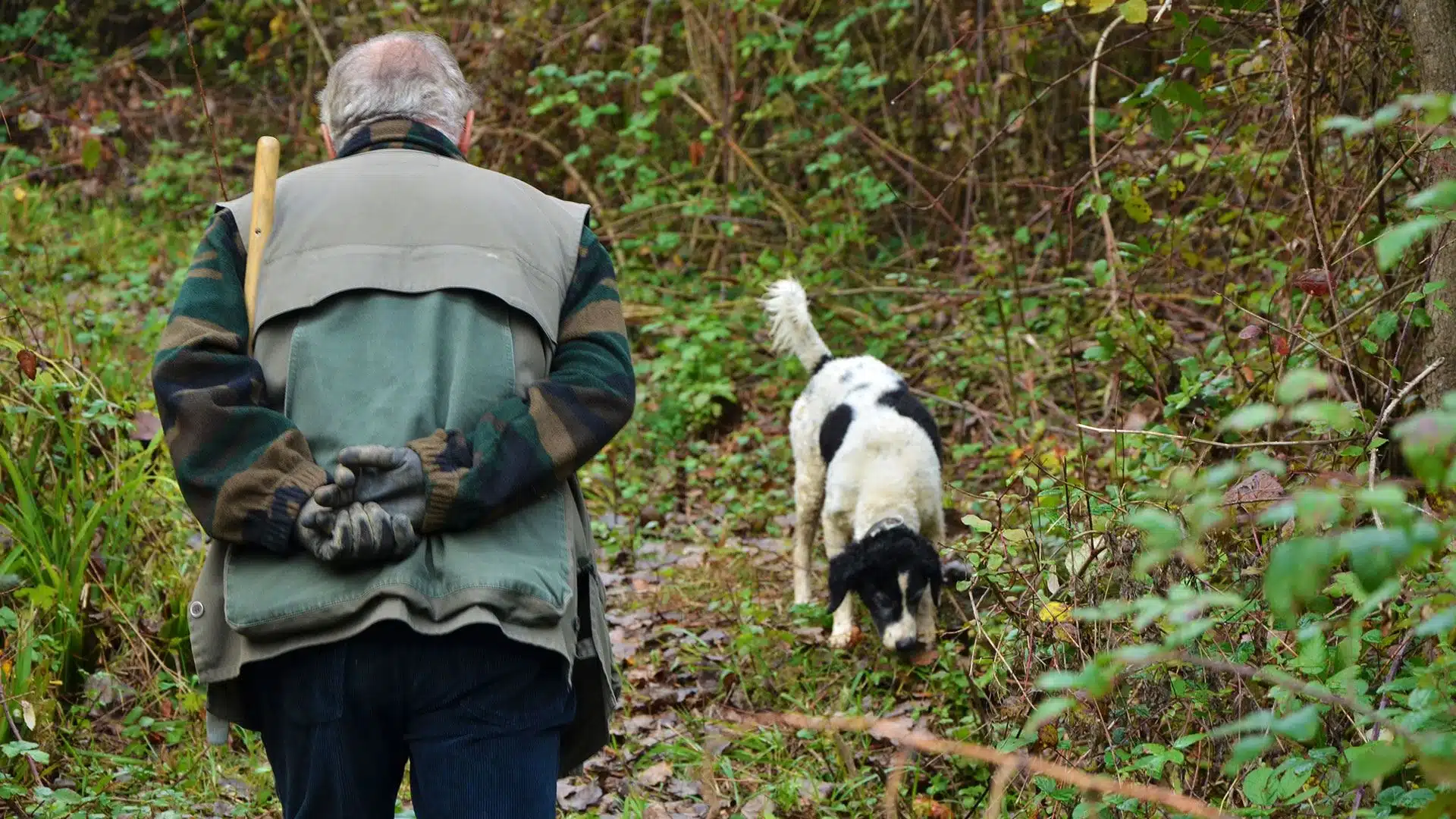
The hunter moves through the woodland at their own pace, following their dog, reading the terrain, and covering ground that a scheduled excursion cannot replicate. What happens in the woodland happens on the woodland’s terms. The dog finds what is there. The hunter digs what the dog locates. The lunch that follows is built around what was found, which means the menu for the morning is decided by the forest rather than a kitchen.
Cultural and Historical Context
Truffle hunting in Tuscany has a documented history stretching back to the Roman era, when Pliny the Elder described the truffle in his Natural History as one of the most sought-after foods in the ancient world. The Crete Senesi and the area around San Giovanni d’Asso are among the most recognized truffle zones in Tuscany, known for both white and black varieties depending on the season.
Truffle hunting follows precise natural seasons. The white truffle, Tuber Magnatum Pico, is found from October to December and is the most sought-after variety. The black winter truffle, Tuber Melanosporum, runs from mid-December through March. The summer Scorzone runs from June to August, and the spring Bianchetto from January through April.
The locations of productive woodland are held within families and not shared. Truffles grow in symbiosis with specific trees, particularly oak and hazel, and the presence of truffles in a given area depends on soil type, rainfall, and microclimate. Historical suitability does not guarantee a harvest every season.
Why Private or Small-Group Access Matters
A group truffle hunt operates around a predictable route, a prepared narrative, and a fixed time frame. The hunter moves through familiar ground at a pace that works for a group, covering the highlights of the search without following the dog into terrain that a group cannot easily navigate.
A private morning with a hunter works differently. The route follows the dog rather than a schedule. If the dog moves into a section of woodland the hunter has not visited recently, the private format allows the morning to follow that direction.
The conversation between the hunter and the guest moves at a different pace when it is not being managed for a group, and the depth of the hunter’s knowledge, the specific trees they look for, the soil conditions they read before releasing the dog, the way they interpret the dog’s behavior before it begins to dig, becomes available in a way that a group context does not produce.
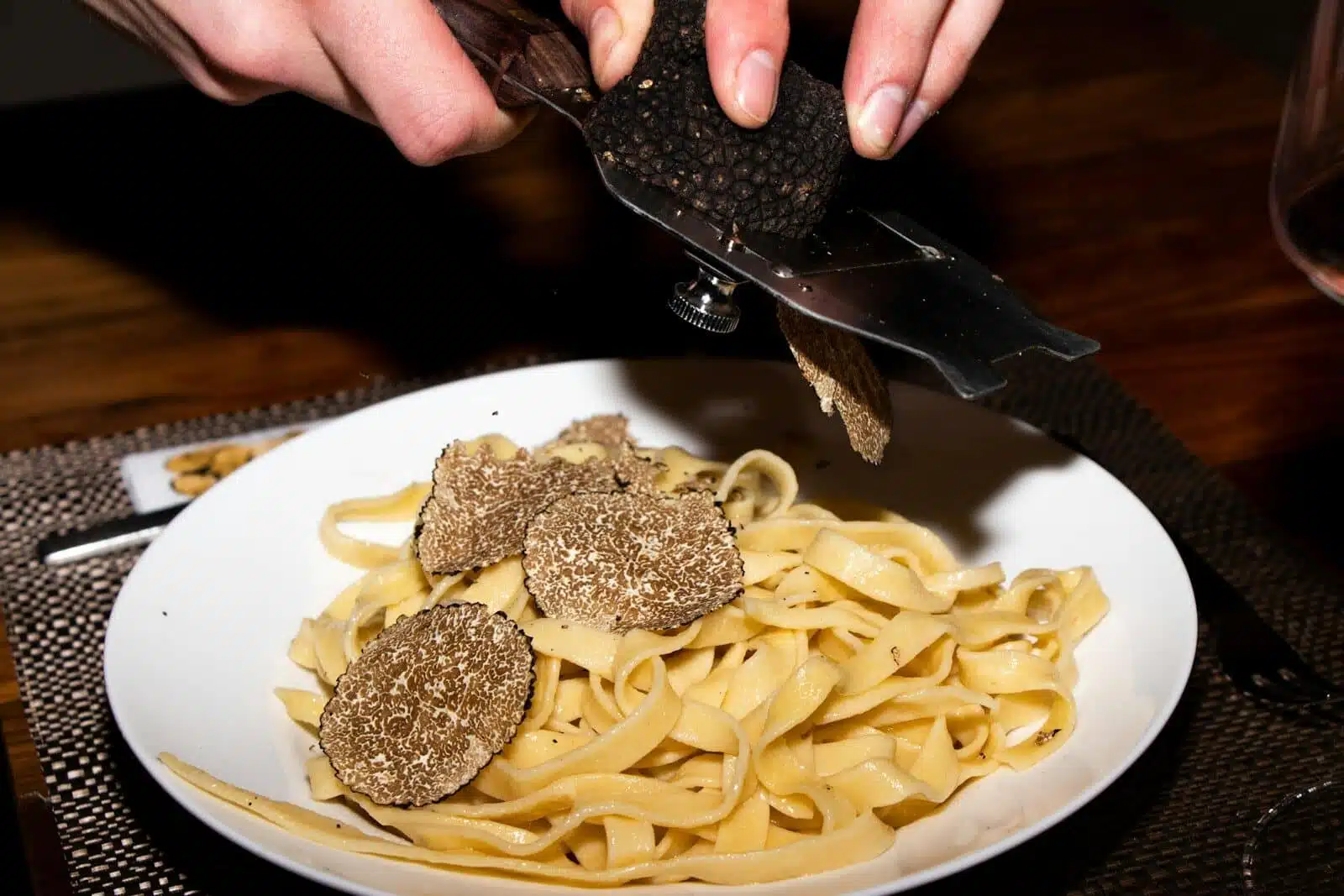
The lunch that follows a private hunt is also built around what was found rather than what a kitchen has prepared in advance. If the morning produced white truffles, the dishes reflect that. If the season and the conditions produced black truffles, the menu shifts accordingly. The connection between the woodland and the table is direct.
What You See
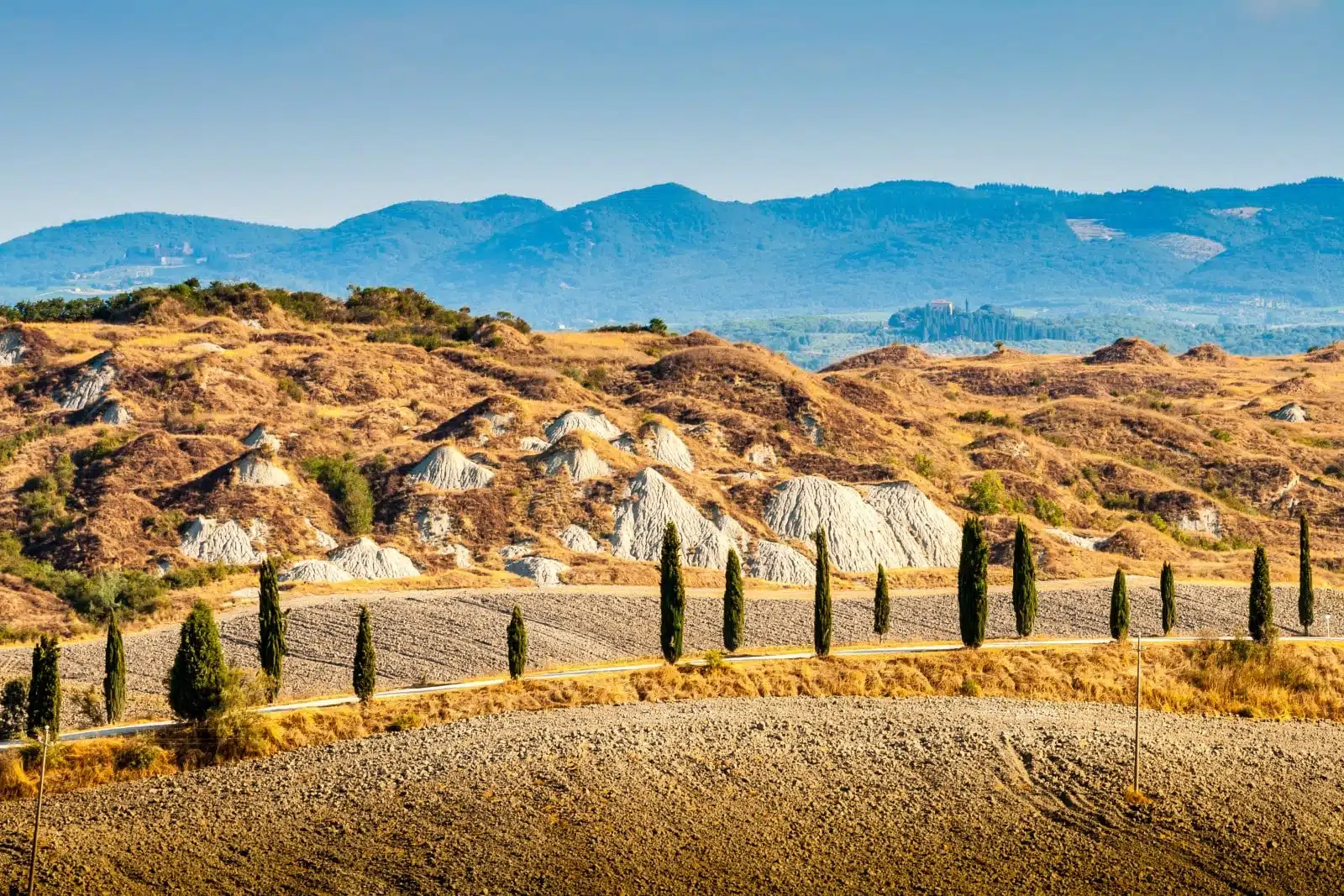
The Crete Senesi at dawn is a landscape of bare clay hills and oak woodland, with mist in the valleys and the light coming in low across a terrain that looks unlike any other part of Tuscany. The hunter moves through the edge of the woodland where the oak roots meet the clay soil, the dog working ahead, covering ground in a pattern that the hunter reads without directing.
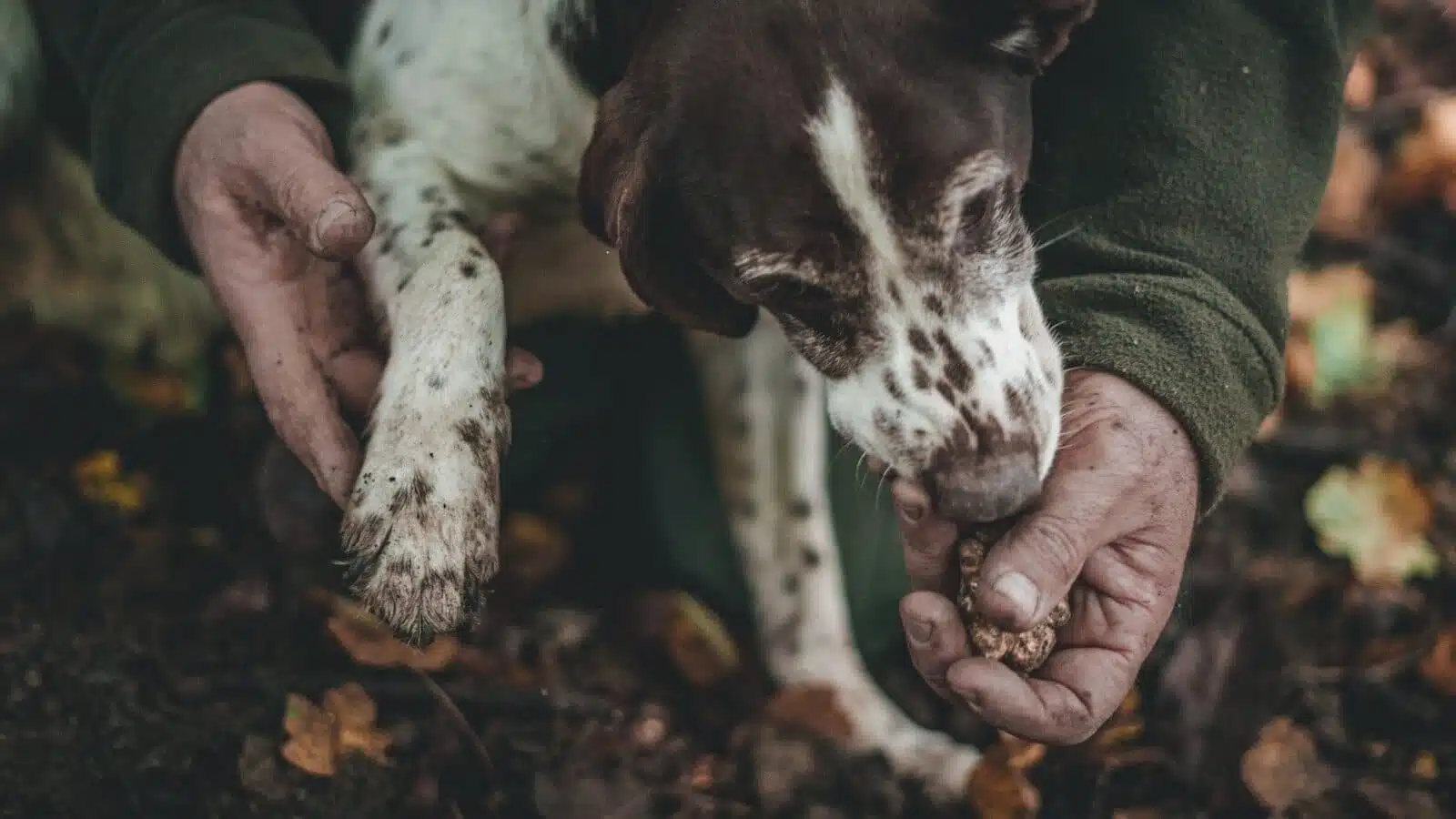
When the dog stops, it stops without announcement. The hunter reads the signals in the dog’s posture and pace before it begins to dig, and moves toward it accordingly. A small hoe opens the soil and the truffle comes out. What happens in the seconds between the dog stopping and the find is the product of years of working together in the same woodland, and it exists almost entirely outside of any institutional form.
The truffle itself, when it comes out of the ground, carries a smell that is difficult to prepare for. The white truffle of the Crete Senesi has a pungency that registers as something between garlic, earth, and something with no direct comparison. The black truffle is earthier and more contained. Both smell stronger at ground level, in the first moment after the soil is opened, than at any point afterward. The hunter shows what was found, describes what the season and the terrain produced, and continues the search.
How Do Not Disturb Makes This Possible
Do Not Disturb works with a small number of truffle hunters in the Crete Senesi whose knowledge of this specific terrain and whose willingness to share it with private guests goes beyond the standard organized excursion. The selection of the hunter is based on the season and on what the guest is most interested in covering during the morning, whether that is the technical aspects of the search, the history of truffle hunting in the Sienese hills, or the cooking session and lunch that follows.
The timing of the visit is planned around the season to maximize the likelihood of a find. October through December for the white truffle, December through March for the black winter truffle, June through August for the summer Scorzone. The morning is combined with a lunch at a farmhouse or agriturismo in the Crete Senesi, where what was found in the woodland is brought to the kitchen and prepared in the dishes that follow.
Ready to plan your truffle hunt in the Crete Senesi and experience one of Tuscany’s oldest food traditions from the inside? Speak with Do Not Disturb to begin your journey.