


Rich Ryan
Luxury Travel Expert
Not sure yet? Talk to an expert · +1 888 931 0363
Or talk to us +1 888 931 0363
Tailor-made trips for 2027 & 2028
Private tours, bespoke itineraries and curated journeys across New Zealand.
Tailor-made, always
Every itinerary shaped around your dates, pace and preferences.
One dedicated expert
The same person from the first conversation until you return.
Decades of experience
Over 35 years shaping bespoke journeys for discerning travelers.
New Zealand is one of the world’s remotest countries, and it has to be experienced at least once in a lifetime. The landscapes are extraordinary: volcanic plateaus, alpine passes, deep fjords, and long coastal plains.
At Do Not Disturb, we match you with one of our dedicated New Zealand luxury travel experts who designs a tailor-made itinerary around how you want your time away to feel. With deep destination knowledge and meticulous planning behind the scenes, we transform complex travel into something effortless and entirely your own.
The world without distraction.
Request a quoteNew Zealand compresses an unlikely range of experiences into a compact landmass, allowing you to move between genuinely distinct environments: subtropical beaches and wine regions in Northland, alpine scenery and adventure sports in the South Island, and geothermal activity around Rotorua, all without the exhaustion of long-haul travel between continents. Māori culture isn’t a tourism overlay but woven through the country’s identity. The Lord of the Rings was filmed in New Zealand for a reason—the landscapes are truly awe-inspiring.
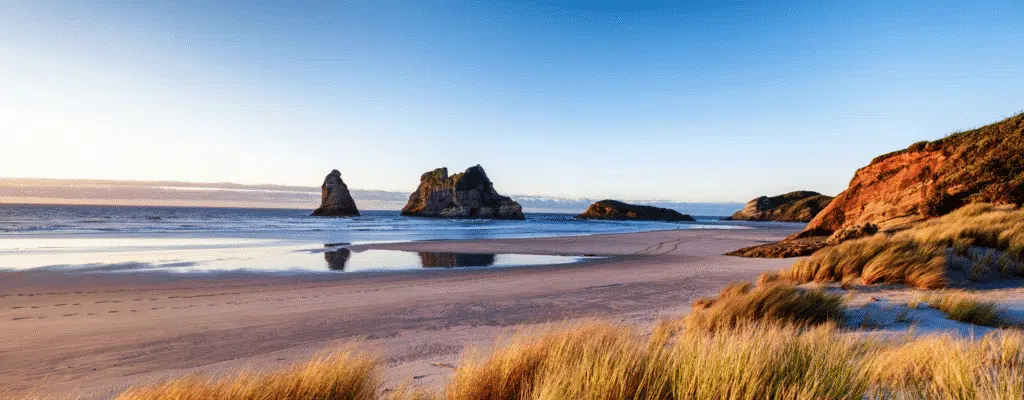


Every itinerary is a starting point. Your expert reshapes the places, hotels and pace around you.
Request a quote Alpine Hot Pools at Dusk
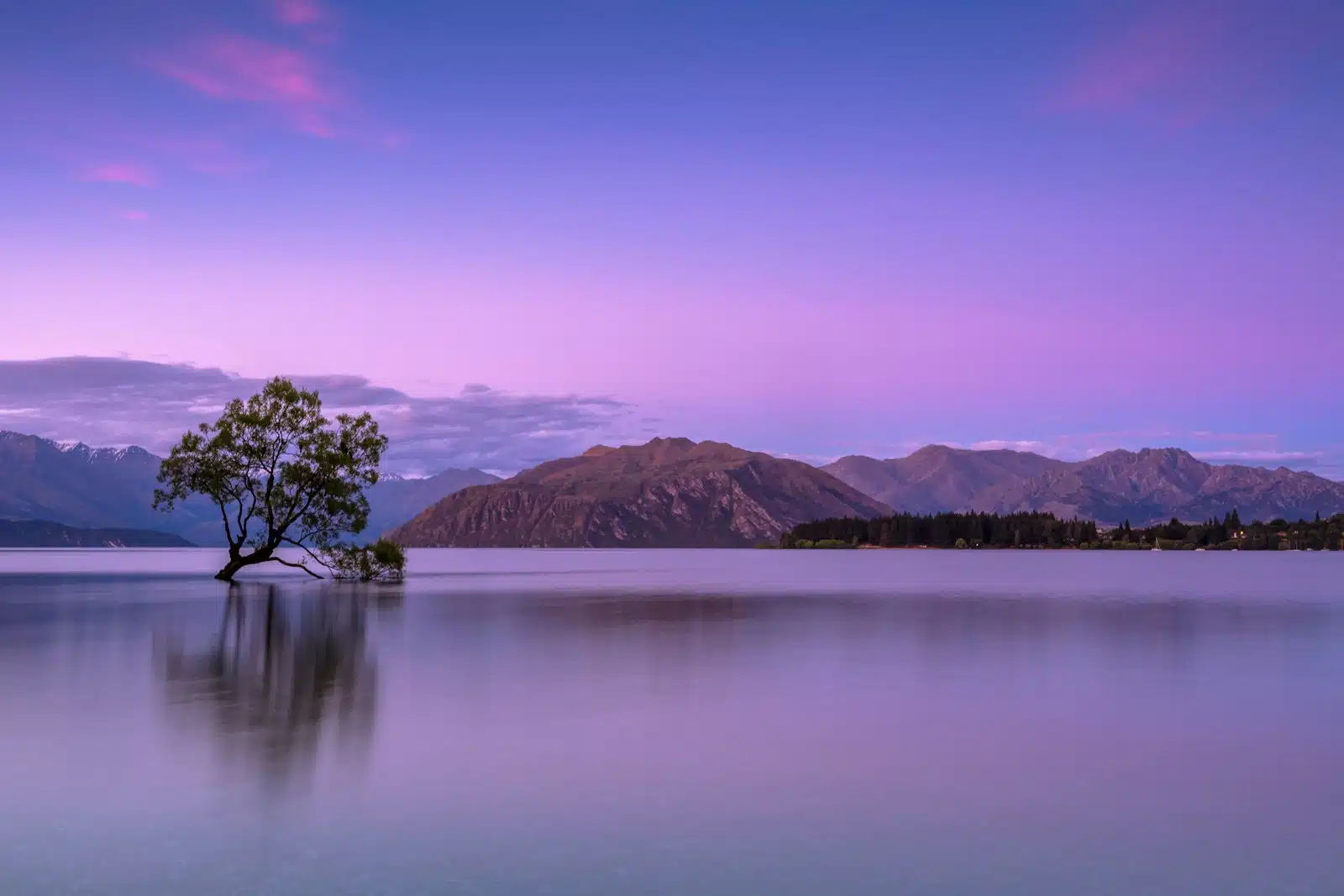
A visit to Tekapo’s alpine hot pools at dusk offers rare stillness in one of New Zealand’s most elemental landscapes. As daylight fades over Lake Tekapo and the Southern Alps, warm mineral water, crisp air, andly timed darkening skies combine to create a moment of physical and mental ease.
Alpine Hot Pools at Dusk
A visit to Tekapo’s alpine hot pools at dusk offers rare stillness in one of New Zealand’s most elemental landscapes. As daylight fades over Lake Tekapo and the Southern Alps, warm mineral water, crisp air, andly timed darkening skies combine to create a moment of physical and mental ease.
 Bay of Islands
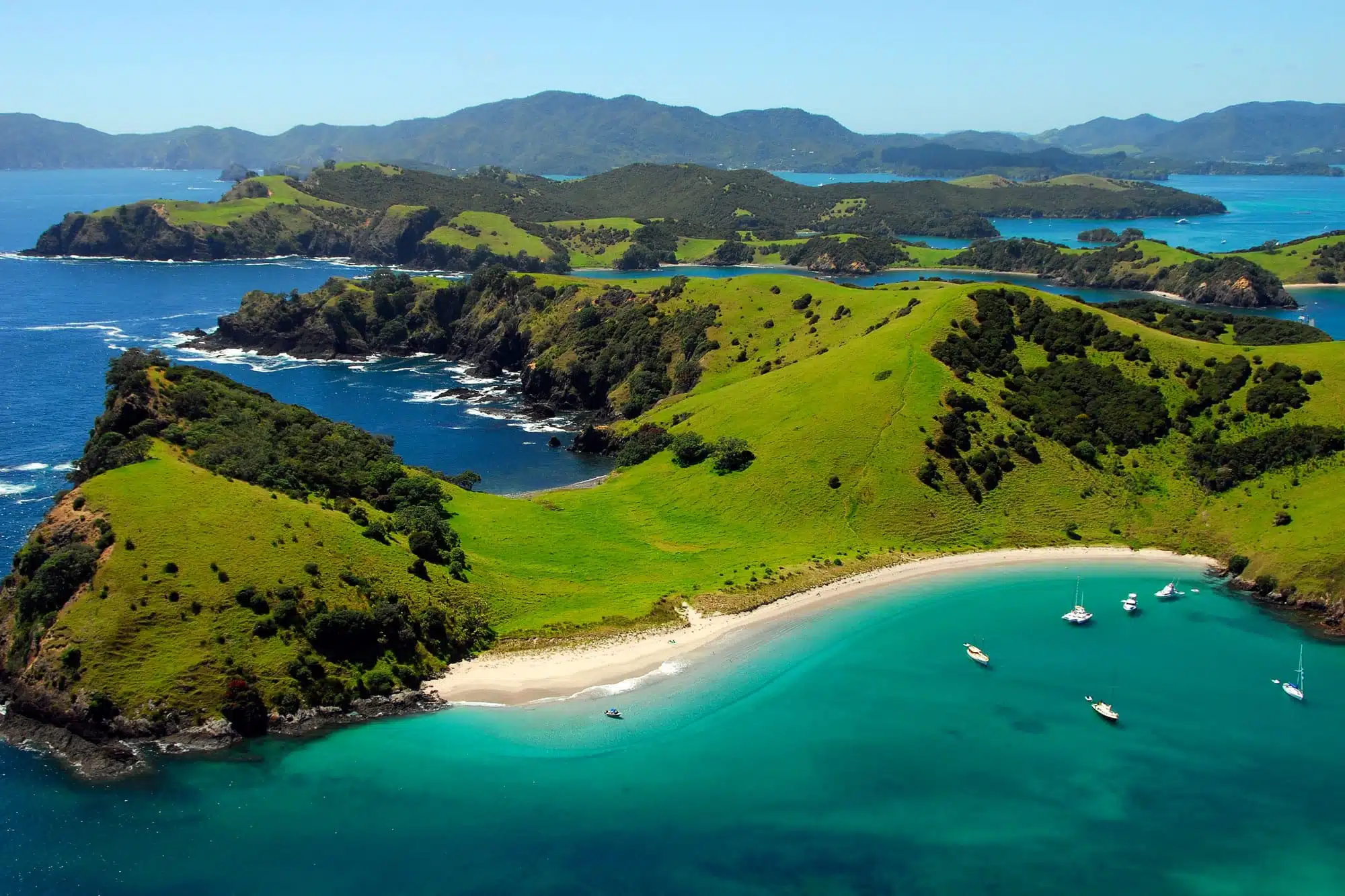
Experiencing the Bay of Islands after the last day boats return to harbor reveals a quieter side of New Zealand’s most storied seascape. With beaches emptied, light softening, and the water settling, this privately timed moment offers rare calm in a place usually defined by movement.
Bay of Islands
Experiencing the Bay of Islands after the last day boats return to harbor reveals a quieter side of New Zealand’s most storied seascape. With beaches emptied, light softening, and the water settling, this privately timed moment offers rare calm in a place usually defined by movement.
 Glowworm Caves
Entering a glowworm cave with a private guide transforms the familiar tourist route into an intimate encounter with New Zealand’s underground magic. Soft lighting and the quiet hum of dripping water, this experience offers a rare moment of calm and wonder beneath the surface.
Glowworm Caves
Entering a glowworm cave with a private guide transforms the familiar tourist route into an intimate encounter with New Zealand’s underground magic. Soft lighting and the quiet hum of dripping water, this experience offers a rare moment of calm and wonder beneath the surface.
 Heli-Hike on Franz Josef Glacier
A privately arranged heli-hike on Franz Josef Glacier offers rare access to one of the Southern Hemisphere’s most dramatic ice landscapes. Reached by helicopter and explored on foot with an expert guide, this experience reveals the scale, movement, and fragility of the glacier far beyond what is possible from valley viewpoints.
Heli-Hike on Franz Josef Glacier
A privately arranged heli-hike on Franz Josef Glacier offers rare access to one of the Southern Hemisphere’s most dramatic ice landscapes. Reached by helicopter and explored on foot with an expert guide, this experience reveals the scale, movement, and fragility of the glacier far beyond what is possible from valley viewpoints.
 After Hours Vineyard Dinner in Hawkes Bay
A privately arranged after-hours vineyard dinner in Hawke’s Bay, pairing seasonal cuisine and library wines in rare seclusion, curated by Do Not Disturb.
After Hours Vineyard Dinner in Hawkes Bay
A privately arranged after-hours vineyard dinner in Hawke’s Bay, pairing seasonal cuisine and library wines in rare seclusion, curated by Do Not Disturb.
 Bungee Jumping in Queenstown
Explore Queenstown’s iconic bungee jumping and skydiving with private access, expert guides, and sweeping views of Lake Wakatipu and The Remarkables.
Bungee Jumping in Queenstown
Explore Queenstown’s iconic bungee jumping and skydiving with private access, expert guides, and sweeping views of Lake Wakatipu and The Remarkables.
Travel guide
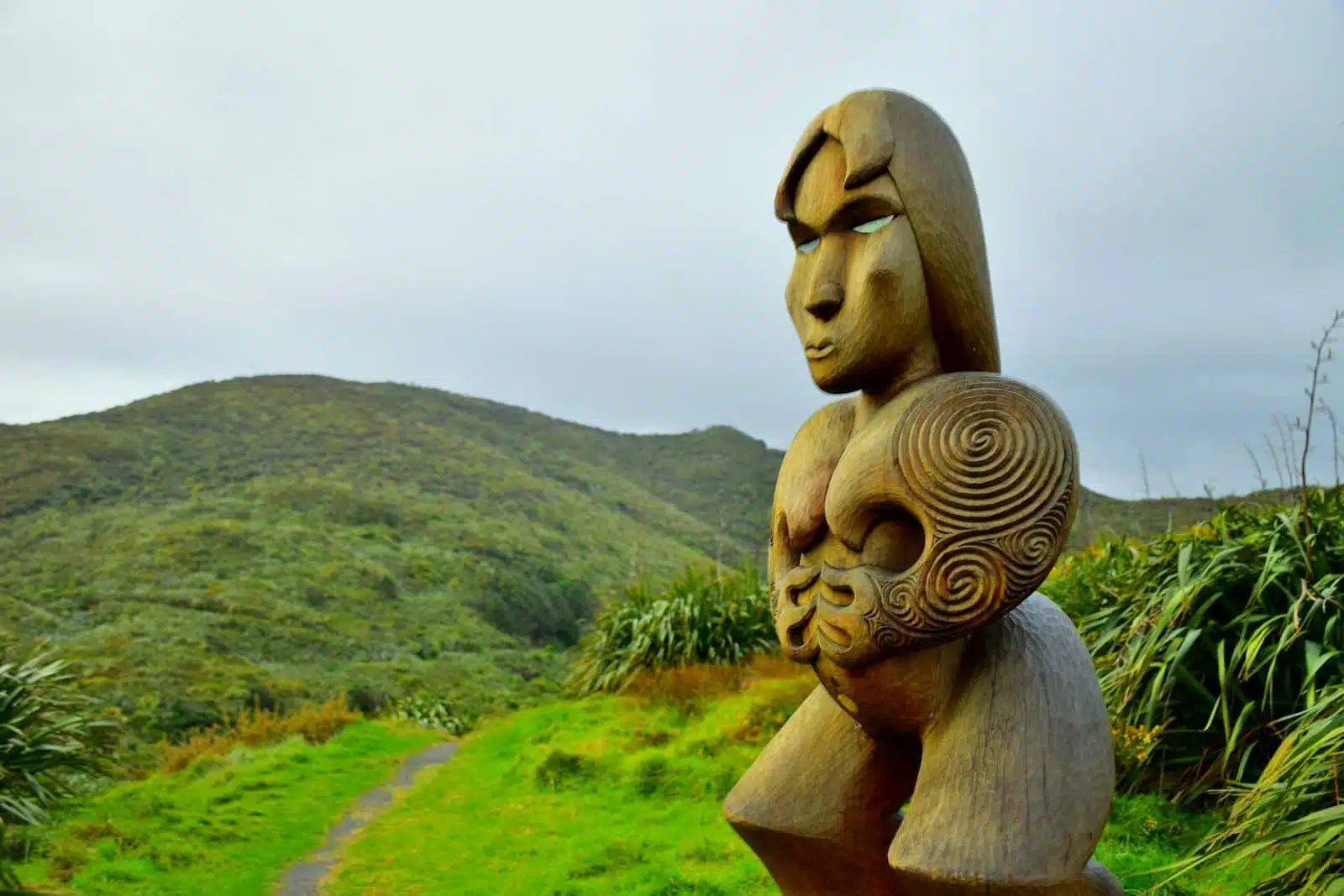
New Zealand is divided into two main islands and several smaller ones. The North Island holds much of the country’s volcanic energy and cultural life. Auckland, the largest city, stretches between two harbors and serves as an easy arrival point.
South of it, the Coromandel Peninsula, Bay of Plenty, and Hawke’s Bay form a chain of beaches, vineyards, and farm towns. The central plateau is defined by the volcanic peaks of Tongariro and Ruapehu, part of a UNESCO World Heritage area.
Wellington, at the southern tip of the North Island, combines government, film, and design in a compact harbor city. A short flight or ferry crosses Cook Strait to the South Island, where the terrain rises sharply.
The Southern Alps run its length, snow-covered for much of the year. To the west, glaciers reach down to rainforest. Further south, Queenstown and Wanaka are gateways to alpine lakes, national parks, and the fjords of Fiordland.
Travel through the islands is easy to plan: regional flights, scenic drives, and short ferries link coast to coast. Many visitors begin in Auckland and end in Queenstown, following a simple north–south flow that captures the country’s range in two to three weeks.
Māori heritage defines the national story. In Rotorua and the Bay of Islands, visitors can experience traditional carving, weaving, and song. Museums in Wellington and Auckland interpret history with detail and respect, while smaller regional galleries show how European and Polynesian influences meet in local art and design.
New Zealand’s climate produces clean flavors and world-class wines. Marlborough and Central Otago lead with Sauvignon Blanc and Pinot Noir. Coastal towns serve seafood straight from the source: green-lipped mussels, crayfish, and bluff oysters.
The country’s geography invites movement. Hike the Tongariro Alpine Crossing for views over volcanic lakes, or drive through Arthur’s Pass where kea parrots wheel above the road. On the South Island’s west coast, short walks lead from rainforest to glacier. The coastline offers everything from surf at Raglan to whale watching in Kaikōura. The scale is impressive, yet distances remain manageable.
Hot springs appear across both islands, from Rotorua’s geothermal pools to the alpine spas near Hanmer Springs. Quiet lodges on lakes and peninsulas focus on rest, simple design, and connection to the landscape.
Nelson sits at the northern tip of the South Island in a pocket of unusual light and warmth that has drawn artists, winemakers, and craftspeople for decades. The local wine scene produces serious Sauvignon Blancs and Rieslings, and the food culture reflects both the vineyards and access to excellent fish and seafood.
Stewart Island sits in isolation south of the mainland, separated by the Foveaux Strait and rarely visited by tourists moving through on predetermined routes. The island is home to one of the world’s largest populations of kiwi birds, along with yellow-eyed penguins and other endemic species found nowhere else.
The East Cape is the easternmost point of New Zealand and one of the first places on earth to see the sunrise each day, a geographical fact that draws a particular kind of traveler. The North Island’s remote northeastern reach is sparsely populated and rich in Māori history and cultural significance. The coastline is untamed: black sand beaches, dramatic headlands, and a sense of genuine isolation despite being on the North Island.
December to February is New Zealand's summer, warm and settled (around 61–75°F) and perfect for road journeys and the coast. Autumn, March to May, is a particular favorite, with clear light, calm seas and the wine harvest, while September to November brings quiet roads and June to August turns the Southern Alps white.
Temperatures range from cool in the mountains to mild in lower elevations. Snow remains on high peaks through September but retreats quickly. Days are clear and light is excellent for hiking. This is shoulder season; crowds thin and prices drop. Roads are open and accessible across the country.
Warm and dry across most regions, with temperatures in the 60s to 70s depending on elevation. This is peak season for good reason; consistent weather makes travel straightforward. Beaches are accessible and pleasant. Higher prices and busy accommodations. Best for road travel and coastal activities.
Clear light and calm conditions. Mountain passes are open and accessible. The sea is calm, making water activities reliable. Wine harvest happens in some regions. Fewer tourists than summer but better weather than winter. Good balance of comfort and solitude.
Alpine regions get cold and can see snow at higher elevations. Lower elevations stay milder and crisp. Days are shorter. Tourist numbers drop significantly and prices lower. Some high mountain passes close or become difficult. Best for travelers comfortable with variable weather and wanting fewer crowds.
International flights arrive into Auckland, Christchurch, and Wellington, with direct connections from Los Angeles, San Francisco, Vancouver, and major Asian hubs. Domestic flights link all regions. Driving is straightforward, and ferries connect the two main islands across Cook Strait. No visa is required for short stays for travelers from the US, UK, Canada, and most of Europe.
Domestically, New Zealand’s regional airlines connect all major towns. The South Island’s rugged terrain makes flying practical for moving between regions like Queenstown, Christchurch, and the West Coast.
Driving is straightforward on main routes, though distances deceive – Auckland to Wellington takes eight hours by car, and the Southern Scenic Route between Queenstown and Te Anau demands time to navigate properly.
The inter-island ferry between Wellington and Picton (South Island) runs multiple times daily and takes approximately three and a half hours, offering decent cabin options and views of Cook Strait.
Planning a trip to New Zealand? We will match you with an expert who knows it well.
Plan your New Zealand journey 8 min read
Where to Go On Honeymoon? A Guide to Help You Choose
The honeymoon is the first major travel decision a couple makes together, and the range of what it can be, remote and silent, culturally immersive, or gastronomically driven, is wider than…
8 min read
Where to Go On Honeymoon? A Guide to Help You Choose
The honeymoon is the first major travel decision a couple makes together, and the range of what it can be, remote and silent, culturally immersive, or gastronomically driven, is wider than…
 8 min read
48 Hours in Auckland
Auckland is New Zealand's largest city and its primary international gateway, which means most travelers pass through it. The city has become genuinely interesting in recent years, with a restaurant…
8 min read
48 Hours in Auckland
Auckland is New Zealand's largest city and its primary international gateway, which means most travelers pass through it. The city has become genuinely interesting in recent years, with a restaurant…
 8 min read
Discover New Zealand’s Fiordland: Milford and Doubtful Sound in Luxury
Milford Sound and Doubtful Sound are the two primary fjords, and they operate on completely different scales and rhythms. Understanding the distinction between them is essential to planning properly.
8 min read
Discover New Zealand’s Fiordland: Milford and Doubtful Sound in Luxury
Milford Sound and Doubtful Sound are the two primary fjords, and they operate on completely different scales and rhythms. Understanding the distinction between them is essential to planning properly.
 8 min read
Plan Your New Zealand Wine Region Tour
At Do Not Disturb, we work directly with winemakers, cellar door managers, and producers throughout New Zealand's regions to arrange private tastings, behind-the-scenes cellar visits, and dinners that connect you…
8 min read
Plan Your New Zealand Wine Region Tour
At Do Not Disturb, we work directly with winemakers, cellar door managers, and producers throughout New Zealand's regions to arrange private tastings, behind-the-scenes cellar visits, and dinners that connect you…
You are matched with an expert who knows New Zealand, and the same expert looks after you from the first conversation until you return.
Luxury Travel Expert

Luxury Travel Expert

Luxury Travel Expert
Our team brings over 35 years of experience in luxury travel, shaping bespoke journeys for discerning clients worldwide.
See more reviews on TrustpilotOur trip was truly magical and full of core memories that will last us a lifetime.
“We just returned from an incredible journey through Ireland, and we couldn’t have had a better experience”
“This was a flawless experience. They took all our thoughts and perfectly curated the most beautiful honeymoon.”
Have another question? Your New Zealand expert will answer it.
Ask an expertYes. Every New Zealand itinerary is a starting point: your New Zealand travel expert shapes each journey around your dates, pace and preferences.
December to February is New Zealand's summer, warm and settled (around 61–75°F) and perfect for road journeys and the coast. Autumn, March to May, is a particular favorite, with clear light, calm seas and the wine harvest, while September to November brings quiet roads and June to August turns the Southern Alps white.
Our New Zealand itineraries run from 16 to 21 days. Your expert can shorten or extend any of them around your plans.
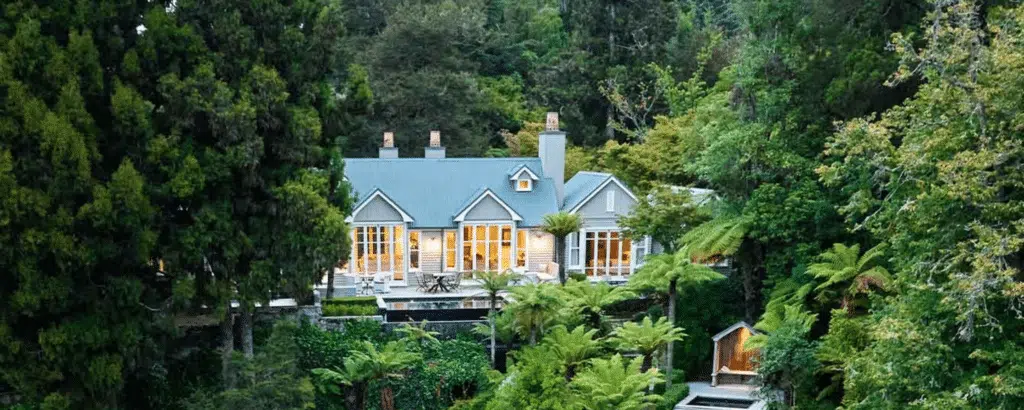
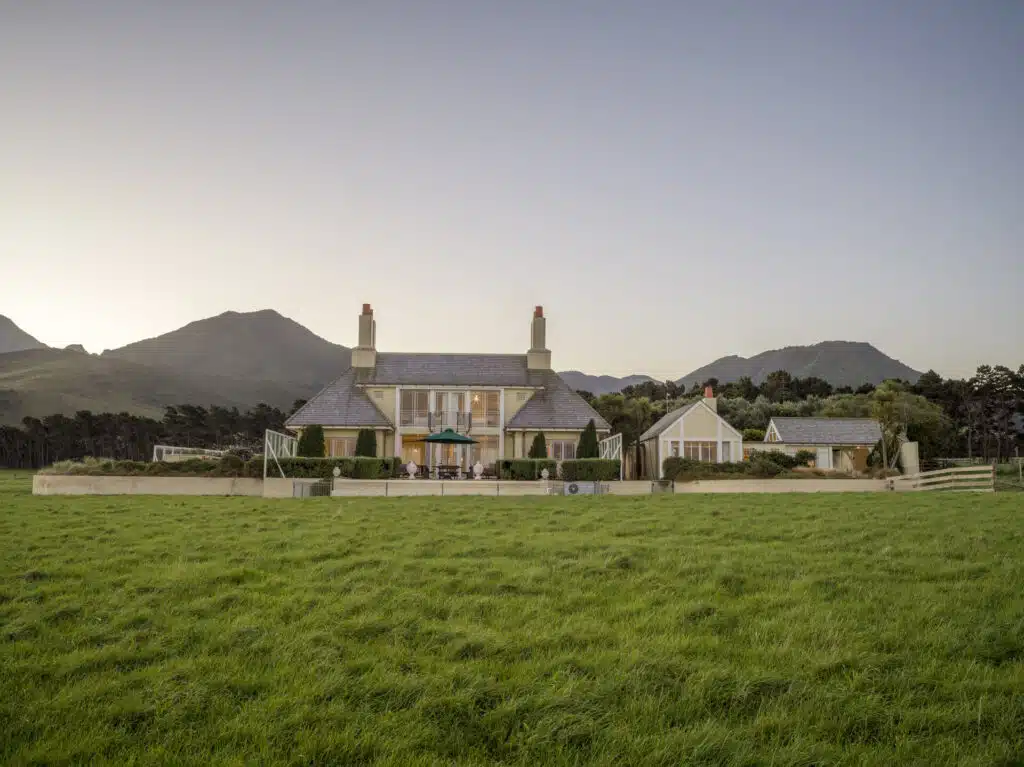
Among the hotels our experts recommend most are Huka Lodge, The Lindis Lodge and Wharekauhau Country Estate. See all our hotels in New Zealand.
Highlights include Alpine Hot Pools at Dusk, Bay of Islands and Glowworm Caves, and your expert will build the experiences that matter most to you into your itinerary.
We design tailor-made luxury journeys. You tell us what you have in mind, whether a destination, a feeling or a celebration, and a dedicated travel expert shapes a private itinerary around you, then takes care of every detail before, during and after your trip.
Yes. Every itinerary on our site is a starting point. Your expert shapes the places, hotels, pace and length around your dates and preferences, or begins with a blank page.
In three steps. We listen: you share your dates, ideas and budget by phone or through our inquiry form. We curate: your expert designs a private itinerary and refines it with you until it feels right. You travel: every detail is handled, with support throughout your journey.
Our team brings over 35 years of experience in luxury travel. You are matched with an expert who knows your destination, and the same expert looks after you from the first conversation until you return.
It depends on your dates, hotels and length of stay. Each suggested itinerary shows a "from" price per person, and your expert prepares a detailed proposal for the journey you have in mind.
Tell us how you want to feel, we’ll take it from there.
Or talk to us +1 888 931 0363
Planning your trip should feel effortless.
You share what matters, whether it is a destination, a feeling, or a moment worth celebrating.
Your dedicated expert shapes a thoughtful, private itinerary tailored entirely around you.
Every detail handled. Every moment considered. Support before, during, and after your journey.
Begin your journey
Tell us how you want your time away to feel. Your dedicated expert will be in touch to begin shaping it around you.
Or speak with us
+1 888 931 0363




Your enquiry goes straight to one of our travel experts, who will reply to you personally.
Rich, Delwyn, Jemima and the team