
On this page
A private morning on the Bora Bora lagoon by outrigger canoe, with a local guide covering manta ray cleaning stations, coral gardens, and the sandbanks of the inner reef. Arranged by Do Not Disturb.
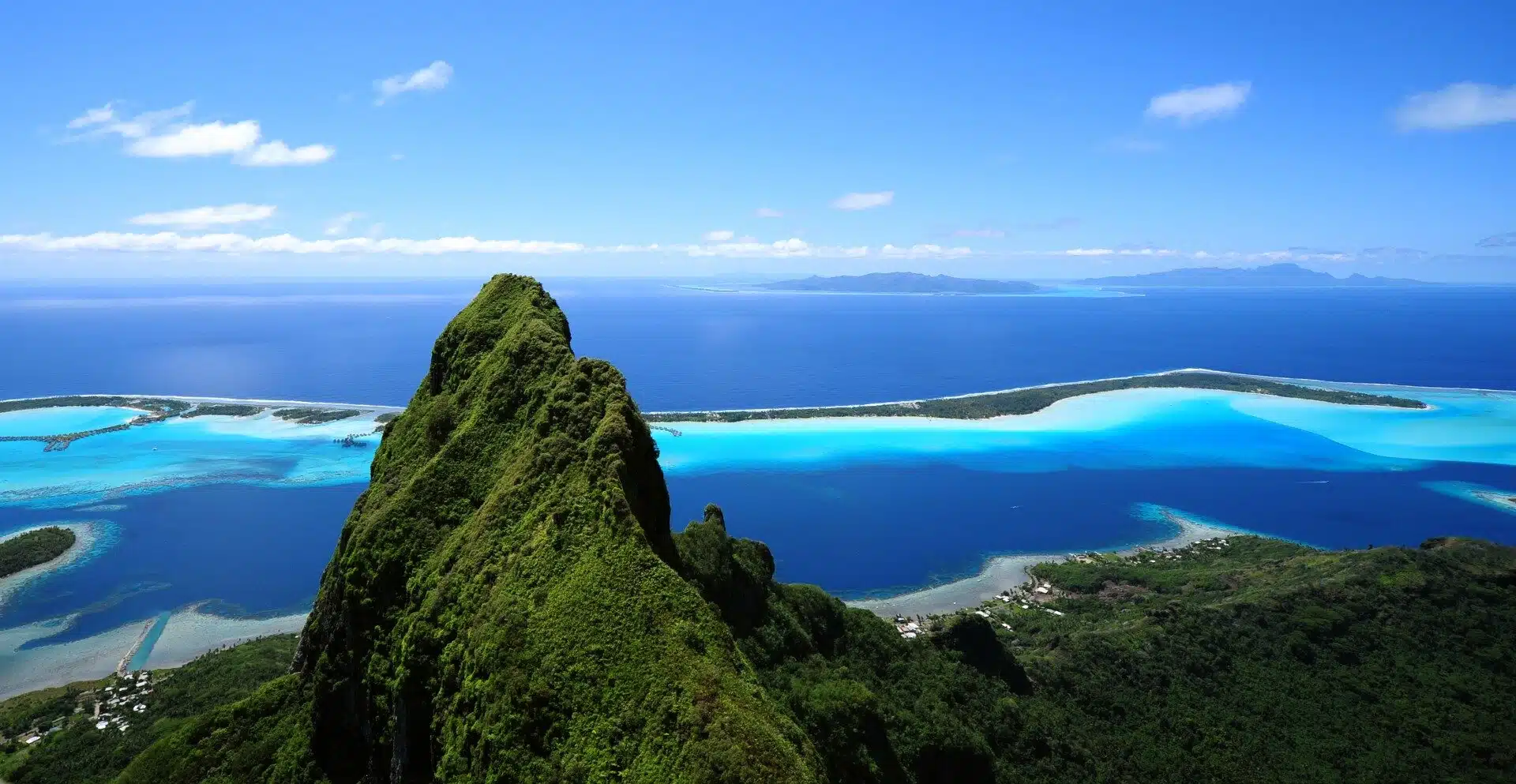
The lagoon of Bora Bora covers 32 square kilometers of water enclosed between the island and the outer barrier reef, with depths ranging from less than a meter on the inner sandbanks to over 30 meters in the reef channel. Mount Otemanu, the eroded volcanic peak at the center of the island, rises to 727 meters and is visible from every point on the water.
The lagoon is the reason most people come to Bora Bora, and the question of how to experience it is less simple than it appears. The standard lagoon tour departs from the main pier in the mid-morning on a motorized boat with between six and twenty guests and covers the stingray sandbank, the coral garden, the outer reef, and a motu for lunch within a fixed schedule.
The marine life encountered on this format, the blacktip reef sharks, the stingrays, the manta rays, and the coral fish of the inner reef, is the same as what a private outrigger canoe with a guide who has grown up on this water encounters. The difference is in the pace, the position, and the quality of the knowledge available during the time on the water.
Cultural and Historical Context
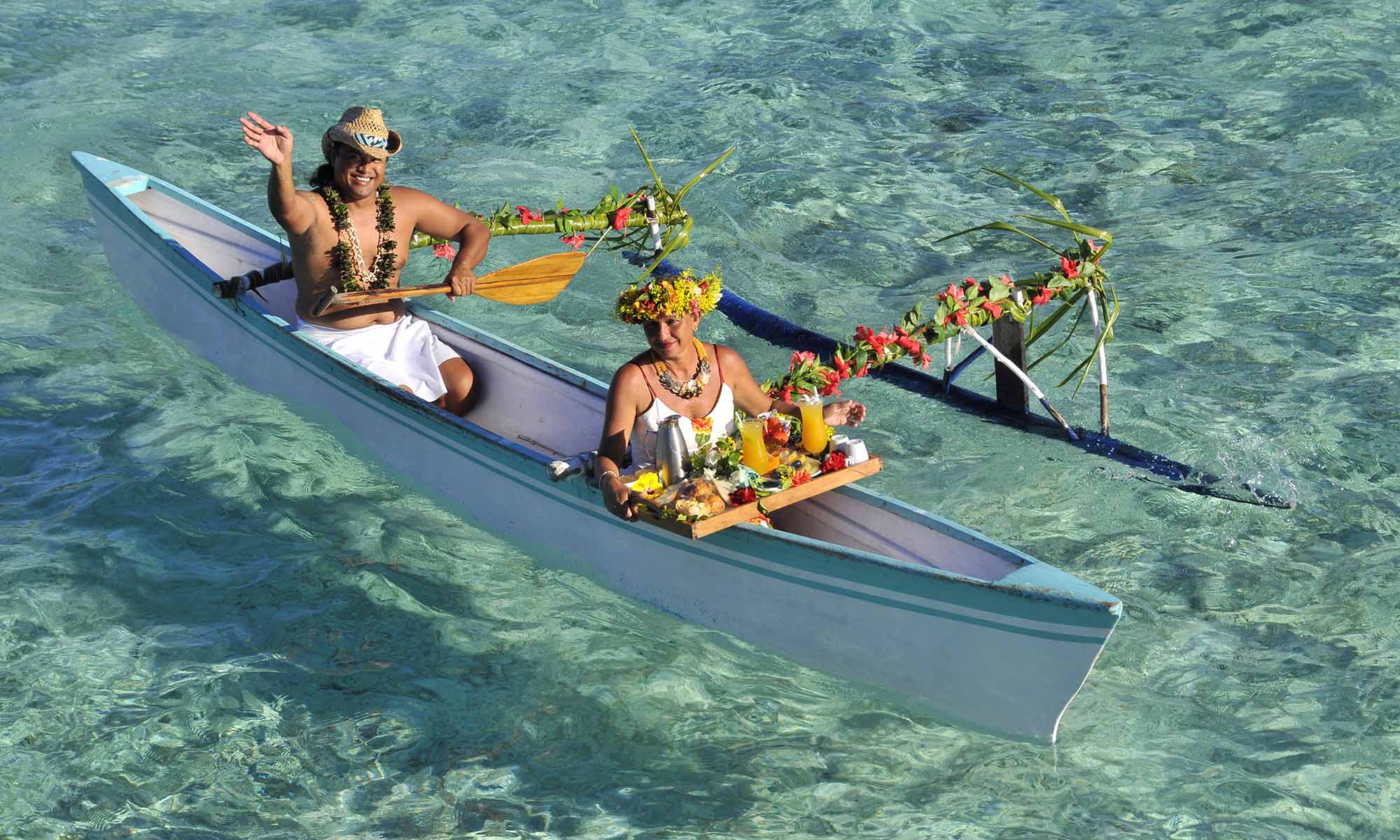
The outrigger canoe, known in Tahitian as the va’a, is the vessel that carried the ancestors of the Polynesian people across the Pacific from Southeast Asia to French Polynesia, Hawaii, and New Zealand across approximately 2,000 years.
The navigation methods used, reading stars, ocean swells, wind patterns, and bird behavior, were developed across generations of daily use on the same waters that surround these islands. The va’a remains in daily use across French Polynesia, and the guides who operate lagoon excursions come from families for whom the outrigger is a working tool rather than a tourist product.
The lagoon was formed over millions of years as the volcanic island of Bora Bora eroded and subsided below the Pacific, leaving the barrier reef that marks its original circumference. The motu on the reef’s edge are coral islands formed from the accumulated material of the reef itself, and the inner lagoon between them and the main island is the most sheltered and biologically productive section of the system.
Why Private or Small-Group Access Matters
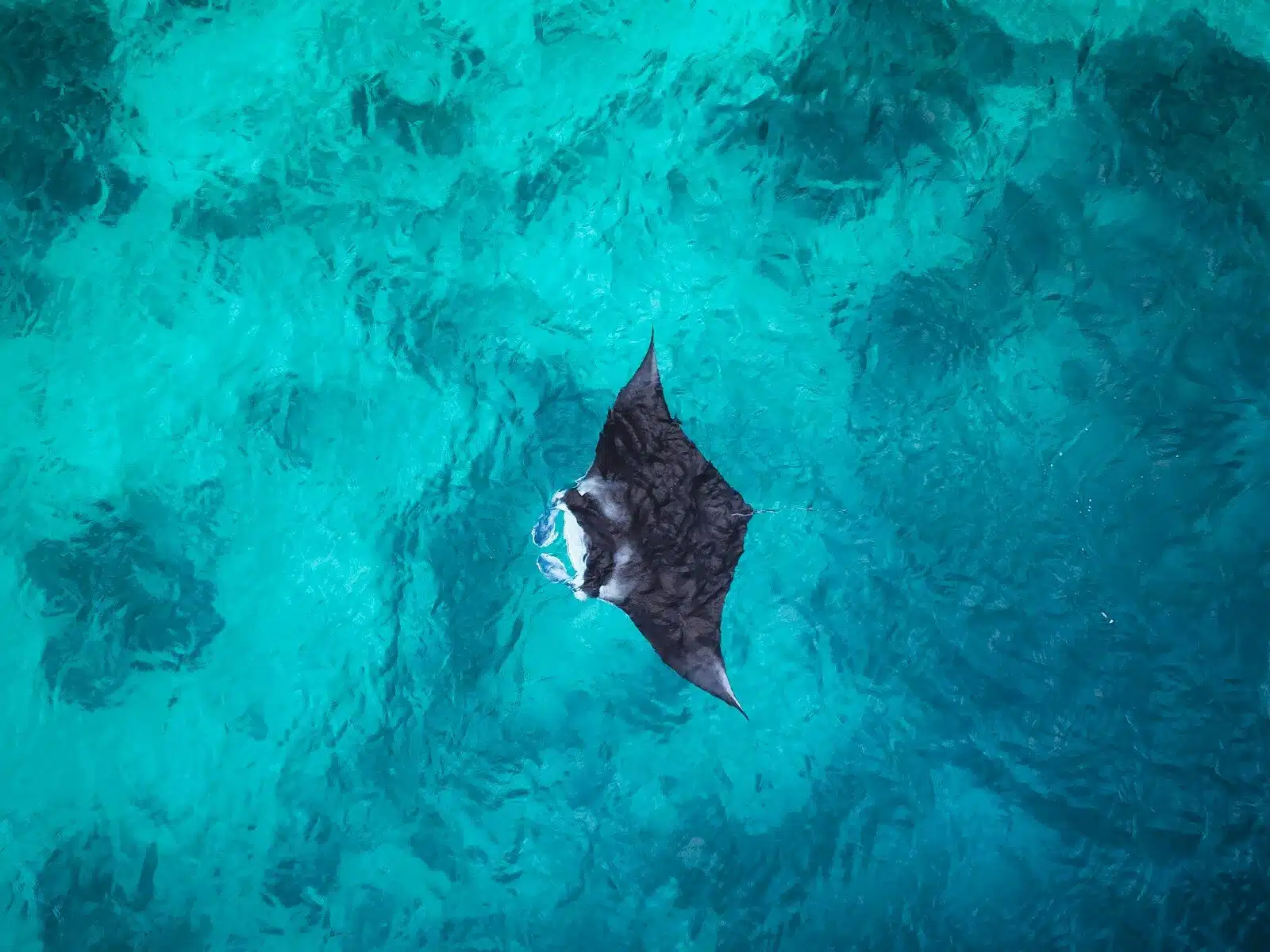
The manta ray cleaning stations in the Bora Bora lagoon are visited in the mornings only, as a conservation measure that reflects the sensitivity of the mantas’ behavior around human activity. A group tour that arrives at the cleaning station with fifteen guests entering the water simultaneously produces a different quality of encounter from a private canoe with two guests and a guide who can position the approach to minimize disturbance.
The manta ray, Mobula alfredi, feeds on plankton and uses the lagoon’s cleaning stations to remove parasites, hovering in the current while small wrasse fish work across the surface of their wings. The cleaning station behavior requires calm water, the right tidal flow, and a low level of human disturbance. A guide who can read whether conditions are right and position the canoe accordingly produces a different encounter from a group boat arriving on a fixed schedule.
The sandbanks of the inner lagoon shift seasonally with the current, and a guide who has been on the water daily for years knows where to find the current formations and what the tidal state means for depth and visibility at each point. The coral garden varies by location and by how much boat traffic an area has received in recent weeks. A private guide who can route the morning around current conditions rather than a fixed itinerary produces a more complete version of what the lagoon holds.
What You See
The canoe departs in the early morning, when the light is low and the inner lagoon holds a quality of quiet that disappears by 10am. The manta ray cleaning station occupies a section where the current brings plankton to the surface and coral formations below provide the cleaning fish the mantas depend on. The Mobula alfredi have wingspans reaching up to four meters, and at snorkel depth, with the animal passing beneath rather than beside you.
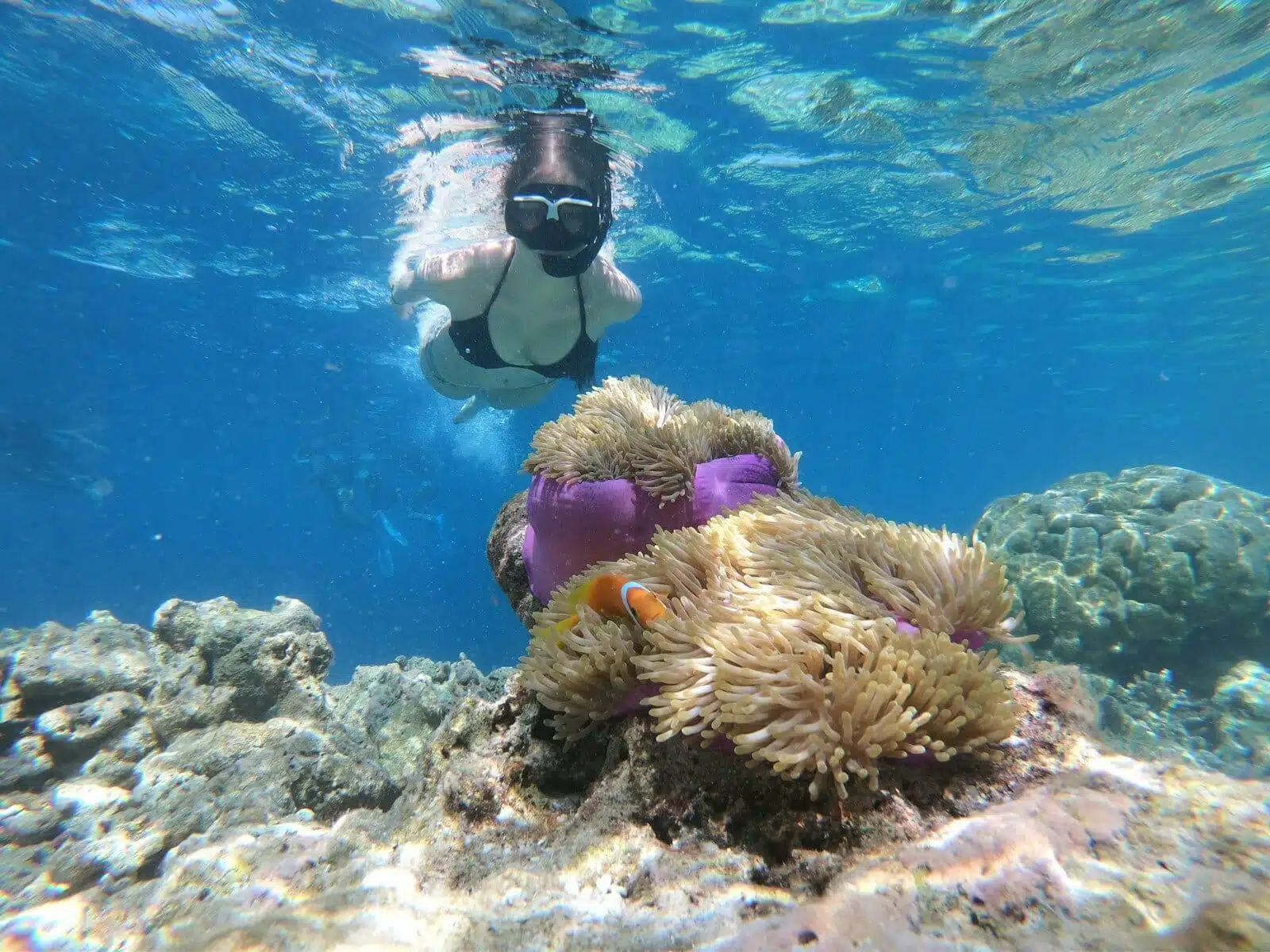
The stingray sandbank in the center of the lagoon is a shallow area of white sand where southern stingrays gather, accustomed to the presence of canoes and snorkelers, moving around rather than away from the people in the water. The coral garden on the inner reef holds plate coral, brain coral, and staghorn coral across a section that motorized boats avoid because of the shallow depth. At canoe depth, the guide can point out parrotfish, triggerfish, Napoleon wrasse, and moray eels in the formations at a pace a moving boat cannot match.
The outer reef channel, where the lagoon meets the open Pacific, holds blacktip reef sharks circling in the current at the point where the depth drops from the shallow lagoon floor to over 30 meters at the reef edge. From the canoe above the channel, with the blue of the open Pacific visible beyond the reef, the geography of the island’s formation is available in a form that the view from a motorized boat does not produce.
How Do Not Disturb Makes This Possible
Do Not Disturb works with a small number of Polynesian guides on Bora Bora whose knowledge of the lagoon extends to the tidal patterns, the seasonal movement of the manta rays, the current location of the shifting sandbanks, and the coral garden sections that receive the least boat traffic.
The morning is timed around the manta ray cleaning station’s most productive window, which is the early morning before the standard tour boats depart from the main pier. The guide is briefed on the guests’ swimming experience and specific marine interests before departure, and the route is adjusted to reflect the tidal and weather conditions on the morning of the visit.
Ready to plan your private morning on the Bora Bora lagoon by outrigger canoe and experience the reef and its marine life at the pace they deserve? Speak with Do Not Disturb to begin your journey.