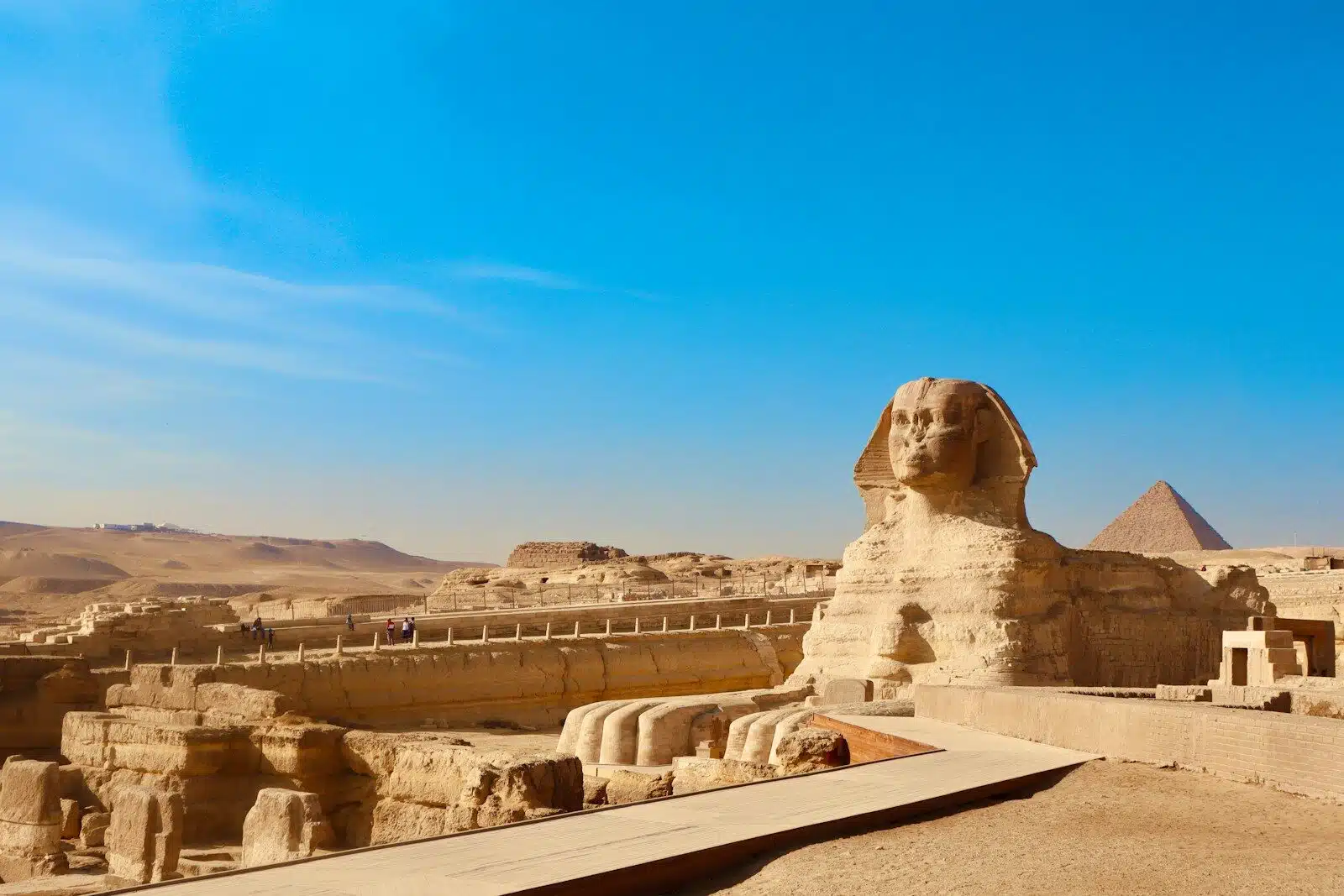

To travel through Egypt in pursuit of Cleopatra is to move between three distinct worlds – a Mediterranean port city, a capital layered with millennia of conquest, and a river that made all of it possible. This is not a journey through myth but through the history of a ruler whose Egypt can just about be seen, if you know where to look.
Alexandria: The City She Ruled
Alexandria was not an Egyptian city in origin. Founded by Alexander the Great in 331 BC and developed under the Ptolemaic dynasty, it was a Greek-speaking Mediterranean capital designed to project power across the ancient world. By the time Cleopatra VII came to rule in 51 BC, it was the largest city in the western world, home to the Great Library, the Mouseion, and a royal quarter that extended to the harbour’s edge.
That royal quarter now lies underwater. Seismic activity and rising sea levels submerged much of the ancient Ptolemaic shoreline, and what remains of Cleopatra’s palace complex sits on the floor of the Eastern Harbour. Underwater archaeological work has recovered statuary, columns, and structural remains, though access to this material is tightly controlled and not available to independent visitors.
On land, the Bibliotheca Alexandrina, built near the site of the ancient library, houses archaeological holdings and a dedicated antiquities museum with Ptolemaic artefacts. The Greco-Roman Museum, currently undergoing restoration, remains the city’s most significant repository of material from Cleopatra’s era.

About Do Not Disturb
Do Not Disturb is a luxury travel company specializing in carefully designed journeys and considered experiences. Each itinerary we build for our clients is informed by real destination knowledge, offering insight into places, cultures, and moments that shape how a trip comes together.
If this destination has sparked ideas, the itinerary can be developed into a private journey tailored to your interests and travel style, with hand-picked stays, thoughtful routing, and experiences curated around what matters most to you.
Beneath the Harbor: The Sunken Palace Quarter
Beneath Alexandria’s Eastern Harbour lies what archaeologists believe to be the royal quarter of ancient Alexandria, submerged by a combination of earthquakes and coastal subsidence over several centuries. Since the 1990s, French marine archaeologist Franck Goddio has led systematic excavations of the site, recovering sphinxes, statuary, and architectural fragments that correspond to structures described in ancient sources. The palace complex where Cleopatra lived and received Julius Caesar and Mark Antony is considered to fall within this zone.
Authorized dive access to the site exists but is not straightforwardly arranged. The excavations remain an active research project, and meaningful engagement with the underwater archaeology depends on coordination that goes beyond standard dive tourism.
If you’re to dive, the National Museum of Alexandria holds recovered artifacts from Goddio’s excavations alongside other material from the Ptolemaic period. The collection provides the clearest above-water account of what the submerged city contained, and is essential context for understanding the scale of what remains offshore.
Cairo and the Ptolemaic Thread
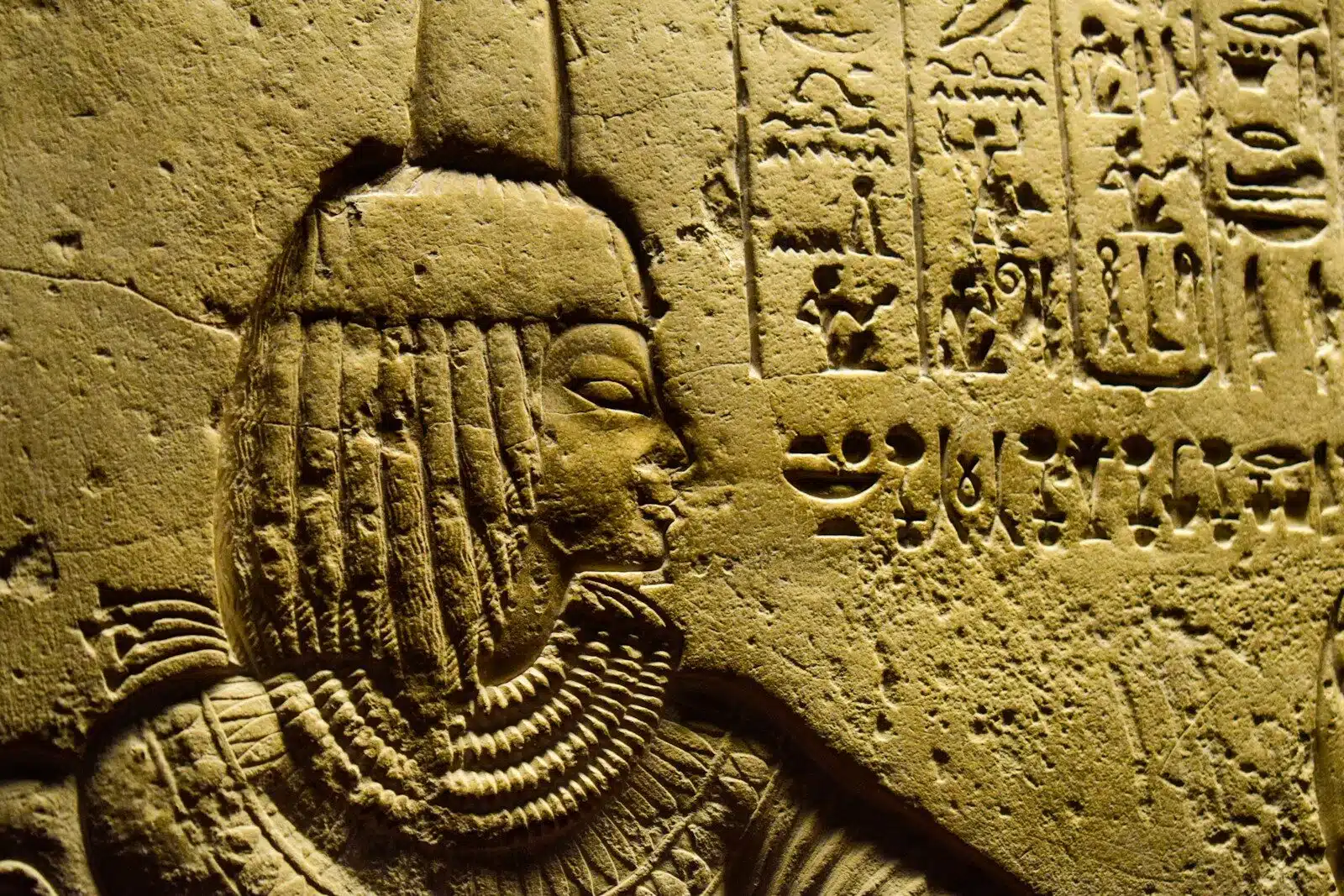
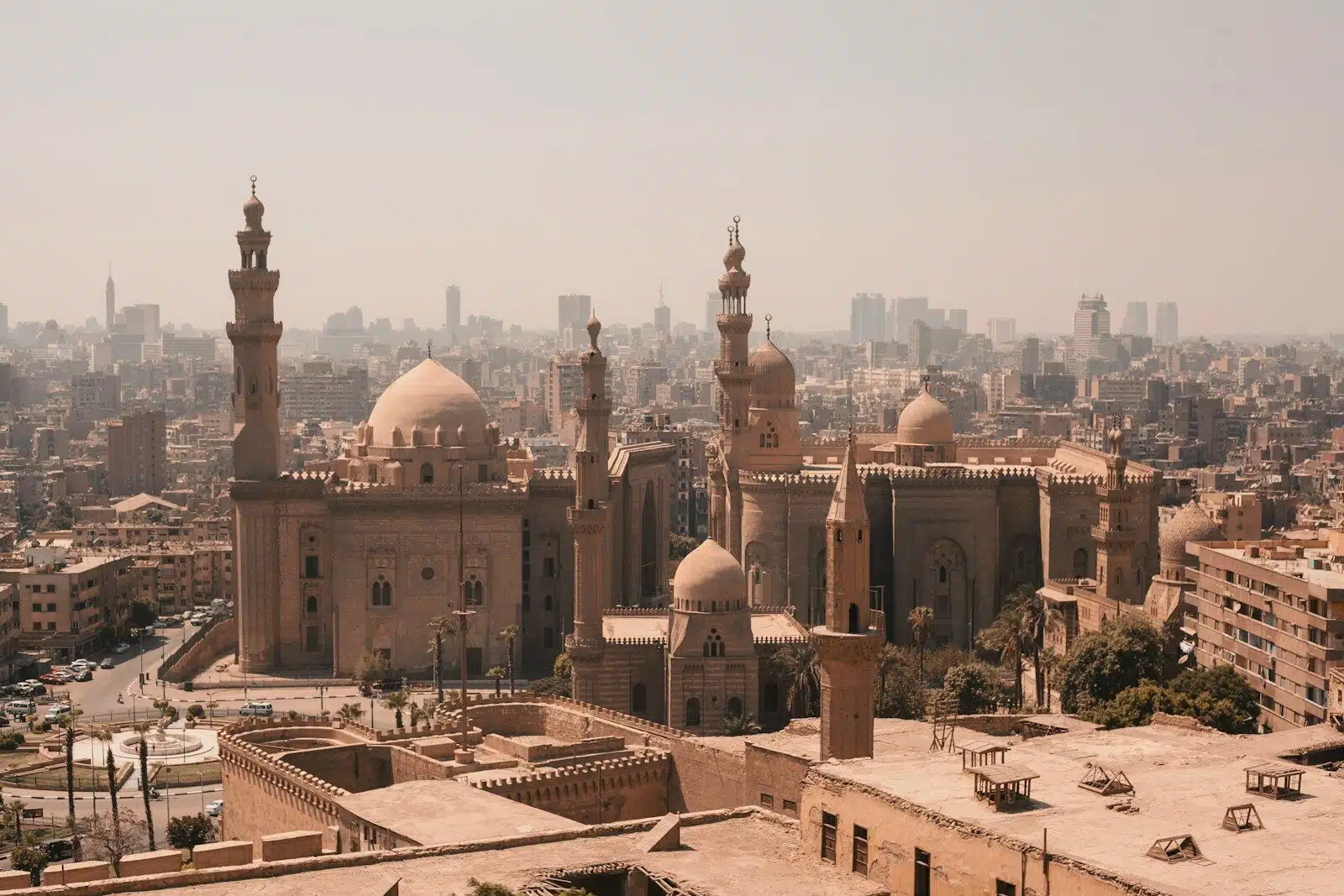
Cairo is not where Cleopatra ruled, but it is where the evidence of her dynasty is most systematically held. The Egyptian Museum on Tahrir Square contains one of the most significant Ptolemaic collections in the world, including portrait busts, ceremonial objects, and inscribed stelae that document the dynasty’s deliberate fusion of Greek political identity with Egyptian religious authority.
These are not decorative artefacts. They are administrative and ideological instruments, and they clarify how the Ptolemies sustained power across three centuries.
The collection is also a corrective to Alexandria’s losses. Much of what the ancient city once held is gone, and Cairo’s holdings fill critical gaps in the material record of the period. Specific objects, including Ptolemaic-era temple fragments and royal iconography, require contextual knowledge to interpret accurately.
Cairo functions, in this sense, as the scholarly counterpart to Alexandria’s geography. Together, the two cities make the Ptolemaic world legible in ways that neither can achieve independently.
The Nile: Power, Ceremony, and Movement
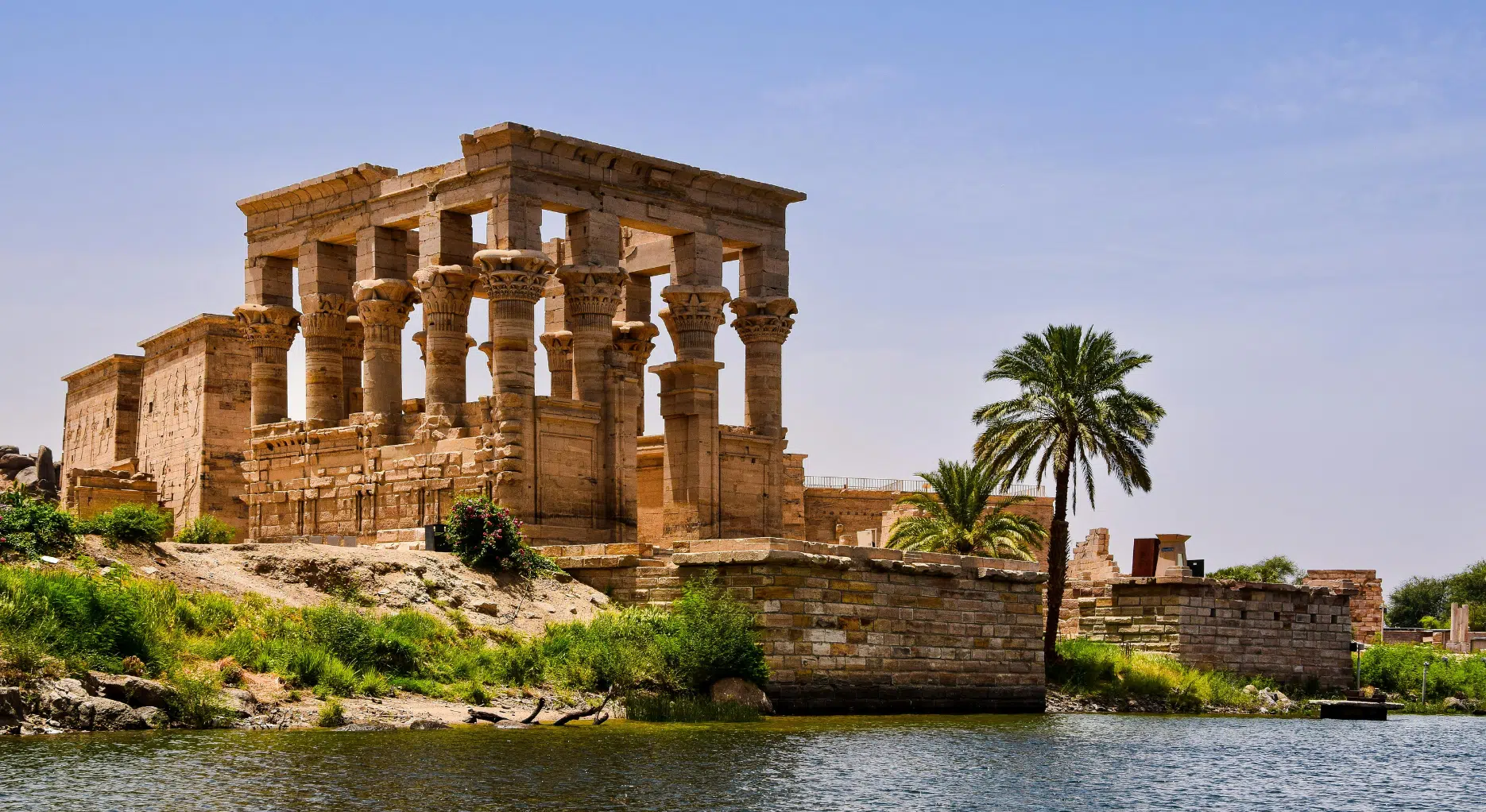
The Nile was not incidental to Ptolemaic power; it was the mechanism through which that power was expressed and maintained. Control of the river meant control of grain, taxation, and movement. Cleopatra understood this. Her ceremonial journeys along the Nile, including her procession to meet Antony, were calculated political performances designed to project divine authority to Egyptian audiences who expected their rulers to inhabit the landscape of the gods.
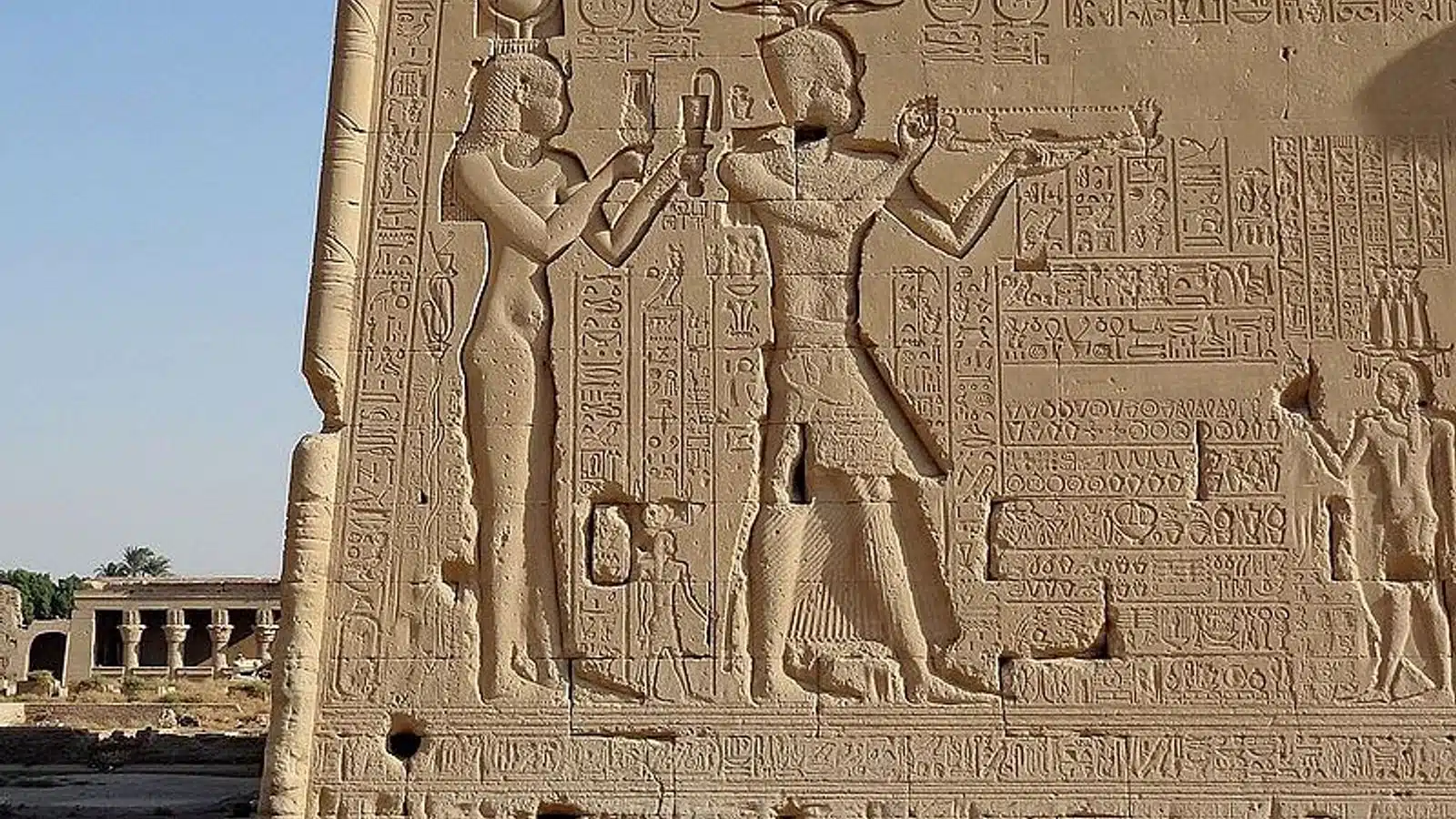
Two temples make this legible in stone. At Dendera, Cleopatra appears in relief on the rear exterior wall alongside Caesarion, her son by Julius Caesar, presented in the formal register of an Egyptian pharaoh. At Edfu, the Temple of Horus offers the most complete surviving example of Ptolemaic religious architecture, built across the dynasty’s final centuries and finished under her predecessors.
Dendera and Edfu: Her Image in Stone
The Temple of Hathor at Dendera contains one of the only surviving large-scale representations of Cleopatra. On the rear exterior wall, she is depicted alongside her son Caesarion in a formal offering scene, rendered in the conventions of Egyptian royal iconography. The choice to appear here in this form was deliberate. By presenting herself as pharaoh within a sacred context, she was asserting continuity with a tradition that predated the Ptolemies by millennia.
The Temple of Horus at Edfu, largely completed under her Ptolemaic predecessors, provides the broader context for that strategy. It is among the best-preserved temples in Egypt and demonstrates how the dynasty systematically adopted Egyptian religious forms to legitimise their rule. Cleopatra inherited and extended this approach.
Together, these two sites offer the most direct visual encounter with how she constructed her public identity. Neither requires interpretation through later sources. The evidence is on the walls.
How to Experience This History
The sequence matters. Alexandria functions best as an entry point, establishing the Hellenistic and Ptolemaic context before Cairo introduces the deeper layers of pharaonic and Roman Egypt. The Nile journey, whether by private dahabiya or curated cruise between Luxor and Aswan, belongs at the end. By that point, the historical thread is established and the monuments read differently.
The quality of this itinerary depends almost entirely on who is interpreting it. Egyptologists who specialise in the Ptolemaic period are not interchangeable with generalist guides, and access to certain collections, restoration sites, and institutional contacts is not available through standard channels. The difference between a competent itinerary and a rigorous one is largely a matter of those relationships.
October to April offers the most workable conditions across all three locations. Summer heat in Upper Egypt is a practical constraint, not a preference. The Egyptian Museum’s ongoing transition to the Grand Egyptian Museum also affects what is currently accessible in Cairo, and current status should be confirmed before any itinerary is finalised.
If you are planning a private journey through Alexandria, Cairo and the Nile, speak to our team about creating an itinerary built around your interests, with expert Egyptologists, private transfers and carefully selected hotels throughout.
Plan your own version of this journey
Speak to Do Not Disturb’s luxury travel experts and turn this moment into something personal.
Related destinations
Suggested articles
A Luxury Journey Through Ancient Egypt

Best Winter Sun Honeymoon Destinations in Europe
Portugal vs Spain for Your Honeymoon – Which Should You Choose?

One Island or Two? Splitting Your Maldives Honeymoon Between Resorts

Best Honeymoon Destinations for Autumn

Italy vs Greece for Your Honeymoon – Which is Better?

48 Hours in Lima: Where to Eat, Stay and Explore

A Cultural Honeymoon in Peru: Machu Picchu, Cusco, the Sacred Valley and the Amazon

Peru or Mexico: Which Ancient Civilization Should You Visit First?
The Best Time to Visit Machu Picchu for Fewer Crowds

Why So Many Travelers Fall for Kanazawa

Kyoto or Kanazawa – Which Is Better for Traditional Japan?

What Is a Kissaten? Inside Japan’s Historic Coffee Shop Culture