
On this page
The Munch Museum rises thirteen floors above Oslo’s harbour at Bjørvika, a dark, angular tower holding close to 28,000 works by Edvard Munch. At its top, sixty meters above ground, sit Tolvte and Kranen, a restaurant and bar stacked one above the other, both looking straight out over the fjord. A private guide moves you through the galleries, and the visit closes over dinner and drinks at a table already held for you on the twelfth and thirteenth floors.
Cultural & Historical Context
The Munch Museum opened in Bjørvika in 2021, a thirteen-story building designed by the Spanish firm Estudio Herreros to hold the largest collection of work by a single artist held anywhere in the world, bequeathed to the city of Oslo by Munch himself. The building leans slightly towards the water, a deliberate gesture by the architects towards the harbour it overlooks.
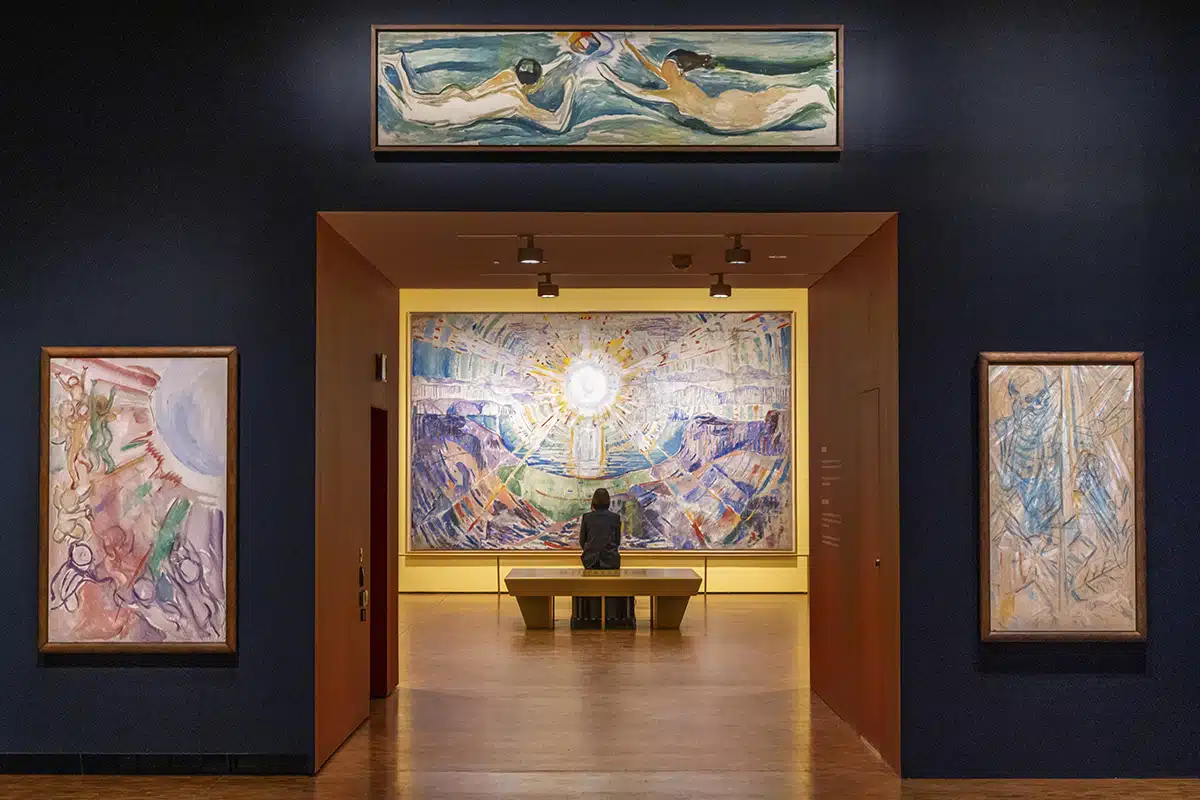
The collection spans six decades of Munch’s work, from the anxious, expressive paintings that made him famous, The Scream among them, through to the quieter portraits and prints of his later years. At the very top of the same tower sits Kranen, an indoor and outdoor bar sixty meters above the ground, closely connected to Bistro Tolvte, the restaurant on the floor just below it. The pairing puts one of the world’s most significant single-artist collections and one of Oslo’s highest bars inside a single building.
Why a Guide and a Held Table Matter
The museum draws a steady stream of visitors during regular hours, and Munch’s best-known works tend to gather a crowd around them. A private guide changes the pace of the visit without needing special access: more time in the rooms that hold your attention, and context on Munch’s life and work that a self-guided visit would miss.
The same logic applies upstairs. Kranen fills quickly, particularly for its wooden deck and sofas in the warmer months, and a reserved table means arriving to a spot already held rather than competing for space on a terrace sixty meters above the street. The day moves from a considered look at the collection into one of the highest views in Oslo, without either half spent waiting.
What You Experience
The visit begins in the galleries with a guide who works through the collection in whatever order suits you, spending real time with the paintings that draw your attention rather than following a fixed script. The guide’s knowledge extends into Munch’s life and the reasoning behind how the museum’s rooms are arranged, context that turns a walk past the paintings into something closer to a conversation with them.
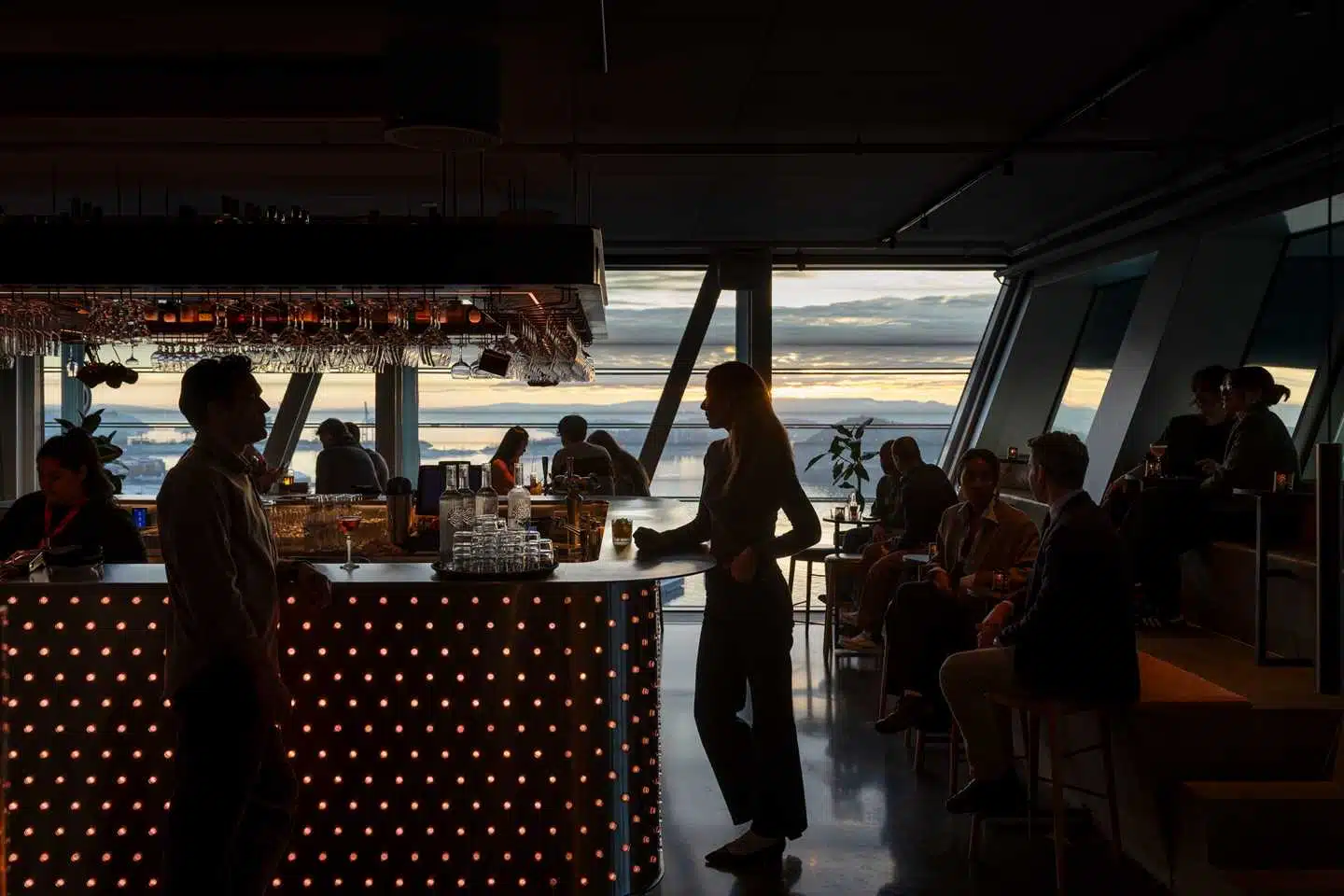
From the galleries, the elevator rises to the twelfth floor, where Tolvte serves Norwegian dishes through panoramic windows facing the harbour, an indulgient dinner rather than a quick stop between the museum and the view.
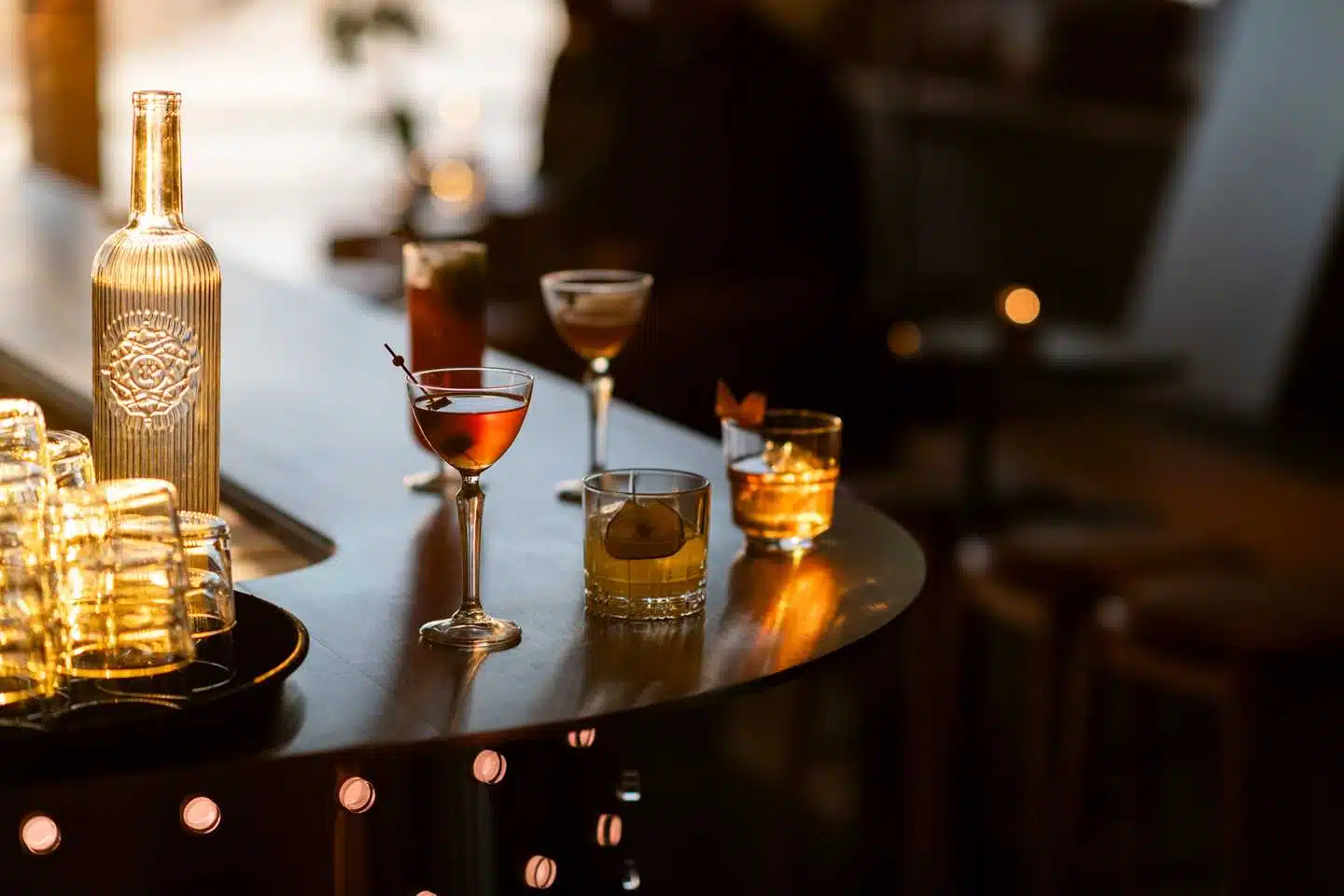
Afterwards, a short climb to the thirteenth floor brings you to Kranen, an intimate interior lounge alongside a wooden decked terrace, where cocktails, spritz, beer, and sparkling wine round out the evening under a smart casual dress code that suits the setting. Your table looks straight out over the Oslo Fjord and the working harbour beyond it, the city’s skyline sitting low against the water. In the warmer months, the terrace’s sofas are the place to be as evening settles in; through the colder ones, the indoor lounge holds the same view behind glass.
How Do Not Disturb Makes This Moment Happen
Arranging a private guide through the Munch Museum alongside held tables at Tolvte and Kranen means coordinating a museum guide’s schedule with two of the city’s most sought-after rooms for a view into a single smooth evening. Do Not Disturb handles all three directly, drawing on connections built across the world of private travel to confirm the right guide and hold your tables timed to follow the visit.
The result is a considered walk through one of the world’s most significant single-artist collections, followed by dinner and drinks at the highest point in the city, sixty meters above the fjord.