
On this page
Once the US Embassy, now London’s most talked-about hotel, The Chancery Rosewood transforms Grosvenor Square’s modernist landmark into the city’s newest luxury address.
For six decades, a gilded eagle cast from B-52 bomber aluminium watched over Grosvenor Square as the symbol of American diplomatic power in Britain. Its 11-meter wingspan crowned Eero Saarinen’s brutalist masterpiece, the purpose-built U.S.
Embassy that opened in 1960 as a bold statement of mid-century modernist ambition. Diplomats, spies, presidents, and protesters all passed beneath that eagle, and the building became synonymous with Anglo-American relations at their most complex and consequential.
The eagle still presides over the square. But everything beneath it has transformed.
In September 2024, The Chancery Rosewood opened its doors, converting one of London’s most politically charged buildings into what may be the capital’s most ambitious luxury hotel. This is not just another high-end property occupying a historic structure.
It is a Grade II-listed architectural icon reimagined by Sir David Chipperfield and interiors architect Joseph Dirand into an all-suite hotel that is already positioning itself as London’s most expensive and exclusive address. With penthouse suites commanding £60,000 per night and a restaurant roster that reads like a greatest hits of international dining, The Chancery Rosewood represents a new peak in London luxury.
An Architectural Landmark Reborn
Eero Saarinen’s design for the U.S. Embassy was controversial from the moment it was unveiled. The Finnish-American architect, famous for the TWA Terminal at JFK and the Gateway Arch in St. Louis, created a six-story building that deliberately contrasted with the Georgian terraces surrounding Grosvenor Square.
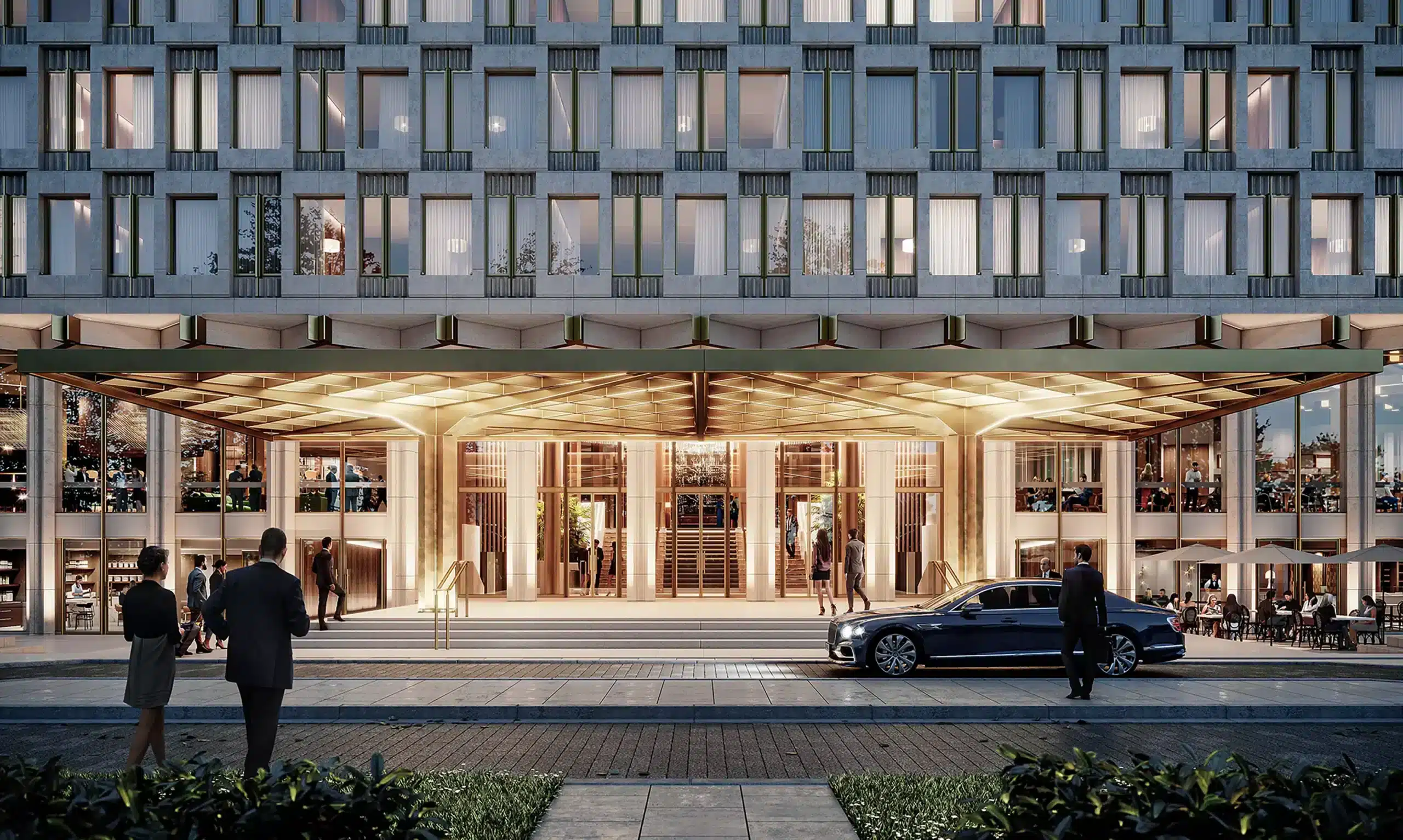
Its façade features a distinctive checkerboard pattern of Portland stone and bronze-tinted windows, creating what was described at the time as either a bold modernist statement or a brutalist intrusion, depending on your architectural sympathies.
The building’s most striking feature remains Theodore Roszak’s golden eagle, commissioned in 1960 and cast in Brooklyn specifically for the embassy. The sculpture’s aluminium came from decommissioned B-52 bombers, a deliberate choice that connected America’s diplomatic presence to its military might during the height of the Cold War.
When the building achieved Grade II listed status in 2009, that eagle became legally protected, forever binding it to Saarinen’s creation even as the embassy itself prepared to relocate.
The U.S. Embassy departed for its new home in Nine Elms in 2017, leaving behind a building rich with history but deeply unsuited to modern diplomatic security requirements. Qatari Diar acquired the property in 2009 for a reported £500 million, recognising that Grosvenor Square’s prestige and the building’s architectural significance created extraordinary potential for transformation.
Chipperfield’s Intervention
Converting a 1960s embassy into a 2020s luxury hotel presented extraordinary challenges. The building’s listed status meant the exterior had to be preserved with minimal alteration. Security features accumulated over decades, from blast-proof barriers to concrete landscaping, needed removing without damaging the original design. And the entire structure required upgrading to contemporary standards while respecting Saarinen’s vision.
David Chipperfield Architects approached the project with characteristic restraint. The firm’s philosophy centres on what they call “disciplined continuity,” allowing great architecture to speak without overwhelming intervention.
They removed the defensive clutter that had accumulated around the building, restored the Portland stone façade to its original lustre, and crucially, respected the building’s proportions and sightlines from the square.
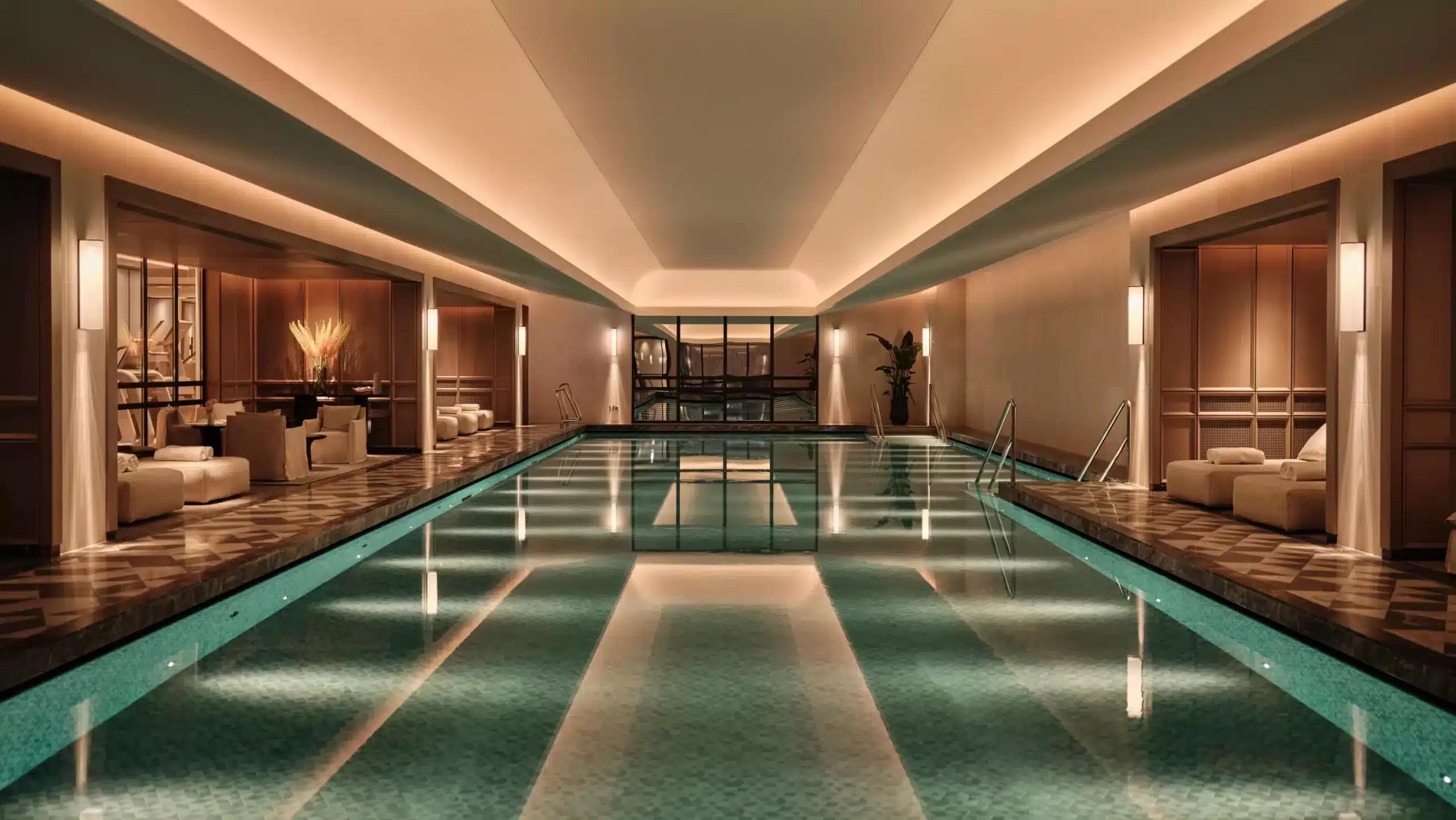
The transformation nearly doubled the building’s footprint through a four-story excavation beneath the original structure. This subterranean expansion created space for the Asaya Spa, including a 25-meter swimming pool, treatment rooms, and the Taktouk Clinic, without altering the building’s external profile.
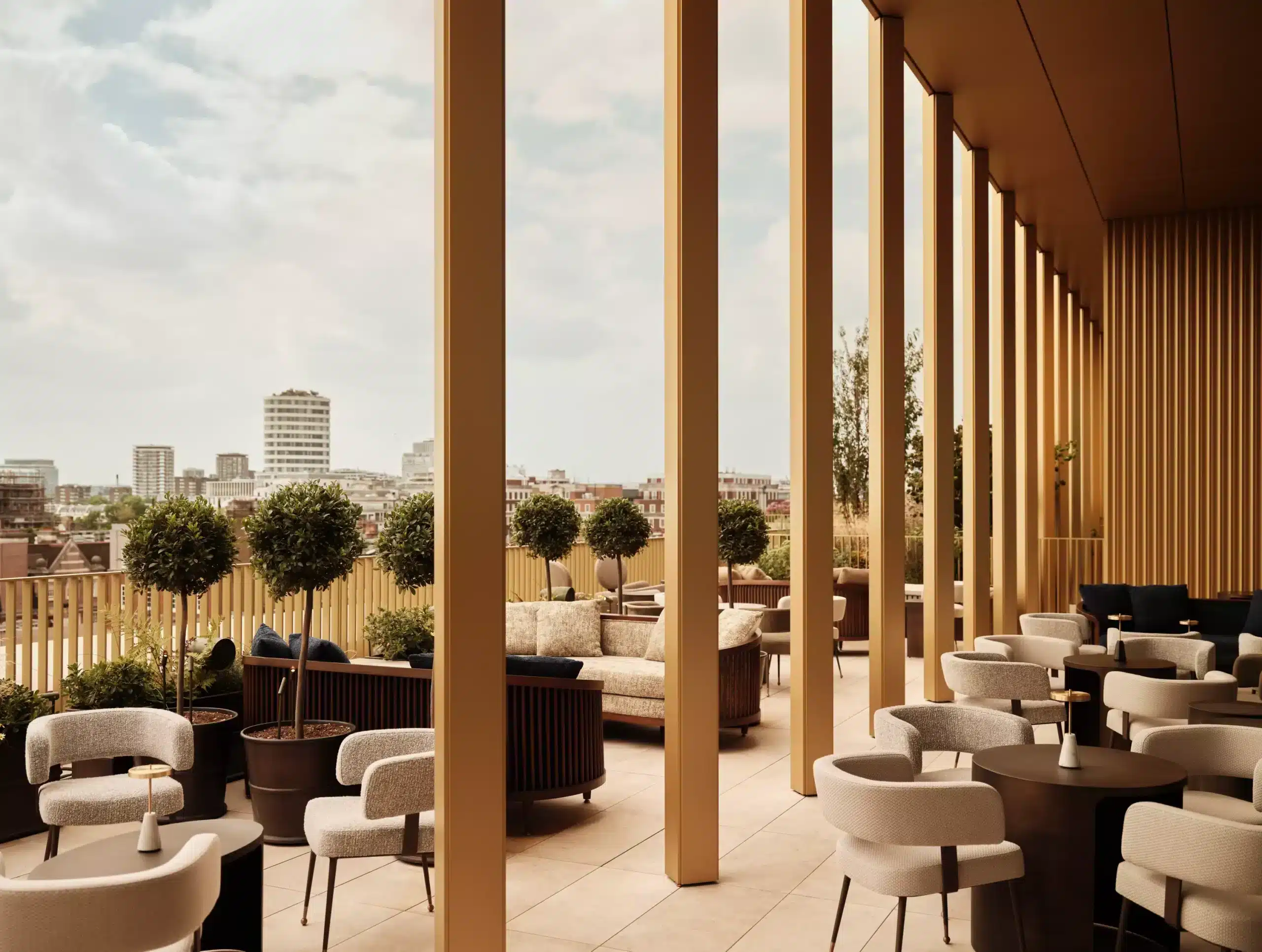
The rooftop addition, carefully designed to be invisible from street level, houses the Eagle Bar with its Manhattan-style views across Mayfair.
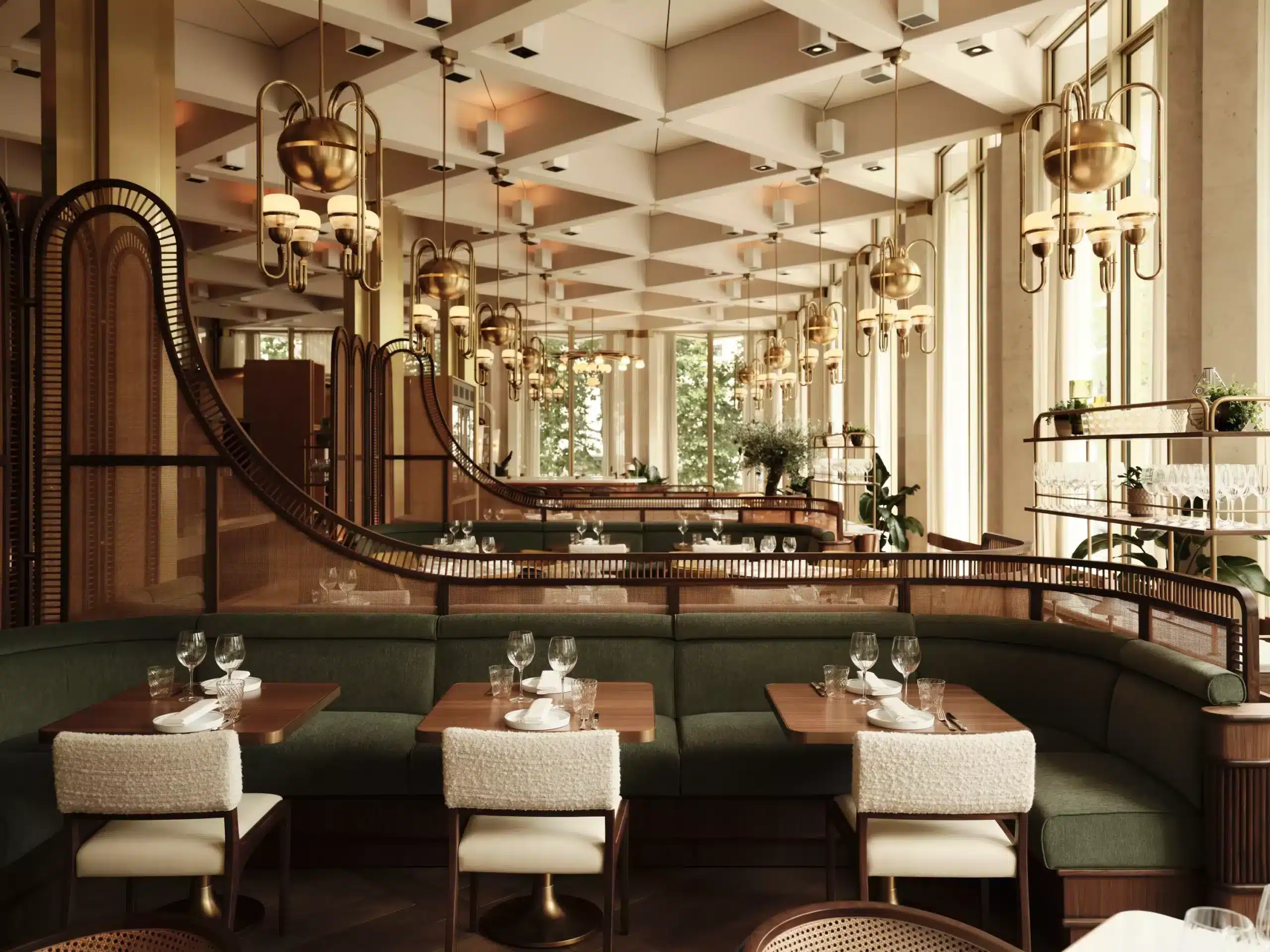
Inside, Chipperfield’s team exposed Saarinen’s original diagrid ceiling structure, a geometric lattice that had been hidden for decades. This restoration reveals the building’s structural beauty while creating dramatic spaces for the hotel’s public areas.
The grand ballroom, capable of hosting 750 guests, occupies what was once secured embassy space, now transformed into one of London’s most architecturally significant event venues.
Dirand’s Residential Luxury
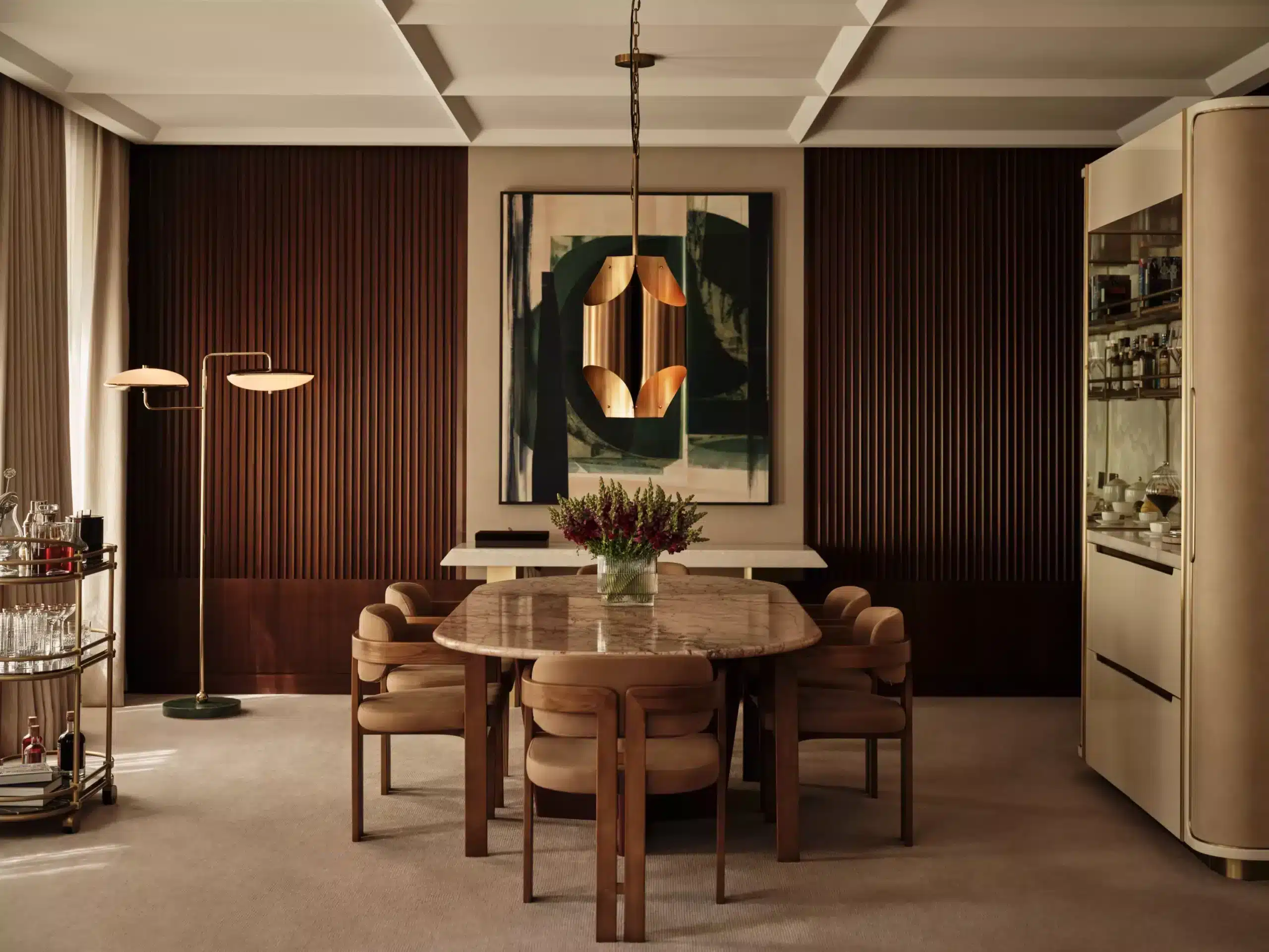
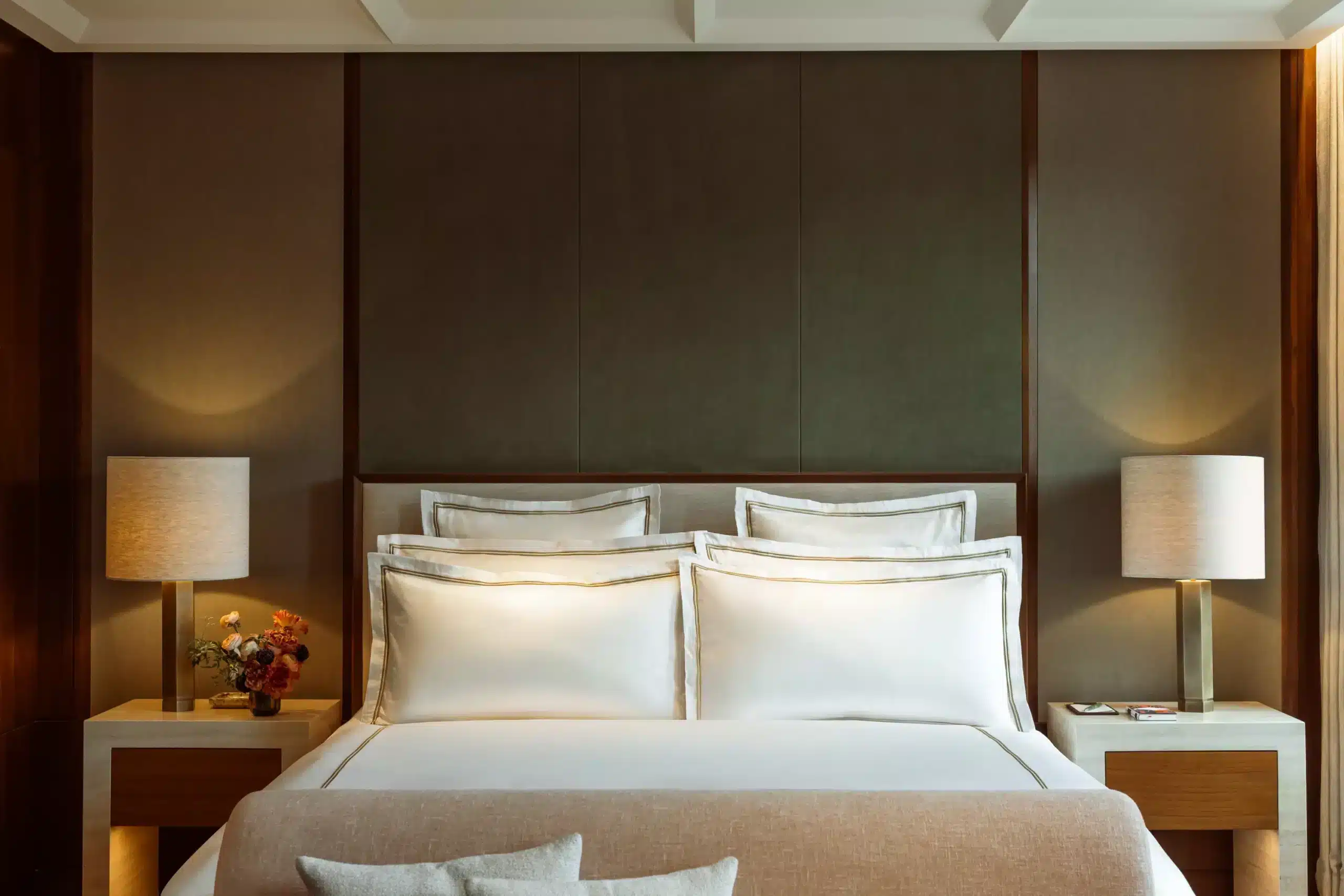
French architect Joseph Dirand, known for his work on Baccarat Hotel New York and various Pucci boutiques, handled the interior design with an aesthetic he describes as Art Deco meets mid-century glamour filtered through a contemporary British sensibility. This is luxury as understatement rather than ostentation, which positions The Chancery distinctly from London’s heritage hotels.
All 144 accommodations are suites, averaging 185 square meters, comparable to substantial Mayfair apartments. This represents a radical departure from traditional hotel room configurations.
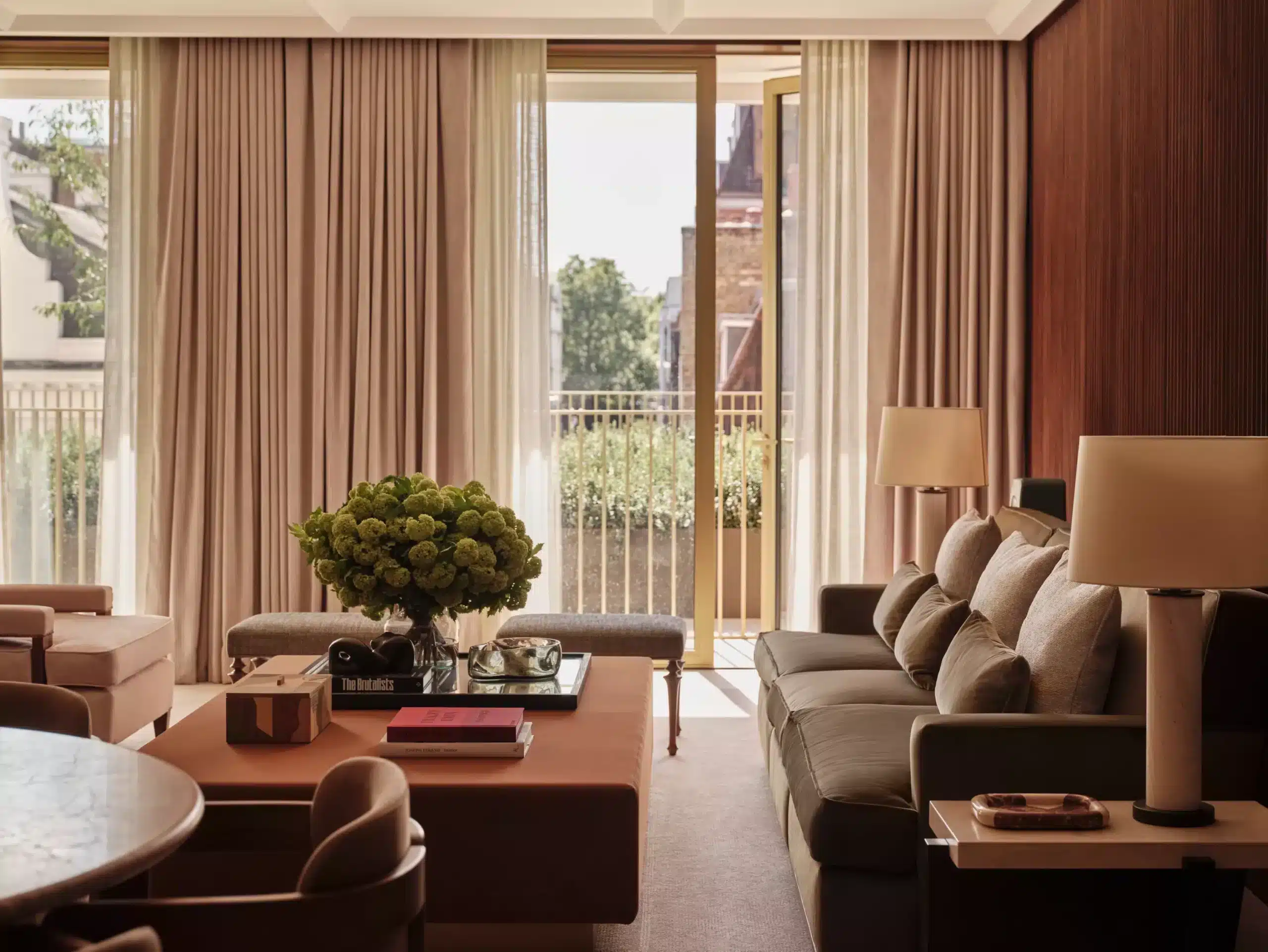
Dirand designed spaces that feel residential rather than hotel-like, with separate living areas, full kitchens in many suites, and an emphasis on natural light through Saarinen’s expansive windows.
The colour palette emphasises warm neutrals: honey-toned woods, soft grays, and cream upholstery. Bathrooms feature sleek stone surfaces and walk-in showers rather than the gilt and marble excess common in luxury hotels.
The effect is surprisingly calming for Mayfair, where hotels often compete to out-opulent each other. Here, luxury announces itself through space, light, and quality rather than decoration.
Suites and houses carry names connected to the building’s diplomatic past: the Saarinen House, John Adams House, Kennedy House, and Chancery House. The two seventh-floor penthouses, Elizabeth House and Charles House, represent the pinnacle. Each spans multiple levels with private terraces, full kitchens, dining for ten, and those £60,000-per-night rates that have positioned The Chancery as London’s most expensive hotel accommodation.
A Dining Destination
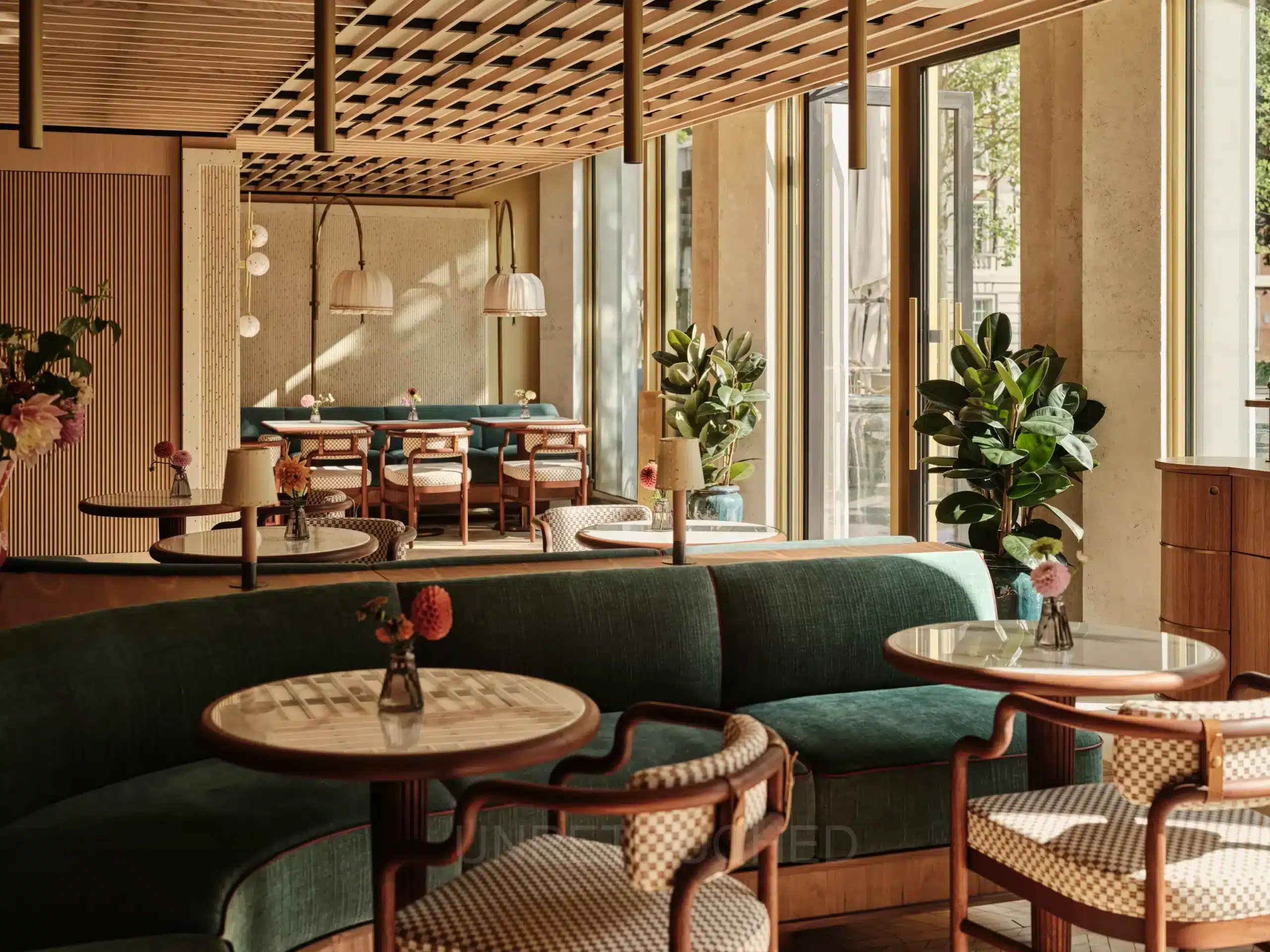
The Chancery Rosewood’s culinary ambition is staggering: eight restaurants and bars, each conceived as a destination in its own right rather than simply hotel dining options. This strategy transforms the property into a neighbourhood hub, attracting Londoners who might never stay at the hotel but will certainly dine there.
The crown jewel is Carbone, the first European outpost of New York’s legendary Italian-American restaurant. Carbone has defined maximalist dining in Manhattan since 2013, serving tableside Caesar salads and veal parmigiana. Its London arrival has been one of the city’s most anticipated openings, and The Chancery provides a suitably dramatic setting.
Tobi Masa brings Michelin three-star chef Masayoshi “Masa” Takayama to London for the first time. Takayama’s New York restaurant charges over £750 per person for omakase, and expectations for his London debut are correspondingly astronomical. Early reports suggest he has delivered, with pristine sushi and Japanese technique that rivals anything in the city.
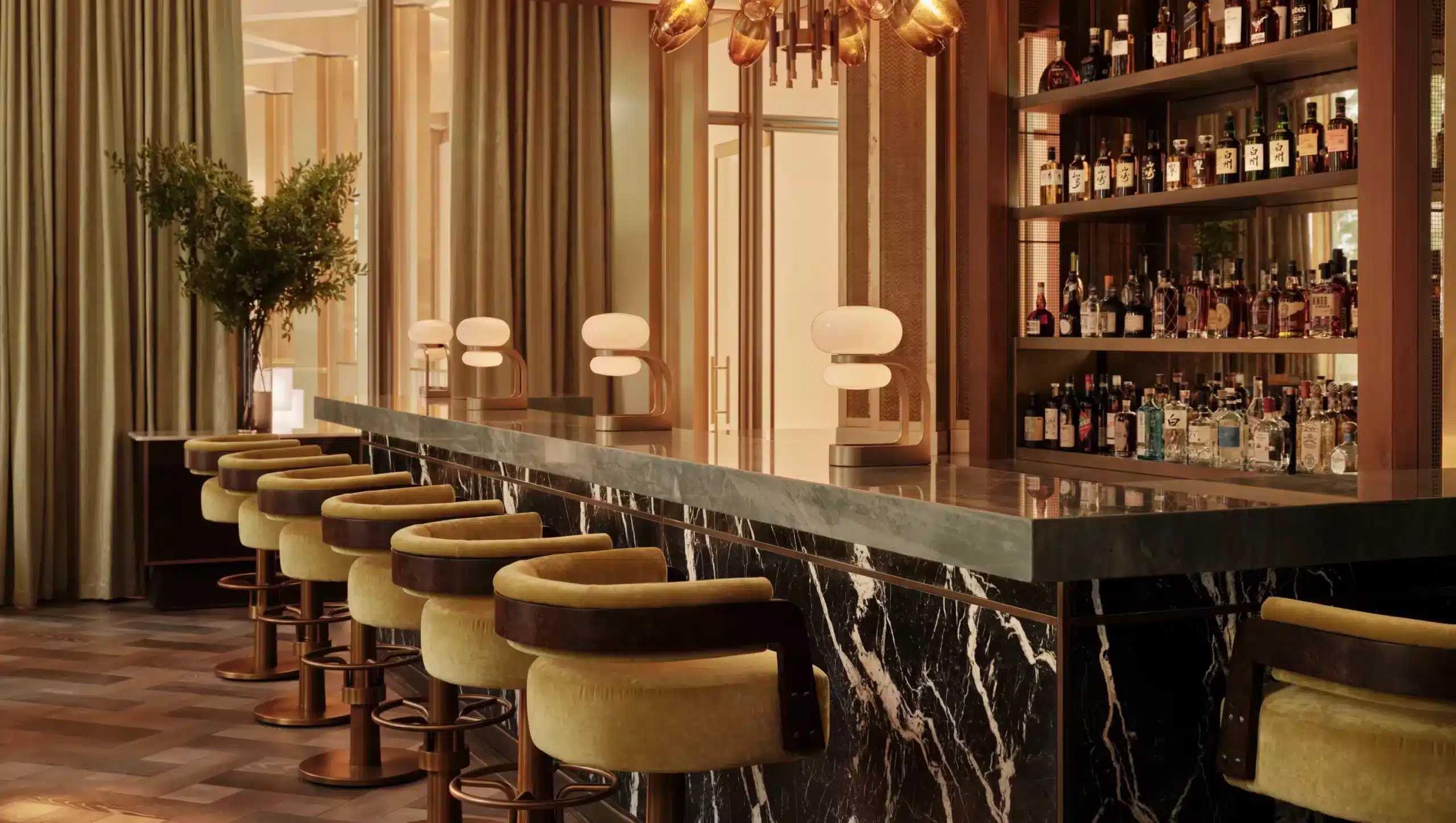
Serra offers southern Mediterranean cuisine in a greenhouse-inspired setting that provides all-day dining from breakfast through late-night cocktails. The Eagle Bar, occupying the seventh floor with views across Mayfair, channels New York rooftop culture with premium spirits, craft cocktails, and small plates that have quickly established it as one of London’s most desirable bars.
The remaining venues cover everything from casual dining to intimate private rooms, creating a portfolio that ensures guests never need to leave the building while providing enough variety to draw repeat visits from locals.
Wellness as Luxury
The subterranean Asaya Spa, designed by Yabu Pushelberg, represents Rosewood’s holistic wellness philosophy. The 25-meter swimming pool, surrounded by columns that reference the building’s brutalist heritage, creates a cathedral-like space for swimming.
Five treatment rooms offer therapies that blend Eastern and Western techniques, from traditional Thai massage to contemporary facial treatments.
The Taktouk Clinic, integrated within the spa, represents something genuinely new for London hotels. Dr. Wassim Taktouk, one of Britain’s most respected aesthetic dermatologists, operates his second clinic here, offering medical-grade skincare, aesthetic treatments, and dermatology services that go far beyond typical hotel spa offerings.
Tiered spa memberships provide access to the facilities for non-guests, creating a community around the wellness offering.
The fitness centre features Technogym’s latest equipment, while the steam rooms, saunas, and relaxation areas provide spaces for recovery between treatments or workouts.
The Rosewood Philosophy
Rosewood Hotels & Resorts, owned by Hong Kong-based Chow Tai Fook Enterprises, operates 30 properties globally with a philosophy they call “A Sense of Place.” Each property should reflect its location’s culture and history rather than impose a corporate template. This approach has created hotels as diverse as Rosewood Hong Kong’s modern tower and Rosewood Castiglion del Bosco’s Tuscan estate.
The Chancery Rosewood embodies this philosophy through its deep connection to the building’s history. Rather than erasing the embassy past, Rosewood highlights it. The eagle remains the hotel’s symbol. Historical photographs and artefacts from the building’s diplomatic era appear throughout the property. Even the name “Chancery” references the building’s original purpose, the first purpose-built chancery in London.
Service standards reflect Rosewood’s “Relationship Hospitality” approach: hyper-personalisation, flexibility, and long-term relationships with guests.
The most visible manifestation is the no-fixed check-in or check-out policy. Guests define their own schedule, with the hotel accommodating arrivals and departures at any time without supplements. Butler service comes standard with Signature Suites and Houses, while all guests receive house car service within central London.
Positioning Against London’s Luxury Titans
London’s luxury hotel landscape has traditionally been dominated by heritage properties: Claridge’s with its Art Deco glamour, The Connaught with its Michelin-starred dining, The Savoy with its Thames-side history, and Mandarin Oriental Hyde Park with its contemporary elegance. Each offers a distinct vision of luxury rooted in tradition, formal service, and established reputation.
The Chancery Rosewood presents an alternative. Where Claridge’s offers heritage-led staging and formal choreography, The Chancery provides contemporary residential comfort and privacy-first service. Where The Connaught emphasises intimate townhouse scale, The Chancery delivers apartment-sized suites. Where traditional luxury hotels follow established patterns, The Chancery rewrites the rules.
The Grosvenor Square Context
Location matters in luxury hotels, and Grosvenor Square carries unique significance. Known historically as “Little America” due to the embassy presence, the square sits at the heart of Mayfair, London’s most expensive neighbourhood.
The Connaught occupies Carlos Place just around the corner. Claridge’s is a five-minute walk. The square itself, one of London’s largest, provides rare green space in central London.
The Chancery’s ground-floor retail and restaurant spaces open directly onto the square, creating permeability between the hotel and its surroundings. This contrasts sharply with the building’s embassy era, when security concerns created fortress-like separation.
Now, Londoners can walk through the building, dine in its restaurants, or simply admire the architecture without staying at the hotel.
Why It Matters
For luxury travellers, The Chancery offers something London has lacked: genuinely residential-scale luxury accommodation in an architecturally significant building at the heart of Mayfair. The combination of space (those 185-square-meter suites), location (Grosvenor Square), design pedigree (Chipperfield and Dirand), and dining programme (Carbone, Masa, Serra) creates a package unavailable elsewhere in the city.
The property has particular appeal for American guests, who appreciate the historical connection, understand the cultural references in the dining programme, and respond to the more relaxed service style compared to formal British luxury hotels.
The gilded eagle still watches over Grosvenor Square. But now it presides over an impeccably stylish hotel for luxury travellers.