



On this page
For discerning travellers arriving in London with water on their minds, the city presents an immediate dilemma: surrender to the Thames and its revitalised riverfront neighbourhoods, or use London as a launchpad for the coastal and rural escapes that lie within 90 minutes of the capital. The answer, for those with time and curiosity, is rarely one or the other.
Two Bodies of Water, Two Entirely Different Journeys
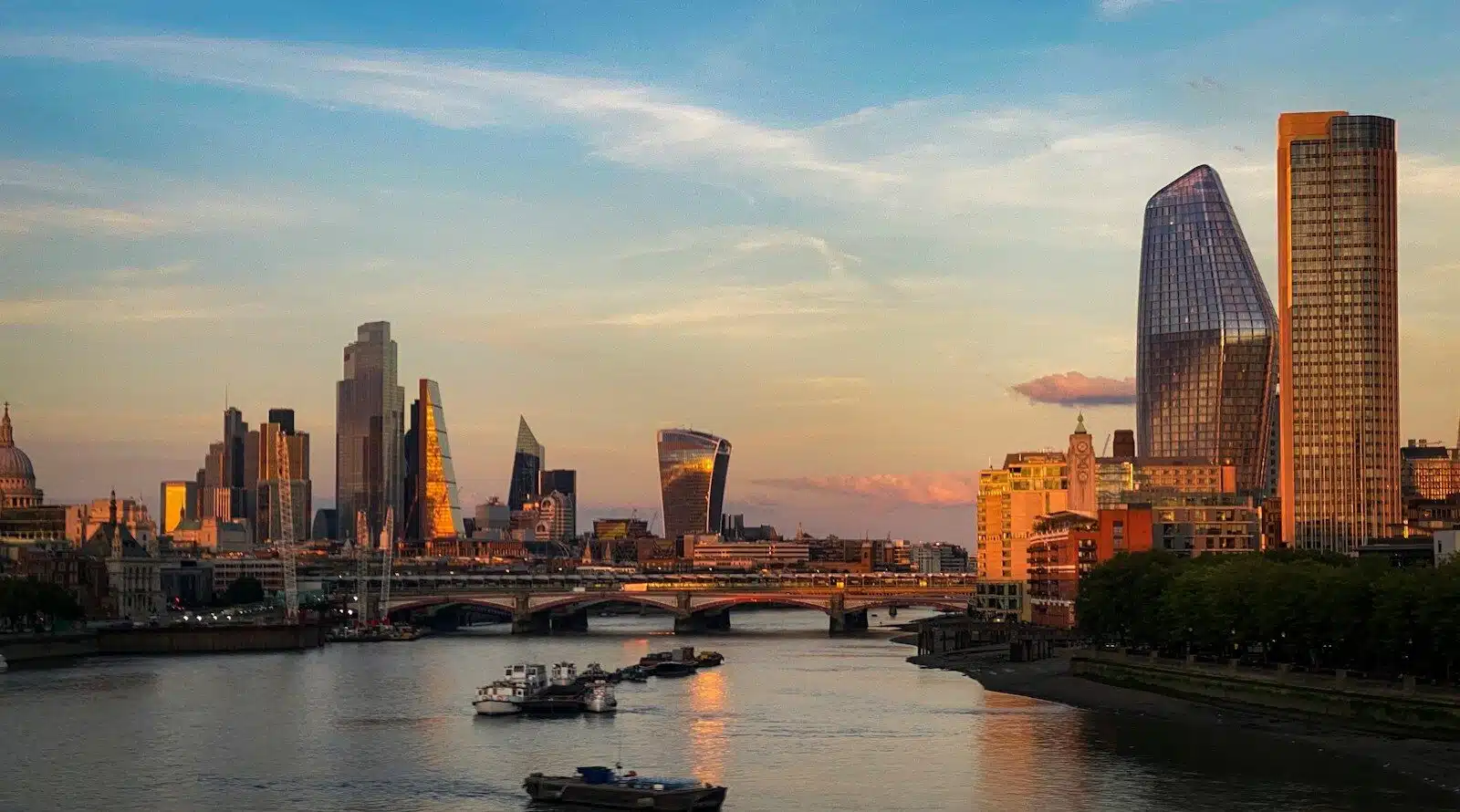
The Thames is not simply a backdrop; it is the reason London exists, and the 19th-century docks, Brutalist riverbanks, and Georgian wharves that line its tidal stretch carry the full weight of that history. Travelling along it is an exercise in reading a city through its relationship with moving water. The scale is vast, the pace is charged, and the architecture tells a story of commerce, empire, and reinvention.
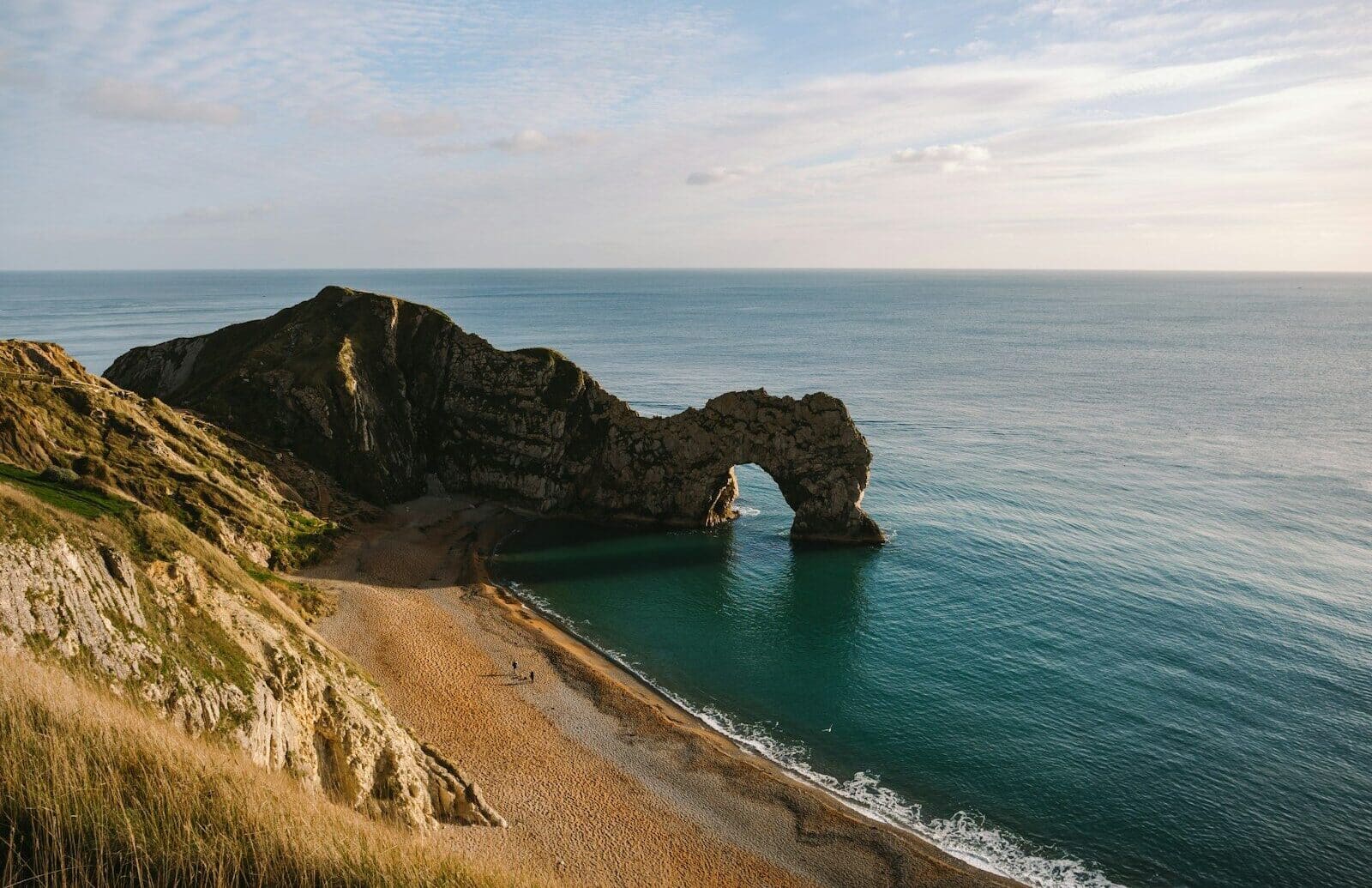
The English countryside and coast offer something categorically different. Within 90 minutes of central London, the landscape shifts entirely: chalk downlands, tidal estuaries, medieval market towns, and stretches of coastline that feel genuinely remote despite their proximity to one of the world’s busiest cities. The relationship with water here is quieter, older, and shaped by tide and weather rather than by trade.
Neither experience competes with the other. They address different instincts, and understanding that distinction is where the decision begins.
The Thames as Destination, Not Just Backdrop
Few urban waterfronts carry as much accumulated meaning as the Thames. The river has functioned as a working artery, a political boundary, and a site of industrial transformation for centuries, and that layered history is still legible in the architecture and neighbourhoods that line its banks today. Walking from Bermondsey’s converted warehouses west towards Battersea, the city reveals itself differently than it does from any other vantage point.
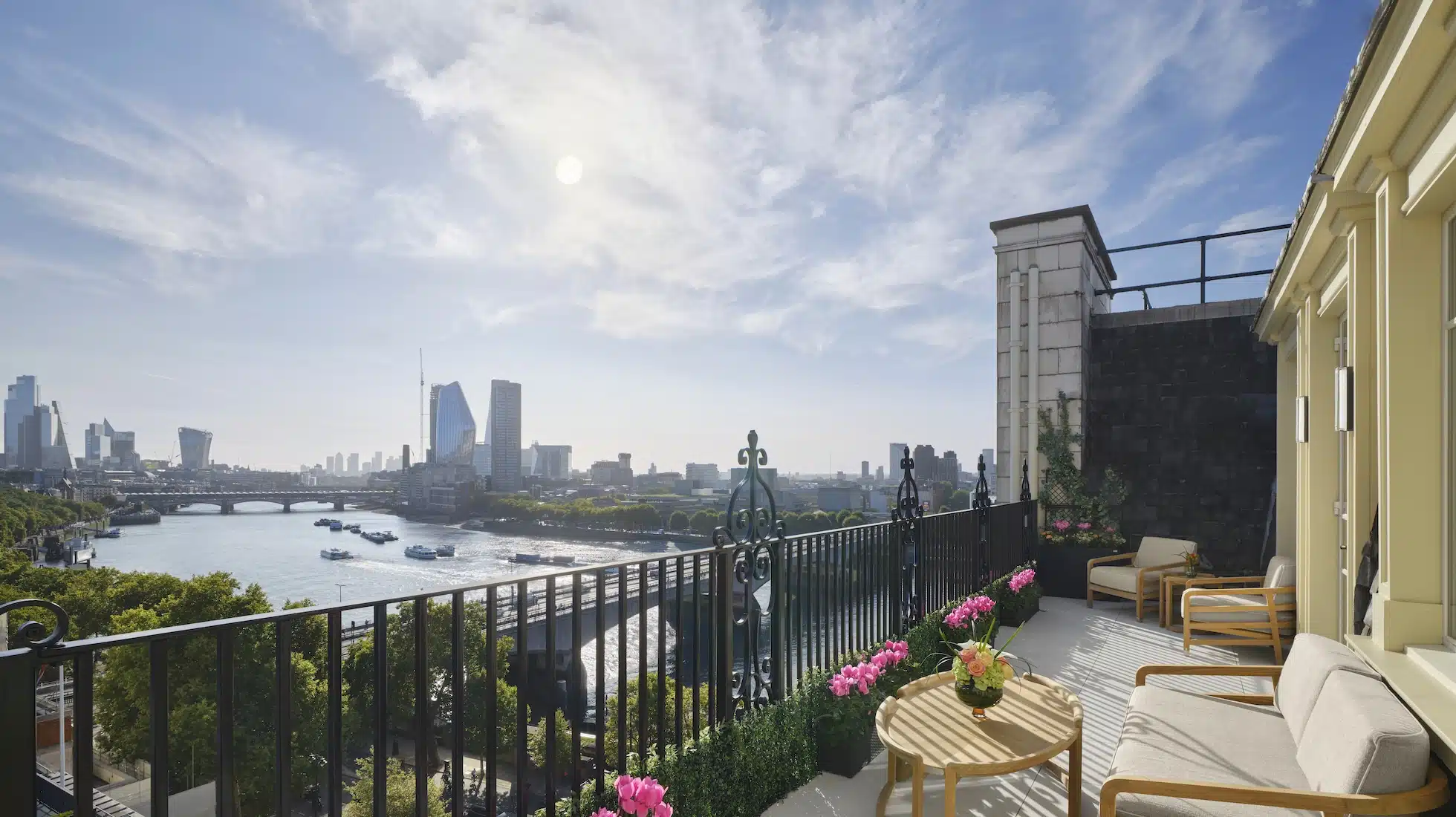
The hotels that sit along this stretch understand the river as more than scenery. The Savoy, on the Strand’s north bank, has river-view rooms and suites that look up and down the Thames, the same outlook Monet painted from the hotel in 1899. Elsewhere, Claridge’s, The Ritz, and Rosewood London sit inland, so the Thames becomes part of the day’s plans rather than the view from the room.
What distinguishes Thames-side London from comparable European waterfront cities is the density of transition, where working bridges, public riverside paths, and private dining terraces exist in close proximity, making the river genuinely accessible rather than merely visible.
What the City Cannot Give You
There are things the Thames corridor, for all its reinvention, simply cannot provide. The riverfront neighbourhoods of Bermondsey, Battersea, and Wapping have traded industrial grit for considered dining and well-appointed hotels, but the water here is tidal, urban, and hemmed in by infrastructure. It does not smell of the sea. The light does not change the way it does on an open coastline, and the silence that settles over a Cotswolds valley at dusk has no equivalent anywhere within the city limits.
For certain travellers, this matters. Those drawn to the particular informality of a working harbour town, where fishing boats share moorings with leisure craft and the menu reflects what came in that morning, will find London’s riverfront a sophisticated but ultimately urban substitute. The same is true of anyone seeking the kind of stillness that only arrives with genuine distance from a capital city.
This is not a case against London. It is a case for treating the city as the beginning of a broader journey through the United Kingdom, rather than the entirety of it.

Whitstable, Brighton, and the Logic of the Quick Coast
The two most compelling coastal options from London operate on entirely different registers, which makes choosing between them less a matter of distance and more a matter of disposition. Whitstable, on the Kent coast roughly 70 miles from the capital, is a working oyster town that has absorbed a degree of quiet sophistication without losing its character. The appeal is intimate and unhurried: independent restaurants, a shoreline defined by weatherboard fishermen’s huts, and a food culture rooted in what the sea actually produces. It rewards a day trip precisely because its pleasures are concentrated and walkable, though the handful of well-regarded small hotels make an overnight stay genuinely worthwhile for those who want the town at its quietest.
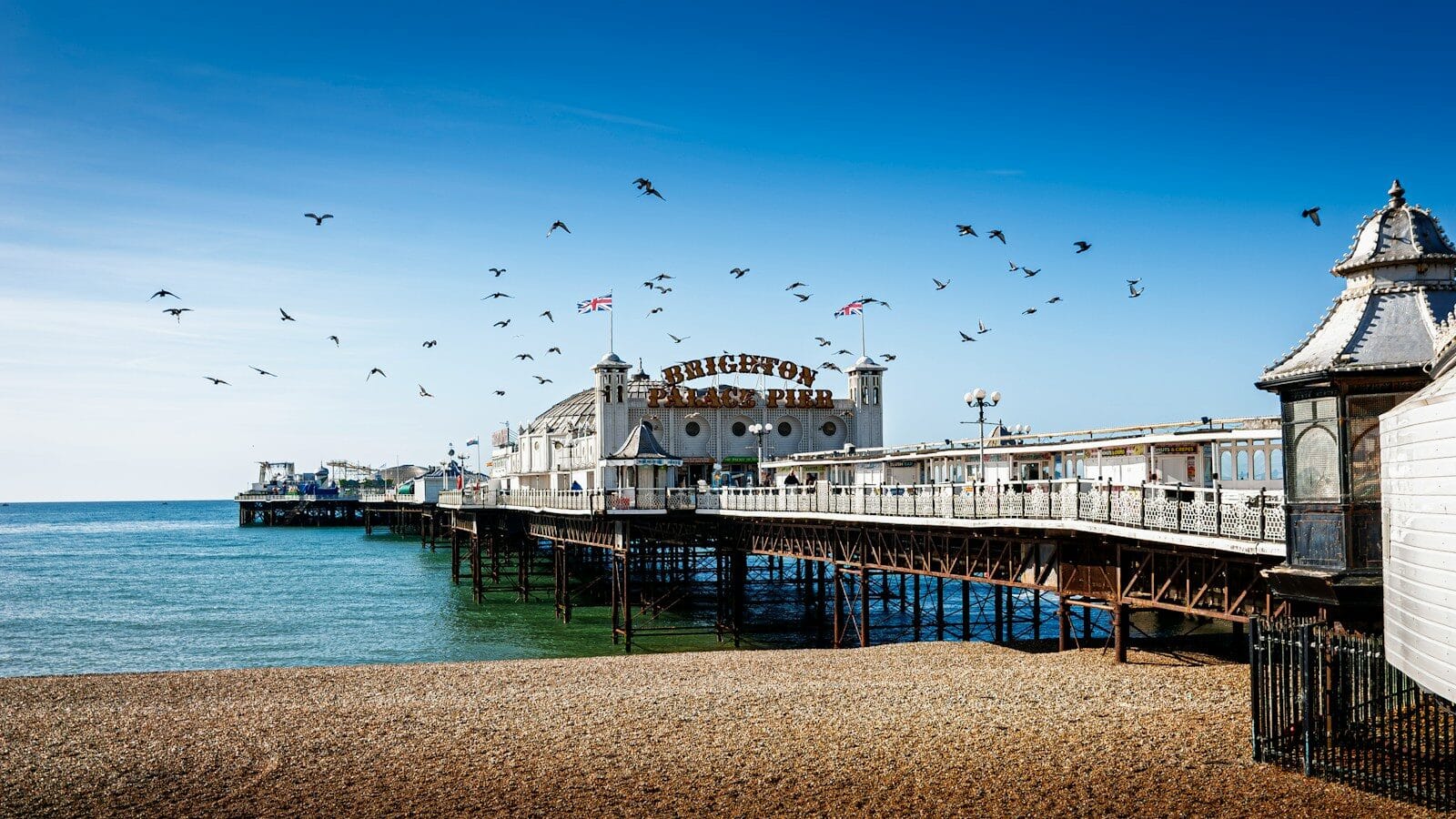
Brighton operates at a different scale entirely. The regency architecture of Kemp Town, the cultural density of the North Lane, and a hotel landscape that includes some of the more considered luxury properties in the United Kingdom make it the stronger case for an overnight stay. At 50 miles from London and under an hour by fast train, it is close enough to feel spontaneous but substantial enough to justify two nights without effort.
Building an Itinerary That Earns Both
The most common mistake travellers make is treating the countryside as a reward saved for the final day, when energy is low and the return flight is already shaping the itinerary. The counterpoint works better when it’s built in early, ideally as the second movement of a trip that opens on the Thames. Two or three nights in London, long enough to absorb Bermondsey or Battersea at a considered pace, creates the right contrast for what follows rather than competing with it.
Anchoring accommodation in London for the full trip makes logistical sense for most itineraries, particularly when the rural or coastal excursion runs to a single night or a long day. The exception is the Cotswolds or the Suffolk coast, where the distance and the pace of the landscape both reward staying over. In those cases, splitting nights between a well-positioned London property and a countryside hotel allows each setting to register on its own terms.
For travellers still mapping the broader shape of a United Kingdom itinerary, the riverfront-to-countryside structure translates well beyond London, applying equally to Edinburgh’s urban core and the Scottish Highlands, or Bristol and the Jurassic Coast.

The Real Reason to Choose Both
The tension between London’s riverfront and the countryside beyond it isn’t a problem to solve; it’s the point. The Thames-side neighbourhoods, with their density of culture, architecture, and movement, create a particular kind of engagement that sharpens the senses. The quieter water landscapes of the Cotswolds, the Norfolk Broads, or the Jurassic Coast offer something different in kind, not just in scale. Each experience reframes the other.
Travellers who commit exclusively to London often leave with an incomplete picture of how the English relationship with water actually works, running from tidal urban river to chalk stream to open coastline within a geography that remains surprisingly compact. Those who bypass the city entirely for rural retreats miss the context that makes the contrast legible.
For anyone building a serious itinerary around this part of England, the most rewarding approach treats London and its surroundings as a single, layered destination. The luxury hotels of the United Kingdom reflect that range, from converted riverside warehouses in the capital to manor houses positioned at the edge of protected landscapes.