


On this page
A privately guided visit to La Casa Azul offers measured access to Frida Kahlo’s lifelong home in Coyoacán, experienced quietly, thoughtfully, and with cultural clarity.
Introduction
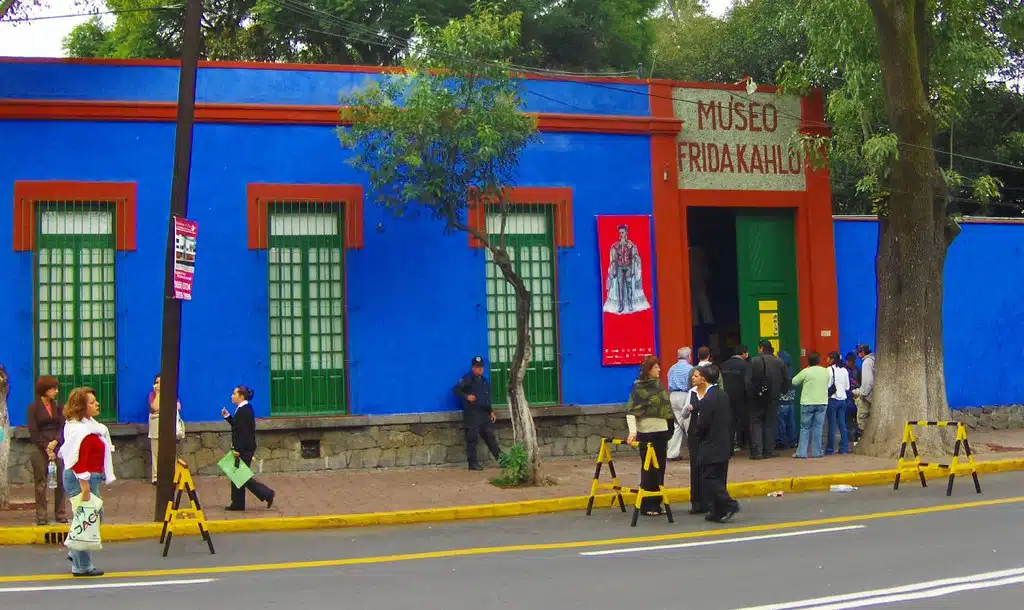
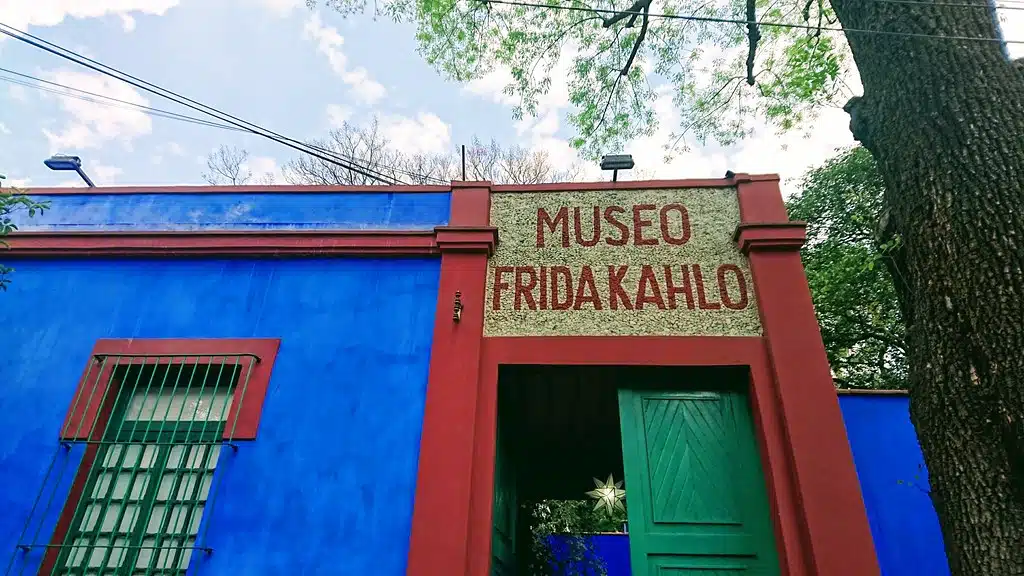
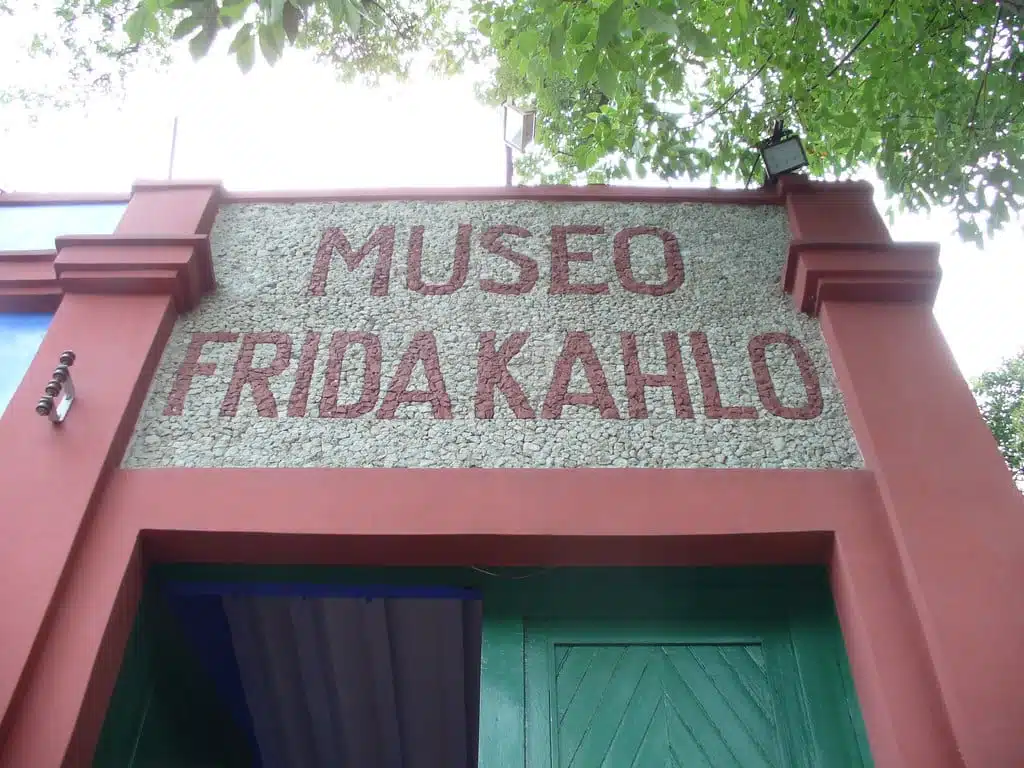
In the leafy neighbourhood of Coyoacán, far from the glass towers and traffic corridors of central Mexico City, stands a cobalt-blue house behind heavy wooden gates. This is Frida Kahlo Museum, known locally as La Casa Azul. For most visitors, entry is tightly timed, crowded, and hurried. A private visit changes the experience entirely.
Arriving with a specialist guide and no surrounding rush alters how the house is read. Rooms feel intimate rather than compressed. Objects register individually. Silence becomes part of the experience. This is not a gallery in the conventional sense, but a domestic space where art, illness, politics, and intimacy intersect.
Cultural and Historical Context
Frida Kahlo was born in this house in 1907 and returned to it repeatedly throughout her life. After a catastrophic bus accident at eighteen left her with enduring spinal injuries, chronic pain, and reduced mobility, La Casa Azul became both refuge and studio. Many of her paintings were created while confined to bed, using mirrors mounted above her.
Often associated with Surrealism, which she rejected, her paintings are instead grounded in autobiography, corporeality, and Mexican identity. Self-portraits dominate, rendered with unsparing realism, symbolic imagery, and a deliberate visual vocabulary drawn from indigenous culture, colonial history, and personal mythology.
The house also reflects her political convictions. Kahlo was an active communist, engaged with revolutionary ideals and international leftist movements. Her marriage to Diego Rivera, volatile and intellectually charged, shaped both her public life and her private environment. Together, they transformed La Casa Azul into a gathering place for artists, exiles, and thinkers, including international figures drawn to post-revolutionary Mexico.
Today, the museum receives thousands of visitors daily. Demand is constant, time slots are brief, and standard access allows limited interpretation.
Why Private Access Matters Here
La Casa Azul is modest in scale. Narrow corridors, small rooms, and enclosed courtyards were never intended for volume tourism. In standard conditions, visitors are moved quickly through spaces where pause is essential.
With private access, the house reveals itself gradually. You can stand in Kahlo’s bedroom without interruption. You can examine personal artefacts in your own time. Questions lead to conversation rather than feeling like an interview.
What You See
The tour begins in the central courtyard, enclosed by vivid blue walls and volcanic stone flooring. Indigenous sculptures sit among native plants. Light enters unevenly, filtered by leaves and open doorways.
Inside, the rooms are preserved as they were years ago. Kahlo’s studio contains her easel, brushes, and unfinished works. Her wheelchair remains positioned before the mirror she used to paint herself.
In her bedroom, the orthopedic corsets she wore following surgeries are displayed alongside personal photographs. Some are painted, others inscribed. They are practical objects transformed into expressive surfaces. Nearby, her prosthetic leg rests in a glass case, dressed in a red boot with a bell.
The kitchen reflects her attachment to Mexican tradition. Yellow tiles, hand-painted utensils, and inscribed walls speak to domestic ritual rather than display. This was a working household, not a curated aesthetic.
Upstairs, works by Kahlo and Rivera are displayed. A private guide contextualizes each piece within specific moments of illness, political activity, or emotional rupture.
How Private Access Elevates the Experience
Under standard conditions, visitors move through the house in groups, often distracted by crowd movement and limited sightlines. Noise accumulates and attention can be fragmented.
Private access removes any pressure. The house becomes quiet, with details being easy to register. You are able to connect visual elements with narrative threads, rather than consuming them in isolation. The emotional tenor shifts from observation to engagement.
This is particularly important in Kahlo’s work, which confronts vulnerability, pain, and identity directly. Space to absorb those themes is not a luxury, but a necessity.
How Do Not Disturb Makes This Possible
Do Not Disturb arranges private or discreetly timed visits to the Frida Kahlo Museum, guided by specialists with deep knowledge of Mexican art, politics, and twentieth-century cultural history. Timing is selected to avoid peak congestion, allowing the house to be experienced as a lived environment rather than feeling like a checklist.
Logistics are handled seamlessly, from private transfers through Coyoacán to advance access coordination. Guides are chosen for their passion and knowledge, offering informed interpretation of the art.
This experience is often paired with a broader cultural exploration of Mexico City, shaped around pace, proximity, and personal interests, ensuring continuity rather than compression.
Ready to plan a private visit to the Frida Kahlo Museum and experience Mexico City with focus and ease? Speak with Do Not Disturb to begin your journey.