On this page
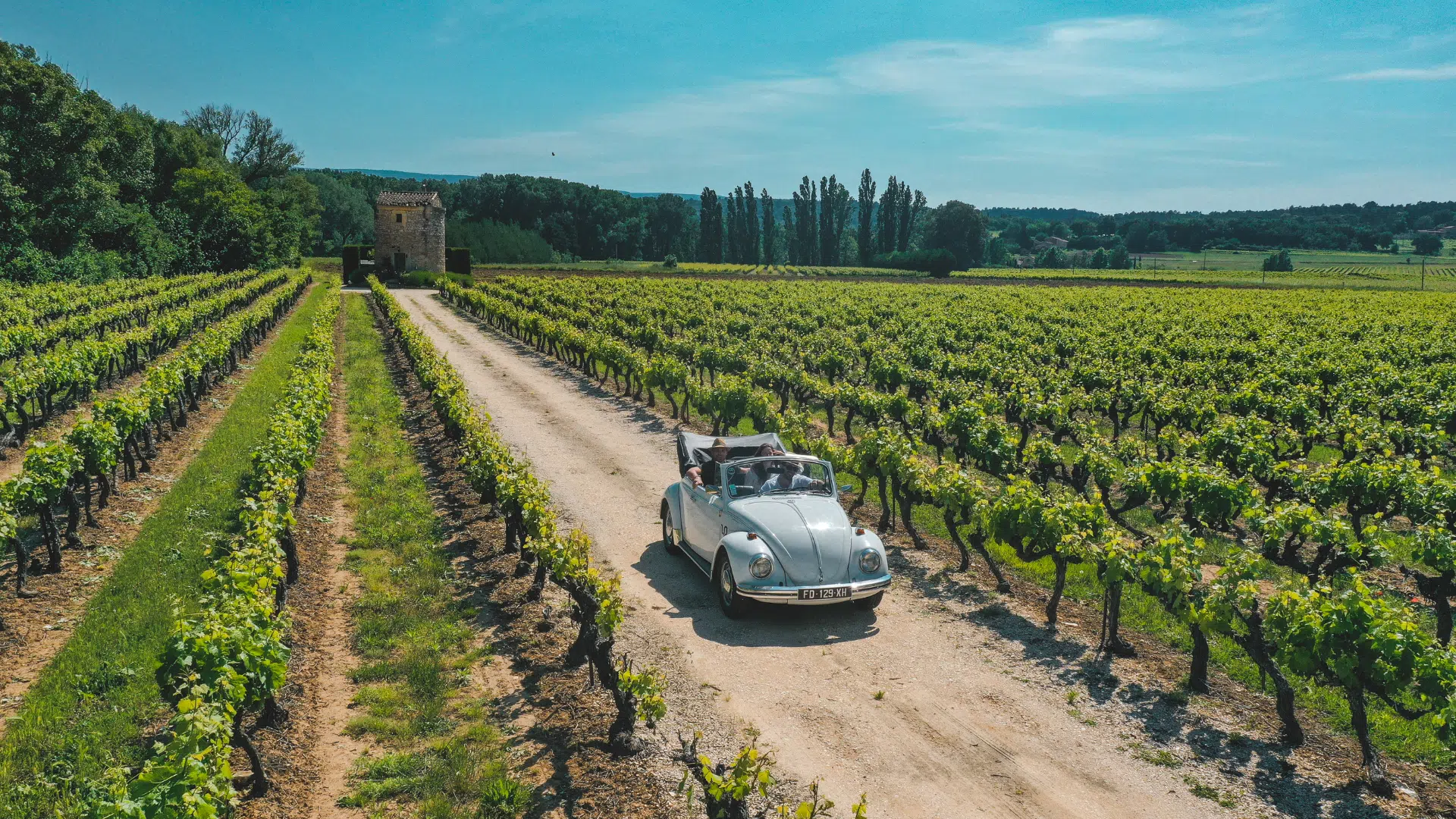
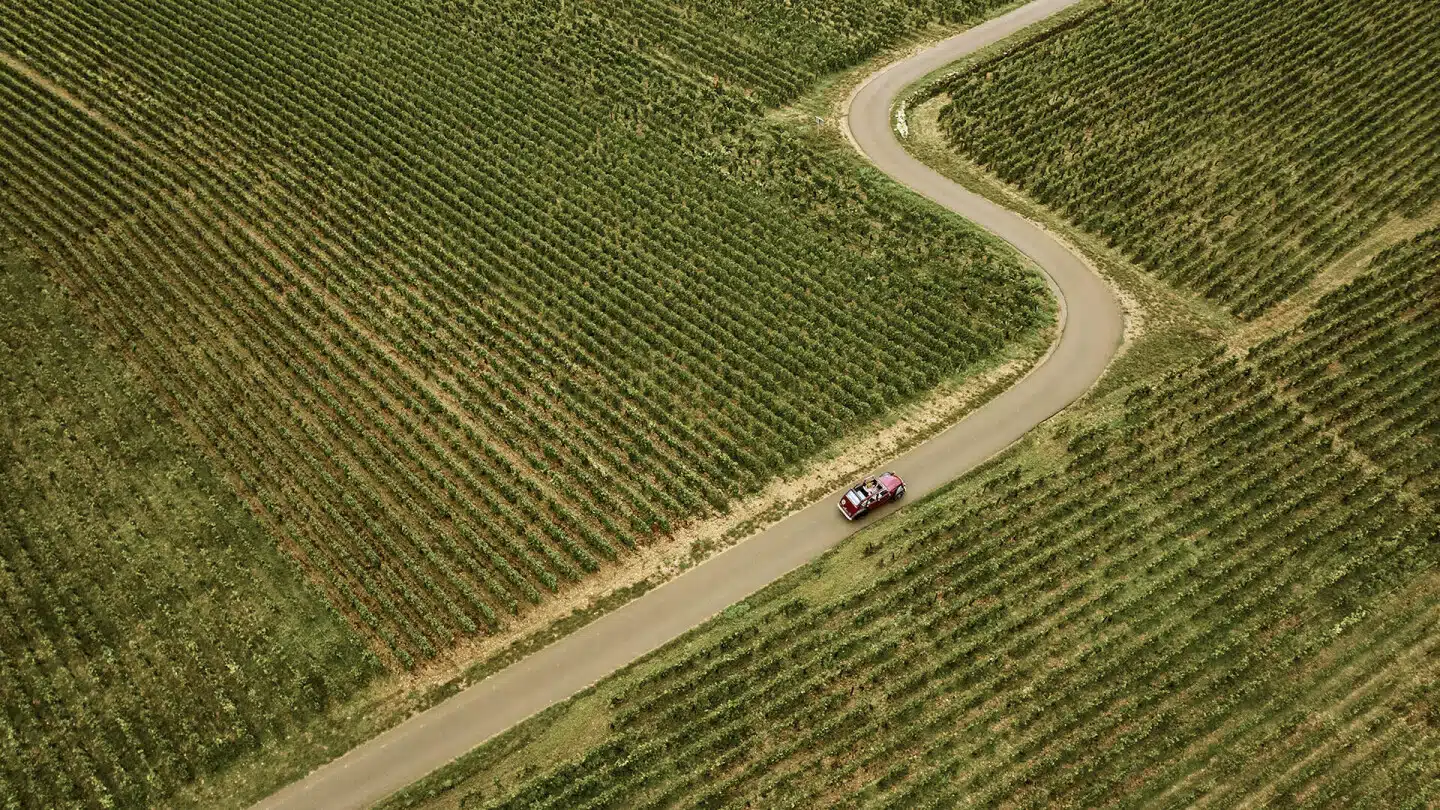
A classic car pulls out of Stellenbosch onto the R310, headed for Franschhoek. Your wheels set the pace for everything that follows: a carefully curated schedule of vineyard visits, a private meal and wine tasting, and driving through one of the world’s most picturesque landscapes.
This is a private day, not a shared tour. The route, the producers visited, and the time spent at each are shaped by local knowledge and relationships with estates, some of which do not run standard public tastings.
The Car and the Concept
The experience centres on a privately arranged vintage car, typically a 1960s or 1970s model, driven by a knowledgeable guide who sets the pace and sequence of the day. Common choices include classic Jaguars, Mercedes-Benz models from the same era, and occasionally South African-market vehicles with their own regional history.
The car is not a prop. It sets the tempo of the journey, limiting how many estates can be visited and encouraging a more considered approach to each stop.
The result is a day organised around quality of access rather than volume of visits, with the vehicle functioning as both transport and the defining logic of the itinerary.
The Road Out of Town
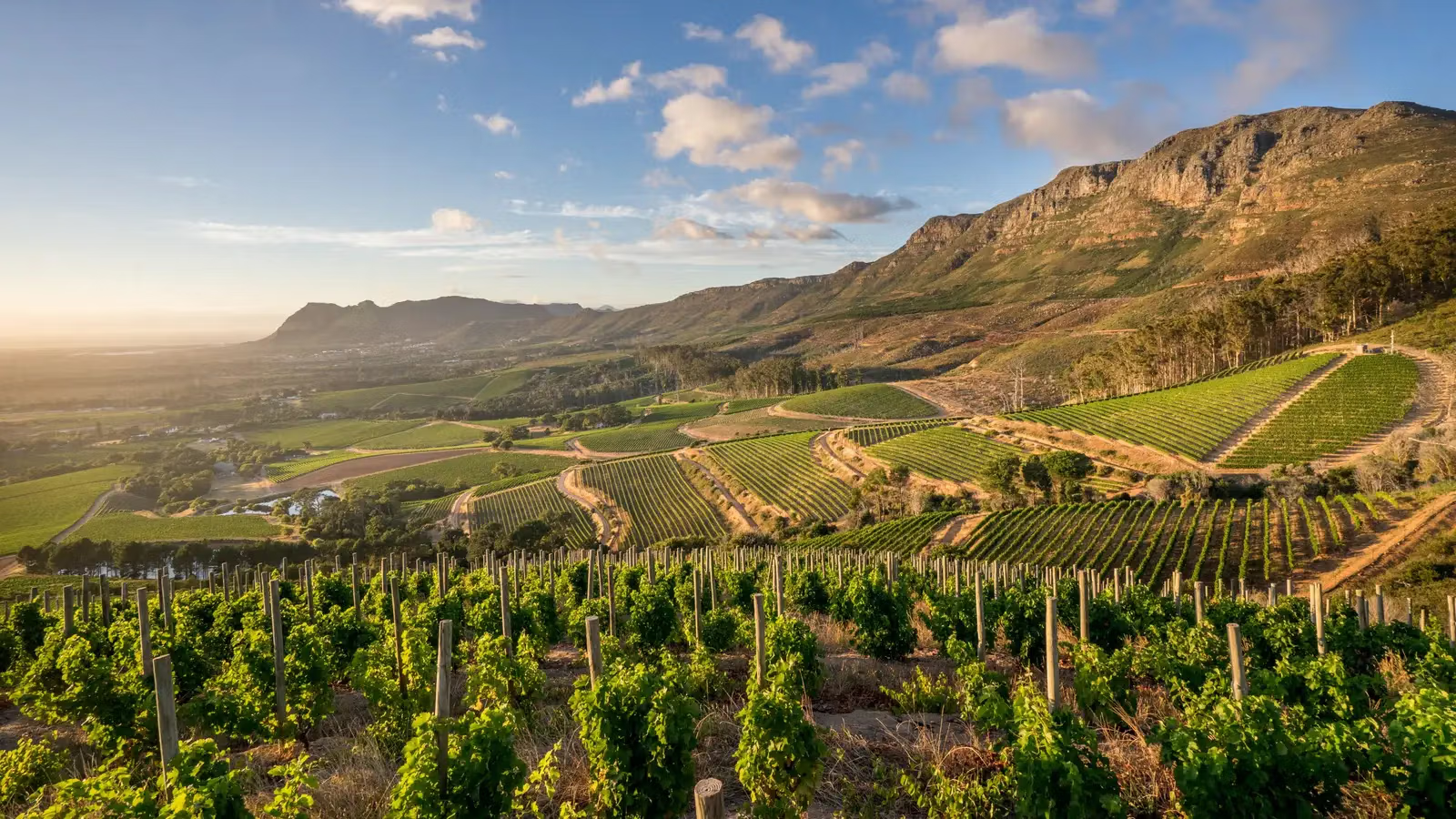
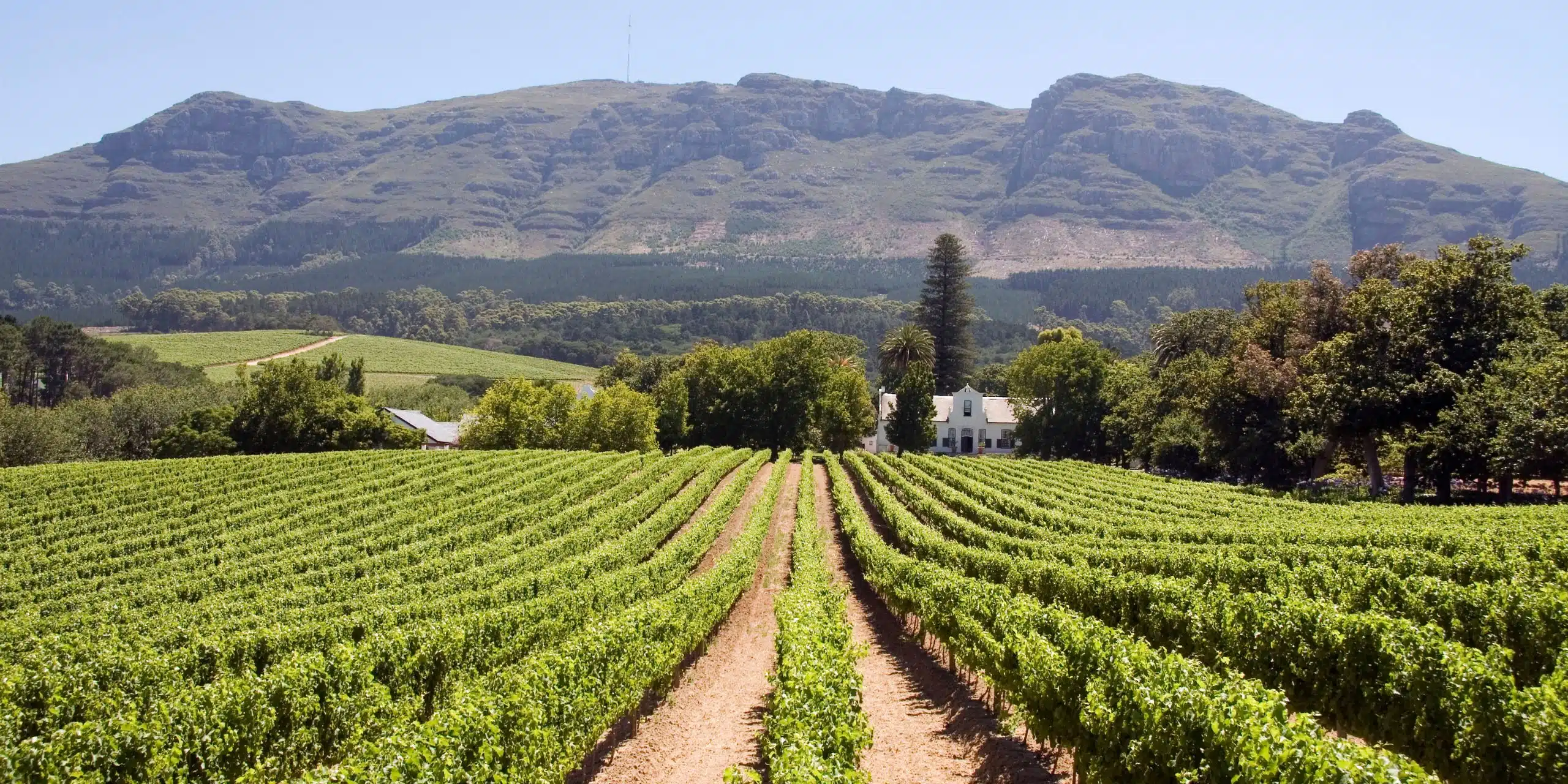
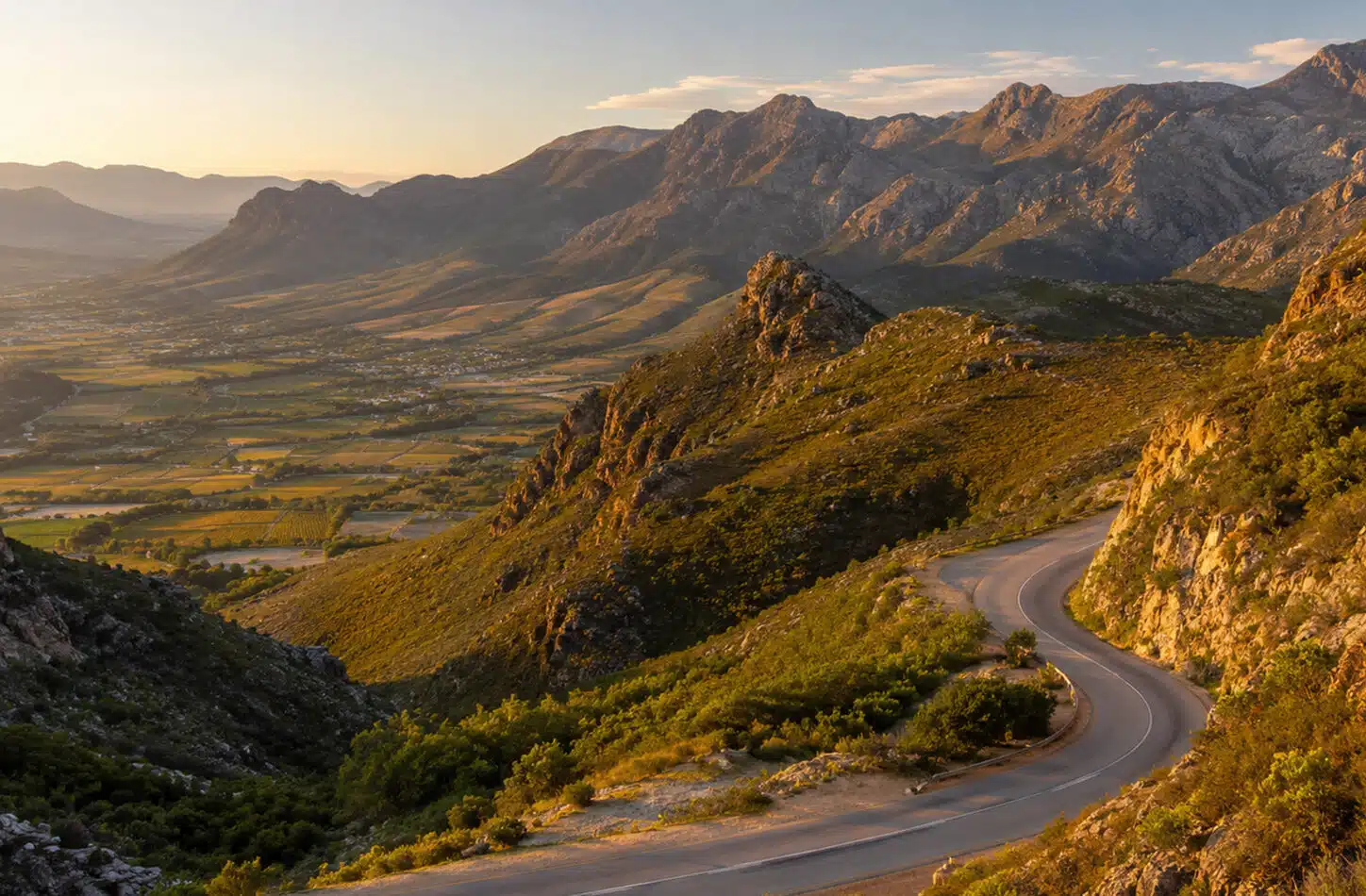
The drive out of Stellenbosch follows the R310 towards Franschhoek, passing through the Helshoogte Pass before the valley opens below. The road climbs through fynbos and granite outcrops, with the Simonsberg and Groot Drakenstein ranges framing the route on either side.
Dropping into the valley, the landscape shifts to cultivated farmland, with vineyards laid out in rows against the mountain slopes and Cape Dutch homesteads set back behind oak avenues. Many of these estates date to the late seventeenth century, when the VOC granted land to freed Huguenot settlers, and the architecture still reflects that origin: whitewashed gables, thatched roofs, and symmetrical facades.
The journey between producers is not incidental to the day. On these roads, in this kind of car, it is where the experience begins.
A First Estate, Quietly Chosen
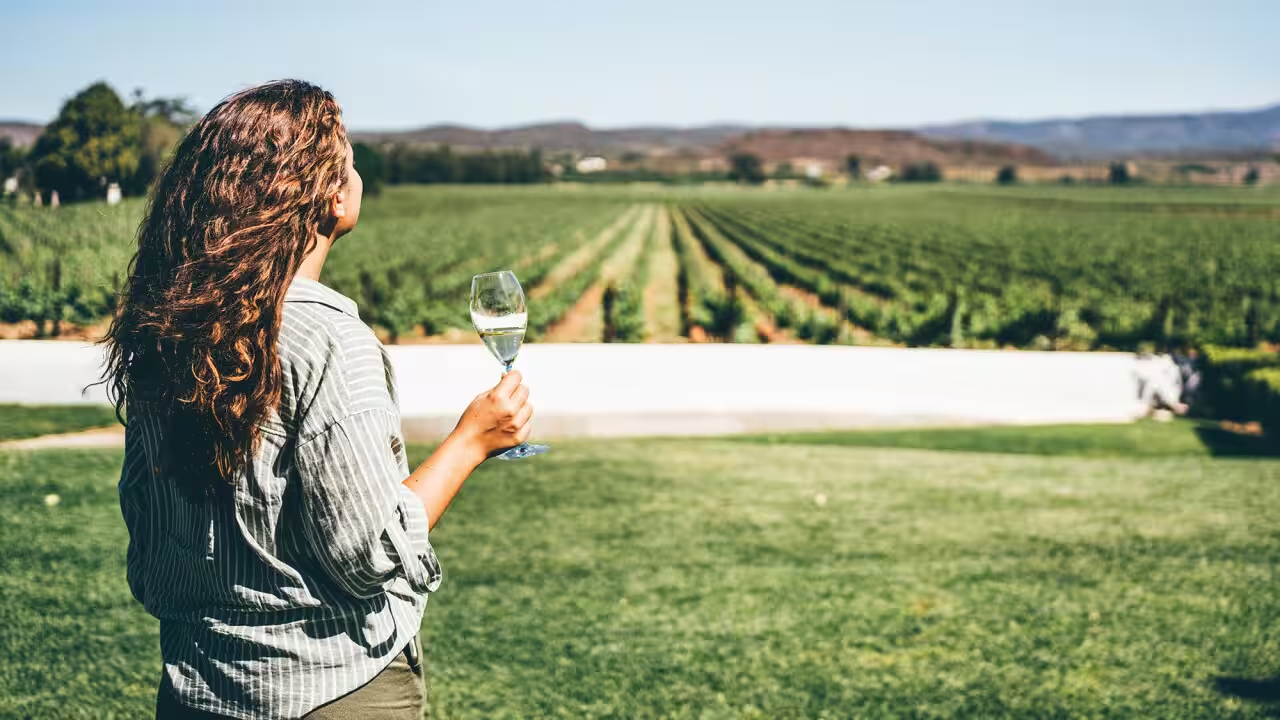
The first estate sets the register for the day, so the selection matters. The most rewarding stops in the Winelands are rarely the largest. Small, owner-run properties, particularly those producing under 20,000 cases annually, tend to offer a different kind of access: the person pouring the wine is often the person who made it.
Franschhoek and the Hemel-en-Aarde ridge both have producers of this type, though the right choice depends on the wines being made and the relationships that make a private visit possible.
Two or three wines tasted with proper attention reveal more than a full flight managed at pace. Producers working with single-vineyard parcels or older bush vines often have the most to say and the most reason to say it slowly.
The Long Lunch
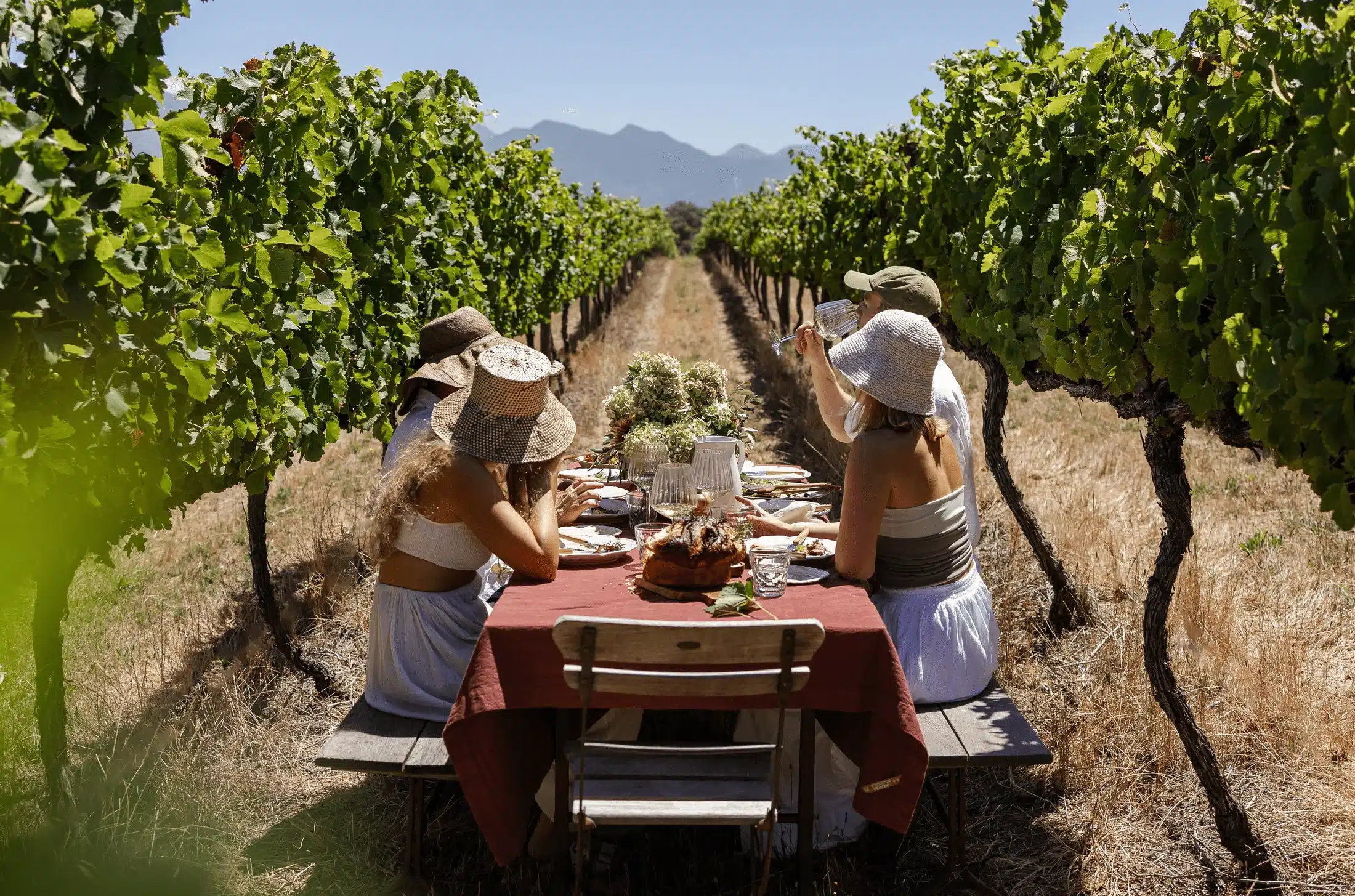
The midday meal is the focal point, serving as the structure around which the rest of your day is arranged. The best lunch options in Stellenbosch and Franschhoek are tied to estates that either grow what they serve, or work closely with producers in the immediate region.
A well-chosen table has direct vineyard sightlines and enough space between covers to allow an unhurried pace. Service at the better estate restaurants is informed by your needs rather than performed like a speech, and the kitchen tends towards seasonal, ingredient-led menus that change with the harvest calendar.
The value of this lunch is partly practical. A two-hour table in the middle of the day sets the rhythm for what comes before and after, while also removing any pressure to move quickly between places.
The Afternoon Estate
The afternoon stop is deliberately singular. Where the morning may have covered ground, this visit is structured around one producer and one focused tasting, typically a vertical or a library selection that rewards attention rather than comparison.
Estates in Franschhoek and Stellenbosch that operate at this level rarely accommodate walk-ins. The format of the visit is agreed upon in advance and shaped around what the producer is willing to open. A seated tasting with a winemaker or cellar representative, covering three to five wines with genuine depth of context, is more useful here than volume.
The vintage car frames the return journey as part of the experience rather than a transfer.
The Drive Back
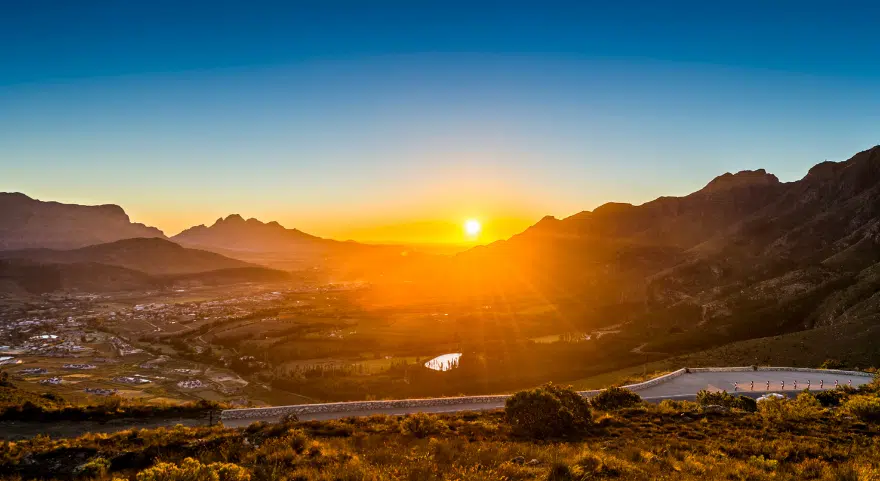
The return through the valley follows the same roads, but the quality of the afternoon light in the Western Cape is a known quantity: lower, more directional, and particularly effective on the Helshoogte or Franschhoek mountain passes that frame the drive out.
What a vintage car imposes, practically, is a ceiling on speed and a floor on attention. It is not possible to move through this landscape carelessly in a 1960s roadster or a pre-war tourer.
The Winelands are among the most visited wine regions in the Southern Hemisphere. The distinction this format offers is not exclusivity of place but a quality of access that depends entirely on how the day is constructed.