

On this page
A privately guided visit to the Museum of Contemporary Art Bangkok offers a focused way to experience Thailand’s most important modern art collection. Inside a privately founded granite landmark, contemporary Thai works are explored with insight from a specialist guide, away from the pace of the city.
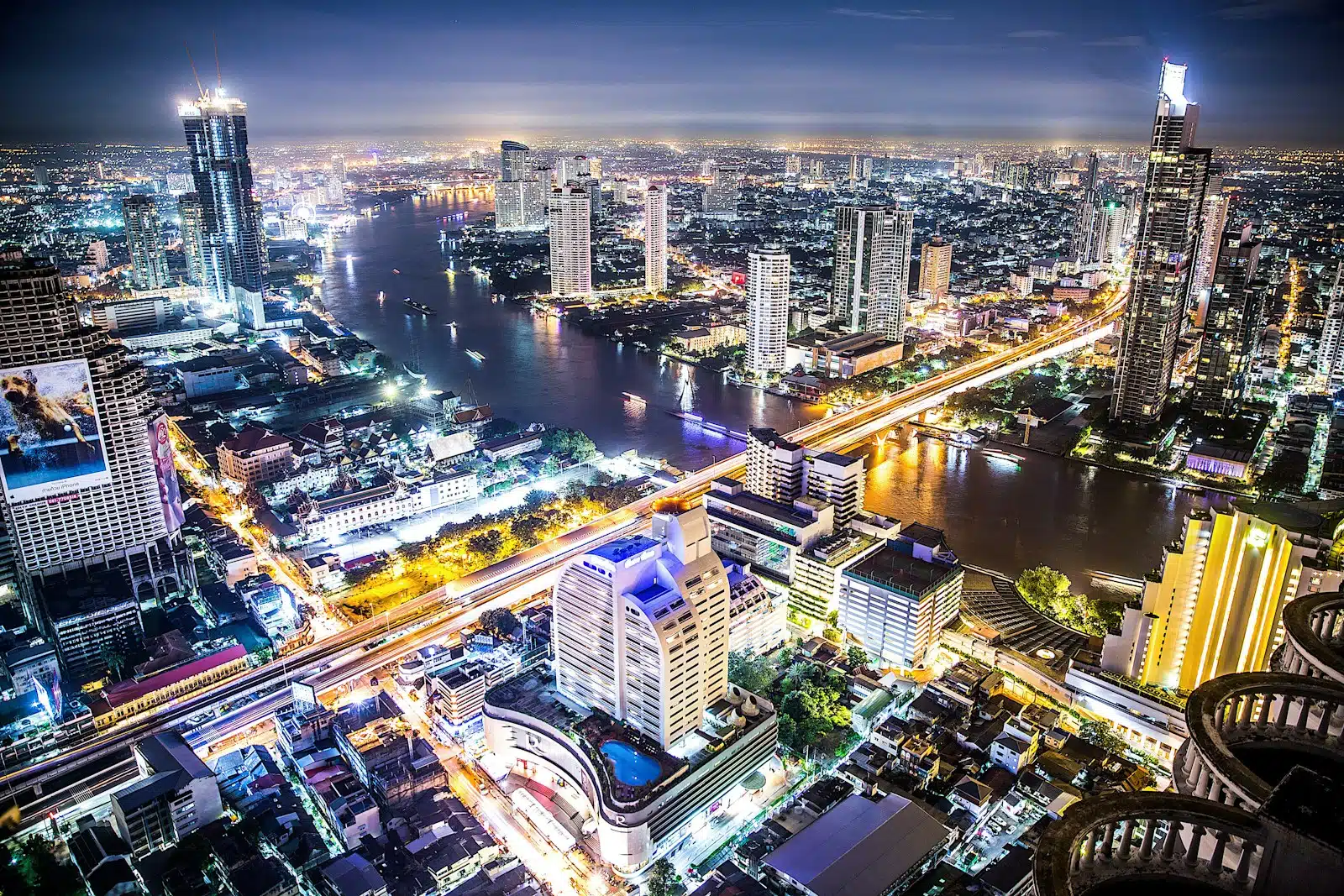
Bangkok rarely pauses. Heat, traffic, and movement define the city’s rhythm. Yet north of the centre, beyond the familiar routes of temples and markets, the Museum of Contemporary Art stands apart, both geographically and atmospherically.
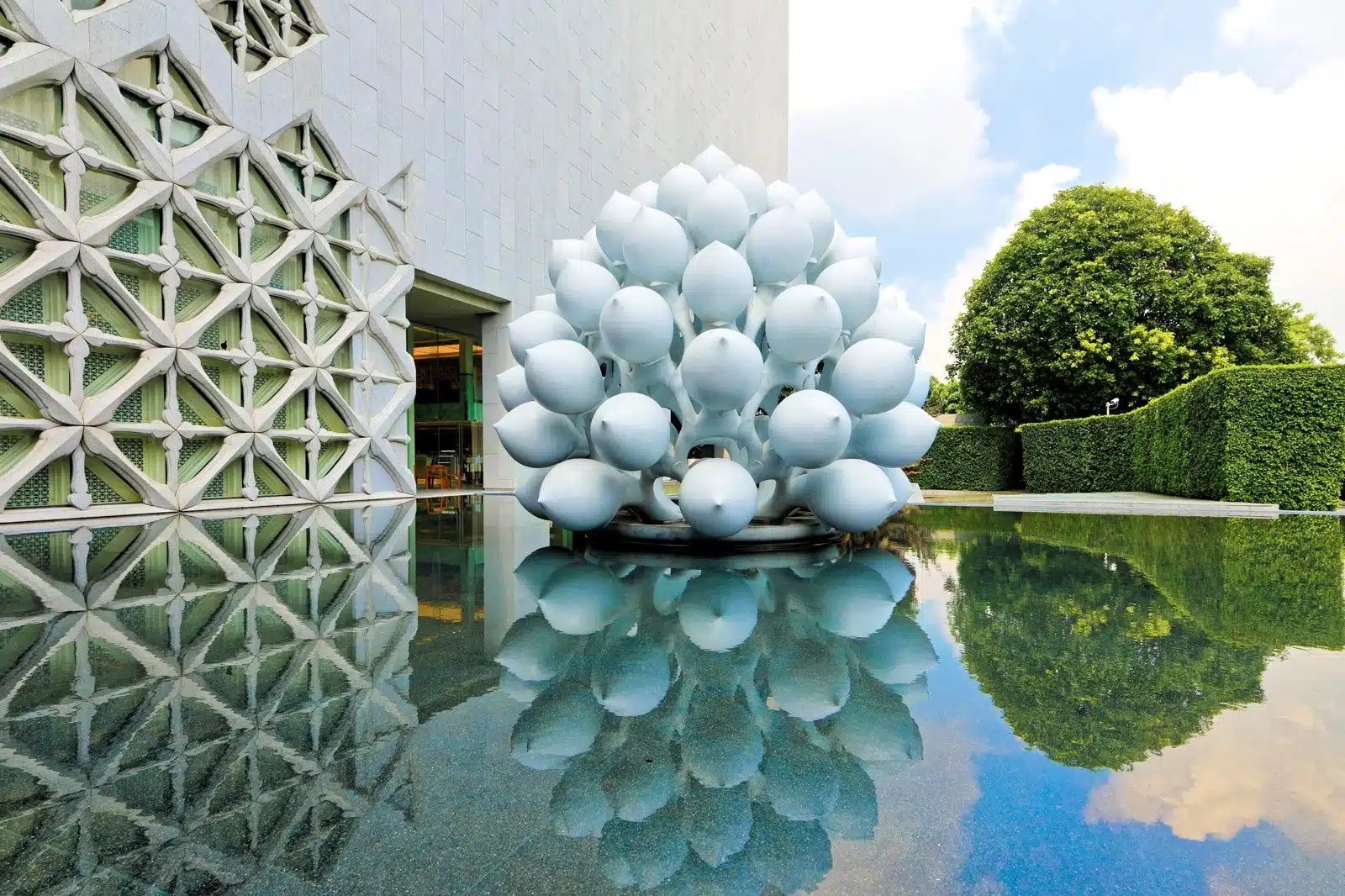
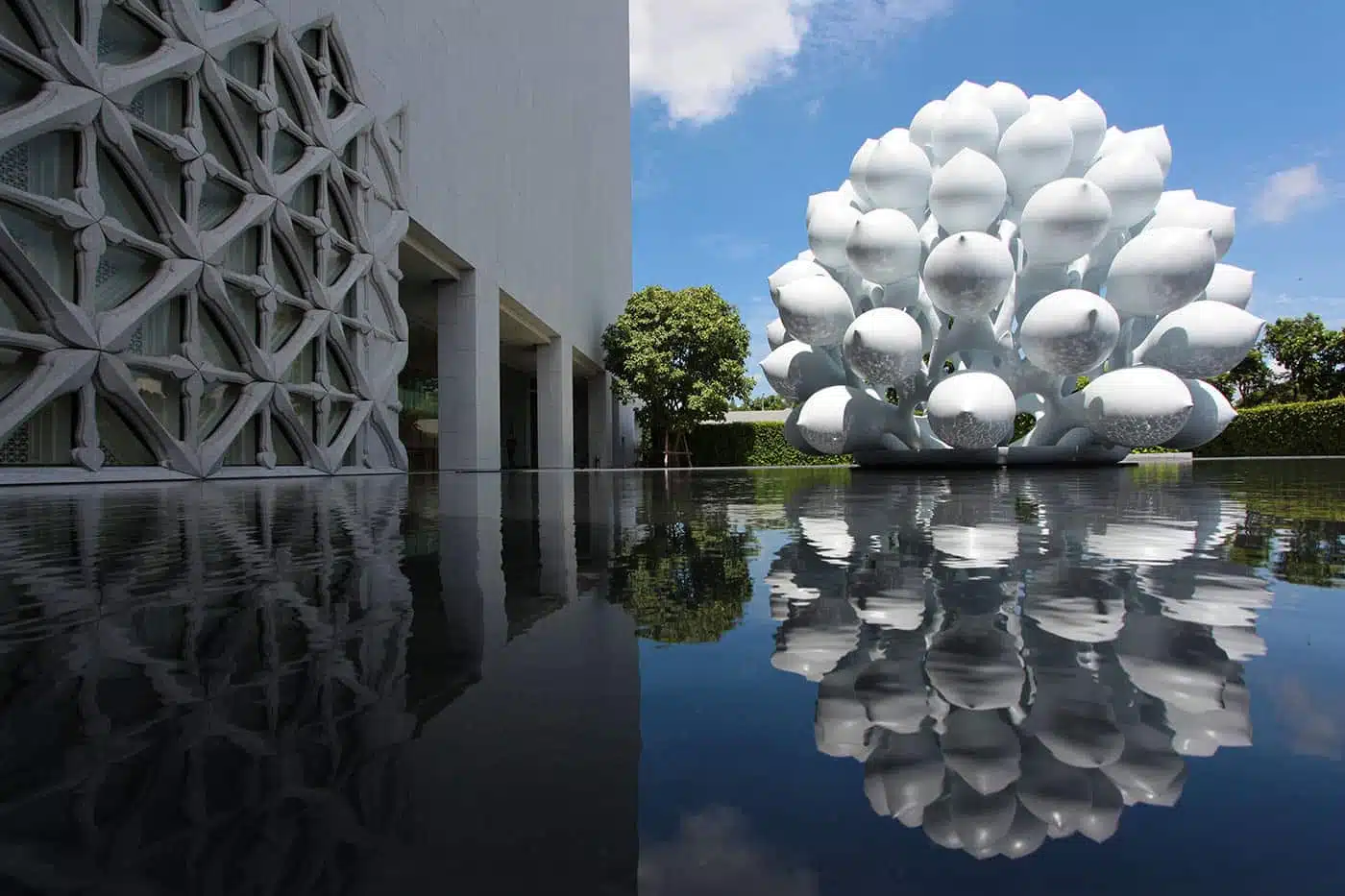
The Museum of Contemporary Art rises from pale granite, monumental and unmistakable. Set back from the road, it feels purposeful and complete in its form. Inside, the city loosens its hold, guiding the eye and shaping how the art is encountered.
A private tour changes how the museum reveals itself. Instead of moving from room to room, you are led through a sequence of ideas. The works are not introduced as isolated objects but as part of a broader cultural conversation, one that blends religion, politics, mythology, and modern Thai identity. The silence is not emptiness. It is space to think.
Cultural and Historical Context
MOCA Bangkok was founded in 2012 by Boonchai Bencharongkul, a telecommunications entrepreneur and one of Thailand’s most influential private collectors. Unlike state museums shaped by committees and cultural diplomacy, this collection reflects a single, sustained vision.
Thai contemporary art is deeply rooted in Buddhist philosophy and symbolic storytelling. Many artists draw on cosmological ideas of heaven, earth, and hell, using traditional techniques to explore modern anxieties. Social hierarchy, moral consequence, political power, and personal desire often coexist within the same canvas.
The museum’s collection traces the evolution of these themes across generations of artists, particularly from the late twentieth century onward. Large scale murals sit alongside intensely detailed oil paintings. Figurative work dominates, demanding interpretation rather than passive viewing.
Why Private or Small-Group Access Matters
Thai contemporary art is rich in reference, drawing simultaneously on Buddhist symbolism, folklore, and modern social commentary. Without guidance, much of this meaning can remain surface-level.
Do Not Disturb arranges access with an expert guide dedicated to your visit, whether privately or within a small, like-minded group. Rather than following a fixed script, the guide responds to questions as they arise and adjusts focus based on what holds the group’s attention. Time can be spent exploring a single work, artist, or theme without pressure to move on.
With an expert at hand throughout, conversation replaces commentary and understanding builds naturally. The visit becomes structured yet flexible, shaped by informed guidance and shared curiosity rather than pace or crowd flow.
What You See
The museum is experienced floor by floor, with each level introducing a different concentration of work. One of the most striking transitions comes as you approach The Bridge of the Universe. A darkened passage narrows your field of vision before opening into galleries dedicated to Buddhist cosmology, deliberately controlling how the space is entered and absorbed.
Inside, large scale works depicting Heaven, Earth, and Hell cover entire walls. Each composition contains thousands of figures, arranged with dense precision. Deities, spirits, animals, and human characters appear together, their roles overlapping. Some faces are clearly contemporary, quietly placing modern figures within traditional moral narratives.
The museum holds the world’s largest collection of works by Thawan Duchanee, one of Thailand’s most uncompromising artists. His paintings are stark and forceful, dominated by black and red. They focus on instinct, conflict, and the darker aspects of human nature, offering a direct contrast to more ornamental interpretations of spirituality.
At the highest level of the museum, the atmosphere shifts unexpectedly. A curved roof gallery opens into a space reminiscent of a Victorian museum in London. Here hangs the owner’s private collection of European Romantic and Victorian paintings, assembled through London’s Richard Green gallery. Landscapes and portraits sit in quiet dialogue, intentionally removed from the Thai narrative below. The contrast is deliberate and disorienting, emphasising the breadth of the collector’s vision.
How Do Not Disturb Makes This Possible
Experiencing MOCA with depth requires more than a standard visit. Do Not Disturb curates private access that aligns timing, guidance, and pacing to the way the museum is meant to be experienced.
Specialist guides are selected for their ability to interpret symbolism with clarity rather than simplification. Visits are timed to ensure calm galleries and optimal natural light, allowing the architecture and artwork to work together as intended.
Ready to experience the Museum of Contemporary Art Bangkok? Speak with Do Not Disturb to curate your MOCA visit as part of a culturally focused journey through Thailand.