On this page
Kenya’s most compelling honeymoon itinerary moves between two entirely different worlds: the wildlife-dense plains of the Maasai Mara and the ancient coral-stone quietude of Lamu Island. Together, they form a journey that is both dramatically varied and precisely calibrated for couples seeking depth over spectacle.
Why Kenya Works as a Honeymoon Destination
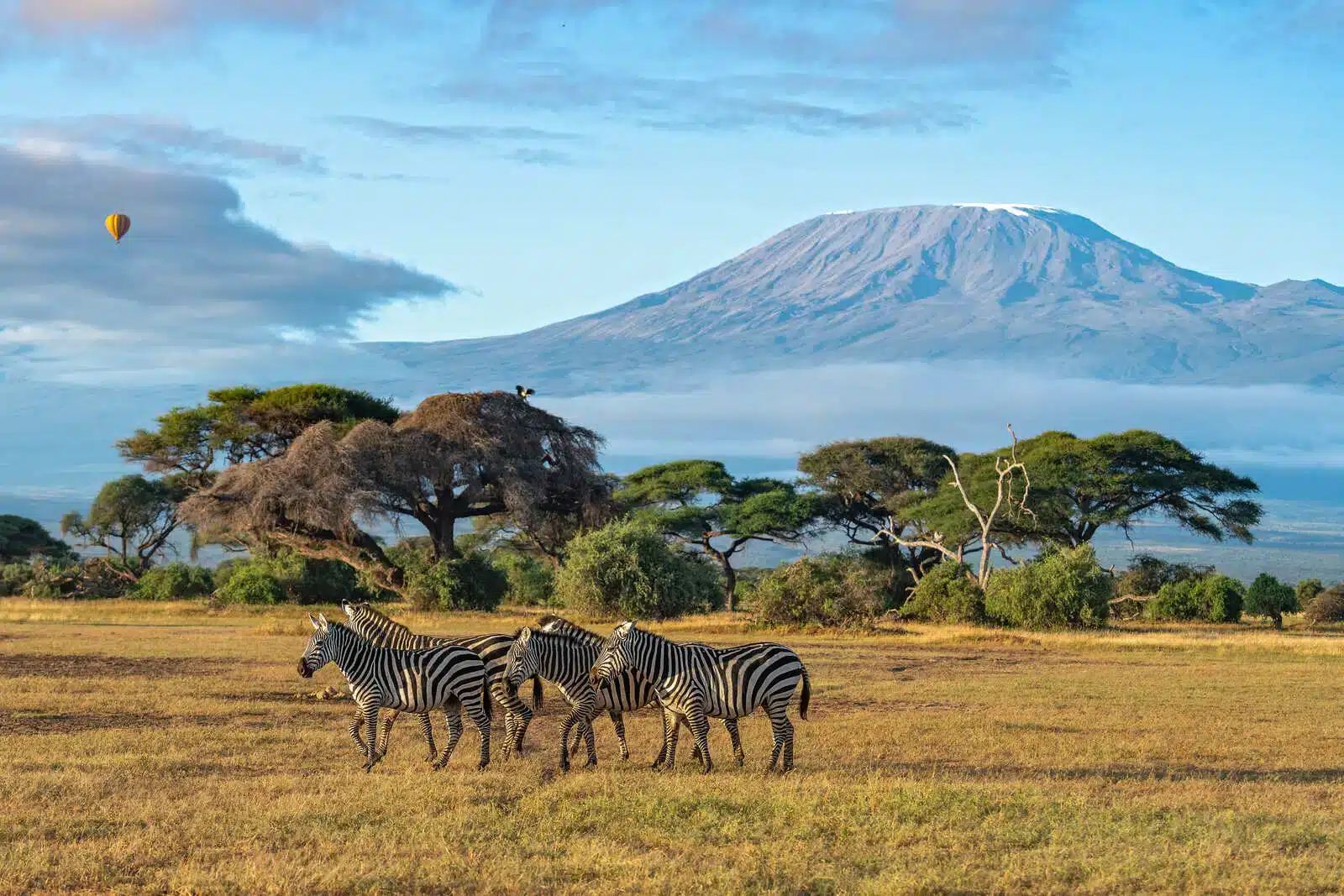
Kenya works as a honeymoon destination because it offers two structurally distinct experiences within a single, manageable itinerary. The Maasai Mara, in the southwest, is one of Africa’s most productive wildlife ecosystems, built around game drives and close proximity to large mammals across open savannah. Lamu, an island off the northern coast, is a UNESCO-listed Swahili settlement with no motorized vehicles, a functioning medieval street grid, and a pace shaped by centuries of Indian Ocean trade. The contrast between them is not incidental; it is the point.
Few destinations at a comparable distance allow couples to move between wilderness and cultural depth without significant logistical disruption. The internal flight between the Mara and Lamu takes under three hours, keeping the transition clean. Each environment also requires a different mode of engagement, which prevents the itinerary from feeling repetitive and gives the trip a natural rhythm of intensity followed by stillness.
The Maasai Mara: Private Camps and the Intimacy of the Bush
The private conservancies bordering the Maasai Mara, among them Ol Kinyei, Naboisho, and Olare Motorogi, operate under strict low-density agreements that limit the number of vehicles and camps permitted within each area. This structure produces a quality of access that the main reserve, which is open to all licensed operators, cannot reliably offer. Game drives here are exclusive to guests of the hosting camp, and sightings are not shared with competing vehicles.
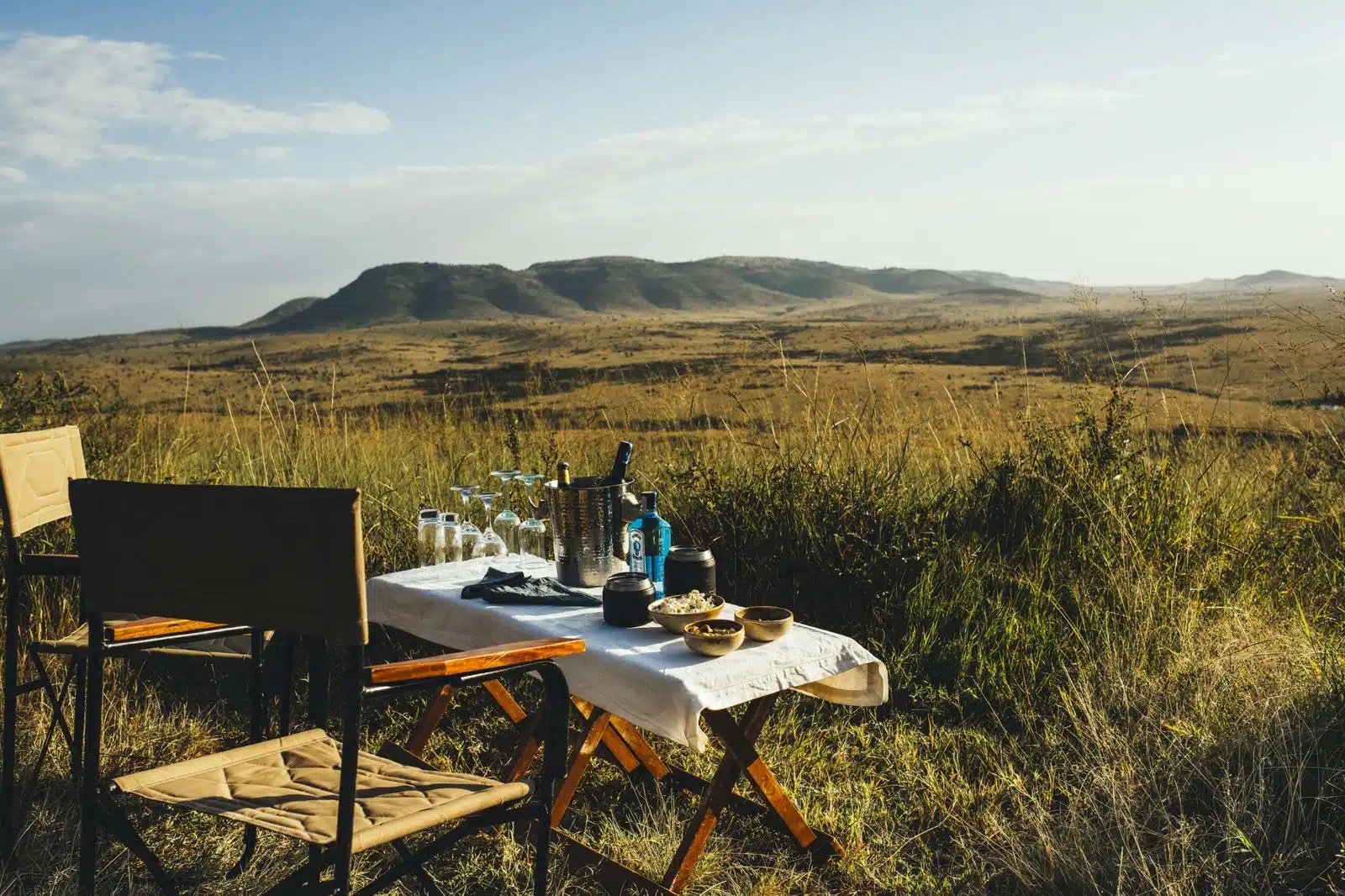
Camps within these conservancies are typically small, often fewer than ten tents, and are designed around a single couple or small group rather than a full lodge occupancy. Private dining in the bush, whether a breakfast at a seasonal river crossing or a dinner set in open grassland, is arranged as a standard part of the stay rather than an optional add-on.
The conservancy model also permits activities restricted inside the reserve, including night drives and walking safaris, both of which are relevant for honeymooners seeking a more considered engagement with the landscape.
Choosing the Right Camp: What Separates Good from Exceptional
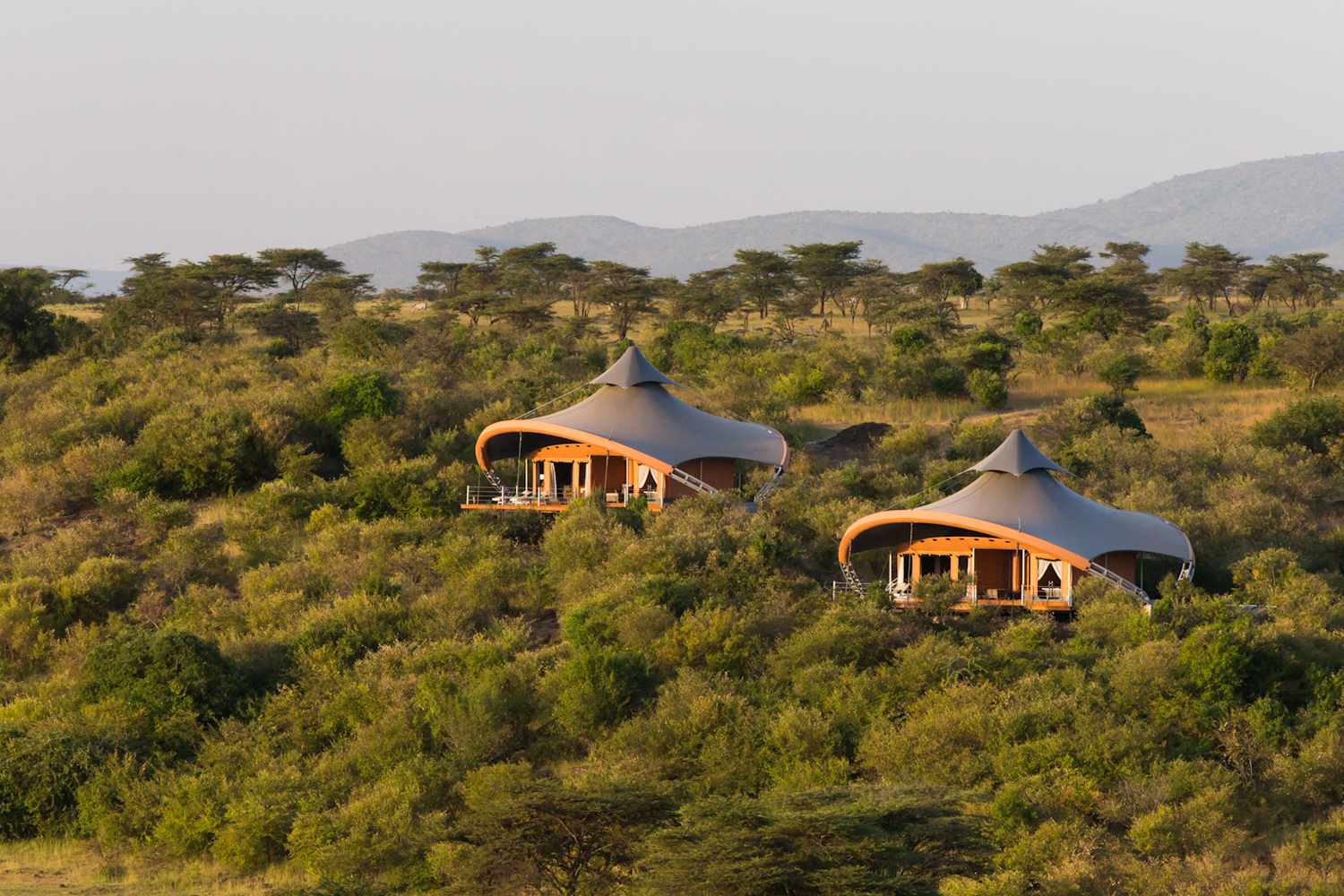
The Mara ecosystem contains dozens of camps, but the gap between competent and exceptional is significant. At the top tier, the distinction lies in guide quality, suite configuration, and the degree to which the operation functions around a couple rather than a group. Camps such as Angama Mara and Mahali Mzuri offer suites with unobstructed Mara views and dedicated hosting, but the critical variable is guide assignment. A camp that rotates guides daily operates differently from one that assigns a single guide for the duration of a stay.
Honeymoon-specific programming varies considerably. Some camps offer private dining setups, fly-camping extensions, or exclusive vehicle use as standard inclusions; others treat these as add-ons with variable availability. The difference matters operationally, not just experientially.
Access to the best camps, particularly those within conservancies rather than the main reserve, is often constrained by limited inventory and allocation agreements. The right placement depends on travel timing, suite availability, and relationships that are not straightforwardly navigable from the outside.
Lamu Island: Slowness as Luxury
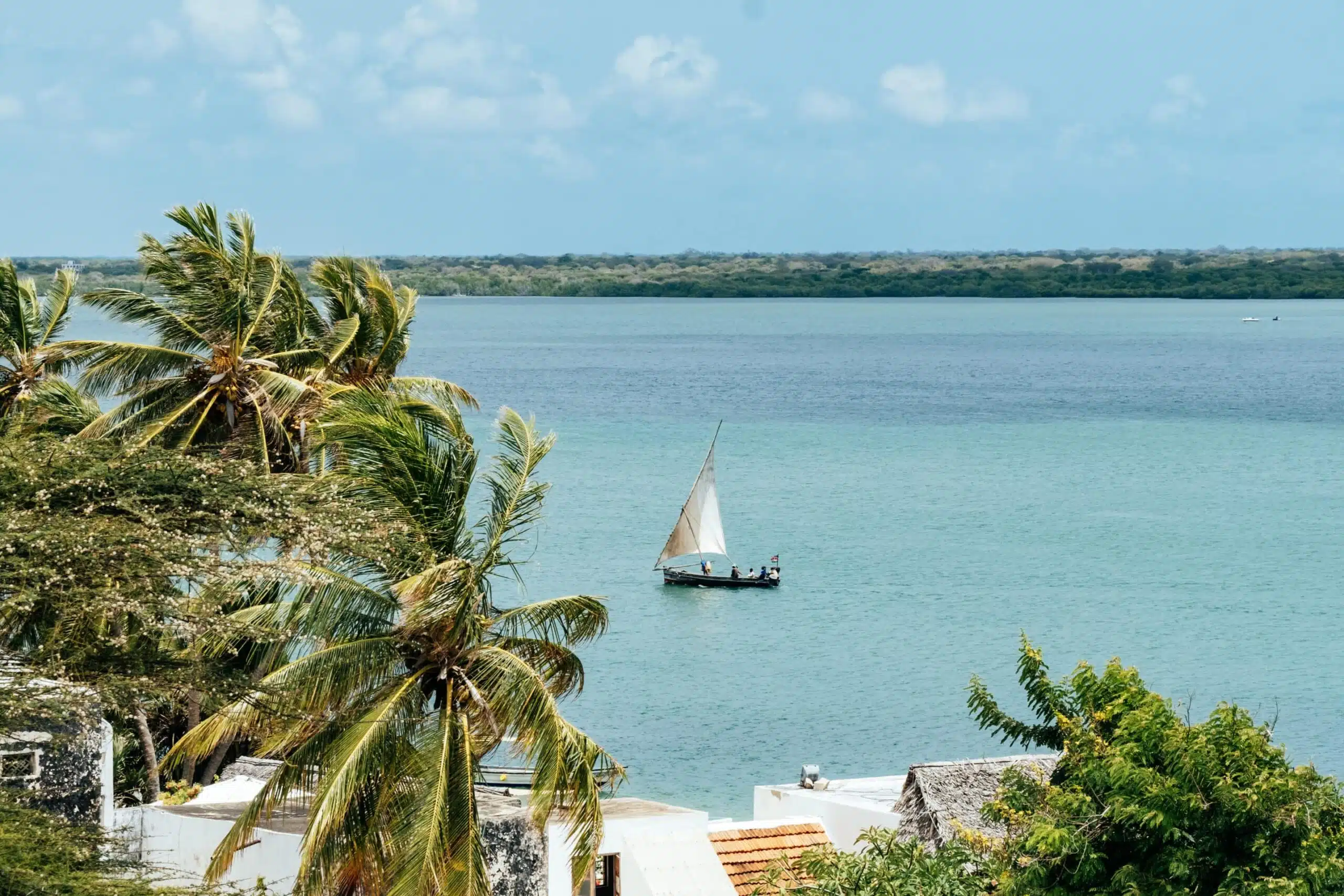
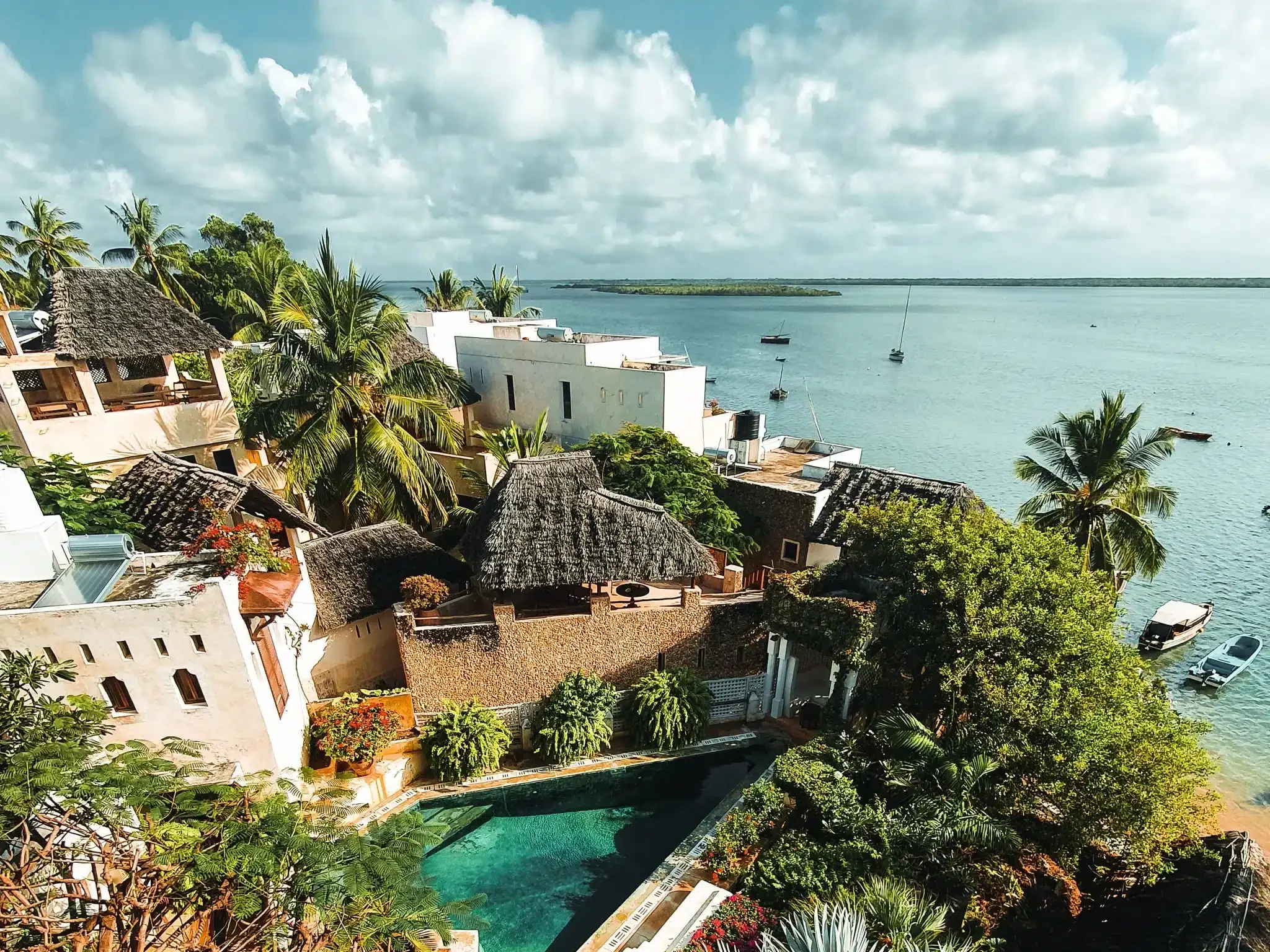
Lamu is one of the oldest continuously inhabited settlements on the East African coast, a UNESCO World Heritage Site whose medieval Swahili architecture and street layout have remained largely intact. There are no cars on the island. Movement is by foot, donkey, or wooden dhow, and the town’s narrow coral-stone lanes were built for exactly that pace. This is not a resort destination that performs simplicity; it is a place where the infrastructure of modern tourism has genuinely not overtaken the existing order.
For couples arriving from the Mara, the contrast is structural as much as geographical. The Mara demands attention outward, towards landscape and wildlife. Lamu redirects it inward, towards the detail of carved wood, the geometry of architecture, and the rhythm of tidal movement.
Accommodation on Lamu tends towards privately owned historic houses, many of which have been restored with considerable care. Access to the most considered properties is rarely straightforward, and the quality of what is arranged reflects the depth of local knowledge behind it.
Where to Stay in Lamu: Boutique Retreats and Private Villas
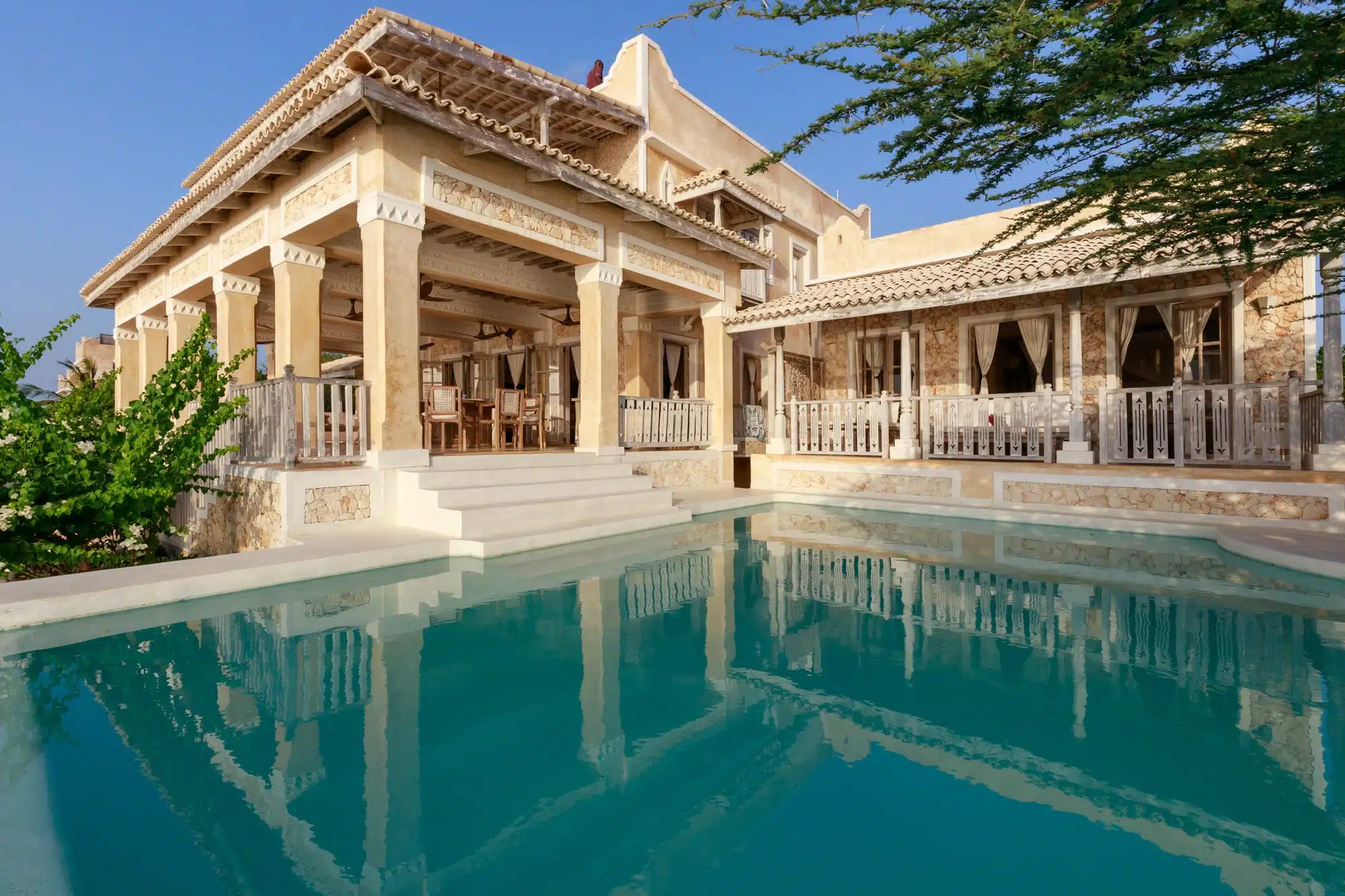
Lamu’s accommodation divides broadly across three locations, each suited to different priorities. Lamu Town offers restored Swahili merchant houses, many converted into boutique guesthouses with internal courtyards, carved wooden details, and rooftop terraces. These properties place couples within the UNESCO-listed old town, where the architectural heritage is the primary draw. Shela, a short boat ride from town, is where most of the island’s higher-end villa rentals are concentrated, offering greater privacy and direct beach access without the density of the town.
The outer islands, particularly Manda and Pate, suit couples seeking near-total seclusion. Properties here are fewer, and access is more involved, which limits availability and requires careful coordination.
Private villa rental is the dominant format at the upper end of the market across all three areas. Most villas operate with dedicated staff and are not listed through conventional booking channels, meaning access depends significantly on who is arranging the stay and what relationships they hold on the island.
Building the Itinerary: Sequencing, Logistics, and Timing
Most itineraries run between ten and fourteen nights, with the Maasai Mara scheduled first. Arriving in the bush before the coast allows the pace to decelerate naturally, and the contrast between the two environments lands more effectively in that order. A typical split allocates four to five nights in the Mara and five to seven nights in Lamu, though the balance shifts depending on travel dates and camp availability.
Connections between the two destinations are not direct. The standard routing moves through Nairobi’s Wilson Airport, with onward flights to Lamu’s Manda Airport operated by scheduled light aircraft services. Total transfer time, including ground connections, typically runs between four and six hours. The sequencing of these legs requires careful coordination, particularly during peak season when aircraft capacity is limited.
The strongest travel windows are July to October, when the Mara’s dry season coincides with settled conditions on the coast, and January to February, which offers a quieter alternative with reliable weather across both destinations.