On this page
The Okavango Delta, a UNESCO World Heritage Site in northern Botswana, floods on a seasonal cycle, transforming the Kalahari into one of Africa’s most biodiverse wilderness areas.
A Flood That Builds an Ecosystem
The water that defines the Okavango Delta does not originate within it. Rainfall in the highlands of Angola feeds the Cubango and Cuito rivers, which converge to form the Okavango River before it crosses into Botswana and fans out across the Kalahari basin. The journey takes months, and the flood peak typically arrives in the Delta between June and August, during Botswana’s dry season.
The flooding cycle is what gives the Delta its ecological significance. As surrounding landscapes dry out, rising waters push wildlife onto elevated islands and woodland edges, concentrating animals in patterns that can be planned around. The flood does not simply fill the Delta. It restructures it, determining which areas are accessible, which species are present, and in what densities.
For safari planning, the flood cycle is a structural variable rather than a backdrop. The timing and extent of inundation vary year to year, and the areas worth prioritising shift accordingly.
On the Water: Safari by Mokoro and Motorboat
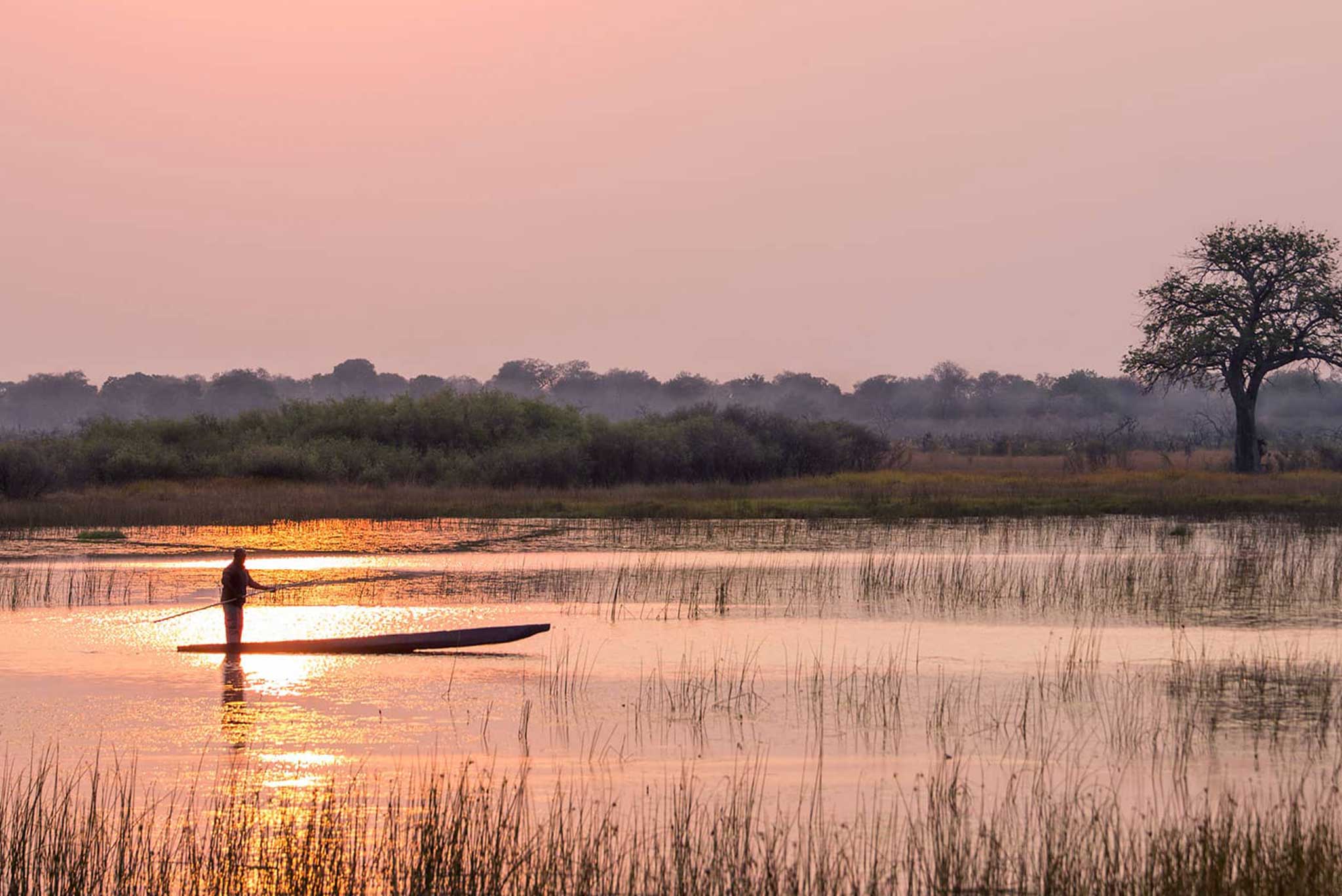
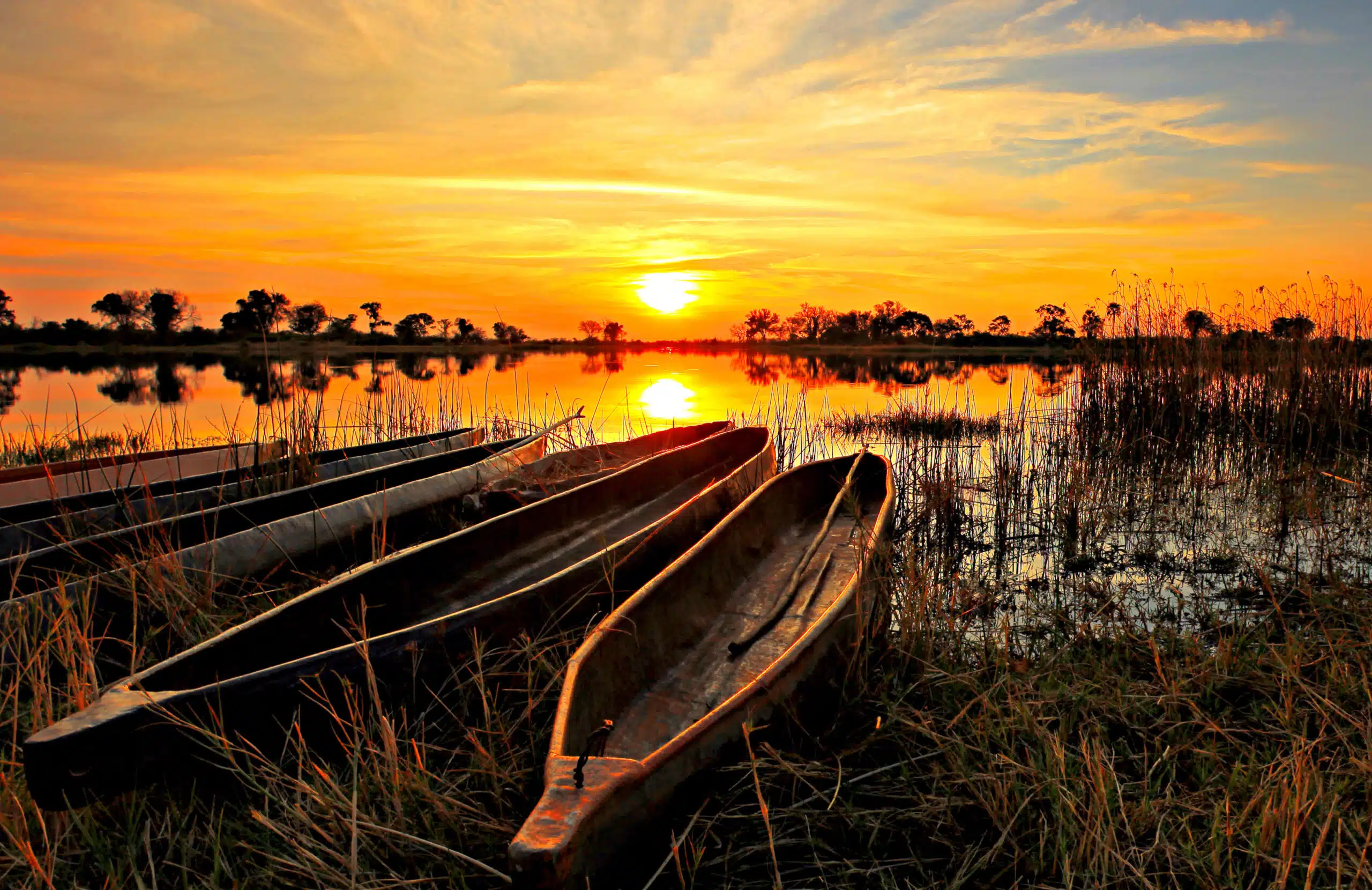
Movement through the Delta’s interior relies on two modes of water-based travel. The mokoro, a traditional dugout canoe poled from the stern, operates in shallow, vegetation-dense channels where motorized access is not possible. At water level, animals that might otherwise move away from a vehicle often hold their position.
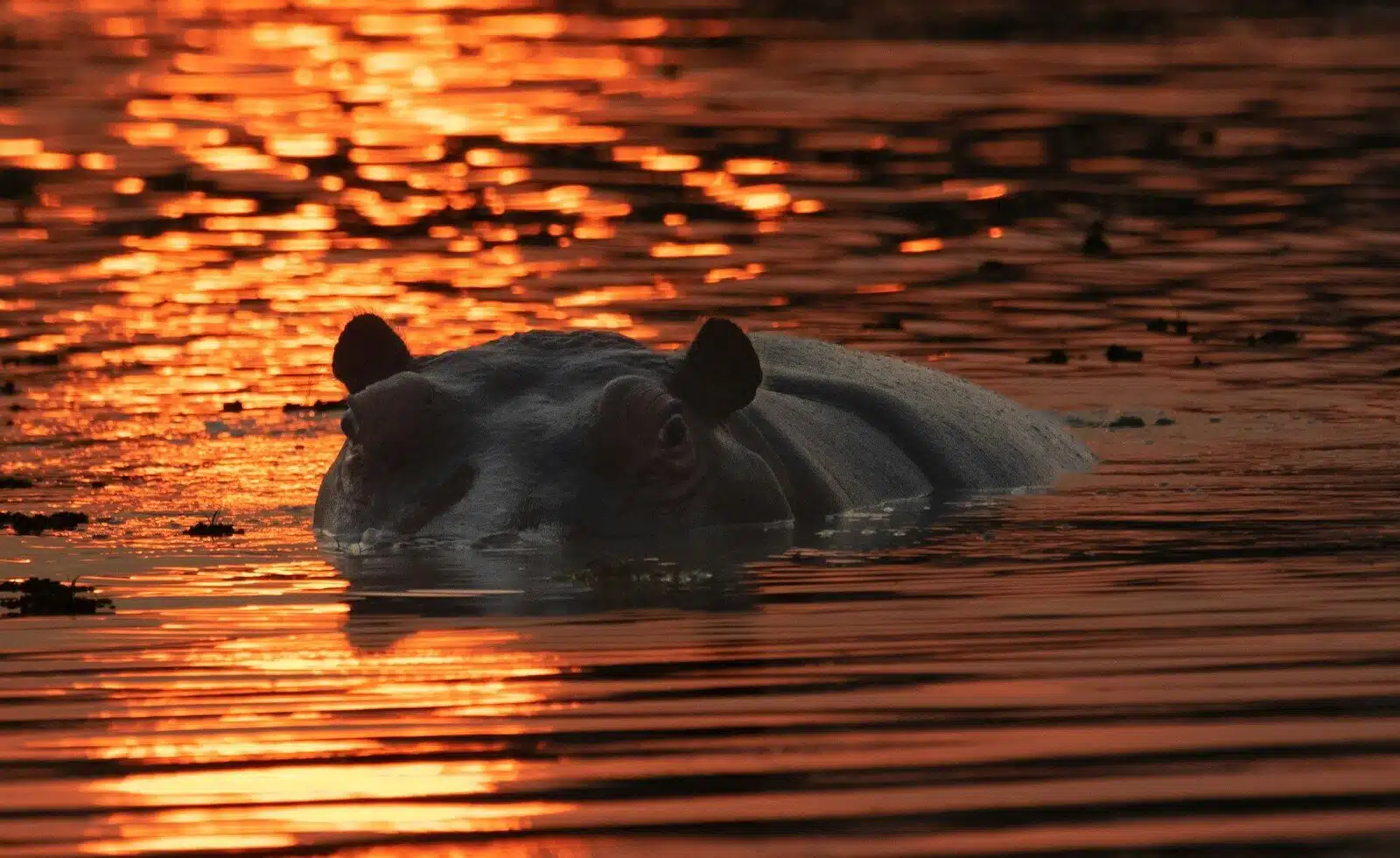
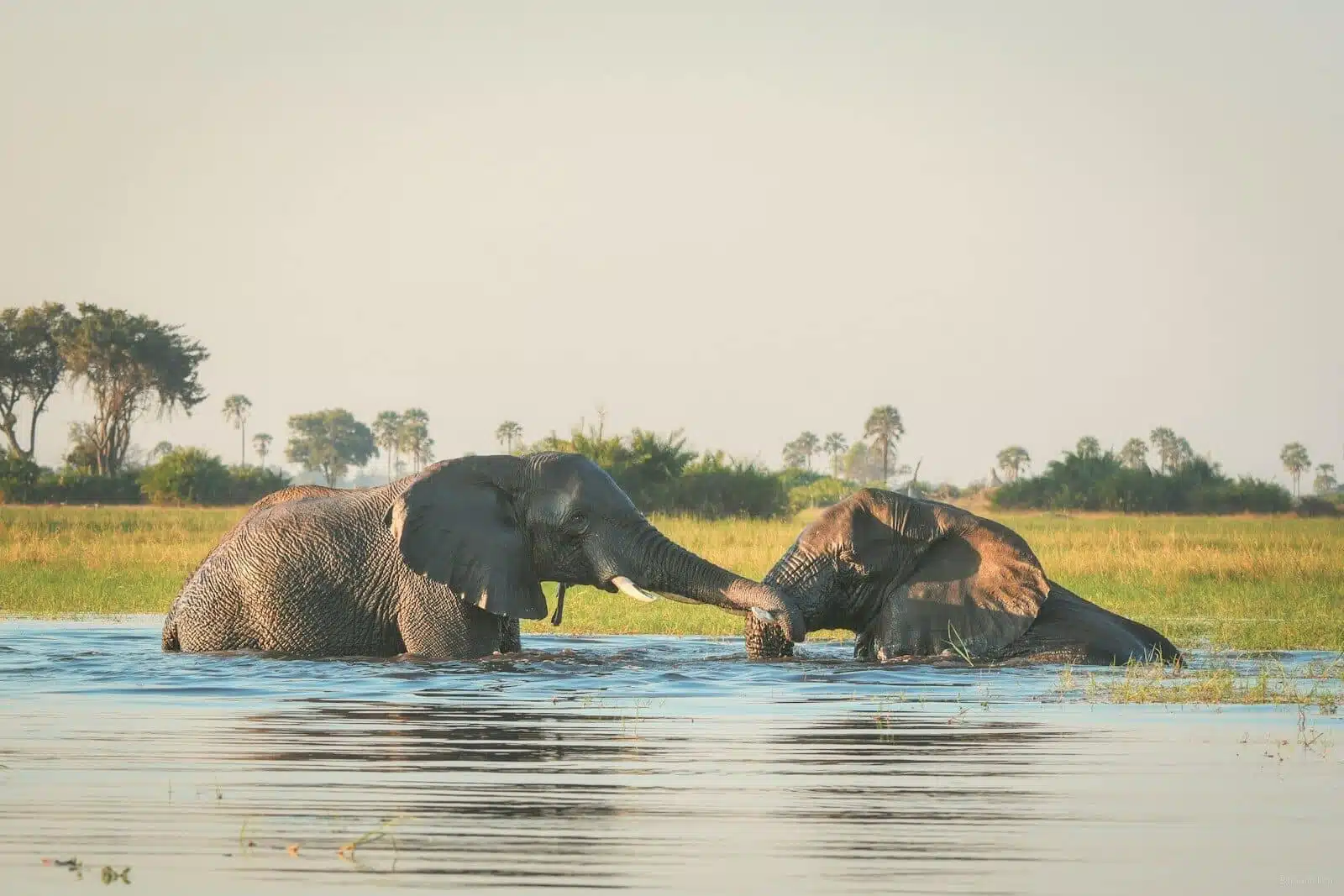
Motorized boat safaris operate across broader floodplains and deeper channels, where elephants cross between islands and hippo pods occupy permanent pools. This format covers greater distances and suits tracking larger aggregations of wildlife during peak flood season, typically between June and August.
The two approaches are rarely interchangeable. Which is used, and when, depends on water levels, wildlife distribution, and the specific area of the Delta being accessed.
Biodiversity at an Unusual Scale
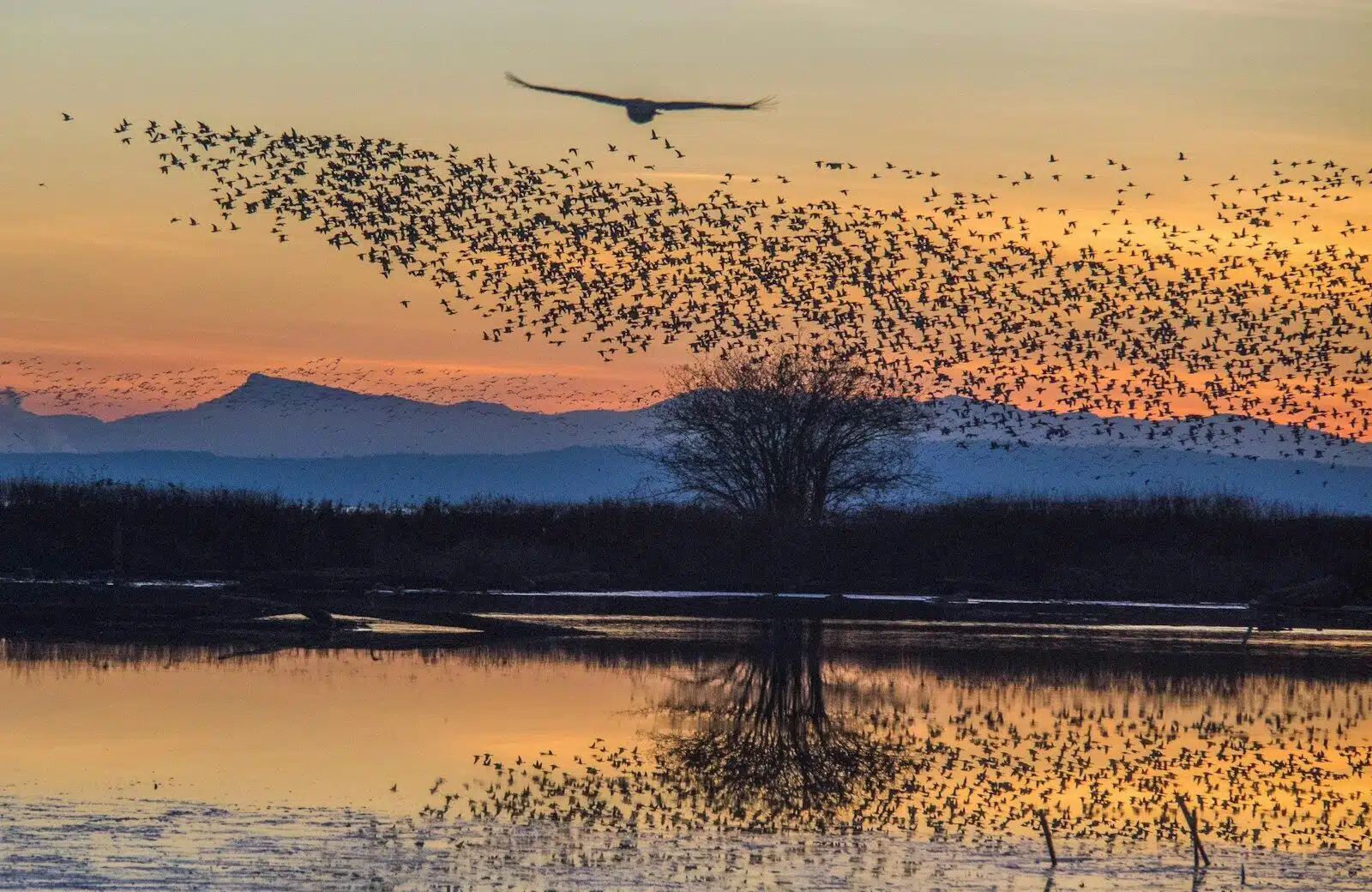
The Okavango supports all of the Big Five alongside African wild dog, cheetah, sitatunga, and red lechwe, with over 400 recorded bird species. This is a direct consequence of the Delta’s layered habitat structure, where permanent water channels, seasonally flooded plains, and elevated dry land exist in close proximity, each sustaining different species and behaviours across the same landscape.
The seasonal flood cycle, fed by rainfall in the Angolan highlands rather than local rain, advances slowly through the Delta between May and August. The timing matters. It coincides with the dry season across the broader region, drawing wildlife inward as other water sources diminish. The result is a convergence of species that few ecosystems produce by nature alone.
The sitatunga is a telling indicator of the Delta’s ecological range. A semi-aquatic antelope rarely seen in drier safari destinations, its presence here reflects how far the habitat extends beyond what a conventional game reserve can sustain.
The Concession Model and Why It Matters
Botswana’s national tourism policy rests on a deliberate constraint. Limit visitor numbers, charge accordingly, and protect the wilderness that justifies the price. Private concessions are the mechanism through which this works. Operators lease large tracts of land directly from the government or community trusts, securing exclusive rights to conduct activities within defined boundaries. In the Delta, some concessions exceed 150,000 hectares, accessed by a single camp.
The effect is profound. A concession structure removes the shared-road problem common to East African safari circuits, where multiple vehicles converge on the same sighting. Here, game drives, mokoro excursions, and walking routes unfold across land no other operator can enter. This exclusivity is not incidental to the experience. It is the condition that makes certain encounters, and certain places, possible at all.
The concession system also ties conservation directly to occupancy. Lease fees fund anti-poaching operations and community programmes, meaning the model sustains itself through use rather than despite it.
Ultra-Luxury Lodges Built for Isolation
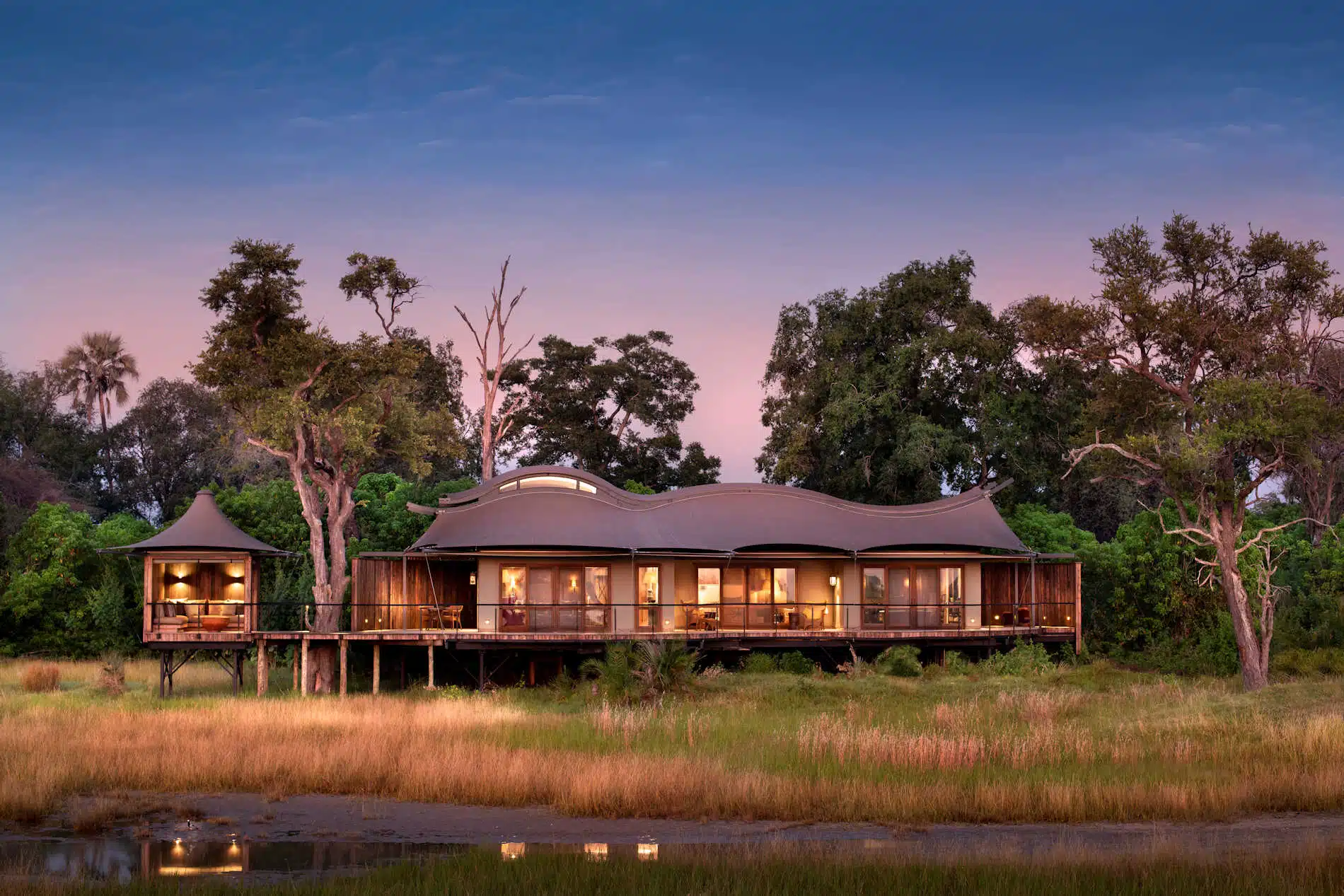
Accommodation across the Delta’s private concessions ranges from elevated tented camps on seasonal islands to permanent lodge structures with plunge pools and views across the floodplains. Properties remain small, with guest numbers capped by concession agreements. Several camps are rebuilt or repositioned each season to follow the flood cycle, meaning a property’s layout in June may look entirely different by October.
Most lodges sit beyond road access for much of the year. Reaching them relies on a network of light aircraft and bush airstrips, with guests transferring between Maun or Kasane and individual concessions by small charter plane. Flight times are short, but the logistics demand precise coordination across multiple operators and landing schedules.
The standard of finish across leading properties runs high, with solar infrastructure, conservation levies, and low-density design built into the operating model rather than offered as an afterthought.
When to Go and How to Plan
The Okavango moves to a counterintuitive seasonal rhythm. The annual flood, fed by rainfall in Angola’s highlands, typically peaks between June and August, well after the rains have ended in Botswana. This is also peak dry season, meaning wildlife converges around water channels and floodplains at once, making it the most rewarding period for both mokoro travel and game viewing. The green season, from November through April, brings dramatic skies, migratory bird activity, and newborn wildlife, though vehicle access across some areas becomes limited.
Experienced itineraries account for this by moving between distinct zones within a single trip. The permanent Delta, the seasonal floodplains, and the drier eastern corridors near the Moremi Game Reserve each behave differently depending on the time of year. Structuring a journey across two or three camps positioned across these zones calls for precise timing and a close understanding of how water levels shift between concessions. The sequencing of camps matters as much as the selection of them.
Ready to plan your Okavango Delta safari and experience one of Africa’s most remarkable wilderness systems? Speak with Do Not Disturb to begin your journey.