
On this page
Visit the Dambulla Cave Temple with a private guide, exploring five cave shrines with centuries-old murals and more than 150 Buddha statues.
Explore the Dambulla Cave Temples
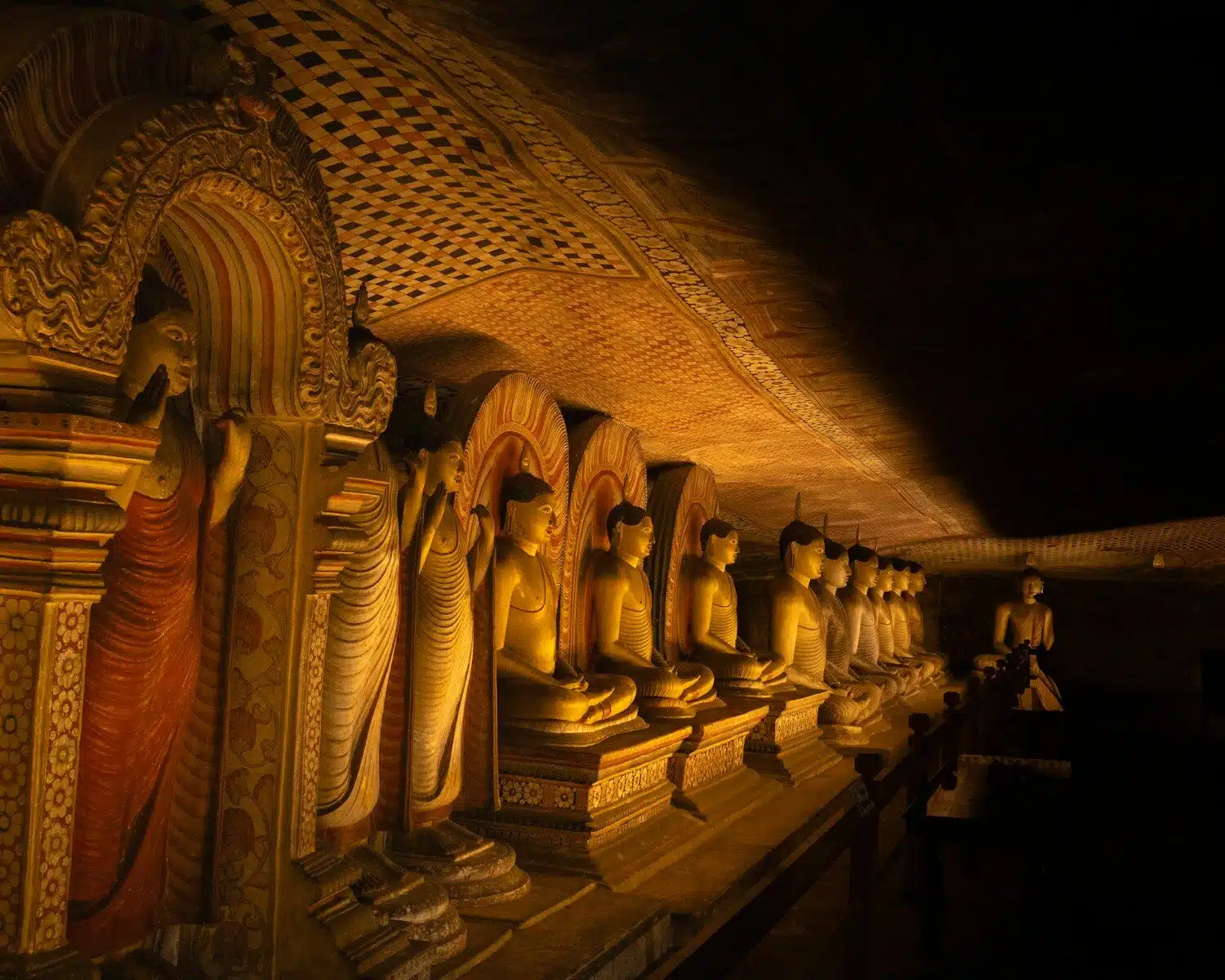
Buddhist monks first used Dambulla’s caves as shelter in the 3rd century BCE, meditating in the natural rock overhangs above the surrounding plain. Centuries later, King Valagamba hid here for 14 years after being exiled from Anuradhapura, and on reclaiming his throne, he had the caves converted into shrines in gratitude to the monks who sheltered him. A private guide leads the way through five main cave temples, revealing centuries-old murals and more than 150 Buddha statues carved into the rock.
What You See
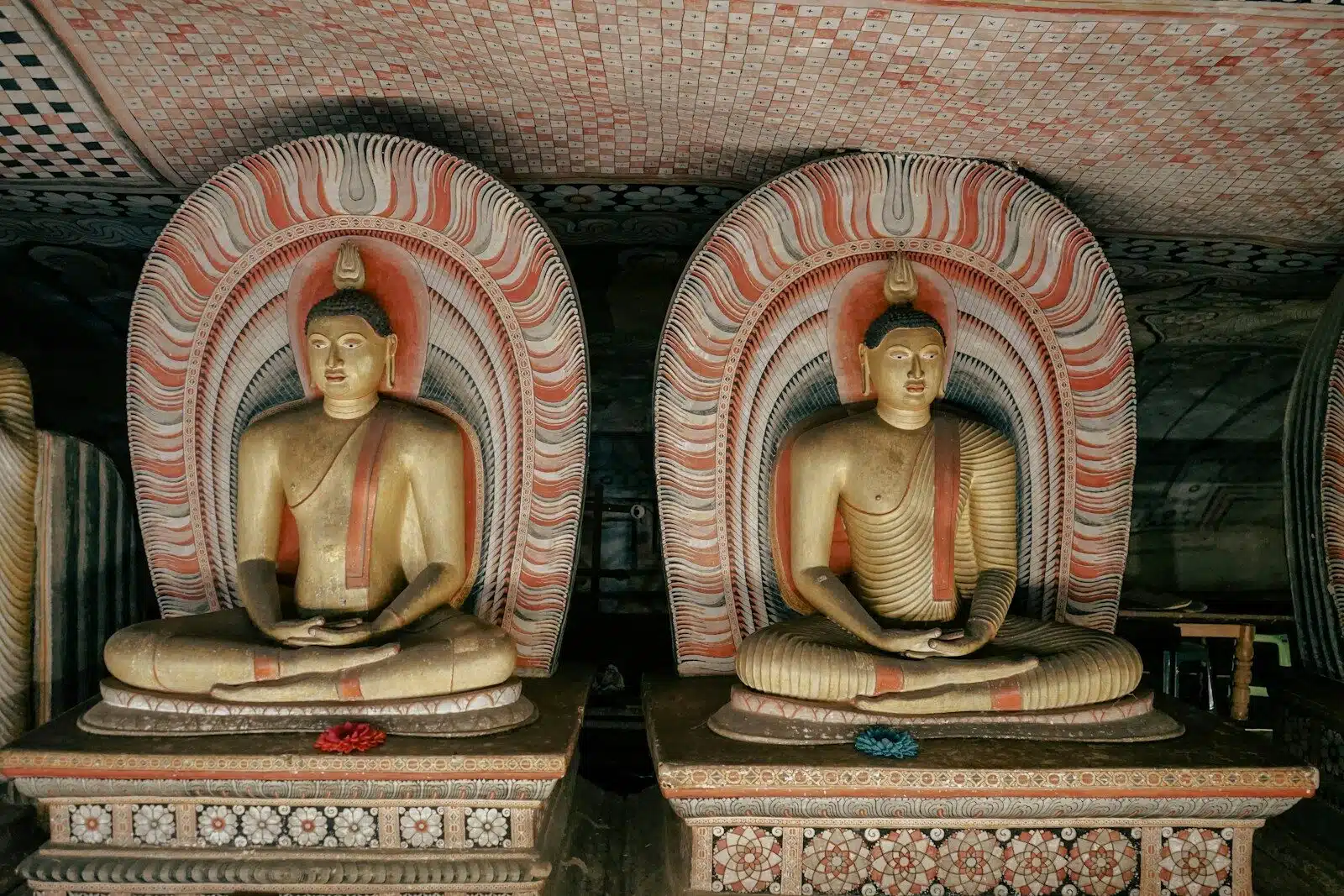
The five caves hold 2,100 square meters of rock murals, painted across walls and ceilings carved 160 meters up into the cliff face, among the largest surviving painted surfaces of its kind anywhere in the world. The paintings depict scenes from the life of Gautama Buddha, including his first sermon and his temptation by the demon Mara, alongside Jataka tales and images of historical kings. Cave 3 holds a ceiling painting of Maitreya, the future Buddha, preaching in a traditional pavilion. Cave 4 contains a large mural of the Buddha seated in an assembly hall surrounded by his disciples. Cave 5 depicts regional guardian deities, including Kataragama and Vishnu.
What You Experience
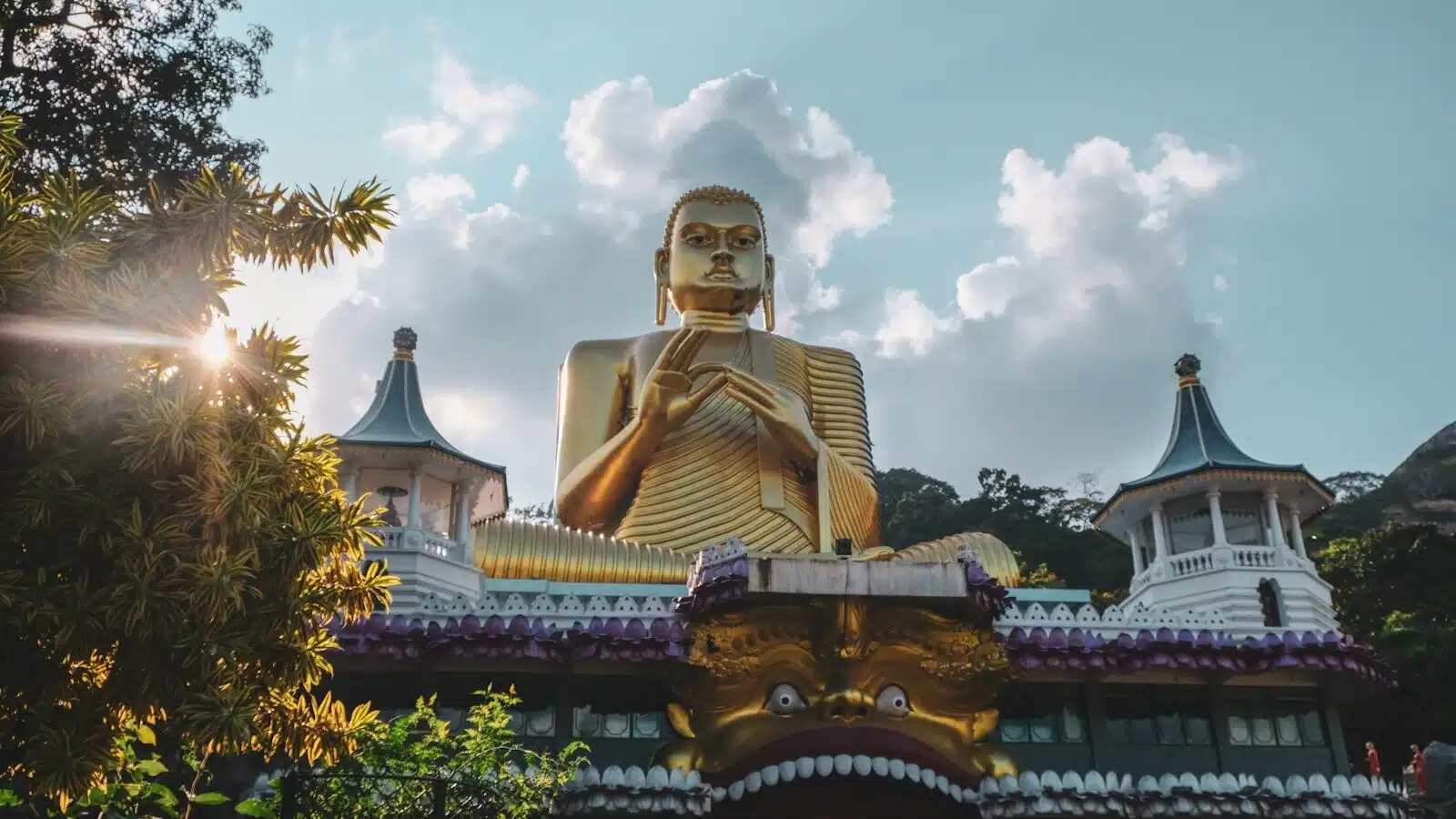
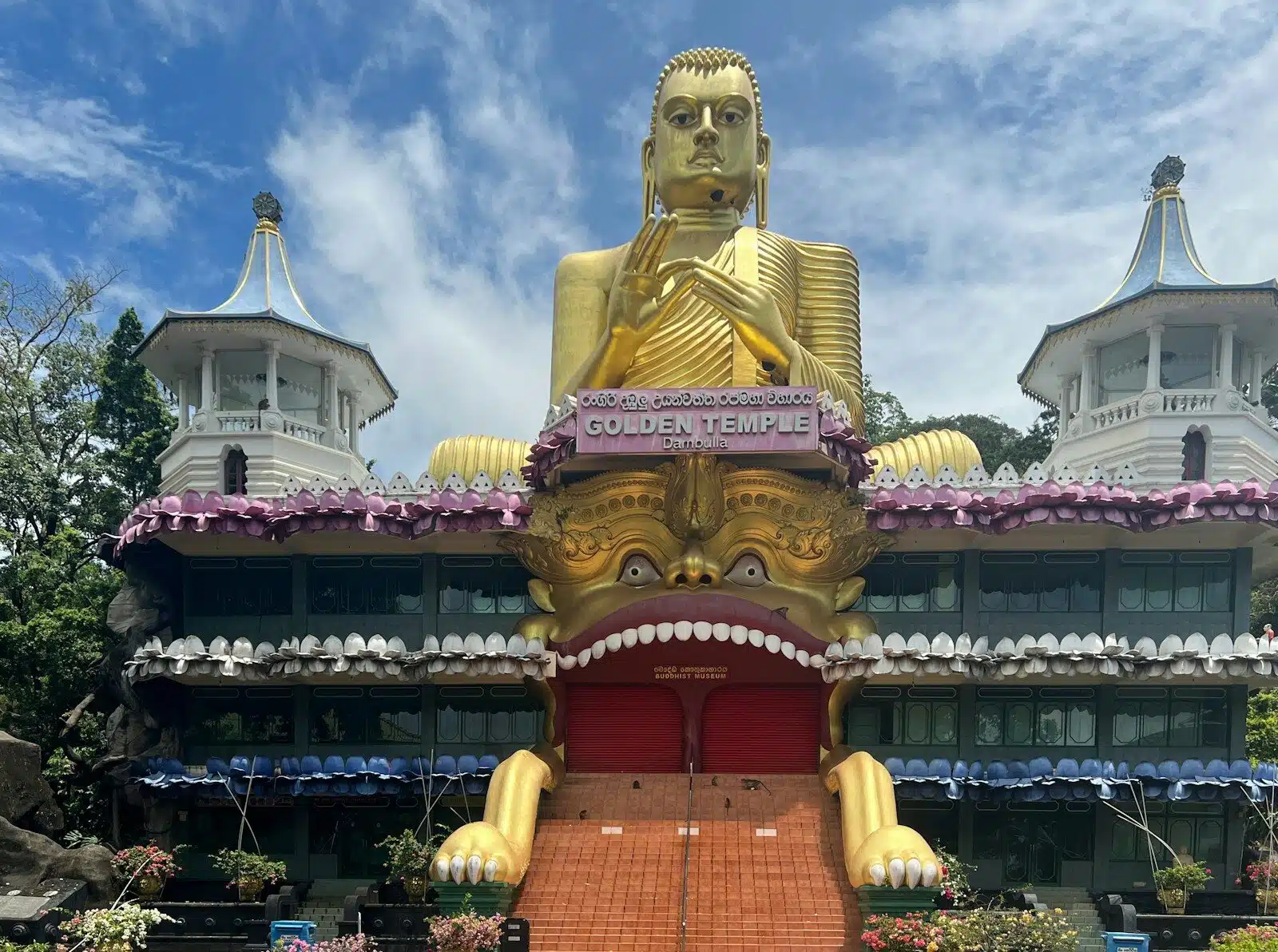
Statues of the Buddha fill the caves in seated, standing, and reclining poses, more than 150 in total, added and gilded over successive centuries by different rulers. King Nissanka Malla gilded parts of the interior and added roughly 70 statues in the 12th century, and the Kings of Kandy restored and repainted much of the complex in the 18th century, giving the caves the layered appearance they hold today. At the base of the site stands a separate, modern landmark, a 30-meter Golden Buddha statue completed in 2001, seated in the Dhamma Chakka posture with hands raised in the Vitarka Mudra, the gesture of teaching. It sits apart from the ancient cave complex above, though the two are often mistaken for one another.
Why Private Access Matters
A private guide draws out the detail across the caves that’s easy to miss without context, the ongoing restorations of different eras, the specific stories behind individual murals, and the sequence in which the shrines were built. Moving through the caves at an unhurried pace allows time to take in the scale of the murals properly, rather than passing through with a larger group. The climb up to the caves is set at a pace suited to the group, with the guide timing the visit around the day’s wider plans.
Commonly Asked Questions
What is the story behind the Dambulla Cave Temple?
Buddhist monks first used the caves for shelter in the 3rd century BCE. King Valagamba later hid there for 14 years, and on reclaiming his throne, had the caves converted into shrines in thanks for the monks’ protection.
What is the tallest statue in Sri Lanka?
The Golden Buddha at the base of the complex stands roughly 30 meters tall, though it’s a modern addition, separate from the ancient cave temple higher up the rock.
What makes Dambulla so famous?
The site holds 2,100 square meters of rock murals across five caves, among the largest surviving painted surfaces of its kind, alongside more than 150 Buddha statues added over centuries.
How many caves are there?
Five main caves make up the temple complex, each with its own murals and statues added across different periods of Sri Lankan history.
How Do Not Disturb Makes This Possible
Do Not Disturb arranges a private guide for the Dambulla caves, timing the visit to the day’s wider itinerary rather than a fixed group schedule. The visit sits naturally within a broader Sri Lanka Highlands or Cultural Triangle journey, alongside sites such as Sigiriya or Kandy.
Start Planning Your Dambulla Visit.