

On this page
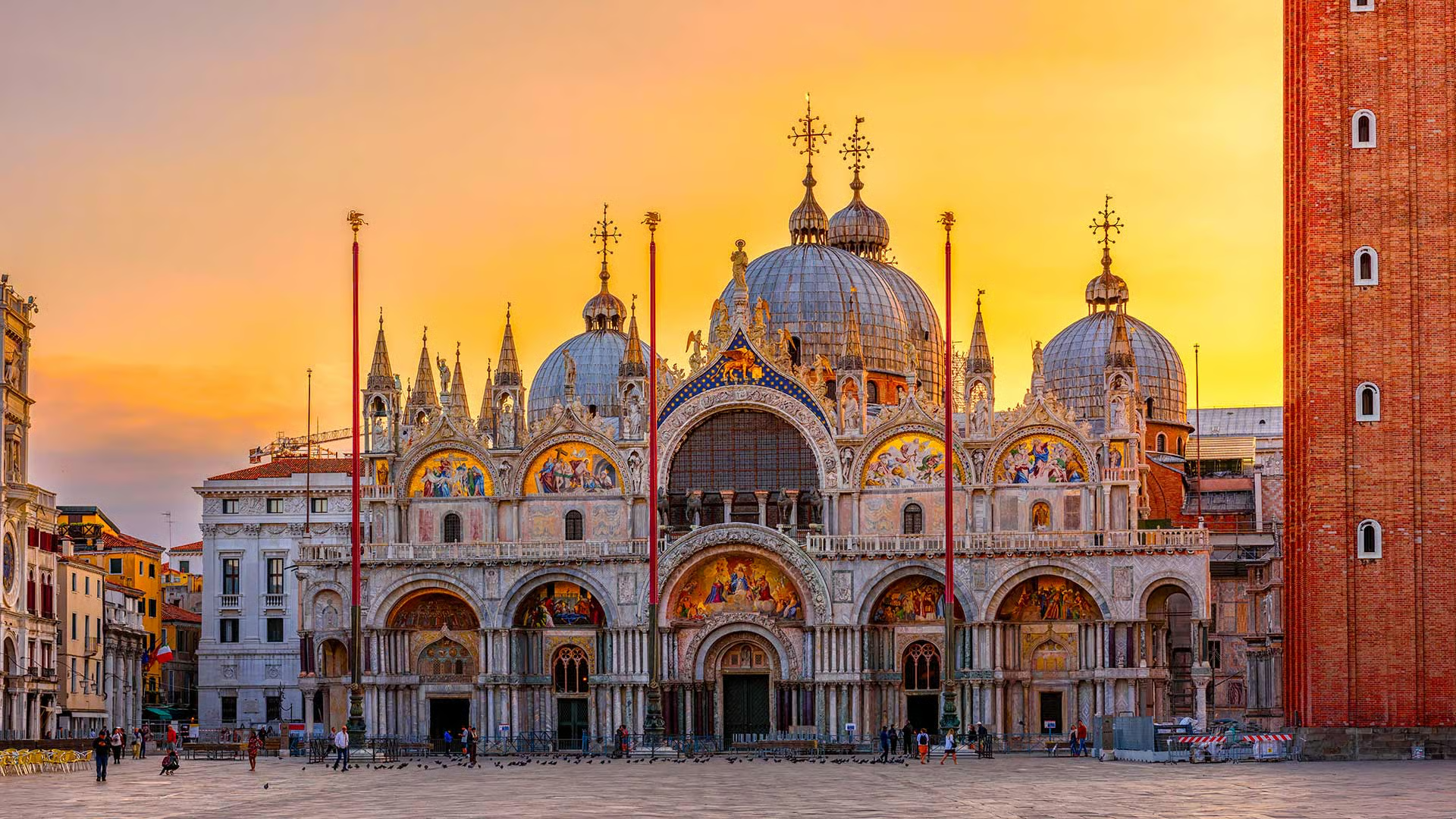
One of Venice’s gold-mosaic churches opens its doors at 7:30 am, well before the regular visitor hours begin. Inside, about 8,000 square meters of mosaic cover the domes and upper walls, and the marble floor below has settled into slow waves. The doors open for prayer, and a short service follows at 7:40 from Monday to Saturday.
Before the City Wakes
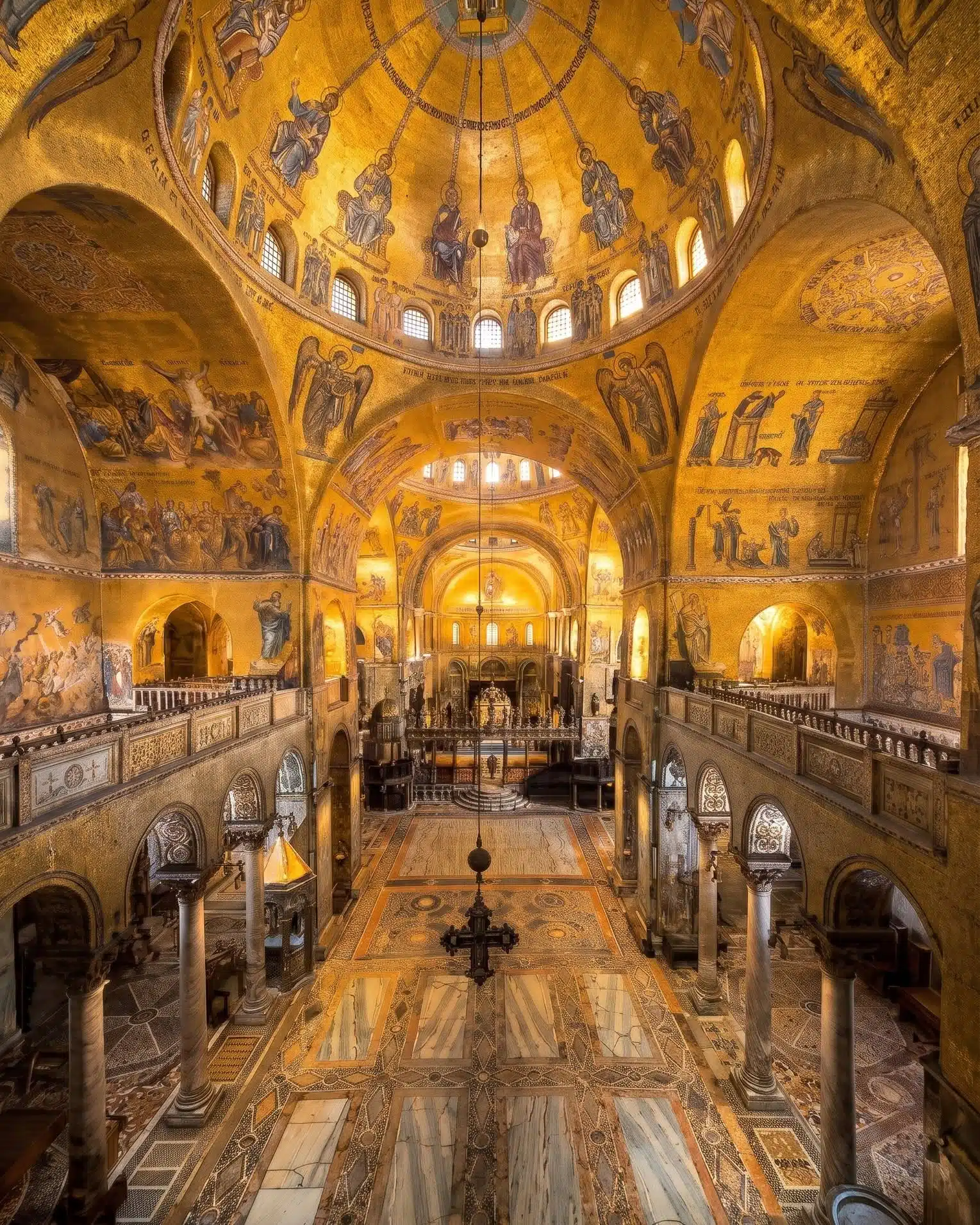
The side door opens onto an interior that feels larger than the doorway suggests. Your eyes take a moment to adjust, and the gold arrives gradually. First there is a glint high in the nearest vault, then the full curve of a dome, and then the ceiling reads as one continuous surface of small, tilted squares.
The regular visitor hours are still some way off, so there is space around you. You can cross the floor without a route to follow and stand under the nearest dome until you have looked at it properly.
The Chapel Itself
Walk towards the north transept, and the altar of the Nicopeia comes into view, set slightly apart from the nave. At its centre is a Byzantine icon of the Virgin and Child, framed in gold and enamel. The Virgin holds the Child upright in front of her, and Byzantine emperors are recorded as carrying this image into battle.
It reached Venice from Constantinople, one of many pieces that came from there, including objects taken in 1204. From a seat in the transept you are close enough to watch the gold frame catch what light there is, and far enough from the nave to feel the scale of the building behind you. The mosaics continue overhead, so the gold stays above the altar as well.
Gold in Low Light
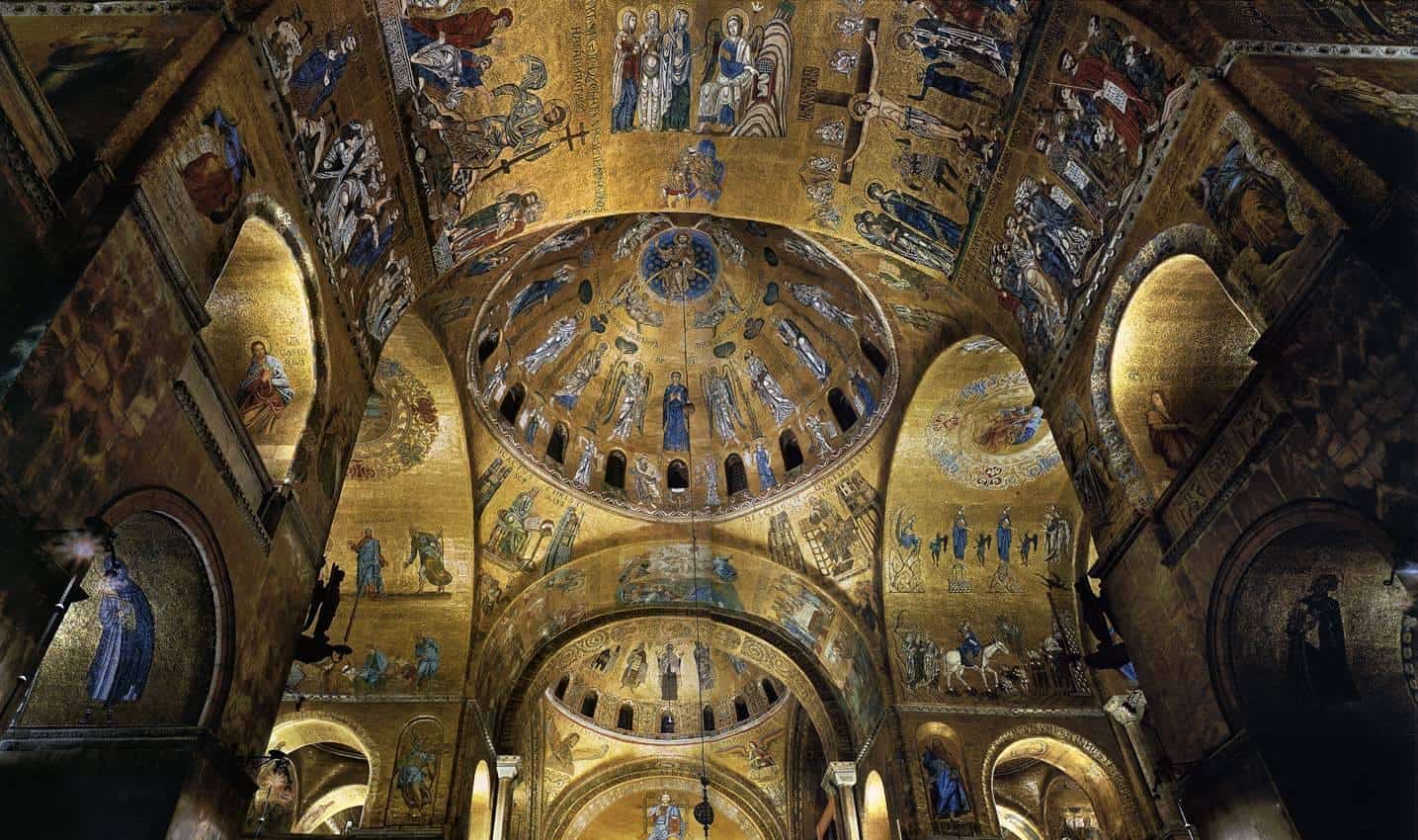
Look up. The gold tesserae are set at slight angles rather than flat, so the ceiling never settles into one tone. A small turn of your head moves the shimmer across a dome, and it shifts again as you walk. Saints and biblical scenes stand against that gold ground, drawn in simple dark outlines, and the work was added over several centuries, so the style changes from one vault to the next.
Windows at the base of the domes let in daylight, and in the early hours that is most of the brightness the gold has to work with. The result is a warm, uneven glow that moves through the morning as the sun does. Below, the marble floor is laid in geometric patterns and tilts underfoot, so you feel the building’s age through your shoes before you read a word about it.

A Space Outside the Canon
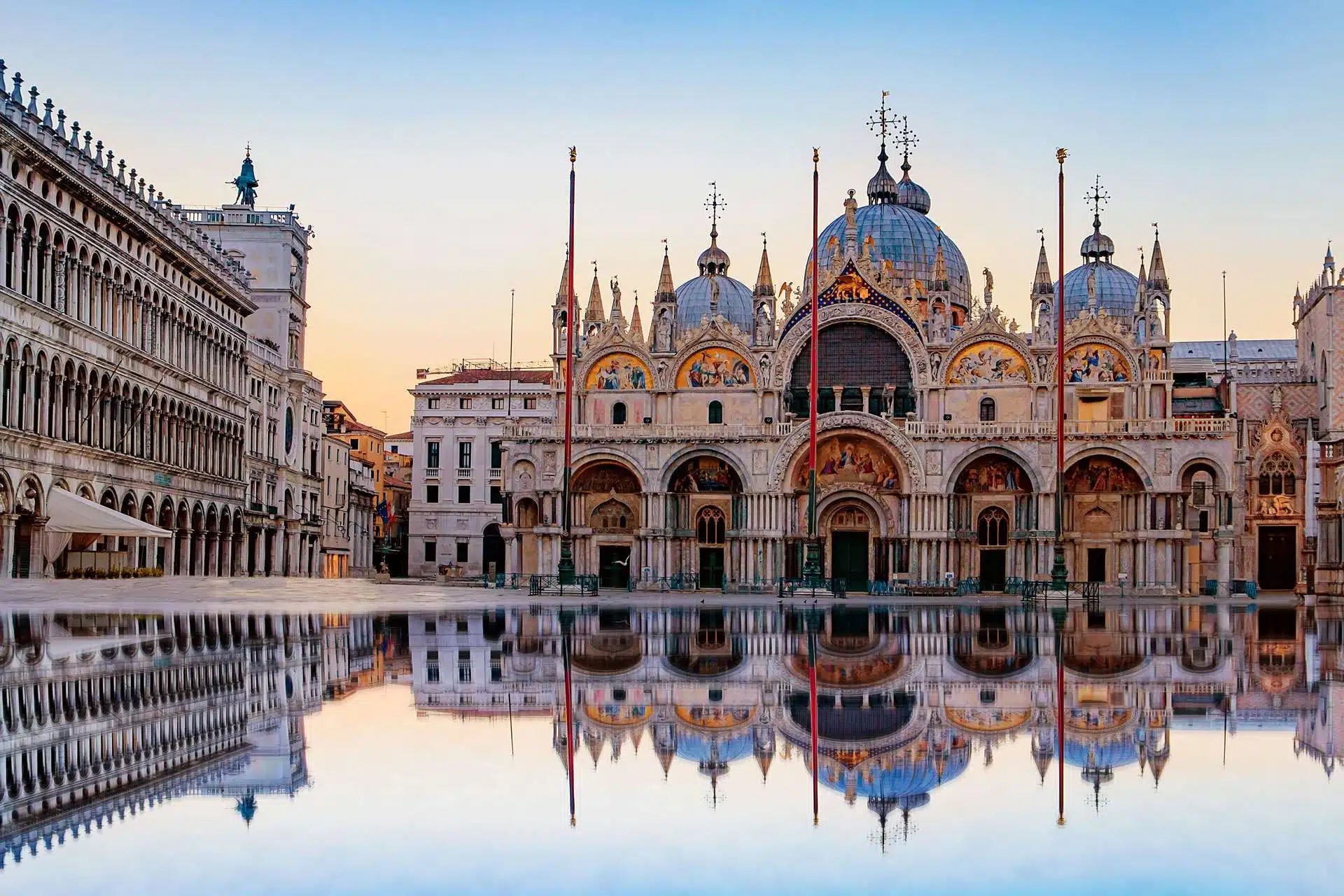
This is not a building that began as a sight. It was made to house the relics of St. Mark, brought to Venice from Alexandria in the ninth century, and for most of its history it served as the doge’s chapel, a state sanctuary rather than a bishop’s seat. That explains the scale. The decoration was meant to speak for the Republic, and it still carries the marks of Venice’s ties to Constantinople, from the Greek cross plan to the five domes. It became the city’s cathedral only in 1807.
It remains a working church. On Sundays and holy days of obligation, the 10:00 am Mass moves into the nave and is sung by the basilica’s own choir, which suits you better if you want to hear the space with music in it.

Access and Protocol
Enter through the side door on the north side of the church, which opens for prayer at 7:30 am every day. The weekday service is at 7:40, Monday to Saturday, and Sundays and holy days of obligation follow a different timetable. If the door is roped off, tell the attendant you are there for the service and follow their direction.
Dress as you would for any active church, with shoulders and knees covered and hats off. Keep your phone away while the service is on and keep your voice low. Attending a service does not open the ticketed areas of the building, which are available later in the day. Check the schedule the day before.
Why This Moment Does Not Scale
The morning works because the church is in daily use, and that cannot be made private. It is public, and it belongs to the people who attend, so nothing here can be closed off, extended, or arranged around a group. A party of twelve would turn a quiet interior into a tour, which is the thing this Moment avoids.
Sunrise changes what you see. In midwinter it falls close to opening time, so the interior is at its dimmest and the gold glows only where the windows reach. In June the sun is well up before the doors open, and daylight reaches the domes from the first minute.
Do Not Disturb plans the morning from the moment you leave your hotel, with a transfer timed to the 7:30 opening and a specialist guide waiting when the visitor hours begin, so the first hour belongs entirely to you.