
On this page
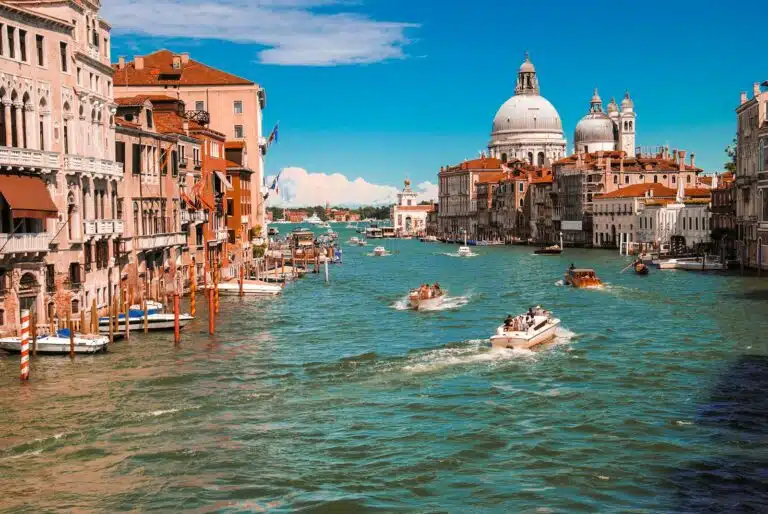
The boat leaves Venice at the hour the light turns low and amber. Beyond the last of the city, the lagoon spreads across about 550 square kilometres of shallow water and tidal marsh, the largest wetland in the Mediterranean Basin. By the time the first aperitivo is poured, Venice has thinned to a line on the horizon.
The Lagoon Beyond the City
Venice looks self-contained from the Rialto, but it sits inside something much larger. Only about 8 percent of the lagoon is land, and roughly 80 percent is mudflat and salt marsh that appear and disappear with the tides. Three inlets connect it to the Adriatic, and the tide moves through them twice a day, which is why the shoreline never holds still.
From the water, the first thing you notice is the absence of edges. A bank of mud lifts out of the surface and sinks again later, and a low island of marsh vegetation sits at the margin of a dredged channel. The lagoon was added to the UNESCO World Heritage List in 1987. Venice exists because people fled the mainland in the fifth and sixth centuries and found protection in these shallows.
Why Dusk Changes Everything
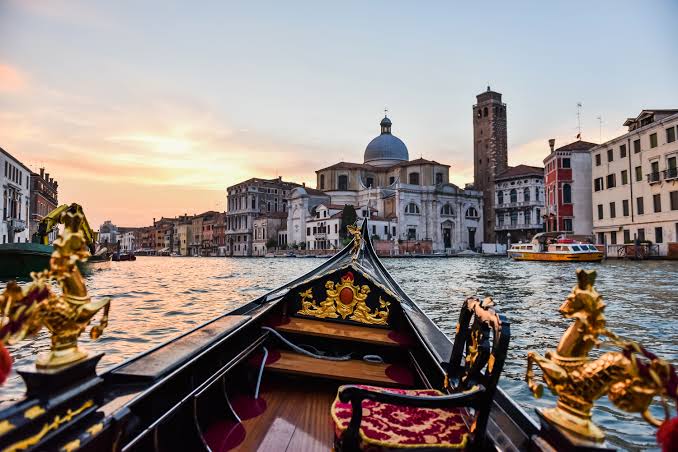
At dusk the lagoon changes in two ways at once. The sun drops towards the horizon and lays long reflections across the shallows, and the water takes on the colour of the sky until the line between them softens. Where the tide has left mud exposed, the thin film of water on top reflects the sky as well, and the marsh edges turn into dark lines against the light.
The sound changes too. The noise of the city falls away behind you, and what remains is water against the hull. Dusk is also when the lagoon is easiest to read. The low sun picks out the outlines of the islands and the straight run of the channels, and bell towers stand clear against the sky.

The Role of the Local Guide
Out on the water every direction looks the same, and a local guide is what turns it into a place. Depth and tide decide where a boat can go, and the dredged channels run between banks that stay invisible until the water drops. A guide who knows the lagoon reads that for you and names what the flat horizon hides, such as an island monastery behind a screen of cypress and pines or the long walls of a former quarantine station.
Monks and market gardeners have both made a living from these waters, and the guide connects each island you pass to the people who worked it. The job is to supply the history that the empty horizon leaves out.
The Islets and What Remains
Many of the lagoon’s islands once held a town or a monastery, and a good number have since been abandoned. Seen from the boat at dusk, they read as dark shapes with a bell tower or a broken wall.
Some of the history is specific. Lazzaretto Nuovo opened in 1468 and served for three centuries as Venice’s main quarantine station for plague. Poveglia, where an octagonal fort was begun in 1645, is abandoned and off limits. Torcello held more than 10,000 people in the tenth century and about 300 by 1797, yet its cathedral, founded in 639, still stands.
On San Francesco del Deserto, a small community of friars lives on an island that took the name “of the desert” in the fifteenth century, when malaria left it empty for more than twenty years.
Which of these the boat passes depends on the tide and the light.

Aperitivi on Deck
As the sun goes down, the boat slows and the first glasses are poured. Aperitivo is the Venetian habit of having a drink and something small to eat before dinner, and on deck it happens with the whole lagoon as your restaurant. The sky fades over the marsh to the west, and the first lights of the city come on across the water.
The lagoon’s own produce is worth looking for on the table. Sant’Erasmo has long been known as Venice’s vegetable garden, and its first artichoke shoots, the castraure, are harvested from the end of April and available for only 10 to 15 days a year. Vineyards have also been replanted on Sant’Erasmo and Mazzorbo, so the wine can come from the same water you are crossing.
Arranging the Experience
Do Not Disturb builds the evening around the tide and the sunset, because those two decide the route. The boat is private, a specialist guide is aboard, and aperitivi are served on deck, so the only decision left to you is where to look. The departure is timed to the light, and the route is set on the day to suit the water level.