
On this page
A private visit to the Piccolomini Library inside Siena’s Duomo, with a specialist guide covering Pinturicchio’s ten-fresco cycle depicting the life of Pope Pius II in a room that most visitors pass through.
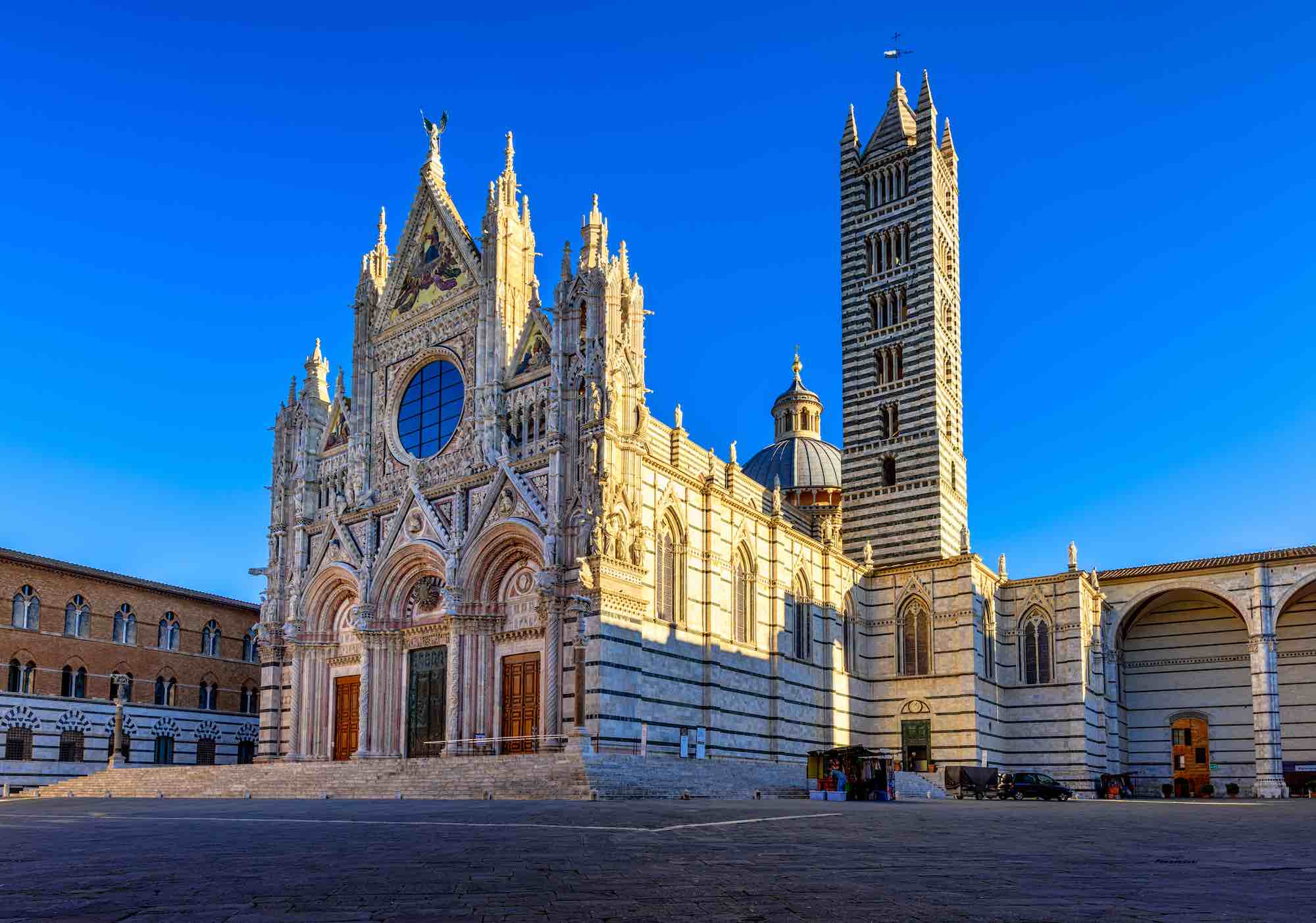
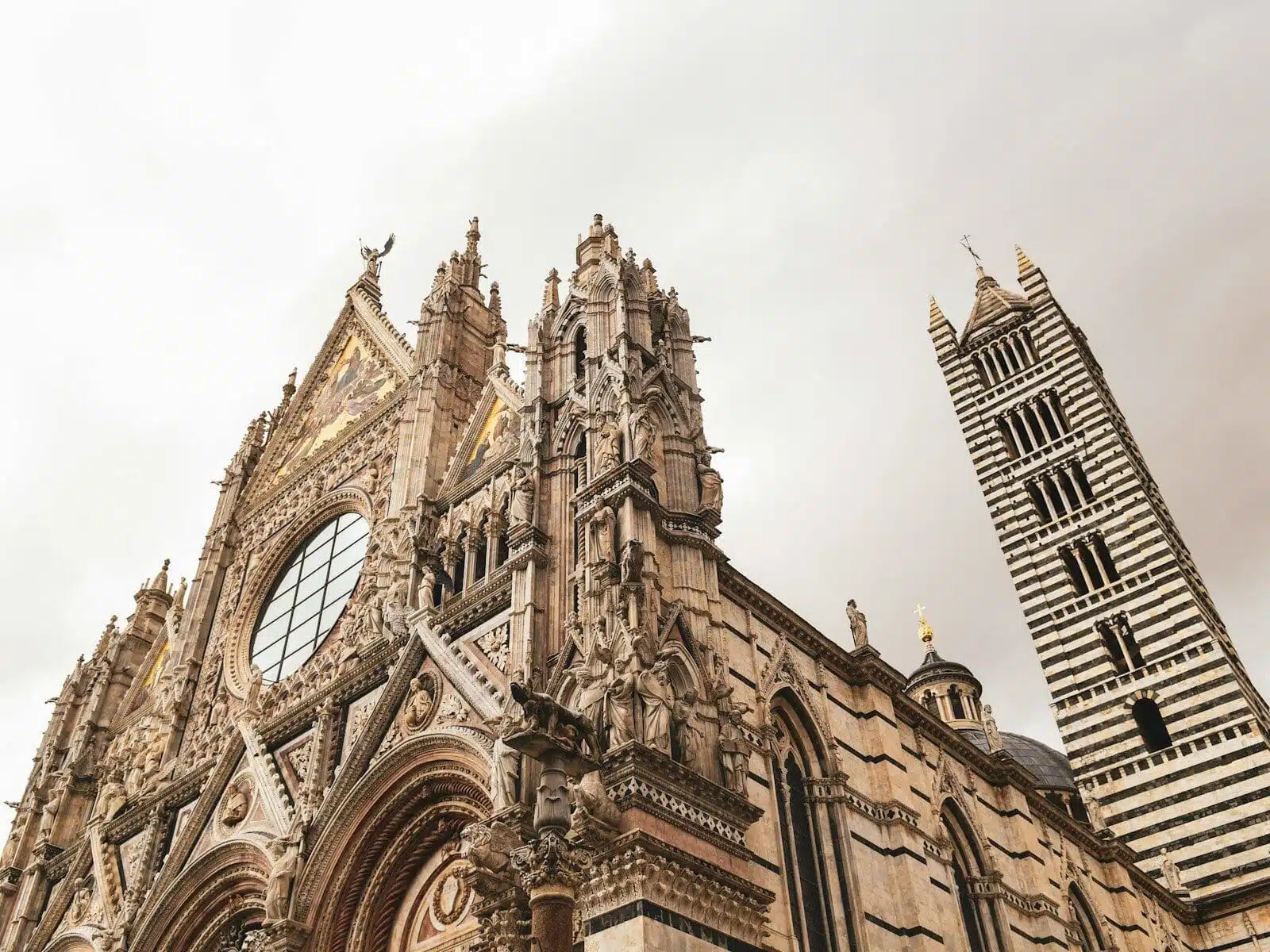
The Piccolomini Library sits off the left nave of Siena’s Duomo, entered through a bronze door set into the cathedral wall. Most visitors to the Duomo do not enter it. Those who do typically spend less than three minutes inside, moving around the perimeter, taking photographs of the frescoed walls and vaulted ceiling, and returning to the nave.
The library is included in the standard cathedral ticket. It is not marked as a priority on most visitor maps. It is one of the most complete and intact fresco cycles of the Italian Renaissance, and it is consistently overlooked.
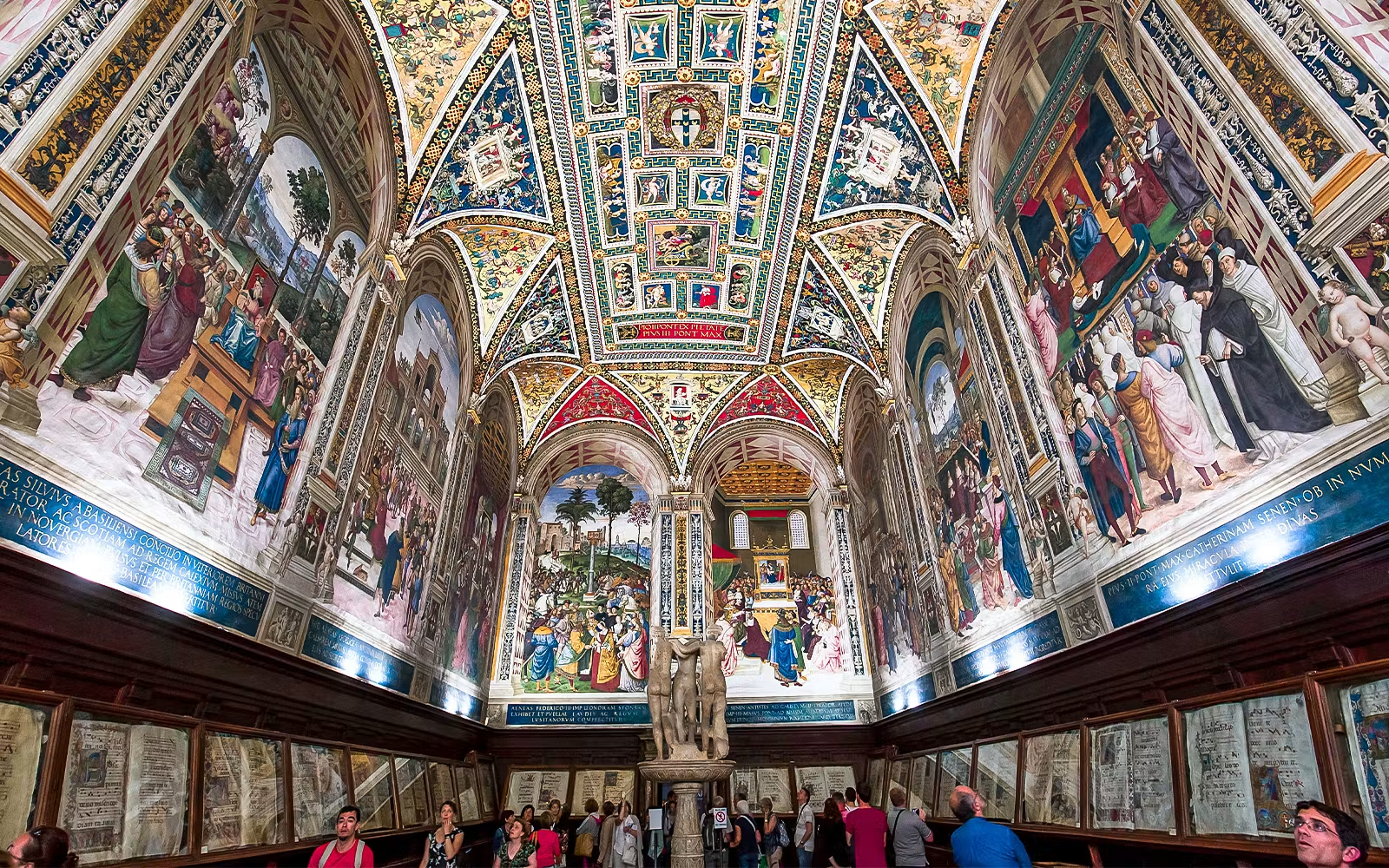
Pinturicchio and his workshop painted the library’s walls between 1503 and 1508, covering ten scenes from the life of Pope Pius II from floor to ceiling in colours that have remained vivid across five centuries. The young Raphael worked on the preparatory drawings for the cycle, and his presence is recorded in one of the frescoes, where a figure identified by art historians as a 20-year-old Raphael stands in the crowd at the canonization of Saint Catherine of Siena.
A private guide who can read the cycle in full, identifying the figures, tracing the narrative, and explaining the political and cultural context of each scene, changes the quality of the experience in ways that the standard visit does not produce.
Cultural and Historical Context
The library was commissioned around 1492 by Cardinal Francesco Todeschini Piccolomini to house the manuscripts of his maternal uncle, Enea Silvio Piccolomini, who served as Pope Pius II from 1458 to 1464. Pius II was the first humanist pope in papal history and wrote his own autobiography, the Commentarii, which provided the source material for Pinturicchio’s cycle.
The ten scenes are read clockwise from the northeast corner, tracing Piccolomini’s life from his departure for the Council of Basel as a young diplomat to his death in Ancona in 1464, having failed to launch the crusade he spent his pontificate pursuing. Between those two points the frescoes cover his ambassadorial work, his crowning as imperial poet by Frederick III, his elevation to cardinal, his election as pope, and his canonization of Saint Catherine of Siena.
Cardinal Francesco, who commissioned the library, was himself briefly pope, elected as Pius III in September 1503 and dying 26 days later. The entrance door to the library depicts his coronation. It is a monument built by a man who did not live to see it completed.
Why Private or Small-Group Access Matters
The Piccolomini Library is a small room. When a group enters, the space fills quickly. The standard visit moves around the perimeter and exits. A private visit with a specialist guide changes the terms entirely. The guide can stand in the centre of the room, directly below the vaulted ceiling, and orient the visit around the full cycle rather than the most accessible sections.
Each of the ten scenes can be covered in the order of the narrative, with the guide explaining not just what is depicted but who commissioned the scene, what the biographical source was, what the political significance of the event was at the time it happened, and what Pinturicchio’s compositional choices add to the account that the written sources do not.
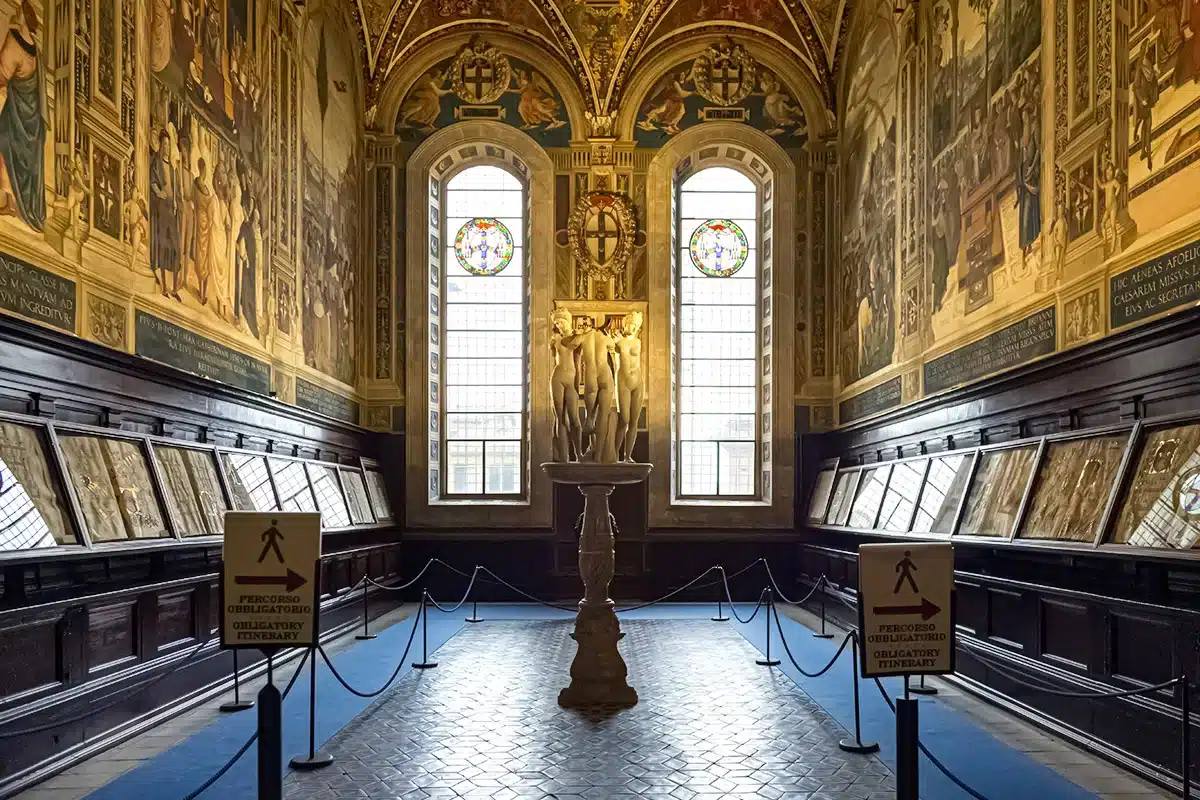
The library also holds a marble sculpture of the Three Graces, a second-century Roman copy of a Hellenistic original, placed in the centre of the room by Cardinal Francesco Piccolomini. Its history, from Rome to Siena, through periods of controversy over the nudity it depicts, to its return to the library in 1972, is part of the room’s story that the standard visit does not cover.
What You See
The vaulted ceiling is painted in blue, red, and gold grotesque decoration in the style of the Roman Domus Aurea, with the Piccolomini coat of arms at the centre and allegorical figures, pastoral scenes, and mythological panels surrounding it.
The ten wall frescoes cover every surface between the windows and the ceiling, separated by illusionistic arches. The colours have not faded in five centuries, the blue of the sky in each landscape and the red and gold of the ceremonial fabrics as vivid as the day they were finished.
The fifth scene depicts the meeting between Emperor Frederick III and Eleonora of Portugal near Siena’s Porta Camollia gate on February 24, 1452, with a column still standing at the site today. Pinturicchio’s attention to the fabrics and jewels of the figures around the couple occupies more of the frame than the historical event itself.
In the canonization of Saint Catherine of Siena, a group of figures in the lower left corner includes a self-portrait of Pinturicchio and, to his left, a portrait identified by art historians as the young Raphael, 20 years old at the time of the composition.
How Do Not Disturb Makes This Possible
Do Not Disturb works with a small number of specialist guides in Siena whose knowledge of the Piccolomini Library and the Piccolomini family’s place in Sienese and papal history extends well beyond the standard commentary. Entry to the library is included in the standard Duomo ticket, but the timing of the visit matters.
The library is at its quietest in the early morning, when the Duomo first opens, and in the late afternoon before closing. A visit timed for the first hour of the day gives the room a quality of quiet that the midday hours do not produce.
Ready to plan your private visit to the Piccolomini Library and experience one of Siena’s least visited Renaissance rooms with a specialist guide? Speak with Do Not Disturb to begin your journey.