

On this page
A private walking tour of Florence’s Michelangelo sites, from the David at the Accademia through the Medici Chapels, Casa Buonarroti, and Santa Croce.
Michelangelo Buonarroti was born in Caprese, a small town in the Casentino valley, in 1475, and moved to Florence as a child. He trained in the city, lived in the Medici household as a teenager, and carved some of his most significant works for Florentine patrons.
He fought on the republican side against the Medici when they were expelled from the city in 1527, and left Florence in 1534 at the age of 59 to work in Rome on the Last Judgment. He never returned. He died in Rome in 1564 and his body was smuggled back to Florence, at his own request, wrapped in a merchant’s bale. He is buried in Santa Croce.
The sites connected to that biography are distributed across Florence within walking distance of each other, and the relationship between them tells a story about the Italian Renaissance, the Medici family, and the conditions that produced the art that came out of Florence in the late 15th and early 16th centuries.
A private guide who can read that story across the full arc of the walk, from the David at the Accademia to the tomb in Santa Croce, produces a version of Florence that a standard guide does not reach.
Cultural and Historical Context
Michelangelo entered the Medici household at 14, invited by Lorenzo de’ Medici to study in the Garden of San Marco. He lived with the family for two years, eating at their table and studying classical sculpture alongside the scholars and artists of the household. The relationship shaped his entire career, even as it became complicated by the upheavals that followed Lorenzo’s death in 1492.
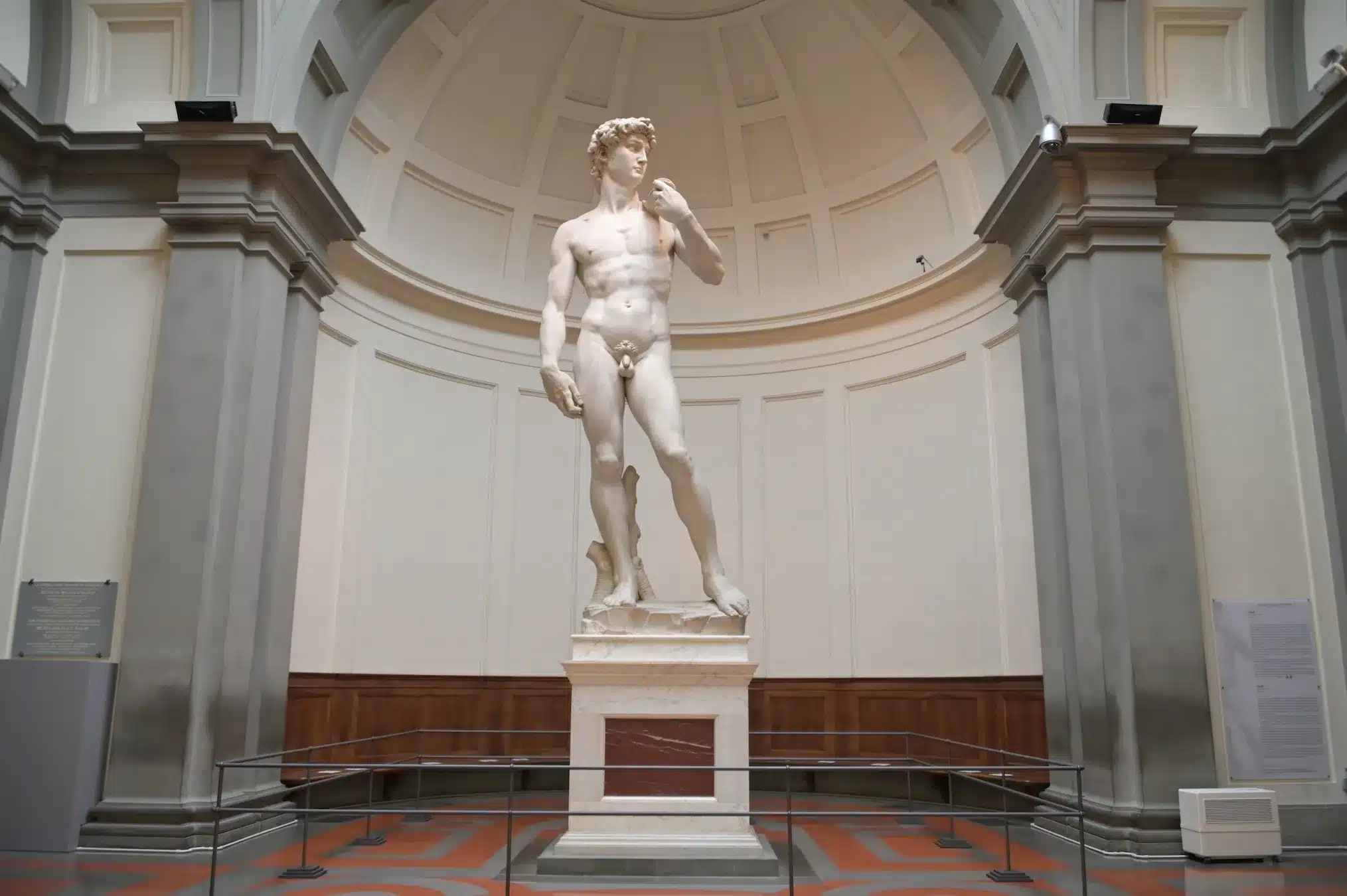
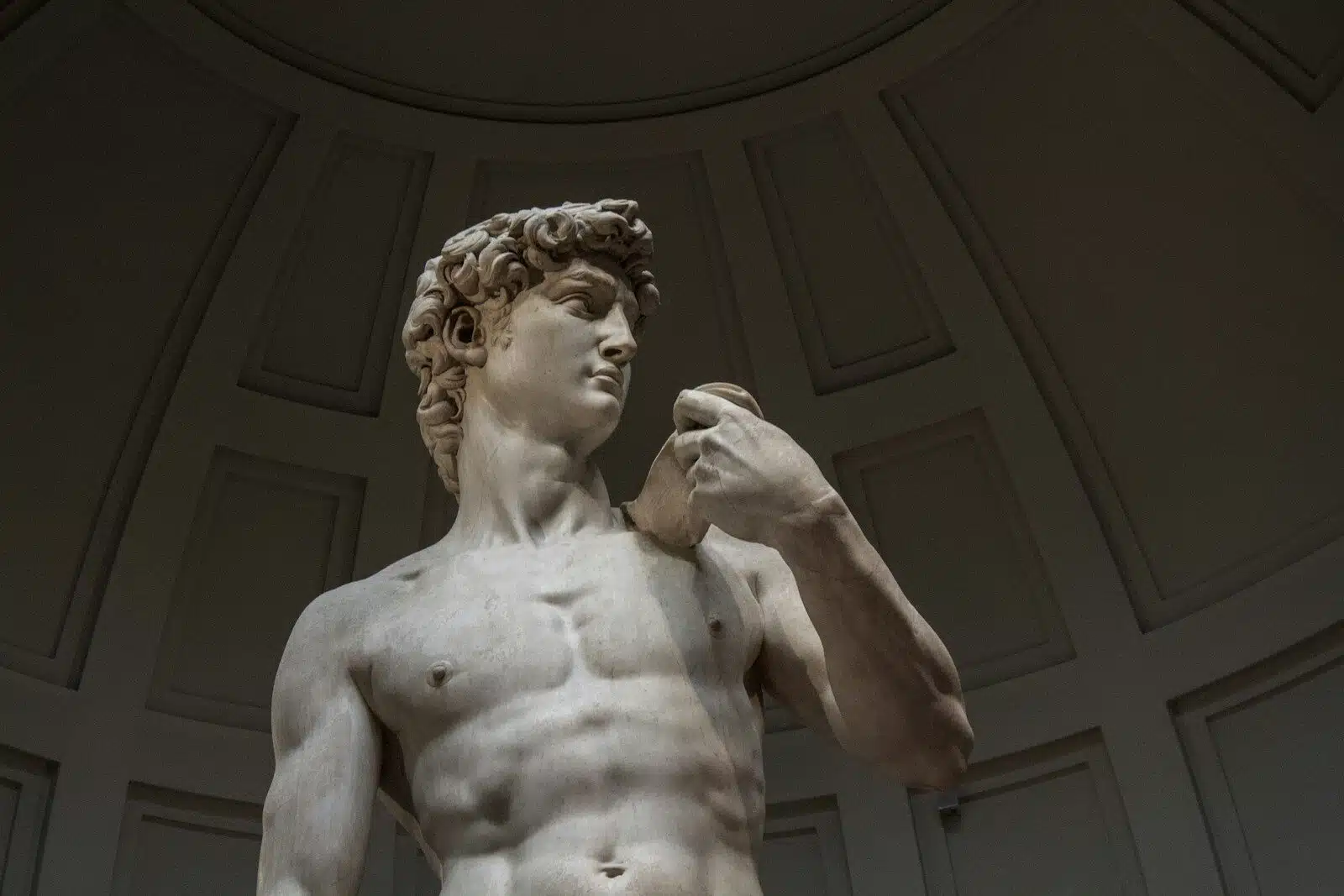
The David was carved between 1501 and 1504 from a block of marble abandoned for 25 years. Michelangelo was 26 when he took the commission. The David was placed in Piazza della Signoria as a civic symbol of Florentine republican values at the moment the Medici had been expelled. The political meaning and the artistic achievement were the same thing.
The Medici Chapels represent the other side of that relationship. After two Medici became popes, they commissioned Michelangelo to design the New Sacristy as a family mausoleum. He worked on it from 1520, designing the architecture and carving the allegorical figures, Dawn and Dusk for Lorenzo, Night and Day for Giuliano, before leaving for Rome in 1534, unfinished.
Why Private or Small-Group Access Matters
A standard tour of any one site covers it in isolation. The private walking tour covers the connections between them, which is where the biography and the significance of the work becomes most legible.
At the Accademia, the guide covers not just the David but the four unfinished Prisoners in the corridor, originally intended for the tomb of Pope Julius II in Rome. The Prisoners appear to be emerging from the marble rather than being carved from it, and the question of whether that is incomplete work or intentional design is one the guide can address with the scholarship it deserves.
At the Medici Chapels, the guide covers the architecture of the New Sacristy alongside the sculptures, explaining what Michelangelo’s decision to design both, rather than simply fill a space designed by someone else, means for how the room functions as a monument.
What You See
The walk begins at the Accademia, where the David stands at the end of a corridor lined with the Prisoners. At 5.17 meters tall and carved from a single block of Carrara marble, the scale registers differently at close range than any photograph suggests.
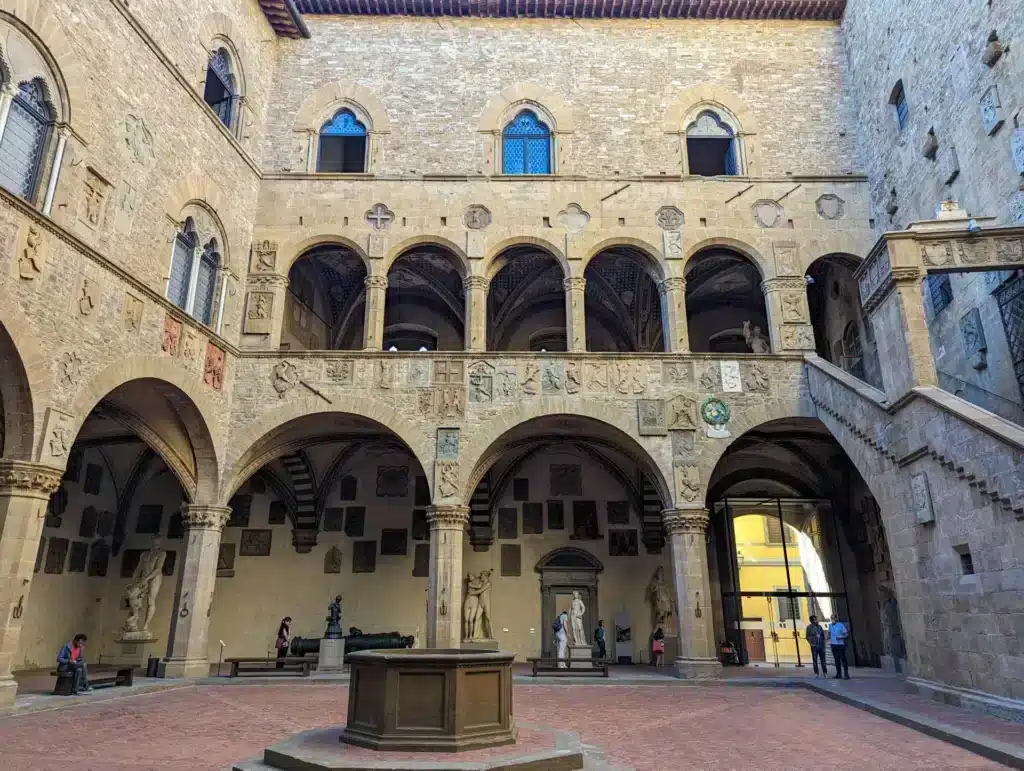
Casa Buonarroti holds the two earliest works attributed to Michelangelo still in existence, the Battle of the Centaurs and the Madonna della Scala, both carved in his teens, providing a view into his development that the later sites do not.
The Medici Chapels contain the New Sacristy, designed as a response to Brunelleschi’s Old Sacristy on the other side of the church, with allegorical figures on the tombs whose symbolic programme scholars have debated since they were installed.
Santa Croce holds Michelangelo’s tomb on the south wall of the nave, with three figures representing Painting, Sculpture, and Architecture above the sarcophagus. Dante, Galileo, and Machiavelli are buried in the same church.
How Do Not Disturb Makes This Possible
Do Not Disturb works with a small number of specialist guides in Florence whose knowledge of Michelangelo’s biography and its relationship to the city extends across all the sites on the walk rather than covering one venue in depth and the others in outline.
The walk is planned around the opening hours of each site and the time of day that each is at its quietest, with the Accademia timed for early morning, the Medici Chapels and Casa Buonarroti for mid-morning, and Santa Croce for the early afternoon when the tour groups have moved on. The route between them is on foot, covering the streets of the historic centre at a pace that allows the guide to add context about the buildings and neighbourhoods that connect the sites.
Ready to plan your private walking tour of Michelangelo’s Florence and follow one of the Renaissance’s greatest careers through the city that shaped it? Speak with Do Not Disturb to begin your journey.