

On this page
For the forty million Americans who claim Irish ancestry, a trip to Ireland can be more than a vacation. Done properly, with the groundwork laid before you fly, it becomes the journey that connects a family name to an actual townland, parish, and place. This is what a serious heritage trip to Ireland looks like.
Before You Arrive: Laying the Genealogical Groundwork
The quality of an ancestry journey in Ireland is largely decided before departure. Ireland’s main genealogical holdings, including civil registration records from 1864, Catholic parish registers, Griffith’s Valuation of the 1840s to 1860s, and the surviving Tithe Applotment Books, are held across several institutions, among them the General Register Office, the National Archives, and the Representative Church Body Library. Many records are partially accessible online, but reading them accurately takes expertise in regional record survival, particularly given the destruction of the Public Record Office in 1922.
A certified Irish genealogist can assess what survives for a given surname and county, identify the gaps, and determine which archives require in-person access. This work shapes both the research itinerary and the geographic one, establishing which counties, parishes, and townlands are relevant before travel is booked.
The difference between a productive research trip and an inconclusive one usually comes down to the depth of preparation and the caliber of professional guidance secured in advance.
The Ancestral Counties: Navigating Ireland's Regional Identities
The geography of an ancestry itinerary is determined by surname distribution, migration history, and the survival of local records. The western counties of Mayo, Galway, and Clare were among the most severely affected by the Great Famine of the 1840s, producing the largest waves of emigration to the United States. Families tracing roots to these regions will find their itinerary anchored along the Atlantic seaboard, where townland boundaries and Catholic parish registers remain the primary documentary framework.
Cork and Tipperary present a different archival profile. Pre-Famine emigration from these counties was more economically varied, meaning records may extend further back and intersect with Church of Ireland registers, estate papers, and landed gentry documentation. The nature of the records shapes the research approach as much as the location itself.
Because parish boundaries rarely align with modern county lines, and because many records are held locally rather than centrally, the sequence and focus of any itinerary requires prior research to be meaningful rather than approximate.
Tours we recommend
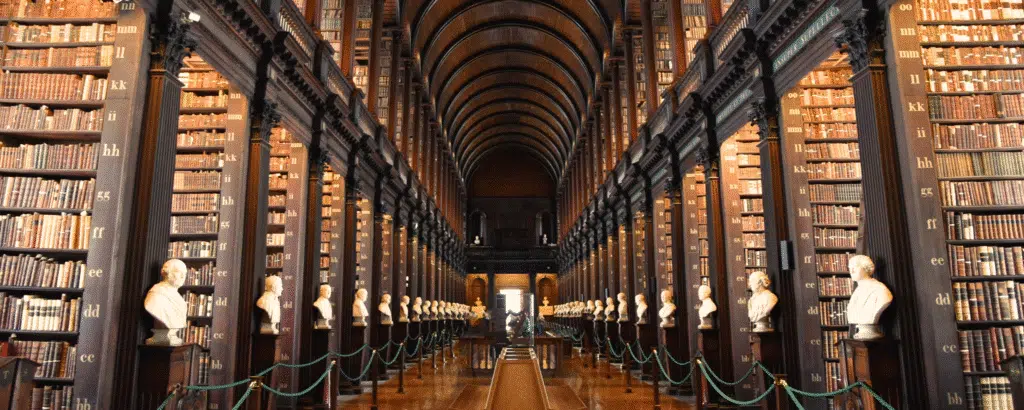 IrelandAncestry Tour of Ireland: Heritage & Roots Journey
10 days · From $9,195pp
IrelandAncestry Tour of Ireland: Heritage & Roots Journey
10 days · From $9,195pp
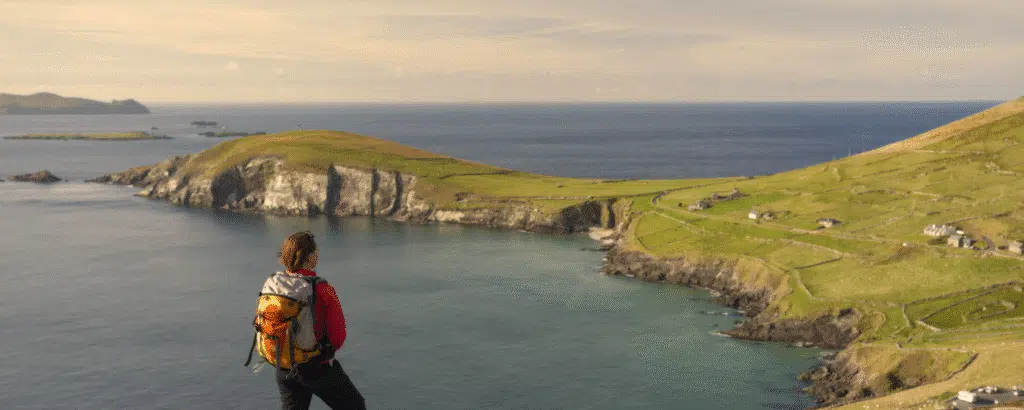 IrelandCeltic Adventure: Explore Ireland and Scotland
10 days · From $6,295pp
IrelandCeltic Adventure: Explore Ireland and Scotland
10 days · From $6,295pp
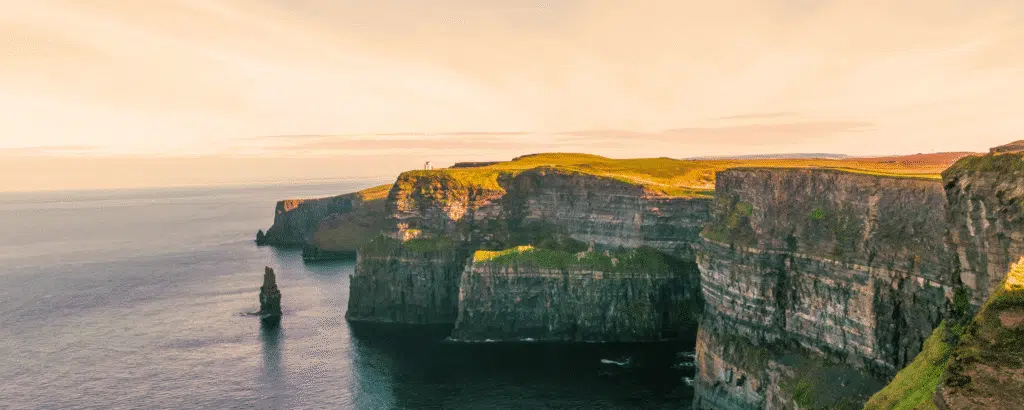 IrelandClassic Tour of Ireland: Dublin to The Cliffs of Moher
7 days · From $4,795pp
IrelandClassic Tour of Ireland: Dublin to The Cliffs of Moher
7 days · From $4,795pp
 IrelandDublin to Belfast Cultural Tour: Ireland’s Art, Poetry & Music
10 days · From $7,795pp
IrelandDublin to Belfast Cultural Tour: Ireland’s Art, Poetry & Music
10 days · From $7,795pp
Where to Stay: Luxury Manor and Castle Accommodation as Historical Context
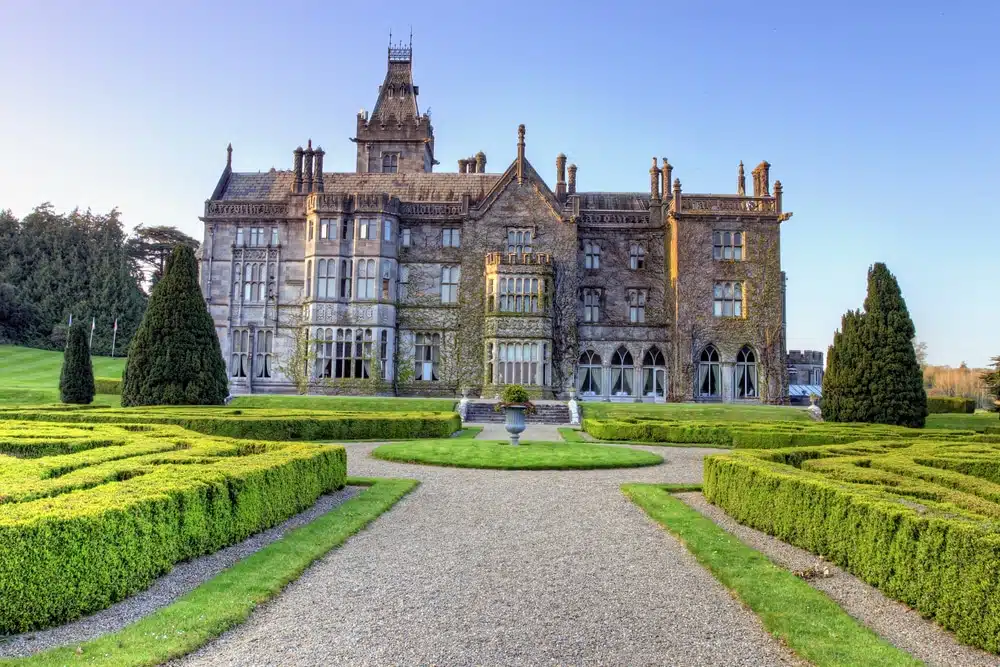
Accommodation in Ireland’s heritage travel context functions as more than a base. Manor houses and castle hotels place travelers within the same architectural and social landscape that shaped the Anglo-Irish ascendancy and, by contrast, the tenant and farming communities that comprised the majority of Irish ancestry. This positioning is historically instructive, not merely aesthetic.
Ashford Castle in County Mayo and Dromoland Castle in County Clare are the most established properties in this category, both operating at the highest service level and situated within regions of significant ancestral density for Irish-American families. Ballynahinch Castle in Connemara serves travelers with Connacht lineage, occupying an estate with documented ties to the O’Flaherty clan and later the Martin family. Each property carries a specific historical record that can be aligned with genealogical research.
The relationship between property selection and ancestry region is consequential. Proximity to relevant county archives, local heritage centres, and family townlands determines which accommodation makes practical sense for your itinerary.
Private Genealogy Consultations: Access, Archives, and Expert Guidance
Private genealogy consultations in Ireland draw on a network of archives that vary significantly in scope and accessibility. The National Archives of Ireland holds census fragments, estate records, and transportation registers. The General Register Office maintains civil registration records from 1864, covering births, marriages, and deaths. County repositories and local libraries hold material that rarely appears in national collections, including estate papers, land agent correspondence, and parish registers not yet digitised.
The most useful research tool for tracing 19th-century landholding is Griffith’s Valuation, a mid-century land survey covering every townland in Ireland. Combined with church registers — Catholic and Church of Ireland — and civil records, a skilled specialist can typically construct a verified lineage to the early 1800s, and in some cases further.
The quality of this work depends on the researcher’s familiarity with regional record survival patterns, which vary considerably due to historical record loss. Access to certain repositories, and the ability to interpret what is found, is not uniform across practitioners.
Curated Cultural Experiences: Connecting Heritage to Living Tradition
The cultural dimension of ancestry travel in Ireland extends well beyond archival research. Private sessions with traditional musicians, particularly in counties with strong regional styles, such as Clare for trad or Donegal for fiddle, can be arranged through networks that sit outside the public-facing music scene. Introductions to local historians and heritage officers in specific counties offer context that published sources rarely do: oral knowledge of townland boundaries, land clearances, and the migration patterns that shaped particular families and communities.
Guided visits to ancestral townlands need local coordination to be worthwhile. Without it, a site visit can amount to little more than a walk across an empty field. The difference comes down to who accompanies you and what they know about that specific place.
Broader heritage sites, such as Strokestown Park in Roscommon with its Famine Museum, or the EPIC museum in Dublin, set individual family histories within the larger story of emigration and diaspora. How they are worked into a wider itinerary decides whether they add real weight or just fill time.
Planning the Journey: Working with Specialist Tour Operators
A well-structured ancestry itinerary is not assembled from standard touring components. It requires advance genealogical groundwork, coordination with county archives and local historians, and accommodation positioned to support regional research rather than general sightseeing. This is the kind of travel we specialize in. We hold established relationships with the National Library of Ireland, the General Register Office, and regional heritage centers, access points that are not straightforwardly available to independent travelers.
Meaningful genealogical research takes time. A minimum of ten to fourteen days allows for archival appointments, site visits to ancestral parishes or townlands, and the kind of local inquiry that produces substantive findings rather than surface-level connections. Shorter trips rarely leave enough time for the research to develop.
The difference between a purposeful heritage journey and a general tour of Ireland comes down largely to preparation. What you uncover on the ground depends on what has been established before departure, and on who did the establishing. That last part is where our contacts on the ground make the difference.