


On this page
A private helicopter, a remote dune, and the slow ignition of a Uluru sunrise form the architecture of a morning that resists easy description.
Before the Desert Wakes
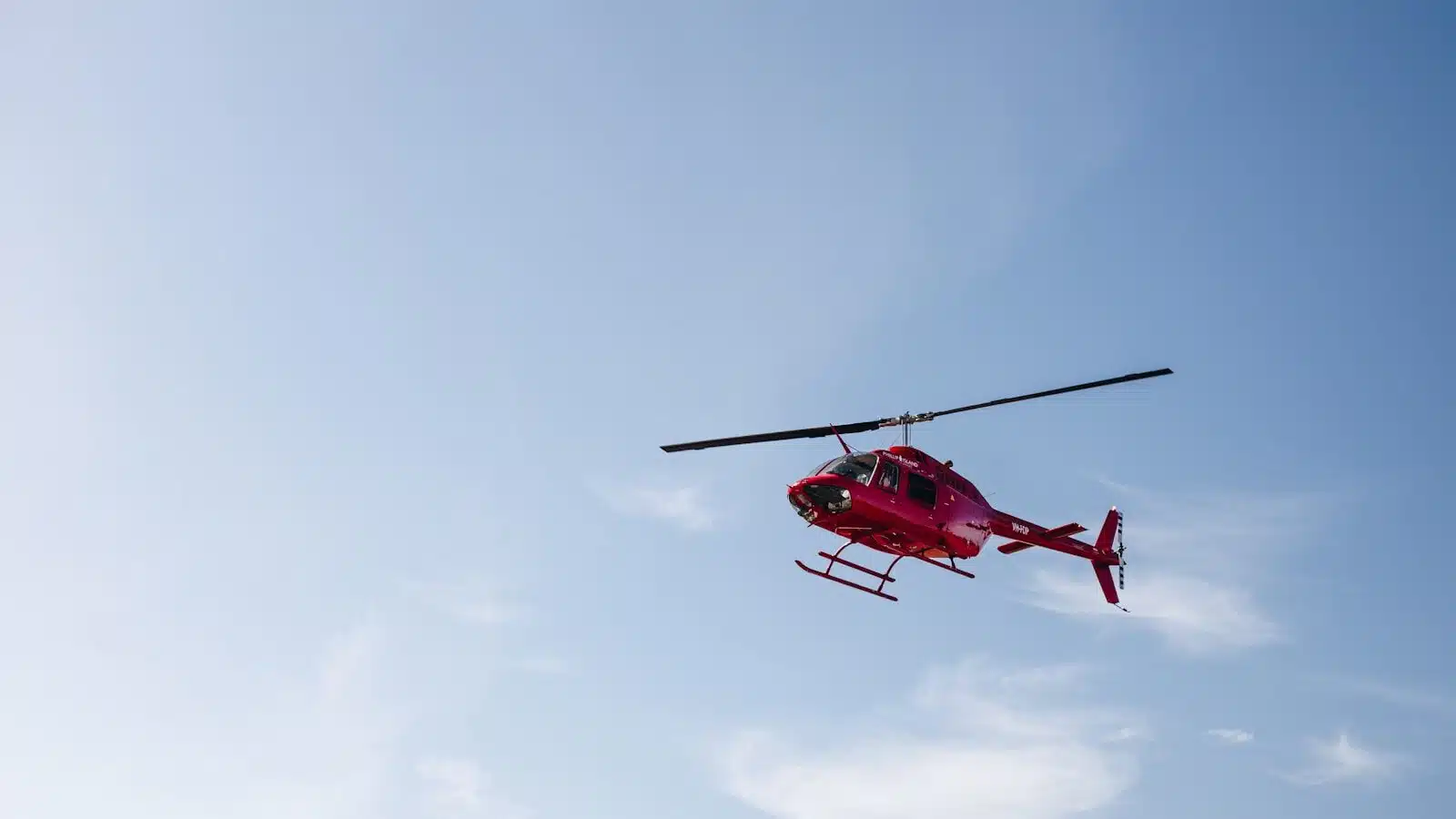
Departures for sunrise helicopter flights from Ayers Rock Airport typically begin between 4:30 and 5:00am, timed to position guests above the landscape as first light reaches Uluru. At this hour, the airport operates with minimal activity. Ground crew and a pilot are present; little else moves.
The airstrip sits within Yulara, the purpose-built resort township approximately 20 kilometres from Uluru. It functions as the logistical hub for all access to the national park, and the pre-dawn departure is structured around the fixed variable of sunrise, which shifts by several minutes across seasons.
For couples beginning a honeymoon here, the early start is part of the experience’s design. The Red Centre receives very few visitors relative to its scale, and the window between darkness and full daylight in this landscape is brief. The departure hour exists to capture it precisely.
The Aerial Perspective
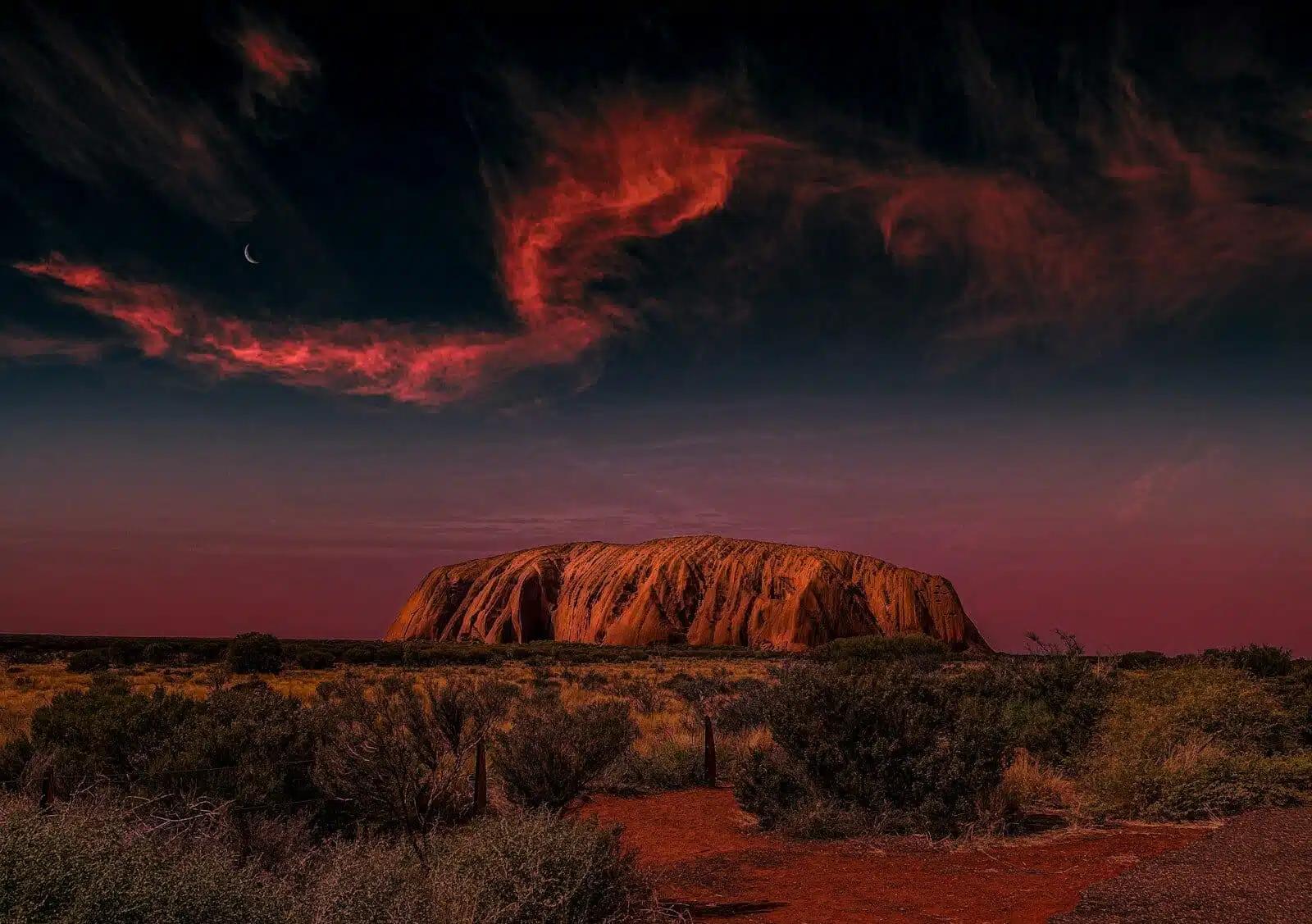
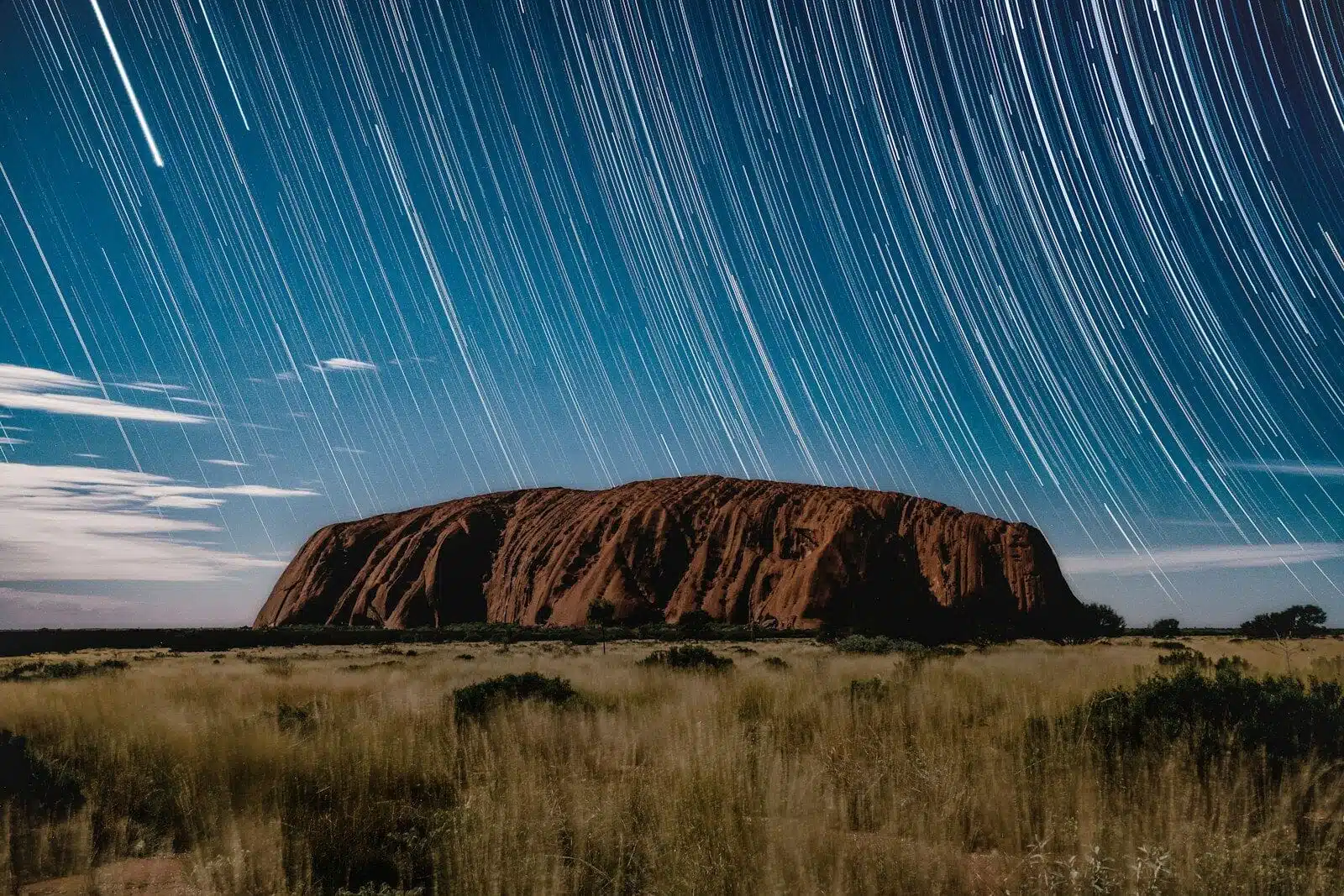
The flight departs before first light, when the desert floor is still undifferentiated and the horizon unresolved. From the air, Uluru’s scale becomes measurable in a way it cannot be from the ground, 348 metres at its highest point, 9.4 kilometres in circumference, rising from a flat plain that extends without interruption in every direction. Kata Tjuta, 50 kilometres to the west, appears as a dense cluster of domed formations, its 36 individual rocks compressed by distance into a single mass.
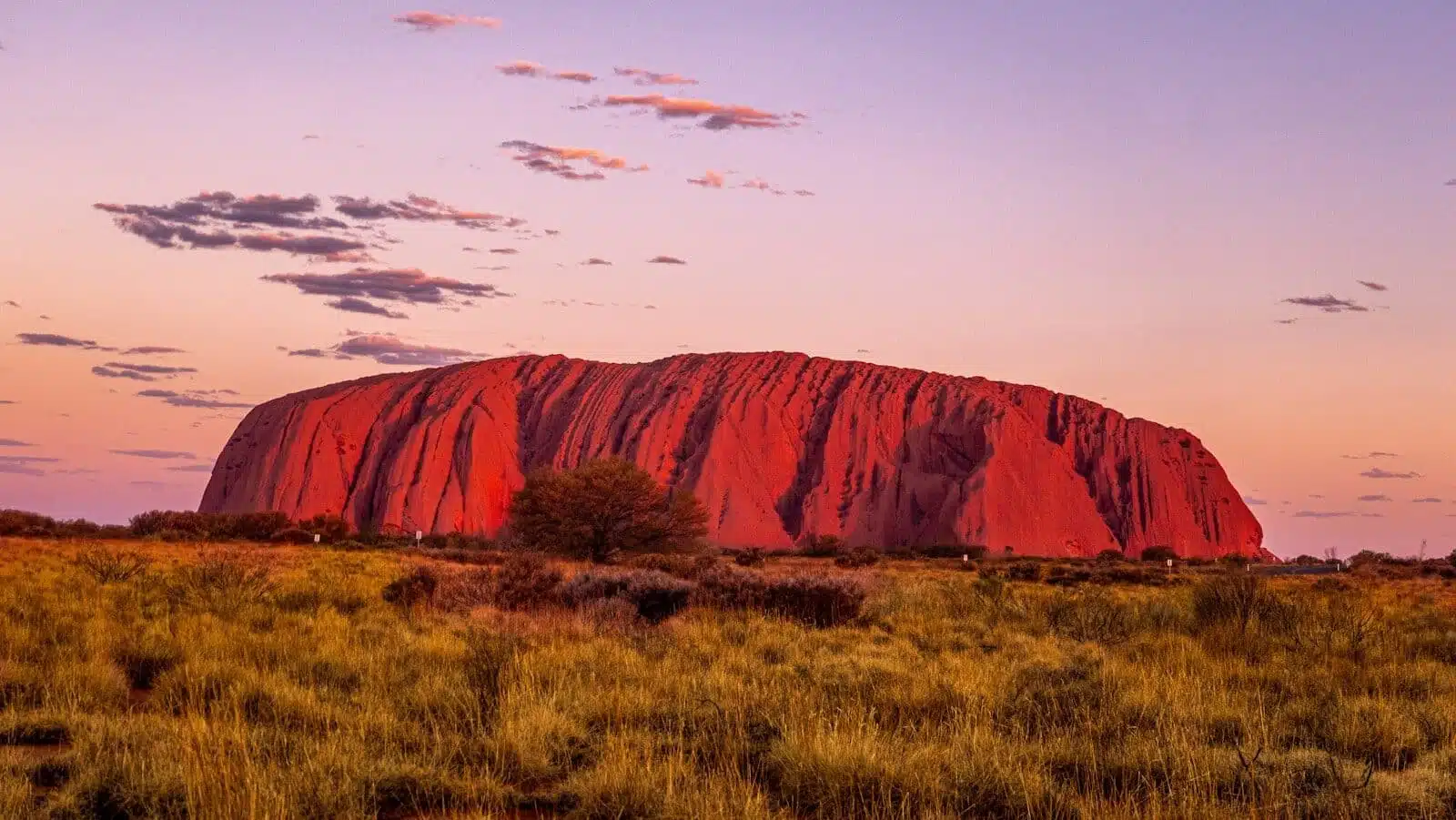
The flight arc typically covers both formations, giving a structural understanding of how they relate geographically, something ground-level visits rarely provide. As light increases, the rock surfaces shift from silhouette to colour, the iron oxide in Uluru’s sandstone producing the gradation from deep ochre to burnt red that defines the site photographically but reads differently from altitude.
For two people in a private cabin, the view is unmediated and unshared. The configuration matters as much as the route.
A Table at the Edge of Nowhere
The helicopter sets down on a red sand dune chosen for its isolation, no roads, no infrastructure, no other access point. What greets the arrival is a white-linen table set for two, positioned to face Uluru directly, with the rock’s changing colour at sunrise forming the only backdrop. The setup is exact: crystal glassware, a private chef, and vintage champagne chilled and ready. Nothing about the surrounding terrain accommodates this level of precision, which is precisely the point.
The chef operates without a kitchen, without proximity to supply lines, and without the logistical support that most fine dining takes for granted. The food is prepared and transported as part of a coordinated sequence that begins well before dawn. The result is a formal dining experience delivered in conditions that are, by any conventional measure, inhospitable to it.
No other guests are present. The dune is not a designated site or a shared vantage point. Access to this specific configuration, location, timing, personnel, and provision is not replicable without the coordination that underpins it.
The Cultural Weight of the Land
Uluru is the ancestral home of the Anangu people, who have lived in and around the Western Desert for more than 60,000 years. To the Anangu, Uluru is not a geological landmark but a living cultural entity, embedded with Tjukurpa, the law, belief system, and oral history that governs their relationship with the land. Tjukurpa is not mythology in the Western sense; it is a precise and functional framework that explains the origin of landforms, regulates social behaviour, and defines custodial responsibility across generations.
The surrounding desert carries the same weight. Specific rock formations, waterholes, and dune corridors hold ceremonial significance that is not publicly disclosed, in part because Anangu knowledge is tiered; certain stories belong to particular people, genders, or stages of life. Visitors are in a country that is actively maintained and interpreted by its traditional owners.
This context matters when considering where and how a private experience is positioned within the landscape. Proximity to Uluru is not simply a question of access or aesthetics; it is a question of what that access has been designed to respect.
When the Desert Comes Alive
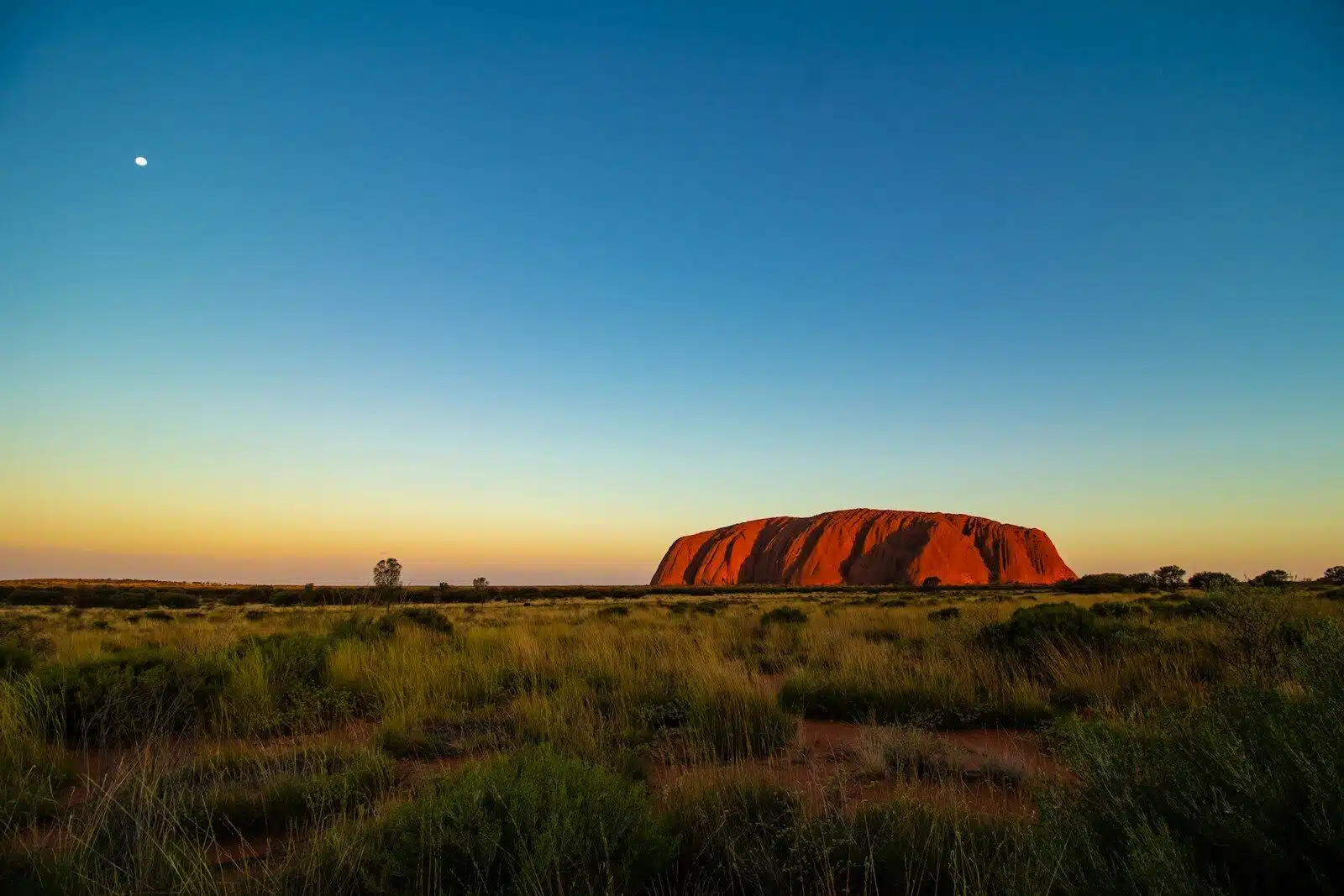
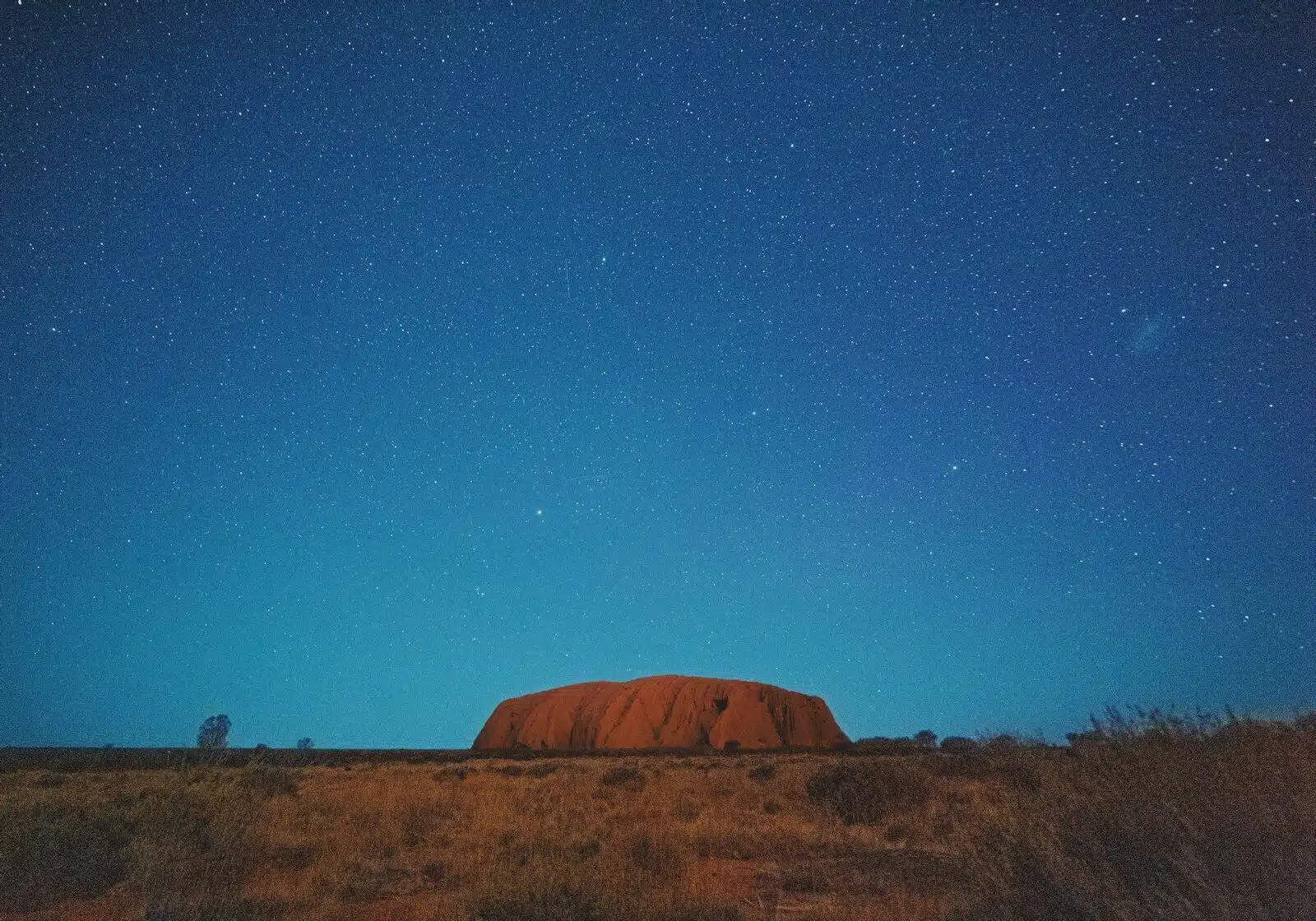
Uluru’s sandstone changes colour as light intensity increases, moving from deep ochre through burnt sienna to a vivid red-orange as the sun clears the horizon. This shift is not gradual but occurs in distinct stages, each tied to the angle and quality of incoming light. From an elevated dune position, the full western face of the rock is visible across open desert, with no foreground obstruction.
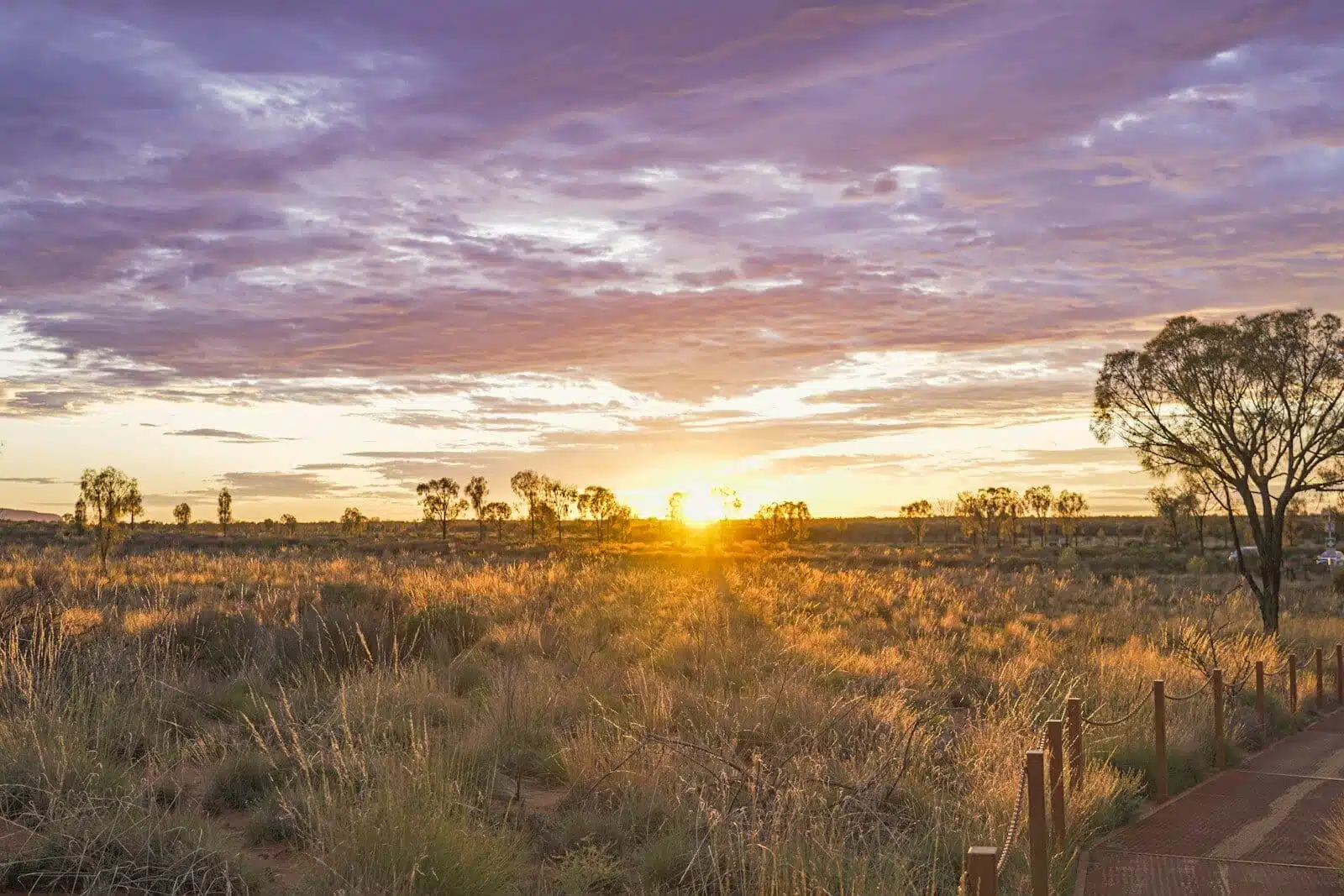
The surrounding landscape responds to rising temperatures in measurable ways. Desert birds become active before full light. Wind, if present, typically drops at dawn before building again mid-morning. The dunes themselves cast long lateral shadows that shorten and flatten as the sun climbs.
The experience is structured around this progression. Breakfast is timed to the transition from pre-dawn to full sunrise, which at this latitude lasts approximately 20 to 30 minutes, depending on the season. The absence of other visitors at this location and hour is a function of access, not circumstance.
Planning the Experience
The experience is available year-round, but the cooler months between May and September offer the most stable conditions for both the flight and outdoor dining. Summer temperatures in the Red Centre regularly exceed 104°F, which affects what is operationally feasible at dawn. Winter mornings can drop close to freezing, a contrast that shapes the format of the experience.
Helicopter operators based at Ayers Rock Resort hold the relevant permits to fly over Uluru-Kata Tjuta National Park, and the dining component requires separate coordination with ground logistics providers familiar with the restricted landscape. The two elements are not a standard packaged product; they are assembled through relationships between operators, and the quality of the result depends on how that coordination is managed.
Access to Uluru is subject to Anangu cultural protocols, and certain areas carry restrictions that affect flight paths and ground access. These are not incidental considerations. They are central to how the experience is structured and should be understood before any arrangements are made.
Book Now With Do Not Disturb
A sunrise flight and a private dunes breakfast have to line up perfectly: the helicopter slot, the dawn window, the table set in the right spot before the light arrives. A Do Not Disturb travel designer takes care of the choreography and builds the rest of your time in the Red Centre around it.
Reach out when you would like to start planning.