



On this page
In Zermatt, before the lifts spin and the first skiers queue at the base, a private helicopter is already ascending through the pre-dawn dark toward the Theodul Glacier. This is what exclusive access to the Swiss Alps actually looks like.
The Departure: Zermatt Before It Wakes
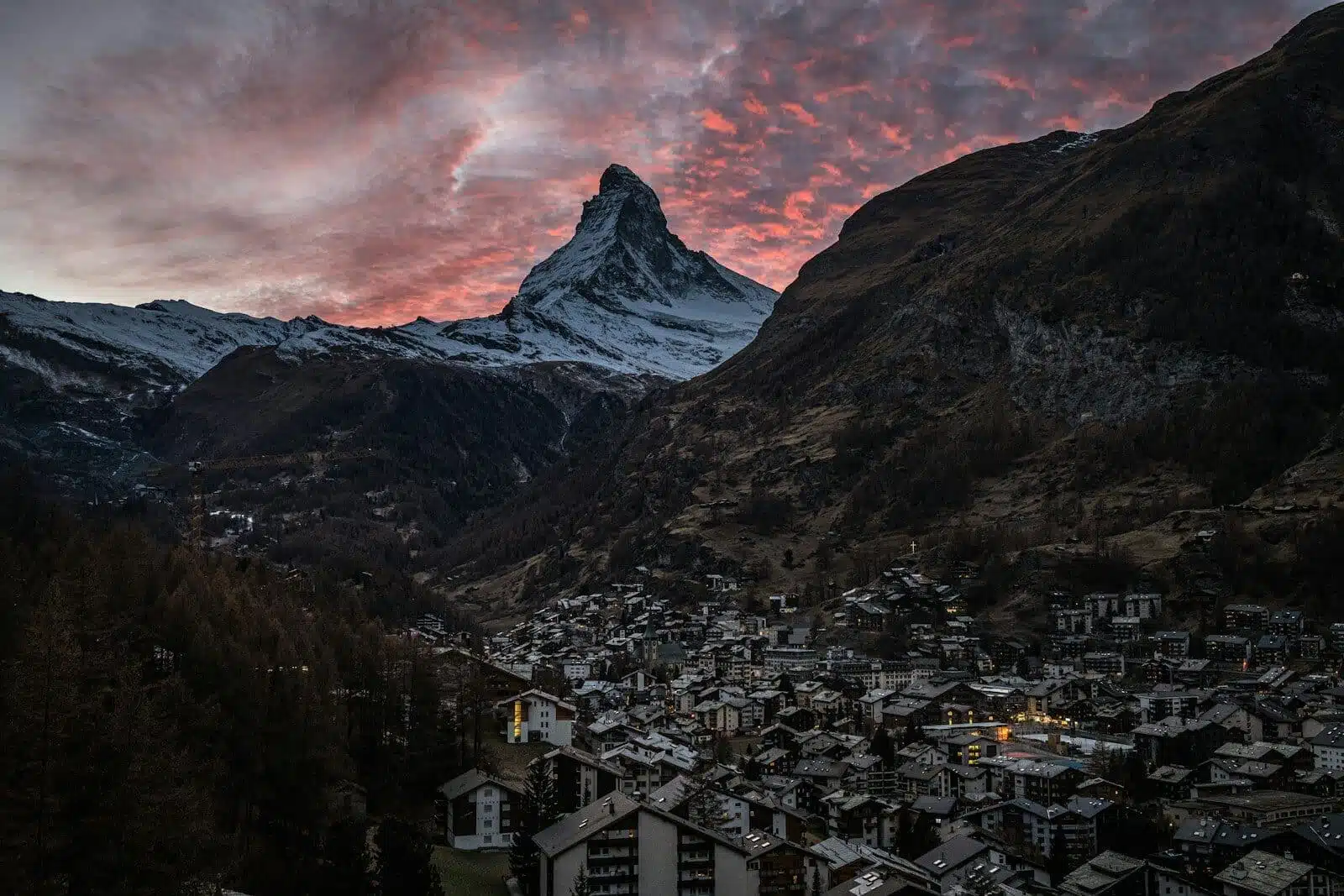
Zermatt is a car-free village. At 4 am, that fact becomes structurally significant; there are no engines, no transfer vehicles moving through the streets, no ambient noise from traffic. The departure point for a pre-dawn glacier flight is reached on foot or by electric taxi, a detail that shapes the rhythm of the morning from the outset.
The helicopter departs from the Zermatt helipad before the mountain railway begins its first ascent and well before the ski area opens. This timing is not incidental. It is the operational condition that makes first tracks on unworked snow possible; the window between night grooming and the arrival of other skiers is narrow and fixed.
A standard ski day in Zermatt begins at the lift queue. This experience begins earlier and at a different altitude entirely. The distinction is logistical before it is anything else, and the logistics require coordination that goes beyond what a standard resort booking can provide.
The Flight: Matterhorn at Close Range
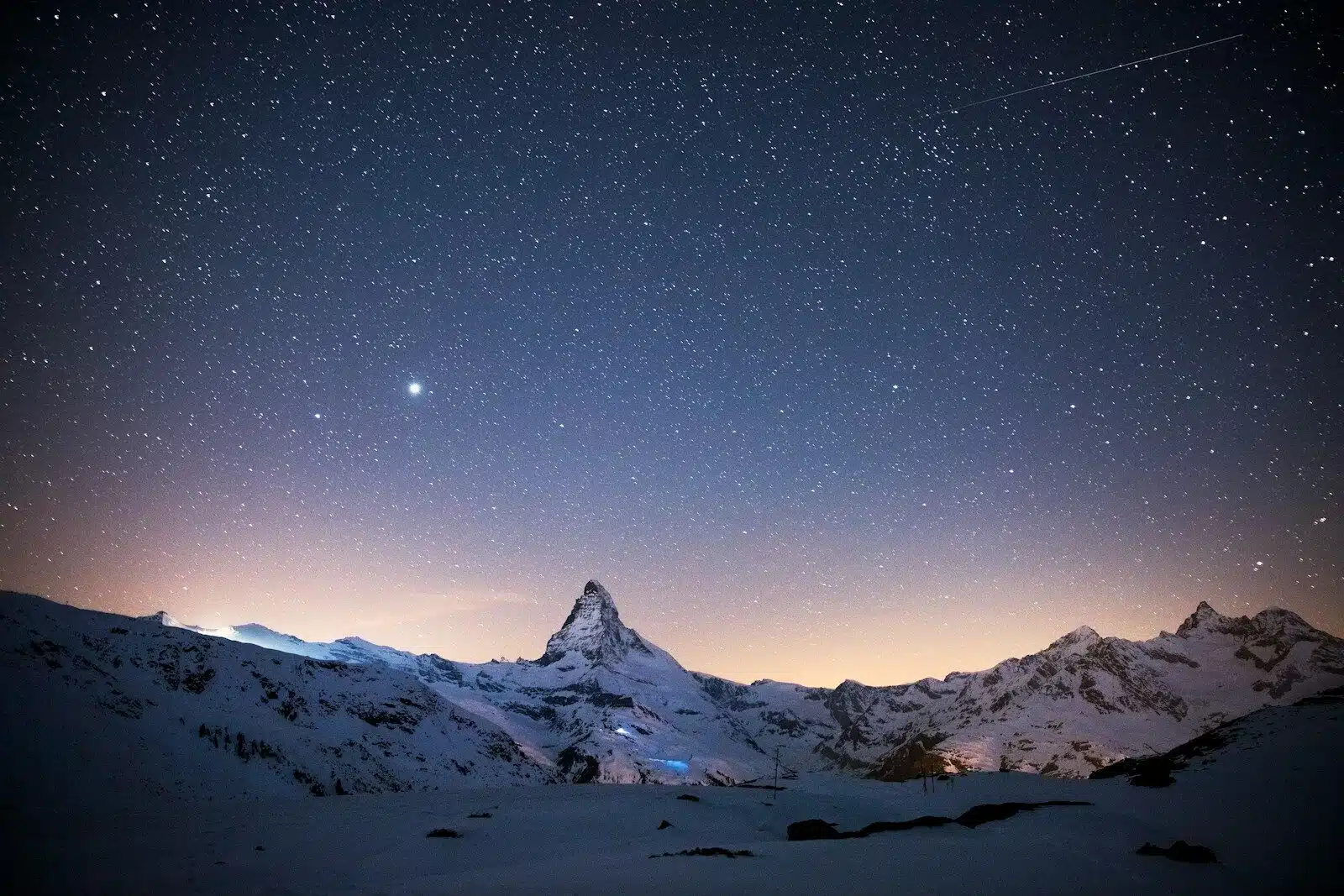
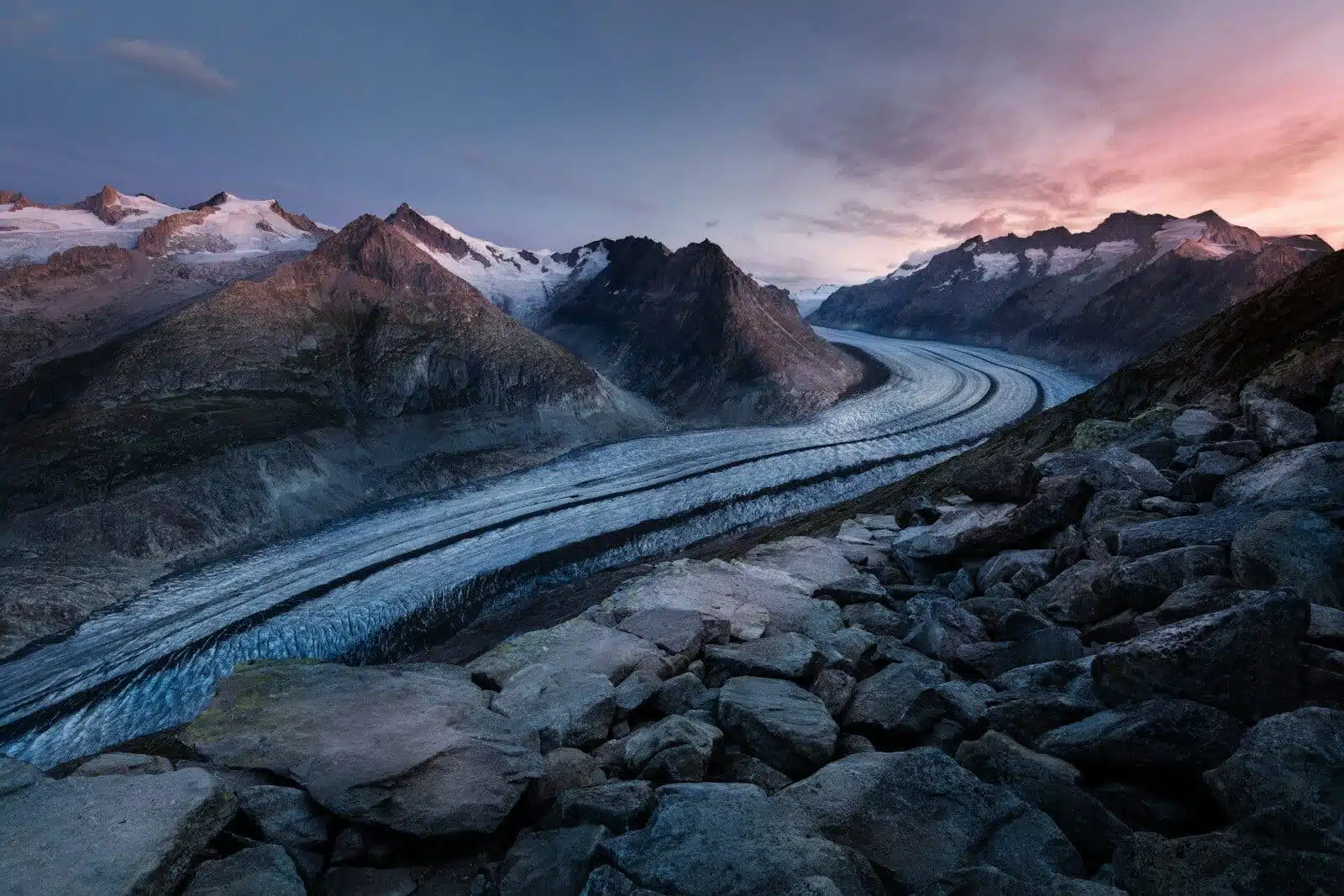
The helicopter departs from Zermatt Heliport and climbs southeast, reaching the Theodul Glacier at approximately 3,300 metres. The route runs along the Swiss-Italian border ridge, placing the Matterhorn’s north face in direct lateral view, a perspective unavailable from any lift system or marked trail in the region.
The north face rises 1,200 metres of near-vertical rock and ice from the Matterhorn Glacier to the summit at 4,478 metres. From the air at this altitude and angle, the full geometry of the face is visible: the central couloir, the Schmid Route line, and the relationship between the summit pyramid and the surrounding ridgelines connecting to Italy’s Cervinia side. These are structural features that ground-level access compresses or obscures entirely.
The flight duration is short, typically under fifteen minutes from departure to glacier landing, but the position relative to the mountain is the operative detail. No fixed infrastructure in the Zermatt ski area reaches the altitude or angle this transit covers.
The Landing: Theodul Glacier at Sunrise
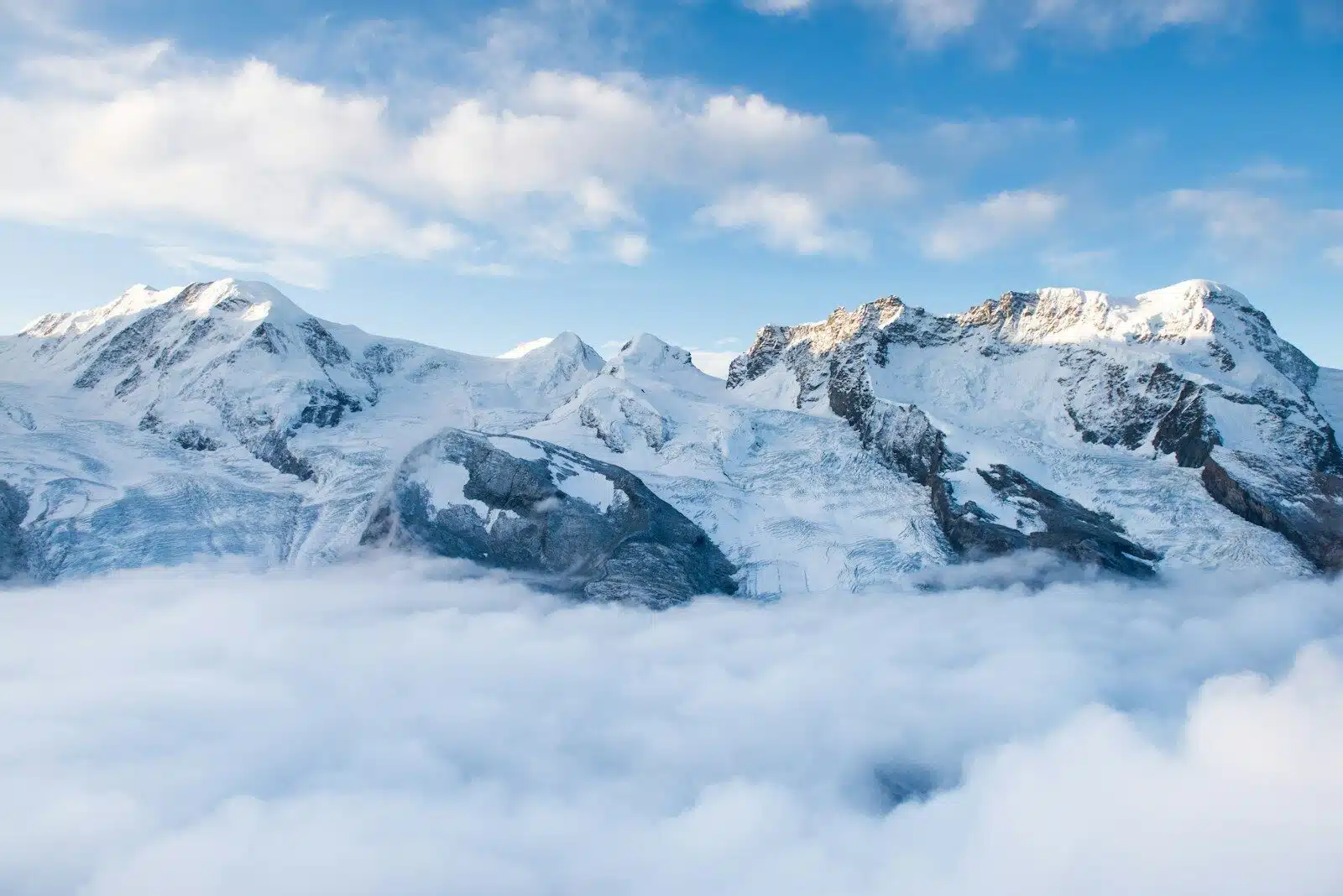
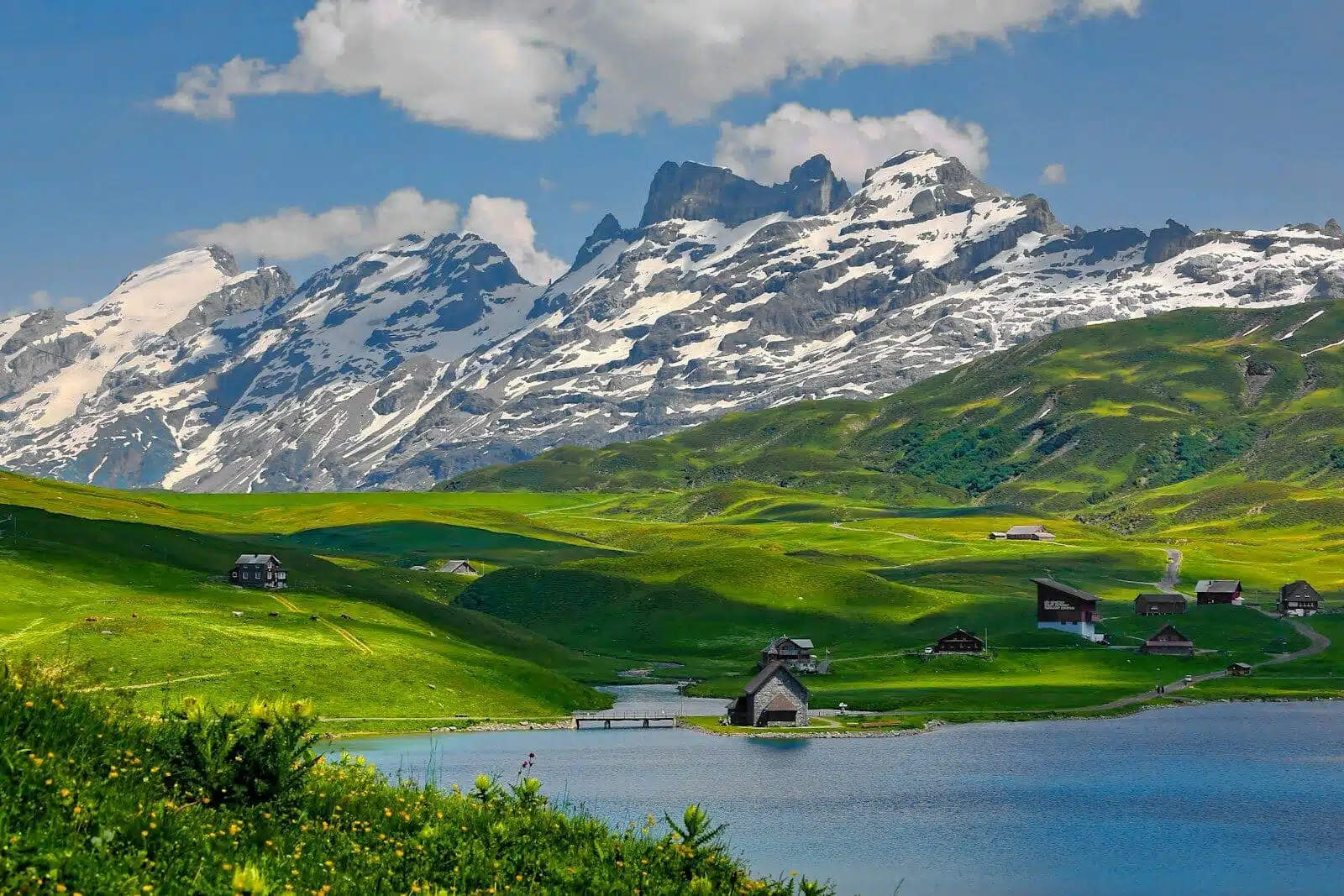
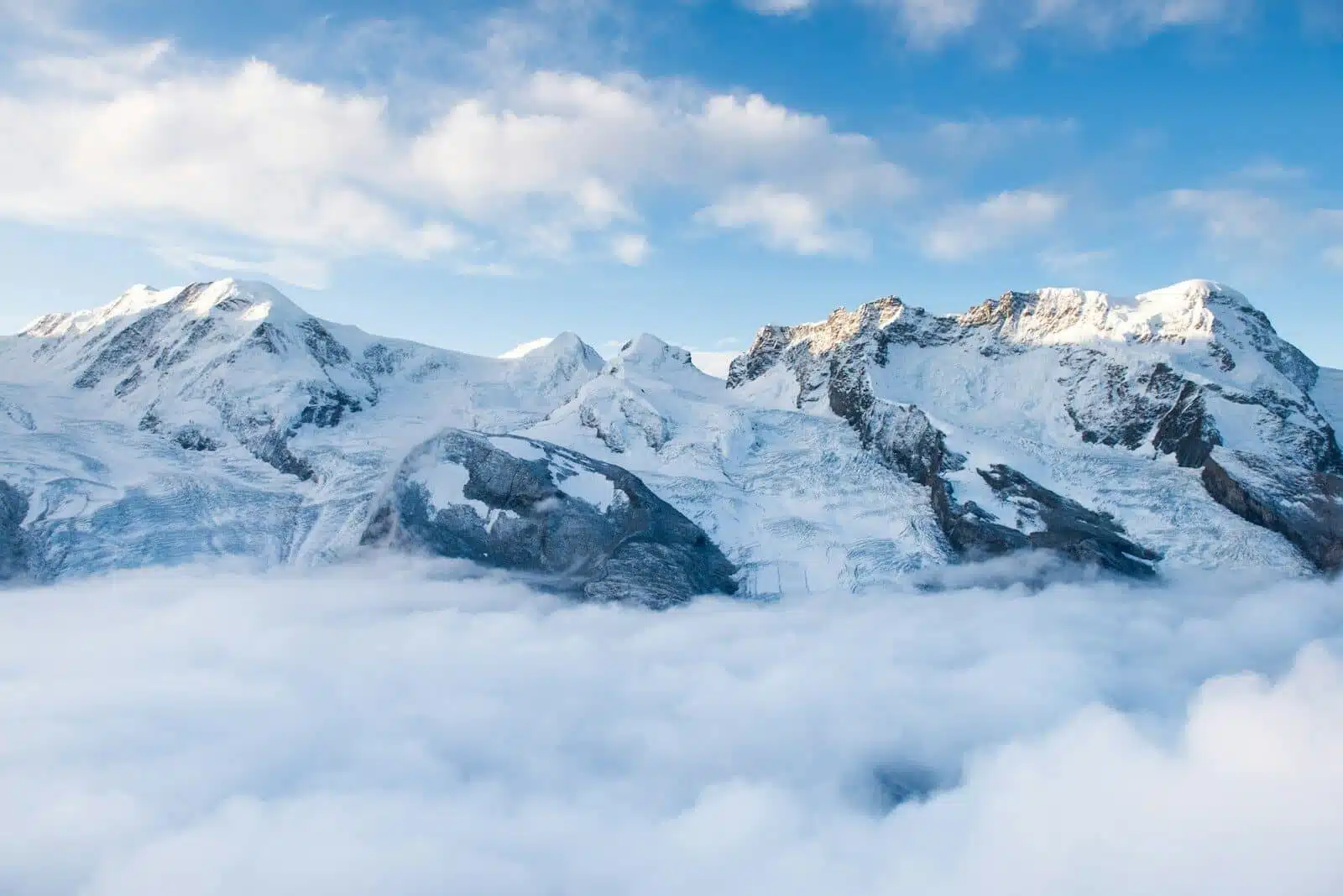
The Theodul Glacier sits at approximately 3,300 metres, straddling the Swiss-Italian border at the foot of the Klein Matterhorn. At sunrise, the plateau is untracked. No lifts serve this terrain at this hour, and no other parties are present. The scale of the snowfield, several kilometres across at its widest point, becomes legible only once you are standing on it.
The pre-ski ritual here is specific: spiced mountain tea, served before a single turn has been made. It is a deliberate pause, not a formality. The uncut snow in front of you represents a finite resource; once skied, it is gone for the day.
What distinguishes this moment is not the altitude or the view but the condition of the terrain. First tracks on a glacier of this size, with no other access parties, is a circumstance that depends entirely on timing, coordination, and the kind of relationships that take years to build.
The Glacier: Elevation, History, and Ice
The Theodul Glacier sits at the base of the Klein Matterhorn, topping out at 3,883 metres, the highest ski terrain in the Alps accessible by lift. Its elevation ensures reliable snow cover across most of the calendar year, which is why Zermatt operates year-round skiing here while most Alpine resorts close in spring.
The glacier straddles the Swiss-Italian border, and the Theodul Pass directly above it has served as a transit route between Valais and the Aosta Valley for centuries. Archaeological finds in the area date human passage back to the Bronze Age. The same topography that made it a viable crossing point, a relatively navigable high-altitude col, is what makes it functional ski terrain today.
Glacial retreat has altered its surface considerably over recent decades, with the ski area now partially dependent on snow management to maintain early and late-season conditions. What remains is still substantial: a high-altitude plateau with vertical drop, open aspect, and a documented place in both Alpine history and competitive ski racing.
First Tracks: The Descent in Full
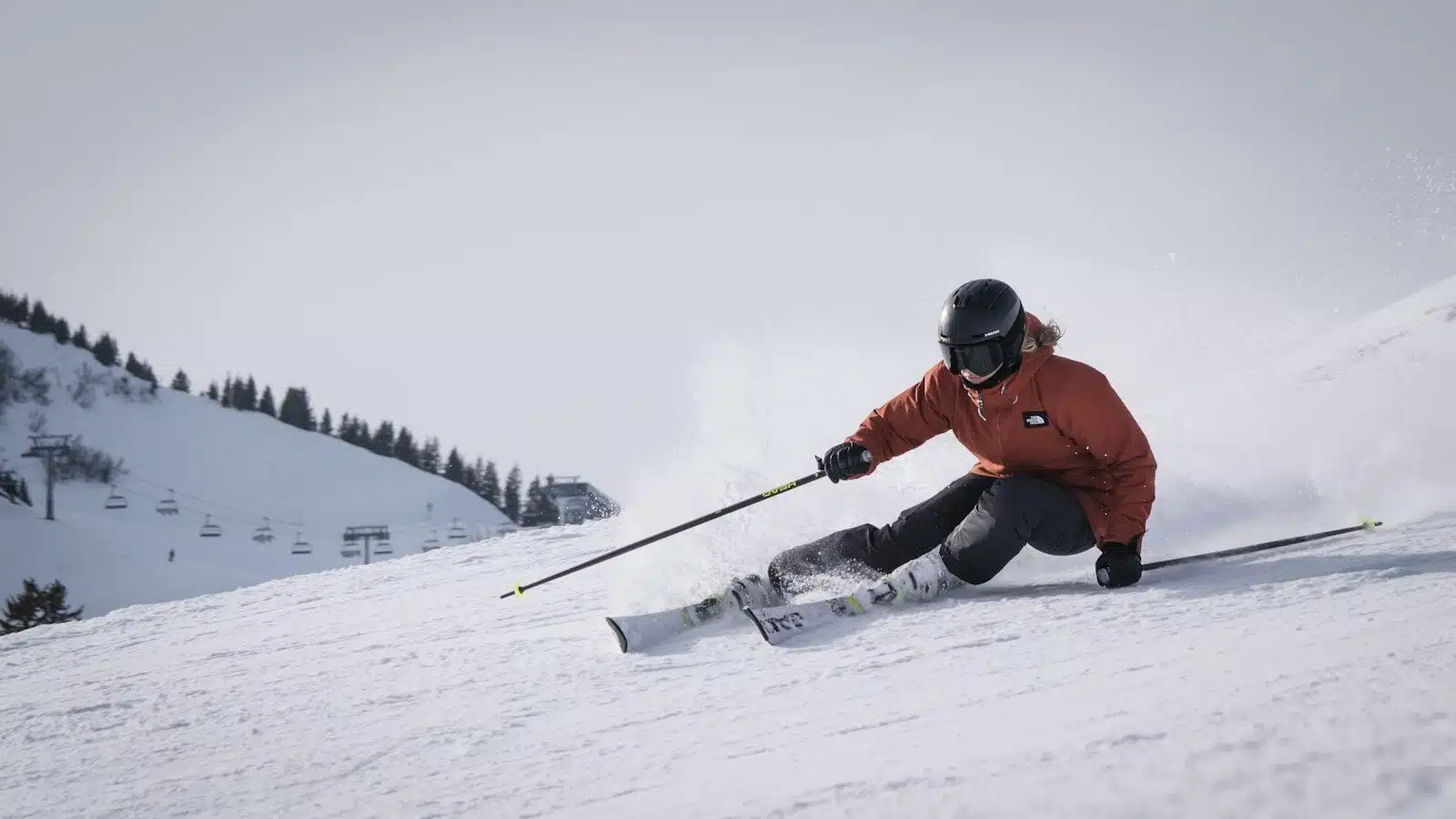
The Theodul Glacier sits at approximately 3,883 metres and connects to a network of runs that drop toward the Klein Matterhorn station. In the window between helicopter arrival and lift opening, this terrain is untracked. No grooming machines have redistributed the surface since overnight preparation, and no other skiers have cut across it. The vertical available from the upper glacier to the mid-mountain zone exceeds 1,000 metres, depending on the chosen line.
The technical character of the descent varies by route. The upper glacier section is predominantly wide and open, suited to high-speed carved turns at altitude. Lower sections introduce more defined fall lines and, depending on conditions, variable pitch. Having sole priority over terrain of this scale changes the decision-making entirely; line selection, speed management, and pacing are determined by the skier, not by traffic.
This is not a guided ski lesson or a curated beginner route. The terrain demands competence, and the access depends on coordination that cannot be replicated through standard resort channels.
Access and Arrangement: What This Takes
Private glacier landings in Zermatt operate under Swiss federal aviation regulations and require coordination between licensed helicopter operators, the resort’s ski patrol, and, in some cases, the cantonal authorities responsible for the protected alpine zone. Air Zermatt holds the primary operational infrastructure in the region, though access to specific glacier zones and first-tracks arrangements typically involves additional permissions tied to snow safety assessments and seasonal conditions.
The viable window runs roughly from late December through mid-April, narrowing further when weather is factored in. Glacier landings require stable high-pressure systems, sufficient visibility, and acceptable wind conditions at altitude, criteria that can eliminate multiple consecutive days without warning. Sunrise timing adds a further constraint, as pre-dawn operations must align with both meteorological clearance and the glacier’s light conditions for safe landing.
The variables involved mean this experience is not reliably self-arranged on short notice. The operators, permissions, and timing require advance coordination through channels that are not publicly accessible, and the quality of the outcome depends significantly on how that groundwork is laid.
Book Now With Do Not Disturb
A dawn glacier landing and a first run down untouched snow depend on weather, the pilot, and a mountain guide reading the conditions on the day. A Do Not Disturb travel designer arranges the helicopter, the guide, and the timing, then builds the rest of your Zermatt stay around the morning.
Get in touch when you would like to begin.