



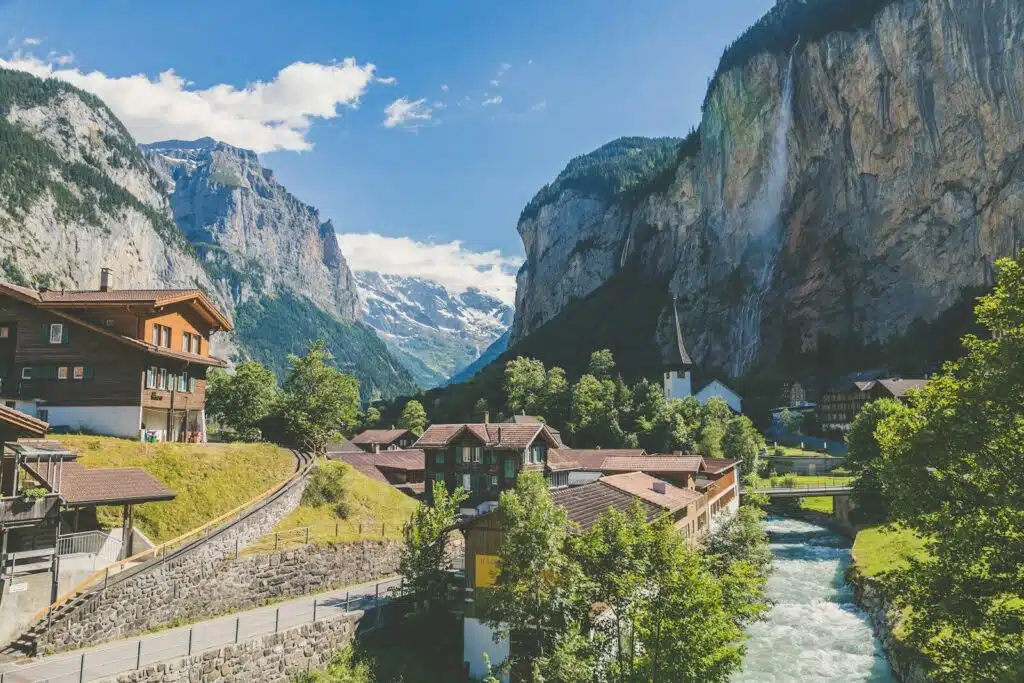
The Glacier Express Switzerland route crosses 291 bridges and passes through 91 tunnels between Zermatt and St. Moritz, climbing to 2,033 meters at the Oberalp Pass.
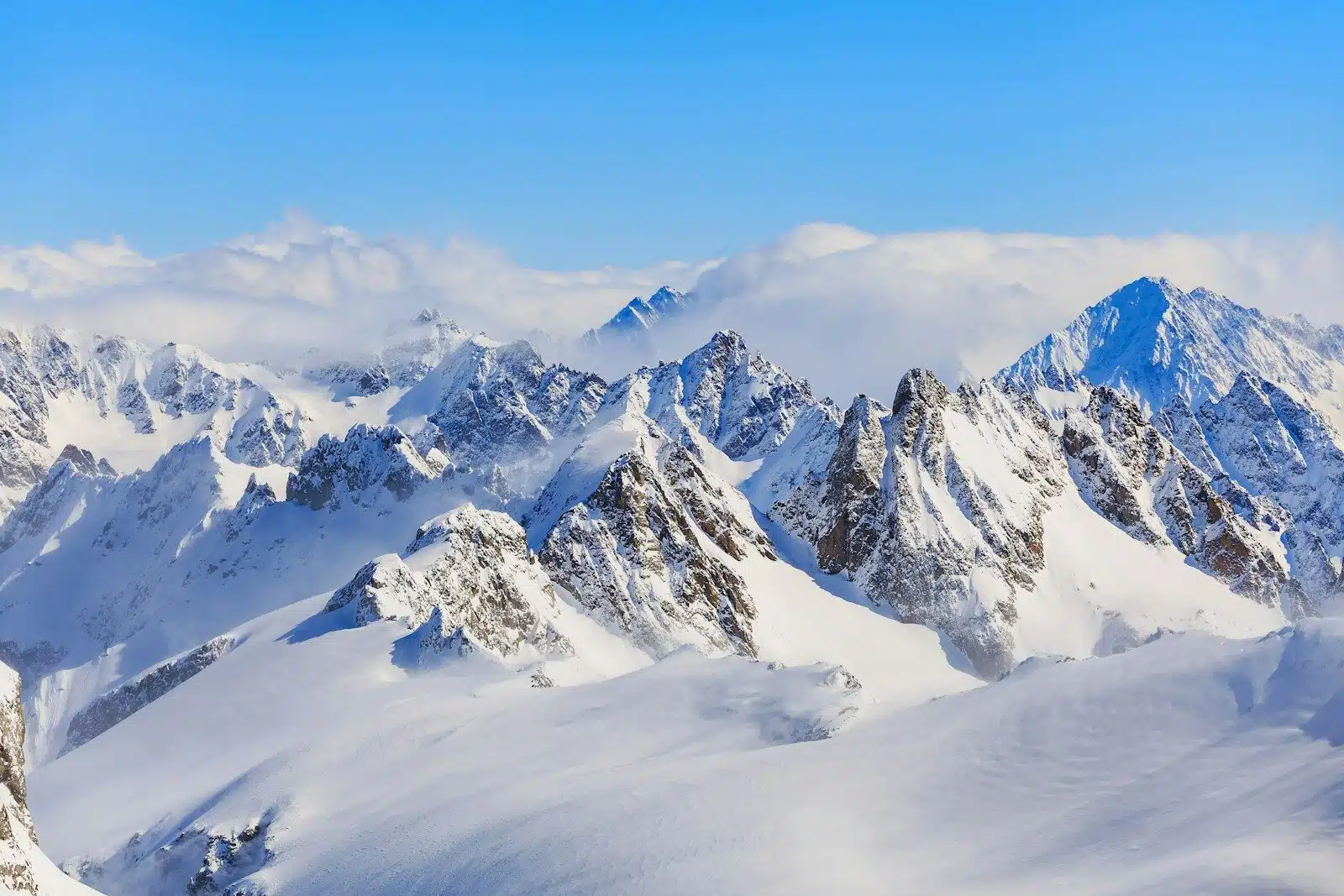
The Glacier Express crosses 291 bridges and passes through 91 tunnels on its route between Zermatt and St. Moritz, climbing to 2,033 meters at the Oberalp Pass. Traveling through three Swiss cantons in a private panoramic carriage, the journey traces the Rhine Gorge and the Landwasser Viaduct over eight hours.
Do Not Disturb is a luxury travel company specializing in carefully designed journeys and considered experiences. Each itinerary we build for our clients is informed by real destination knowledge, offering insight into places, cultures, and moments that shape how a trip comes together.
If this destination has sparked ideas, the itinerary can be developed into a private journey tailored to your interests and travel style, with hand-picked stays, thoughtful routing, and experiences curated around what matters most to you.
The route runs through the cantons of Valais, Uri, and Graubünden, each shifting the landscape outside the window. The Rhine Gorge unfolds over 13 kilometers of white stone cliffs carved by the river below, before the train reaches the Landwasser Viaduct, a curved limestone bridge standing 65 meters high that carries the carriage directly into a mountainside tunnel.
Waterfalls cascade down the valley walls along the Mattertal descent, and snow lingers on the higher peaks for much of the year, even as the lower slopes turn green in summer.
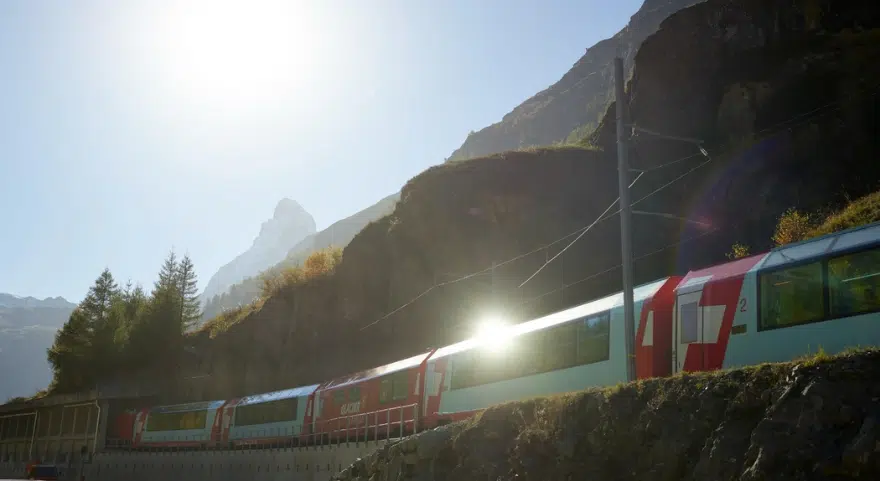
The carriage moves at an average speed of 24 kilometers per hour, slow enough to take in the scenery without it blurring past. Meals are prepared in the onboard kitchen and served directly at the seat on a linen tablecloth, timed to match the changing landscape outside. Panoramic windows run floor to ceiling, framing the Matterhorn at the Zermatt end and the Engadin lakeland as the train approaches St. Moritz.
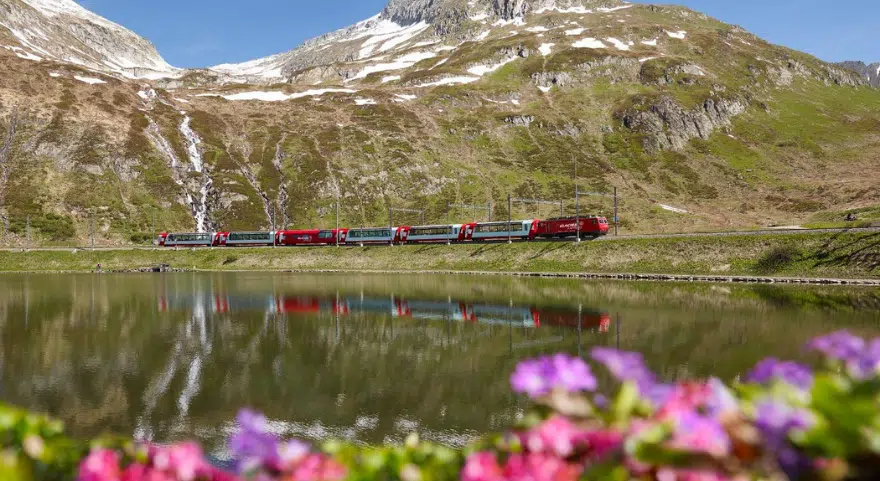
The climb over the Oberalp Pass uses a cogwheel rack rail system, and the incline is steep enough that the onboard wine glasses are built with a slanted base to stop the contents from spilling. Travelers short on time can join the route for a shorter segment, with Zermatt to Chur running around five and a half hours and Andermatt to St. Moritz around four and a half.
Standard service seats groups of four in shared bays, with meals available to order rather than included, and the difference in comfort between 1st and 2nd class comes down mainly to legroom and seating configuration rather than the experience itself. A private carriage changes the pace of the journey, with a smaller group moving through the same eight hours without the fixed schedule of a shared dining sitting or the rotation of new seatmates every leg.
Excellence Class carries a maximum of 20 people, with lounge seating, a five-course meal built into the fare, and access to a dedicated bar car. Check-in happens away from the general platform, and the reduced numbers mean the carriage stays quiet even as the train climbs past its busiest scenic points.
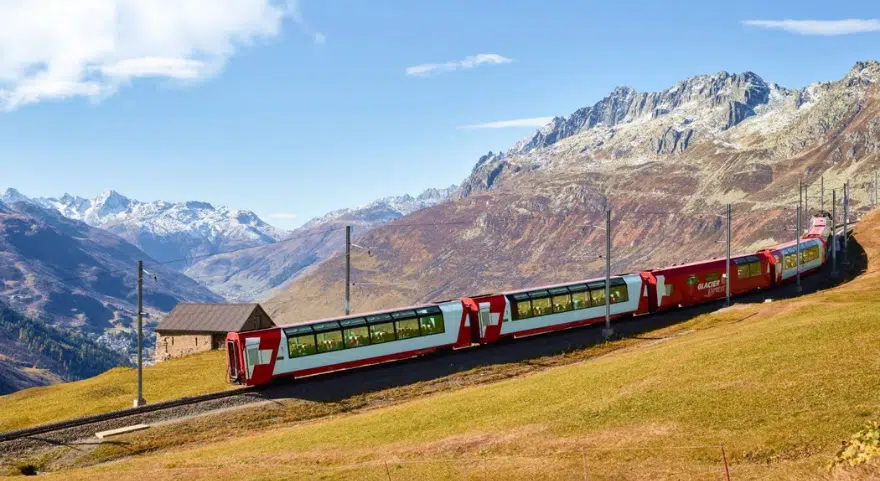
A private carriage or Excellence Class booking gives the most consistent experience, with guaranteed seating, an included meal, and a smaller group moving through the same eight-hour route.
The layout changes seating configuration and legroom, but both classes cover the same route and rely on meals ordered separately rather than included in the fare.
The full route can be split into shorter segments, with Zermatt to Chur running around five and a half hours and Andermatt to St. Moritz around four and a half.
Late spring through early autumn tends to offer the clearest mountain visibility. The train runs close to year round, pausing only for its annual maintenance break in mid-October.
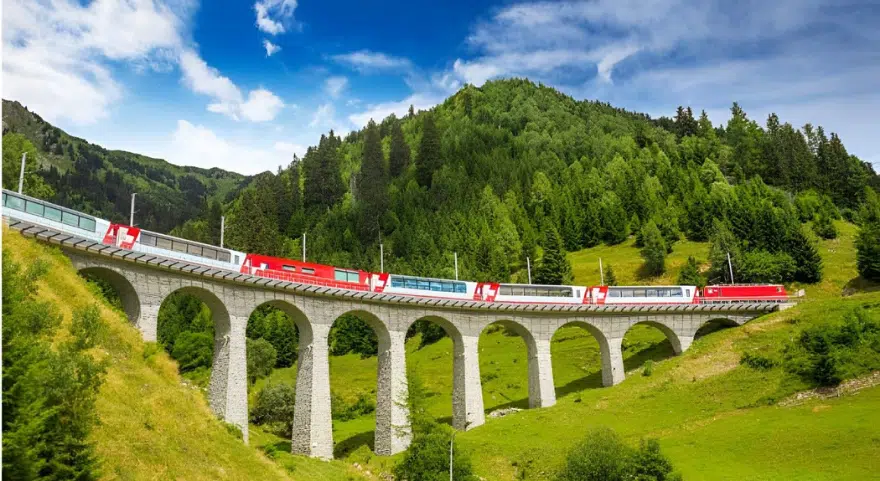
Do Not Disturb arranges the private carriage booking, timing the journey to daylight and season so the Rhine Gorge and Oberalp Pass fall during the strongest light. Onward arrangements in Zermatt or St. Moritz are built around the same day, so the journey sits inside a wider itinerary rather than standing alone as a single excursion.
Start Planning Your Glacier Express Journey.
Speak to Do Not Disturb’s luxury travel experts and turn this moment into something personal.
Related destinations
Suggested articles







Tell us how you want to feel, we’ll take it from there.
“Our trip was truly magical and full of core memories that will last us a lifetime.”
Michael • Bora Bora Honeymoon

“We just returned from an incredible journey through Ireland, and we couldn’t have had a better experience”
Brad • Ireland Adventure
“This was a flawless experience. They took all our thoughts and perfectly curated the most beautiful honeymoon.”
Kris • Sicily Honeymoon
Our team brings over 35 years of experience in luxury travel, shaping bespoke journeys for discerning clients worldwide. The reviews below reflect the trust placed in us and the experiences we continue to create.
See more reviews on Trustpilot
 8 min read
A winter honeymoon in Europe can mean fewer crowds, better hotel availability and a more intimate atmosphere, but not every sunny destination offers the same experience. We compare the warmest options, the best places for actual beach weather, luxury hotels that work well out of season, and the destinations that still feel special once summer […]
 7 min read
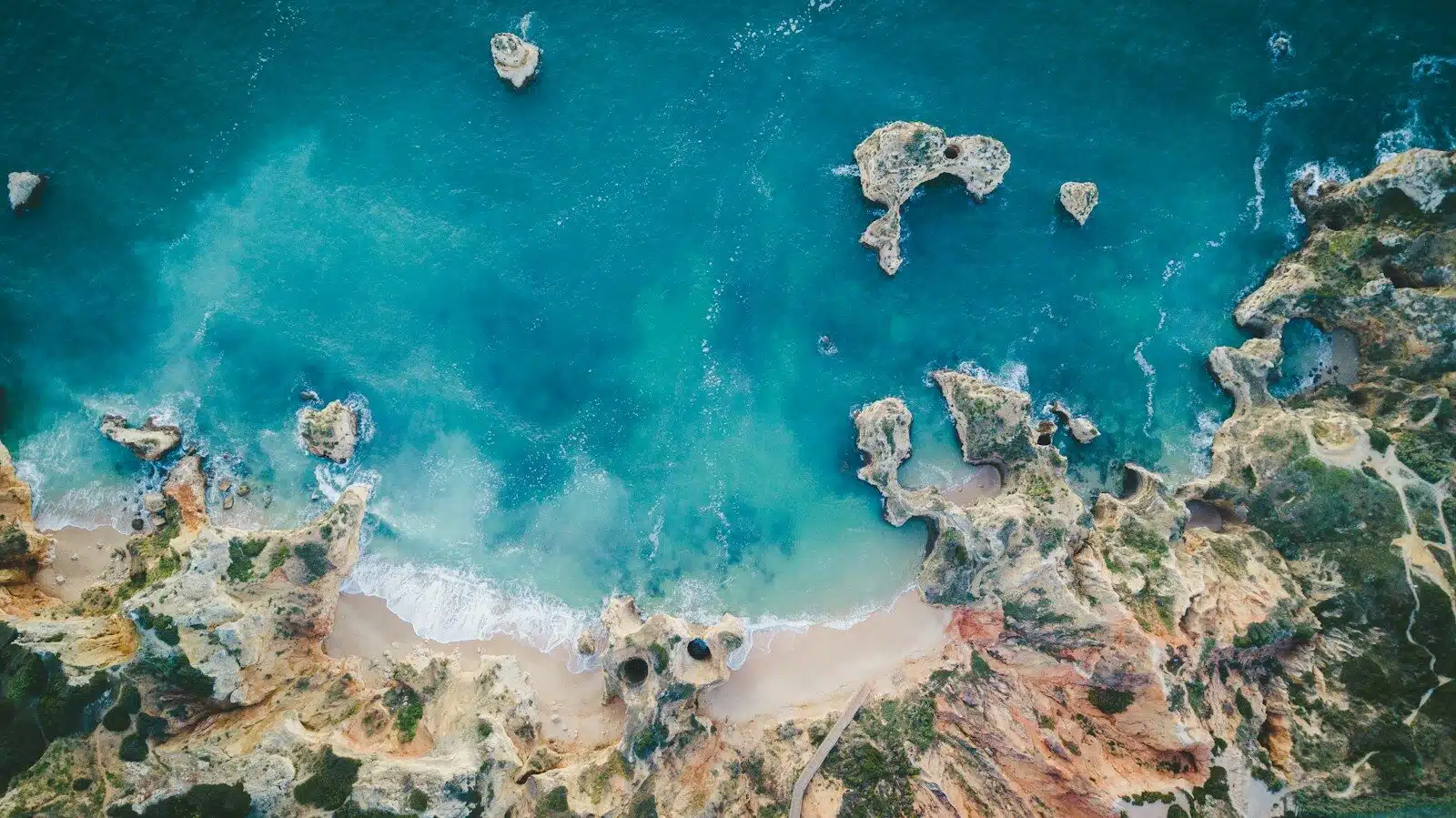
Spain and Portugal can both make exceptional honeymoon destinations, but they deliver luxury very differently. Spain offers greater variety and a more developed high-end hotel scene, while Portugal is more compact, often better value and particularly easy to combine with wine country and coast.
 5 min read
A Maldives honeymoon usually comes down to one early decision. Stay on a single island for the full trip, or divide the time between two resorts with different characters.
 6 min read
Most honeymoon planning defaults to summer, or to whichever destination is warmest on the day of the wedding. Autumn deserves its own shortlist. It is grape harvest in Italy, dry season settling in across the African plains, the last stretch of Caribbean heat before winter rates arrive, and a handful of weeks in Japan that […]
Planning your trip should feel effortless.
You share what matters, whether it’s a destination, a feeling, or a moment worth celebrating.
Your dedicated expert shapes a thoughtful, private itinerary tailored entirely around you.
Every detail handled. Every moment considered. Support before, during, and after your journey.

Answer a few quick questions and we’ll craft a journey as unique as your state of mind.
Ask us anything.
