
On this page
A private morning at a working vanilla farm on Taha’a, covering the full cycle from hand-pollination of the flower through to the curing process that produces the finished bean.
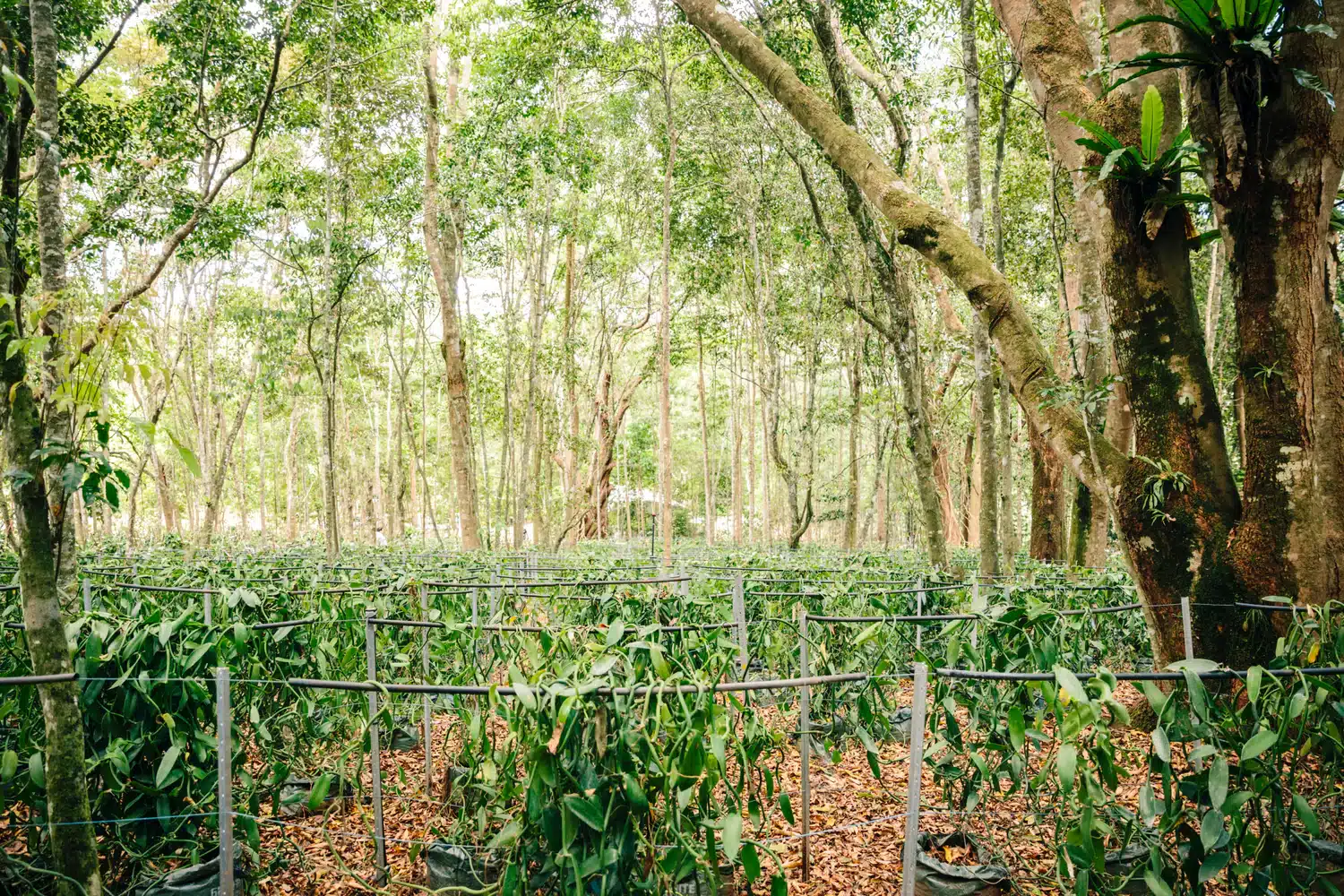
Taha’a is a small island in the Society Islands of French Polynesia, accessible only by boat from Raiatea, and it produces 80 percent of all vanilla grown in French Polynesia. Its interior valleys, where vanilla orchid vines climb the trunks of host trees through a network of family-owned plantations, are where some of the most sought-after vanilla in the world is grown.
Vanilla tahitensis, the hybrid species cultivated on Taha’a, is distinct from the vanilla of Madagascar and Mexico in both aroma and flavor profile. It contains lower levels of vanillin, the compound that produces the conventional vanilla scent, and higher levels of heliotropin, which gives it a more floral, anise-like character. This makes it the choice of pastry chefs and perfumers whose work requires a more nuanced and less sweet quality from the ingredient.
Most visitors encounter Taha’a vanilla in its finished form, dried black pods sold in the Papeete market or packaged at the airport, with no visible connection to the farm or the conditions that determined what the pod looks, smells, and tastes like. A private morning at a working farm changes that relationship. Vanilla is the second most expensive spice in the world after saffron, and the reason for that price is directly visible in the farm’s daily operations.
Cultural and Historical Context
Vanilla was introduced to the Society Islands in 1848 when a French admiral brought two varieties of vanilla orchid to Tahiti. The plants crossed to produce Vanilla tahitensis, and the island of Taha’a proved to have the specific combination of soil, humidity, altitude, and rainfall the orchid required.
Vanilla farming arrived on Taha’a around 1919 and the plantations have been operated by the same families across multiple generations since, with the knowledge of how to manage the orchid, pollinate the flower, and execute the curing process passed from parent to child alongside the land itself.
In Mexico, where vanilla originated, the orchid is pollinated by the Melipona bee, a species that does not exist in French Polynesia. Without it, every vanilla orchid on Taha’a must be pollinated by hand, a process known locally as marrying the vanilla.
A farmer must visit each plant every morning during the flowering season, from July to September, and transfer pollen from the anther to the stigma of each flower that has opened since the previous day. A flower that is not pollinated on the morning it opens will wither and die by the afternoon. Nine months later, the successfully fertilized flowers will have become vanilla pods ready for harvest.
Why Private or Small-Group Access Matters
A private morning at a working farm operates on different terms. The farmer’s pollination run across the plantation is not a demonstration. It is the work the farm requires that day, completed within the window the flower provides, regardless of whether visitors are present. A farmer who is working rather than presenting has a different quality of attention available, and the conversation that develops alongside the work covers ground that a structured tour does not reach.
The knowledge that determines the quality of a given plantation’s harvest is not available in a standard tour. The relationship between the altitude of the planting, the density of shade from the host trees, the rainfall in the weeks before the flowering season, and the character of the vanilla that results from those variables is built across years of daily observation on the same land. A private morning gives the farmer the time and the context to share that knowledge in full.
What You See
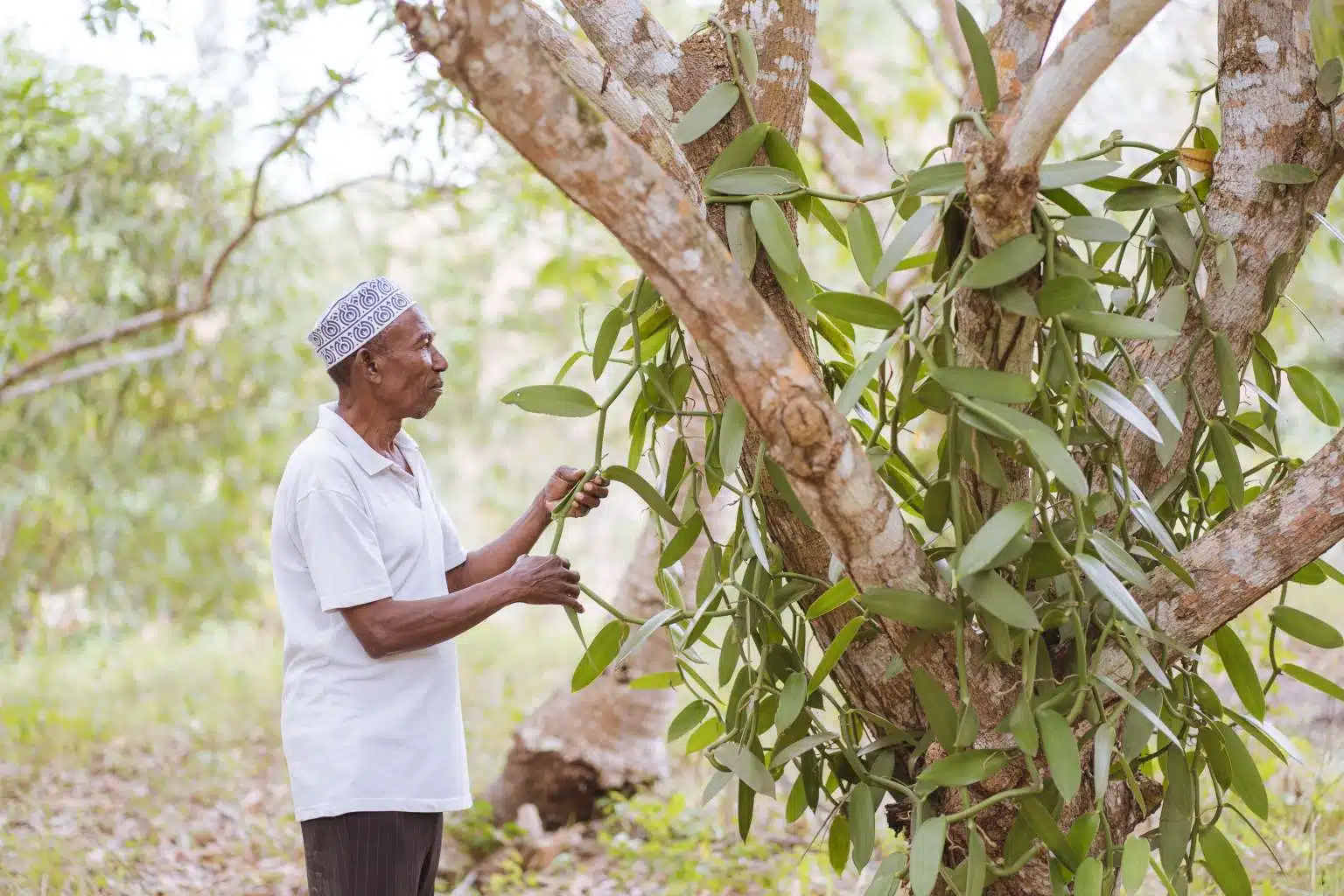
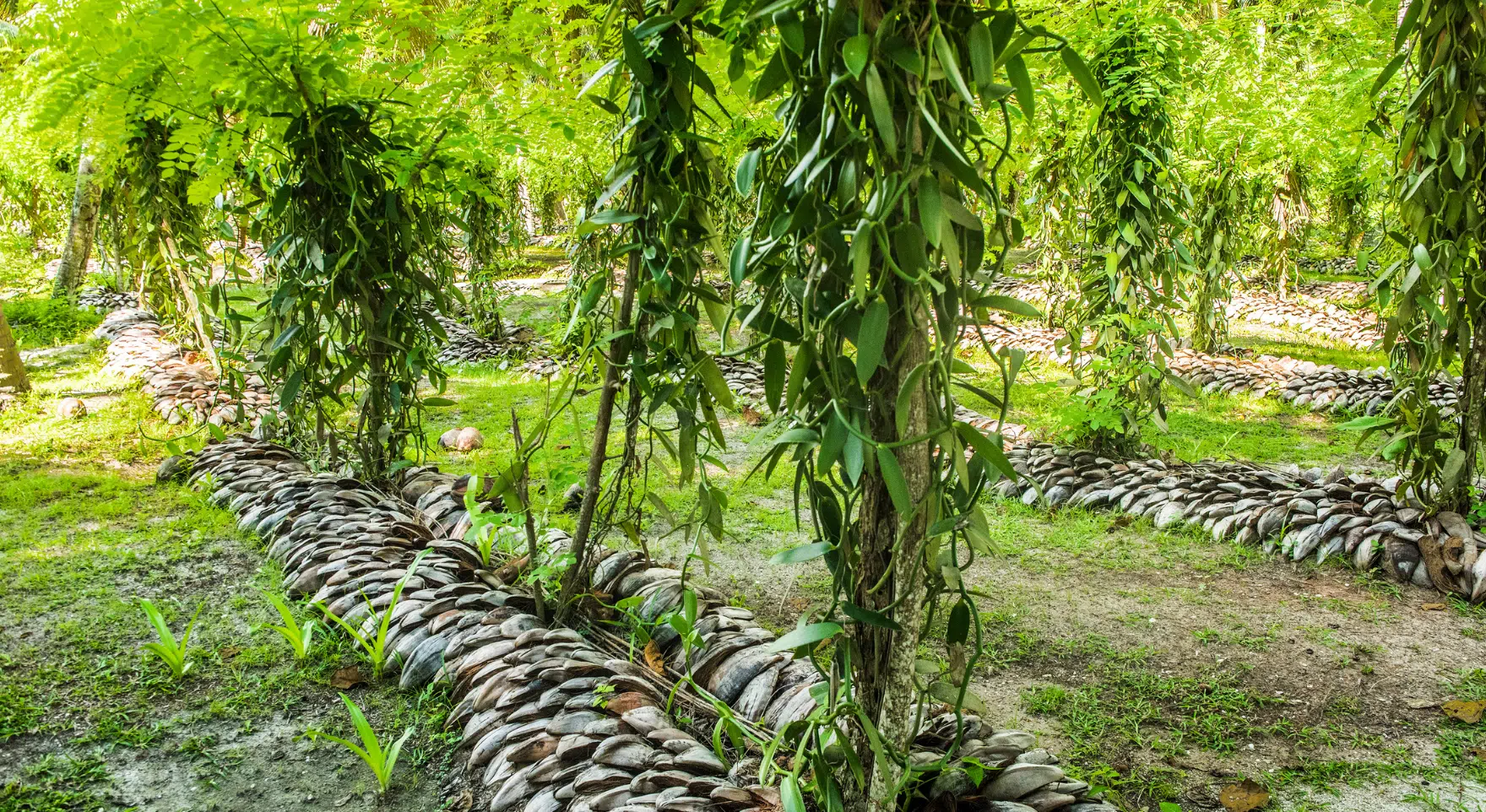
The vanilla orchid is a vine that grows upward on a host tree, secured to the trunk and allowed to climb for at least three years before it produces its first flowers. The flowers are pale and small when they open, but the scent is immediate, more floral and less sweet than the cured bean but recognizable as the origin of the same fragrance.
The pollination process involves using a small wooden stick to transfer pollen from the anther to the stigma of each open flower. The operation takes a few seconds per flower and requires the farmer to judge which flowers have opened since the previous morning and which are in the ideal condition for fertilization. A skilled farmer can pollinate hundreds of flowers in a morning across a plantation. A flower that misses its window is lost.
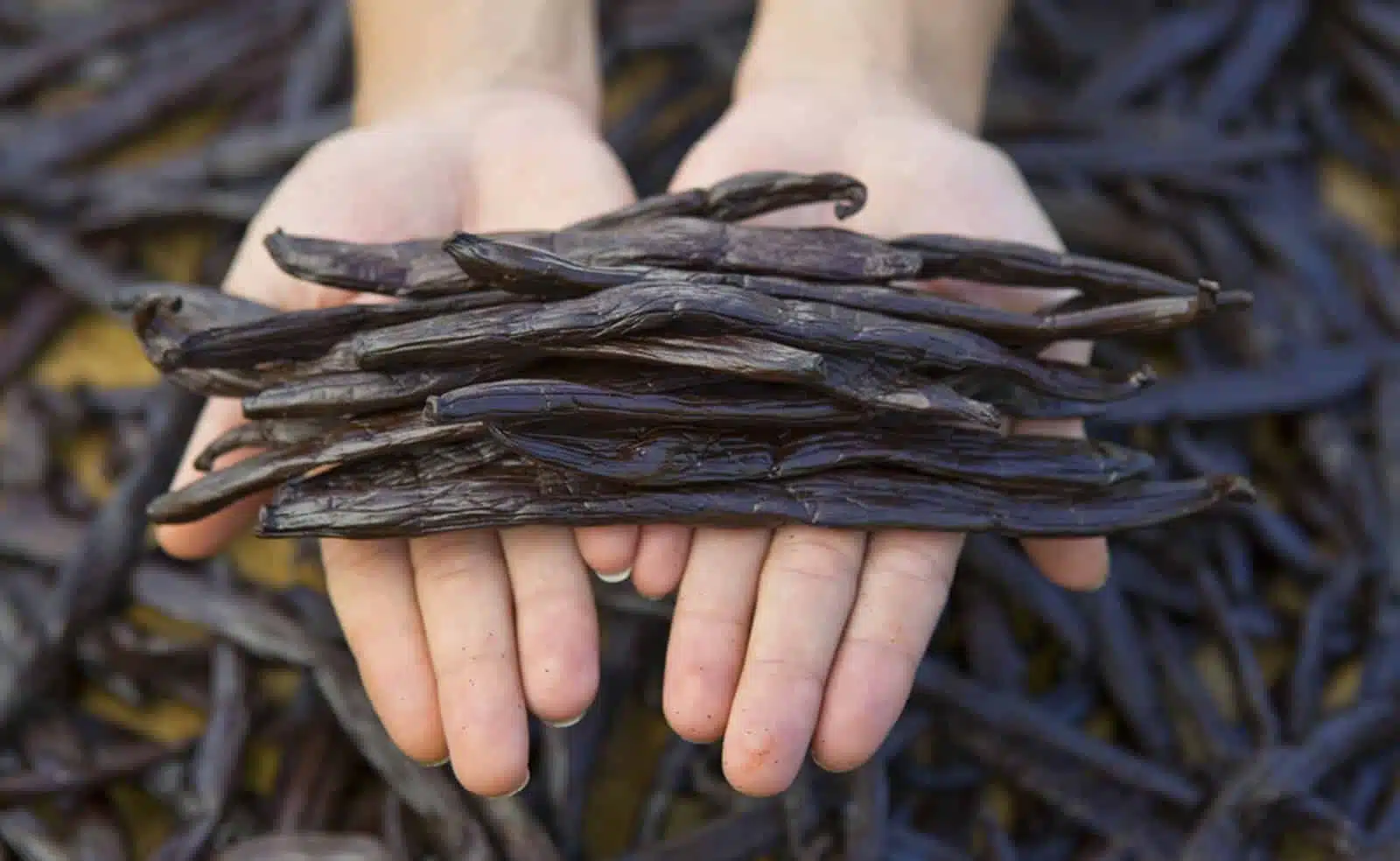
In the curing room, the green pods are blanched in hot water, then wrapped in cloth overnight before being spread in the sun for no more than two hours each day. This daily cycle continues for several months, the pods darkening from green through brown to the near-black of a fully cured bean.
The farmer judges completion by the flexibility of the pod, the depth of the color, and the concentration of the aroma. The longest and most unblemished pods are sold individually to pastry chefs and perfumers, at a price considerably lower than the same product purchased in Papeete.
How Do Not Disturb Makes This Possible
Do Not Disturb works with family-owned vanilla farms on Taha’a whose farmers receive private guests within the working context of the farm rather than a visitor format. The morning is timed around the farm’s pollination schedule during the flowering season from July to September, which produces the most complete version of the cultivation cycle.
Outside the flowering season, the visit covers the curing room, the sorting and grading process, and the harvesting of pods at the appropriate stage of maturity. Access to Taha’a requires a boat from Raiatea, and all logistics are coordinated as part of a broader French Polynesia itinerary.
Ready to plan your private morning at a vanilla farm on Taha’a and experience one of French Polynesia’s most labor-intensive food traditions from the inside? Speak with Do Not Disturb to begin your journey.