



On this page
A private tour of the Roman Baths offers rare, focused access to one of Britain’s most significant ancient sites, allowing its ritual, engineering, and layered history to be understood with clarity and context.
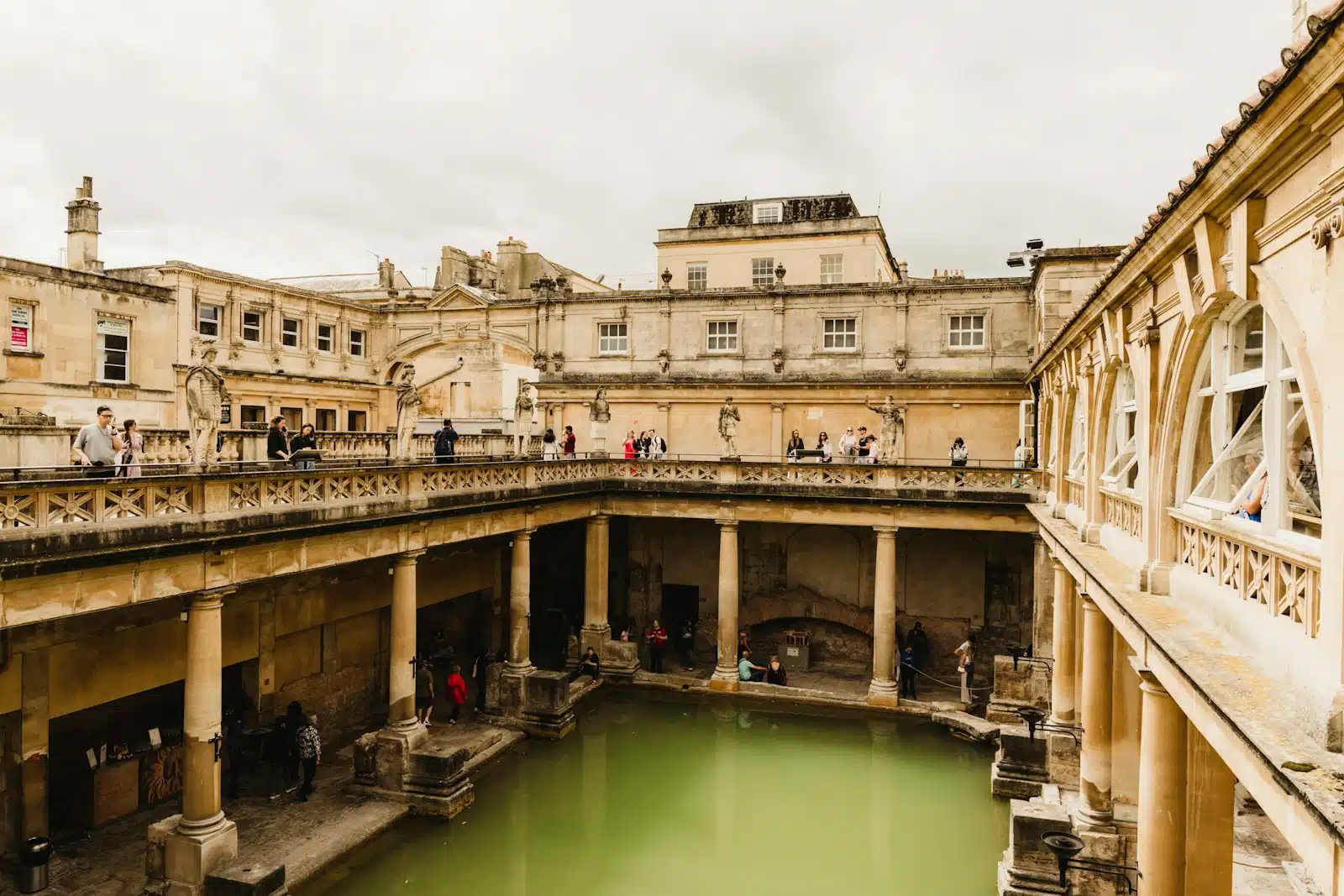
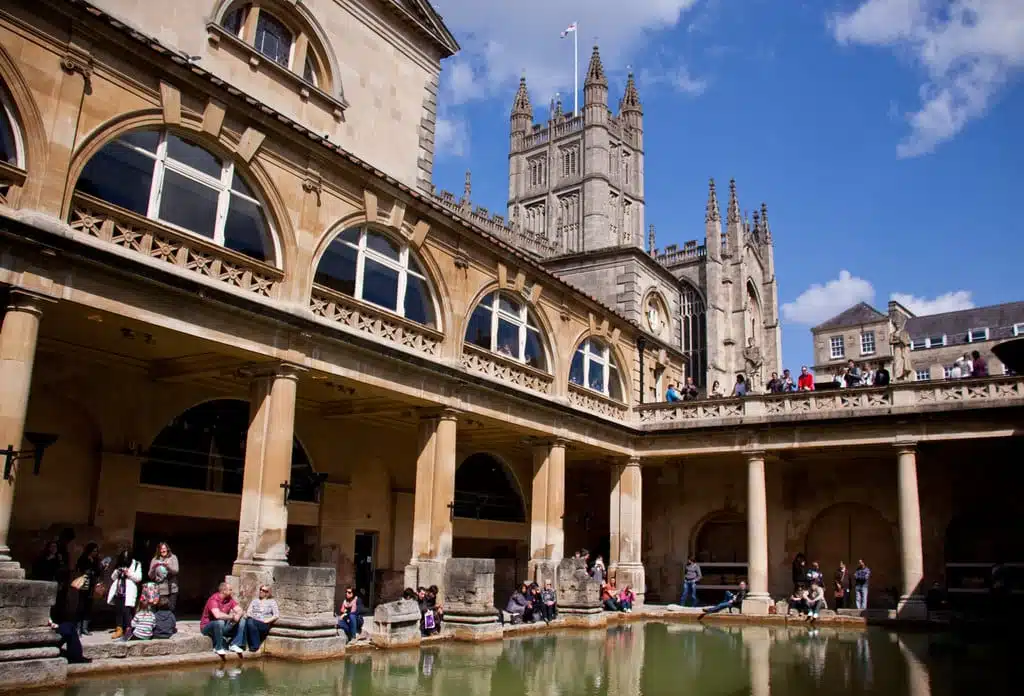
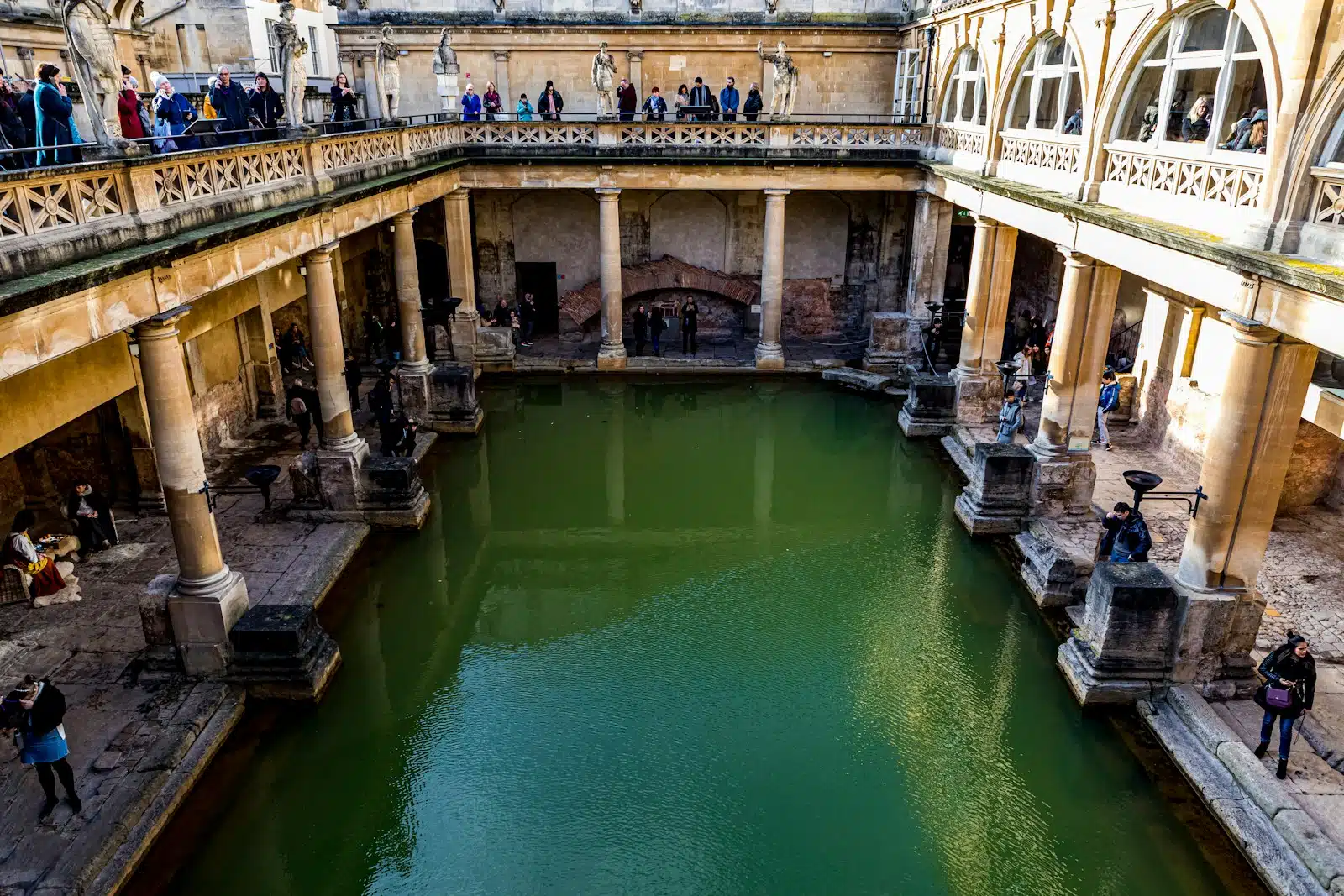
A private tour of the Roman Baths is a completely different experience from a regular visit. Instead of following the general flow of visitors, movement through the site becomes measured, with pauses that allow the scale and purpose of the complex to emerge naturally. The Great Bath appears slowly, its surface rippling gently, fed by water that has risen from deep underground for thousands of years.
This is not an abstract introduction to Roman Britain but a physical one. Stone, water, and heat remain active participants, creating an atmosphere that feels inhabited rather than preserved, and setting the tone for a visit grounded in context rather than spectacle.
Cultural and Historical Context
The Roman Baths were established around 70 AD as part of the settlement known as Aquae Sulis, built around Britain’s only natural hot springs. For the Romans, the presence of naturally heated water carried religious as well as practical significance, leading to the dedication of the complex to Sulis Minerva, a deity that merged a local Celtic goddess with the Roman goddess of wisdom and healing.
The baths were designed as both a social and sacred space. Visitors would progress through a carefully planned sequence of rooms, moving from warm to hot environments, bathing, exercising, and engaging in conversation as part of daily life. The engineering behind this system remains impressive, from the lead-lined Great Bath to the complex network of channels that controlled temperature and water flow.
Following the Roman withdrawal from Britain in the fifth century, the site fell into neglect and was gradually buried beneath layers of silt and later construction. Its rediscovery and excavation in the eighteenth and nineteenth centuries transformed understanding of Roman Britain, revealing not only monumental architecture but also intimate human traces, including curse tablets inscribed with personal grievances and prayers cast into the Sacred Spring.
Today, the Roman Baths stand as one of the most complete Roman bathing complexes in the world, offering insight into ritual, technology, and everyday life within a provincial Roman city.
Why Private Access Matters
The Roman Baths are among the most visited historic sites in England, and their popularity can compress the experience into a series of brief encounters. In busy periods, movement is often dictated by necessity rather than curiosity, with little opportunity to linger and truly take it all in.
Private access restores a sense of proportion. With a dedicated guide, it becomes possible to slow down and explore how individual spaces relate to one another, and why their arrangement mattered to Roman users. Questions can be addressed as they arise, whether about construction methods, religious practice, or the social dynamics of bathing culture.
This approach is particularly valuable in a site where meaning is layered rather than immediately visible. Many of the most compelling details, from inscriptions to subtle changes in stonework, are easily overlooked without expert interpretation and time to look closely.
What You See
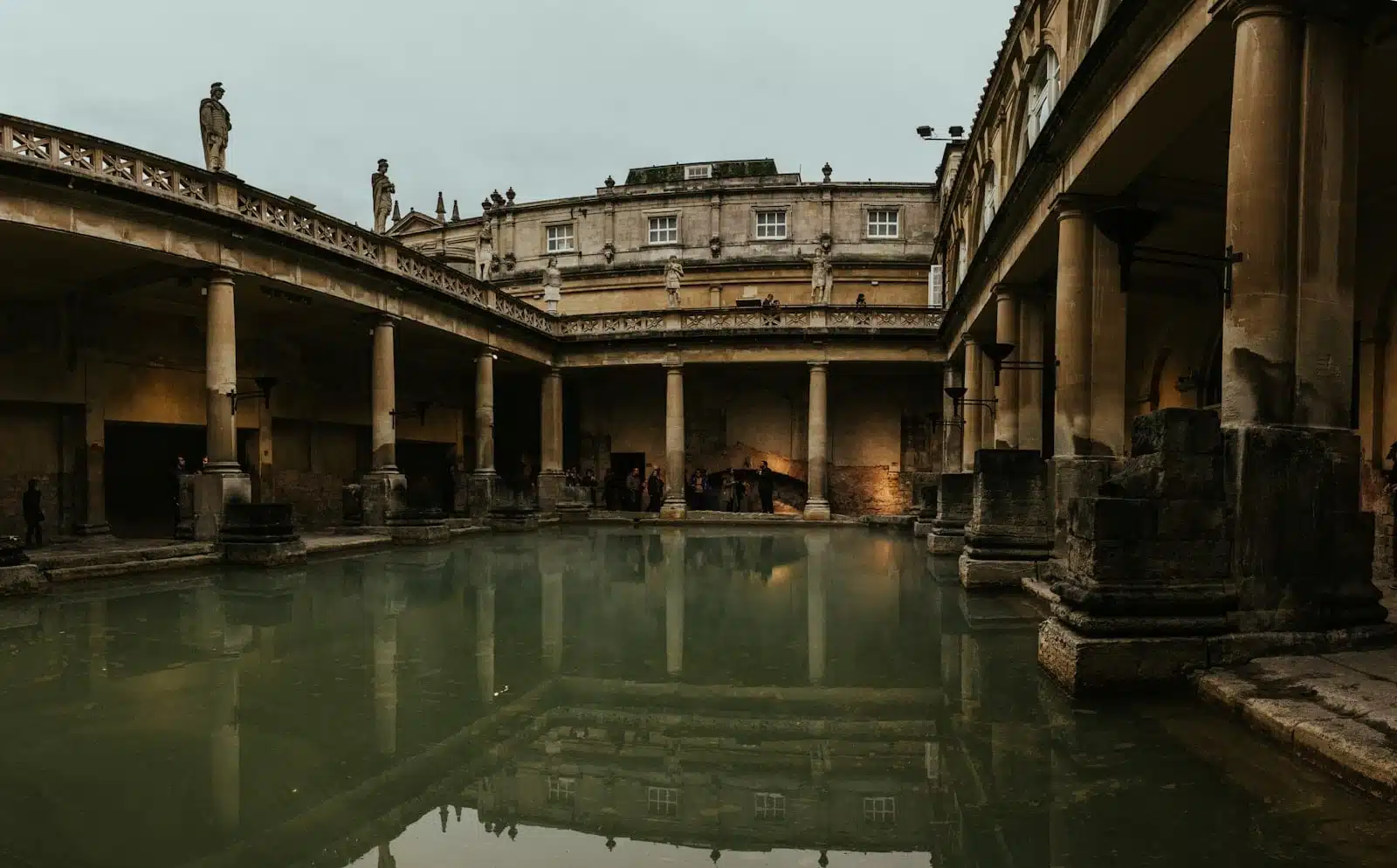
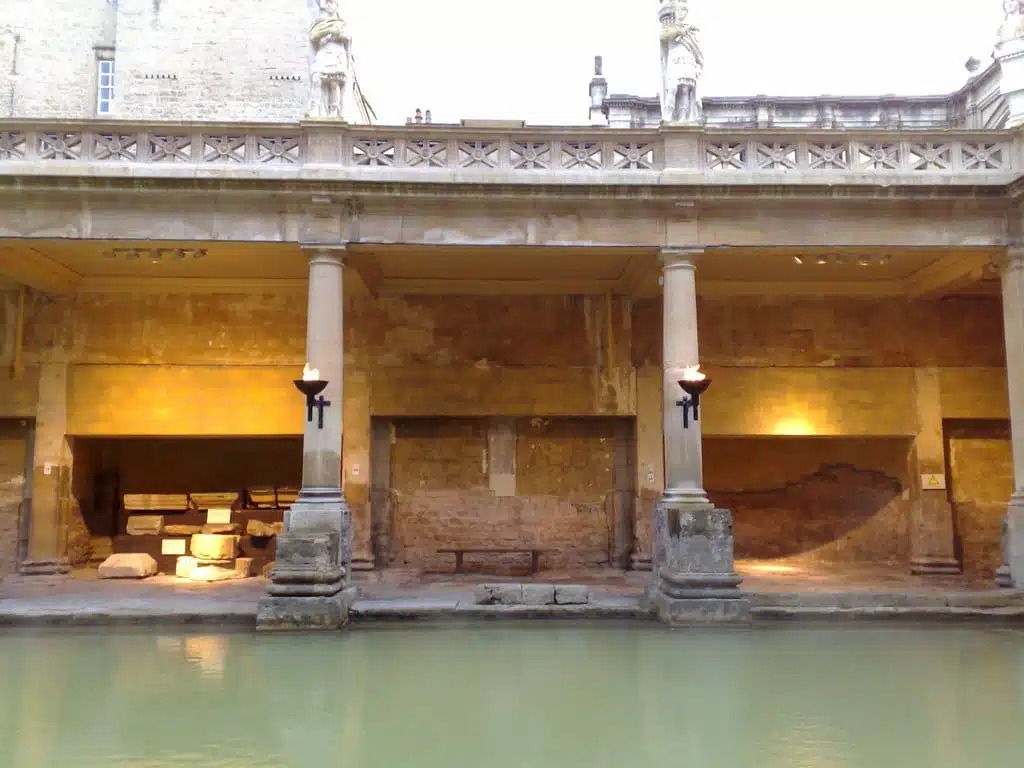
The tour unfolds through a sequence of spaces that mirror the original Roman experience. The Great Bath remains the focal point, its green-tinged water framed by original Roman paving stones and later architectural additions that reveal centuries of adaptation. Steam rises gently, creating a sense of continuity between past and present.
Nearby, the Sacred Spring offers a more intimate encounter. Here, mineral-rich water emerges directly from the earth, surrounded by stone walls that have absorbed ritual significance over generations. Objects recovered from this space, including offerings and inscribed tablets, provide a direct connection to individual voices from antiquity.
Moving through the museum galleries, sculptures and architectural fragments add further context. The bronze head of Sulis Minerva, with its commanding gaze and finely worked features, stands as a reminder of the site’s spiritual importance. Models and reconstructions help clarify how now-fragmentary structures once functioned as part of a coherent whole.
Light plays a subtle role throughout, shifting from open-air views of the bath to enclosed galleries where artifacts are carefully illuminated, guiding attention without overwhelming the senses.
Interpreting the Baths with Expert Guidance
Understanding the Roman Baths requires more than identifying rooms and artifacts. A skilled guide provides insight into how Romans understood health, religion, and community, drawing connections between physical remains and the beliefs that shaped their use.
Discussions often touch on the contrast between Roman bathing culture and modern expectations, revealing how public bathing was tied to identity, status, and civic life. The presence of curse tablets, for example, introduces a personal and sometimes unsettling dimension, illustrating how visitors used the site to appeal directly to the divine in moments of frustration or loss.
Private guidance allows these narratives to develop organically, adapting to areas of interest without rushing toward predetermined conclusions.
How Do Not Disturb Makes This Possible
Do Not Disturb curates private visits to the Roman Baths with attention to timing, access, and expertise. Tours are arranged with specialist guides whose knowledge extends beyond surface history, offering informed perspectives on Roman engineering, religion, and the later rediscovery of the site.
Each visit is shaped in advance through conversation, ensuring the focus aligns with personal interests, whether architectural detail, ritual practice, or the Georgian period that brought the baths back into the public eye. Logistics are managed discreetly, allowing the experience to unfold smoothly from arrival to departure.
For those seeking a deeper physical connection to the waters themselves, Do Not Disturb can also arrange access to nearby thermal bathing experiences, extending the historical narrative into the present without disrupting the integrity of the visit.
Ready to plan a private tour of the Roman Baths and explore Bath’s ancient heritage with clarity and ease? Speak with Do Not Disturb to begin shaping your visit.