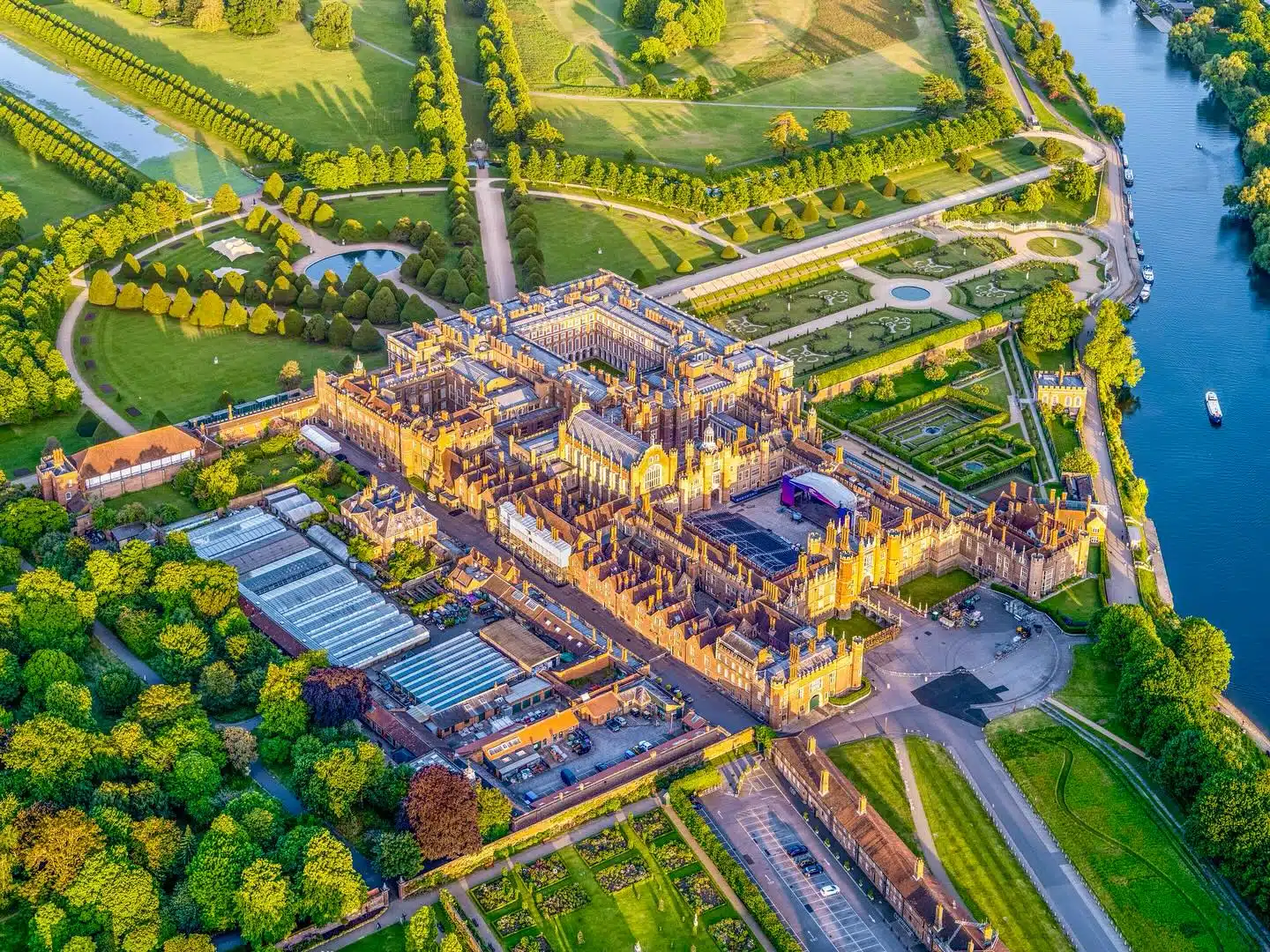


A private early-morning visit to Hampton Court Palace gives you the Tudor kitchens, State Apartments, and sixty acres of royal gardens before the public arrives. This is Henry VIII’s greatest surviving residence, and the hour before the gates open is the best time to understand why it mattered.
Hampton Court Palace sits on the south bank of the Thames in Surrey, originally built for Cardinal Wolsey before Henry VIII claimed it in 1529 and spent the following decades expanding it into the most important palace in his kingdom. A century and a half later, William III commissioned Christopher Wren to rebuild the east wing entirely in the Baroque style, creating a second palace that stands almost literally alongside the first.
Your private guide meets you before the gates open. Clock Court’s astronomical clock, built for Henry VIII in 1540 and still tracking the phases of the moon and the hour of high tide at London Bridge, marks the quiet. The courtyards that will fill within the hour hold nothing yet but early light.
The morning is focused on two things: the palace’s Tudor and Baroque interiors and the gardens beyond them.

About Do Not Disturb
Do Not Disturb is a luxury travel company specializing in carefully designed journeys and considered experiences. Each itinerary we build for our clients is informed by real destination knowledge, offering insight into places, cultures, and moments that shape how a trip comes together.
If this destination has sparked ideas, the itinerary can be developed into a private journey tailored to your interests and travel style, with hand-picked stays, thoughtful routing, and experiences curated around what matters most to you.
Cultural & Historical Context
Hampton Court’s significance runs across two of England’s most distinct royal periods, and both are still visible in the same building. Henry VIII’s sections, the Great Hall, the Chapel Royal, the Haunted Gallery, and the Tudor kitchens built to feed more than a thousand people a day, represent the monarchy at its most theatrical and most dangerous. Three of Henry’s six wives had direct connections to specific rooms here. Jane Seymour died at the palace after giving birth to Edward VI. Catherine Howard’s arrest was announced within its walls. Anne of Cleves lived here briefly after her annulment.
William III’s Baroque additions, completed in the 1690s, were built to rival Versailles without demolishing what Henry had left behind. The result is a palace that holds two centuries of royal ambition side by side, neither fully obscuring the other.
The gardens carry their own layered history. Capability Brown served as Chief Gardener here before his work at Blenheim, and his most lasting contribution still grows in a purpose-built glasshouse at the end of the Pond Garden. The Great Vine, planted in 1768 from a cutting taken at Valentines Mansion in Essex, is now 250 years old, four meters around the base, and the largest grapevine in the world. Until 1920, its grapes were grown exclusively for the royal table. The Maze, to the north of the palace, dates to the reign of William III and remains the oldest hedge maze in England.

Why Private or Small-Group Access Matters
Hampton Court draws visitors throughout the year, and the combination of the kitchens, the State Apartments, and the gardens means most people move faster than they would like, particularly in the first hour after opening when each section fills quickly.
A private early visit removes that pressure. The palace is yours from arrival until the gates open, and the guide can set the pace around your group rather than the crowd moving behind you. Rooms that feel performative when full, the Great Hall’s hammer-beam ceiling, and the kitchens’ scale carry more weight when there is nothing between you and them but the account of how they actually worked. The gardens benefit most from the timing. Sixty acres at eight in the morning, before any other visitor has entered, offer a stillness the rest of the day rarely recovers.

What You Experience
The tour begins in the Tudor kitchens, a sequence of rooms covering nearly 55,000 square feet, built to supply two full meals a day to a court that at its peak numbered more than a thousand people. The scale is striking: great fireplaces, butchery rooms, pastry houses, and storage cellars organized with a logistical precision that still reads clearly today. Your guide walks you through the supply chain, from the royal warrant-holders who provided the ingredients to the hierarchy that governed who ate what and where, depending on their rank at court.
From the kitchens the route moves through the Great Hall, its hammer-beam ceiling still carrying the carved royal badges of Henry’s reign, and into the Haunted Gallery, which takes its name from Catherine Howard, said to have run through it toward the chapel where Henry was at prayer, pleading for her life, before being dragged back by the guards.
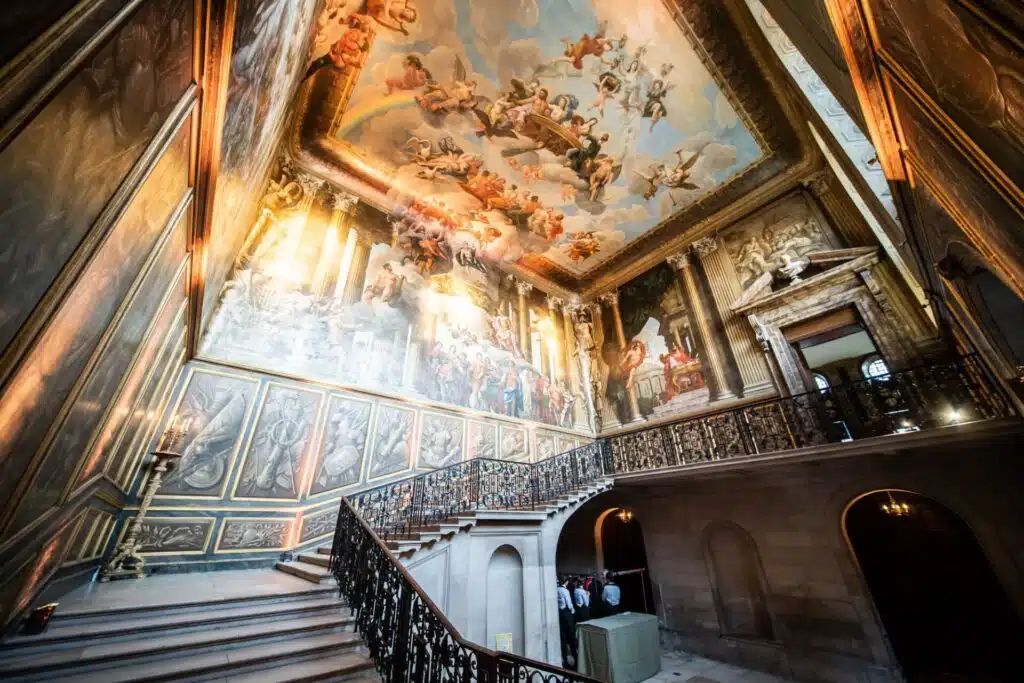
William III’s Baroque State Apartments occupy the east wing and offer a complete tonal shift: lighter ceilings, classical proportions, and painted interiors by Antonio Verrio. The King’s and Queen’s Apartments face each other across a sequence of increasingly formal rooms designed to impress visiting ambassadors rather than function as private living quarters.
The gardens follow. The Great Fountain Garden on the east front, with its radiating avenues of yew trees planted by William III’s gardener Daniel Marot, gives the clearest sense of the Baroque ambition that shaped this side of the palace. The Maze is best attempted before other visitors arrive, its yew hedges rising well above head height and its puzzle taking most adults longer than they expect.
The morning ends at the Great Vine’s glasshouse. The vine’s main trunk fills the full length of the building, its longest rod stretching more than thirty-six meters overhead. Its grapes are still harvested each September, a detail that gives it a living quality that sets it apart from the palace’s other historic features. This is not a plant preserved behind glass but one still tended, pruned, and productive, as it has been for two and a half centuries.

How Do Not Disturb Makes This Possible
Do Not Disturb arranges this visit through Historic Royal Palaces’ exclusive private tours program, securing pre-opening access for your group and confirming the guide, timing, and sequence of the morning in advance. The tour runs from 09:00 until the palace opens at 10:00, with the option to extend by one additional hour into the gardens if your group wants more time. Transfers from central London are handled in full, and the morning pairs naturally with Windsor Castle, less than thirty minutes away, for a considered full day across two of the Thames Valley’s most significant royal sites.
Hampton Court is a palace that rewards the kind of attention most visitors, working quickly through its rooms and gardens on a fixed route, rarely have time to give it. An early private morning returns it to something closer to its original character: a working royal residence, experienced at the leisurely pace it was built for.
Plan your own version of this journey
Speak to Do Not Disturb’s luxury travel experts and turn this moment into something personal.
Suggested articles

The Most Romantic Train Journeys for a Slow Honeymoon

Ireland vs Scotland: Which Luxury Escape Fits Your Travel Style?

The Do Not Disturb Guide to Luxury Travel in the UK

How to Plan a Multi-Country Europe Honeymoon
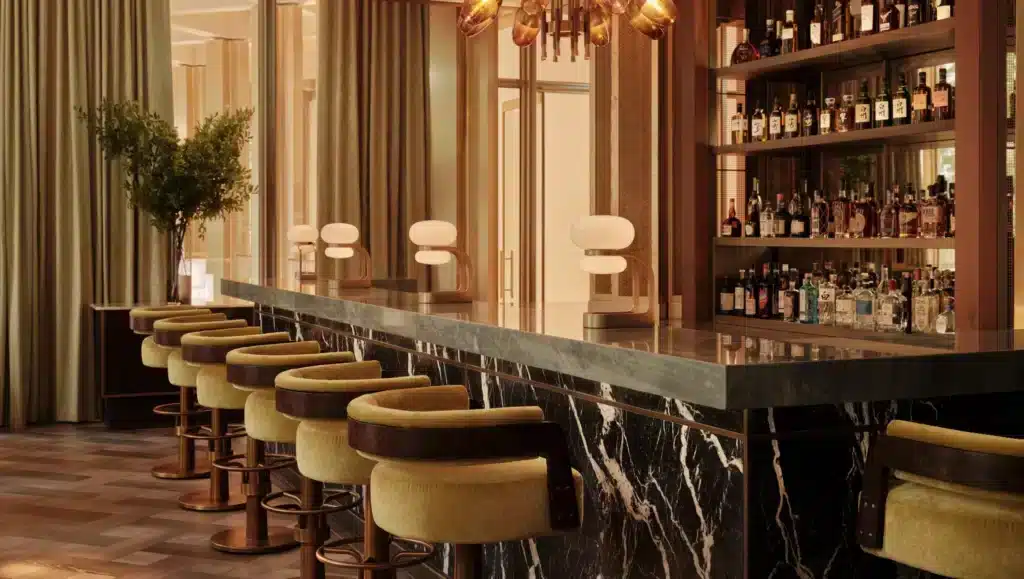
The Chancery Rosewood: Inside London’s Most Exclusive New Hotel

The Best Royal Experiences in Scotland: A Journey Through Royal History

The Best Christmas Markets in England for 2026

Discover Regency England: Jane Austen and Bridgerton Tour

Plan Your UK Heritage Trip: An American’s Guide to Tracing Your Roots
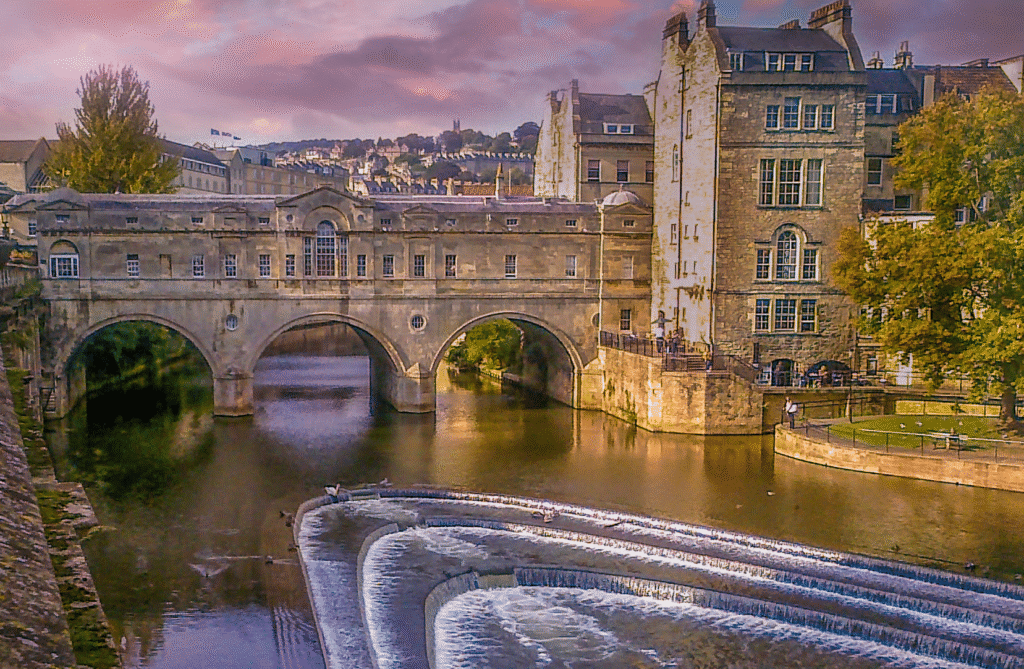
24 Hours in Bath: A Perfect English Experience

Best Winter Sun Honeymoon Destinations in Europe

Portugal vs Spain for Your Honeymoon – Which Should You Choose?

One Island or Two? Splitting Your Maldives Honeymoon Between Resorts