

On this page
A privately guided visit to the Grutas de Mira de Aire introduces families to Portugal’s largest cave system through clear storytelling, controlled pacing, and seamless logistics from Lisbon or central Portugal.
The landscape north of Lisbon gives little away. Low hills, limestone fields and a relaxed, quiet rural feel to it. Suddenly, the ground opens up, and the scale of what lies beneath becomes clear.
The Grutas de Mira de Aire are the largest known cave system in Portugal and one of the country’s officially recognised 7 Natural Wonders. For families, the experience balances spectacle with structure, combining geological drama with a well-managed route that remains accessible and safe.
A private guided visit restructures the day. Instead of navigating transport, timing, and language barriers, families move at a steady pace, with context tailored for both adults and children.
Cultural and Geological Context
Grutas de Mira de Aire were formed approximately 150 million years ago, during the Middle Jurassic period, when this region sat beneath a shallow sea and dinosaurs still roamed the surface above.
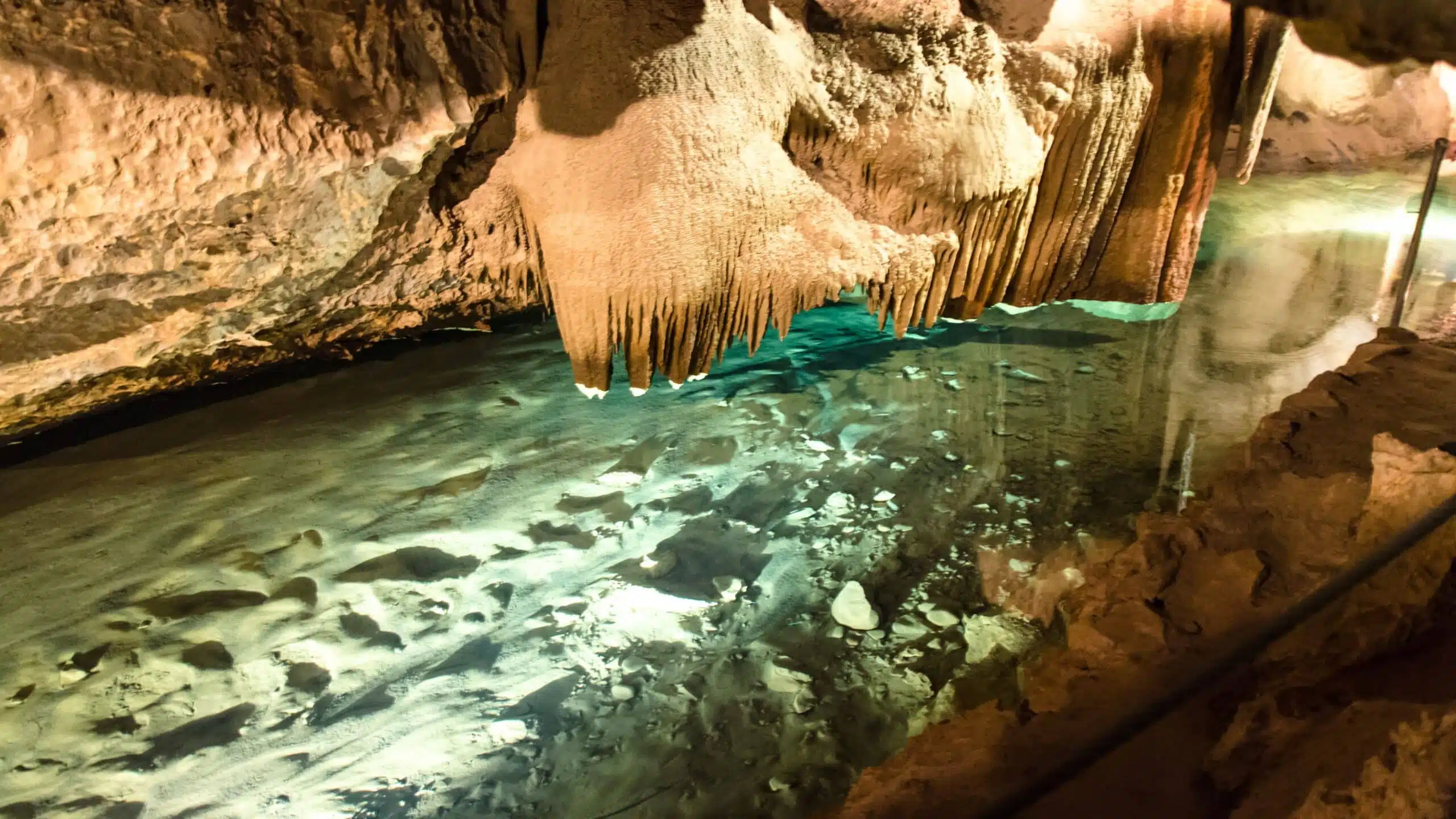
Over time, water filtered through layers of limestone, slowly carving galleries, chambers, and vertical drops. What emerged is an eleven kilometre underground network, of which a carefully developed section is open to visitors today.
The caves were discovered in 1947 by local explorers and officially opened to the public shortly after. Their national importance was formally recognised in 2010, when they were elected one of Portugal’s 7 Natural Wonders.
Why a Private Guided Visit Matters for Families
The caves operate with their own internal guided tours, typically delivered in Portuguese, with written material available in English. While informative, this format can be limiting for families unfamiliar with the geology or for children who benefit from explanation delivered in real time.
A private guide changes the experience. An English speaking specialist accompanies you from the outset, translating where needed and adding context that is not part of the standard script. Questions are encouraged with the explanations being adapted to age and interest.
Equally important, logistics are simplified. Families are collected directly from their hotel in Lisbon, Fátima, or nearby regions, removing the need to drive unfamiliar rural roads or coordinate entry times independently.
The Descent Into the Caves
The visit begins at ground level, before descending 683 steps along a secure, well lit pathway. The descent is gradual, with frequent pauses that allow children to rest and absorb what they are seeing.
As you move downward, the temperature cools and sounds soften. Water can be heard before it is seen with rock formations growing larger and more complex.
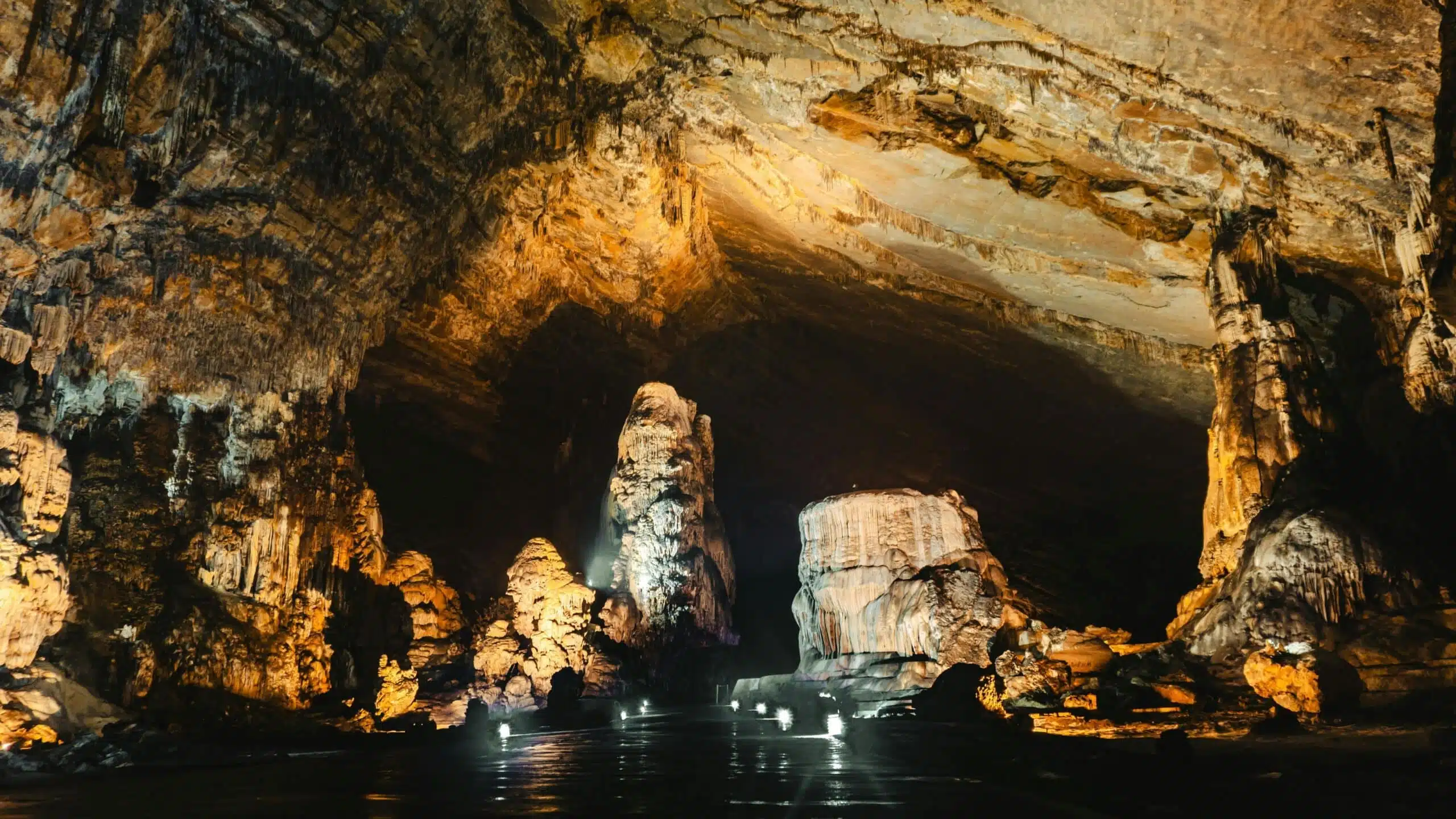
The route reaches a depth of 110 meters, passing through vast chambers such as the Great Hall, where scale becomes immediately apparent. Ceilings rise high above the walkways. Light reveals textures formed drop by drop over millions of years.
In the Jewel Room, mineral formations take on recognizable shapes, nicknamed the Jellyfish and the Organ for their fine, branching detail. A private guide explains how these structures grow and why they are so fragile, grounding the visual impact in simple science.
For younger visitors, the experience is tactile and visual rather than abstract. Echoes carry and the lights reflect off the wet stone. Water moves slowly through channels carved long before human history.
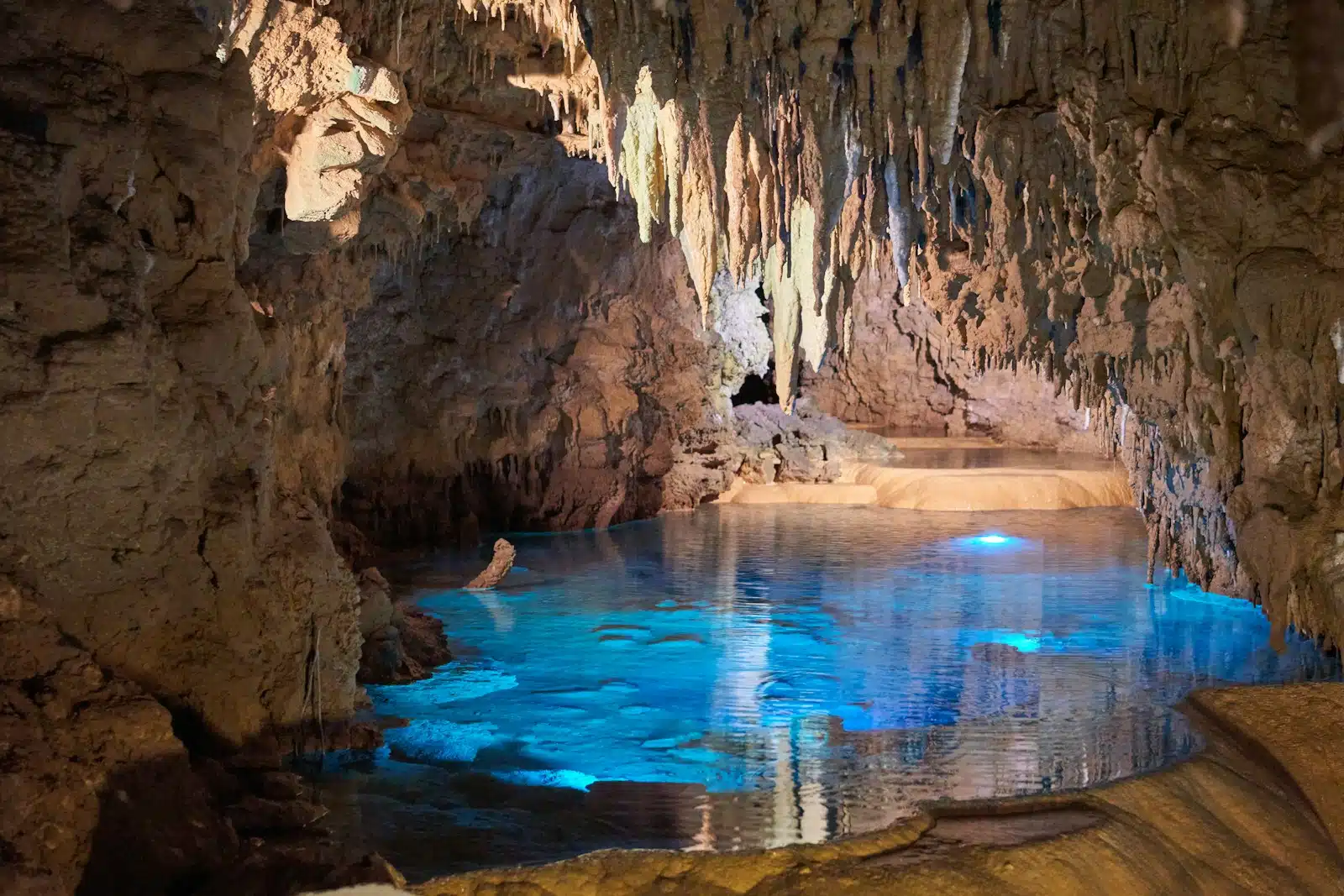
The underground lake at the end of the route often becomes the defining moment. Fed by a waterfall from the Black River, it marks the lowest point of the visit. A short, controlled music and light sequence illustrates the size of the cavern without overwhelming younger guests.
An elevator returns the group to the surface, avoiding the need to climb the full route back up, a practical detail that makes the experience manageable for families of mixed ages.
Educational Value Without Overload
The Grutas de Mira de Aire offer a clear introduction to geology, time, and natural processes, presented in a way that feels concrete rather than academic.
A private guide ensures that explanations remain focused. Dinosaurs are mentioned. Water erosion is demonstrated visually. Scale is compared to familiar references. Children leave with understanding rather than fatigue.
For parents, the experience provides substance without requiring prior knowledge or preparation.
How Do Not Disturb Makes This Possible
A private visit to the Grutas de Mira de Aire requires coordination across transport, guiding, and timing. Do Not Disturb arranges private drivers and licensed English speaking guides who accompany families throughout the day.
Entry times are selected to reduce waiting and crowd overlap. The pace of the visit is adapted to children. Additional stops are planned thoughtfully rather than added as afterthoughts.
The focus remains on ease, clarity, and comfort, allowing families to engage fully with the experience rather than manage it.
Ready to plan a privately guided family visit to the Grutas de Mira de Aire with seamless transport and expert context? Speak with Do Not Disturb to curate the experience with clarity and ease.