

On this page
A private visit at sunrise, led by a specialist Egyptologist, offers something the standard itinerary rarely allows. Time enough to stand at the base of the Great Pyramid before the first coach arrives.
Arriving Before the Plateau Wakes
The drive from central Cairo to Giza takes between 30 and 45 minutes depending on departure time. Leaving before 5 am avoids the city’s traffic and positions you at the plateau entrance ahead of the official opening, which is coordinated in advance through established relationships with the Egyptian Ministry of Tourism and Antiquities.
Access at this hour is not standard. Entry before public opening requires permissions secured through those relationships. The structure of the visit, including where you go first and how the site is navigated, is determined in advance and reflects both the access granted and the expertise of the Egyptologist leading it.
The plateau itself covers roughly 3 square kilometres. Arriving early means the sequence of the visit can be set by the guide rather than by crowd movement, which changes how the site can be read and how much time can be spent at each structure without interruption.
The Great Pyramid in Morning Light
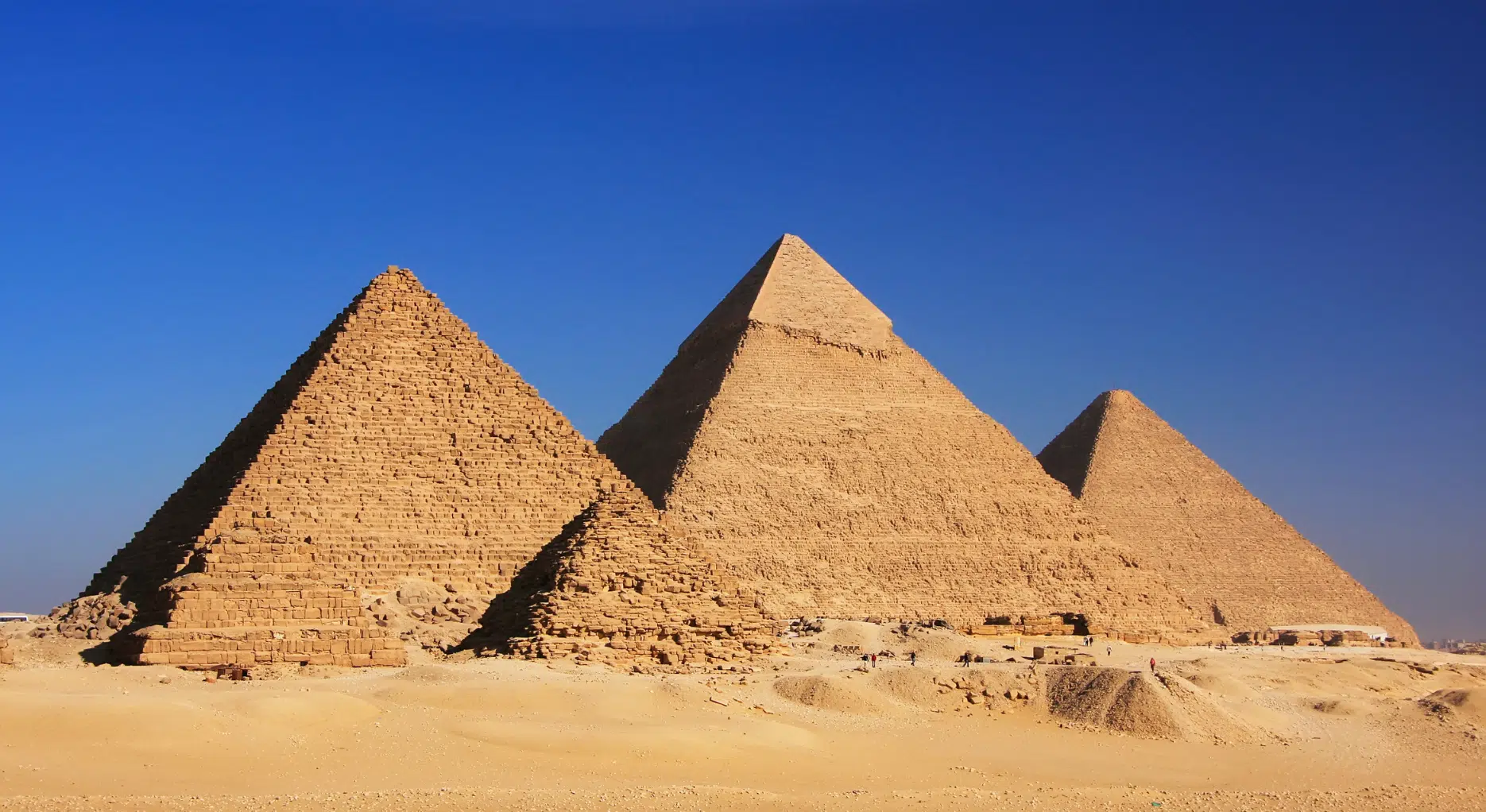
The Great Pyramid of Khufu stands 138 meters tall and contains an estimated 2.3 million stone blocks, many weighing between 2.5 and 15 tons. These figures are widely cited, but they rarely land with full weight until you are standing at the base, with no queue and no commentary competing for attention. An Egyptologist working at this hour can direct focus where it matters: the precision of the casing stones, the alignment to true north, the engineering decisions that remain only partially understood.
Entry to the interior is through the Ascending Passage, a corridor roughly 1.2 meters high that leads eventually to the King’s Chamber, a granite-lined room positioned at the pyramid’s core.
The chamber contains Khufu’s empty sarcophagus, cut from a single block of red Aswan granite. Without the interpretive layer that a specialist provides, the room reads as an empty box. With it, the construction logic, the astronomical alignments, and the unresolved questions about its purpose become the actual subject of the visit.
Understanding the Layout of the Pyramids
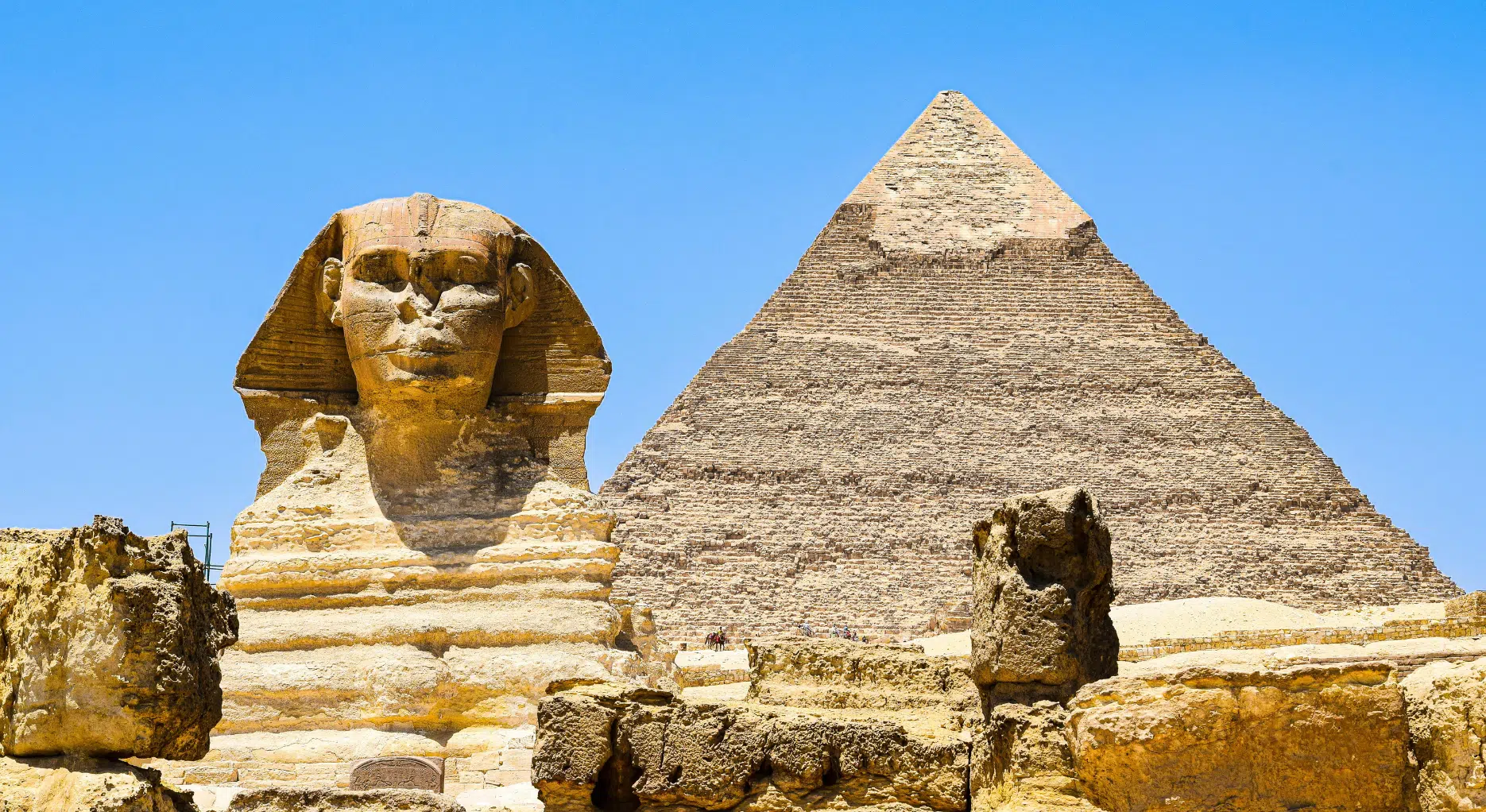
The three pyramids of Giza are not placed arbitrarily. Khufu, Khafre, and Menkaure are positioned along a southwest diagonal, a layout that scholars have long connected to sight lines, solar orientation, and the constraints of the plateau’s bedrock. The relationship between them only becomes legible at distance, from the elevated ground to the southwest, where the full sequence comes into view.
From this position, the scale of the complex becomes easier to assess. The causeways, mortuary temples, and subsidiary pyramids that surround the main structures form a planned precinct rather than a collection of monuments. The geometry is deliberate and, at ground level within the site, largely obscured.
Morning light is relevant here for a practical reason. Low-angle illumination defines the edges and gradients of the limestone more clearly than midday sun, which flattens the surface.
The Sphinx
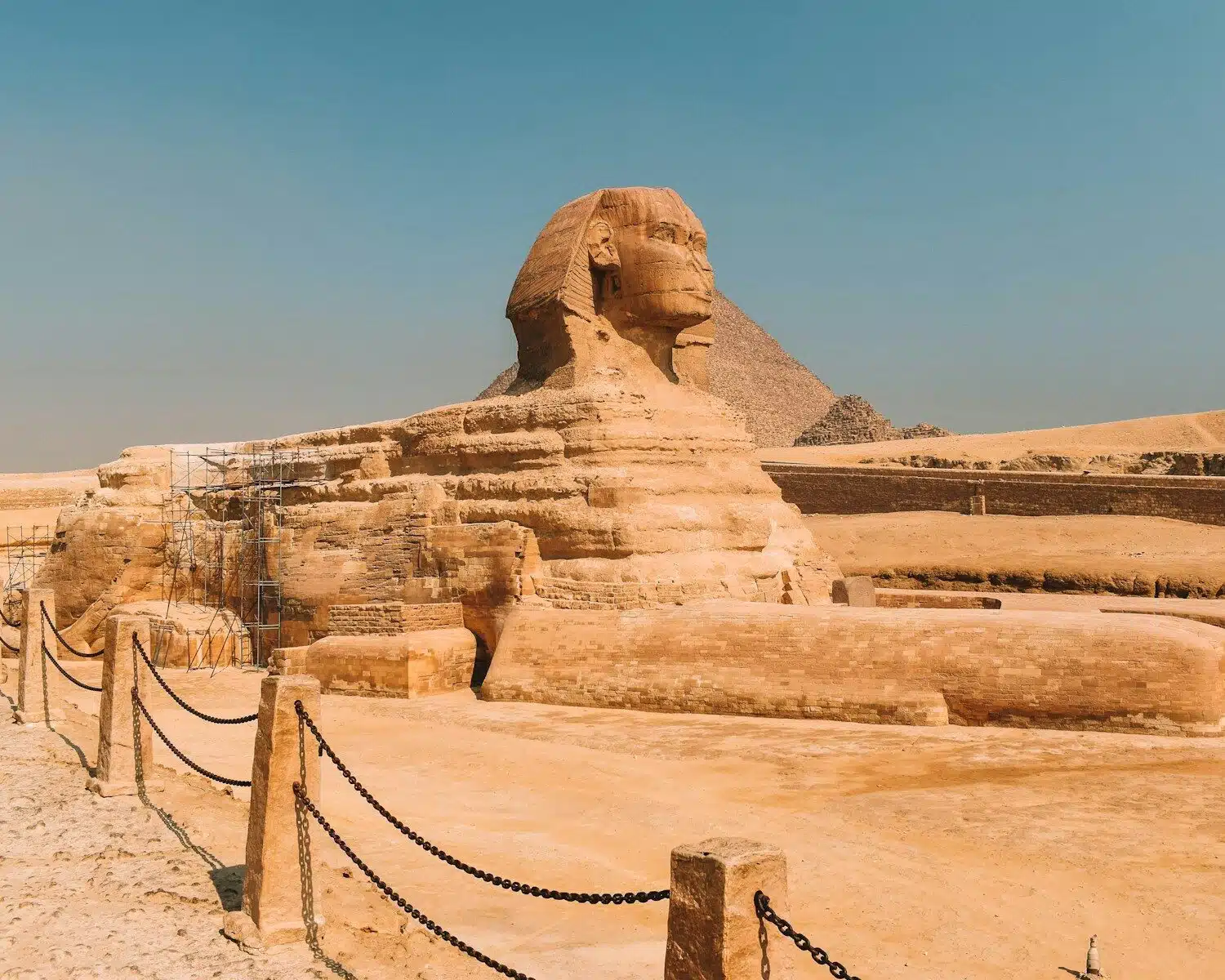
The Great Sphinx is typically encountered from a distance, framed for photographs and understood as a landmark rather than a structure with a specific function. At close range, with an Egyptologist present, the reading changes. The Sphinx was carved directly from the bedrock of the plateau, most likely during the reign of Khafre in the Fourth Dynasty, and positioned to face east along a precise solar axis.
Its relationship to the adjacent valley temple and the broader funerary complex of Khafre is not incidental; it was integral to the ritual geography of the site.
What proximity reveals is scale and erosion in ways that photographs do not convey. The body shows significant weathering, the cause of which remains debated among scholars, with some attributing it to wind and sand and others pointing to water erosion as evidence of greater antiquity. These are not settled questions, and a specialist can place them within the current state of Egyptological research rather than defaulting to received interpretation.
Why the Egyptologist Changes Everything
The plateau holds more than three thousand years of construction, modification, and religious function across multiple dynasties, and without a framework for reading it, the scale becomes the only thing a visitor registers. A specialist Egyptologist provides that framework, sequencing the visit to build understanding rather than simply moving between monuments.
The difference is most apparent in the details that a general guide would pass over. The deliberate alignment of the Sphinx with the rising sun at the spring equinox, the function of the valley temples as sites of ritual purification rather than burial, the ongoing scholarly debate over the layout and orientation of the three main pyramids, these are not incidental facts. They reorder how the entire complex is understood.
The ability to ask questions in real time, without the constraints of a group itinerary, is also a significant advantage.
Planning the Visit
Sunrise at Giza occurs between 5:30 and 6:30am depending on the season, and a private visit is typically timed to begin at or just before first light. The plateau opens to permitted private access ahead of general admission, which begins at 8:00am. This window is finite and requires coordination with Egyptian authorities in advance; access is not guaranteed through standard channels.
The drive from central Cairo to Giza takes between 30 and 45 minutes at that hour, with significantly less traffic than later in the day. Private transfer is the standard arrangement, and departure times need to account for security checks at the plateau entrance.
The visit itself typically runs two to three hours, structured around the Great Pyramid, the Sphinx enclosure, and the mortuary complexes, with pacing determined by the Egyptologist leading the session. Rushed itineraries reduce the experience considerably; the value lies in having sufficient time at each site to engage with what the monuments actually represent.