


On this page
A privately guided exploration of the Monteverde Cloud Forest Reserve offers rare access to one of the planet’s most ecologically significant landscapes, where mist, altitude, and biodiversity combine to create a forest unlike any other.
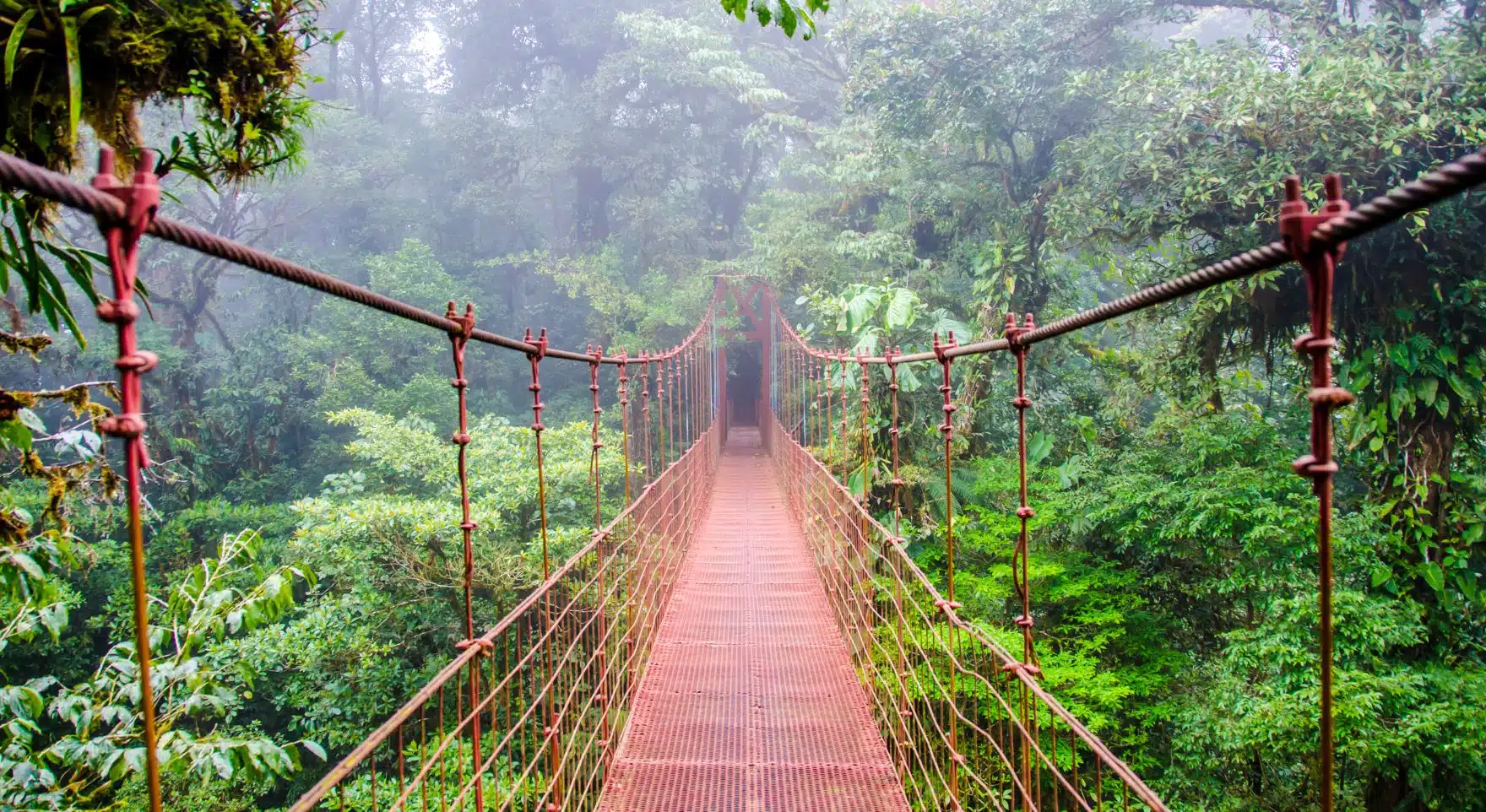
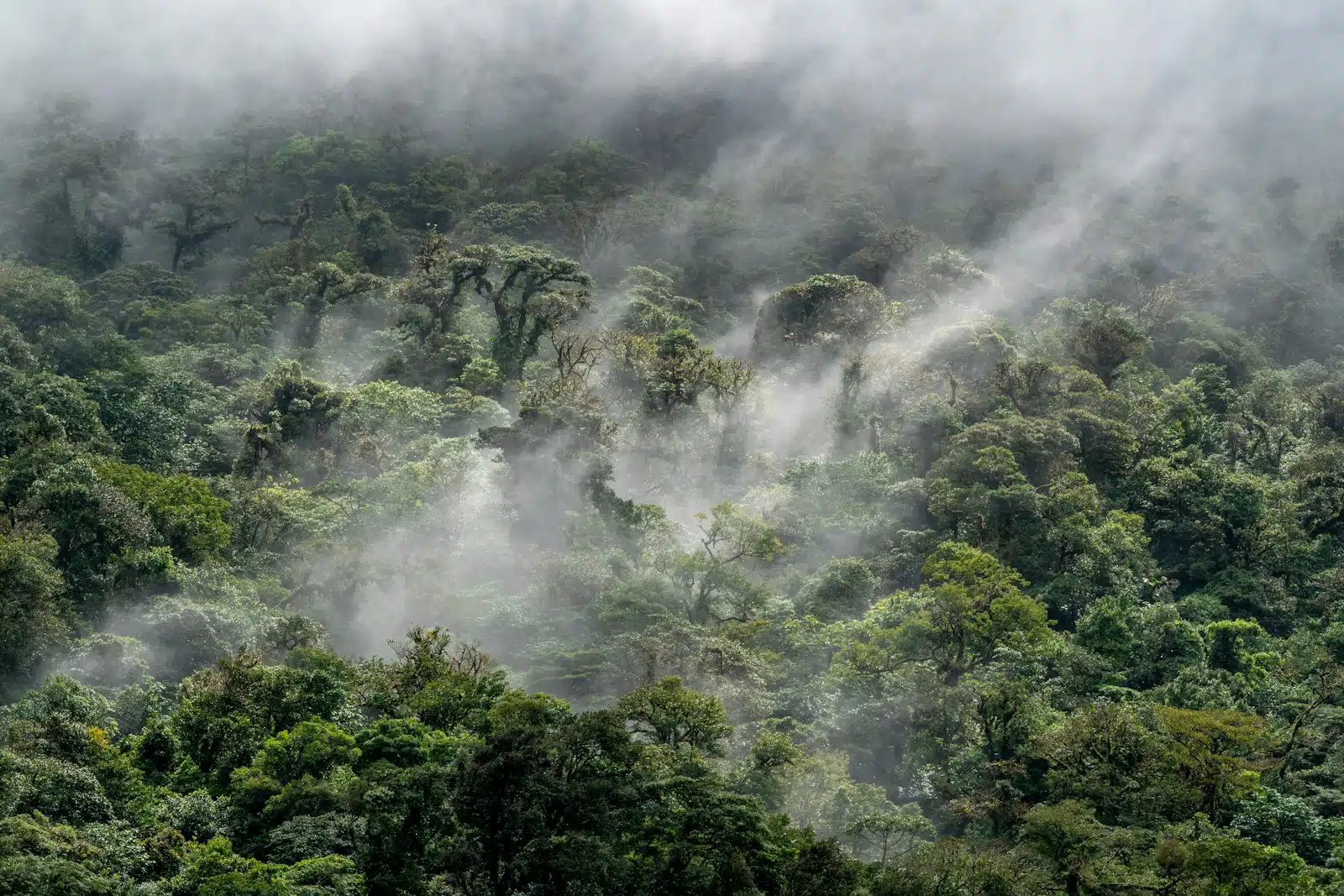
The road into Monteverde climbs steadily, leaving behind warmer lowlands as the air cools and the light begins to soften. By the time you arrive at the reserve, clouds move at eye level, drifting slowly through branches heavy with moss and orchids. Sound changes here. The forest absorbs it, replacing traffic and conversation with birdsong, dripping water, and the faint rustle of leaves.
Entering the cloud forest with a private guide immediately alters how the place reveals itself. There is no sense of being ushered along a set path or competing for space on narrow trails. Instead, there is no rush. The experience is shaped by what appears in the canopy or along the forest floor, and by the questions that naturally arise as the environment begins to explain itself.
Ecological and Geographic Context
Cloud forests are among the rarest habitats on the planet, covering roughly one percent of global woodlands and a fraction of the Earth’s land surface. Monteverde’s significance lies not only in this rarity, but in its precise positioning. The reserve sits directly along the Continental Divide, where rainfall is split between two oceans. Water that falls on one side eventually reaches the Caribbean Sea, while water on the other flows towards the Pacific.
Unlike rainforests that rely primarily on rainfall, the cloud forest draws a substantial portion of its water from mist. As clouds move through the trees, moisture condenses on leaves, mosses, and epiphytes, supplying up to forty percent of the forest’s hydration. This phenomenon, often described as horizontal rain, allows life to thrive at elevations between 1,200 and 1,800 meters, where conventional rainfall alone would be insufficient.
Established in 1972 by a collaboration of local Quaker settlers and scientists, the reserve has grown from a modest protected area into more than 35,000 acres of conserved land. Its success is often cited as a model for conservation that balances scientific research, community involvement, and carefully managed access.
Why Private Access Matters Here
Monteverde is frequently described as a living laboratory, and like any complex system, it benefits from explanation. Visiting with a private guide transforms what might otherwise feel like an overwhelming density of life into a coherent narrative.
Without the constraints of group schedules, your guide can pause when a rare bird calls overhead, explain the layered structure of the canopy, or trace how a single tree supports dozens of interconnected species. Children and adults alike are encouraged to ask questions, and the pace adjusts naturally to curiosity rather than to a fixed itinerary.
Crowded trails tend to flatten the experience, reducing the forest to a sequence of viewpoints. Private access restores depth, allowing silence when it matters and conversation when it adds understanding.
What You See
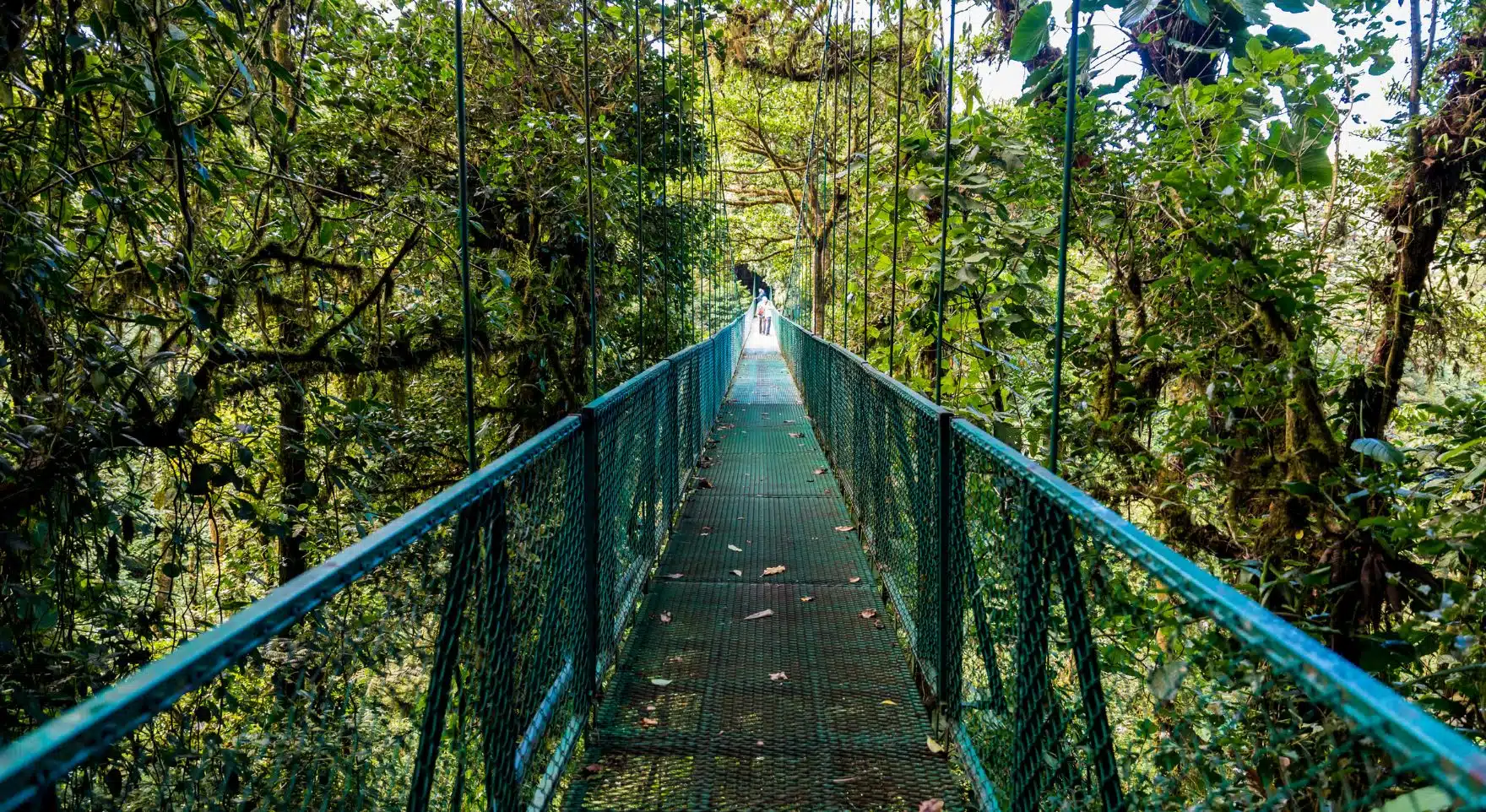
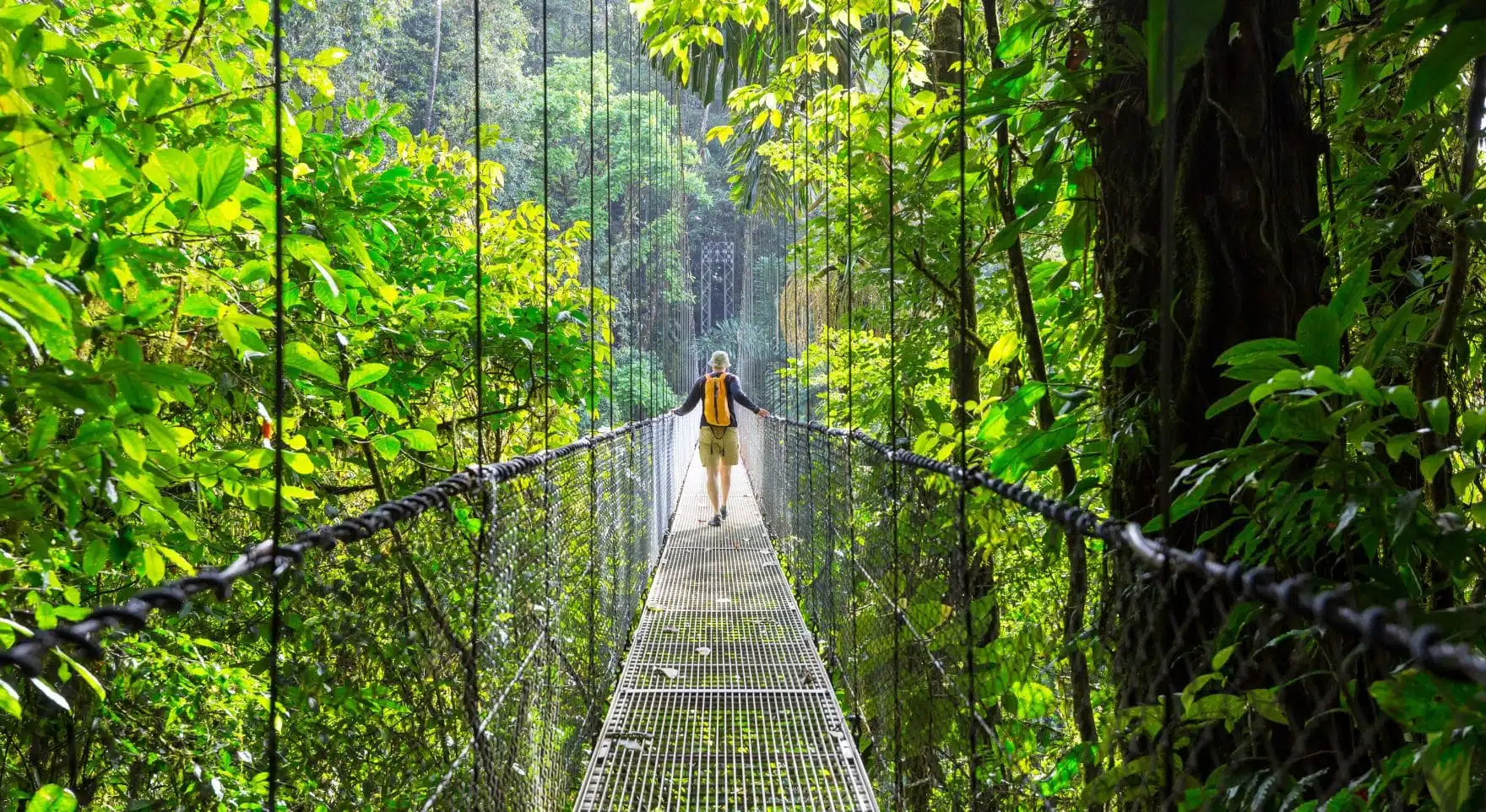
The first impression is how tall and green evreything is. Life in Monteverde is stacked, from roots gripping damp soil to branches that disappear into cloud. Trunks are coated in moss, lichens, and ferns, each surface hosting organisms that draw nutrients directly from the air.
Orchids are everywhere once you learn how to see them. The reserve holds the world record for orchid diversity in a single location, with more than 500 species identified. Some are no larger than a fingernail, flowering briefly before vanishing back into the green. Others cling visibly to branches, their roots exposed, thriving without soil.
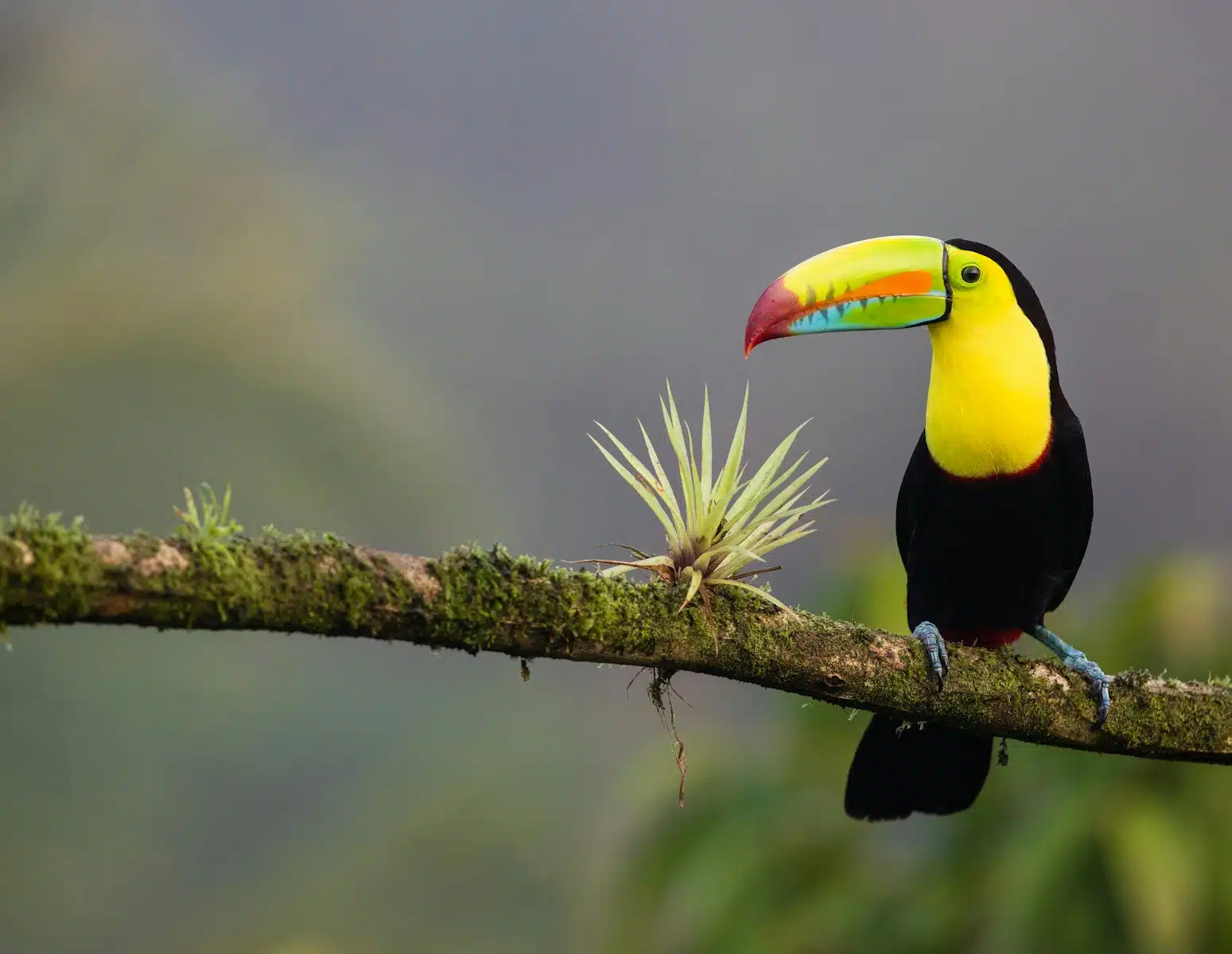
Birdlife reveals itself gradually. More than 400 species have been recorded here, including the resplendent quetzal, whose presence often elicits a pause and lowered voices, and the three-wattled bellbird, whose metallic call carries across the forest. A skilled guide knows how to listen first, then look.
Mammals are incredibly rare but no less important. Monteverde supports over 100 species, including all six of Costa Rica’s wild cats. While sightings are scarce, understanding their role in the ecosystem adds another layer to what at first appears to be a world ruled by plants and birds.

The Canopy Perspective
One of the most striking facts about Monteverde is scale at the micro level. A single mature tree here can host more species of plants and insects than entire forests in temperate regions. Bromeliads collect water in their leaves, creating miniature aquatic ecosystems. Insects, frogs, and microorganisms coexist within spaces measured in inches.
Private tours often include time to focus on these details rather than rushing towards larger landmarks. With guidance, the forest becomes far more understandable, and your appreciation only increases.
How a Private Tour Changes the Rhythm
Standard visits tend to follow predictable routes at peak times, compressing exploration into narrow windows. A privately arranged tour allows for thoughtful timing, often entering the forest when wildlife is most active and foot traffic is light.
The difference is subtle but cumulative. Sounds carry further. Sightings last longer. The forest feels inhabited rather than observed. This shift in rhythm is particularly valuable in a place defined by nuance rather than spectacle.
How Do Not Disturb Makes This Possible
Arranging a meaningful visit to Monteverde requires more than securing entry. Do Not Disturb works with specialist naturalist guides who understand both the science of the forest and the art of communicating it clearly.
Tours are timed to suit seasonal conditions and individual interests, whether focused on birdlife, botany, or family-friendly discovery. Logistics are handled seamlessly, from transportation on winding mountain roads to pacing that respects energy levels and weather patterns.
The result is an experience shaped around understanding rather than accumulation, where the complexity of the environment is revealed without effort on the part of the traveller.
Ready to explore the Monteverde Cloud Forest with expert guidance and a pace shaped around curiosity rather than crowds? Speak with Do Not Disturb to plan your private tour in Costa Rica.