
On this page
St Barths has held its position at the top of the Caribbean luxury market for decades. Here is why no other island has managed to replace it.
The French Factor
St Barths became a French territory in 1648 and has remained one, with a brief period under Swedish rule in the eighteenth century, ever since. That administrative heritage matters more than it might seem. The island operates under French law, uses the euro, and has absorbed a set of standards around food, design and hospitality that most Caribbean islands simply do not share.
The restaurants in Gustavia benefit from that French influence.
The Swedish interlude left its mark too. Gustavia is named after King Gustav III of Sweden, and the harbour retains a certain Nordic orderliness beneath its French surface. It is one of the few harbours in the Caribbean where the seafood market, the chandlery and the three-Michelin-star-quality restaurant feel like they belong to the same place.
The Runway Did It
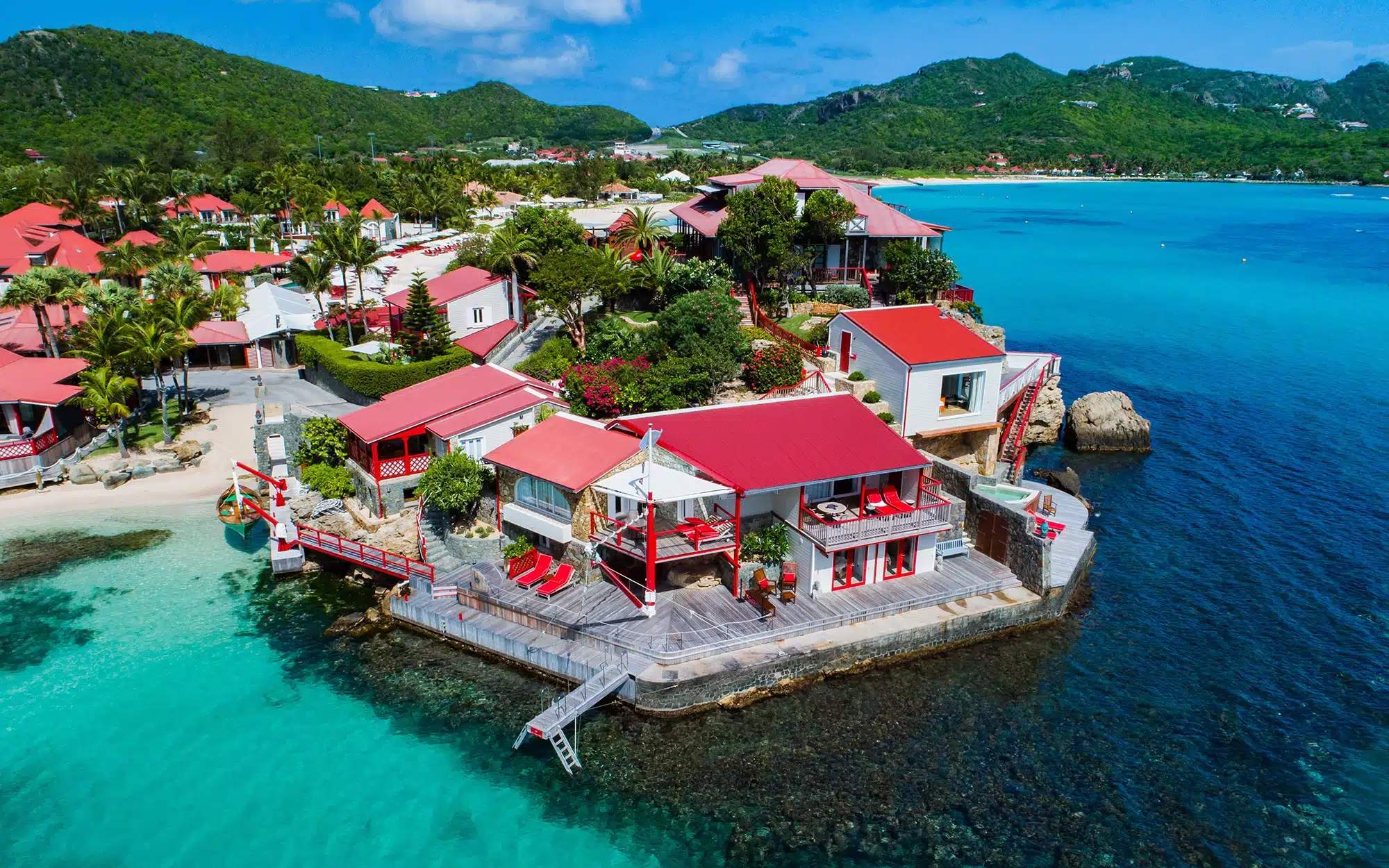
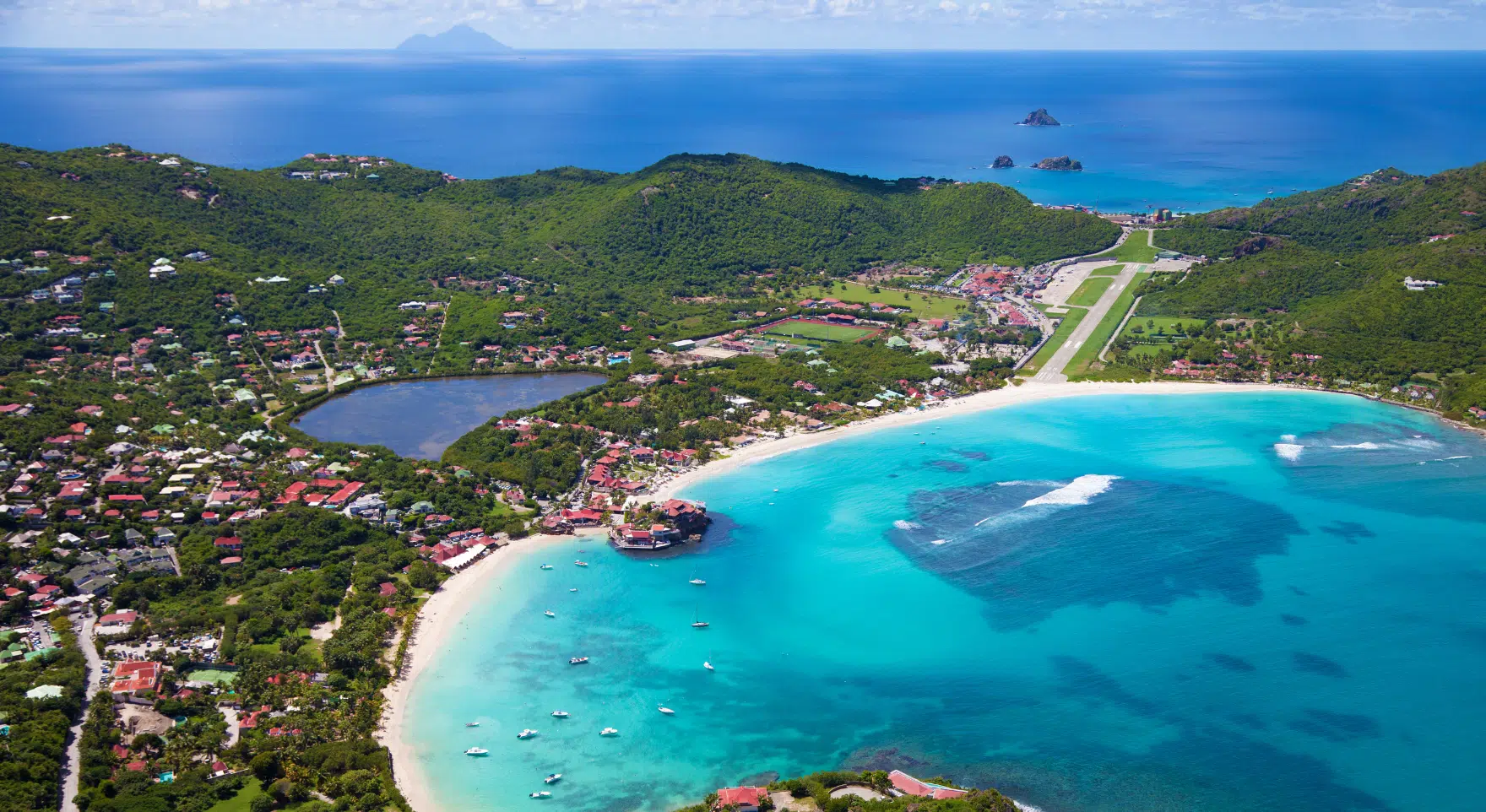
The most important piece of infrastructure on St Barths is not a hotel or a beach club. It is the runway at Gustaf III Airport, 650 meters of tarmac that ends at a hillside and begins at a beach.
Only small aircraft can land there. No wide-body jets. No charter flights from Miami carrying three hundred passengers. The physical constraint of the runway has done more to shape the character of the island than any planning regulation ever could.
What this means in practice is that St Barths has never experienced the mass tourism that has transformed neighbouring islands. The island fills in December and empties in May, and at its busiest it still feels quiet by the standards of anywhere else in the region.

The Villa Model
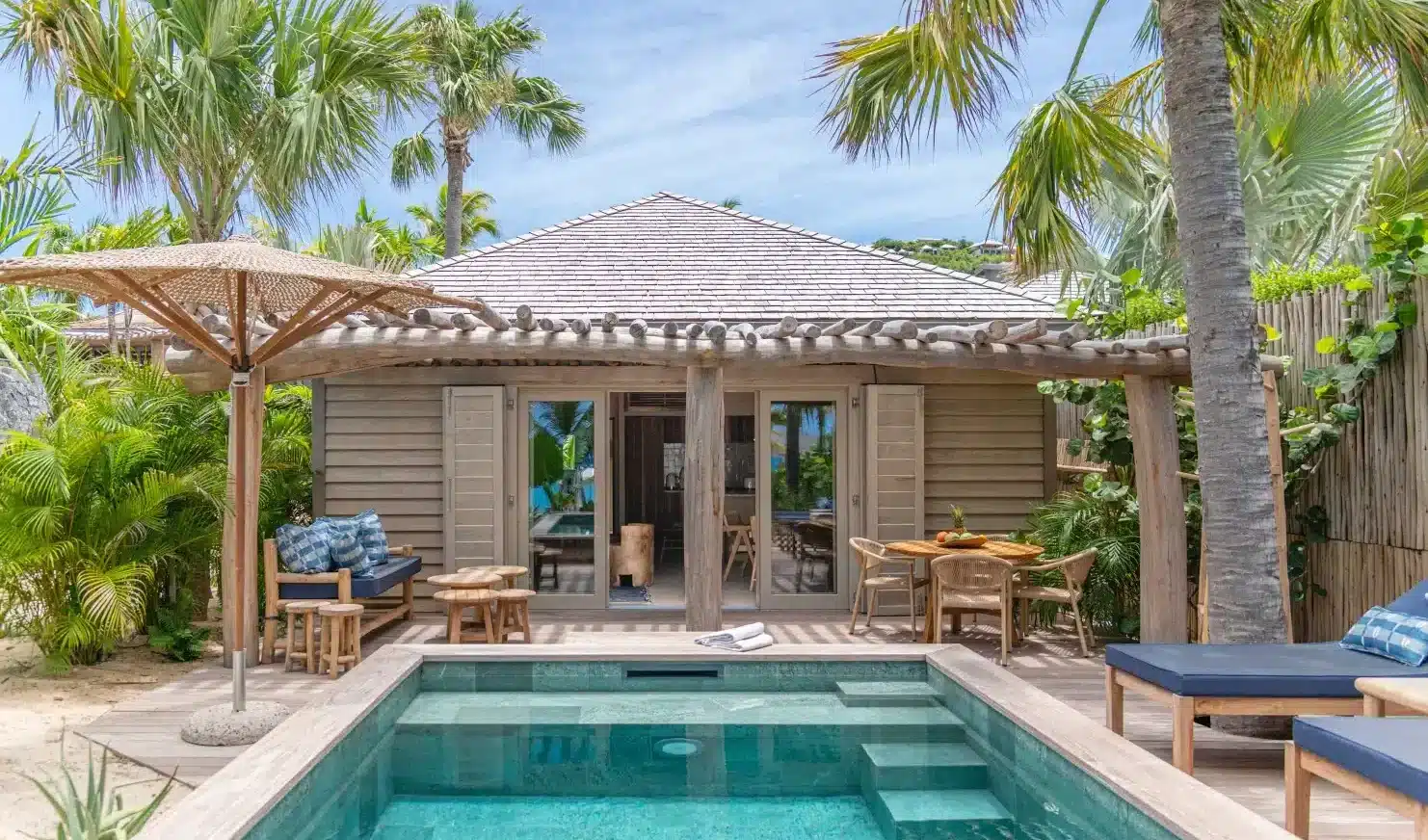
Most Caribbean luxury resorts sell rooms. St Barths sells privacy. The island’s accommodation market is dominated by private villas, most of them with their own pool, their own kitchen, their own staff and their own view of the ocean. There are small boutique hotels, and a handful of larger properties, but nothing that resembles a conventional resort.
This shapes the experience in ways that go beyond the practical. When your villa has a chef, dinner is not a reservation, it is a conversation about what you want to eat. When your pool is yours alone, the beach is a choice rather than a necessity.
The island has built an entire ecosystem around the assumption that its visitors value their own company and expect it to be catered to.
The Clientele Reinforces Itself
St Barths attracts a particular kind of traveller, and that traveller attracts others like them.
The harbour in December fills with superyachts. The beach clubs serve good wine at prices that filter the crowd. The shops in Gustavia stock the kind of brands that require no explanation.
None of this happened by accident, and none of it is maintained without effort. But the result is an island that has held its position at the top of the Caribbean market for decades while others have risen and fallen around it.
What It Actually Delivers
Strip away the mythology and St Barths offers a straightforward proposition. Eight square miles of hilly, beautiful island with outstanding beaches, excellent food and genuine privacy.
The villa model gives it an intimacy that hotels cannot replicate. The runway keeps it from becoming something it was never meant to be. Every element of the island, the constrained access, the absence of large resorts, the clientele it attracts and retains, points in the same direction.
St Barths does not promise exclusivity as a marketing position. It delivers it at the highest level. That is why, decades into the Caribbean luxury market, no other island has convincingly replaced it at the top.