



14 days days
|£4,400

Choosing between Sorrento and Ravello isn’t a small decision. It shapes how you experience the Amalfi Coast entirely. One puts you in the middle of it all, with energy, movement, and constant access. The other lifts you above it, quieter, slower, and more removed.
Sorrento sits at the northern edge of the Amalfi Coast, connected to Naples by the Circumvesuviana rail line and positioned with direct ferry access to Capri, Ischia, and Positano. Its infrastructure is built for movement. A traveller based here can reach multiple destinations in a single day without significant logistical friction. That utility is the point.
Ravello occupies a different position entirely. Set 350 metres above sea level on a ridge above Amalfi town, it has no direct coastal road access and no ferry connections. Reaching the coast requires descending by car or bus to Amalfi, then continuing from there. The town’s elevation and relative isolation are not inconveniences to be managed – they are the defining conditions of staying there.
The decision between them is therefore a question of intent. Do you want to be in the more touristy town with an easy train link to Naples, or do you want to stay in a more atmospheric town that’s slightly harder to access?
Do Not Disturb is a luxury travel company specializing in carefully designed journeys and considered experiences. Each itinerary we build for our clients is informed by real destination knowledge, offering insight into places, cultures, and moments that shape how a trip comes together.
If this destination has sparked ideas, the itinerary can be developed into a private journey tailored to your interests and travel style, with hand-picked stays, thoughtful routing, and experiences curated around what matters most to you.
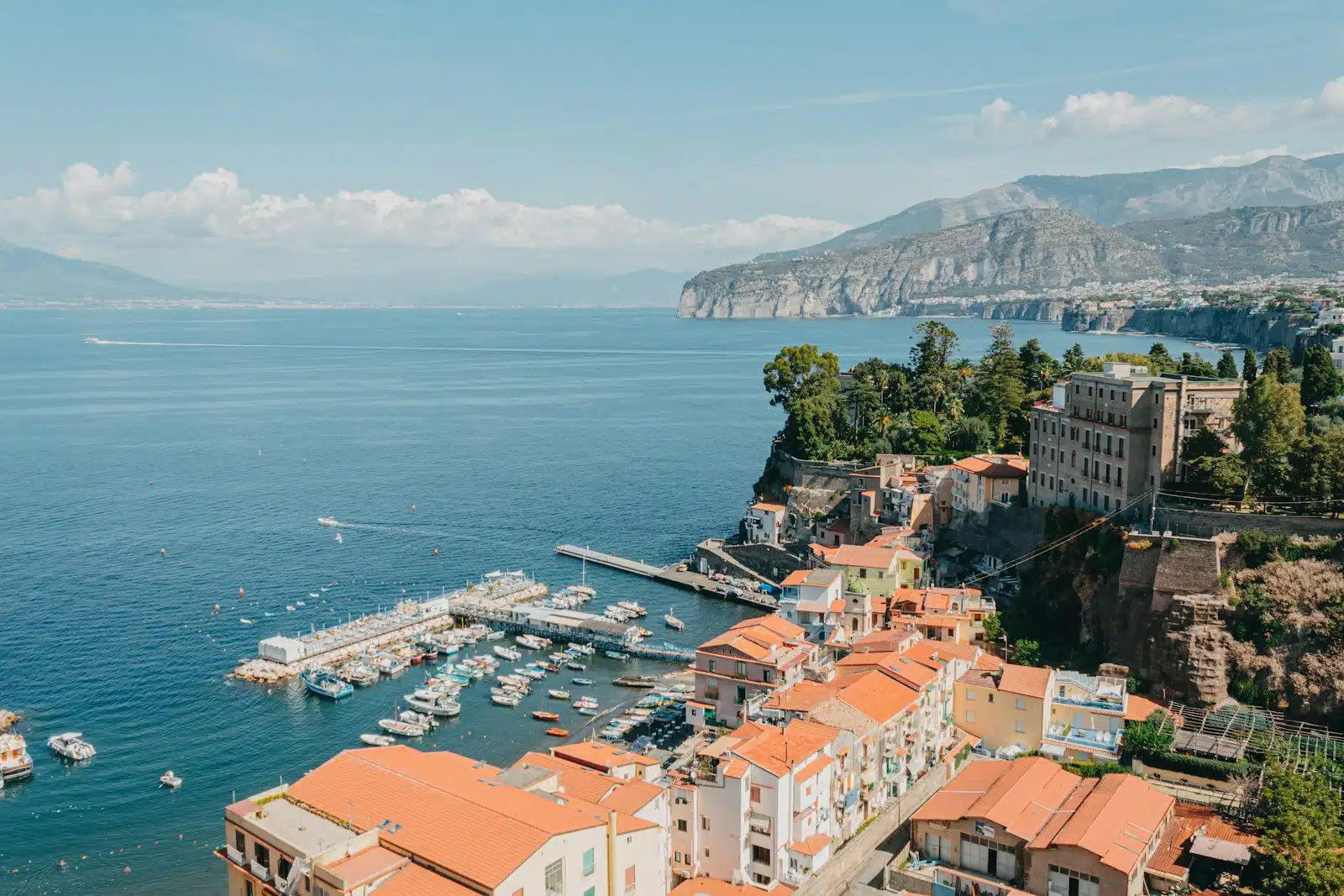
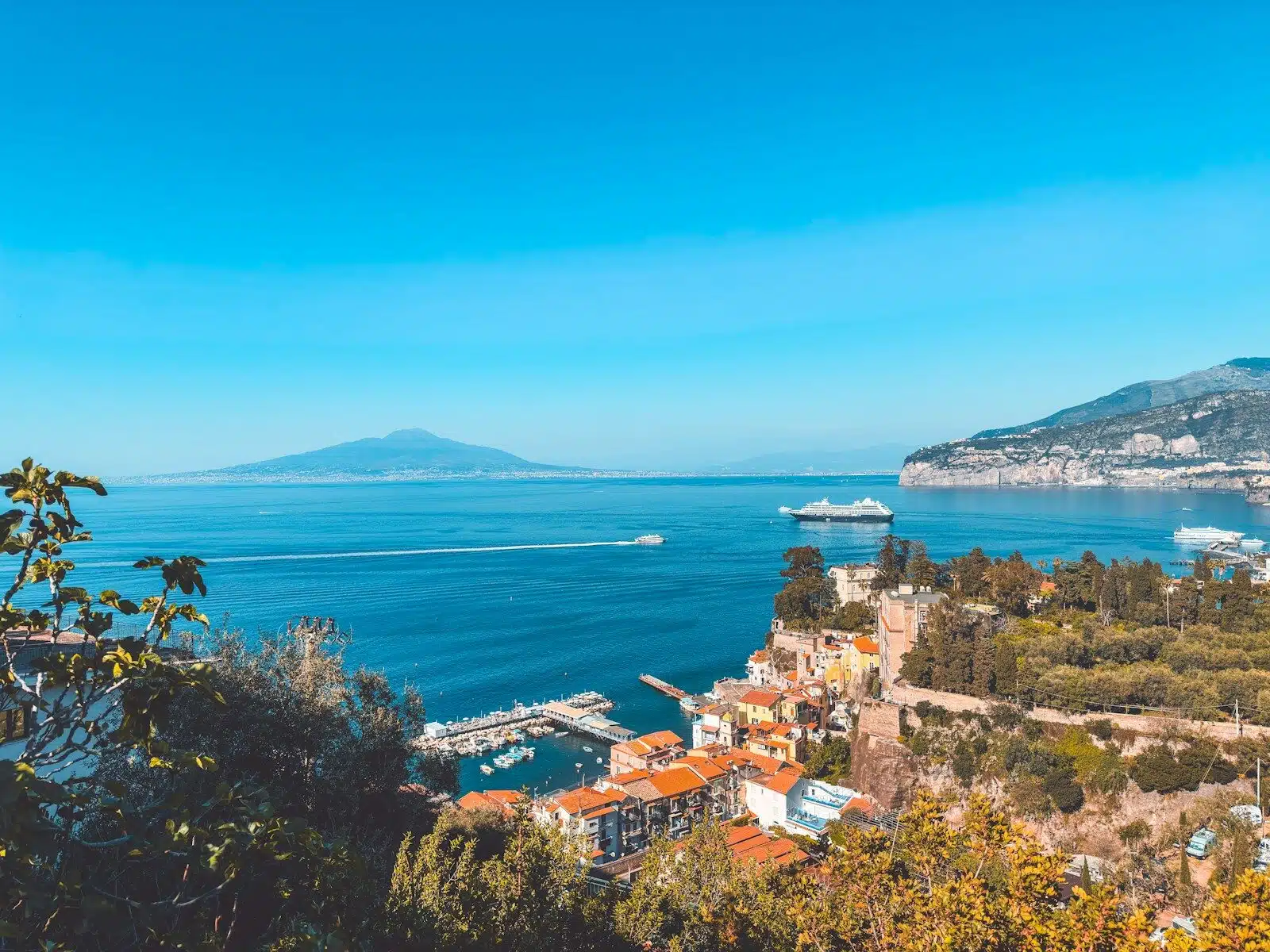
Sorrento sits at the northern edge of the Amalfi Coast, connected to Naples via the Circumvesuviana railway and to Capri, Ischia, and Positano by regular ferry services. This infrastructure makes it the most functional base on the coast for travellers whose itinerary extends beyond a single destination. Pompeii is under thirty minutes by rail. Naples, with its museums, markets, and airport, is less than an hour.
The town itself has a working urban structure that Ravello lacks entirely. A historic centre with established restaurants, independent shops, and a defined piazza culture means Sorrento functions as a destination in its own right, not only as a point of access. That distinction matters for travellers who want engagement with daily Italian life alongside coastal scenery.
The trade-off is density. Sorrento receives significant tourist volume, and its position on the Bay of Naples rather than within the Amalfi Coast proper gives it a different character that’s broader in scope, but less singular in setting.
14 days days
|£4,400
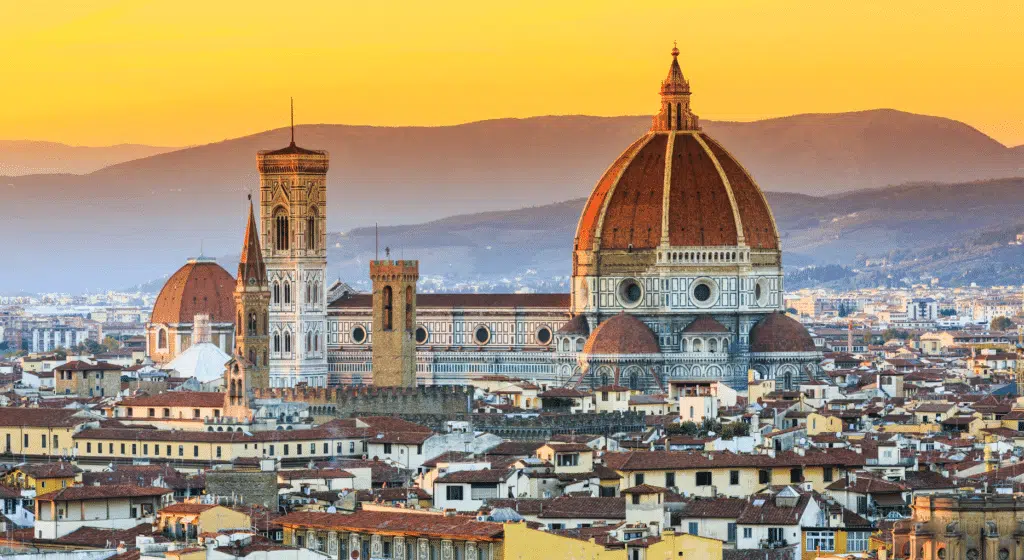
14 days days
|£5,135
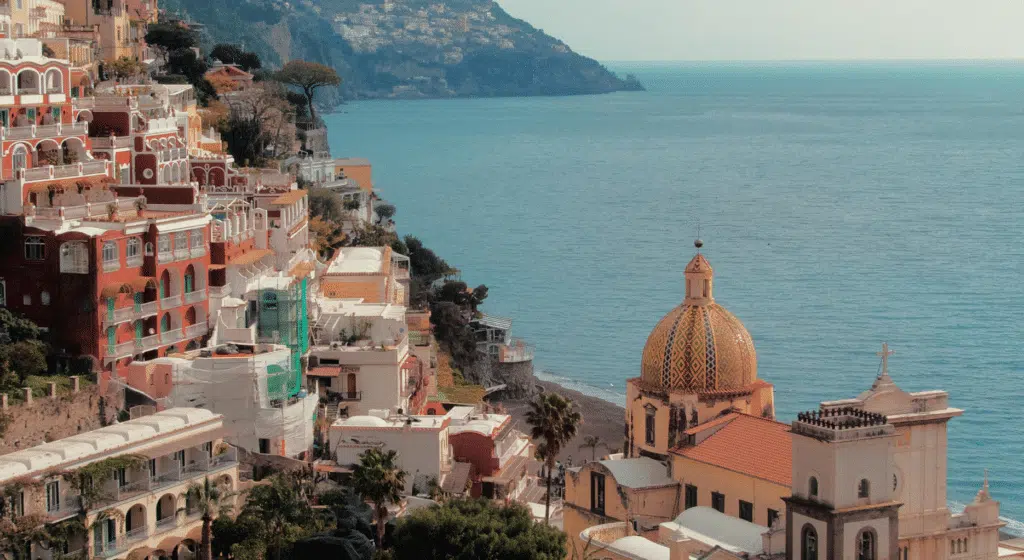
12 days
|£3,740
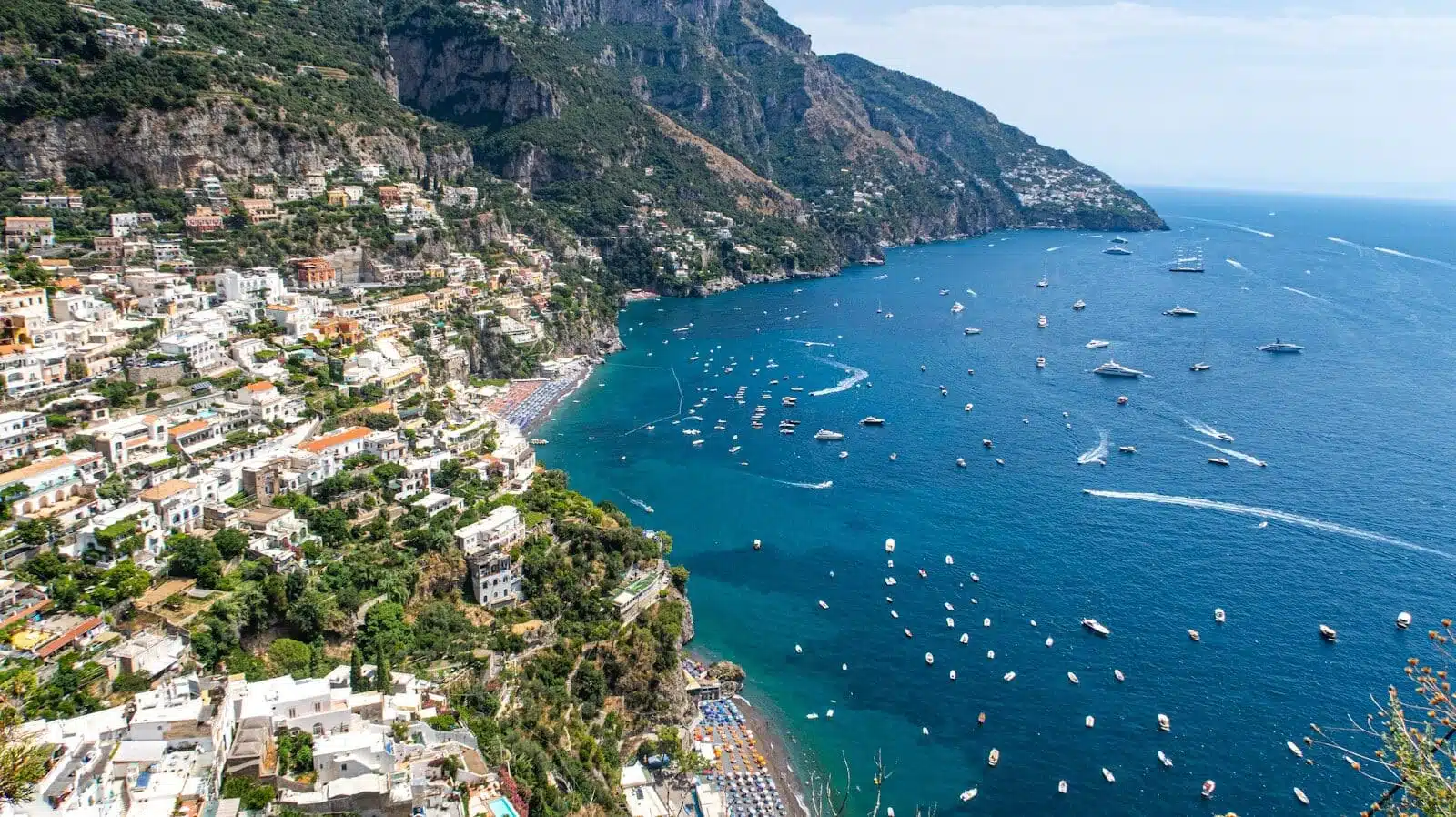
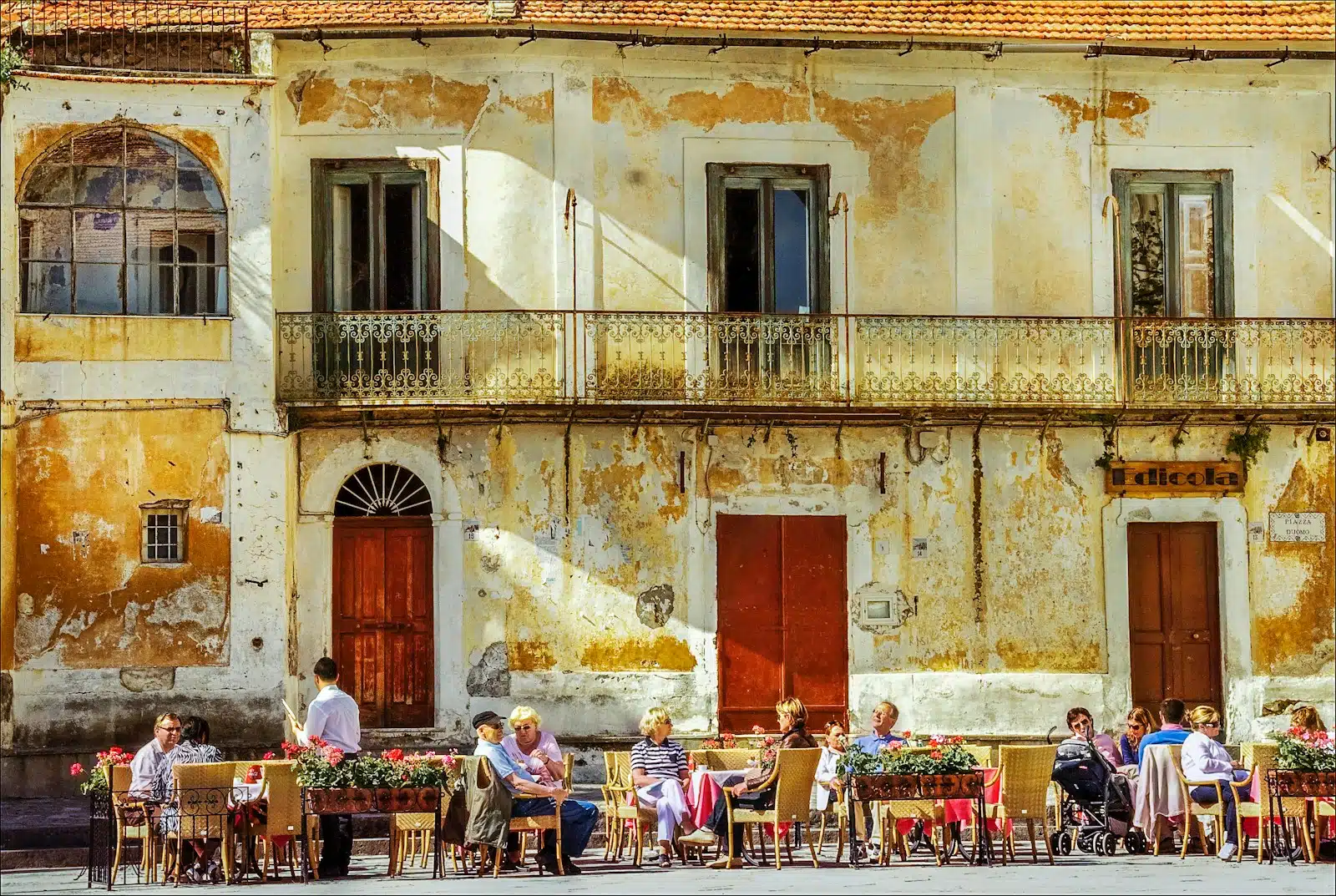
Ravello sits roughly 350 metres above sea level, connected to the coast by a single road that climbs through Scala and requires either a private transfer or a series of coordinated connections. That physical remove is the defining condition of the town. Visitors who arrive without a plan for movement will find themselves effectively stationary.
What the altitude returns is a sense of peace and a town that has remained largely unchanged in scale and character for decades. Ravello’s association with figures such as Wagner, D.H. Lawrence, and Gore Vidal was not coincidental; the town offered productive distance from the more trafficked coastal strip below. That reputation has shaped the kind of cultural infrastructure that exists here, including Villa Cimbrone, Villa Rufolo, and the annual Ravello Festival among them.
Ravello is not a base for exploring the coast. It is a destination chosen for its own terms, and the decision to stay here requires clarity about what the trip is actually for.
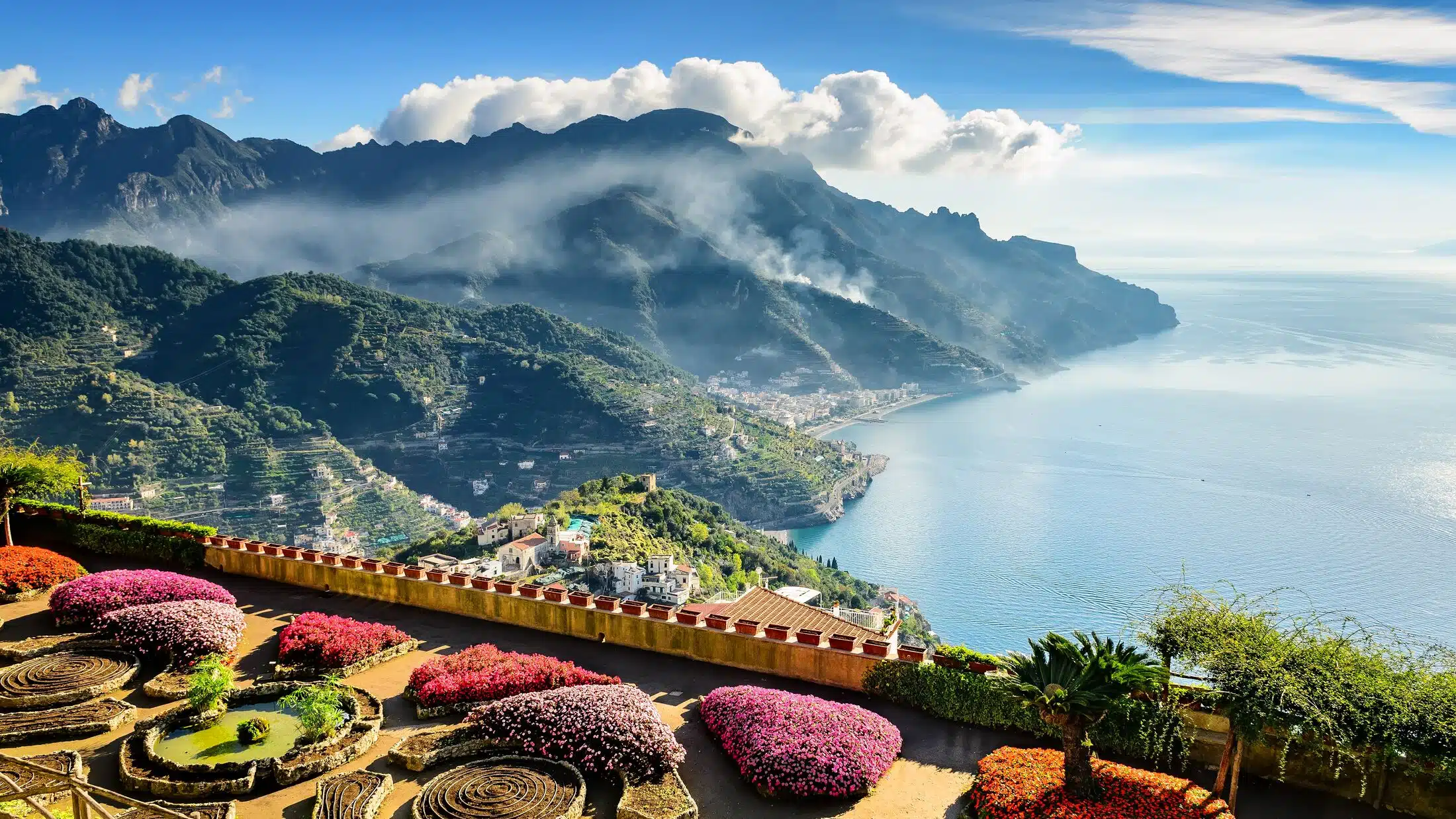
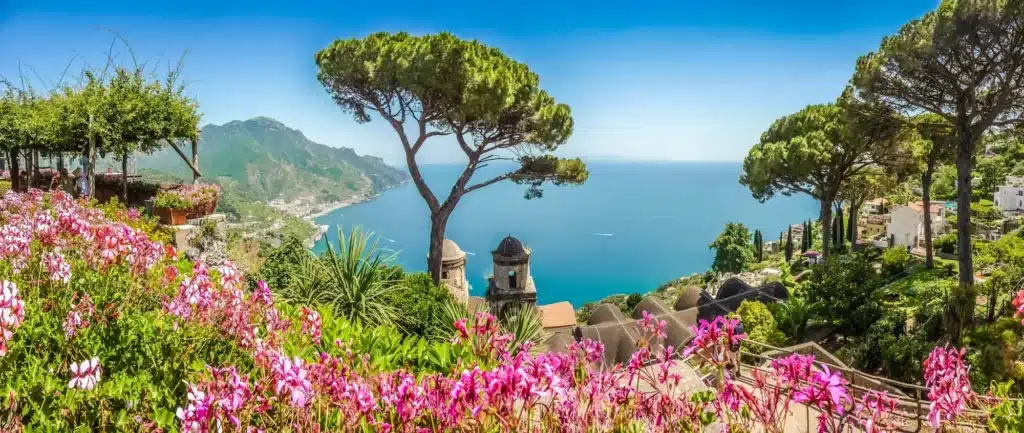
Ravello’s two principal gardens function as cultural sites rather than ornamental ones. Villa Cimbrone’s belvedere sits at roughly 350 metres above sea level, offering an unobstructed view across the Tyrrhenian that has made it one of the most referenced vantage points on the coast. Villa Rufolo, dating to the 13th century, provides the architectural context for Ravello’s broader cultural identity and serves as the primary venue for the Ravello Festival.
The Ravello Festival is the defining event in the town’s calendar and a primary reason culturally motivated travellers time visits deliberately. Held across the summer months, it draws internationally recognised orchestras, conductors, and soloists to an open-air stage positioned directly above the sea.
Sorrento’s hotel stock is anchored by large, historic properties built on clifftop terraces above the marina. These are full-service hotels with multiple restaurants, pools, and conference infrastructure, designed to accommodate volume. Rates are competitive by Amalfi Coast standards, and the concentration of options across different price points means the town functions as a practical base for a range of budgets.
Ravello operates on a different scale. The Belmond Hotel Caruso and Villa Cimbrone represent the ceiling of what’s available: small, historically significant properties with limited room counts and rates that reflect both exclusivity and restricted supply. There are no large resort hotels. Availability, particularly in peak season, is constrained, and the properties that define the town’s reputation require planning well in advance.
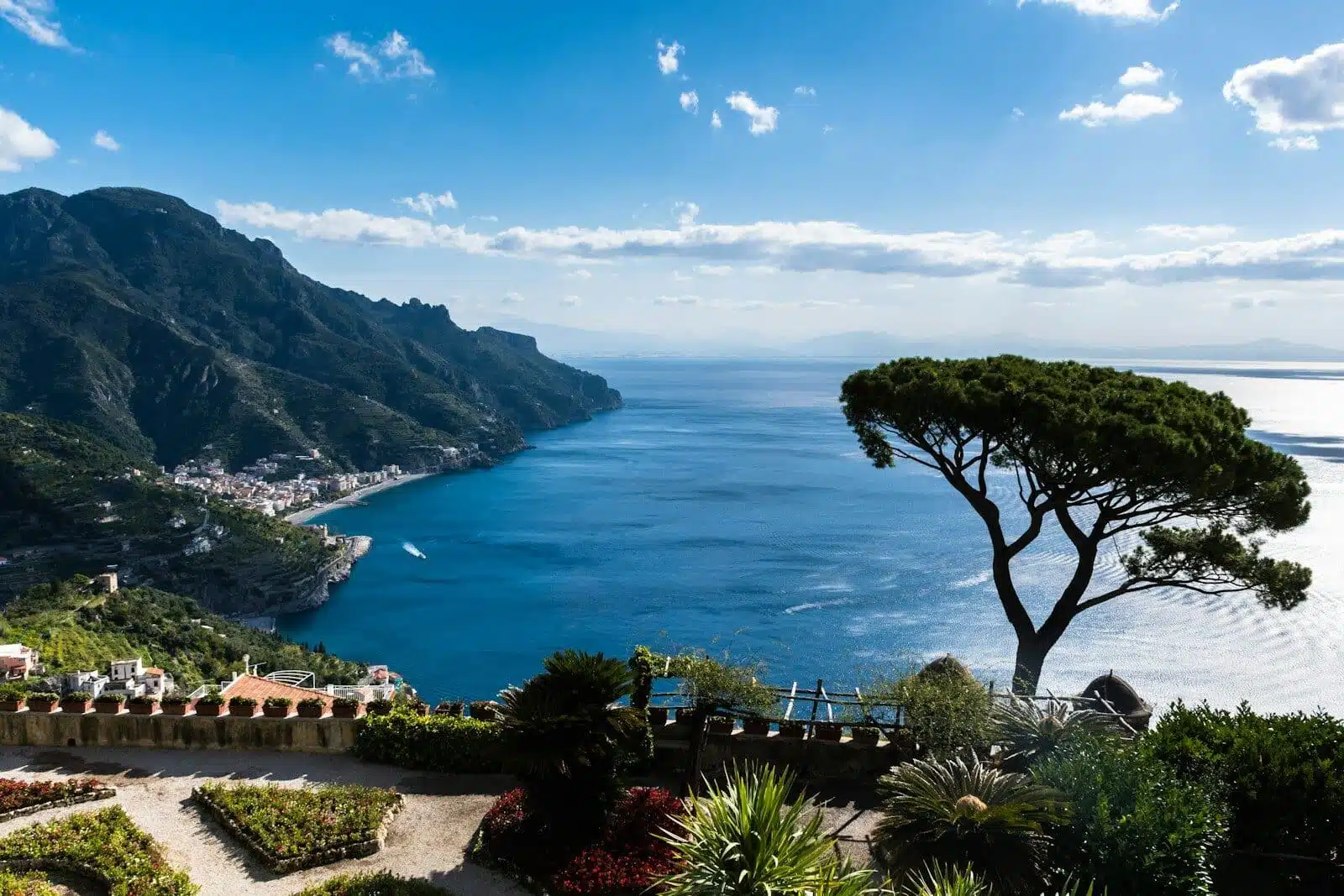
Sorrento is the correct base for travellers whose primary objective is the Amalfi Coast itself. Its rail connection to Naples, ferry access to Capri and Positano, and position at the western end of the SS163 make it structurally superior for multi-destination itineraries. The town functions as a hub, and its accommodation infrastructure reflects that purpose.
Ravello is the correct choice when the destination is the point. It sits above the coastal circuit rather than within it, and reaching other towns requires deliberate effort. That constraint is also its value: the town rewards travellers whose itinerary is built around cultural experiences rather than coastal movement.
The distinction is logistical before it is experiential. Travellers who conflate the two risk choosing a base that works against their own itinerary. The decision should be made at the planning stage, and it should be made with a clear account of how each day is actually intended to be spent.
Speak to Do Not Disturb’s luxury travel experts and turn this moment into something personal.
Related destinations
Suggested articles









Tell us how you want to feel, we’ll take it from there.
“Our trip was truly magical and full of core memories that will last us a lifetime.”
Michael • Bora Bora Honeymoon

“We just returned from an incredible journey through Ireland, and we couldn’t have had a better experience”
Brad • Ireland Adventure
“This was a flawless experience right from the beginning, we had so many thoughts and ideas flowing around and they took all of them and perfectly curated the most beautiful honeymoon for us.”
Kris • Sicily Honeymoon
 5 min read
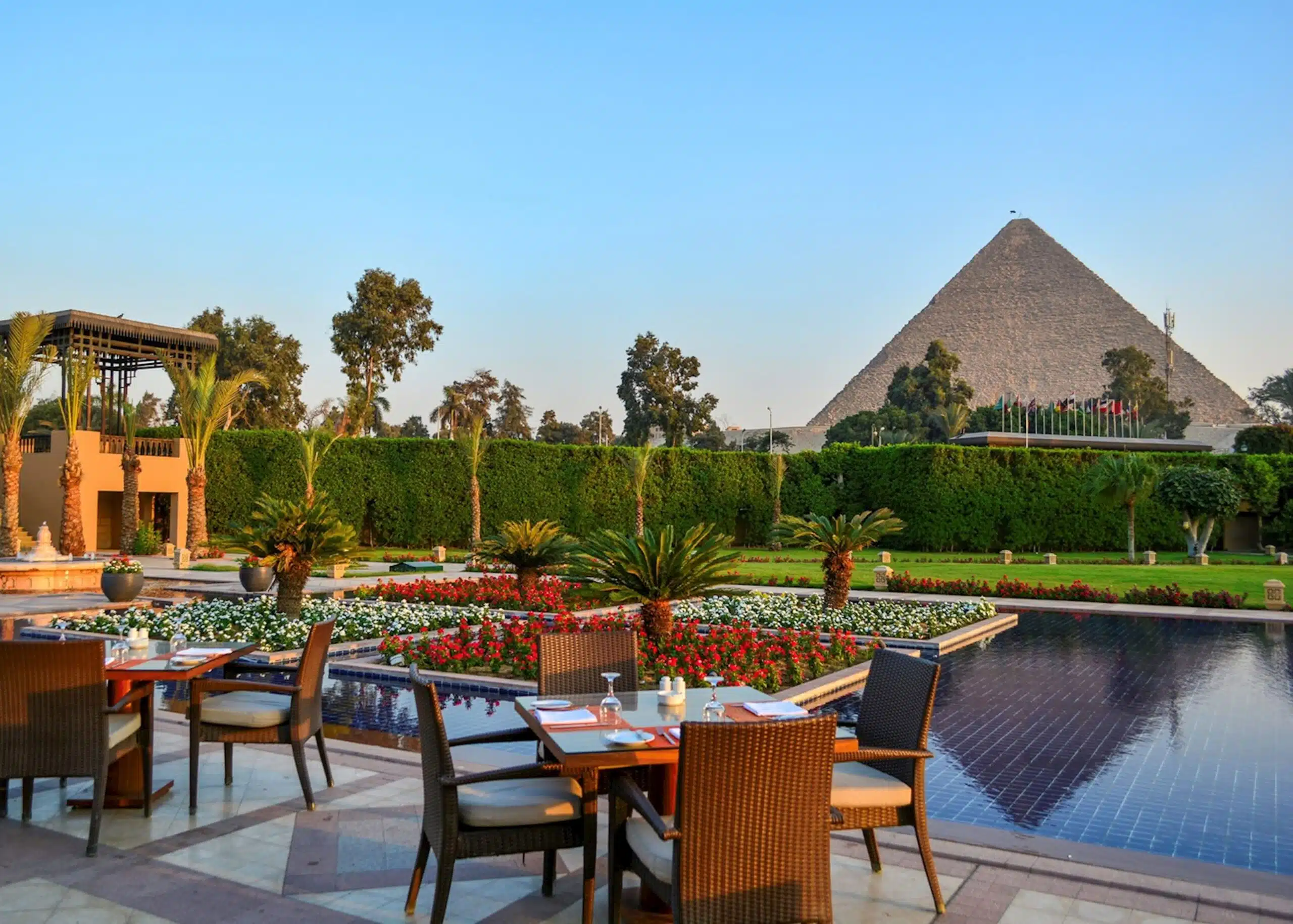
Discover Cairo in luxury, from the Pyramids of Giza and the Grand Egyptian Museum to Islamic Cairo, exceptional hotels, private guides, and expertly planned days.
 6 min read
Ancient Egypt is best experienced along the Nile, where temples, tombs and desert landscapes still make the past feel remarkably close.
 5 min read
To travel through Egypt in pursuit of Cleopatra is to move between three distinct worlds – a Mediterranean port city, a capital layered with millennia of conquest, and a river that made all of it possible. This is not a journey through myth but through the history of a ruler whose Egypt can just about […]
 4 min read
“The Maldives islands luxury resort scene spans private-island retreats across a dozen atolls, each with its own pace, style, and reason for being there. This guide covers a set of standout properties opening over 2026 and 2027, alongside a few already open or returning after a period of closure.
Planning your trip should feel effortless.
You share what matters, whether it’s a destination, a feeling, or a moment worth celebrating.
Your dedicated expert shapes a thoughtful, private itinerary tailored entirely around you.
Every detail handled. Every moment considered. Support before, during, and after your journey.

Answer a few quick questions and we’ll craft a journey as unique as your state of mind.
Ask us anything.
