

Getting to a Maldivian resort requires at least one additional transfer after landing at Velana International Airport, and the method you take shapes the arrival experience as much as the destination itself. Understanding how seaplanes, speedboats, and domestic flights operate, and how each interacts with international arrival times, luggage limits, and resort location, is essential before you book.
Why the Transfer Decision Matters More Than Most Travelers Expect
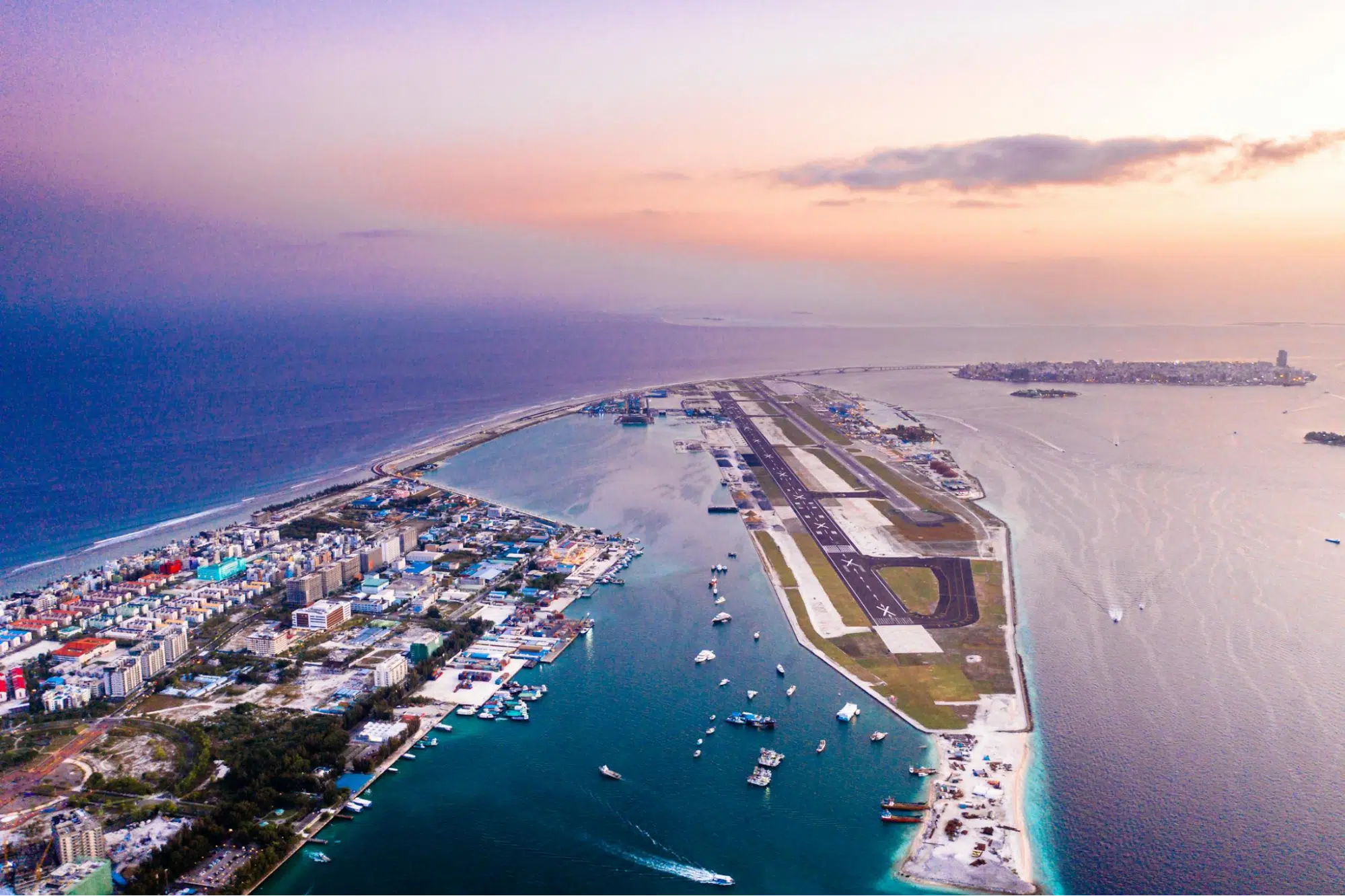
The Maldives is an archipelago of more than 1,000 islands spread across the Indian Ocean. Velana International Airport serves as the single entry point for international arrivals, but most resorts are not on the same atoll or even within the same atoll cluster. The transfer is not a formality; it’s a structural part of the journey with its own scheduling logic, cost implications, and constraints.
Each of the three transfer types, seaplane, speedboat, and domestic flight, operates within a distinct set of rules. Seaplanes are daylight-only and subject to weather holds. Speedboats cover shorter distances but are limited by sea conditions and journey time. Domestic flights connect to regional airports on outer atolls, requiring an additional speedboat leg in most cases. These aren’t interchangeable options.
The method used for Maldives transfers is often determined by resort location rather than traveler preference, which makes understanding the system a prerequisite for planning an itinerary that functions in practice.
About Do Not Disturb
Do Not Disturb is a luxury travel company specializing in carefully designed journeys and considered experiences. Each itinerary we build for our clients is informed by real destination knowledge, offering insight into places, cultures, and moments that shape how a trip comes together.
If this destination has sparked ideas, the itinerary can be developed into a private journey tailored to your interests and travel style, with hand-picked stays, thoughtful routing, and experiences curated around what matters most to you.
Seaplane Transfers: The Constraints Behind the Iconic Arrival
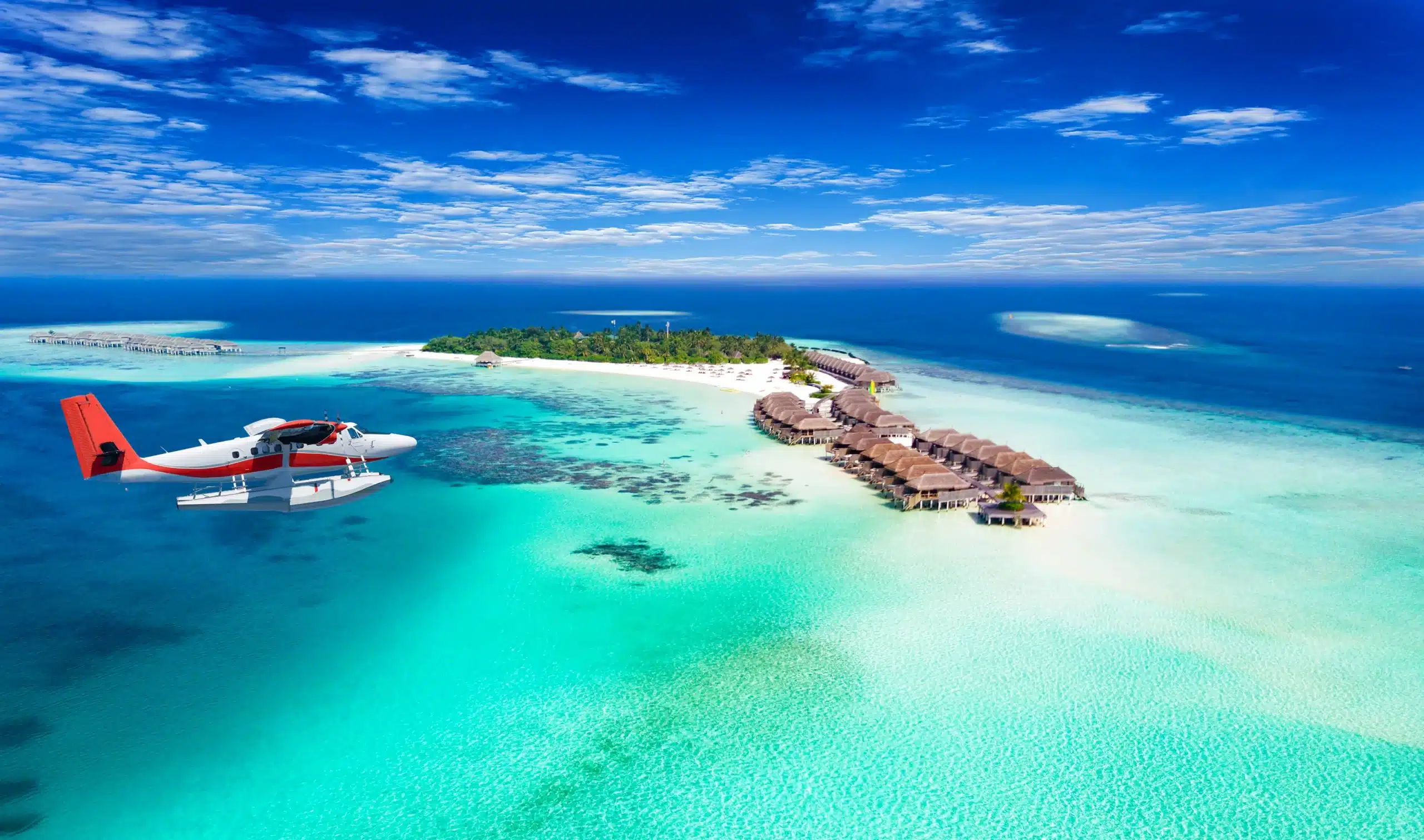
Seaplanes operate exclusively during daylight hours, with the exact window shifting slightly by season. Flights typically take between 20 and 45 minutes depending on the resort’s atoll, and departures are scheduled in coordination with each property. International flights that land in Malé in the evening will miss this window entirely, requiring an overnight stay before the transfer can proceed.
Luggage restrictions are a practical constraint that affects packing decisions. Most operators enforce a modest per-person weight allowance, and bags must be soft-sided to fit within the aircraft’s hold. Hard-shell suitcases aren’t accepted. Excess luggage can often be stored in Malé and transferred separately, though this requires advance coordination.
Seaplane access isn’t uniform across resorts. Some properties are served exclusively by seaplane due to their distance from Malé, while others offer it as one option among several. Which atolls are reachable, and under what scheduling conditions, depends on factors that vary by resort and season.
Speedboat Transfers: Flexible but Demanding
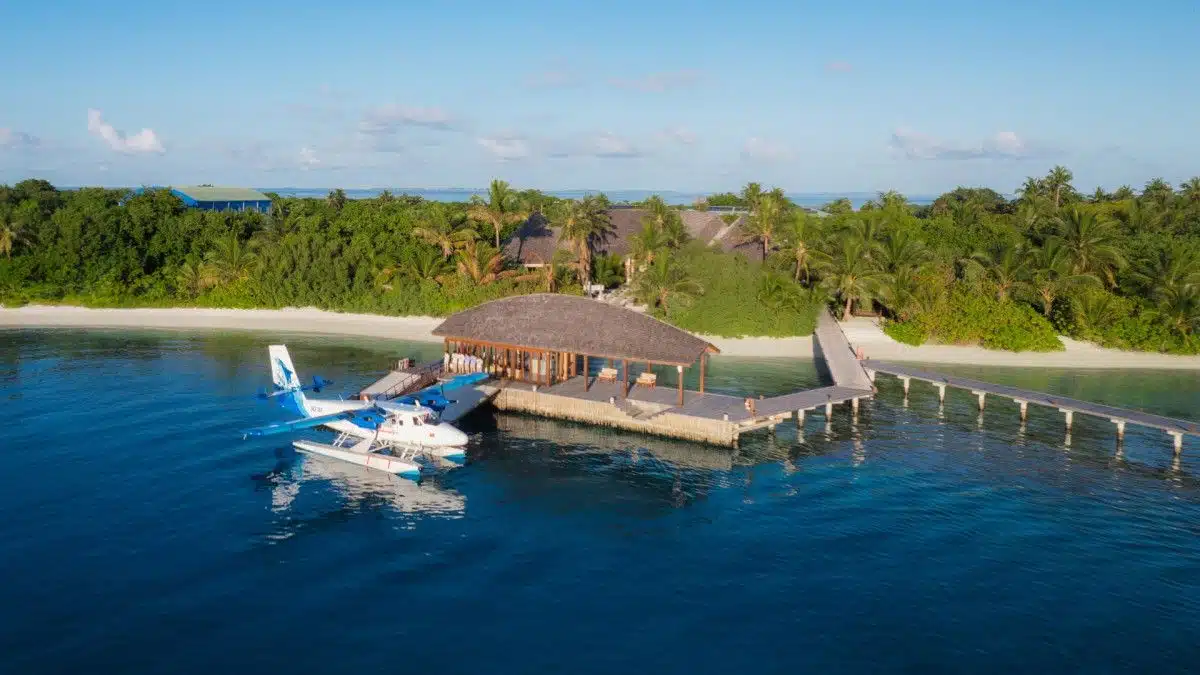
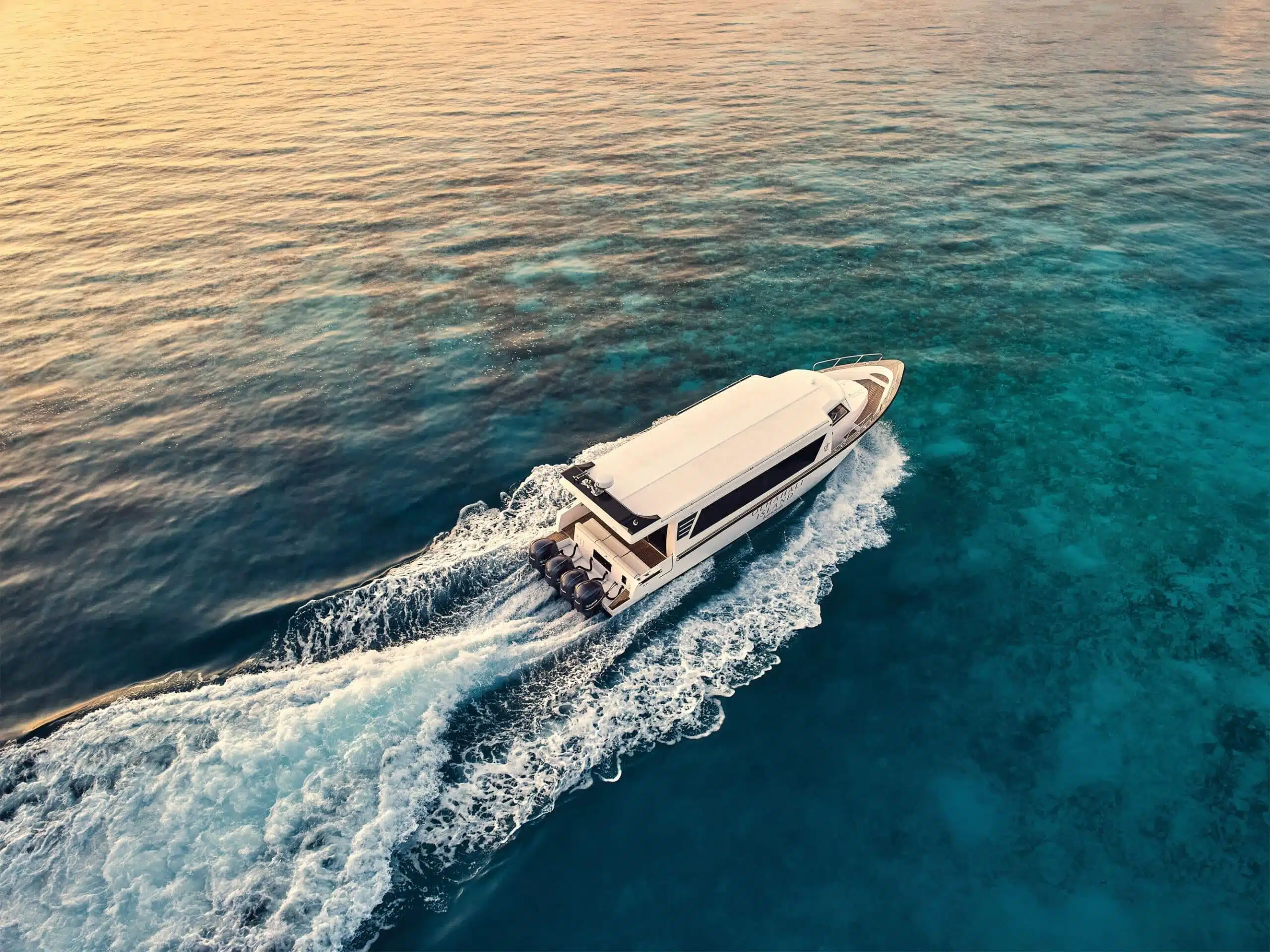
Speedboat transfers operate around the clock, making them the only viable option for travelers arriving on late-night international flights. Unlike seaplanes, they aren’t constrained by daylight or weather-related ground stops, which gives them a practical advantage for itineraries built around long-haul connections.
Journey times vary significantly depending on resort location. Transfers within North Malé Atoll can take as little as 20 minutes, while resorts in more distant atolls may require crossings of 90 minutes or more. The boats travel across open water rather than through sheltered lagoons, and during the wet season, from May to October, swells can make longer crossings uncomfortable. This is a relevant consideration for travelers with motion sensitivity or those with young children.
Speedboats accommodate most standard luggage without the weight restrictions that apply to seaplanes, though individual resort policies differ. Transfers are typically coordinated through the resort rather than arranged independently, and the quality of the vessel and crew varies between properties.
Domestic Flights: The Overlooked Middle Option
Domestic flights operate from Velana International Airport’s domestic terminal to regional airports across the outer atolls. Flights run on small turboprop aircraft, with journey times typically ranging from 25 to 45 minutes depending on the destination atoll. Luggage allowances are generally lower than international standards, and strict enforcement is common.
This transfer method functions as a bridge rather than a complete solution. Resorts served by domestic flight connections require a final speedboat leg from the regional airport, adding meaningfully to the total journey. The combined transfer time can match or exceed a direct seaplane flight from Malé, though domestic flight combinations aren’t subject to the same daylight restrictions that limit seaplane scheduling.
The practical advantage is reliability across a wider operational window, making this route relevant for itineraries where international arrival times or atoll distance make a direct seaplane connection unworkable.

How International Flight Timing Affects Every Transfer Decision
Seaplanes in the Maldives operate under visual flight rules, which means they can’t fly after dark. Most long-haul flights from Europe, the Middle East, and Asia arrive at Velana International Airport between midnight and early morning, making same-day seaplane connections impossible regardless of resort distance. This isn’t an exception; it’s the default condition for the majority of international arrivals.
Travelers with seaplane-access resorts must account for this gap in advance. The standard options are an overnight stay in Malé or at an airport transit hotel, followed by a morning seaplane departure, or a reconfigured itinerary that routes the first night through a speedboat-access property. Neither option is inherently better, but each has implications for luggage handling and the overall structure of the trip.
Speedboat transfers operate at night and aren’t subject to the same restrictions, which makes them the default arrival method for resorts within practical range of Malé. For resorts beyond that range, the timing of the international flight is a primary factor in how the transfer sequence should be structured.
Cost, Luggage, and What to Confirm Before You Arrive
Transfer costs and inclusions vary significantly by method, resort, and season, and figures quoted anywhere online should be treated as a starting point rather than a fixed number. This is one of those details worth working through directly rather than guessing at: our experts can talk you through the current costs, inclusions, and luggage policy for your specific resort and route before you commit to anything.
Luggage restrictions are where most disruptions occur. Seaplanes enforce the strictest allowance of the three transfer types, with excess baggage typically stored in Malé until return. Speedboats and domestic flights are more permissive, though neither is without limits.
Before departure, confirm your transfer method and whether it’s included in your rate, the luggage policy specific to your route, and your international arrival window relative to seaplane operating hours. These details aren’t standardized across resorts, and assumptions made at the booking stage frequently cause avoidable complications on arrival day.
Plan your own version of this journey
Speak to Do Not Disturb’s luxury travel experts and turn this moment into something personal.
Related destinations
Suggested articles

The Best Honeymoon Destinations for LGBTQ+ Couples

The Most Romantic Train Journeys for a Slow Honeymoon

Where to Go On Honeymoon? A Guide to Help You Choose

Multi-Destination Honeymoons: The Best Pairings for Two Distinct Locations
The Cost of All-Inclusive in the Maldives: Is It Worth It?

Maldives Villa Guide: Beach vs. Overwater

How to Choose the Right Maldives Resort For You

How to Choose a Family-Friendly Maldives Resort

Christmas in the Maldives: What to Expect and is it Worth It

The Best Maldives Resorts for Honeymoons

Maldives vs French Polynesia: Best Honeymoon Destination?

The Maldives Beyond the Villa: Best Activities

Maldives vs Bali for a luxury honeymoon