


On this page
Ritz-Carlton didn’t enter yachting to build bigger ships. They entered to prove that service architecture matters more than square footage. On Luminara, that difference becomes impossible to ignore.
The maritime luxury market didn’t need another yacht. It needed a luxury hotel brand that understood service architecture applied to 794 feet of floating steel and engineering. The Ritz-Carlton Yacht Collection’s third superyacht, Luminara, arrived in July 2025 with something that distinguishes it fundamentally from competing operators: a corporate infrastructure built over a century of hospitality, now mobilized for yacht operations.
The yacht accommodates 452 passengers across 226 suites, all with private terraces, supported by 374 crew members. That nearly 1 to 1 ratio of staff to guests fundamentally changes what’s operationally possible on a ship. This isn’t a question of whether Ritz-Carlton can compete in ultra-luxury yachting. It’s a question of why they entered the space at all, and more interestingly, whether they’ve actually solved problems that traditional yacht operators never could.
The Vessel Itself
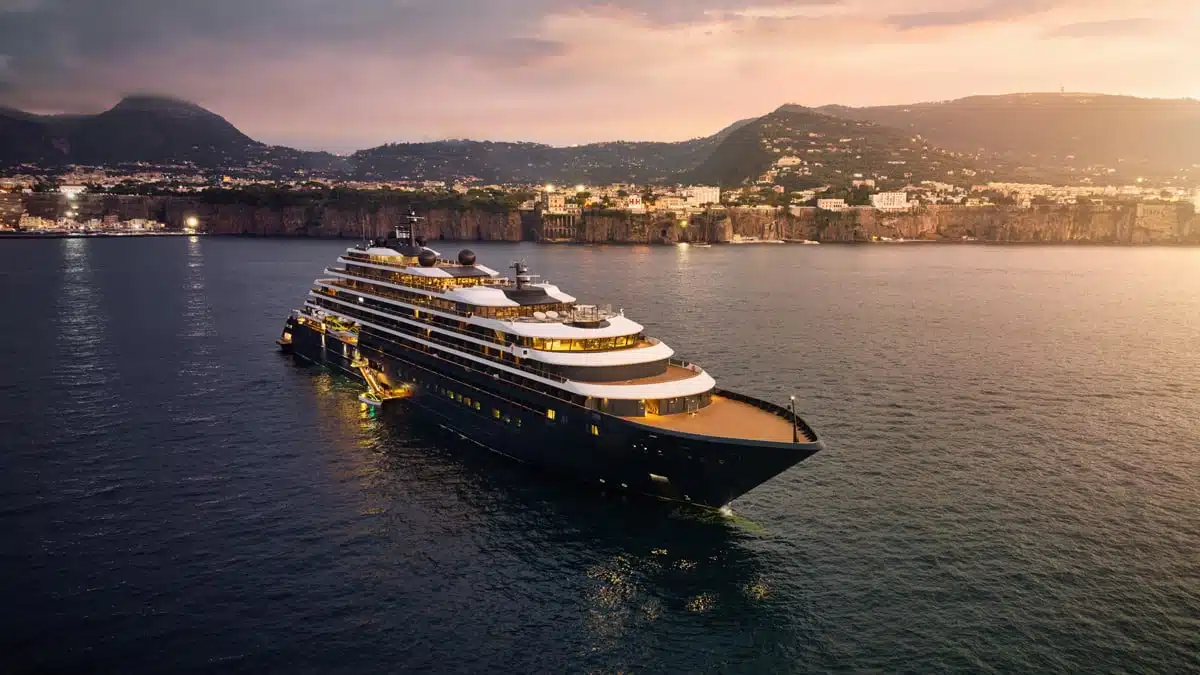
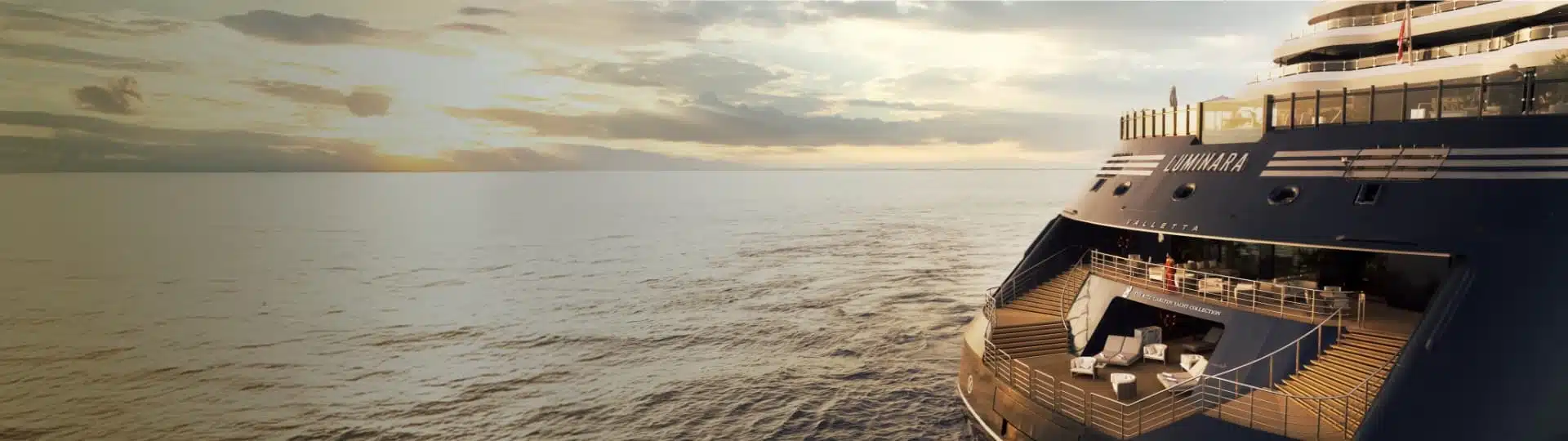
Luminara spans 794 feet and represents the second generation of Ritz-Carlton’s yacht design philosophy, following Evrima (624 feet, 298 passengers) and Ilma (790 feet, 448 passengers). The ship claims the highest space ratios at sea, which translates to staterooms that feel aggressively spacious in an industry where square footage remains aggressively limited.
The Owner’s Suites reach 1,076 square feet. Even standard Terrace Suites offer more breathing room than you’d find on competing ultra-luxury vessels from Regent Seven Seas or Seabourn. Every suite opens to a private balcony, a detail that sounds simple until you’re comparing pricing against yachts where “suite with ocean view” still means a window.
The design language prioritizes contemporary restraint over theatrical drama. Public spaces were designed by Chapi Chapo Design Luxury Division, suites by AD Associates, and exterior architecture by Finnish firm Aivan. The palette centers on walnut wood, Italian marble, soft blues, and warm greys.
The interiors avoid the gilt-and-mahogany aesthetic that dominates some luxury yacht design, leaning instead toward the sophisticated minimalism that has defined contemporary Ritz-Carlton properties in places like Tokyo and Barcelona.
The Art and Aesthetic
Luminara’s art collection contains 731 pieces, approximately 65 percent of which were specifically commissioned for the vessel. The collection includes works by Paul Klee, David Hockney, Alexander Calder, Henri Matisse, Gerhard Richter, and Andy Warhol.
A suspended light sculpture spans seven stories through the aft staircase atrium. This level of artistic curation isn’t typical for any ship, yacht or otherwise. Most luxury vessels include fine art as window dressing. Luminara treats the art collection as a legitimate design component that required curatorial expertise and curatorial investment. That distinction matters, because it reveals how a luxury hotel brand approaches the problem differently than a ship operator would.
The Dining and Culinary Program
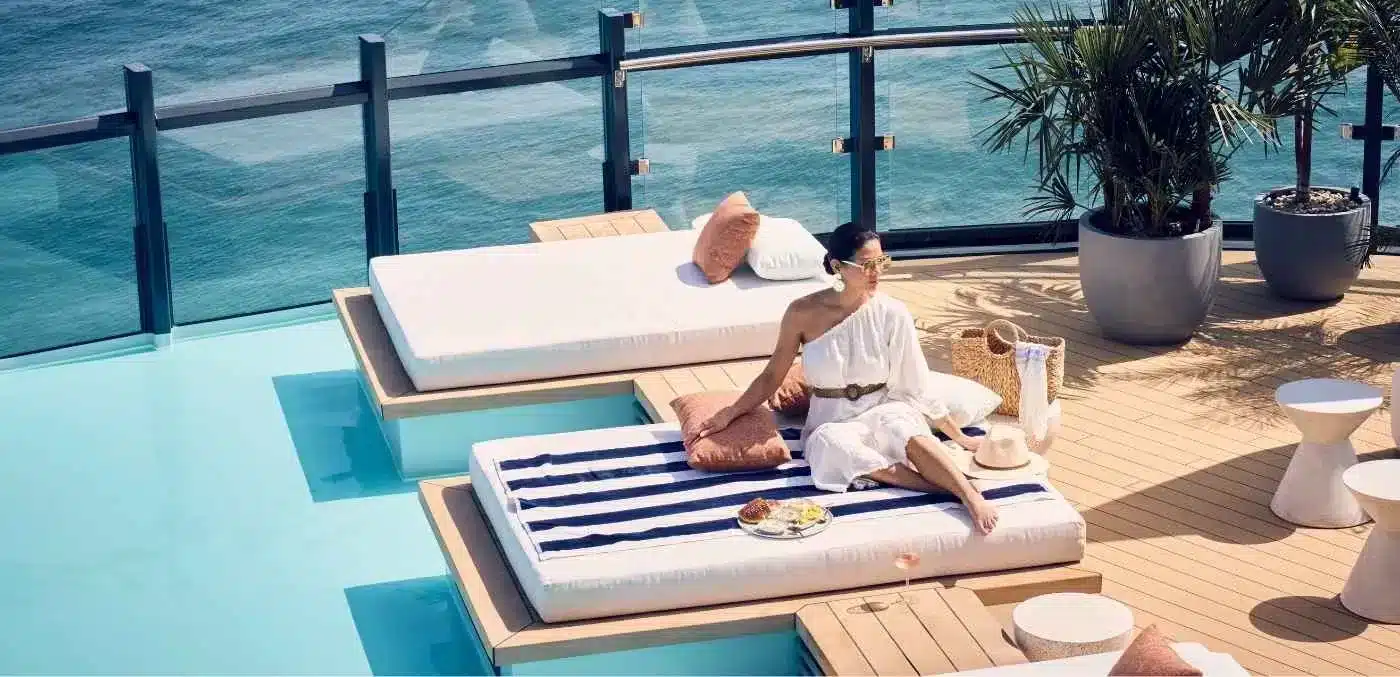
The yacht features five distinct dining venues, two of them shaped by James Beard Award winners and Michelin-starred chefs Fabio Trabocchi and Michael Mina. Seta su Luminara offers an eight-course tasting menu of modern Italian cuisine loosely inspired by Venice’s spice trade.
Beach House, created by Mina, emphasizes Middle Eastern and Mediterranean flavors rooted in his Egyptian heritage. Additional venues include Haesu Bit (pan-Asian, incorporating flavors from the yacht’s Asia-Pacific itineraries), Mistral (Mediterranean coastal dining), and Azur (regionally influenced seasonal cuisine).
This represents fundamental differentiation from competing yacht operators. Regent Seven Seas and Seabourn operate excellent dining programs, but their chef partnerships typically don’t include Michelin-starred talent.
The fact that Ritz-Carlton could negotiate these partnerships relates directly to their corporate leverage as a Marriott subsidiary and their existing relationships with world-class chefs through their hotel portfolio. A traditional yacht operator wouldn’t have that negotiating power.
Retail and Luxury Programming
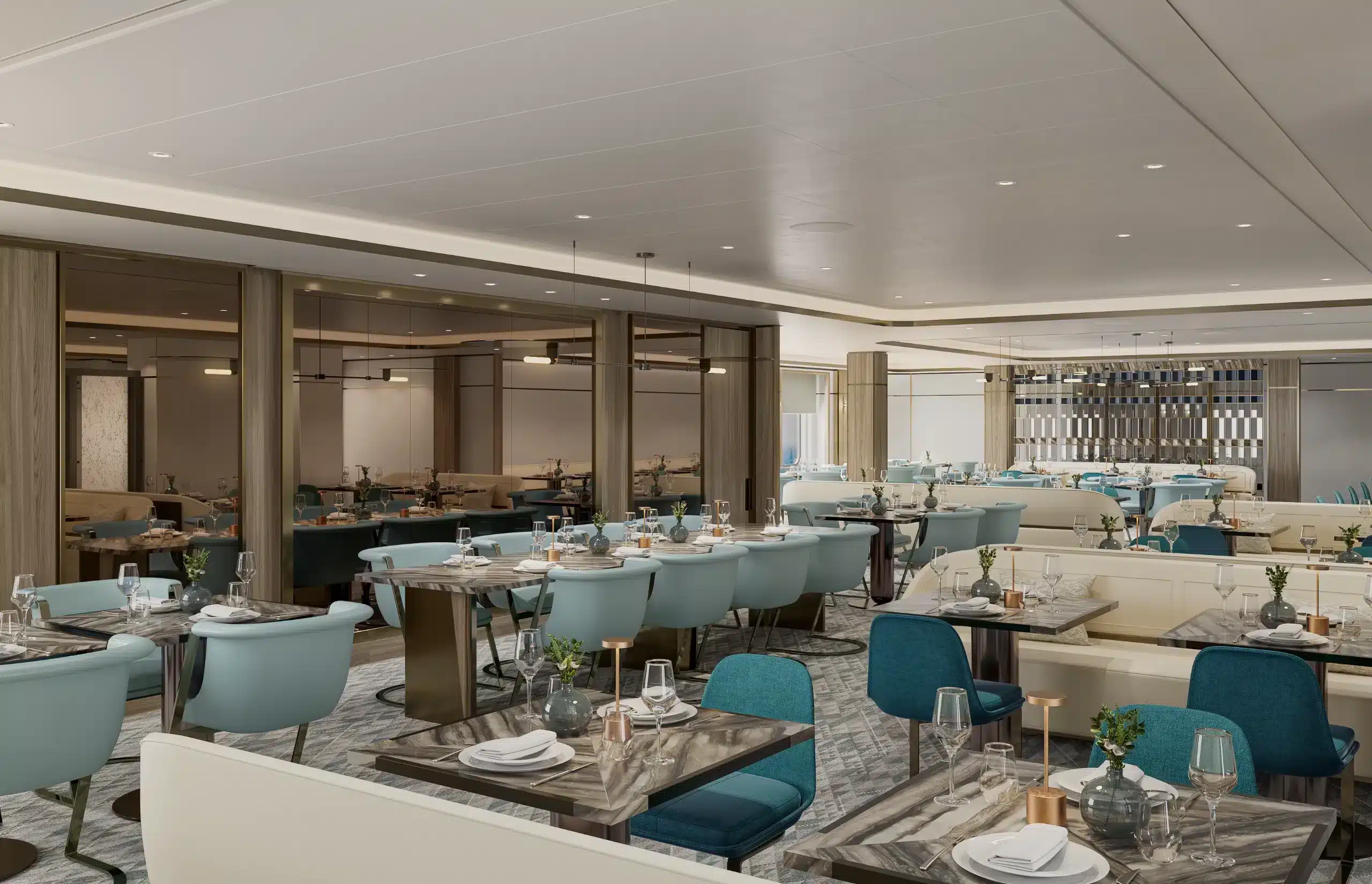
Luminara’s retail spaces feature Cartier, Piaget, and IWC Schaffhausen, all making their debut with the Ritz-Carlton Yacht Collection. The boutique carries Lululemon co-branded apparel, vintage Hermès pieces, Stella McCartney bags, and merchandise from designers like Johanna Ortiz and Orlebar Brown.
The curation treats retail as amenity rather than afterthought, which again traces to the brand’s luxury positioning. A guest can step off the yacht in Cannes and step into retail spaces that don’t feel incidental.
The Marina and Water Access
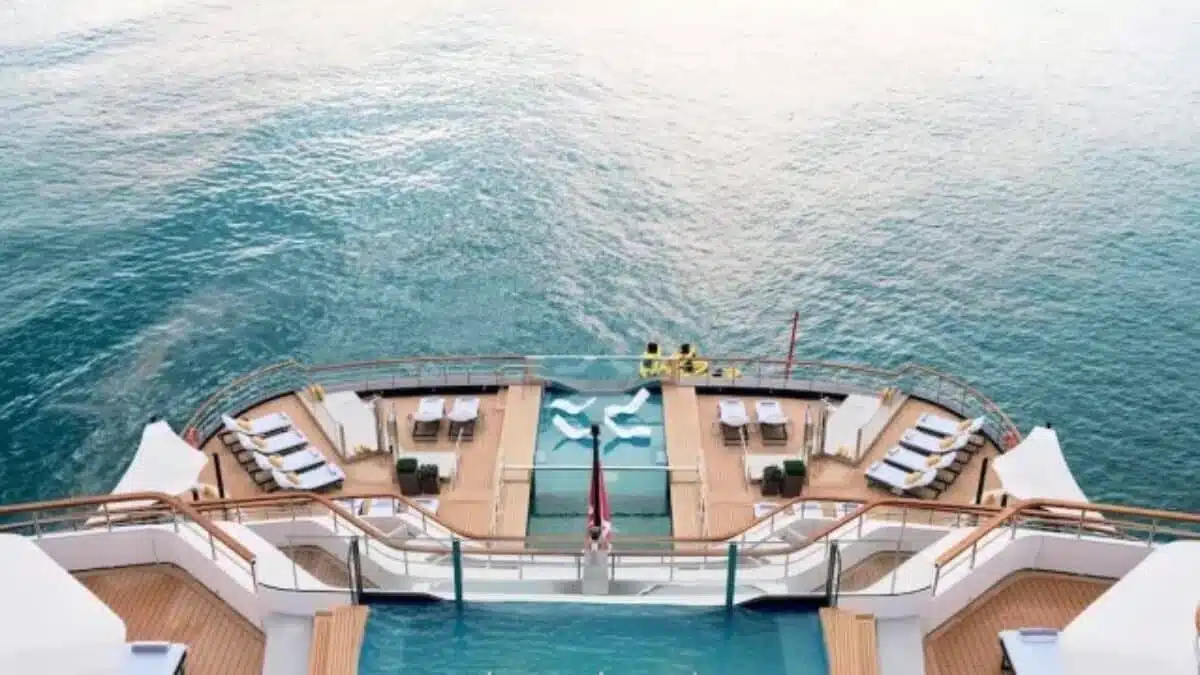
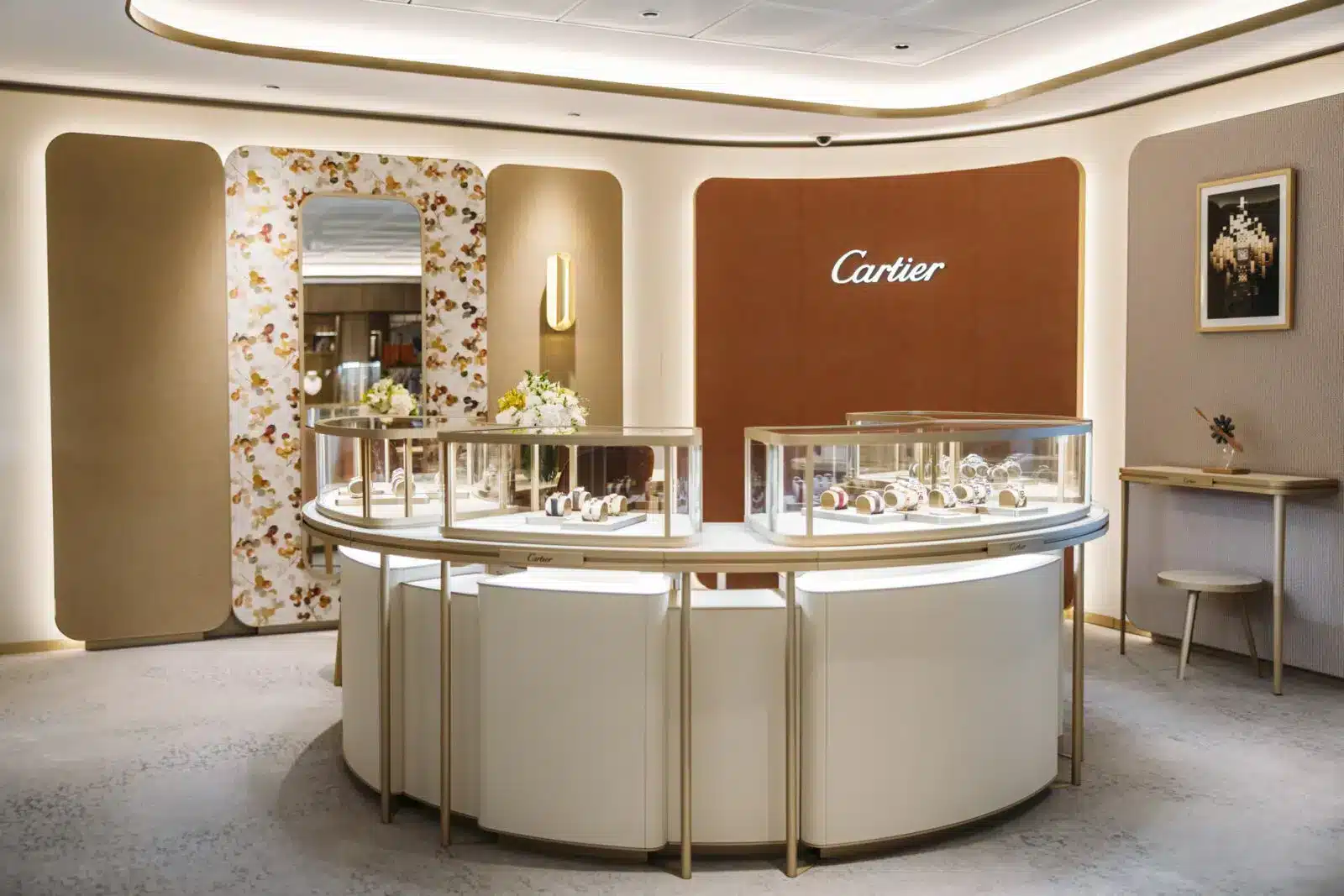
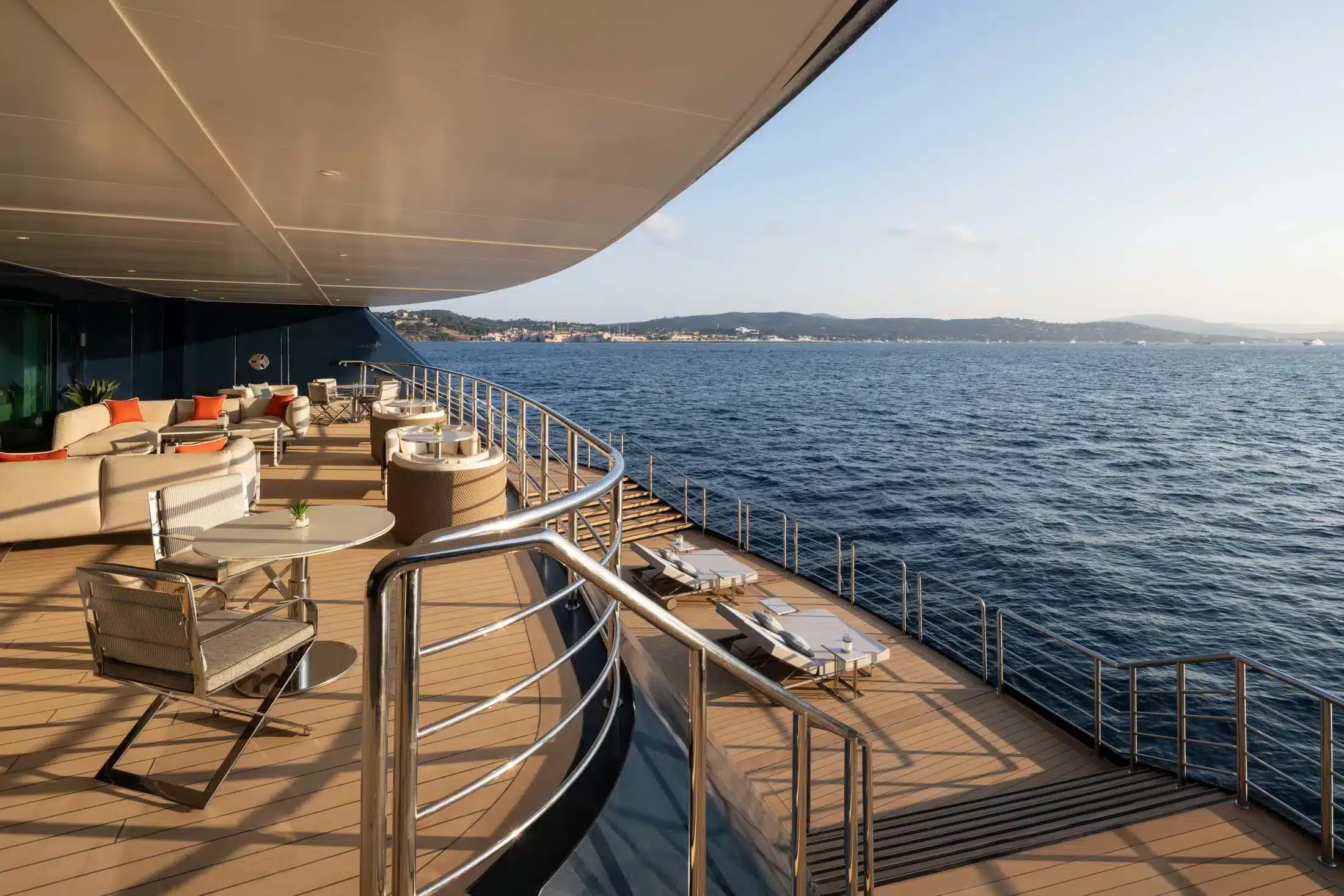
Unlike most large luxury vessels, Luminara features an expansive Marina with a Marina Terrace and Marina Beach anchored by a floating lounge platform with a central pool. Guests can literally swim directly into the sea from the platform. Watersports equipment (kayaks, paddleboards, Seabob electric jets, electric foiling boards) are deployed from the Marina complex rather than stored in remote deck spaces.
This architectural choice reflects a fundamental design priority: making water engagement a consistent part of the daily experience rather than something you schedule around.
The main pool sits on Deck 10 alongside two Jacuzzis and panoramic deck space. For a 452-passenger vessel, the outdoor space allocation feels surprisingly generous.
How Luminara Compares
Regent Seven Seas operates the Prestige-class ships (Seven Seas Explorer, Seven Seas Voyager) with approximately 750 passengers each. Their strength lies in destination expertise and inclusive programming (meals, premium beverages, shore excursions all included).
Seabourn’s fleet averages 450 to 700 passengers with exceptional service standards and strong culinary programs. Silversea operates smaller expedition vessels optimized for remote destinations. Windstar focuses on accessible luxury rather than ultra-luxury.
What separates Luminara in this landscape is operational architecture. The nearly 1 to 1 staff-to-guest ratio, the Michelin-starred culinary program, the artistic curation, and the space ratios create a vessel that feels fundamentally different in execution rather than simply size or price. Regent Seven Seas and Seabourn remain genuinely excellent operators. Luminara simply brings a different institutional competency to the problem.
Why Ritz-Carlton Entered Yachting
The brand’s entry into yachting (Evrima launched in October 2022) wasn’t driven by yacht industry analysis. It was driven by luxury hospitality analysis. Ritz-Carlton recognized that high-net-worth travelers increasingly value unique, immersive experiences over traditional resort stays. A yacht offers something a hotel cannot: mobility, exclusivity, complete control over the travel itinerary, and access to destinations that resorts cannot physically reach.
The brand also identified an operational gap. Traditional yacht operators excel at ship management and navigation. They struggle with service architecture at the level that contemporary ultra-luxury consumers expect. Ritz-Carlton inverted that equation. They brought their legendary service framework, their training infrastructure, and their relentless focus on operational consistency and applied it to yachting. The result isn’t revolutionary from a nautical perspective. It’s revolutionary from a service perspective.
Luminara embodies that logic. The yacht sails to destinations that other ultra-luxury vessels visit (Mediterranean, Asia, Alaska). The differentiation lies in how it operates once it arrives, how meals are executed, how staff anticipate needs, and how every detail reflects hospitality expertise rather than maritime expertise.
Get in contact to book your Private Marina Dinner during your Luminara voyage. The platform is available. The evening is waiting.