


On this page
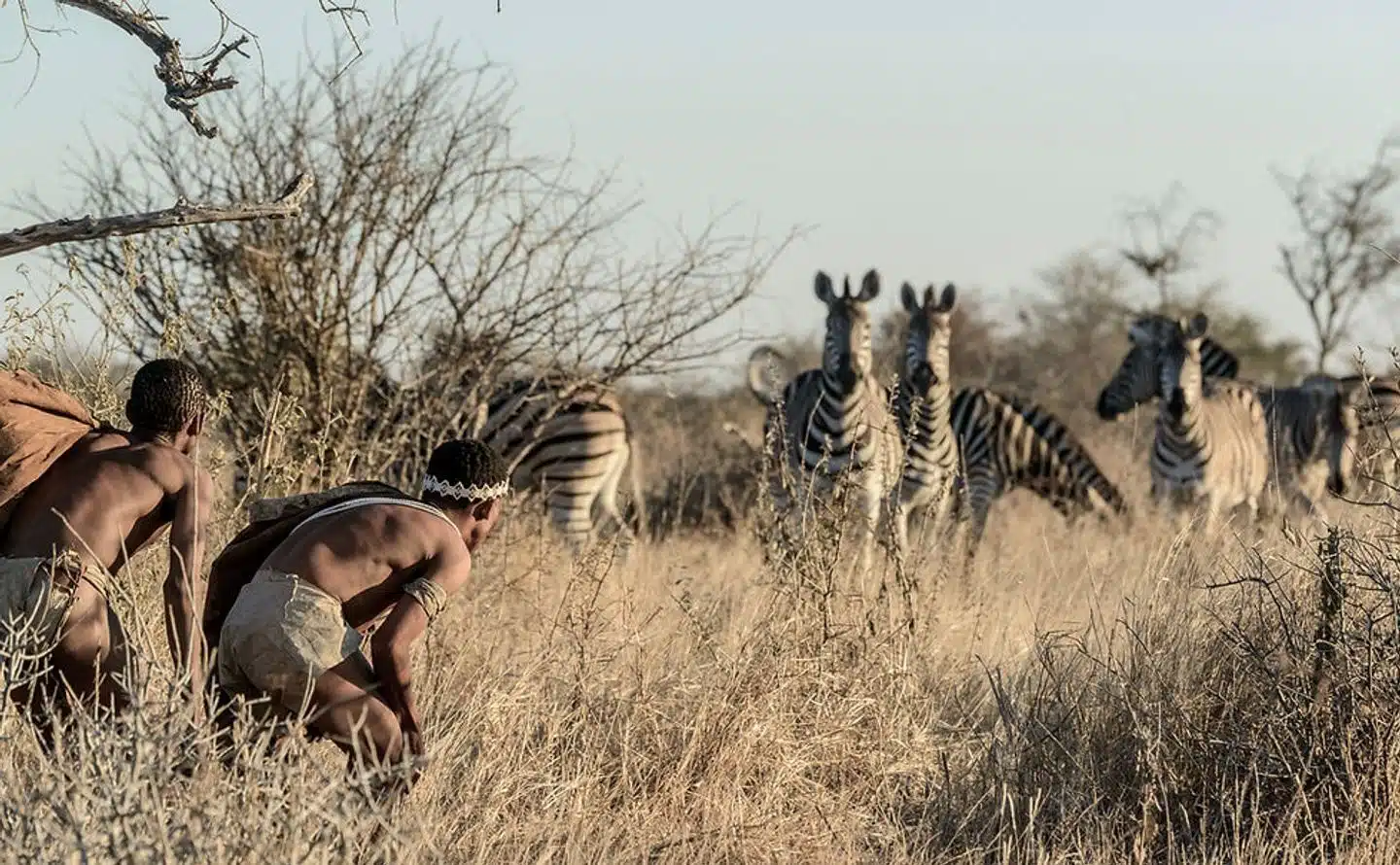
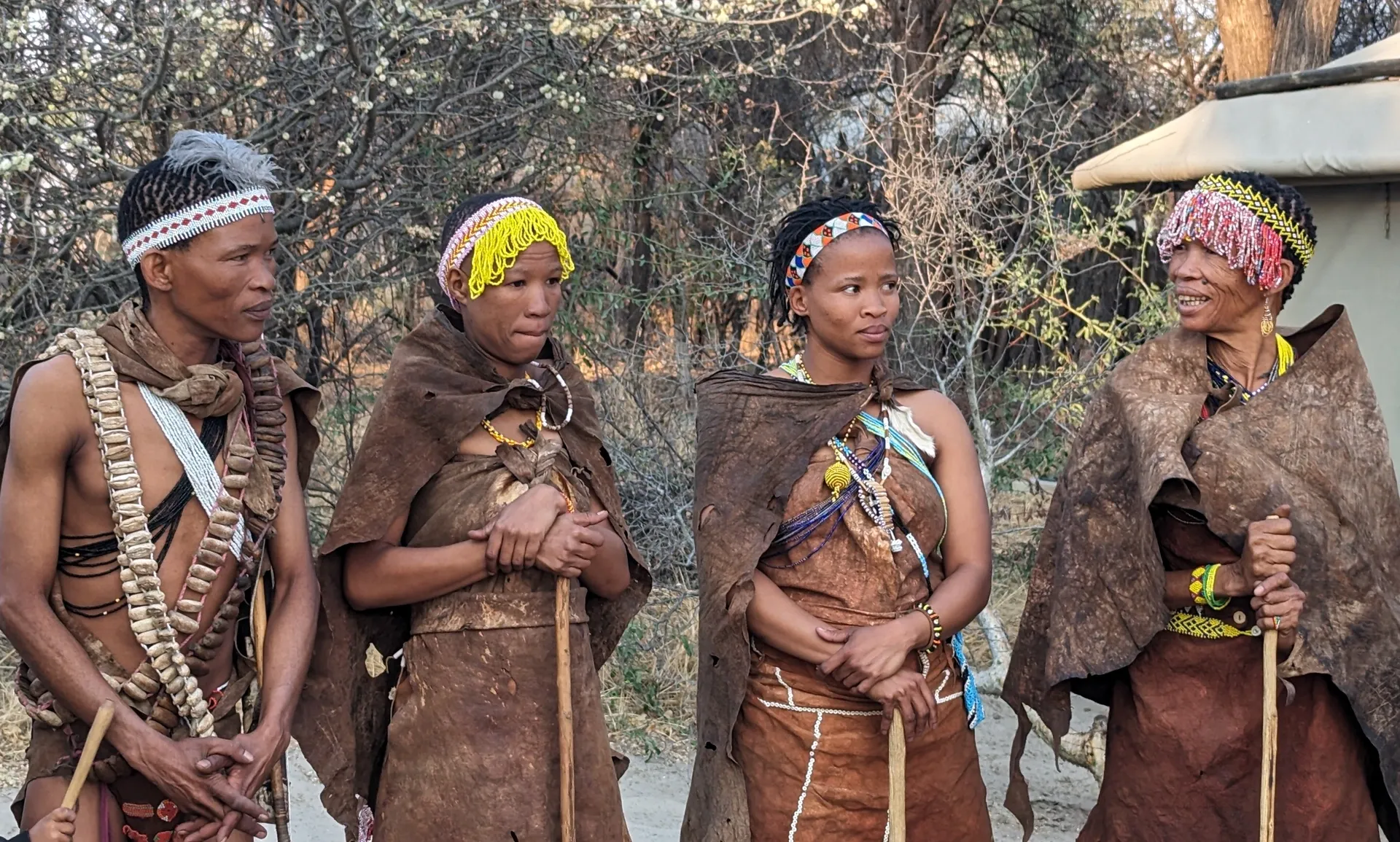
The San have lived in the Kalahari for longer than any other community on Earth. A morning on foot with San guides in the Central Kalahari Game Reserve covers tracking, plant knowledge, and fire-making through a knowledge system that no book or classroom has ever fully captured. This is one of the few experiences in Botswana that is as much about human history as it is about the landscape.
The Central Kalahari Game Reserve covers 52,800 square kilometers of Botswana, making it the second-largest game reserve in the world. For most of that land’s history, it was not a reserve at all. It was where the San lived, as they had for tens of thousands of years, moving through the desert in small family groups, reading tracks, identifying plants, and finding water in a landscape that offers very little of it to anyone who does not know where to look.
A morning on foot with San guides in this landscape is an encounter with that knowledge system at its most direct, on the ground where it was built, with the people who still carry it. The Kalahari is not a desert in the way most people understand the word. It is a fossil desert, covered in grassland and punctuated by fossil river valleys, salt pans, and stands of camelthorn acacia.
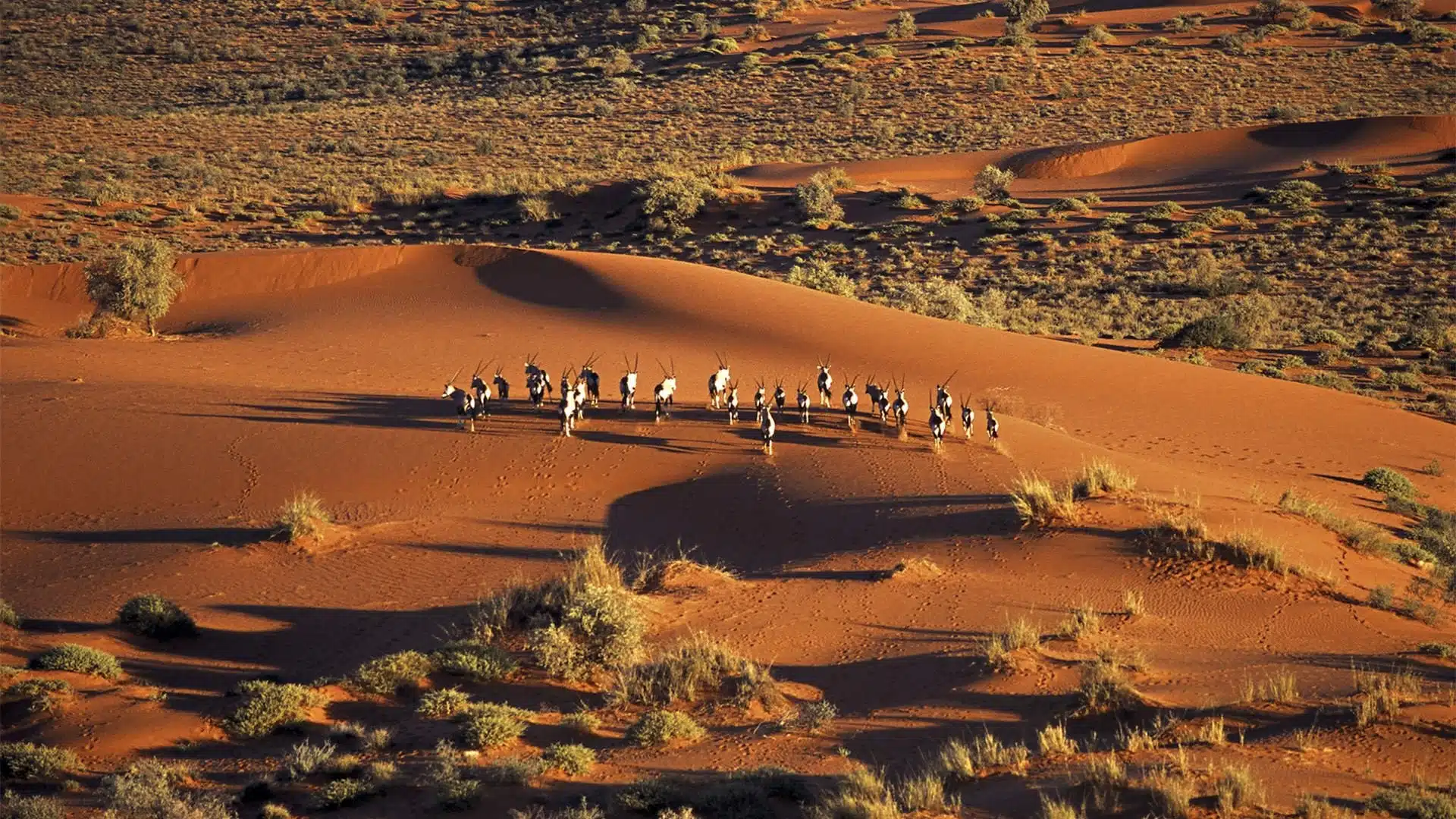
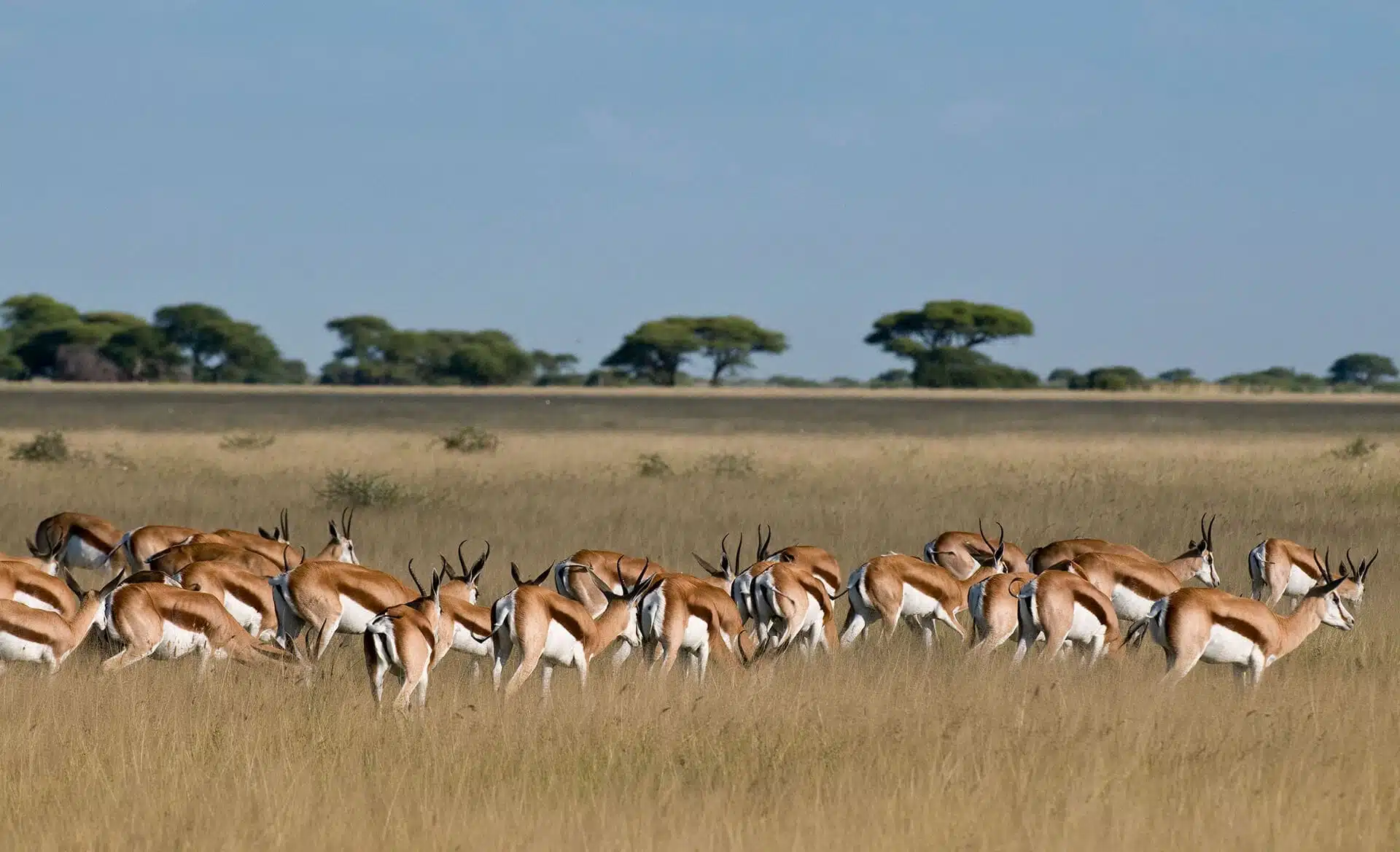
Rainfall is low and unpredictable. Surface water is almost nonexistent for much of the year. The wildlife that lives here, gemsbok, springbok, cheetah, lion, brown hyena, and bat-eared fox among others, has adapted to these conditions over millennia.
Cultural and Historical Context
The San are considered among the oldest distinct human populations on Earth, with evidence of continuous habitation in southern Africa stretching back at least 70,000 years. The knowledge system they developed across that period, covering tracking, plant use, water-finding, and navigation, is one of the most thoroughly documented bodies of ecological knowledge in existence.
The relationship between the San and the Central Kalahari Game Reserve has not been straightforward. Established in 1961 with the intention of protecting the San’s way of life, the reserve became the site of a contested government relocation program in the 1990s that moved most San families to settlements outside its boundaries.
A 2006 High Court ruling found the relocations unlawful and confirmed the San’s right to live within the reserve, with a 2011 Court of Appeal ruling restoring access to a borehole that had been sealed after the relocations.
Today, some San families work with camps in and around the reserve, leading walks as a way of maintaining a connection to their traditional practices on land that is legally theirs. The quality of the experience depends entirely on the depth of the guides’ knowledge and the degree to which the walk is structured around what the San actually know rather than what guests expect to see.
Why Private or Small-Group Access Matters
The knowledge the San carry is not organized around a schedule. It responds to what the morning produces, a fresh set of tracks in the sand, a plant that is in season, a termite mound that holds a story about the soil beneath it, and the depth to which that knowledge can be shared depends on how much time and space the arrangement allows.
A private walk gives the guide the freedom to follow what the landscape offers rather than what a prepared route dictates. If a set of gemsbok tracks leads away from the planned direction, the guide follows them and explains what the gait, the depth of the print, and the time since the animal passed tell them about where it is now and what it was doing when it moved through.
That kind of teaching requires time, and time requires a small group. With two or three people, the guide speaks directly rather than managing a crowd, and the walk becomes a conversation rather than a presentation.
What You See
The Central Kalahari at ground level is a different environment to the one visible from a vehicle. The tracks that cross the sand between grass clumps hold a record of the previous night’s activity, and a San tracker reads them the way a trained reader moves through text, quickly, with comprehension, and with the ability to extract information that is not immediately obvious.
A single set of tracks will tell the guide the species, the approximate time of passage, whether the animal was moving with purpose or foraging, and in some cases the individual animal, recognized by the gait pattern or the shape of a specific foot.
Plant knowledge covers medicinal use, food preparation, and water extraction. The tsamma melon, which grows across the Kalahari and was historically a primary source of water for both humans and wildlife during the dry season, can be shredded and squeezed to produce liquid in conditions where no surface water exists.
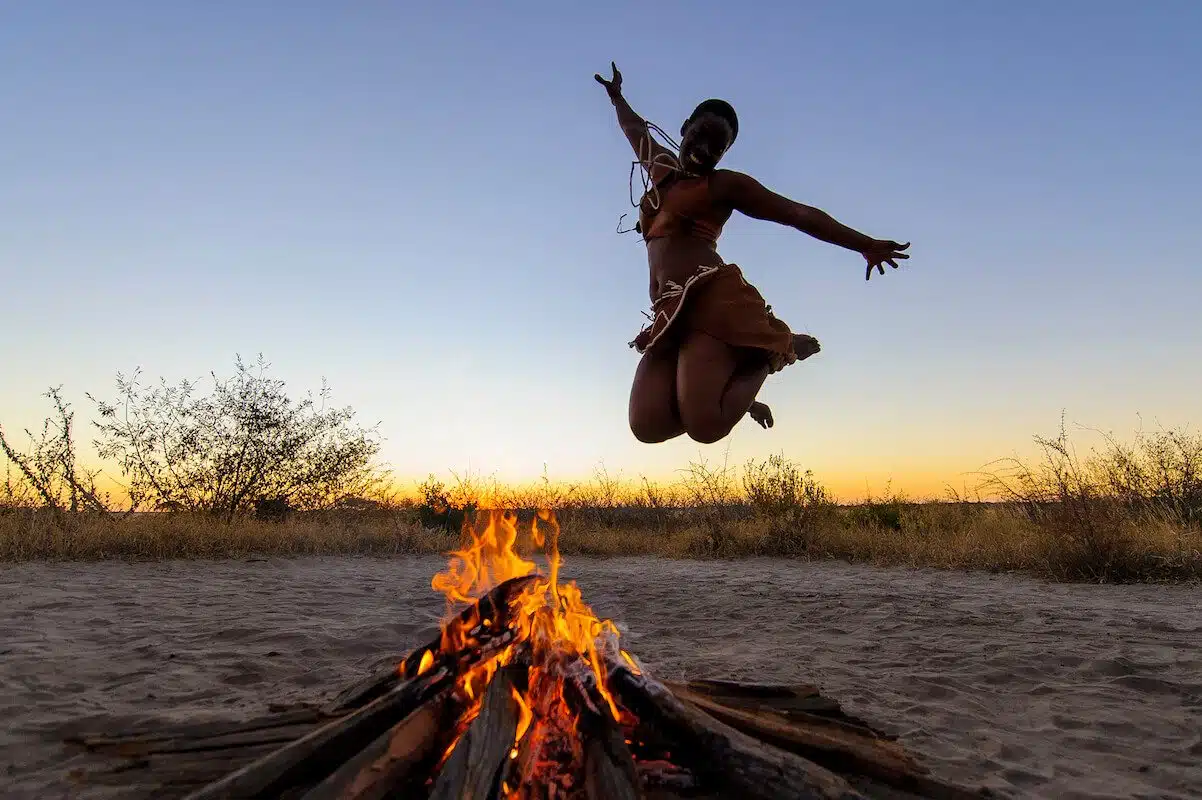
Underground tubers, which store water through the dry months, are located by reading small surface disturbances in the soil that are invisible to anyone who has not been taught to look for them. Fire is made using a hand drill, a method that requires a specific combination of wood types and a technique that takes years to develop to the point of reliability.
How Do Not Disturb Makes This Possible
Do Not Disturb works with a small number of operators in and around the Central Kalahari whose relationships with San guides are built on years of partnership rather than arrangements made for the visitor experience alone.
Not every San guide carries the same depth of knowledge, and the difference between a walk led by someone who has spent their life in the reserve and one performing a version of that knowledge is considerable.
The walk is planned around the season, the time of day, and the area where the guide’s knowledge is deepest, with a light aircraft transfer from Maun and all ground arrangements handled before arrival.
Ready to plan your morning with San guides in the Central Kalahari and experience Botswana’s oldest living knowledge system on foot? Speak with Do Not Disturb to begin your journey.