

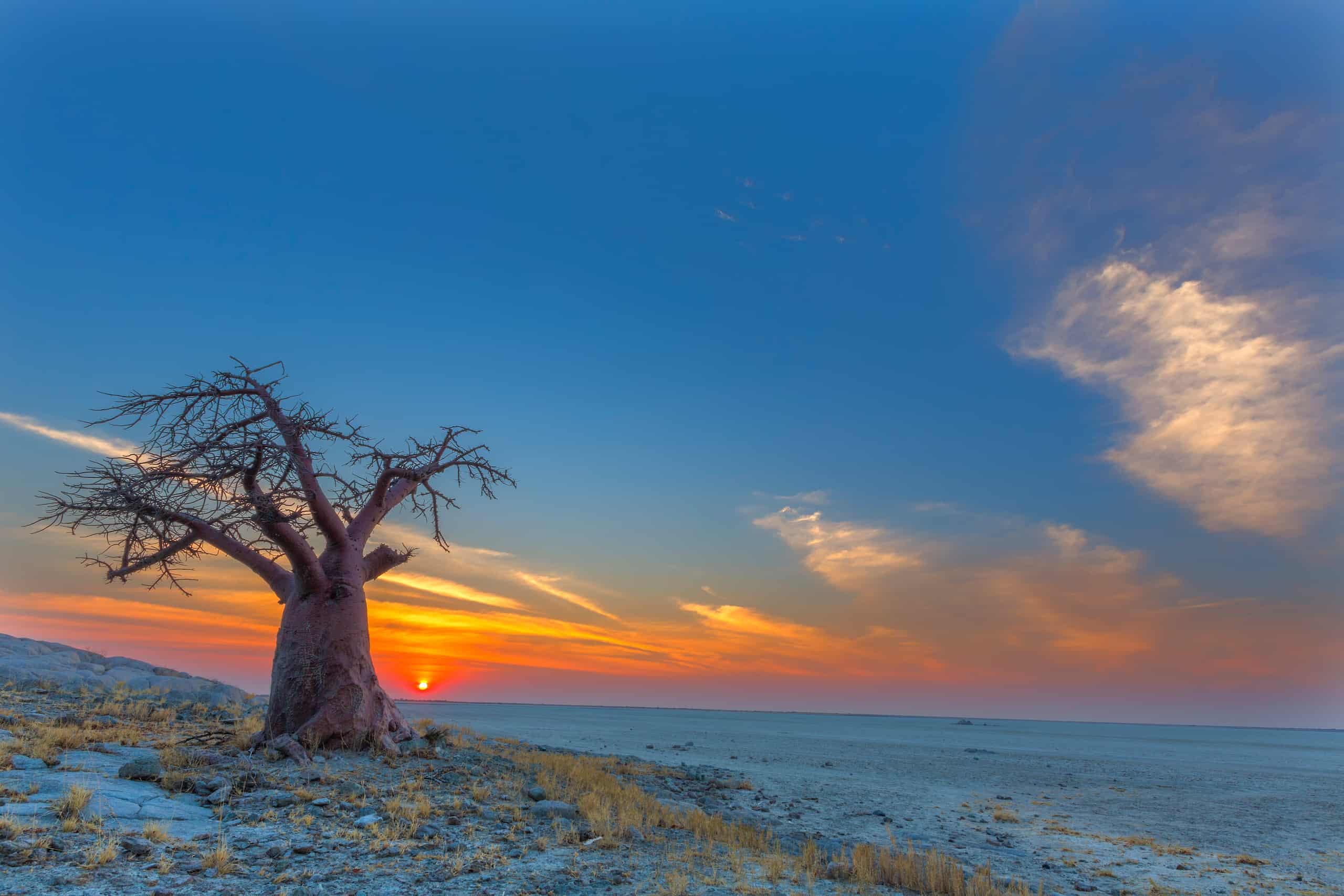
Standing on the Makgadikgadi Salt Pans at sunset, there is no visible horizon in any direction. The surface is white, the sky is changing, and the scale of what surrounds you is without reference point. This is one of the few places on Earth where the experience itself is the landscape, and the landscape is like nowhere else.
The Makgadikgadi Salt Pans cover over 30,000 square kilometers of northeastern Botswana, making them one of the largest salt pan complexes on Earth, rivaled in size only by the Salar de Uyuni in Bolivia.
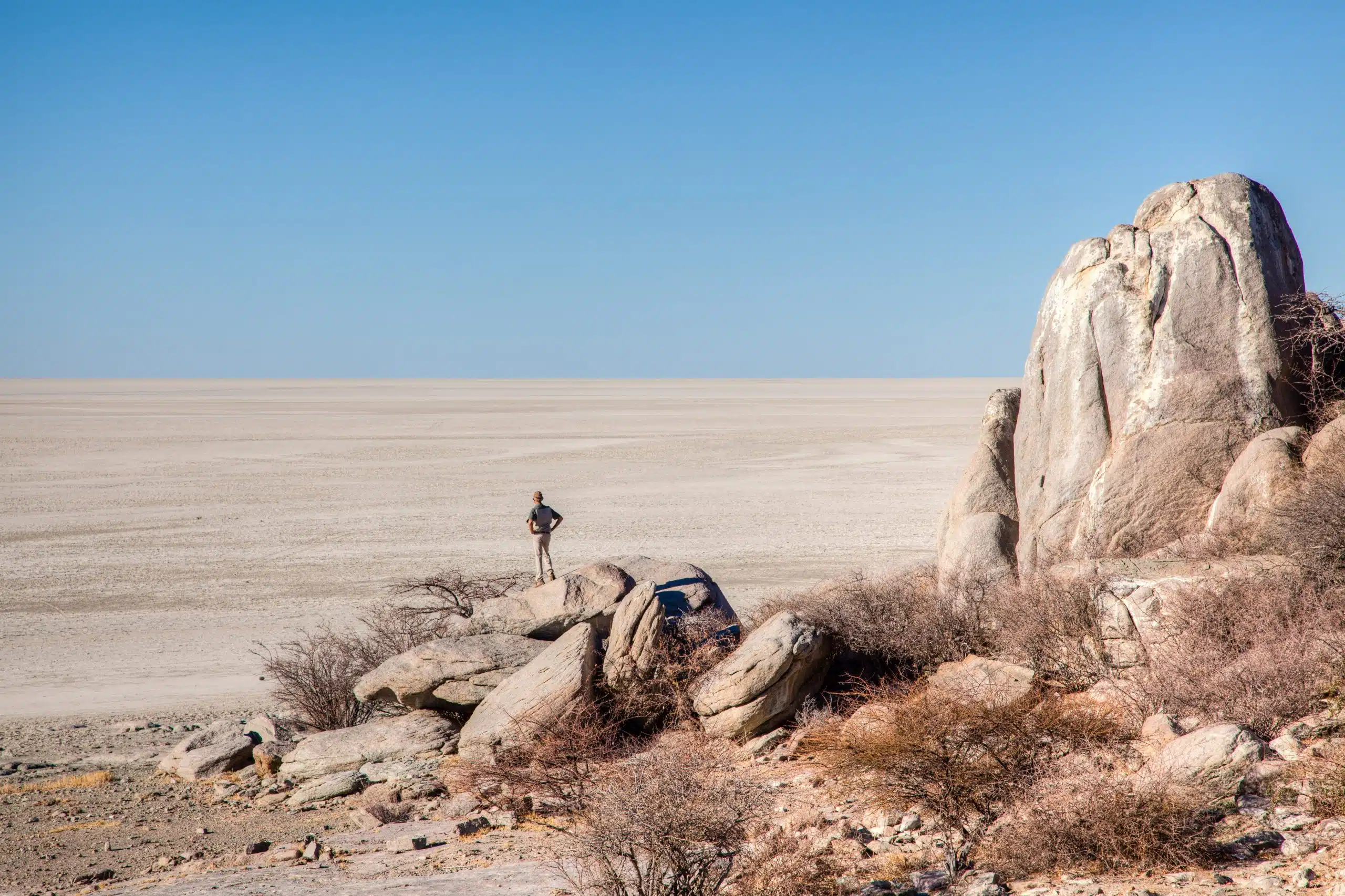
At sunset, a guide drives you out onto the surface, past the point where any landmark disappears from view, and stops the vehicle. The horizon is the same in every direction. The light changes across all of it simultaneously, and the silence has no equivalent in a landscape where trees, water, or animals are present.
The Makgadikgadi is the ghost of a lake. Around 10,000 years ago, Lake Makgadikgadi covered an estimated 80,000 to 275,000 square kilometers of central Botswana, fed by the Okavango, Zambezi, and Cuando Rivers.
Tectonic shifts changed the elevation of the landscape, the rivers were diverted, and the lake dried. What remains is the basin it left behind, a surface of cracked salt that stretches in every direction without variation.
About Do Not Disturb
Do Not Disturb is a luxury travel company specializing in carefully designed journeys and considered experiences. Each itinerary we build for our clients is informed by real destination knowledge, offering insight into places, cultures, and moments that shape how a trip comes together.
If this destination has sparked ideas, the itinerary can be developed into a private journey tailored to your interests and travel style, with hand-picked stays, thoughtful routing, and experiences curated around what matters most to you.
Cultural and Historical Context
The Makgadikgadi is a landscape with a history of human presence that stretches back to the Early Stone Age. Archaeological sites throughout the pan complex have yielded tools from the Middle and Late Stone Age, evidence that communities lived along the edges of the lake and adapted as it dried over millennia. The San people, who lived across the broader Kalahari region for tens of thousands of years, understood how to read this landscape and find water within it.
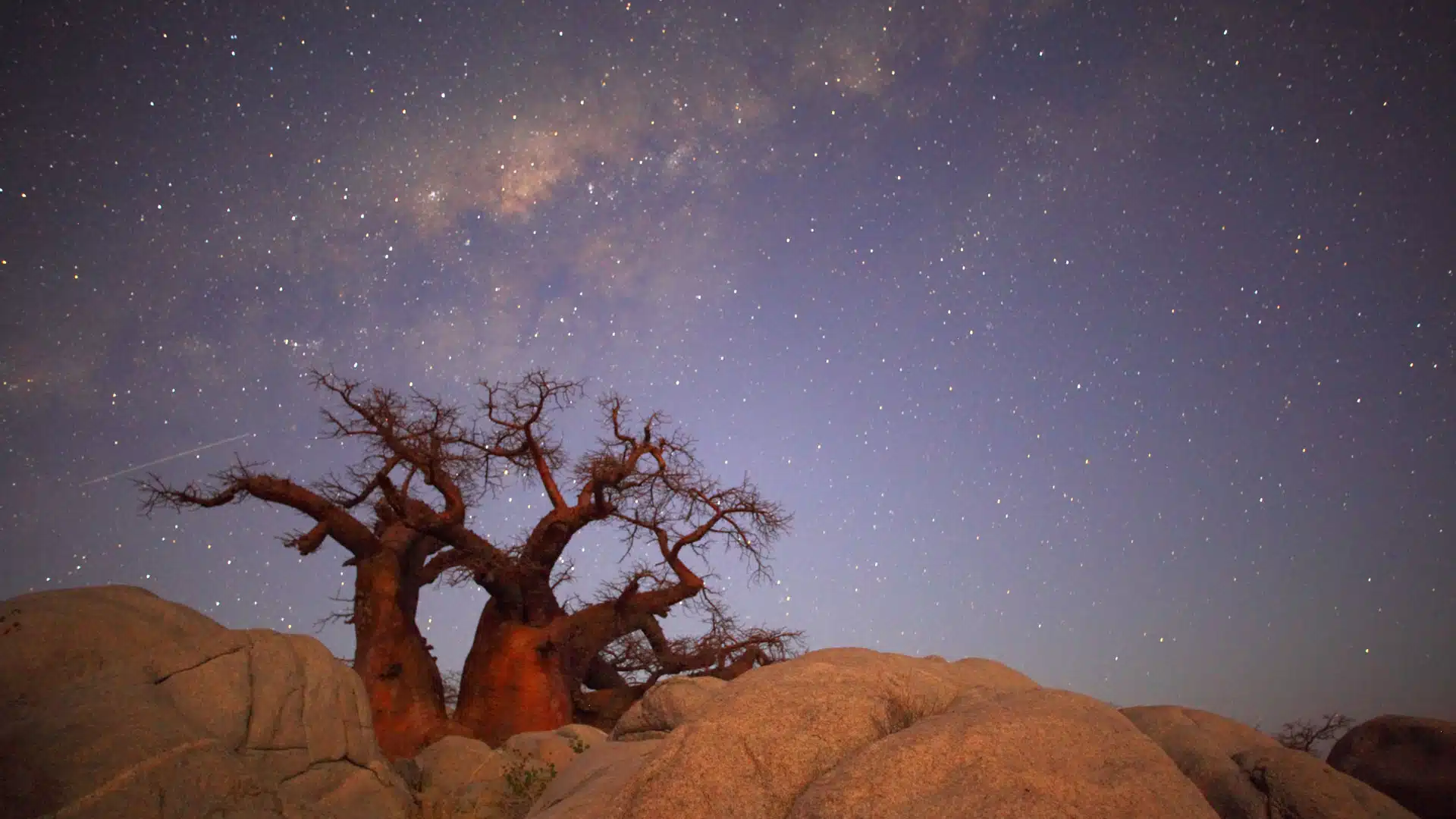
Kubu Island, a granite outcrop that rises from the surface of the Sua Pan, is one of the most significant sites in the complex. The island is covered in baobab trees and surrounded by stone walls, some of which date back centuries and indicate human habitation across a sustained period.
It is considered sacred by local communities and holds a presence that is hard to account for in purely geological terms. Standing on Kubu Island at sunset, with the salt surface extending to every horizon, is one of the few experiences in Botswana that carries both ecological and cultural weight in the same moment.

Why Private or Small-Group Access Matters
A shared vehicle experience on the Makgadikgadi is real but constrained. Departure times are fixed around a camp schedule, the route is predetermined, and the duration of time on the pan is managed around the group’s comfort and return time.
When the engine goes off and the pan falls silent, a group excursion has to manage that moment around the comfort and safety of multiple people in a remote location. The experience is real, but it is shorter than it needs to be.
A private arrangement extends that moment as long as it warrants extending. The guide drives further onto the pan, past the point where a group excursion would stop. The engine goes off at the right time rather than at a fixed point in the schedule. If the light is doing something worth staying for, you stay for it. The difference measured in time, and in what that time allows to settle.

What You See
The surface of the Makgadikgadi in the dry season is white and cracked, with the salt forming patterns that shift in texture and tone as the light changes. From above the pan looks featureless. On the surface the detail is constant, and the observations it offers, the cracks in the salt, the way the surface reflects the sky, the point at which ground and sky become the same color, are only available at ground level.
As the sun drops, the white of midday shifts to gold, then to a copper that deepens as the sun reaches the horizon. Because there is nothing between you and the horizon in any direction, the sunset happens around the full 360 degrees simultaneously. The light comes from everywhere and fades everywhere at once.
After the sun disappears the temperature drops fast. Without any light pollution within range, the Milky Way extends to every edge of the horizon, and the same flatness that defines the sunset experience extends the star field with it. Guides who have spent years here consistently name the transition from sunset to stars as the most significant sequence the Makgadikgadi offers.
How Do Not Disturb Makes This Possible
Do Not Disturb selects guides for the Makgadikgadi whose knowledge of the pan extends beyond the standard route. The timing of the experience is planned around the season, the phase of the moon, and the direction of the light at the specific time of year you are visiting.
In the dry season, when the pan surface is at its most complete and the skies are clearest, the window for the sunset experience is narrow and the logistics of getting far enough onto the surface to remove all landmarks require a guide who knows the terrain well enough to navigate back after dark.
Ready to plan your evening on the Makgadikgadi Salt Pans and experience Botswana’s most extraordinary landscape at dusk? Speak with Do Not Disturb to begin your journey.
Plan your own version of this journey
Speak to Do Not Disturb’s luxury travel experts and turn this moment into something personal.
Related destinations
Suggested articles
Where to Go On Honeymoon? A Guide to Help You Choose
Wilderness to Waves: Luxury Honeymoons in Kenya
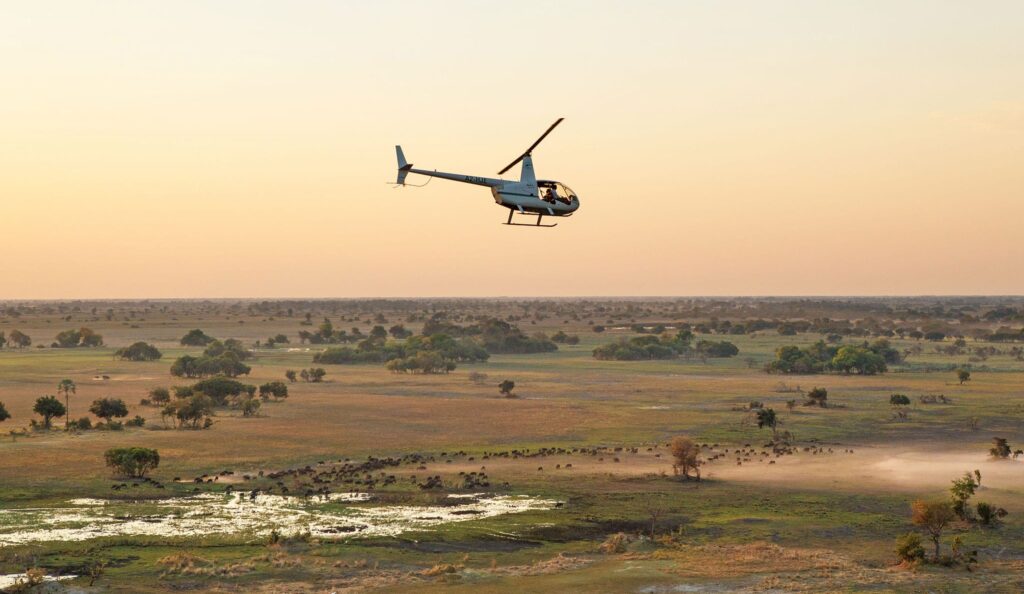
Why Botswana Is Africa’s Most Exclusive Safari Destination
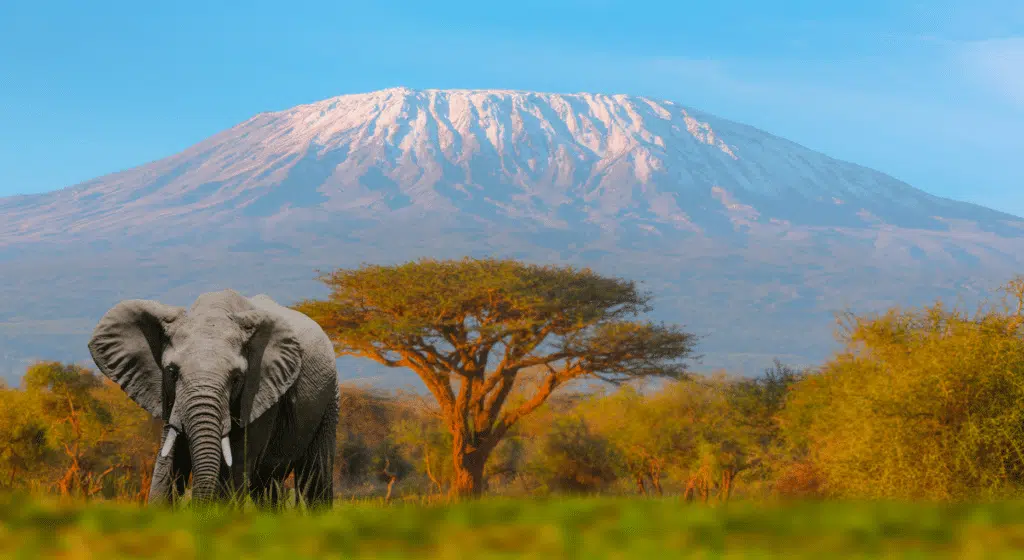
Tanzania vs. Botswana: Which African Safari Should You Choose?

The Okavango Delta: Africa’s Most Unique Safari Destination

Okavango Delta vs. Kruger National Park: Which Safari Is Right for You?

Best Winter Sun Honeymoon Destinations in Europe
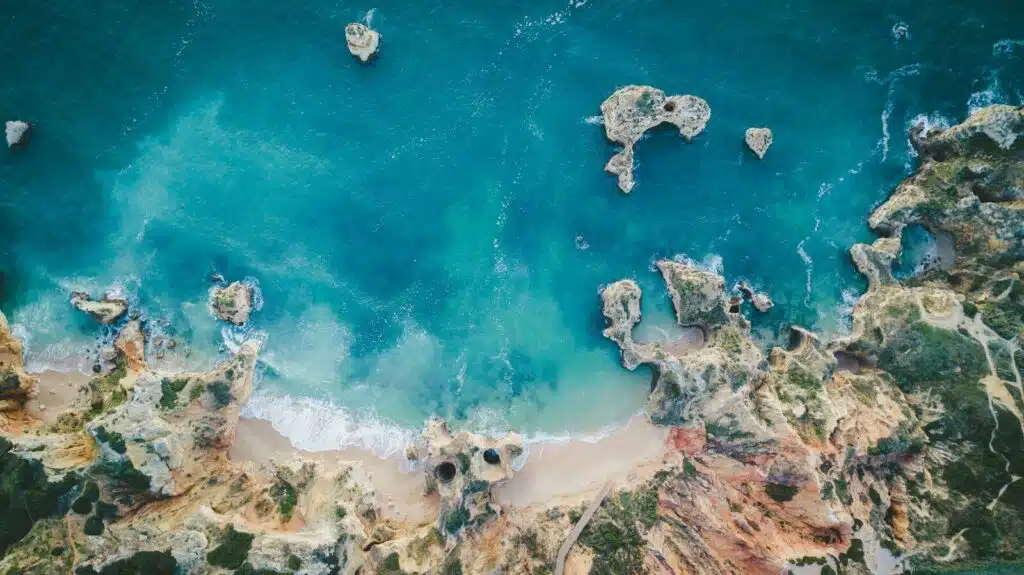
Portugal vs Spain for Your Honeymoon – Which Should You Choose?
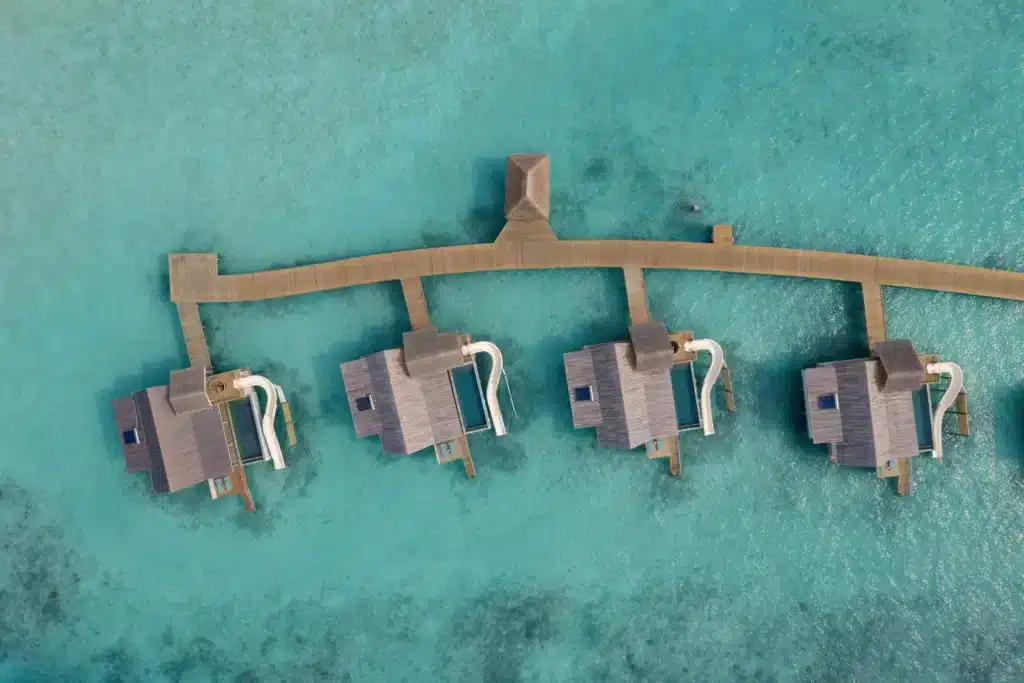
One Island or Two? Splitting Your Maldives Honeymoon Between Resorts

Italy vs Greece for Your Honeymoon – Which is Better?
48 Hours in Lima: Where to Eat, Stay and Explore

A Cultural Honeymoon in Peru: Machu Picchu, Cusco, the Sacred Valley and the Amazon

Peru or Mexico: Which Ancient Civilization Should You Visit First?