



7 days
|$6495

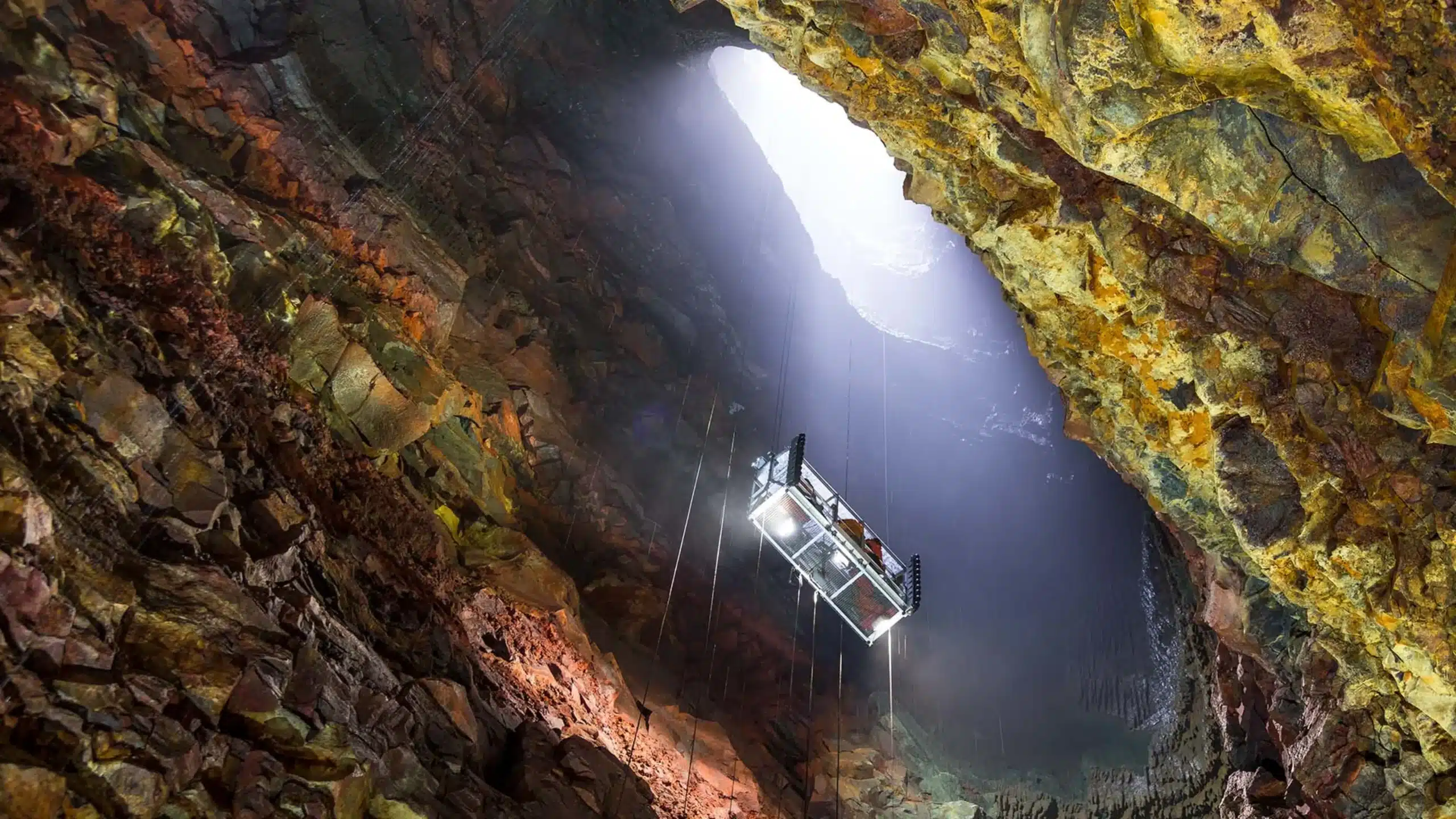
Þríhnúkagígur sits in the Blue Mountains around 30 kilometres south of Reykjavík, a dormant volcano that last erupted approximately 4,500 years ago. In every other volcano studied, the magma chamber fills with solidified rock after an eruption. At Þríhnúkagígur the magma drained away instead, leaving the chamber intact and accessible to visitors since 2012.
The tour begins at a base camp on the lava field, reached by a 3-kilometre walk from the meeting point taking around 45 minutes.
The lift is an open cable elevator, originally built in 2010 for scientific access, attached to a steel bridge spanning the crater opening. The descent takes six minutes and covers 120 metres.
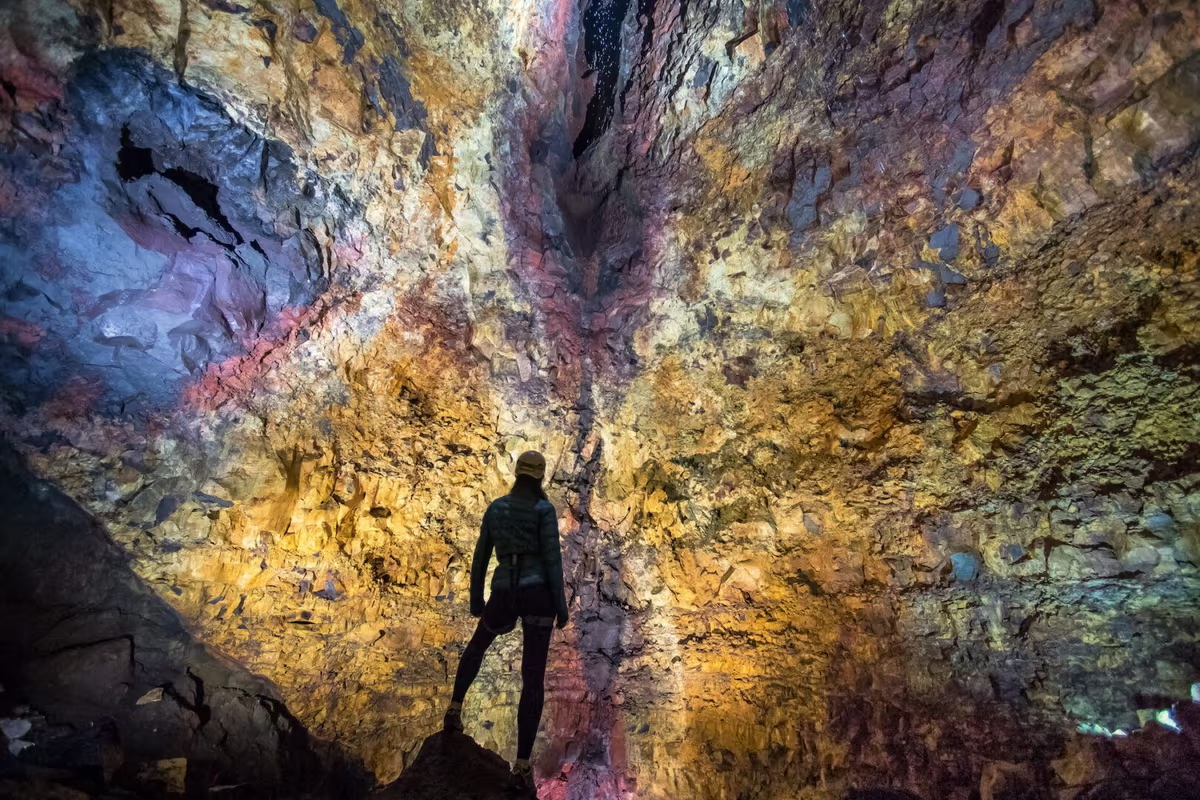
At the bottom, guests have around 35 to 40 minutes in the chamber. The floor covers over 3,000 square metres, with rock formations, frozen magma structures and walls running through mineral colours from deep purple to red, orange, yellow and ochre.
The temperature inside is around 6 degrees Celsius regardless of the season.

Do Not Disturb is a luxury travel company specializing in carefully designed journeys and considered experiences. Each itinerary we build for our clients is informed by real destination knowledge, offering insight into places, cultures, and moments that shape how a trip comes together.
If this destination has sparked ideas, the itinerary can be developed into a private journey tailored to your interests and travel style, with hand-picked stays, thoughtful routing, and experiences curated around what matters most to you.
Iceland sits on the Mid-Atlantic Ridge, the boundary between the North American and Eurasian tectonic plates, with over 130 volcanoes in various states of dormancy or activity. The lava fields around Þríhnúkagígur were formed across successive eruptions over the past 50,000 years.
In a typical volcanic eruption, magma accumulates in a chamber below the surface, builds pressure and forces its way upward. After the eruption, the remaining magma solidifies inside the chamber. At Þríhnúkagígur, scientists believe the magma retreated downward into the Earth’s crust rather than solidifying in place, leaving the chamber hollow and intact.
The colours on the chamber walls come from mineral deposits left by the cooling magma, sulphur-rich gases released during the eruption and microbes that have colonised the rock surface in the thousands of years since.
The volcano was discovered by Icelandic cave explorer Árni B. Stefánsson in 1974 and was accessible only to experienced climbers until the elevator was installed in 2010. The tour opened to the public in 2012.
7 days
|$6495

7 days
|$7695

7 days
|$5295
The standard Inside the Volcano tour runs in groups of up to 18 people, with multiple departures on the same day during peak season. The lift holds a small number of people at a time, meaning the descent and ascent happen in batches, and the 35 to 40 minutes at the bottom move at the pace of the group rather than the individual.
Private tours are available in two formats. A dedicated morning departure at 7:30am or a full buyout of an 18-seat departure. Both give the chamber to a single group without other visitors present.
The guide’s attention is undivided, and the explanation of what the chamber is, how it formed and what the colours on the walls represent can go as deep as the conversation warrants.
The silence inside the chamber is one of its most distinctive qualities, and it is more fully experienced when the space is not shared with a large group.
Helicopter access is available for guests unable to complete the 3-kilometre walk.
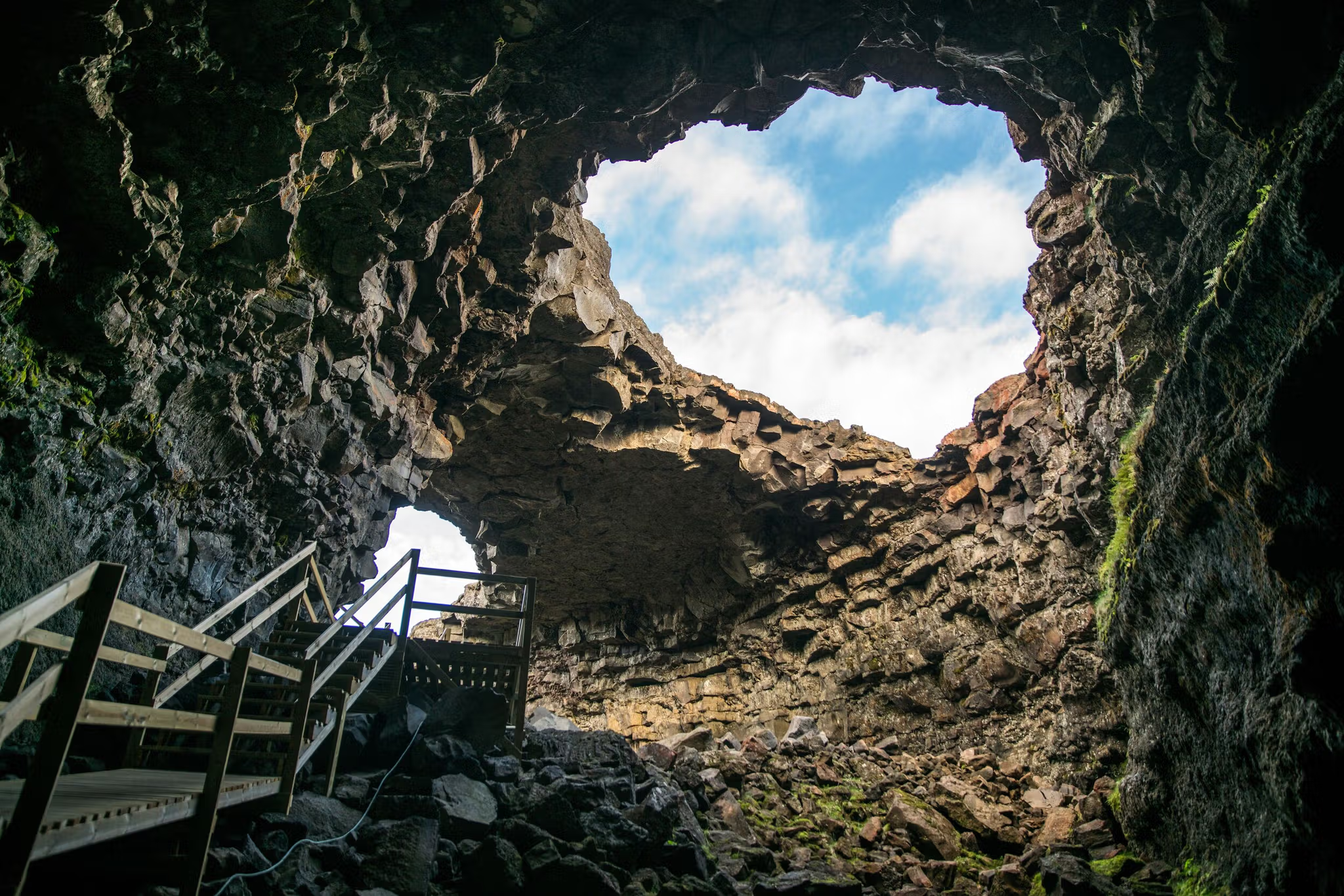
The walk across the lava field passes through moss-covered rock, ancient lava formations and volcanic fissures, with the crater of Þríhnúkagígur visible from around a kilometre out. At the crater rim, the steel bridge spans the opening and the lift platform sits above the descent.
The first seconds of the descent establish the scale of what is below. By the time the platform reaches the floor, the opening at the top is a small circle of light 120 metres above. The floor is uneven, with rock formations requiring careful footing in places.
The walls run from deep purple in the upper sections, where sulphur deposits are concentrated, through red, orange and yellow as the depth increases, to ochre and brown at the base where the rock is oldest.
The ascent takes the same six minutes as the descent. Soup and warm drinks are served at the base camp after.

The Inside the Volcano tour books out weeks ahead during peak season. Do Not Disturb secures the booking in advance and coordinates the full day around the experience, including transfer from Reykjavík and any additional Iceland experiences as part of a wider itinerary.
For guests unable to complete the walk, helicopter access to the crater is arranged as part of the same conversation.
Ready to plan your descent into Þríhnúkagígur in Iceland? Speak with Do Not Disturb to begin your journey.
Speak to Do Not Disturb’s luxury travel experts and turn this moment into something personal.
Related destinations
Suggested articles





Tell us how you want to feel, we’ll take it from there.
“Our trip was truly magical and full of core memories that will last us a lifetime.”
Michael • Bora Bora Honeymoon

“We just returned from an incredible journey through Ireland, and we couldn’t have had a better experience”
Brad • Ireland Adventure
“This was a flawless experience. They took all our thoughts and perfectly curated the most beautiful honeymoon.”
Kris • Sicily Honeymoon
Our team brings over 35 years of experience in luxury travel, shaping bespoke journeys for discerning clients worldwide. The reviews below reflect the trust placed in us and the experiences we continue to create.
See more reviews on Trustpilot
 5 min read
A Maldives honeymoon usually comes down to one early decision. Stay on a single island for the full trip, or divide the time between two resorts with different characters.
 6 min read
Most honeymoon planning defaults to summer, or to whichever destination is warmest on the day of the wedding. Autumn deserves its own shortlist. It is grape harvest in Italy, dry season settling in across the African plains, the last stretch of Caribbean heat before winter rates arrive, and a handful of weeks in Japan that […]
 5 min read
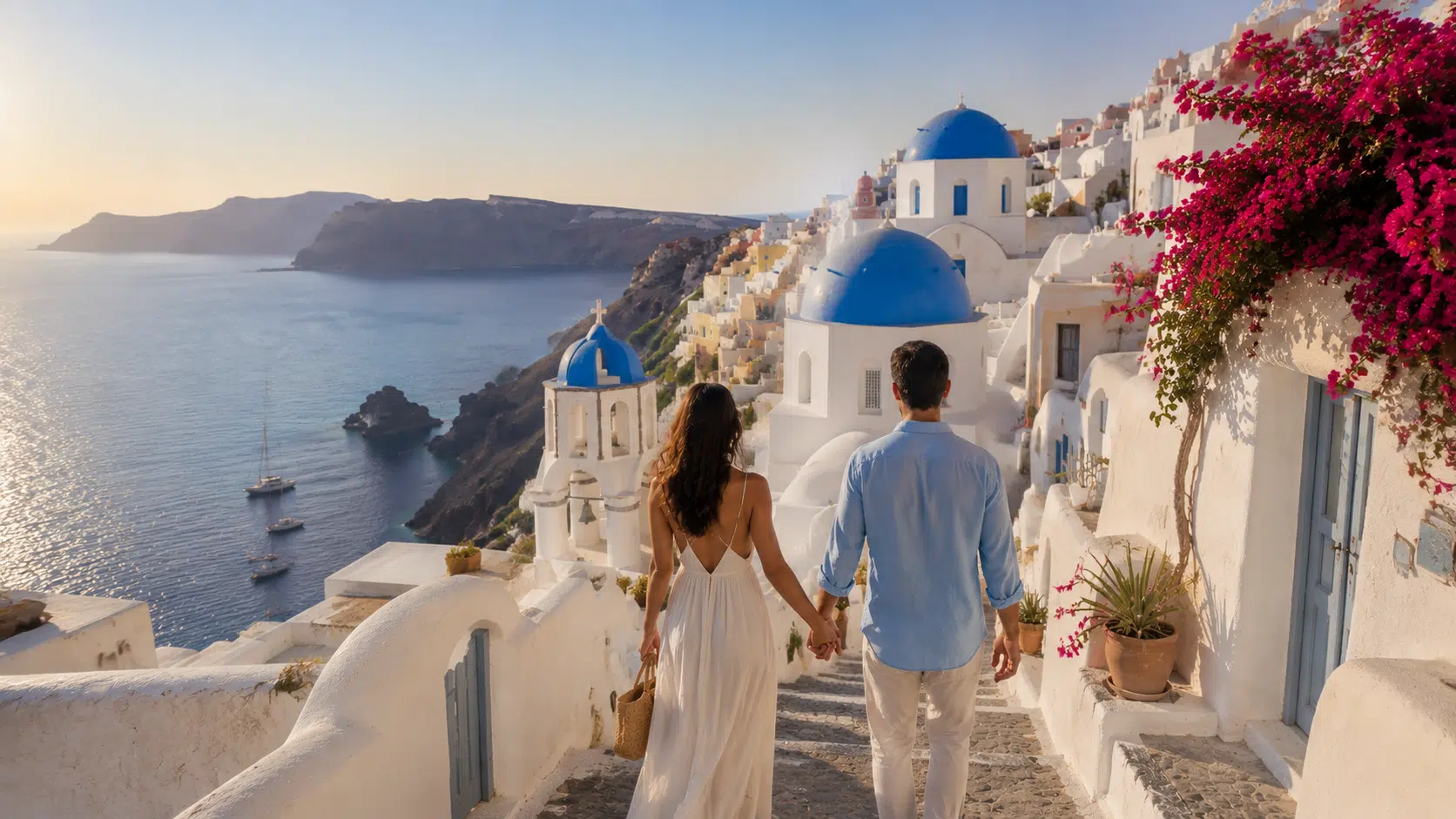
Italy or Greece for your honeymoon? Compare city hopping, beaches, culture, food, weather, and cost to find the right fit for the two of you.
 2 min read
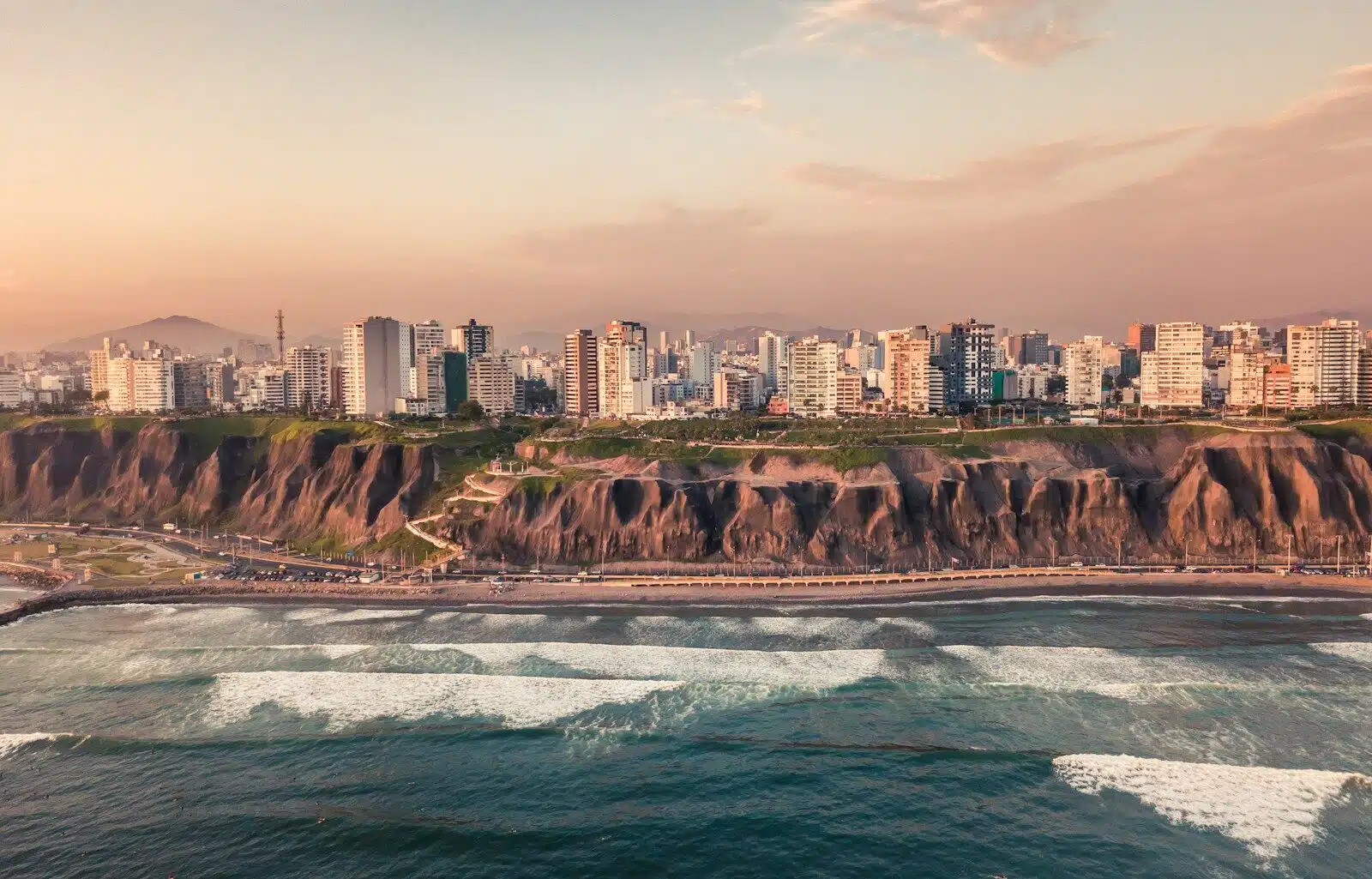
A decade ago, Lima was a single overnight before the flight to Cusco. Now, a two-day trip can be filled with clifftop parks, spectacular culture, and some of the best cooking in the Americas.
Planning your trip should feel effortless.
You share what matters, whether it’s a destination, a feeling, or a moment worth celebrating.
Your dedicated expert shapes a thoughtful, private itinerary tailored entirely around you.
Every detail handled. Every moment considered. Support before, during, and after your journey.

Answer a few quick questions and we’ll craft a journey as unique as your state of mind.
Ask us anything.
