


On this page
Take a private Valley of the Kings tour with a specialist Egyptologist, exploring the tombs of Egypt’s pharaohs in Luxor’s West Bank.
For nearly 500 years during the New Kingdom, Egypt’s pharaohs abandoned the pyramid entirely. Centuries of tomb robbing had proven that a monument visible for miles was also an invitation, so rulers began cutting their tombs deep into the limestone hills above Thebes instead, hidden beneath a mountain peak, al-Qurn, that already formed a natural pyramid over the valley. A private tour with a specialist Egyptologist moves through this hidden necropolis, connecting the valley’s tombs to the history, theology, and discovery that shaped them.
What You See
Sixty-five numbered tombs have been mapped across the valley floor since excavation began, ranging from vast underground complexes to single undecorated storage pits. KV5, built for the sons of Ramesses II, is the largest, with more than 120 rooms cut into the rock.
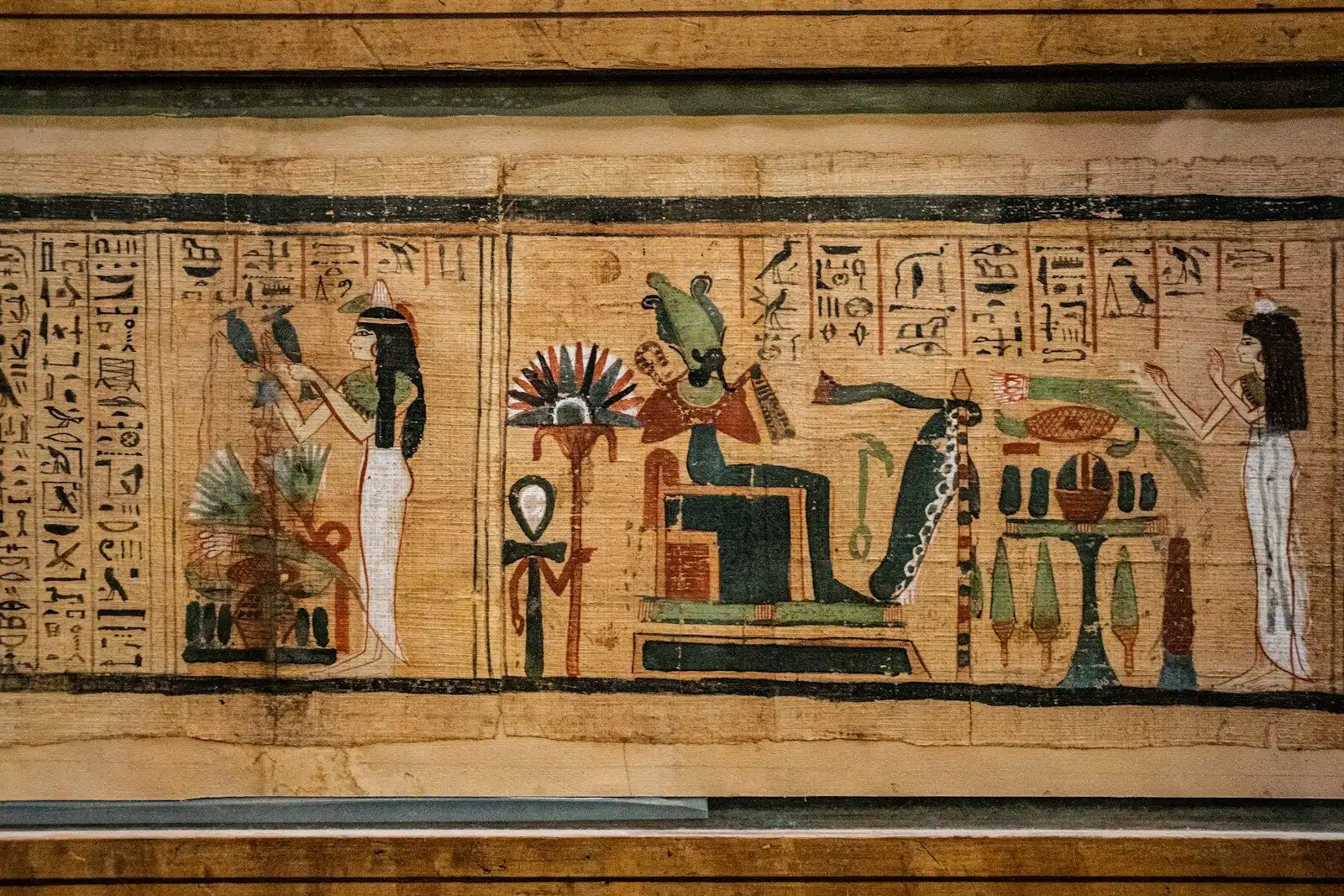
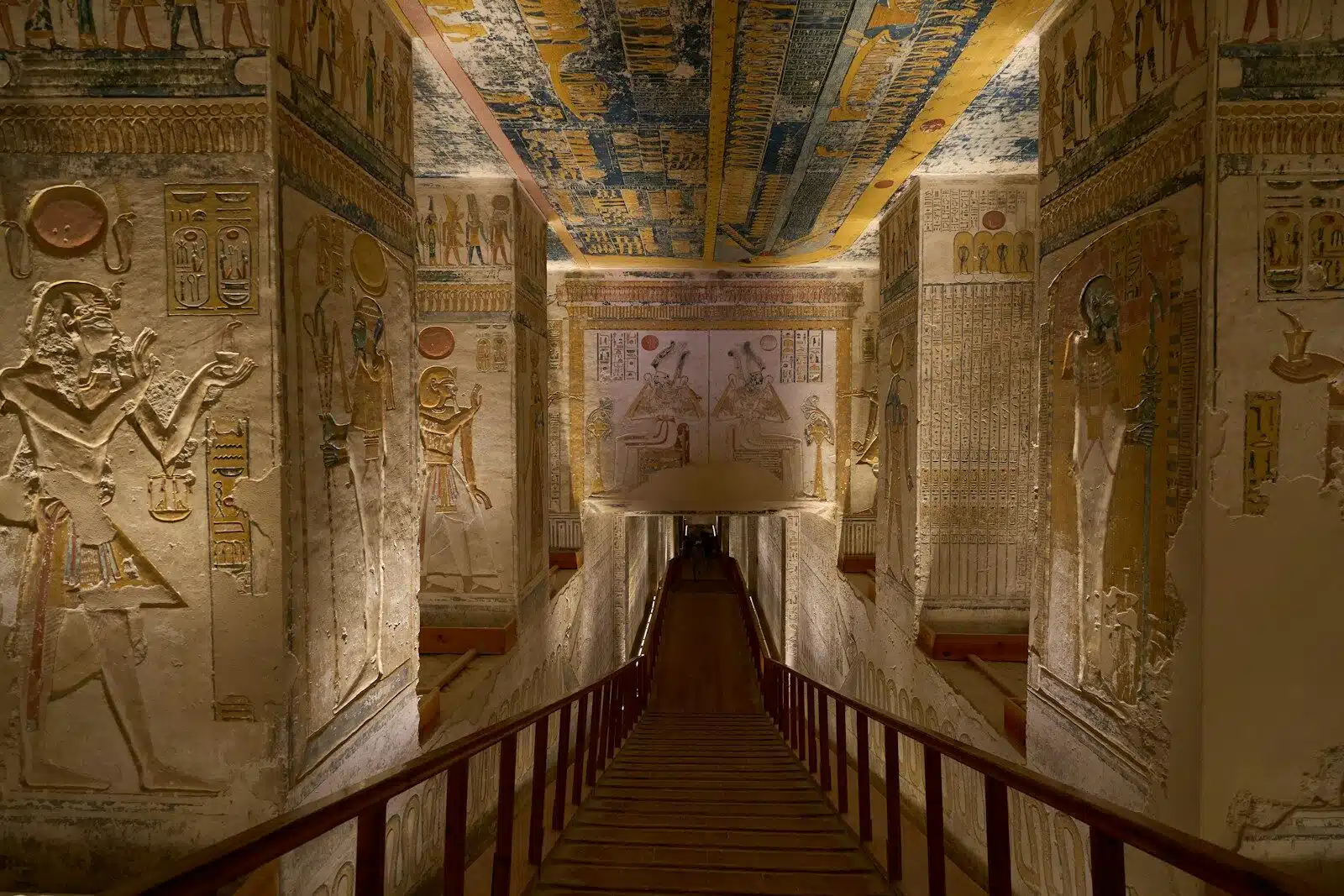
Two tombs stand out for their artistry. The tomb of Seti I descends further into the mountain than any other in the valley, its walls carved in raised relief rather than simply painted, leading to a burial chamber with a ceiling mapping the constellations in black and gold. The tomb of Ramesses VI holds some of the valley’s most vivid surviving color, protected from flood damage by its higher position, its ceiling dominated by the sky goddess Nut arched over the burial chamber below.
What You Experience
Howard Carter discovered Tutankhamun’s tomb here on November 4, 1922, after a decade of searching a valley most archaeologists believed had nothing left to find. Peering through a small breach in the sealed door by candlelight, and asked what he could see, Carter answered simply: “Yes, wonderful things.”
Only a rotating group of roughly 8 to 12 tombs remain open to visitors at any time, a deliberate measure to protect fragile wall paintings from the humidity that builds with every visitor’s breath. Some of the valley’s most significant tombs, including Ramesses II’s, sit closed for long-term restoration, while others require access beyond the standard rotation entirely.
Why Private Access Matters
Knowing which tombs are open on a given day, and moving between them with real context rather than a general script, changes what the visit actually delivers. A specialist Egyptologist can explain why the valley’s long, descending corridors were built to mirror the sun god’s nightly journey through the underworld, and what separates the raised relief of Seti I’s tomb from the vivid color of Ramesses VI’s. The pace can shift toward whichever tombs hold the group’s attention, rather than moving through a fixed list against the clock.
Commonly Asked Questions
How many tombs are in the Valley of the Kings?
Sixty-five have been discovered and numbered to date, ranging from small storage pits to the 120-room tomb of Ramesses II’s sons.
Why were pharaohs buried in the Valley of the Kings instead of pyramids?
Pyramids proved too visible to protect against tomb robbers, so New Kingdom rulers moved to hidden, rock-cut tombs concealed in the hills above Thebes.
What did Howard Carter find in 1922?
Carter discovered the tomb of Tutankhamun, the only royal tomb in the valley found virtually untouched, after a decade-long search funded by Lord Carnarvon.
Can you visit every tomb in the valley?
No, only a rotating selection stays open at any time to protect the wall paintings, with some of the most significant tombs closed for ongoing restoration.
How Do Not Disturb Makes This Possible
Do Not Disturb arranges a private Egyptologist to guide the visit, timed around which tombs are currently open and shaped by the group’s own interests. The day sits within a wider Luxor itinerary, following naturally from a morning balloon flight or a visit to the temples across the Nile.
Start Planning Your Valley of the Kings Visit.