




On this page
A privately guided visit to Ostional Wildlife Refuge reveals the arribada, one of nature’s most precisely timed migrations. With a resident wildlife biologist, witness the mass nesting of Olive Ridley turtles and understand the science, conservation model, and lunar timing that make this beach unlike any other.
On Costa Rica’s Nicoya Peninsula, Playa Ostional curves in a long arc of volcanic black sand. For much of the year it appears unassuming; then, on certain nights, the horizon begins to move.
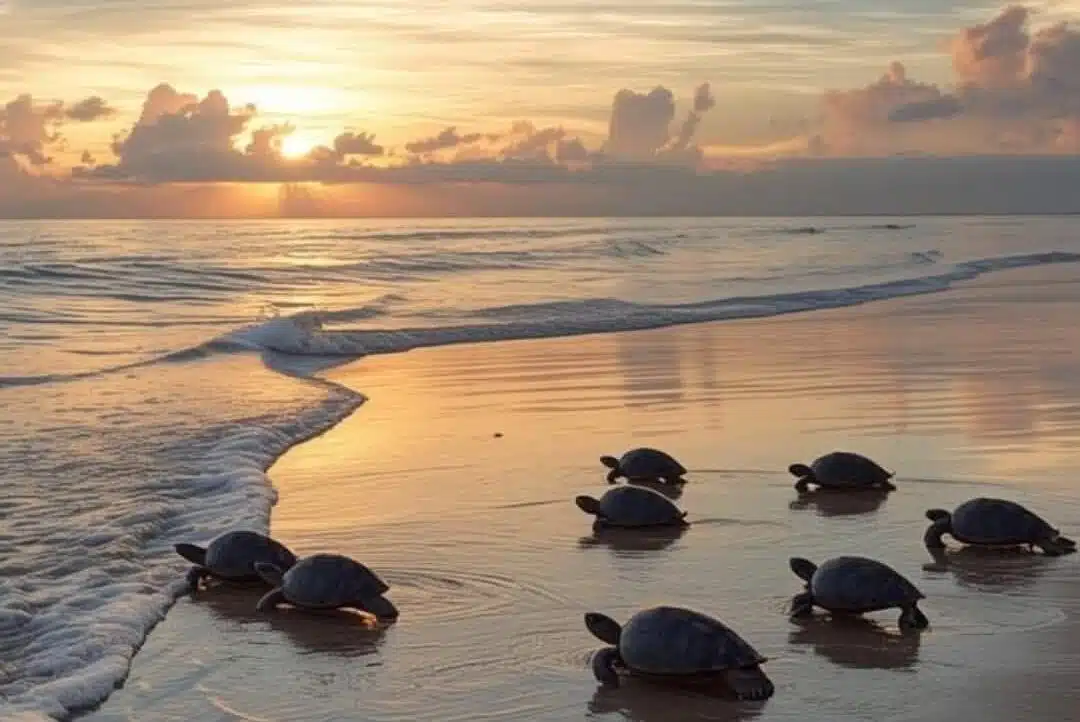
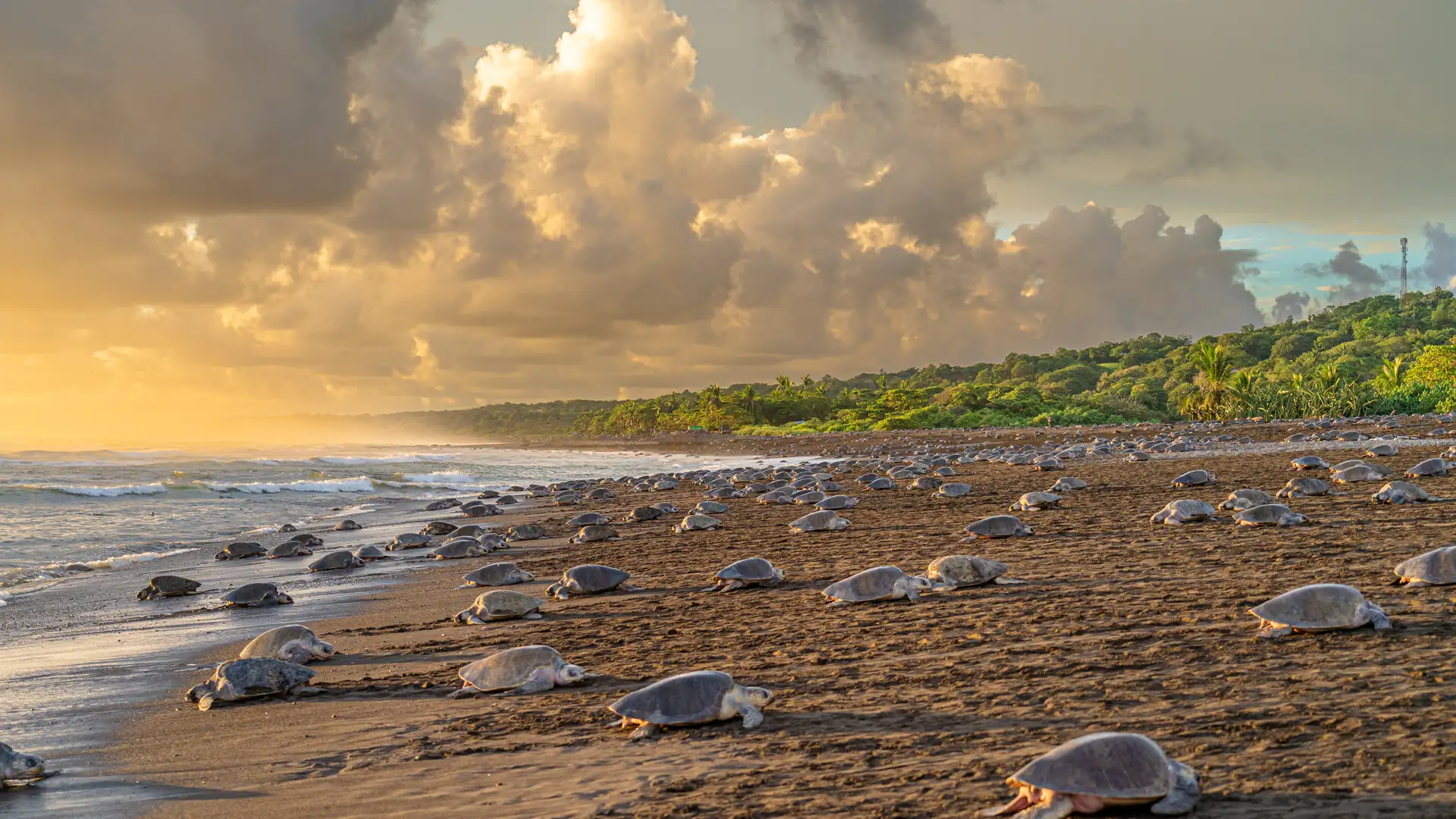
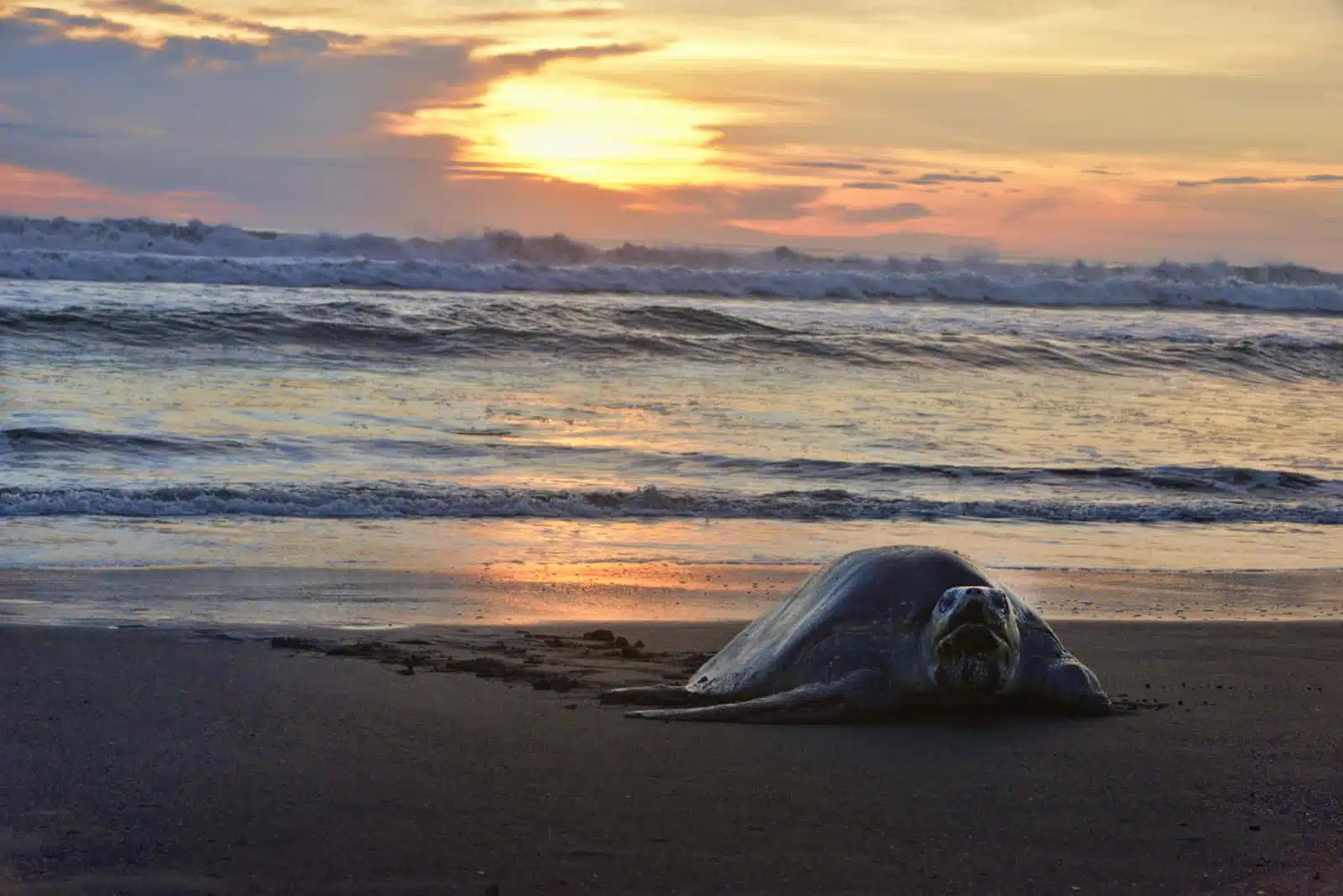
The first Olive Ridley turtle emerges from the surf, lifting herself into the shallows. Behind her, another shape rises, then another. Within hours the beach is transformed into an arribada, the Spanish word for “arrival,” used here for a mass nesting event that can bring hundreds of thousands of turtles ashore within days.
Standing back from the tide line with a biologist who has spent decades studying this coast, there is a sense of calm. Without crowds, you’ll have all the time you need to watch and understand why this event matters far beyond the spectacle.

Cultural and Scientific Context
The Olive Ridley is the most abundant sea turtle species in the world, yet abundance does not equal security. Across the Pacific, populations face pressure from bycatch, coastal development, and climate change.
Several times a year, most dramatically between September and October, hundreds of thousands of females arrive within a span of days. By nesting en masse, sometimes half a million turtles in a single event, the species overwhelms its predators. Vultures, coatis, and ghost crabs feed freely, yet cannot consume more than a fraction of the eggs laid, a strategy known as predator satiation.
Ostional’s volcanic black sand adds a further layer. Incubation temperature determines a hatchling’s sex, and scientists monitor these nests closely to track how shifting climate patterns may affect future generations. Most arribadas begin during the last quarter of the lunar cycle and peak on the darkest nights of the new moon, a correlation strong enough that researchers plan their monitoring around it.
Why a Specialist-Led Visit Matters
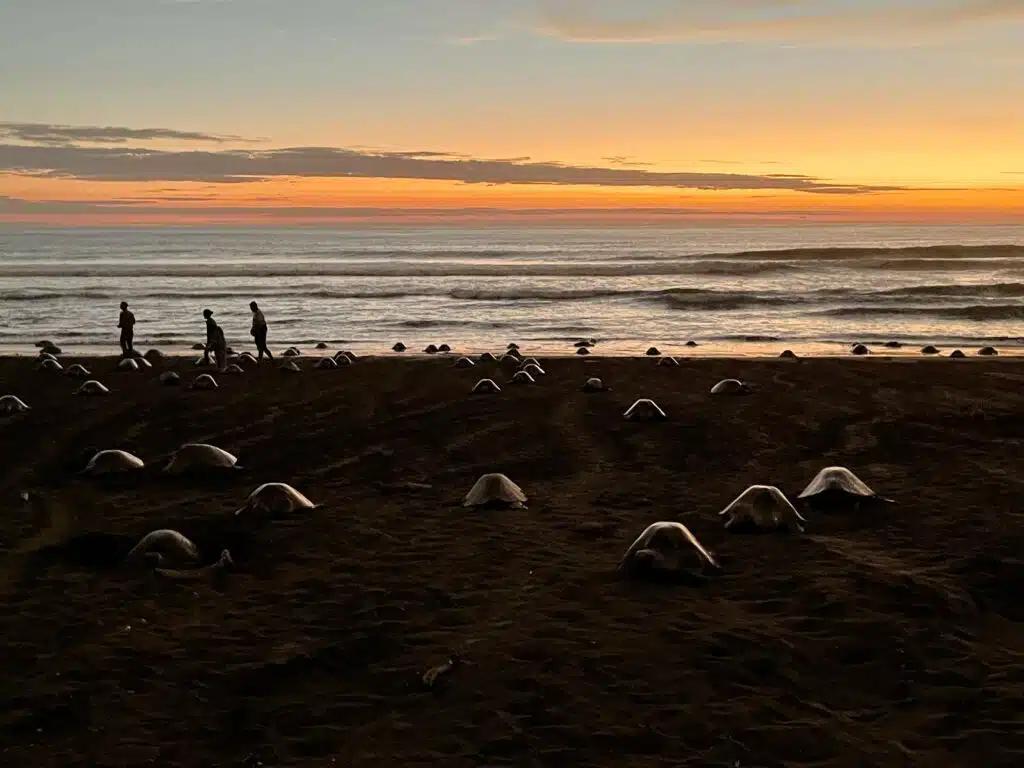
Ostional is not a spectacle to be consumed casually. Access to the refuge is regulated, and rightly so. During peak arribada nights, hundreds of turtles may be nesting simultaneously within a few meters of one another. Without guidance, it would be easy to disrupt their path or damage freshly laid nests hidden just beneath the surface.
Walking the beach with a long-time researcher changes the experience entirely. You learn to read tracks in the sand, why red-filtered light is used, and why silence matters when a turtle enters her egg-laying trance.
There is context for everything you see. When a later-arriving turtle begins to dig and inadvertently unearths a clutch laid earlier that night, your guide explains that this apparent destruction is part of a broader ecological rhythm. The density of nesting means that some early eggs will be displaced. It is within this reality that Ostional’s most debated conservation model emerged.
The Ostional Model
Unlike most turtle nesting sites worldwide, Ostional operates under a legal, government-sanctioned egg harvest. At first glance the idea seems contradictory. In practice, it is rooted in ecological observation and community stewardship.
Early nests are often dug up by later waves of turtles; left exposed, these eggs would rot and attract predators in greater numbers. By allowing the local community to harvest a regulated share of these early, vulnerable eggs, the refuge reduces waste and predator pressure.
The program gives the village of Ostional a direct stake in protecting the beach from poachers. Residents patrol the shoreline and work alongside biologists, and the turtle population has remained stable, in some cycles even increased, making this one of the rare global success stories in marine conservation.
What You See
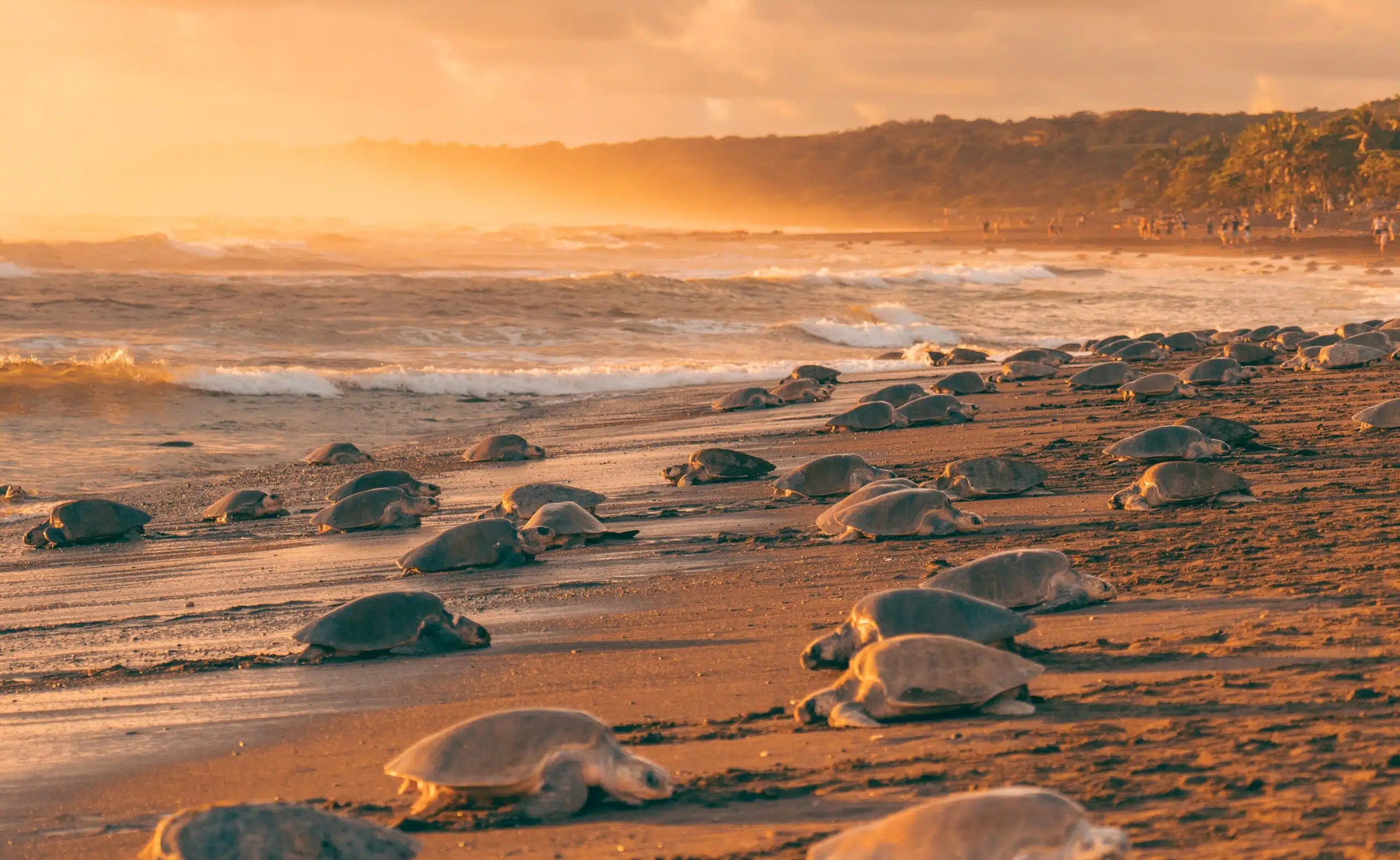
As the tide recedes, the beach fills with overlapping tracks. Some turtles dig with steady precision, hind flippers scooping sand into a flask-shaped chamber. Others rest briefly before beginning the slow return to the sea.
When a turtle enters the final stage of laying, she becomes almost still, eggs dropping in soft, rhythmic intervals. Your guide kneels at a respectful distance, pointing out the subtle contractions that signal completion.
On a new moon night the sky is unlit except for stars. The black sand holds the day’s heat, and the only consistent sound is the low percussion of surf and the dry scrape of sand. At dawn on a later visit, the scale becomes even more apparent: vultures circle overhead, late arrivals still push through the surf, and the shoreline feels less like a location than a system in motion.
How Private Access Elevates the Experience
Public arribada nights draw significant interest, and with darkness making orientation difficult, time on the beach is typically limited and closely managed.
A curated visit shifts the emphasis from observation to understanding. You enter with a pre-briefing on turtle behavior, and your guide adjusts timing to lunar forecasts and tidal patterns so you arrive when activity is most concentrated.
Instead of scanning for a single photograph, you notice sequence and scale: how one turtle conceals her nest in wide arcs, and how another abandons a site and tries again meters away. Logistics stay quiet in the background, transfers are timed, permits are arranged, and the schedule adapts to weather or the turtles’ delay.
The one constant is your presence, witnessing the spectacle ahead.
How Do Not Disturb Makes This Possible
Do Not Disturb coordinates this access directly with licensed local researchers and refuge authorities, arranges private transfers along the Nicoya Peninsula, and briefs you in advance so nothing distracts from the encounter itself.
Your wildlife specialist is embedded in the Ostional project, able to interpret behavior and decades of observation in real time. The result is an evening that feels both intimate and informed.
You are not simply witnessing a migration. You are understanding it.
Start Planning Your Own Do Not Disturb Moment.