


On this page
A private early morning hike on the lower slopes of Mount Otemanu with a local guide, reaching the ridge viewpoints at dawn before the lagoon fills with boat traffic.
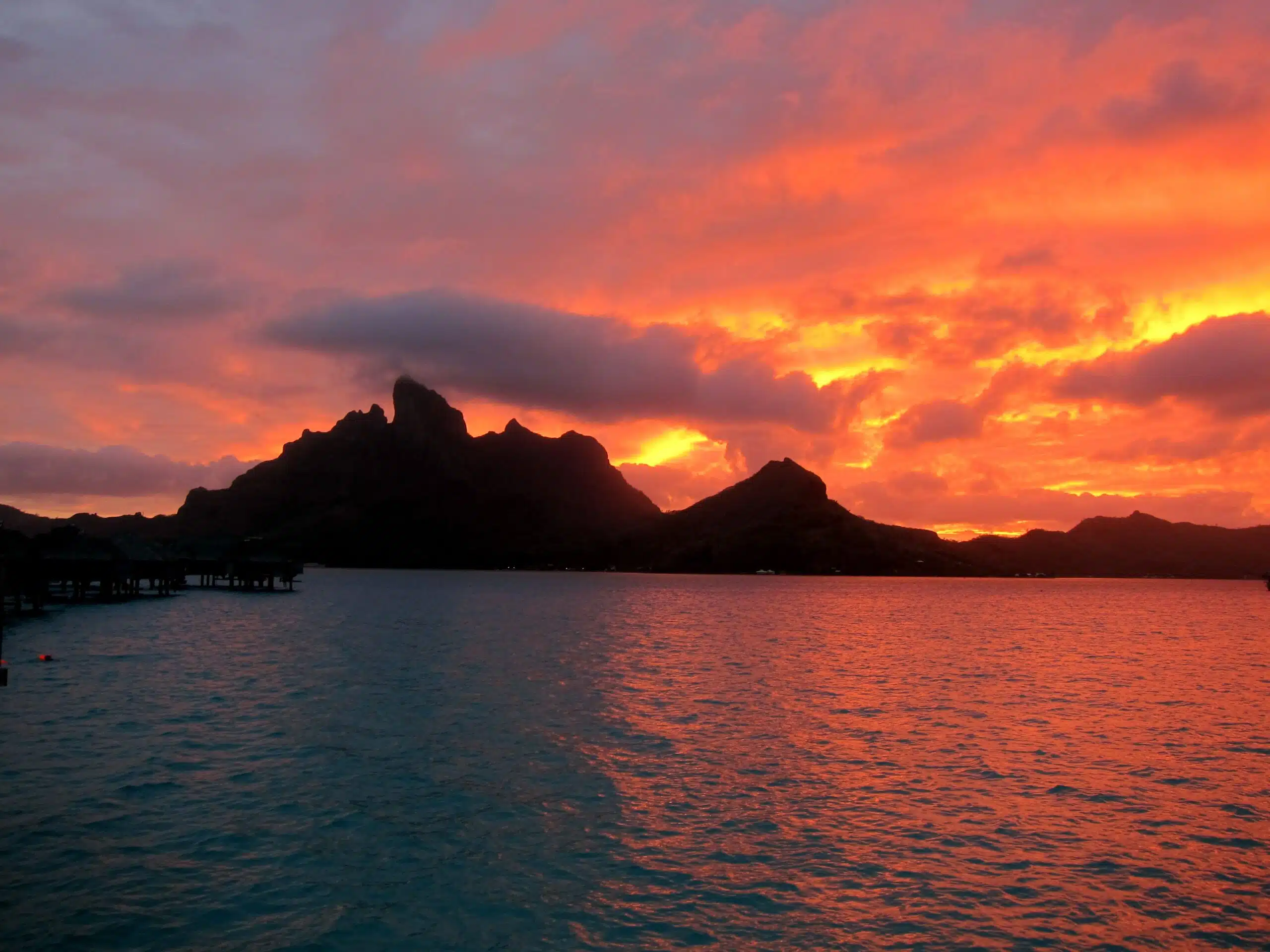
Mount Otemanu rises 727 meters from the centre of Bora Bora, visible from every point on the island and the lagoon. It is the first thing most visitors see on arrival and the constant presence behind every view from an overwater bungalow deck. The standard Bora Bora itinerary is organised around the lagoon, the reef, and the motu, and the mountain that defines the island’s geography remains the backdrop rather than the destination.
A private early morning hike on the lower slopes with a local guide changes that relationship. The summit is not accessible, the final crag is sheer basalt and the rock is unstable, but the lower trail and the ridgeline shoulders reach viewpoints from which the full geography of the island is visible in a way the water level cannot produce.
The lagoon, the barrier reef, the motu, and the open Pacific beyond the reef edge are all present from the same point at once. At dawn, before the boat tours have departed, the island below holds a quality of quiet that the water-level view does not.

Cultural and Historical Context
The name Otemanu is most commonly interpreted as meaning “the peak which sucks up living things,” a description that may allude to the mountain’s sheer basalt cliffs or the powerful winds around its summit. In local legend, the spirit of a god descended atop a rainbow on Bora Bora, the first land and sanctuary of the ancestors, invoked by warriors for power and by priests to attract rain.
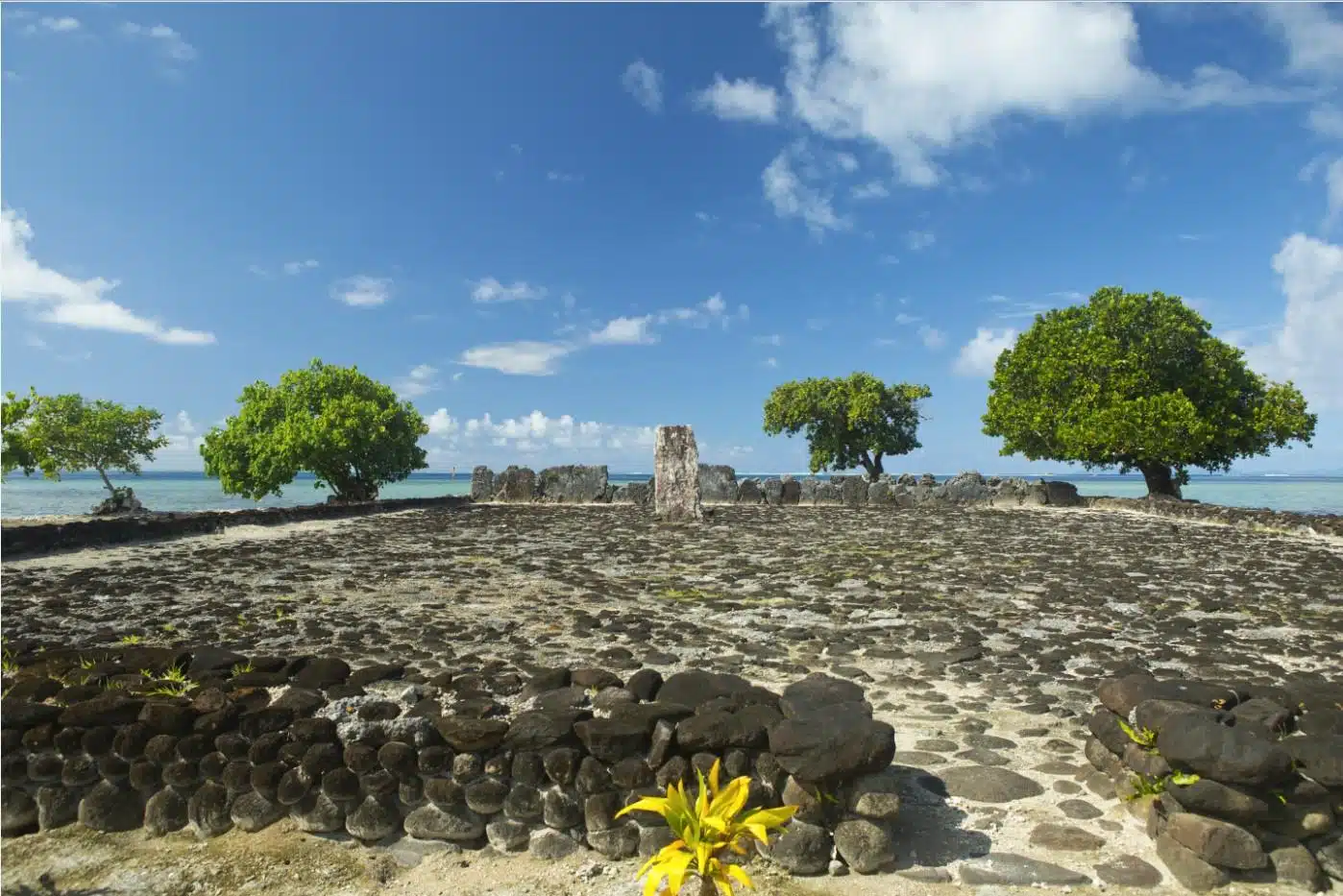
Ancient marae, the stone platform temples of the Maohi people, are distributed across the lower slopes, and the cave of Ana o Pea near the ridgeline served as a site of ceremony and burial for several centuries. Bora Bora formed three to four million years ago as a hot-spot shield volcano that went extinct and began sinking while a coral reef grew up around it, creating the lagoon and barrier reef visible today.
Otemanu and its neighbour Mount Pahia are the eroded remnants of the original volcanic core. Understanding this process changes how the view from the ridge reads. The lagoon is not scenery. It is the space where the original volcano once stood, now filled with water and coral. During World War II, Bora Bora served as a US military refueling base for the Pacific campaign, and Mount Otemanu provided the high ground for radar equipment and artillery. The remains of that infrastructure are still visible on the lower slopes and ridgeline.
Why Private or Small-Group Access Matters
The lower trail has no maintained path, no signage, and no facilities. It requires a guide who knows the terrain, the route to the ridgeline viewpoints, and the sections where loose volcanic rock and dense vegetation require particular care. A private guide is not an optional enhancement. It is the condition under which the morning is both safe and productive.
The specific viewpoints from which the full width of the barrier reef and the lagoon are simultaneously visible are particular locations that a guide who hikes this trail regularly knows and can route the morning around. A private arrangement allows the pace, the stops, and the direction to adjust based on conditions and the guest’s physical level.
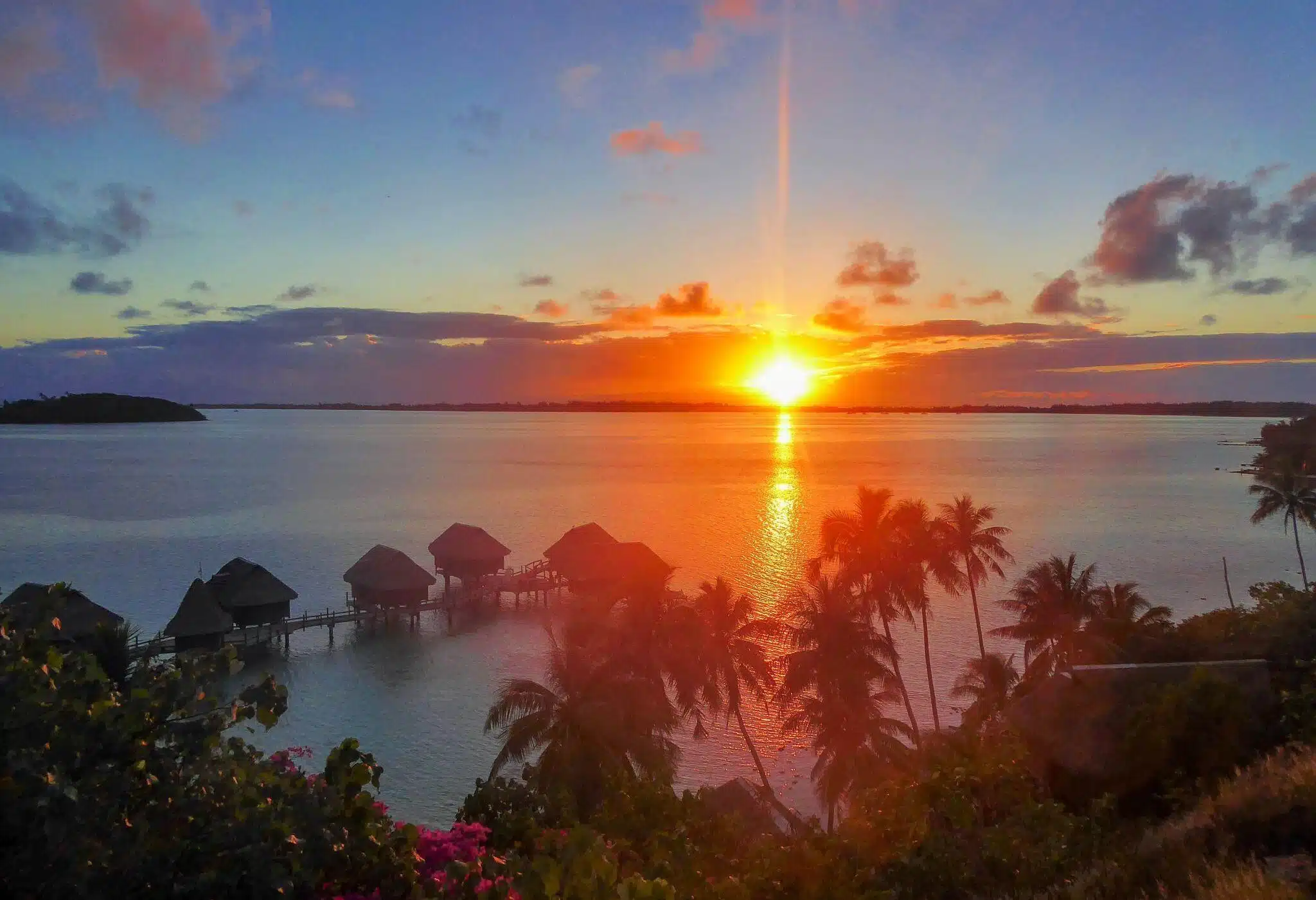
The timing also matters. The light on the lagoon at dawn, when the sun rises from the east and the lagoon below fills with colour, is available for a window of around 45 minutes before the light normalises. A guide who times the departure to reach the ridgeline within that window produces the view at the hour when the island is most itself.

What You See
The hike begins in the dark on mornings timed for the ridgeline at sunrise. The lower slopes are covered in dense tropical vegetation, with ferns, pandanus trees, and sections of exposed volcanic root systems where the trail requires hands and feet simultaneously. The air cools as the altitude increases and the vegetation changes from the humid jungle floor to the more open terrain of the upper lower slopes.
The first ridgeline viewpoint gives the first clear view of the lagoon to the east, with the motu visible as low strips of vegetation above the water and the barrier reef readable as the line where the turquoise of the lagoon meets the darker blue of the open Pacific. At this altitude, the relationship between the original volcanic island and the reef that grew around it is visible in a way the water-level view cannot produce.
The upper ridgeline viewpoints give the full 360-degree perspective, with the lagoon, the reef, Mount Pahia to the south, and the open Pacific to the north and west all present from the same position. The boat tours that will cover the lagoon in a few hours have not yet departed. The cave of Ana o Pea, visible in the cliff face below the summit crag, is the site connected to the creation legend of Bora Bora as the first land, and a guide who knows the oral history associated with it provides the cultural context the geological view alone does not.
How Do Not Disturb Makes This Possible
Do Not Disturb works with local guides on Bora Bora whose knowledge of the Otemanu lower trail extends to the specific ridgeline viewpoints, the World War II infrastructure on the slopes, the location and significance of the marae, and the oral traditions associated with Ana o Pea. The departure is set around the sunrise window, with the guide briefed on the guest’s physical level and specific interests before the morning begins.
All logistics including the transfer from the accommodation to the trailhead are arranged before arrival. The morning can be combined with a private lagoon excursion in the afternoon, moving from the view from above to the view from the water within the same day.
Ready to plan your private sunrise hike on Mount Otemanu and experience Bora Bora from the perspective the lagoon cannot offer? Speak with Do Not Disturb to begin your journey.