

On this page
For a few hours, before the tour groups and the heat, Athens can belong entirely to you. This is a morning structured around context: pre-opening access to the Parthenon, a private archaeologist, and a rooftop breakfast on a restored neoclassical building that asks you to sit with what you’ve just seen.
Before the Gates Open
Pre-opening access to the Acropolis is not a standard ticketing category. It exists through institutional relationships and requires coordination with the Greek Ministry of Culture, which governs site permissions. The window typically opens around sunrise and closes before general admission begins at 8am, giving a group roughly 45 to 90 minutes on the hill without other visitors present.
The practical significance of this timing is structural, not aesthetic. The Acropolis receives up to 10,000 visitors on peak summer days. At that volume, movement around the Parthenon, the Erechtheion, and the Propylaea is constrained, and sustained conversation with a guide is difficult. Early access removes those constraints entirely, allowing the archaeologist to work through the site at a pace determined by the material rather than the crowd.
The arrangement also determines what the archaeologist can do. With uninterrupted access to each structure, the session functions as a proper briefing rather than a moving commentary — a distinction that shapes the value of everything that follows.
The Archaeologist as Interpreter
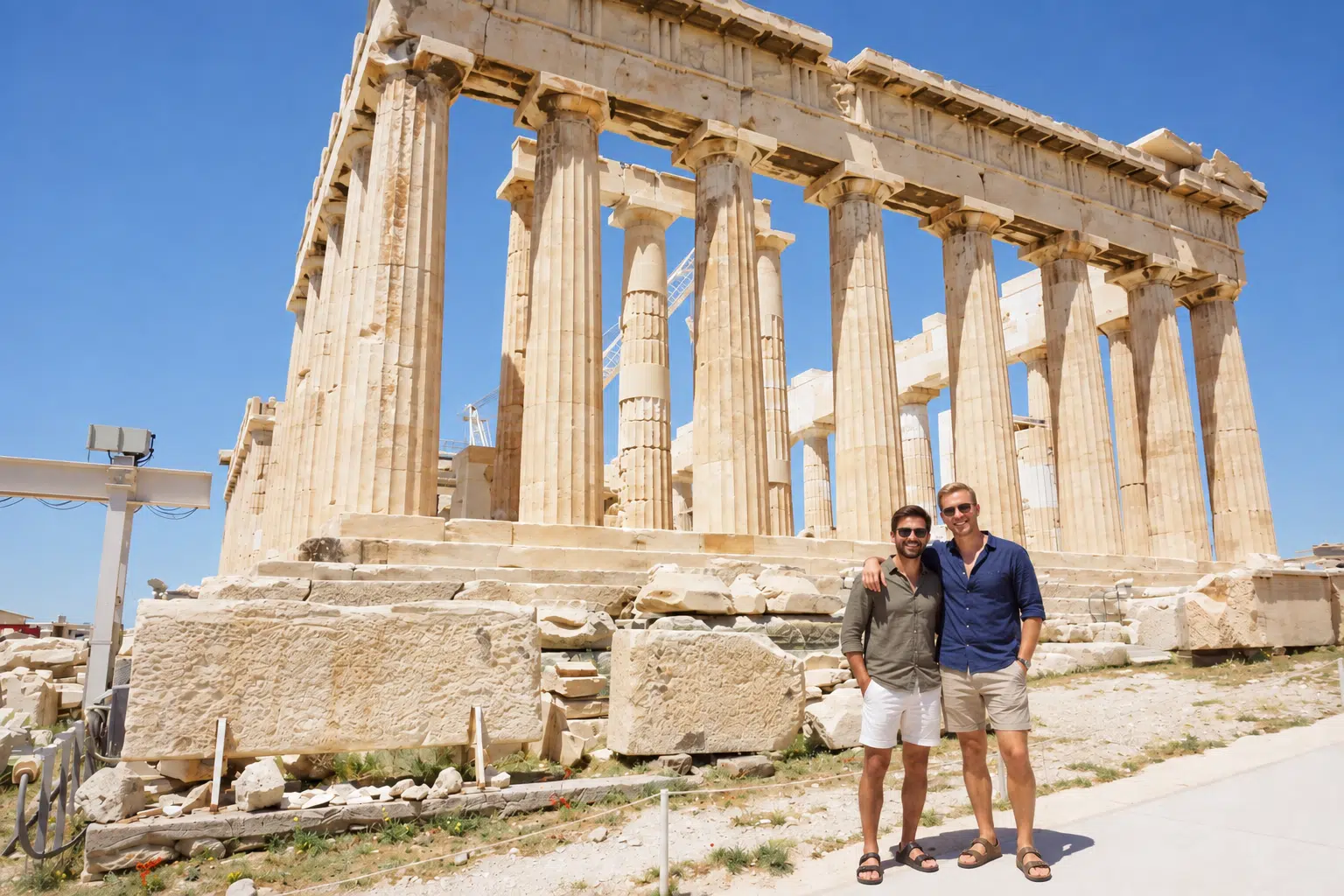
The archaeologist accompanying this experience is not a licensed tour guide. The distinction matters. Where guides are trained to narrate, archaeologists are trained to analyse — and the difference is audible within minutes. The Parthenon is not presented as a monument to be admired but as a structure to be read: its construction timeline, the political logic of Pericles’ building programme, the deliberate optical corrections built into the columns to counter the distortion of human perception at scale.
What shifts the experience is the focus on deterioration and intervention. The ongoing restoration project — now in its fifth decade — has produced significant scholarly revision of what the original structure actually looked like. An archaeologist working in this field can speak to those revisions with precision, including where certainty ends and interpretation begins.
This kind of contextual framing is not available through standard access. It depends on who is present, what their speciality is, and how the visit is structured around their knowledge rather than a fixed itinerary.
Reading the Parthenon in Dawn Light
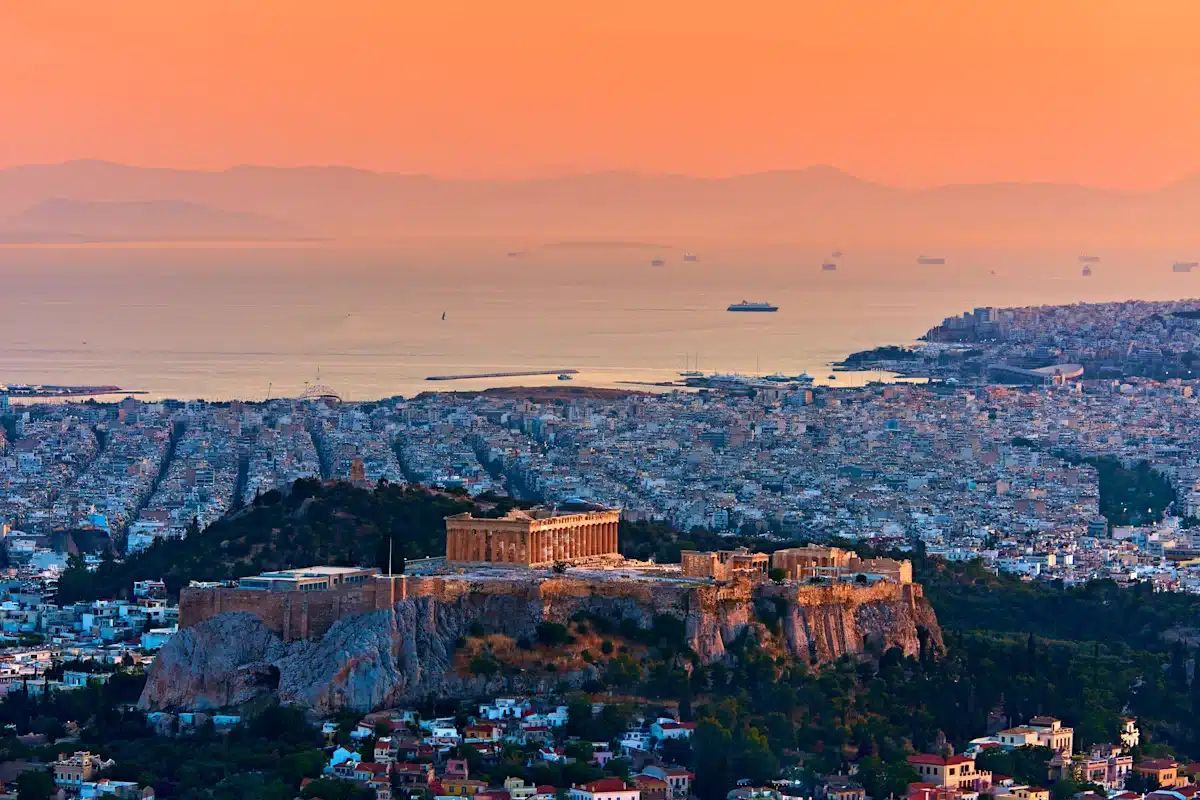
The Parthenon is built with deliberate optical corrections — columns that tilt inward, platform edges that curve upward, spacing that varies across the colonnade — all designed to counteract the distortions of human perception at scale. These are not visible in photographs and are rarely legible in crowded conditions. At dawn, with no competing movement or noise, an archaeologist can walk you through them directly, pointing to specific columns and joints where the engineering decisions are still readable in the stone.
The damage is equally instructive. The Parthenon has survived war, conversion into a mosque and then a munitions store, a 17th-century explosion, and two centuries of extraction and weathering. An archaeologist can identify which scars belong to which period and where the ongoing restoration programme—using original marble from Mount Pentelicus—has intervened.
This level of reading requires both expertise and time. The pre-opening window provides the latter; the quality of the guide determines the former.
A Quieter Museum
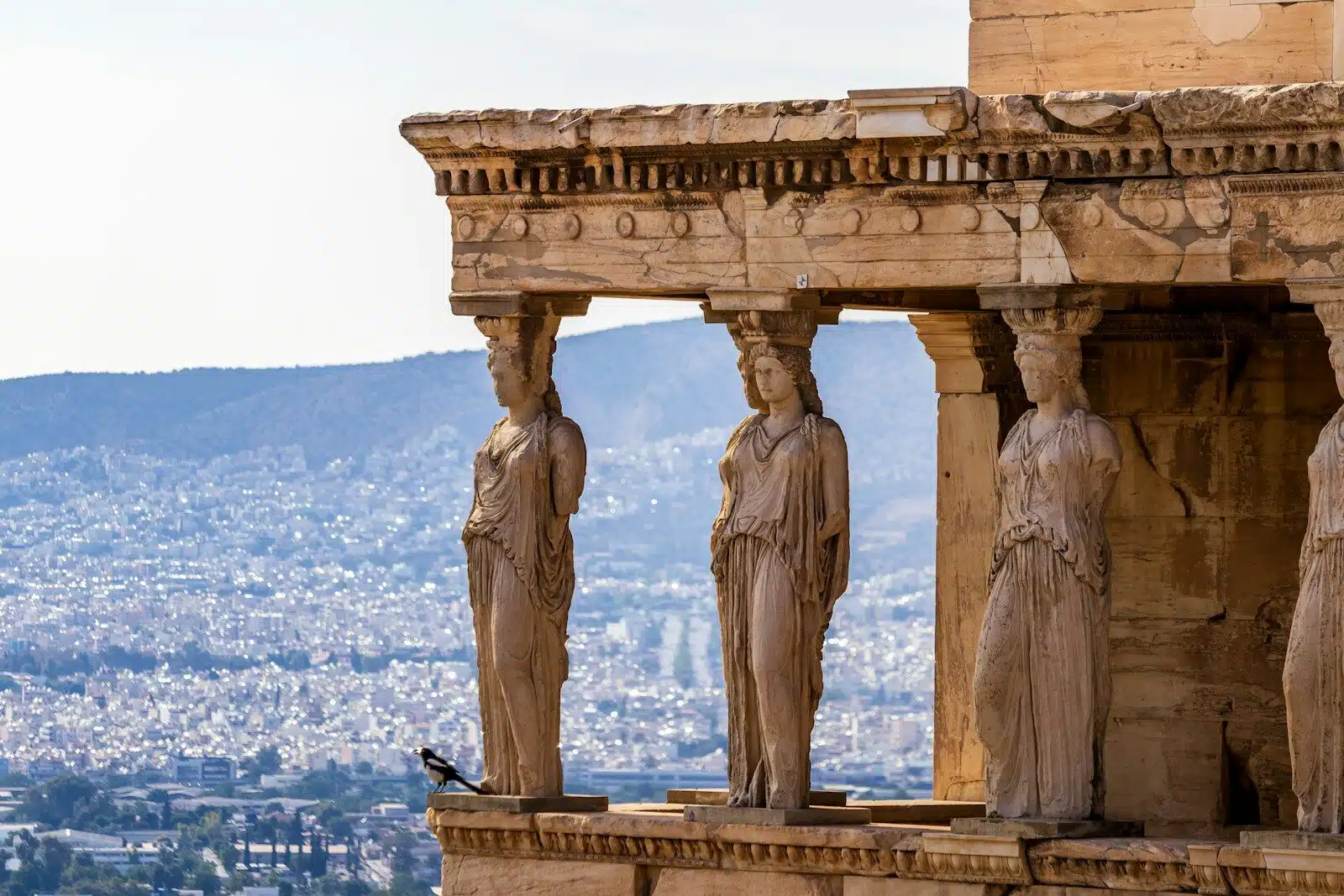
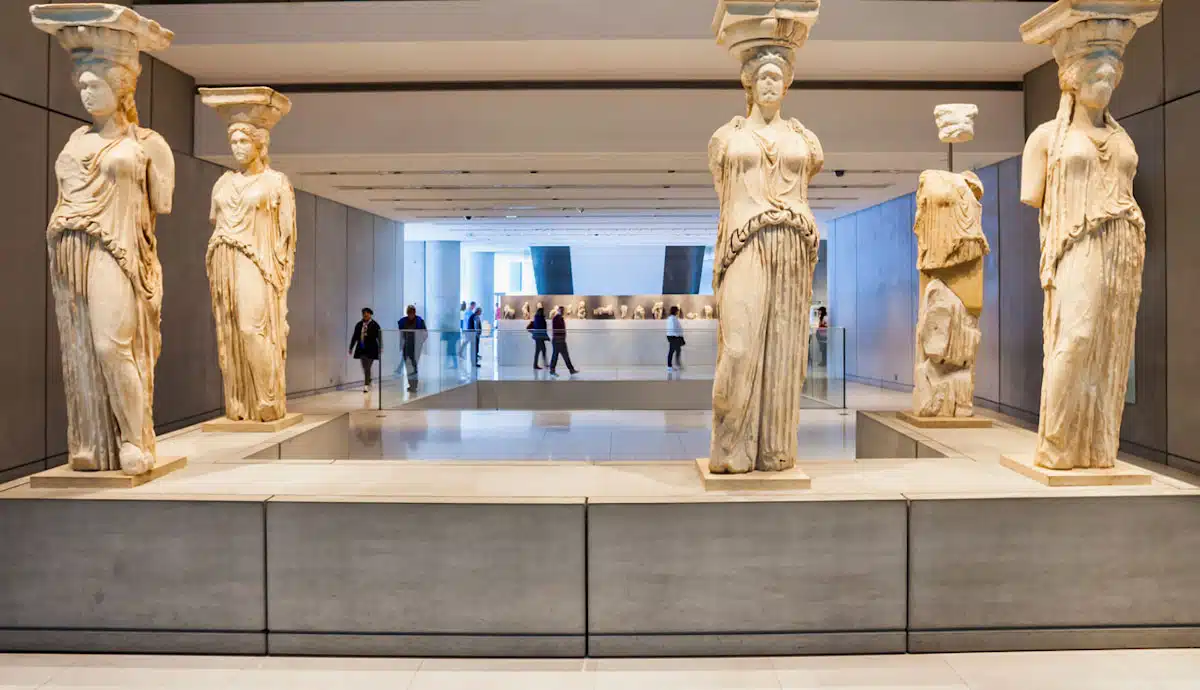
The Acropolis Museum was designed to be read in sequence. The ground floor preserves the archaeological stratigraphy of the site beneath it, visible through glass floors, before the collection moves chronologically upward. The top floor aligns the Parthenon frieze fragments held in Athens directly towards the Acropolis itself — a deliberate curatorial argument about repatriation and context that the building makes without text.
The archaeologist’s value here is selectivity. The museum holds over 4,000 objects, and general visits rarely move beyond the Caryatids or the frieze. The less-examined pieces — votive offerings, architectural details from the Erechtheion, the pedimental sculptures showing the contest between Athena and Poseidon — carry significant interpretive weight that is easy to miss without guidance. These objects extend the logic of what was seen on the rock, filling in the civic and religious functions that the ruins themselves no longer communicate clearly.
Pre-opening access removes the compression that affects most museum visits. The collection can be approached at the pace the sequencing requires.
Breakfast with a View
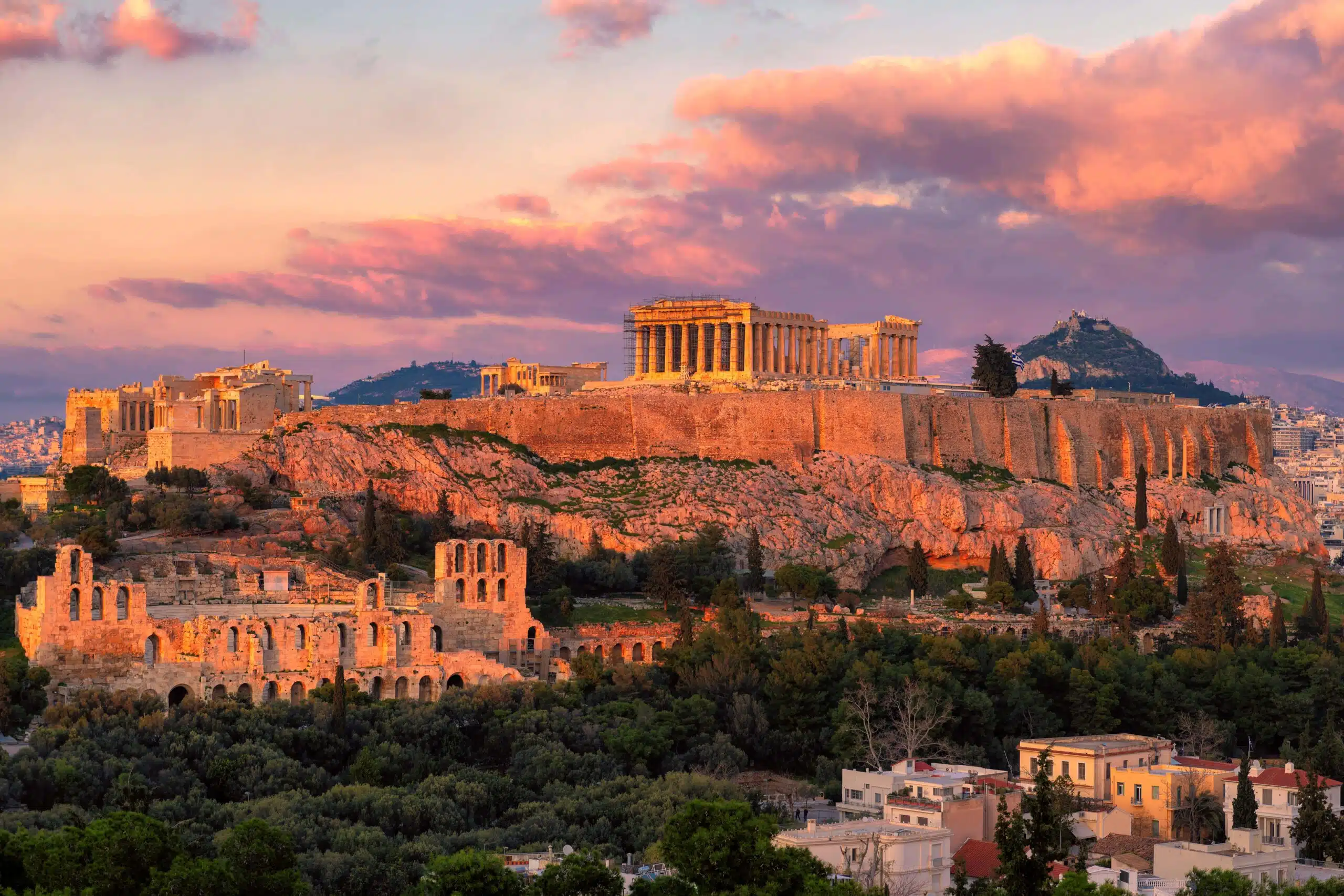
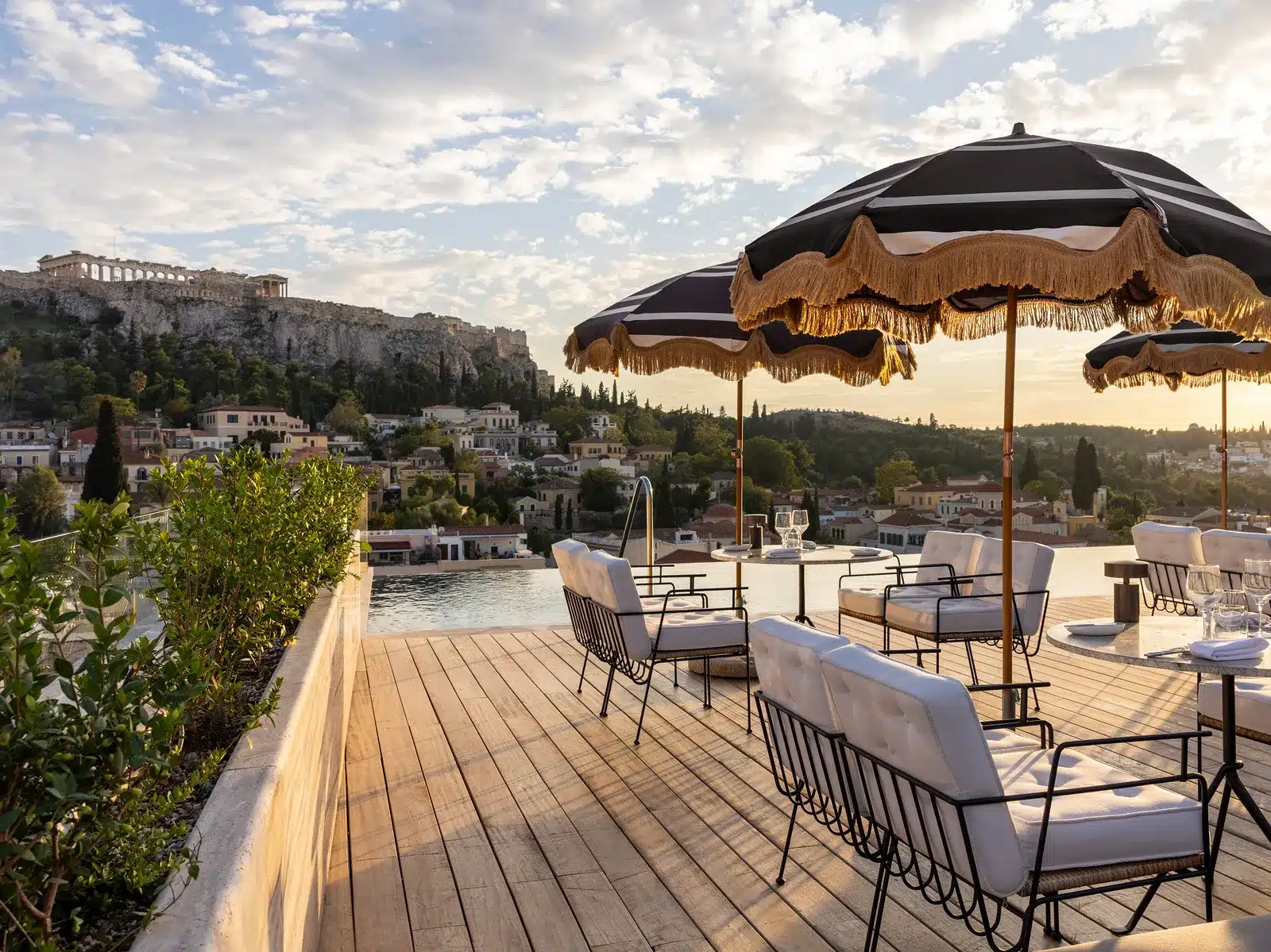
The building sits within walking distance of the Acropolis, its 19th-century neoclassical facade part of a streetscape that Athens has spent decades selectively recovering. The rooftop is functional rather than decorative—a flat terrace with direct sightlines to the Parthenon, positioned so that the monument remains visually present throughout the meal.
The breakfast is structured to support conversation rather than compete with it. The menu draws on Greek produce and preparation—cheese, cured meats, seasonal fruit, bread—without theatrical presentation. The format is unhurried and designed around a table small enough to keep discussion focused.
What follows the meal is a guided conversation on preservation: the ongoing debates around the Elgin Marbles, the structural interventions currently underway on the Parthenon itself, and the political and technical complexity of maintaining a site under continuous international scrutiny. The rooftop setting, with the Acropolis in direct view, gives that conversation a fixed reference point that a seminar room cannot replicate.
The Preservation Conversation
The Parthenon is not a stable object. Ongoing structural intervention—including the controversial use of new Pentelic marble and titanium reinforcements—reflects a fundamental tension in conservation: whether to arrest decay, reverse it, or accept it. These are not settled questions, and an archaeologist working within this site will have a position on them.
The question of the Elgin Marbles sits alongside this. Roughly half of the surviving frieze is in the British Museum; the Acropolis Museum, completed in 2009 and positioned deliberately at the foot of the hill, was designed in part to make the case for reunification. The empty spaces in its frieze gallery are not accidental. They are an argument.
What makes this conversation useful at the end of the morning is that the site has already provided the evidence. The debates around ownership, intervention, and interpretation are easier to engage with when the monument itself is still in view.