

A private whale shark swim departing from Isla Mujeres offers rare access to the Afuera feeding grounds, where early departures, controlled conditions, and deep blue water allow for calm, prolonged encounters with the largest fish on Earth.
Leaving the dock before sunrise, the atmosphere feels closer to a working marine expedition than a tour. Engines hum quietly as the boat clears the coastline and heads north into open water, where the turquoise shallows of the Caribbean slowly darken into a deep, ink-blue expanse. This transition marks entry into the Afuera, a specific offshore zone where the Gulf of Mexico and Caribbean Sea converge.
Unlike reef-based snorkelling or coastal wildlife encounters, this experience unfolds far from land. The horizon stretches uninterrupted, and the scale of the environment becomes immediately apparent. The water beneath the hull is often thirty to fifty meters deep, its colour absorbing light rather than reflecting it, creating a striking contrast once wildlife appears below the surface.
A private departure changes the tone from the outset. There is no sense of racing other boats or waiting for instructions shouted across a crowded deck. Instead, the day progresses deliberately, shaped by conditions, sightings, and the behavior of the animals rather than a fixed rotation.
About Do Not Disturb
Do Not Disturb is a luxury travel company specializing in carefully designed journeys and considered experiences. Each itinerary we build for our clients is informed by real destination knowledge, offering insight into places, cultures, and moments that shape how a trip comes together.
If this destination has sparked ideas, the itinerary can be developed into a private journey tailored to your interests and travel style, with hand-picked stays, thoughtful routing, and experiences curated around what matters most to you.
Understanding the Afuera
The Afuera is not a single point on a map, but a dynamic offshore area north of Isla Mujeres where seasonal upwelling brings nutrient-rich water to the surface. This phenomenon triggers vast blooms of plankton and fish eggs, creating a feeding event that draws whale sharks in extraordinary numbers.
During peak season, typically between June and September, scientists have documented hundreds of whale sharks feeding within a relatively small area. In one aerial survey, more than four hundred individuals were recorded in a single square kilometer, making this the largest known aggregation of whale sharks anywhere in the world.
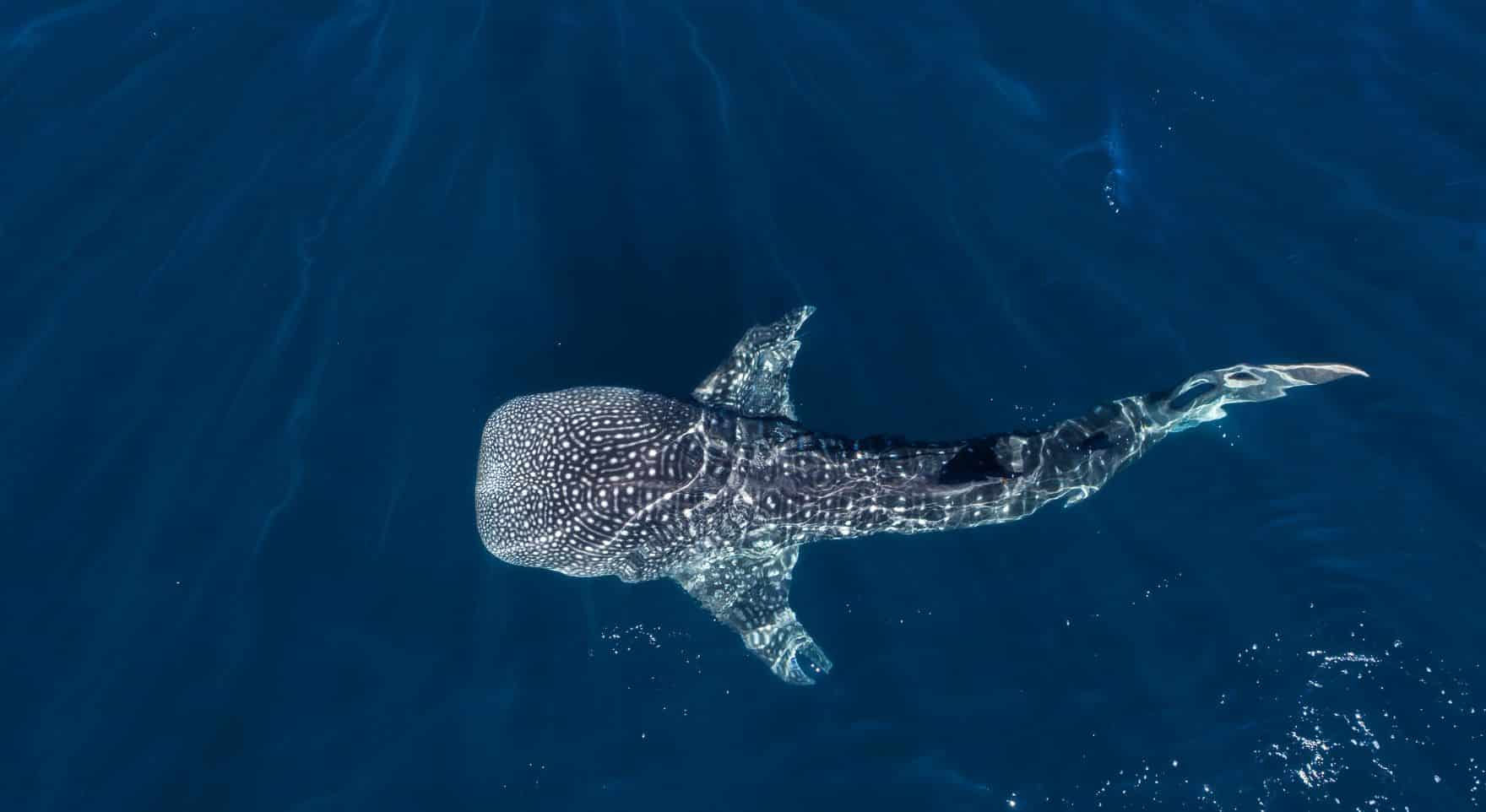
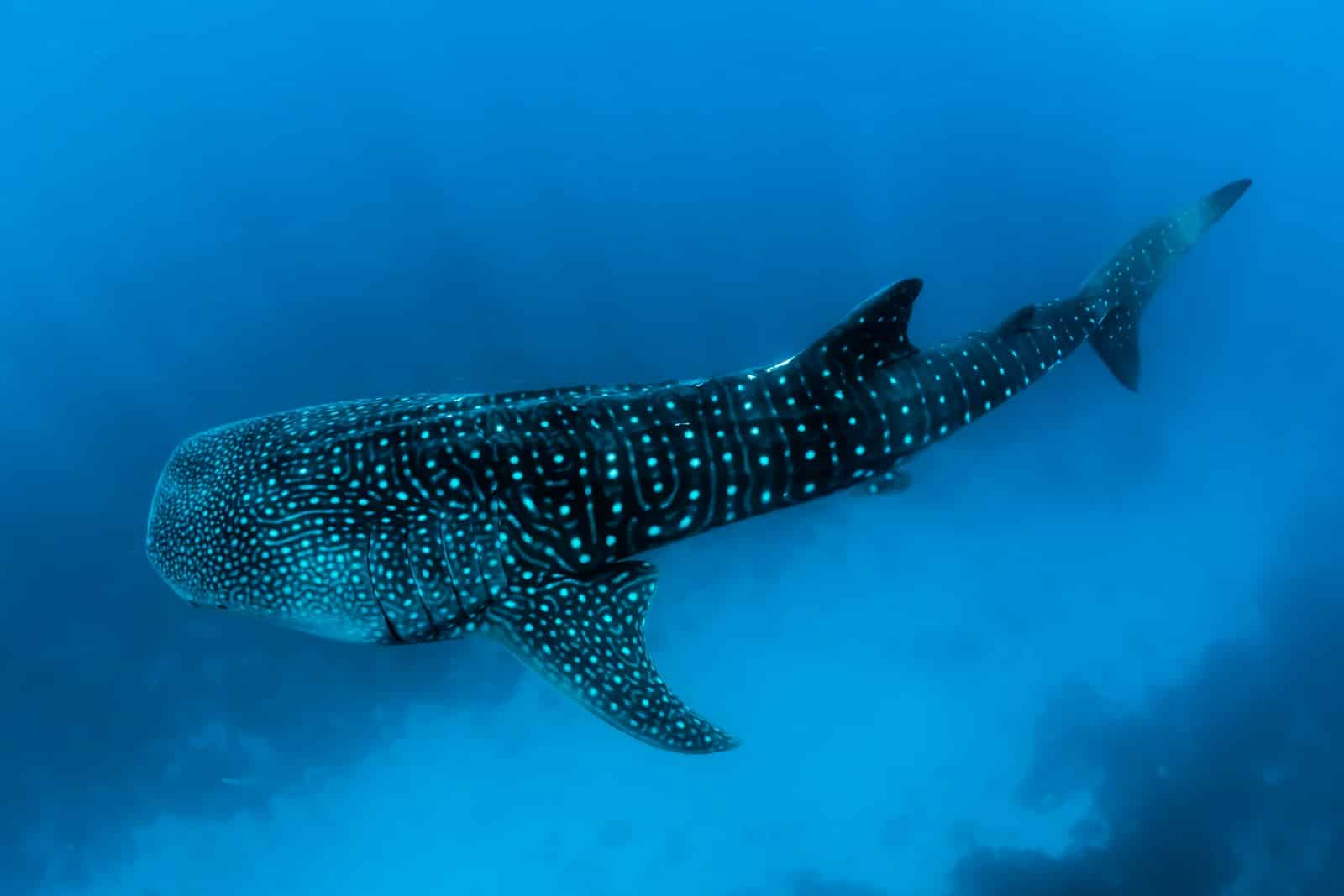
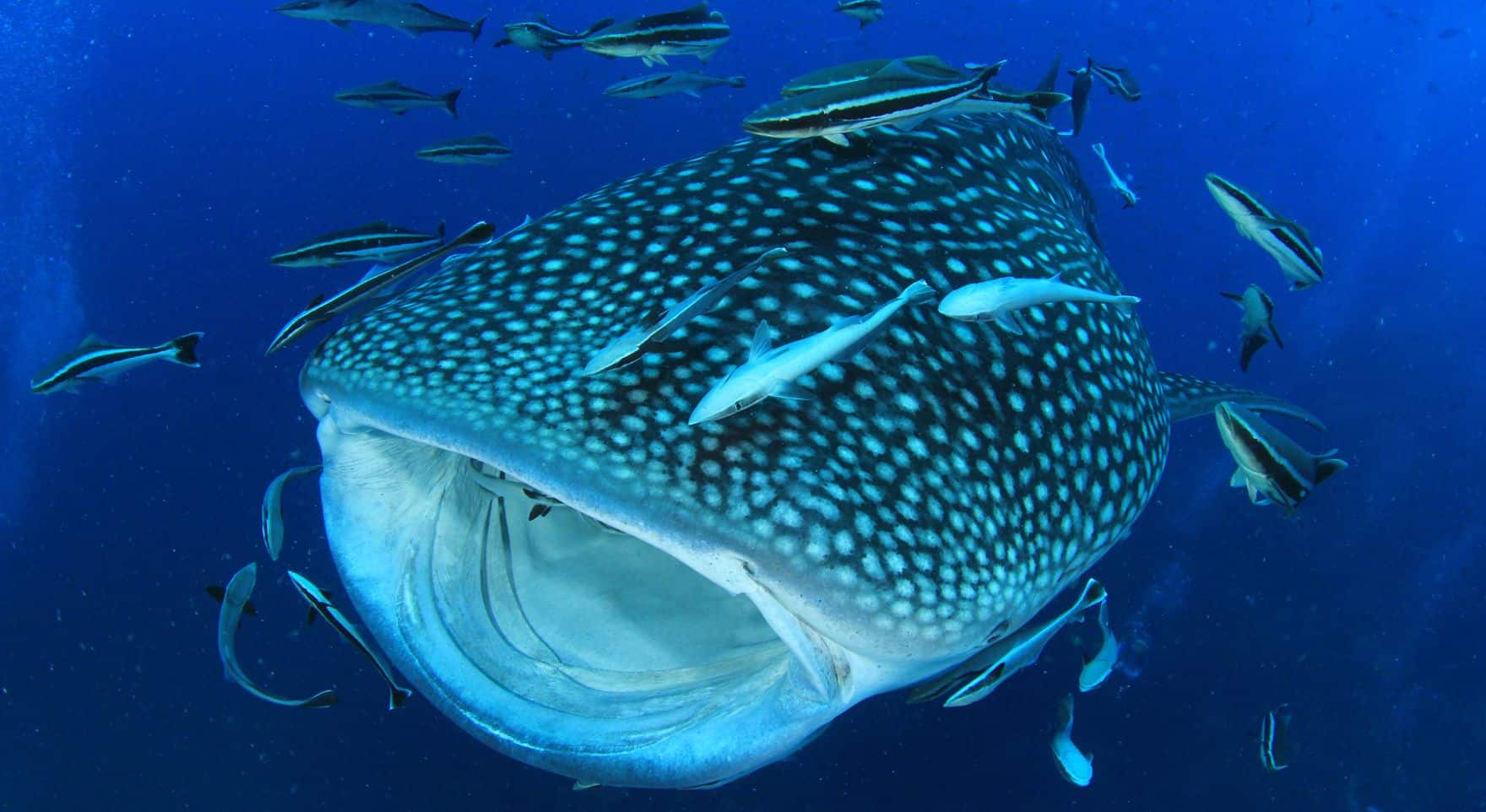
The depth of the water is critical to the experience. Unlike coastal lagoons, the Afuera’s deep blue backdrop causes the white spots and stripes of whale sharks to stand out with remarkable clarity, making encounters visually dramatic even before entering the water.
The Whale Sharks Themselves
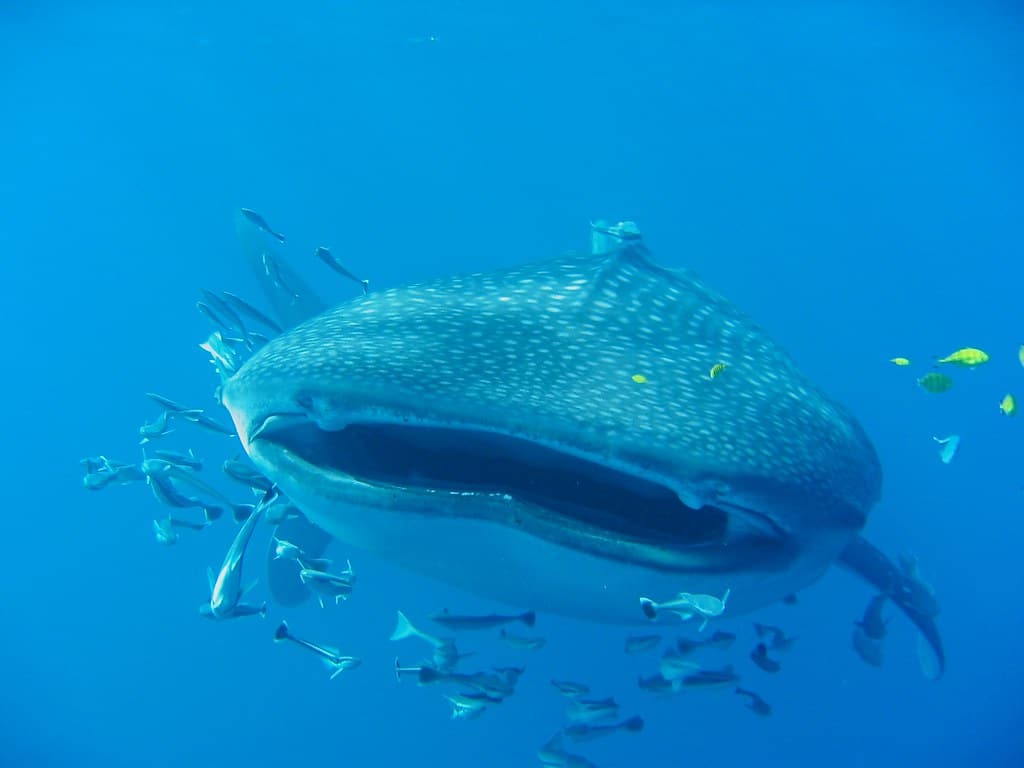
Despite their name, whale sharks are fish rather than mammals. They breathe through gills, are cold-blooded, and rely on ram filtration to feed. Swimming with their mouths open, which can measure up to one and a half meters wide, they filter enormous volumes of water each hour, extracting plankton and fish eggs without any form of biting or chewing.
Individuals encountered in the Mexican Caribbean typically range from six to twelve meters in length, placing them on a scale comparable to a large bus. Even experienced travellers often underestimate their size until they appear directly beneath the surface, moving with a slow, deliberate grace that belies their mass.
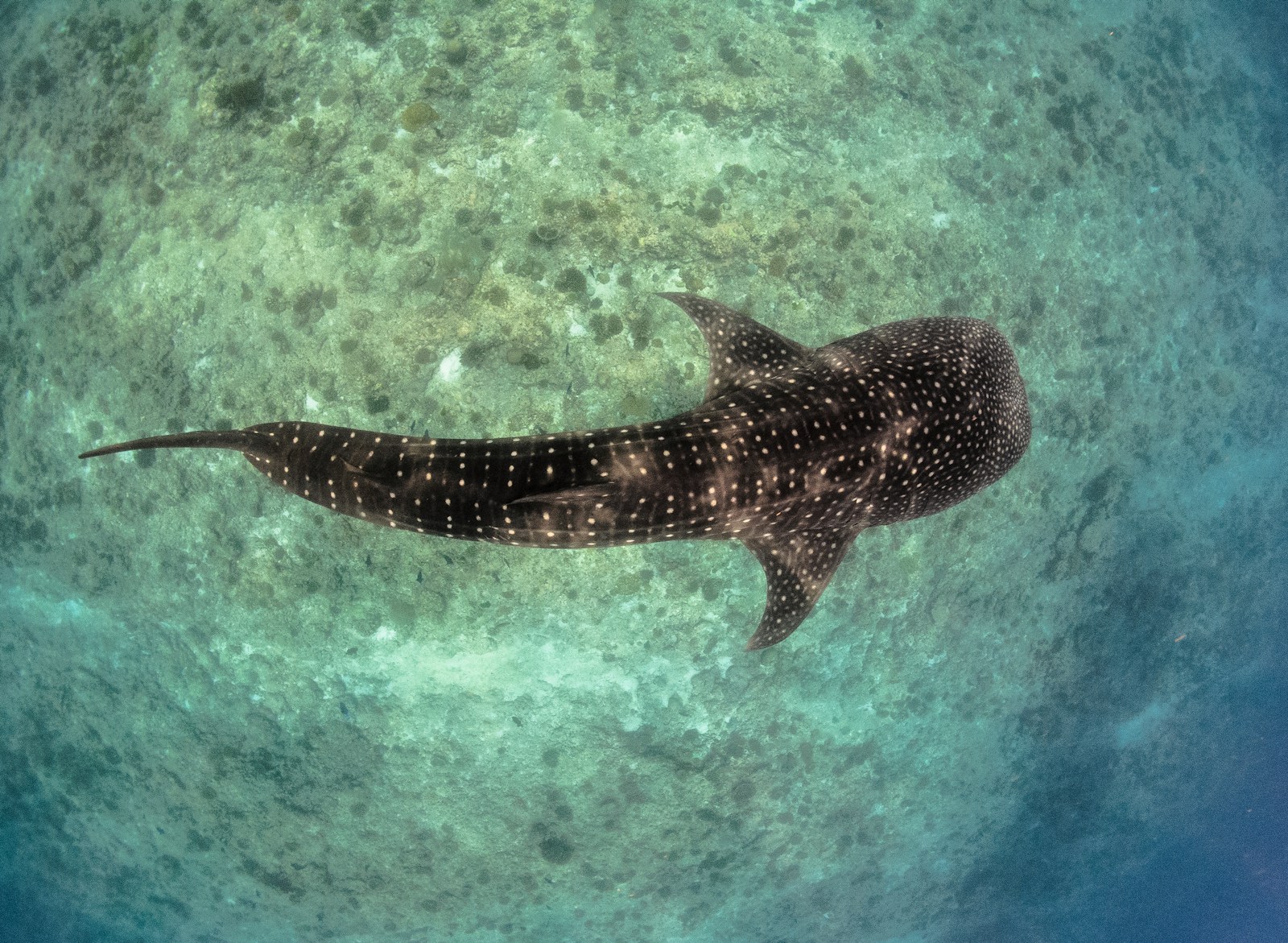
Each whale shark carries a unique pattern of spots, particularly behind the gills, which researchers use as a natural fingerprint to identify and track individuals across oceans. Seeing these markings up close reinforces the sense that this is not an anonymous encounter, but a meeting with a distinct animal within a vast migratory network.
Why Private Access Matters Here
The popularity of whale shark season has transformed the Afuera into one of the busiest marine wildlife zones in the region. On peak days, hundreds of boats may operate in the area, each following strict regulations enforced by Mexico’s environmental authority, SEMARNAT.
Shared tours operate on fixed schedules, usually departing between eight and nine in the morning, when boat traffic is at its heaviest. Guests rotate through short swimming windows, often limited to two or three brief entries into the water before moving on to allow others their turn.
A private charter fundamentally changes this structure. Early departures, often around seven in the morning, place you on the water before the main fleet arrives. Conditions are quieter, visibility is clearer, and sharks are less surrounded by surface activity.
Control over timing also allows for patience. If a particularly curious whale shark lingers near the boat, a private guide can remain in place, allowing multiple, unhurried swims rather than forcing a departure to meet a schedule. The result is an encounter defined by continuity rather than interruption.
Swimming With the Sharks
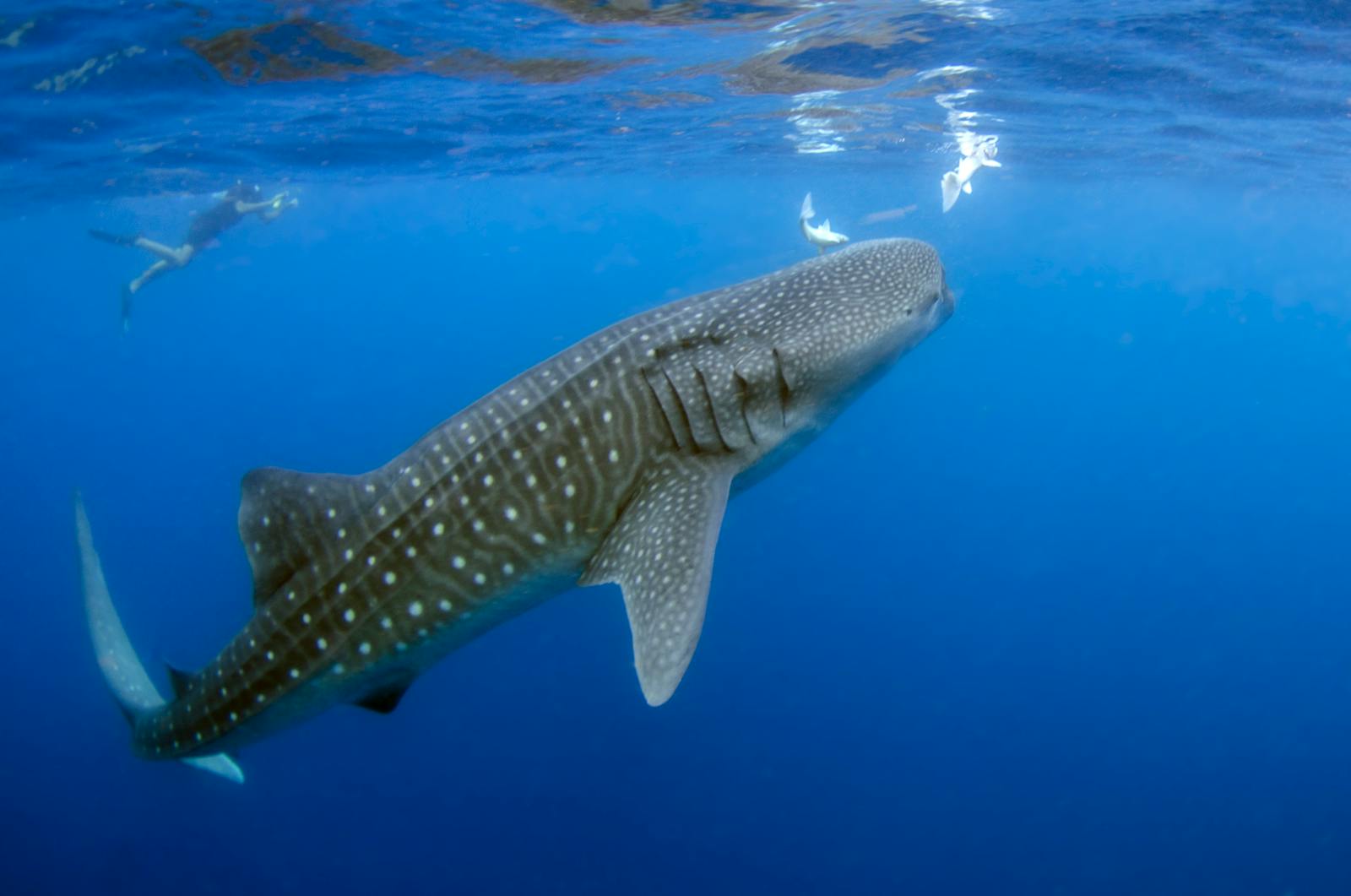
Entry into the water is carefully managed. Regulations allow only two swimmers at a time with each whale shark, accompanied by a certified guide. From the moment you slide into the water, the scale of the experience becomes tangable.
Whale sharks often pass just below the surface, their dorsal fins breaking the water briefly before submerging again. Swimming alongside them requires no pursuit, only alignment with their direction and pace. The goal is to observe them rather than approach, matching speed while maintaining respectful distance.
Because private tours are not constrained by rotation, swimmers can enter the water multiple times, adjusting technique and confidence with each swim. This is particularly valuable for photography, where timing, angle, and light play a significant role.
A private guide also acts as a spotter, positioning swimmers ahead of approaching sharks and ensuring that backgrounds remain clear of other boats or snorkelers, an increasingly rare advantage in this environment.
The Additional Wildlife
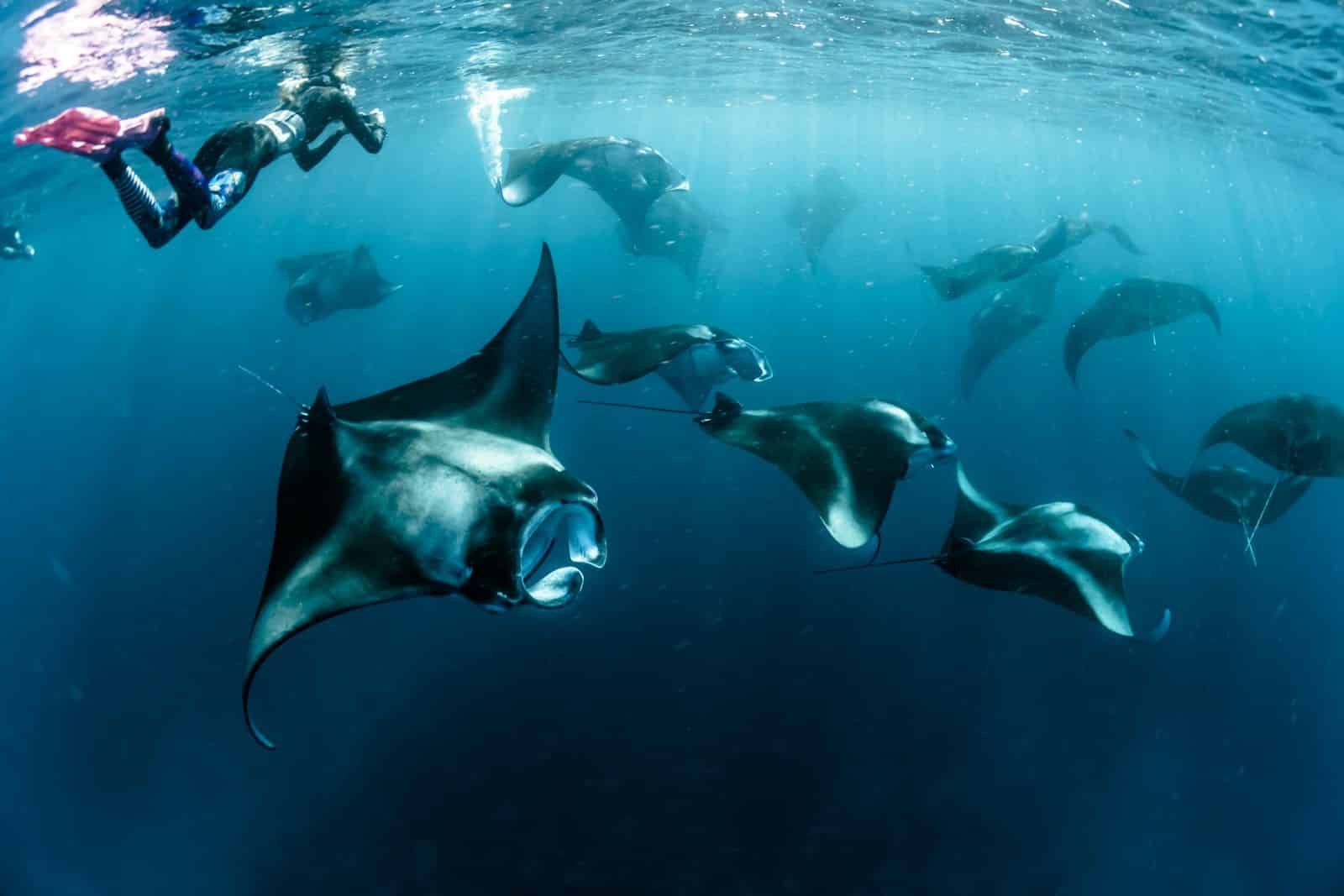
While whale sharks dominate attention, the Afuera supports a wider ecosystem that often reveals itself during the journey. Giant manta rays are frequent companions, gliding just beneath the surface with wingspans that can reach seven meters. Their movement is fluid and effortless, often paralleling that of the sharks.
Pods of bottlenose and spinner dolphins regularly appear during the transit, riding the bow wake or darting alongside the boat for extended periods. These encounters tend to occur unexpectedly, adding a sense of spontaneity to the journey.
Sea turtles surface intermittently, their heads breaking the water briefly before disappearing again. Depending on conditions, green, loggerhead, and hawksbill turtles may all be observed within a single outing.
Near Isla Contoy, a protected island reserve, seabird activity increases dramatically. Frigatebirds, brown pelicans, and flamingos are among the species that occupy this sanctuary, offering a visual counterpoint to the marine encounters offshore.
Conservation and Responsibility
Whale sharks are classified as endangered, and Mexico’s Whale Shark Biosphere Reserve is among the most tightly regulated wildlife tourism zones in the region. Boats must maintain safe distances, swimmers are prohibited from touching the animals, and guides enforce strict behavior protocols in the water.
Private tours tend to operate with greater compliance and awareness, as guides are not pressured by group turnover or time constraints. This allows for more considered positioning and reduces stress on the animals.
Participating in a private swim also supports operators who invest in training, monitoring, and adherence to conservation standards, contributing to the long-term protection of this seasonal aggregation.
How Do Not Disturb Makes This Possible
Do Not Disturb curates private whale shark swims by working exclusively with operators known for early access, experienced guides, and consistent adherence to conservation regulations. Departures are timed to avoid peak congestion, and vessels are selected for comfort, speed, and stability.
Each experience is tailored around your comfort in the water, interest in photography, and tolerance for open-sea conditions. Logistics, permits, and seasonal considerations are managed in advance, allowing the day itself to unfold without friction.
The emphasis remains on clarity and ease, ensuring that one of the Mexican Caribbean’s most extraordinary natural phenomena is experienced with intention rather than urgency.
Ready to plan your private whale shark swim from Isla Mujeres and experience the Afuera with clarity and calm? Speak with Do Not Disturb to begin your journey.
Plan your own version of this journey
Speak to Do Not Disturb’s luxury travel experts and turn this moment into something personal.
Related destinations
Suggested articles
Beyond the Maldives: Seven Islands for a Different Kind of Honeymoon
Multi-Destination Honeymoons: The Best Pairings for Two Distinct Locations

Where to Go On Honeymoon? A Guide to Help You Choose

Wilderness to Waves: Luxury Honeymoons in Kenya
Luxury Safaris: Why Laikipia Is Kenya’s Best-Kept Secret

Positano vs Ravello: Where to Stay on the Amalfi Coast

Chianti’s Luxury Villas: Stay Like a Renaissance Noble

Romantic Florence: The Ideal Italian Honeymoon

Venice for Art Lovers: Palaces, Churches and Private Views

Experiencing Florence Without the Crowds
Lake Como vs Lake Garda: Which Italian Lake Is Right for You?
Venice Without the Crowds: Is It Possible?
Sardinia vs Sicily: Which Italian Island Is Right for You?