
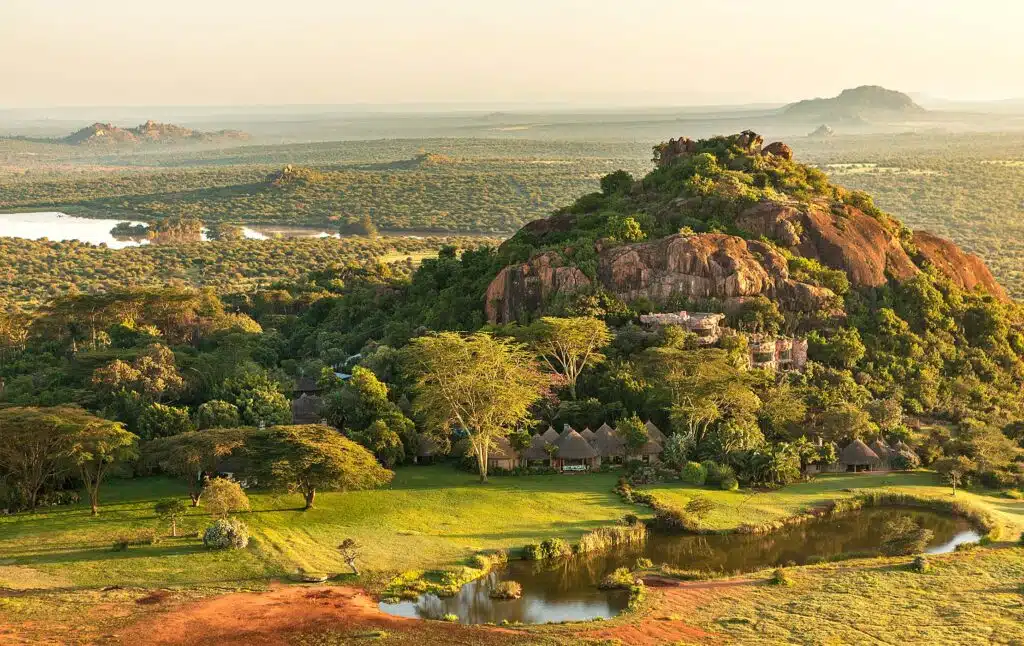
A half-day camel safari through the Samburu landscape in northern Kenya with a Samburu guide whose community has worked with camels for generations, covering the terrain of the Special Five at a pace that changes what you notice and how the wildlife responds to your presence.
The Samburu National Reserve sits in northern Kenya along the banks of the Ewaso Ng’iro River, approximately 350 kilometers north of Nairobi, in a landscape that shifts between semi-arid scrubland, doum palm groves, acacia woodland, and rocky outcrops.
It holds a set of species found nowhere else in Kenya, known collectively as the Samburu Special Five, and a community whose relationship with the land and its animals has been built across centuries of pastoral life in this terrain.
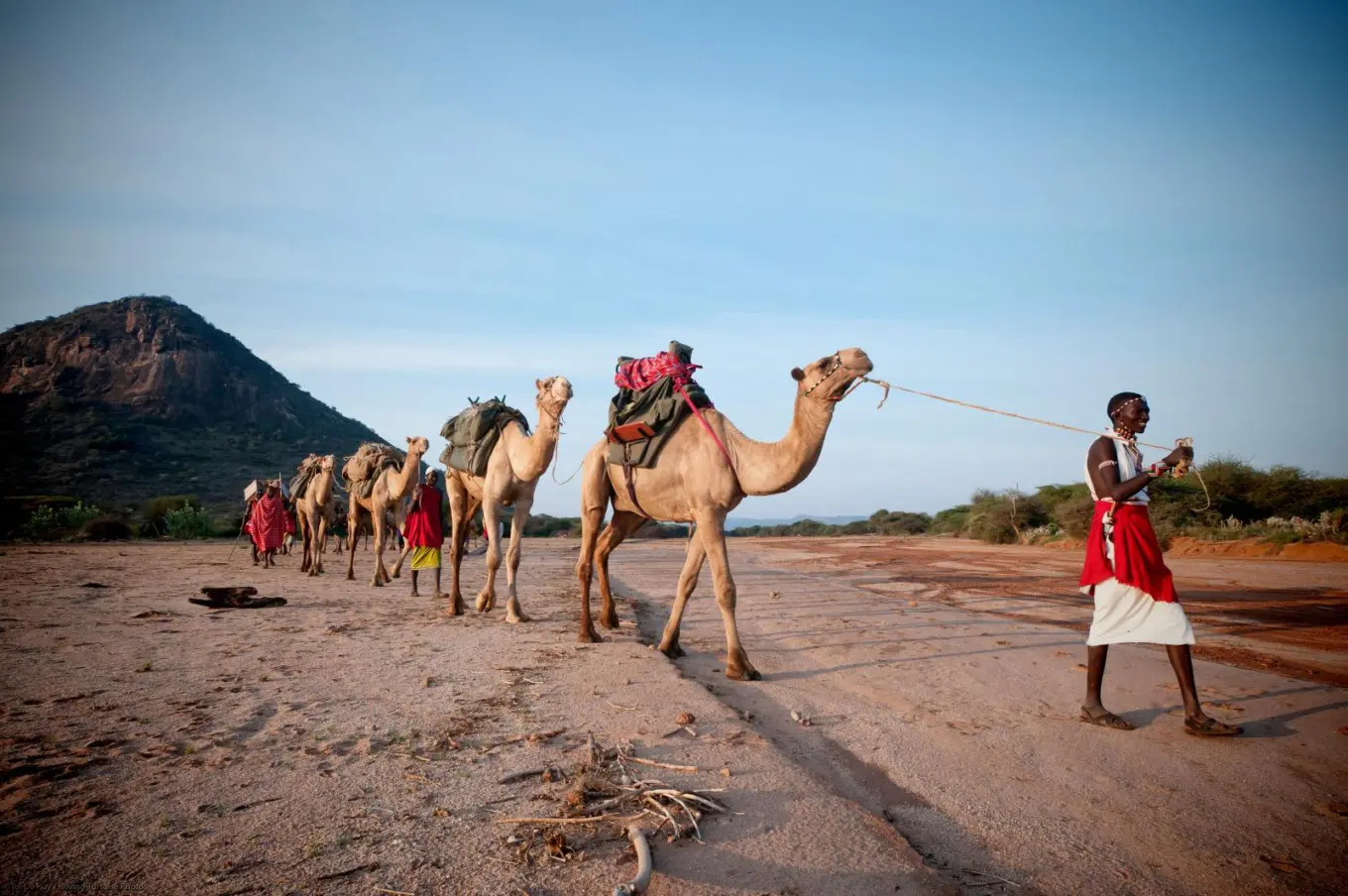
A camel safari through this landscape, led by a Samburu guide, covers both the wildlife and the human knowledge of it at a pace that removes the engine from the equation entirely.
The camel has been part of the Samburu way of life since trading routes brought it from the Horn of Africa into northern Kenya. It thrives in the semi-arid conditions that define the region, moving quietly through acacia scrub and over rocky ground without the noise, smell, or physical footprint of a vehicle.
About Do Not Disturb
Do Not Disturb is a luxury travel company specializing in carefully designed journeys and considered experiences. Each itinerary we build for our clients is informed by real destination knowledge, offering insight into places, cultures, and moments that shape how a trip comes together.
If this destination has sparked ideas, the itinerary can be developed into a private journey tailored to your interests and travel style, with hand-picked stays, thoughtful routing, and experiences curated around what matters most to you.
Cultural and Historical Context
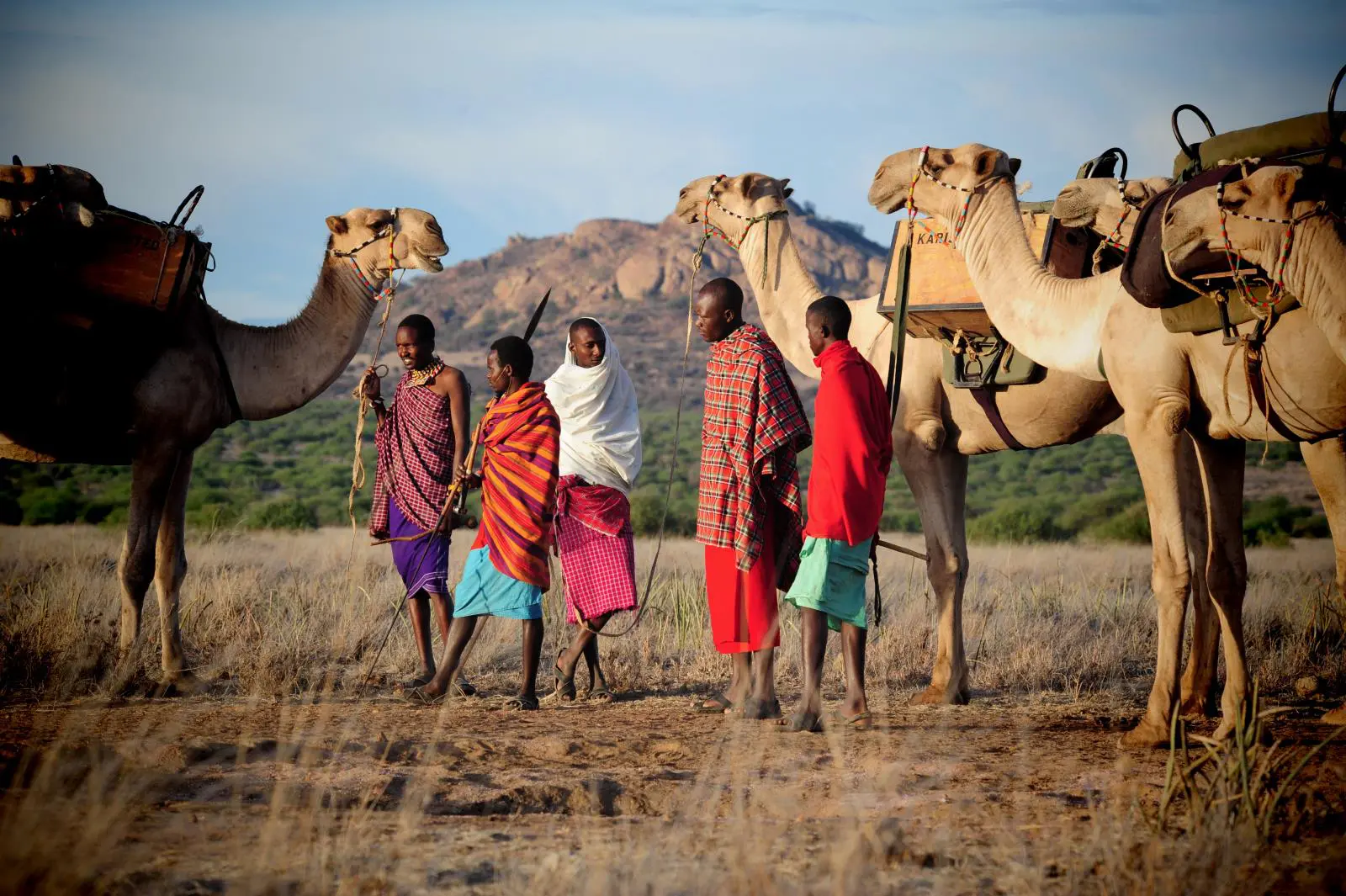
The Samburu are semi-nomadic pastoralists who have inhabited the semi-arid rangelands of northern Kenya for centuries, moving their herds in response to rainfall and grazing conditions. The camel arrived through trade routes connecting the East African interior with the Horn of Africa and was adopted for its ability to survive conditions that cattle cannot sustain.
The Samburu have passed knowledge of this landscape across generations through daily movement within it, a form of environmental literacy built around the specific behavior of the Ewaso Ng’iro River, the seasonal migration of wildlife, and the terrain between the water and the rocky outcrops to the north. A Samburu guide on a camel safari draws on that inherited understanding in a way that no formal training in a different ecosystem can replicate.
The Samburu Special Five, the reticulated giraffe, Grevy’s zebra, Beisa oryx, gerenuk, and Somali ostrich, are found in few other places in Kenya. The Grevy’s zebra is listed as endangered with fewer than 3,000 individuals remaining globally, and the reticulated giraffe, with an estimated 8,500 left in the world, is classified as vulnerable. Both move through the terrain covered by the camel safari on a daily basis.

Why Private or Small-Group Access Matters
A group camel safari follows a fixed route at a pace set by the least confident rider. With two people and one guide, the route is built around what the guide has observed in the preceding days.
If a reticulated giraffe is moving through acacia fifty meters ahead, the group holds position until the animal has passed and the guide has explained what its gait and direction reveal about where it is going. Departure time is set around the light and temperature rather than logistics, which in a landscape where the heat builds fast makes a difference to what the safari finds.
The Samburu guide on a private arrangement can also take the route off established tracks into terrain a group would not enter, covering scrubland between the river and the rocky outcrops that game drive routes do not reach. The camel moves through it without disturbing what is there.
A guide managing eight people cannot give the same depth of explanation as one guiding two. On a private safari, the guide explains what a specific set of tracks means, why the Beisa oryx has moved to a particular stretch of riverbank, and what the time of day tells them about where the Grevy’s zebra will be in the next hour.
What You See
The scrubland and acacia woodland between the Ewaso Ng’iro River and the rocky outcrops to the north is where the Samburu Special Five move on their own terms. Reticulated giraffe browse acacia tops, their geometric coat pattern visible from a distance.
Grevy’s zebra graze in the open ground, their narrow stripes and rounded ears distinguishing them from the plains zebra found further south. Beisa oryx survive days without water in the drier terrain, the gerenuk browses on its hind legs, and the Somali ostrich crosses the open ground in groups or alone.
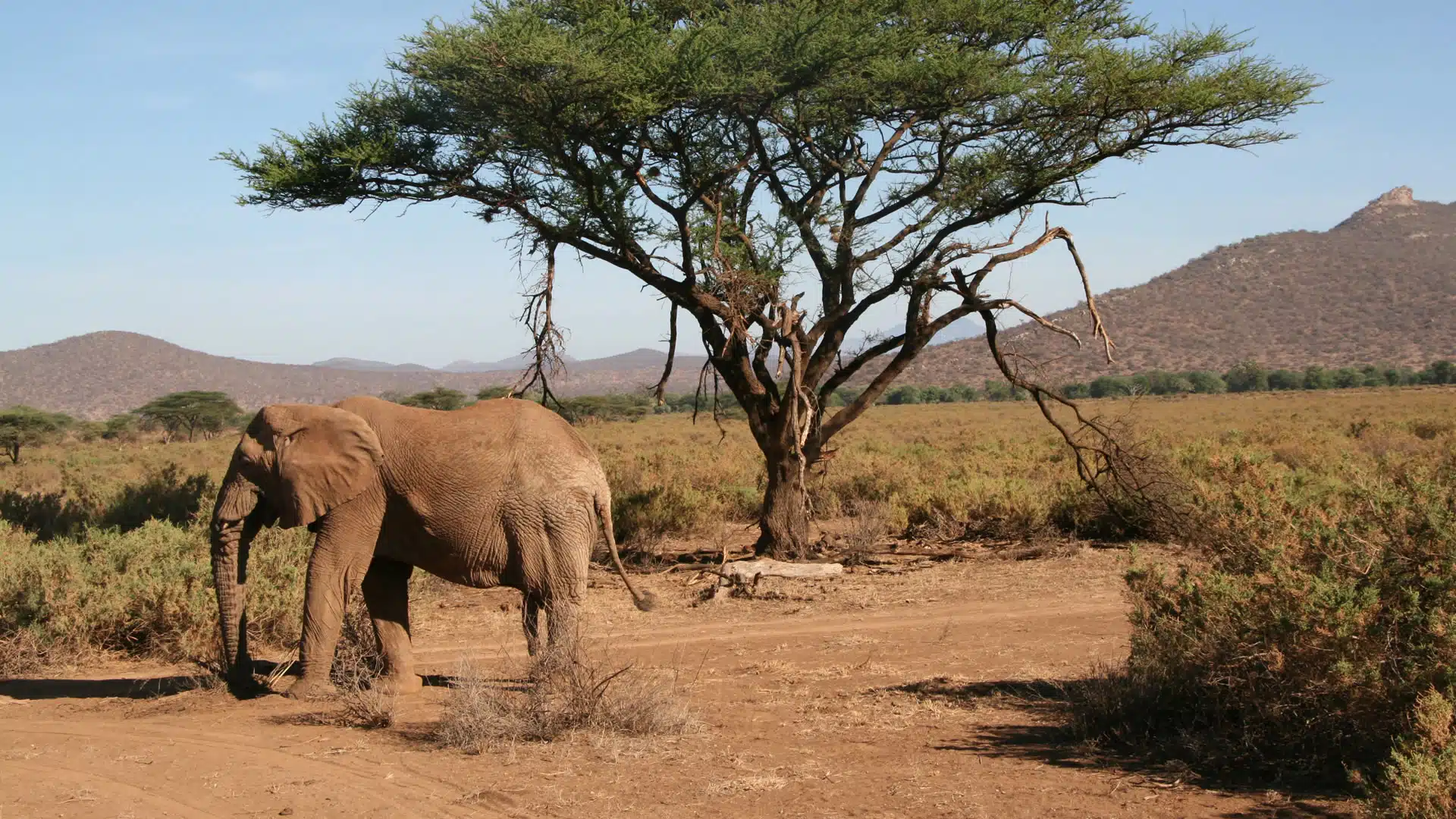
Elephant are present year-round along the river corridor and continue their activity as the camel approaches, where a vehicle would draw their attention. The terrain shifts across the half-day from doum palm groves along the river to open scrubland and acacia woodland.
At camel pace, the transition between habitats is felt through the change in ground underfoot, the shift in birdsong, and the light as the canopy opens and closes.

How Do Not Disturb Makes This Possible
Do Not Disturb works with a small number of camps and guides in and around the Samburu ecosystem whose relationships with the Samburu community are built on years of partnership rather than on arrangements made to satisfy a visitor activity list. The selection of the guide matters as much as the selection of the route.
A Samburu guide who has grown up in the region and worked within it across years carries a quality of knowledge about the landscape and the wildlife that a trained guide from outside the community does not replicate.
The camel safari is planned around the time of day and the season. Early morning, before the heat builds, is the most productive time for wildlife movement and the most manageable for the ride. The route is chosen based on where the guide has observed the Special Five in the preceding days and what conditions the terrain is producing at the time of the visit.
Ready to plan your camel safari through Samburu and experience northern Kenya at the pace it deserves? Speak with Do Not Disturb to begin your journey.
Plan your own version of this journey
Speak to Do Not Disturb’s luxury travel experts and turn this moment into something personal.
Related destinations
Suggested articles
Where to Go On Honeymoon? A Guide to Help You Choose

Why Kenya Is Perfect for a Luxury Honeymoon
Wilderness to Waves: Luxury Honeymoons in Kenya

Kenya vs. South Africa for a First Safari

Serengeti vs. Maasai Mara: Which Luxury Safari Is Right for You?
Cairo for Luxury Travellers: Pyramids, Palaces & Grand Hotels
A Luxury Journey Through Ancient Egypt

Cleopatra’s Egypt: Alexandria, Cairo & the Nile
Maldives Luxury Resorts: The Newest Openings
The Best Temples to Visit Beyond Angkor Wat
The Cardamom Mountains: Cambodia’s Wildest Luxury Escape
Two Seasons: When to Go to Fiji and Why It Matters
Plan your honeymoon in Switzerland