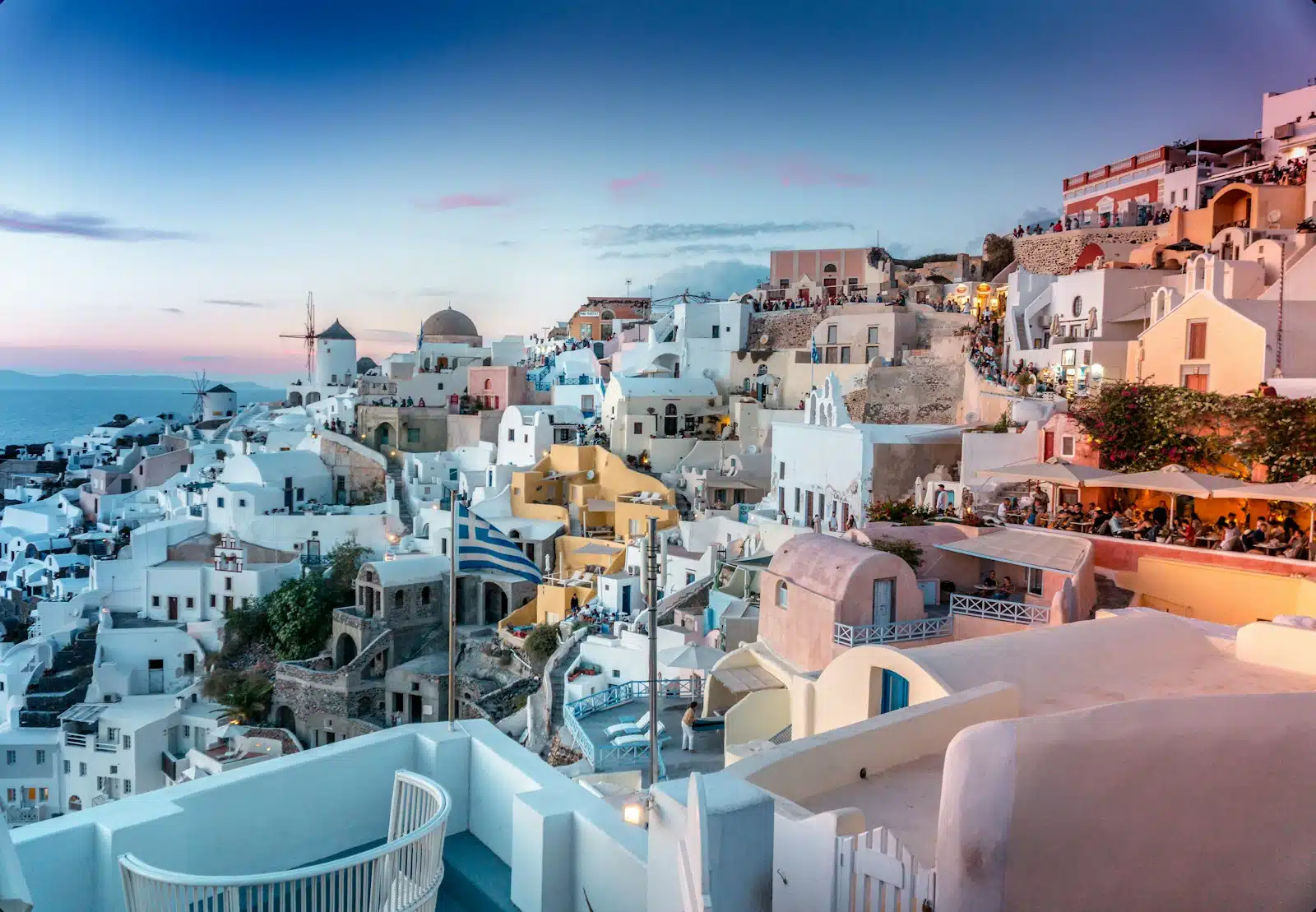
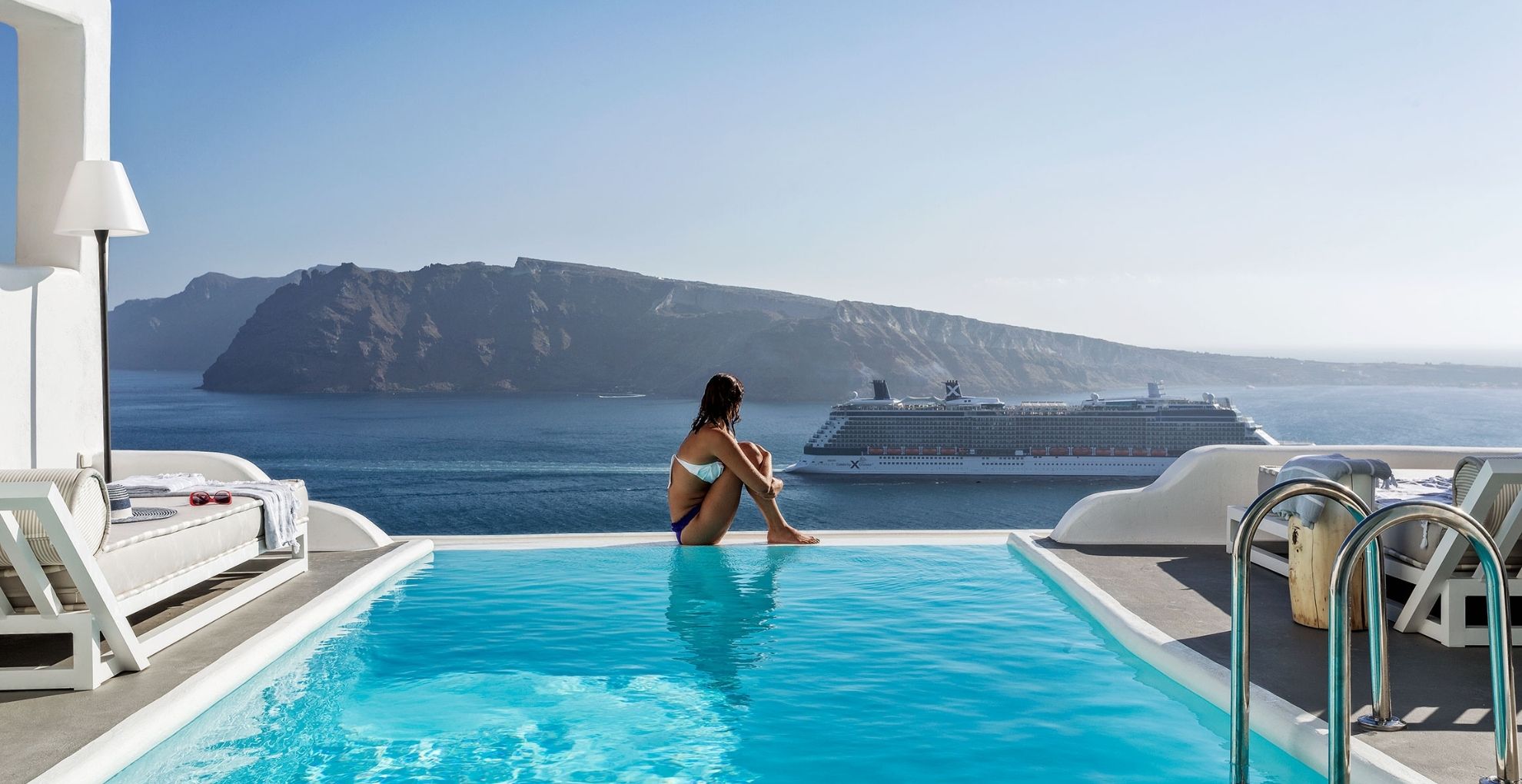
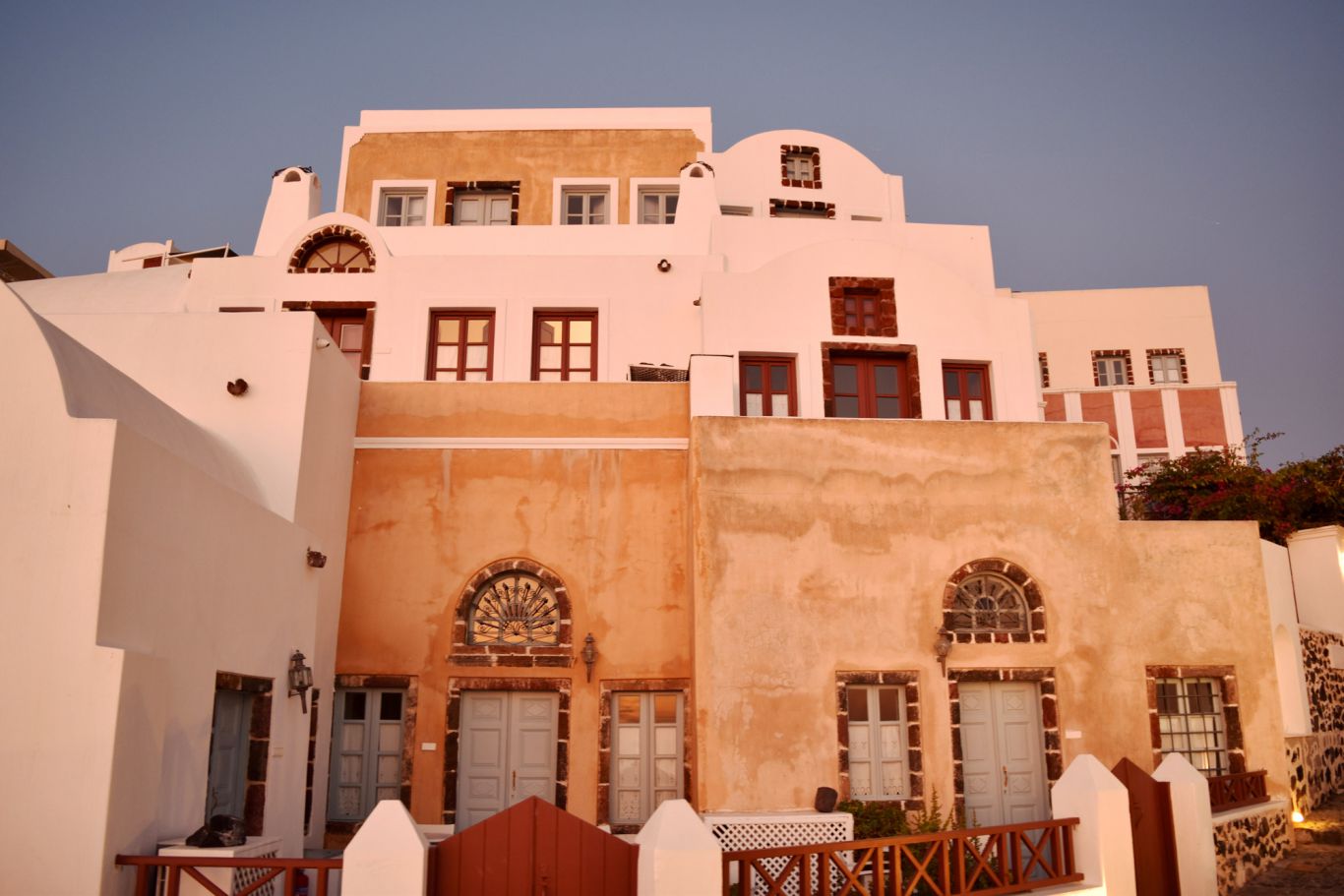
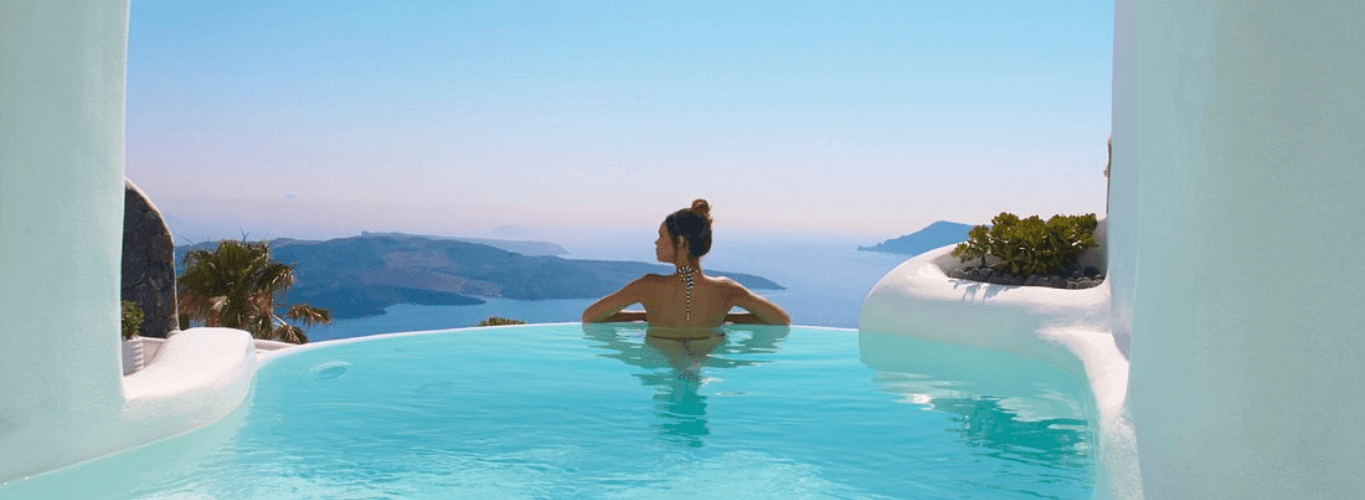
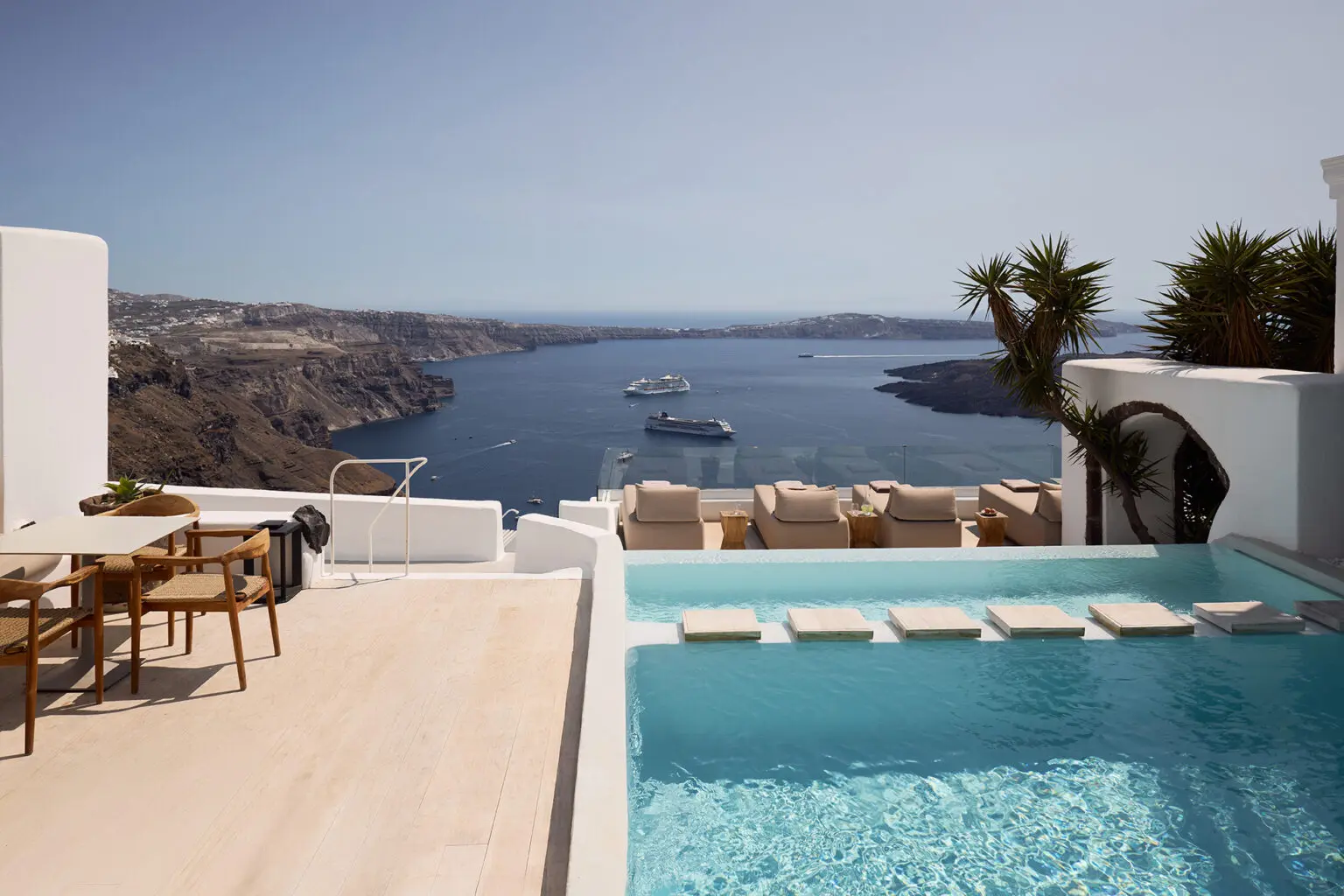
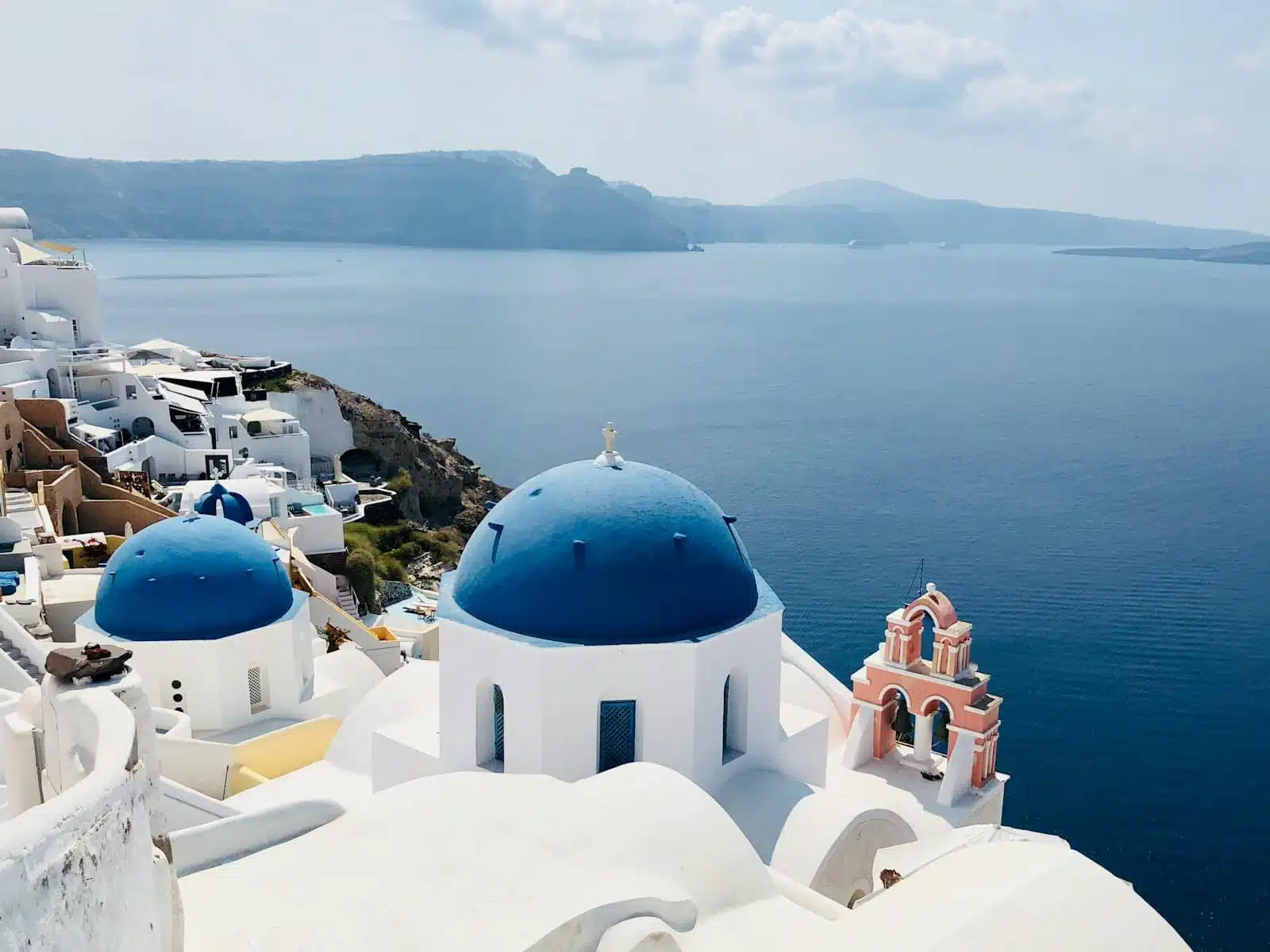
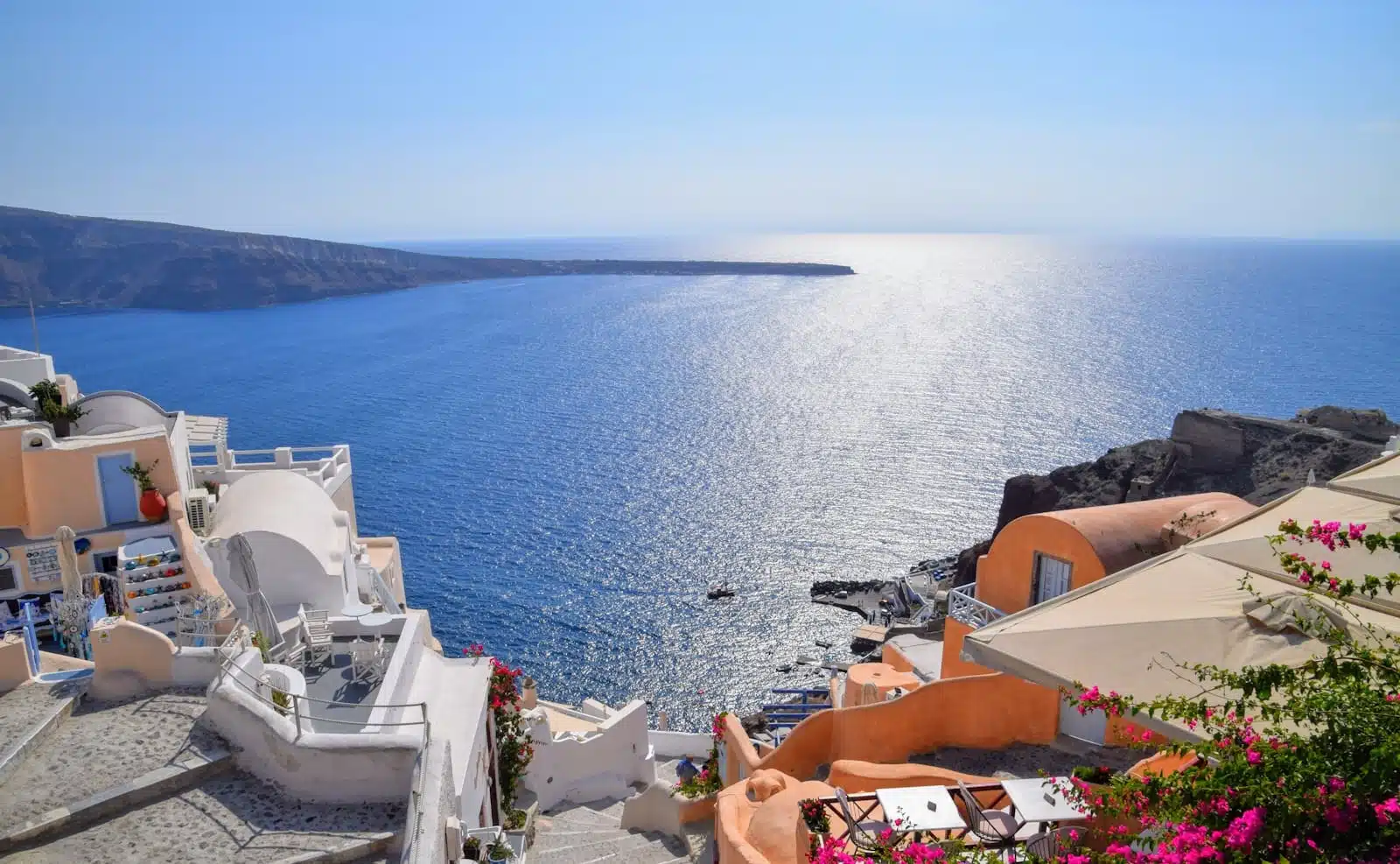
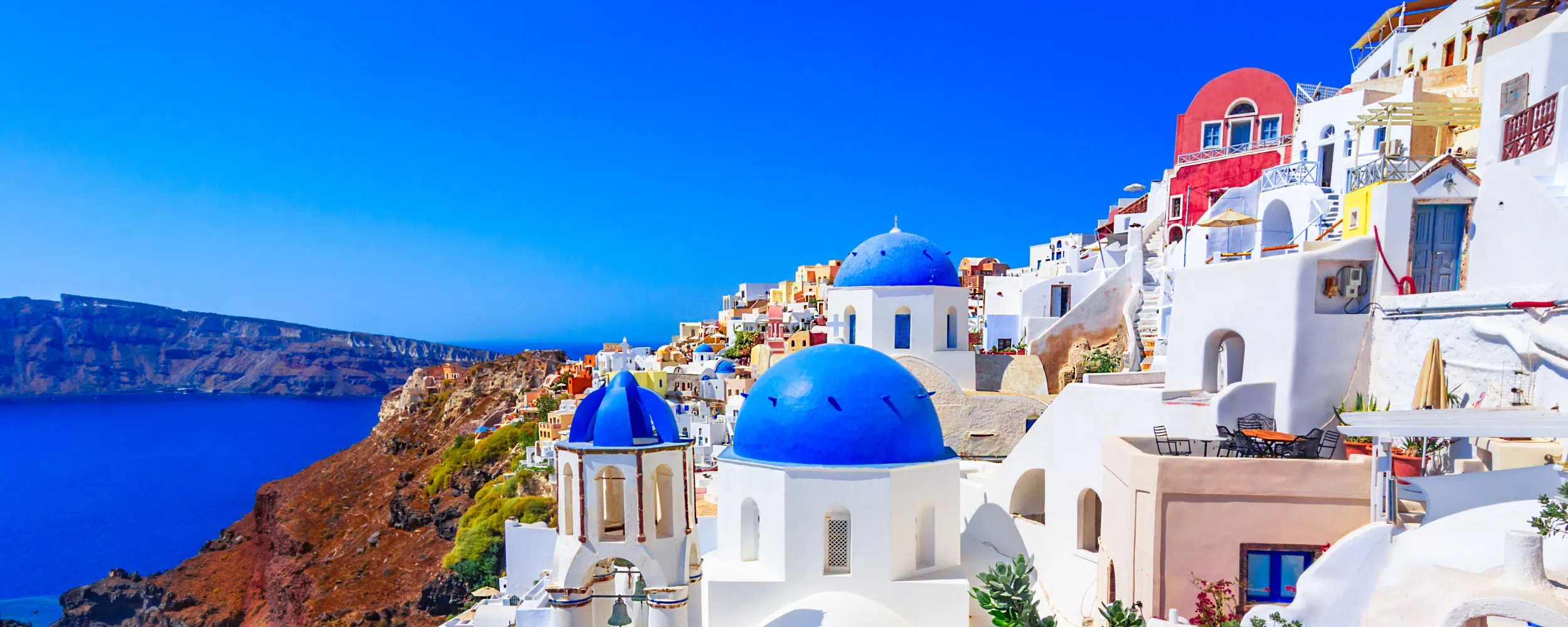
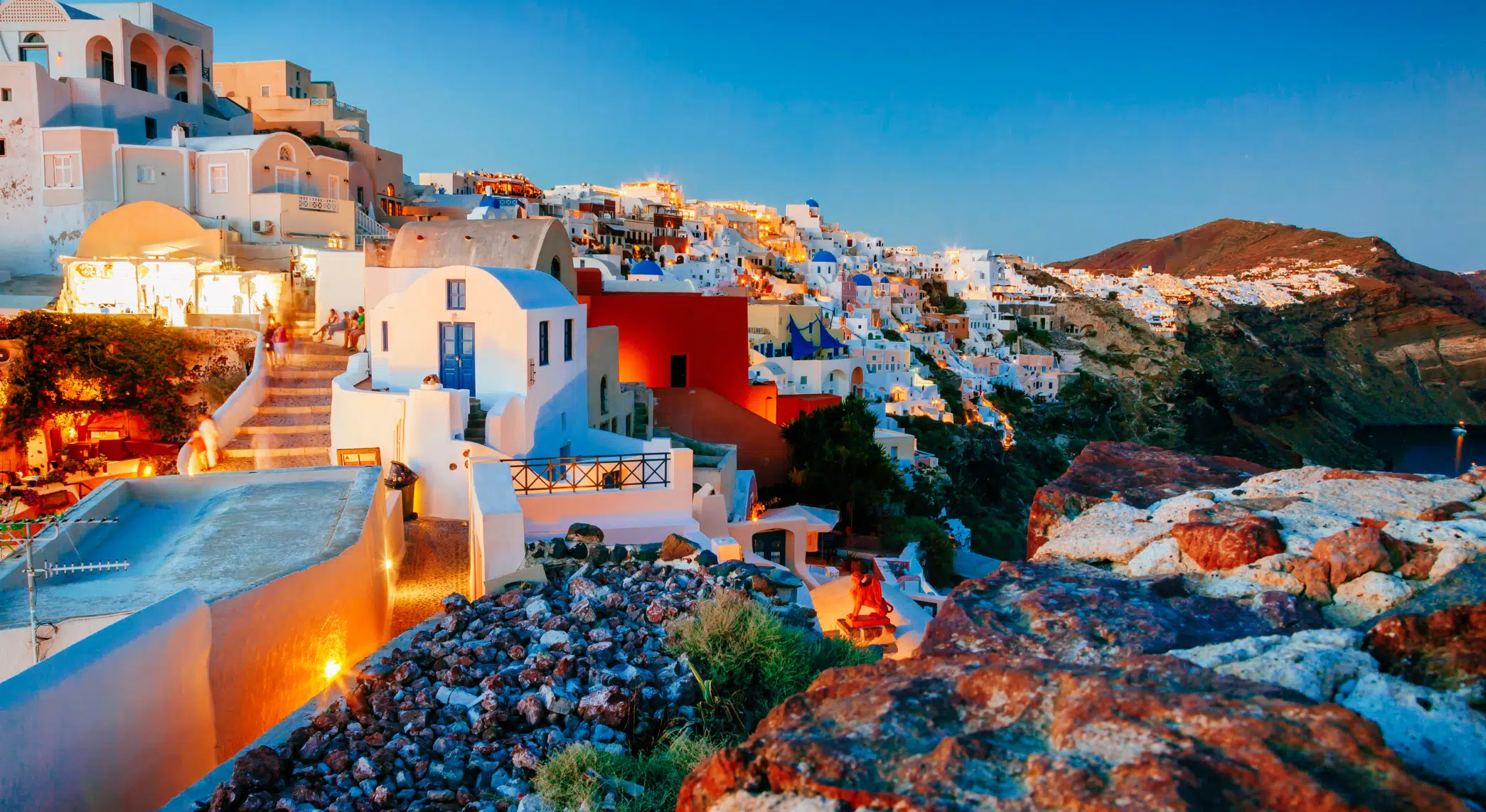
Santorini is what was left when one of the largest volcanic eruptions in human history blew the center out of a circular island around 1600 BC. What remains is a curve of cliff wrapped around a flooded crater, the caldera, with the sea filling the middle and the famous white villages clinging to the top of the rim.
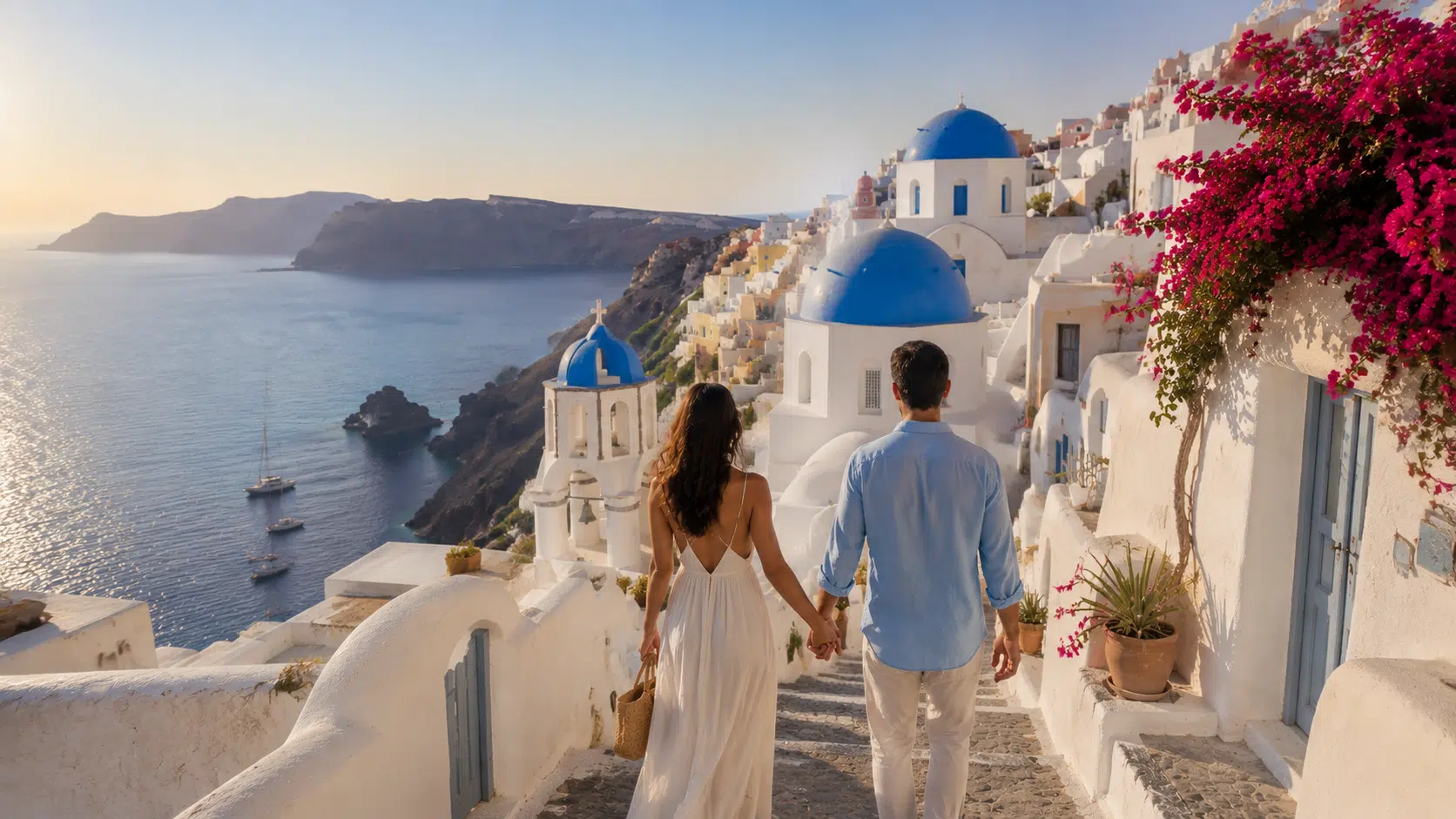
That geology is the whole experience. The villages of Fira, Firostefani, Imerovigli, and Oia run along the cliff edge, each one looking out over the same vast drop to the water. The light here is extraordinary, clear and gold in a way that has drawn painters and photographers for decades, and it changes the island hour by hour.
There is far more to the island than the view. Santorini grows some of the most distinctive wine in Greece, the crisp, mineral Assyrtiko, from vines trained into low baskets to survive the wind, in soil that has never seen a drop of rain it didn’t earn. The food is simple and very good: sun-dried tomatoes, white eggplant, fava, capers, and fish straight off the boat.
And beneath it all sits Akrotiri, the Bronze Age town the eruption buried and preserved, often called the Greek Pompeii, its streets and houses still standing two and three stories high under a modern roof.
What Santorini asks of its visitors is good timing. The island is small and, in high season, very busy, but the crowds move in predictable patterns, and the best of Santorini happens early, late, and just off the obvious path. Plan around that and the island opens up completely.