


On this page
A private guided visit to Christ the Redeemer offers early access to Rio’s most iconic monument, experienced with context, clarity, and space before the summit fills with crowds.
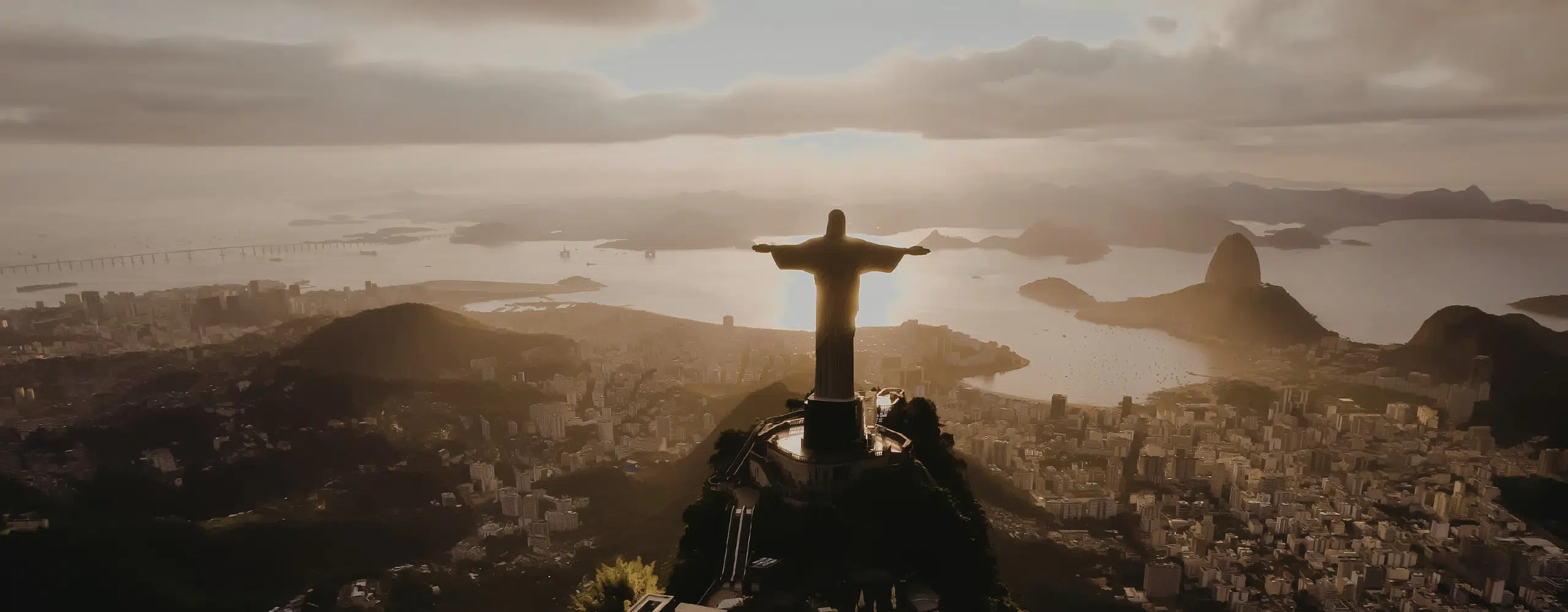
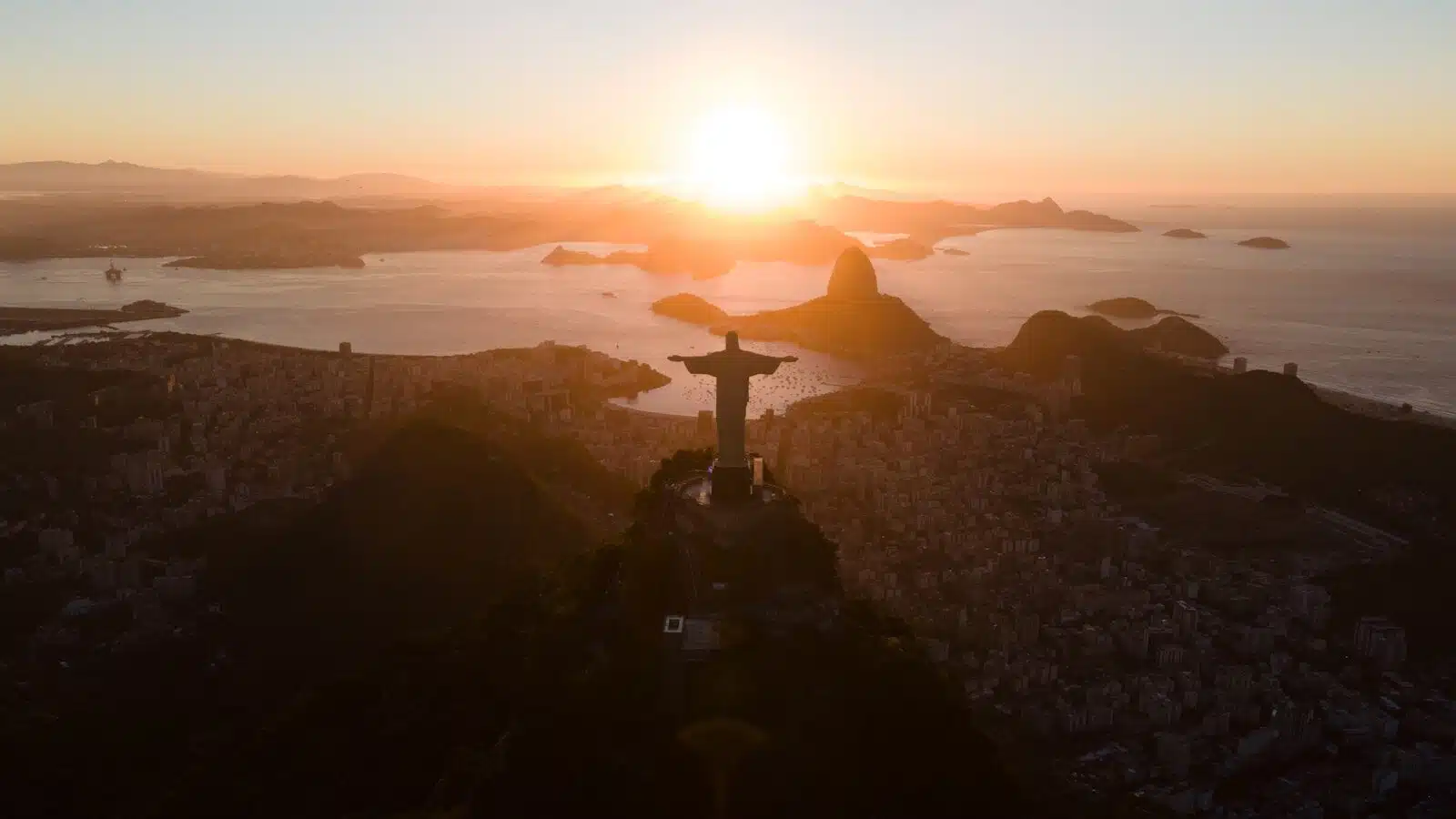
At 700 meters above sea level, Christ the Redeemer stands at the summit of Corcovado Mountain, arms outstretched over Rio de Janeiro. The city spreads below in precise detail: Guanabara Bay, Sugarloaf Mountain, Copacabana’s curved shoreline, the dense green of Tijuca Forest. From here, the scale of Rio becomes visible.
Arriving early changes everything. The light is softer, the air cooler, the platforms still relatively quiet. Instead of navigating a steady stream of visitors, you step onto the summit with room to look, to photograph, to absorb the setting without any distraction.
History
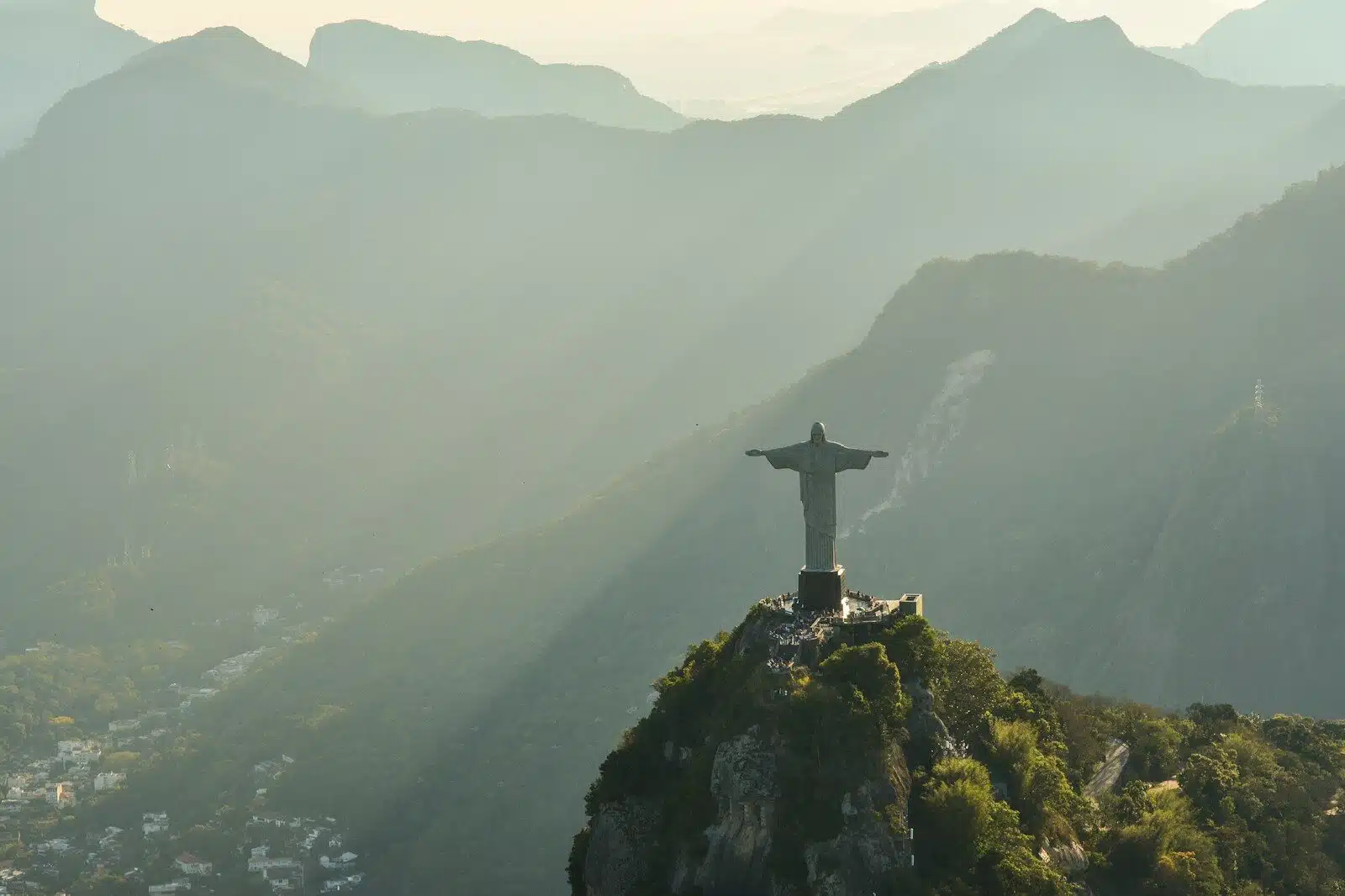
Completed in 1931 after nine years of construction, Christ the Redeemer is one of the most recognizable monuments in the world. The Art Deco statue rises 30 meters high, its arms stretching 28 meters wide. Built from reinforced concrete and clad in more than six million soapstone tiles, it was engineered to withstand wind, rain, and tropical heat. The pale surface you see up close is not smooth marble but thousands of hand-set fragments, chosen for durability and subtle sheen.
The statue was conceived as both a religious symbol and a civic gesture. Positioned high above the city, it was designed to be visible from nearly every neighborhood, a constant presence on the horizon. Today it is listed as one of the New Seven Wonders of the World and forms part of the UNESCO World Heritage site that recognizes Rio’s dramatic cultural landscape, where architecture and nature exist in deliberate balance.
For most visitors, the experience follows a predictable pattern. Tickets are timed. Trains and vans carry passengers up the mountain in steady succession. At the summit, narrow viewing platforms fill quickly. Photographs require patience. The statue is seen, documented, and departed within a compressed window.

A private guided tour reframes this entirely
The experience begins at your hotel, where a private, air-conditioned vehicle collects you at a prearranged time, often shortly after sunrise. The early departure is deliberate. By reaching Corcovado before peak hours, you avoid the congestion that defines the late morning and afternoon. Your guide manages entry logistics, whether by securing priority boarding for the historic Corcovado train or arranging access via authorized vans, ensuring minimal waiting.
As you ascend through Tijuca National Park, the transition is gradual. Dense Atlantic rainforest presses close to the road. The guide explains how this vast urban forest was replanted in the nineteenth century after coffee plantations stripped the hillsides, an early example of environmental restoration. The approach becomes part of the narrative rather than a transfer between points.
At the summit, the statue reveals its scale differently when seen without pressure. Up close, the folds of Christ’s robe show subtle geometric lines typical of Art Deco design. The face, serene and simplified, was sculpted to be legible from great distance. The soapstone tiles form a mosaic surface that catches light unevenly, giving the monument texture rather than polish.
Your guide provides historical context that is often missed in standard visits. The statue was designed by Brazilian engineer Heitor da Silva Costa and realized in collaboration with French sculptor Paul Landowski. The head and hands were modeled in Paris before being shipped to Brazil. Each decision, from material to orientation, was practical as well as symbolic. The arms extend horizontally not only in gesture but in structural balance, distributing weight evenly across the reinforced core.
Standing at the base, you notice how the pedestal elevates the figure further, adding eight meters to the overall height. You also become aware of the surrounding architecture: the chapel beneath the statue, often overlooked, which hosts small ceremonies and weddings. The monument functions as a living religious site as well as a global landmark.
What distinguishes a private visit is not exclusivity for its own sake but the ability to engage with detail. Without a guide, the statue can feel like a backdrop. With context, it becomes a case study in early twentieth century engineering, religious symbolism, and national identity. Questions are answered in real time. Photographs are taken without urgency. You can pause to look outward at the city rather than focusing solely on the monument itself.
What You See
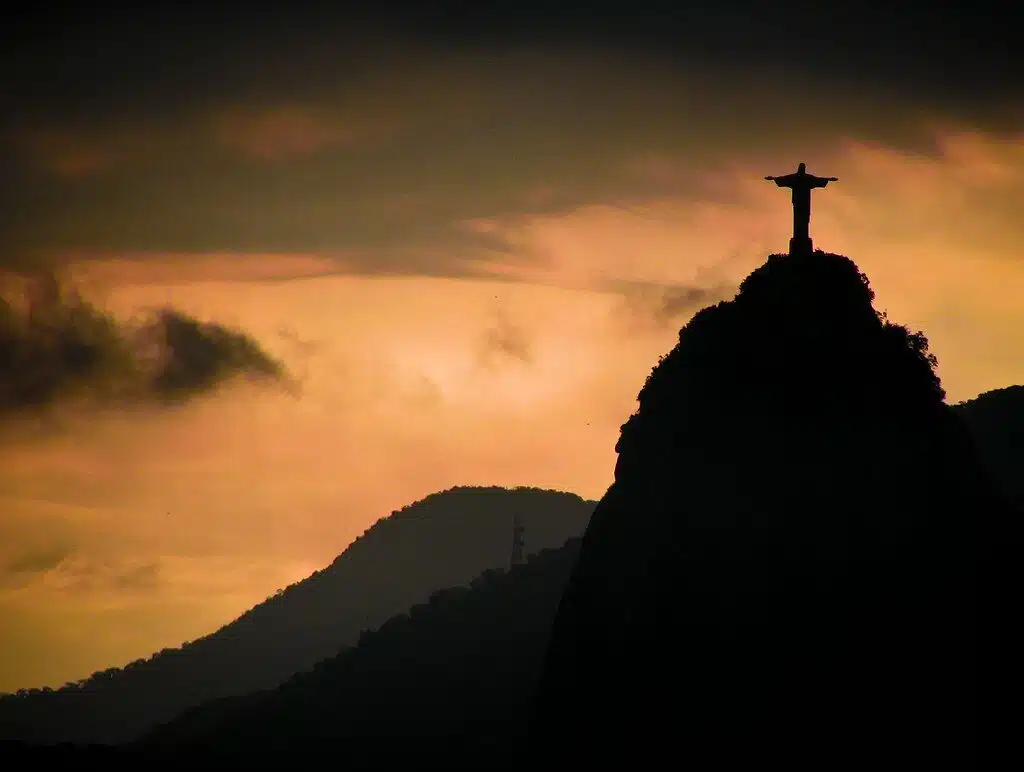
The panorama from Corcovado is structured rather than chaotic. To the east lies Guanabara Bay, dotted with boats. To the south, the Atlantic stretches beyond Ipanema and Leblon. Sugarloaf Mountain rises distinctly from the water, its granite form contrasting with the forested hills. The geometry of Rio becomes apparent from this height: ocean, mountain, and city arranged in deliberate tension.
Early light enhances this clarity. Shadows define the contours of the hills. The water reflects pale gold. By mid-morning, haze can soften these edges and platforms become crowded. Timing is not incidental here. It shapes the entire experience.
Private access also allows flexibility. Once you have taken in the summit, the morning can continue at your pace. Some choose to descend and visit the Selarón Steps, the vibrant tiled staircase created by Chilean artist Jorge Selarón. Others combine the visit with Sugarloaf Mountain for a complementary perspective across the bay. The schedule adapts rather than dictates.
Importantly, logistics remain invisible. Tickets are prearranged. Transport is coordinated. There is no negotiation with drivers or deciphering of public systems. The experience feels straightforward because the complexity has already been managed.
How Do Not Disturb Makes This Possible
At Do Not Disturb, we arrange private guided visits to Christ the Redeemer with careful attention to timing, pacing, and context. We select knowledgeable local experts who bring historical and cultural depth to the experience without overwhelming it. Early access is prioritized to secure the clearest light and the calmest atmosphere.
From hotel pickup to coordinated entry and onward connections, each element is considered in advance. If you wish to combine Corcovado with Sugarloaf Mountain or a curated exploration of Rio’s neighborhoods, the day is shaped accordingly. Our role is to remove friction, so your focus remains on the monument and the view.
Standing beneath Christ the Redeemer, with the city unfolding in every direction, you understand why this site has endured as a symbol for nearly a century. It is not only the scale that impresses but the setting. Mountain, forest, and ocean converge at a single point. Seen without rush, the monument feels less like a checklist item and more like an orientation to Rio itself.
Ready to plan your private guided tour of Christ the Redeemer and experience Rio de Janeiro with clarity and ease? Speak with Do Not Disturb to begin your journey.