
In the spring of 1888, Vincent van Gogh arrived in Arles and began one of the most consequential periods in the history of modern art. This private day traces his path through Provence, from the streets and squares of Arles to the asylum walls of Saint-Paul-de-Mausole, where the paintings that defined his legacy were made.
Why Provence Changed Everything
Van Gogh moved to Arles in February 1888 after two years in Paris, where he had absorbed Impressionism and Post-Impressionist theory but found the city exhausting and the light insufficient for what he wanted to do. He was looking for stronger color, clearer skies, and a slower pace that would allow sustained work. Provence offered all three.
The quality of light in the south is not a romantic abstraction. At this latitude, the sun sits higher and the air carries less moisture than in northern France, producing colors that appear more saturated and shadows that fall with greater definition. Van Gogh responded by working faster and with higher chromatic contrast, completing over 200 paintings in fifteen months.
The move also marked a shift in his ambitions. In Arles, he began planning a community of artists and developing a visual language built on color relationships rather than tonal gradation, a direction that would define the work produced in both Arles and Saint-Rémy.

About Do Not Disturb
Do Not Disturb is a luxury travel company specializing in carefully designed journeys and considered experiences. Each itinerary we build for our clients is informed by real destination knowledge, offering insight into places, cultures, and moments that shape how a trip comes together.
If this destination has sparked ideas, the itinerary can be developed into a private journey tailored to your interests and travel style, with hand-picked stays, thoughtful routing, and experiences curated around what matters most to you.
Reading Arles Through the Paintings
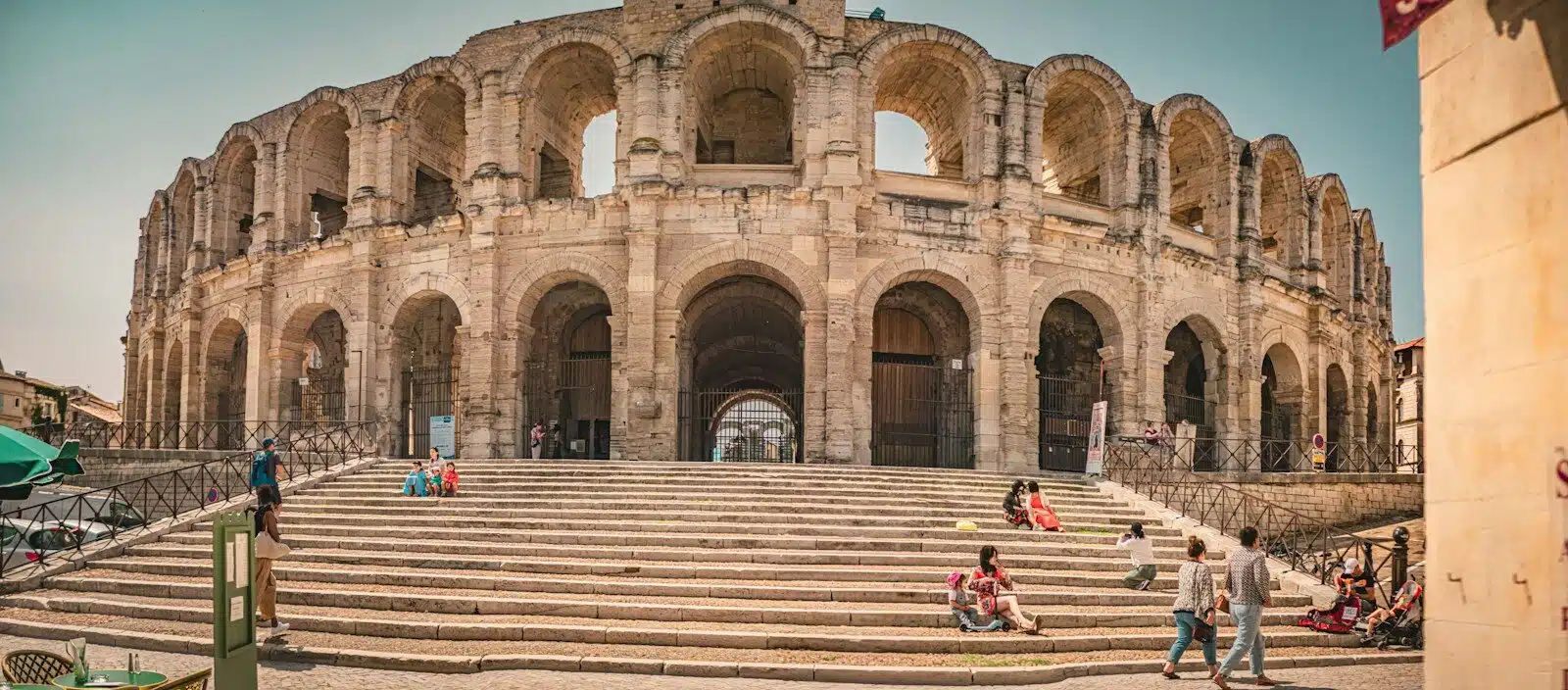
Arles rewards close reading. The city’s layout has changed less than might be expected since Van Gogh’s time, and moving through it with a guide who works from the paintings rather than a standard itinerary produces a different kind of encounter with the place.
At the Place du Forum, the context for Café Terrace at Night becomes legible in structural terms: the angle of the composition, the relationship between the lit terrace and the dark street, and Van Gogh’s deliberate departure from naturalistic colour. Along the banks of the Rhône, the site of Starry Night Over the Rhône clarifies how he positioned himself relative to the water and the gas-lit quay, and why the painting reads as a study in artificial light rather than a romantic landscape.
The guide’s role is to connect compositional decisions to specific locations and to Van Gogh’s own letters, which document his intentions with unusual precision. The result is an account of how the work was made, not simply where.

The Guide and the Work
The sites on this itinerary are well documented, but the connections between them are not self-evident. A specialist guide with a background in Post-Impressionism can map Van Gogh’s evolving technique against specific locations, explaining why the light in Arles produced the compressed, high-contrast palette of early 1888, and how the conditions at Saint-Paul-de-Mausole shifted his compositional approach toward the swirling, rhythmic forms of the asylum period.
That contextual layer changes what the day produces. Without it, the Espace Van Gogh and the recreated panels at Saint-Rémy function as illustration. With it, they become evidence of a working method under pressure, traceable across a sequence of decisions made in specific places.
The pacing of the day also requires judgment. The distance between Arles and Saint-Rémy is manageable, but the weight of the material is not. A guide who understands both the art history and the geography can structure the itinerary so that each site receives the attention its significance warrants.

Lunch Between Two Worlds
The drive from Arles to Saint-Rémy-de-Provence takes under thirty minutes, but the midday pause between the two deserves more than a rest stop. The villages and market towns of the Alpilles offer some of the most considered cooking in Provence, grounded in local produce and without the performance that follows tourist density.
Les Baux-de-Provence and Maussane-les-Alpilles both sit close to the route and have restaurants that reflect the agricultural character of the region: olive oil pressed nearby, lamb raised on the plateau, vegetables sourced from the valley floor. The quality varies significantly depending on season and selection, and knowing where to eat well on a given day requires current local knowledge.
This is not a section of the day to rush. Van Gogh’s time in Saint-Rémy was defined by sustained attention and repetition. Arriving at Saint-Paul-de-Mausole with that same deliberateness changes how the afternoon reads.

Saint-Paul-de-Mausole: Inside the Walls
Saint-Paul-de-Mausole is a functioning psychiatric facility that also operates as a heritage site, allowing access to the areas directly associated with Van Gogh’s stay between May 1889 and May 1890. His ground-floor bedroom and the adjacent studio room have been preserved and furnished to reflect their condition during his residency, based on documentary and pictorial evidence.
The garden and the surrounding landscape were Van Gogh’s primary subjects during this period. The olive groves, the wheat fields visible beyond the walls, and the night sky above the Alpilles provided the source material for more than 150 works completed here, including The Starry Night, painted from memory and imagination rather than direct observation of the view from his window.
The site is small and the access points are specific. Understanding what Van Gogh could and could not see from within the grounds is central to interpreting the paintings made here, and that context is not easily reconstructed without prior knowledge of the site’s layout and history.

How to Arrange the Day
The day works best structured as a morning in Arles followed by an afternoon at Saint-Paul-de-Mausole, with the drive between the two taking around 25 minutes. Beginning in Arles allows time to cover the key sites before midday, when light conditions and visitor numbers at the more exposed locations become less favourable. Saint-Rémy warrants a slower pace and benefits from the quieter afternoon window.
Access to certain parts of Saint-Paul-de-Mausole, including the areas closest to Van Gogh’s cell and the grounds he painted from, is not uniformly available and depends on how the visit is arranged. The same applies to specialist guides with the academic background to contextualise both the paintings and the sites accurately.
This is not a journey that rewards improvisation. The distinction between a well-constructed private itinerary and a standard tour lies in the preparation, the access secured in advance, and the expertise of whoever leads it.
Plan your own version of this journey
Speak to Do Not Disturb’s luxury travel experts and turn this moment into something personal.
Related destinations
Suggested articles
Beyond Paris: 5 Underrated French Cities to Visit

Inside Luminara: The Ritz-Carlton Yacht

Why the French Riviera Still Defines Luxury Travel

A Day in Marseille: Street Art, Bouillabaisse, and the Côte d’Azur

Nice or Marseille: Which Is Better?

What to Know Before Visiting Facteur Cheval’s Palace in France

How to Plan a Wine Tasting Trip in France
Plan Your Honeymoon in Saint-Tropez
One Island or Two? Splitting Your Maldives Honeymoon Between Resorts

Best Honeymoon Destinations for Autumn

Italy vs Greece for Your Honeymoon – Which is Better?
48 Hours in Lima: Where to Eat, Stay and Explore

A Cultural Honeymoon in Peru: Machu Picchu, Cusco, the Sacred Valley and the Amazon