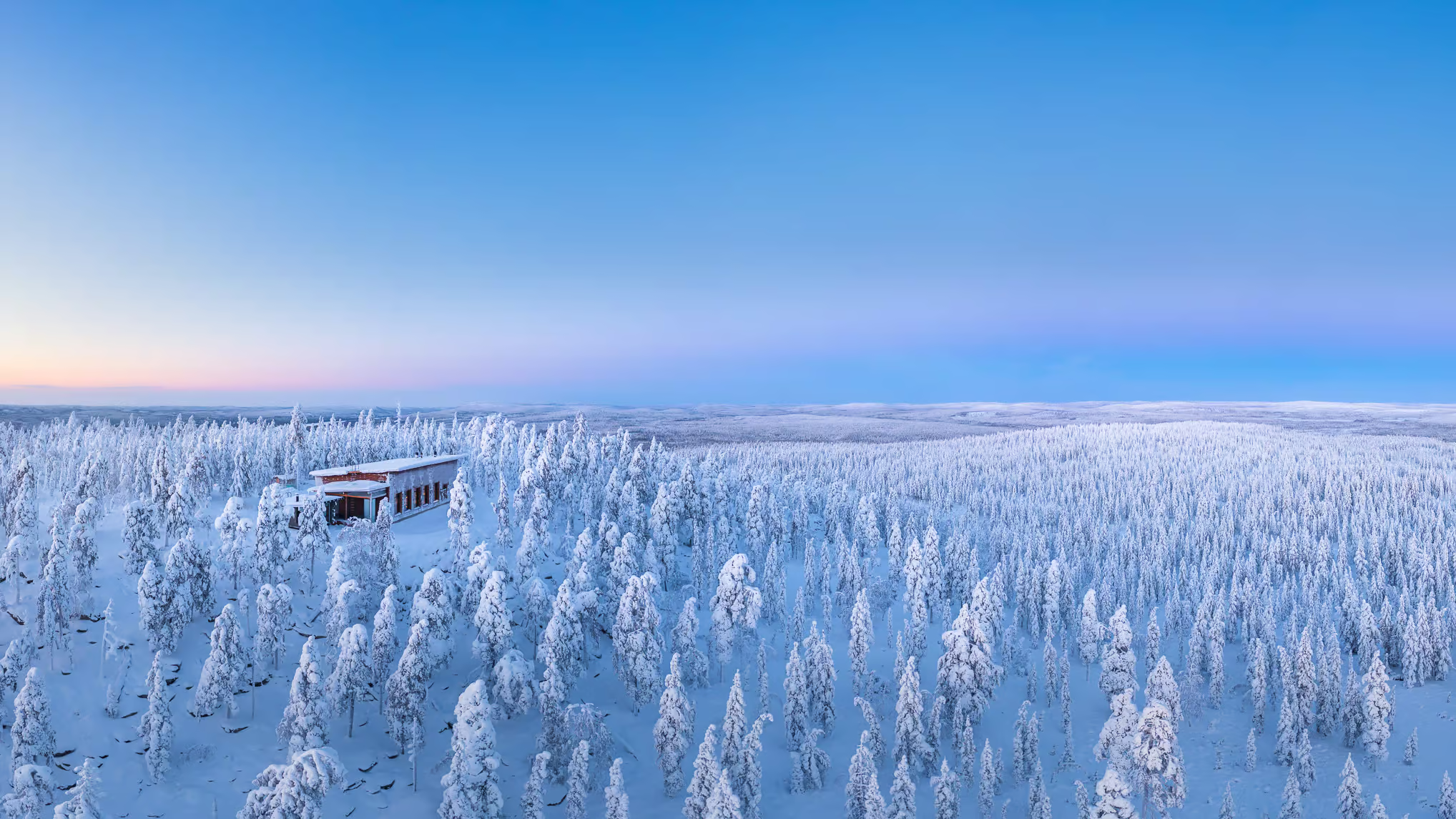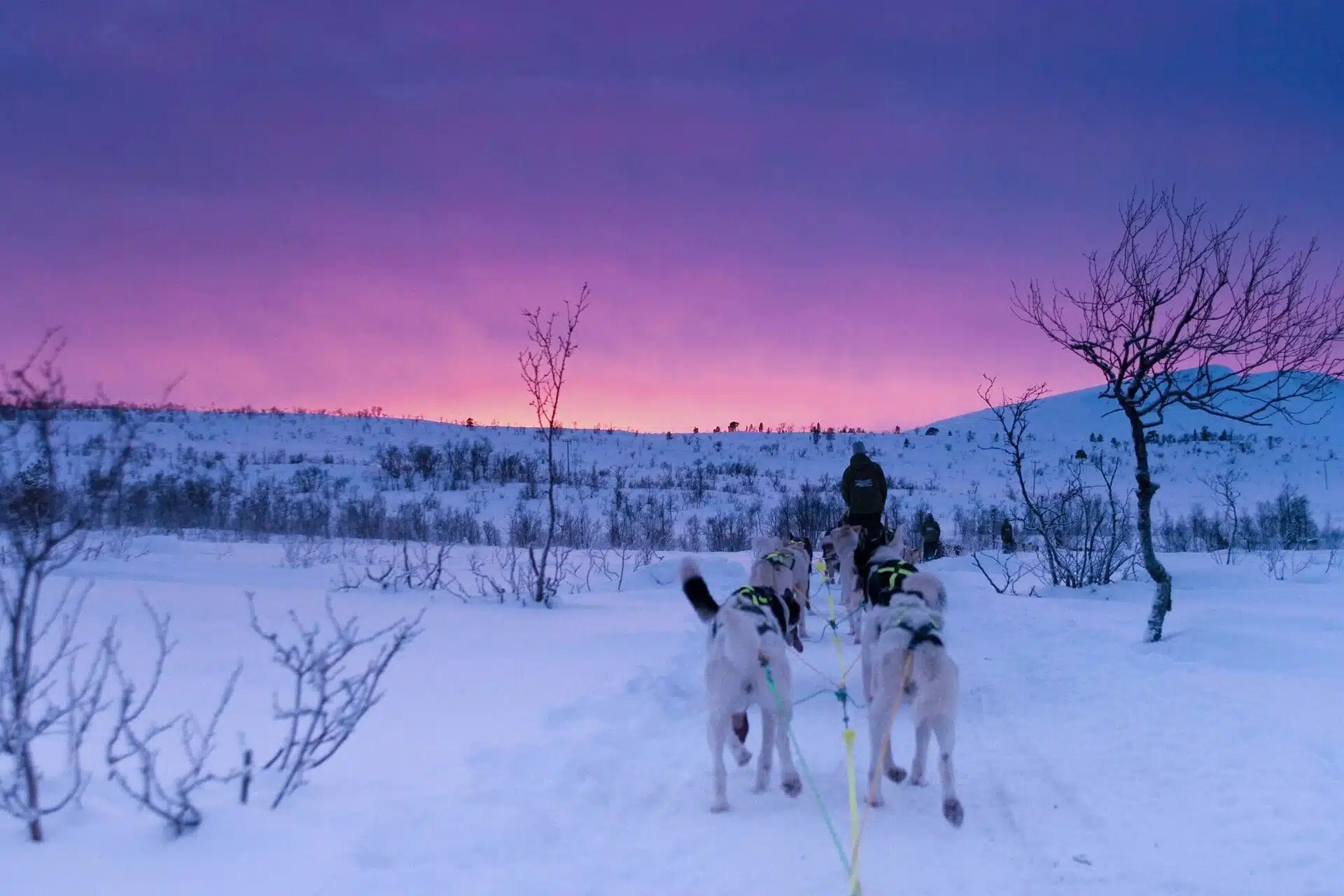

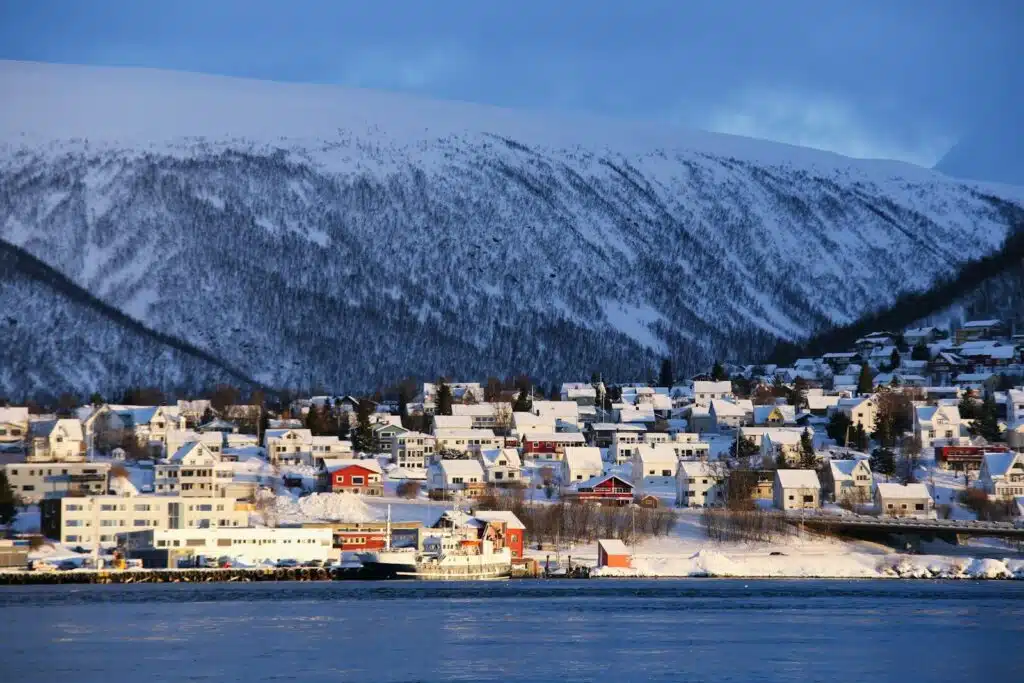
The Finnmarksvidda is a plateau in northern Norway covering 22,000 square kilometres of Arctic terrain, frozen lakes and birch forest. One of the most remote areas in Europe, it is where multi-day dog sledding expeditions still run the way they always have, with overnight stays in wilderness cabins from December through March.
The expedition begins at the kennels, usually in Alta, where guests spend the first morning learning to handle the dogs, attach the harnesses and operate the sled before the first full day on the trail. By the afternoon of day one, the dogs are running and the plateau opens ahead.
The trail on the Finnmarksvidda runs over small mountains, along frozen rivers and through stands of birch forest, with the landscape changing character through the day as the light shifts.
In January and February the sun stays low on the horizon or does not appear at all. In March the days are longer and the snow conditions are often at their best. Each evening the team arrives at a mountain cabin or lodge along the route, feeds and settles the dogs, and gathers around the fire.
Several of the cabins are among the oldest mountain lodges in Finnmark, including the Suolovuopmi Mountain Lodge, a stopping point on this route for generations. Most have saunas. Some have no electricity or running water, with guests fetching water and chopping wood as part of the daily routine.
About Do Not Disturb
Do Not Disturb is a luxury travel company specializing in carefully designed journeys and considered experiences. Each itinerary we build for our clients is informed by real destination knowledge, offering insight into places, cultures, and moments that shape how a trip comes together.
If this destination has sparked ideas, the itinerary can be developed into a private journey tailored to your interests and travel style, with hand-picked stays, thoughtful routing, and experiences curated around what matters most to you.
Cultural and Historical Context
Finnmarksvidda is the traditional homeland of the Sami, the indigenous people of northern Scandinavia, whose reindeer herding culture has shaped this landscape for thousands of years. The plateau is still an active reindeer herding area, and the trails followed by dog sledding expeditions cross the same terrain Sami herders have used for generations.
The Sami name for this region is Sápmi, extending across northern Norway, Sweden, Finland and the Kola Peninsula in Russia. Finnmark alone covers an area larger than Denmark, most of it uninhabited, with snow cover from December through April and temperatures between minus 15 and minus 30 degrees Celsius in winter.
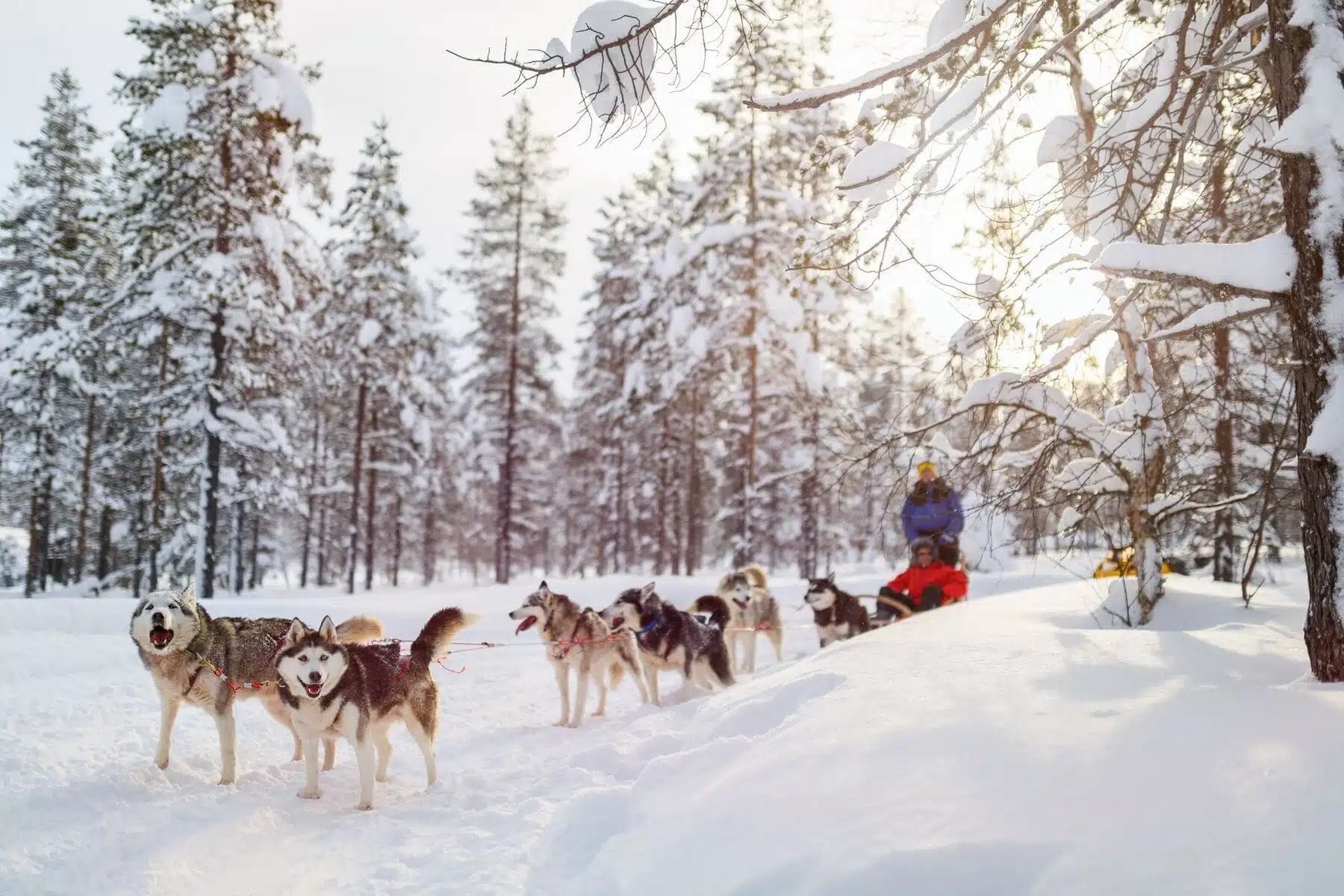
Dog sledding as transport across this terrain predates modern roads by centuries. The huskies are bred for endurance and cold, running 25 to 40 kilometres a day in conditions that would stop most other animals. Caring for them at the end of each day is part of the routine that shapes the expedition.
Why Private or Small-Group Access Matters
Shared dog sledding expeditions in Finnmark run with groups of varying experience levels, and the pace, distance and route adjustments available to the guide are limited by the needs of the whole group rather than the individuals within it.
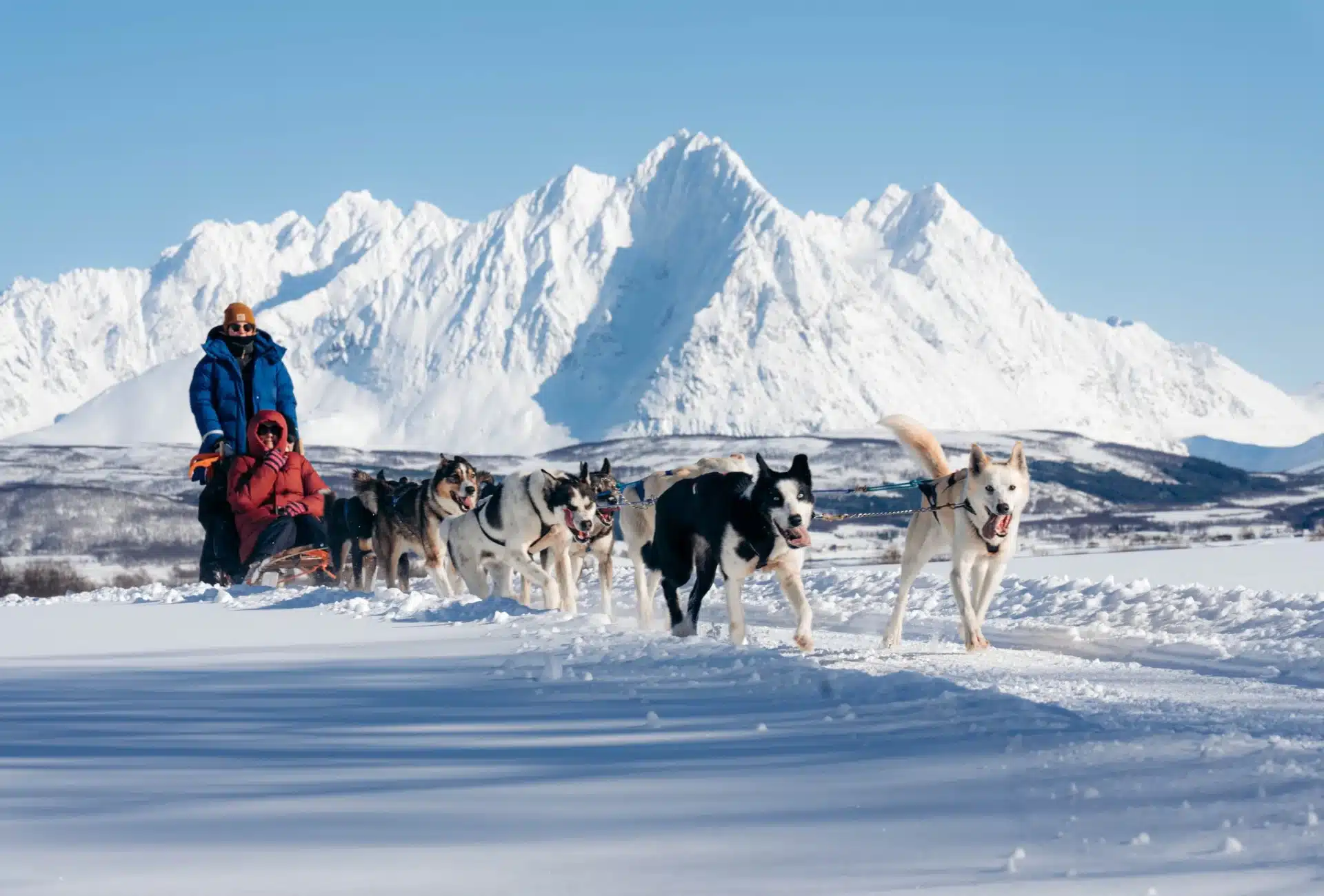
A private expedition changes that directly. The guide adjusts the pace, the daily distance and the route around the experience and fitness of the guests. If the first day is harder than expected, the second day shortens. If conditions are better in a different direction, the route goes there. The programme is built around whoever is making the expedition, not around a standard itinerary.
The size of the group also changes the experience in practical terms. On a private expedition the guide’s attention is on a small number of people. By day two the guide knows how each person handles the sled, which dogs work best with which drivers and where the pace needs to be set. That knowledge builds across several days and shapes the quality of every day on the trail.
What You See
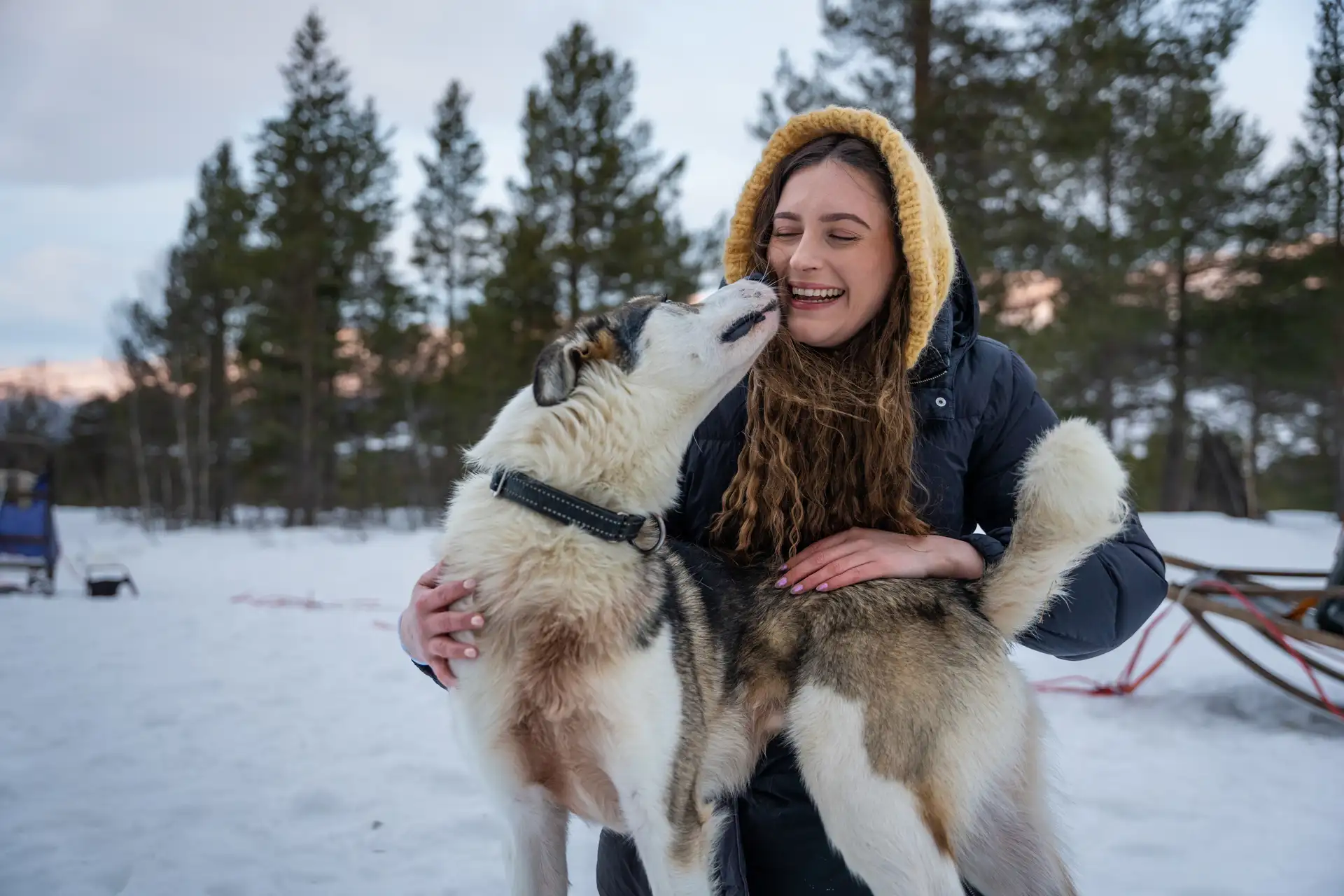
The first morning at the kennels covers the basics: how the harness fits, how to stand on the sled, how to use the brake and how to manage the dogs at the start line, when they are pulling hardest. The training run covers around ten kilometres and is enough to establish the handling before the first full day on the trail.
The days on the Finnmarksvidda cover frozen lakes, river valleys and birch forest at a pace that allows the terrain to register. The dogs set the rhythm and the guide sets the route, moving north toward Karasjok or south toward the Finnmark coast depending on the programme.
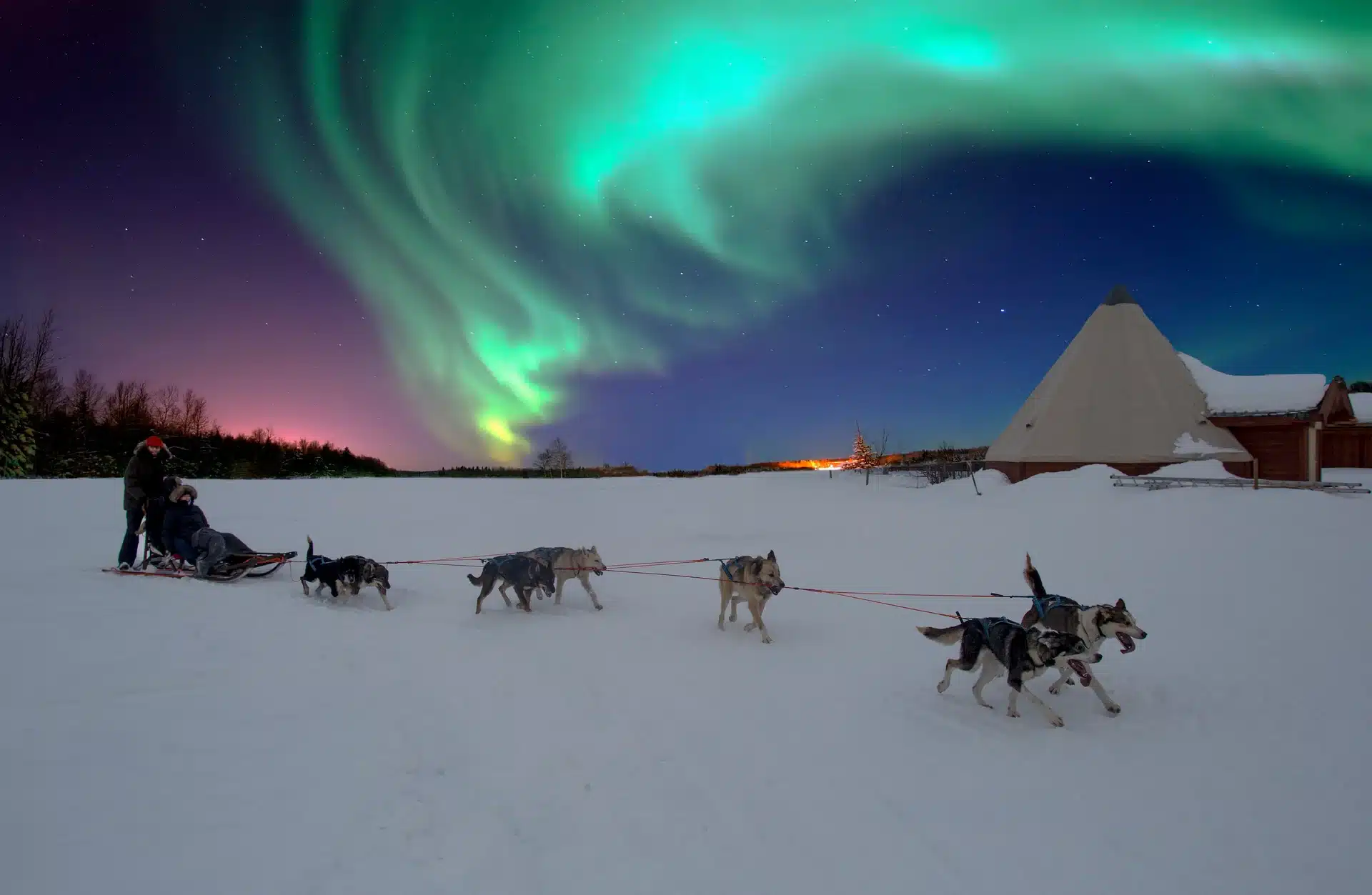
The Northern Lights are a possibility on any clear night from late September through March, and the absence of light pollution on the plateau means that when they appear, there is nothing reducing them.
The cabins along the route vary from simple mountain huts with wood-burning stoves and shared sleeping rooms to the older stone-and-timber lodges that have been on this route for generations. All have saunas.
How Do Not Disturb Makes This Possible
Do Not Disturb works with a small number of operators on the Finnmarksvidda whose guides know the plateau and its routes across all conditions and months of the season. Private and small-group departures are arranged in advance, with the programme shaped around the experience of the guests and the conditions of the chosen dates.
Transfer to Alta, equipment provision and any additional experiences in Finnmark, including Sami cultural immersion or Northern Lights viewing, are all coordinated as part of the same arrangement.
Ready to plan your dog sledding expedition in Finnmark? Speak with Do Not Disturb to begin your journey.
Plan your own version of this journey
Speak to Do Not Disturb’s luxury travel experts and turn this moment into something personal.
Related destinations
Suggested articles
The Norwegian Fjords: A Luxury Traveler’s Guide
Beyond the Maldives: Seven Islands for a Different Kind of Honeymoon
The Ultimate Norway Honeymoon Guide

Svalbard: Europe’s Last Great Wilderness
The Best Honeymoon Destinations for LGBTQ+ Couples
The Most Romantic Train Journeys for a Slow Honeymoon
Chianti’s Luxury Villas: Stay Like a Renaissance Noble
Best Luxury Hotels in Finnish Lapland
Luxury Safaris: Why Laikipia Is Kenya’s Best-Kept Secret
Where to Go On Honeymoon? A Guide to Help You Choose

Why Kenya Is Perfect for a Luxury Honeymoon

Lake Como vs Lake Garda: Which Italian Lake Is Right for You?
Plan Your Honeymoon in Finland